The History of Field Recording: From Wax Cylinders to Biophony
Field recording means taking the microphone to the sound instead of bringing the sound to a studio. The history of field recording is largely a story of machines getting lighter: a parlour phonograph, a disc cutter in the back of a car, a spring-wound tape recorder small enough to carry. Along the way, recordists caught birds, songs, stories and, in the end, whole landscapes.
Quick answer
What is field recording?
Field recording is capturing sound where it happens rather than in a studio. It began with the Edison phonograph: Ludwig Koch recorded a bird in 1889, and Jesse Walter Fewkes recorded Passamaquoddy songs in 1890. Disc cutters, portable tape and the 1951 Nagra made it easier, and Bernie Krause turned it toward whole soundscapes.
A bird in the parlour, 1889
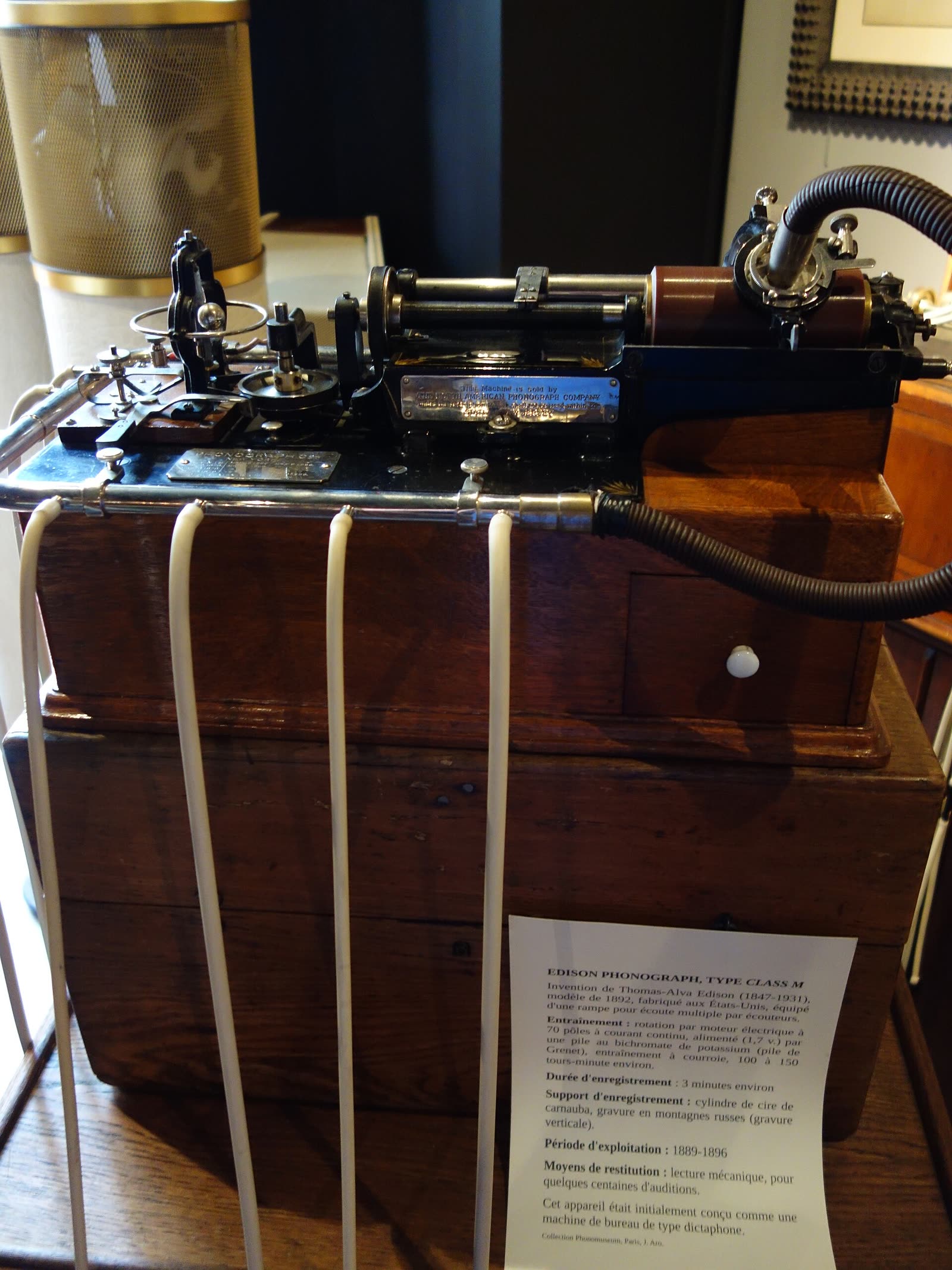
Cheryl Tipp, a historian of wildlife sound, writes that Ludwig Koch “made the first ever recording of a bird in 1889, at the tender age of eight, when his father brought home an Edison Phonograph and a box of cylinders.” The singer was his pet Indian shama. Koch is “described as the father of wildlife sound recording.”
A pet is not a wild bird, and Tipp keeps the two apart. “Cherry Kearton was responsible for the first recordings of wild birds when he captured the song of a Nightingale and a few phrases from a Song Thrush in England in 1900.” The first commercial wildlife record, in 1910, was a captive nightingale whose cage “was suspended in front of the horn.”
Koch later fled Nazi Germany for Britain. For a 1938 project with Julian Huxley he worked at Whipsnade and London Zoos “using a portable recording studio in the form of a seven ton van.” The Whipsnade wolves “remained entirely mute.”
Cylinders on the road: ethnographers and the phonograph
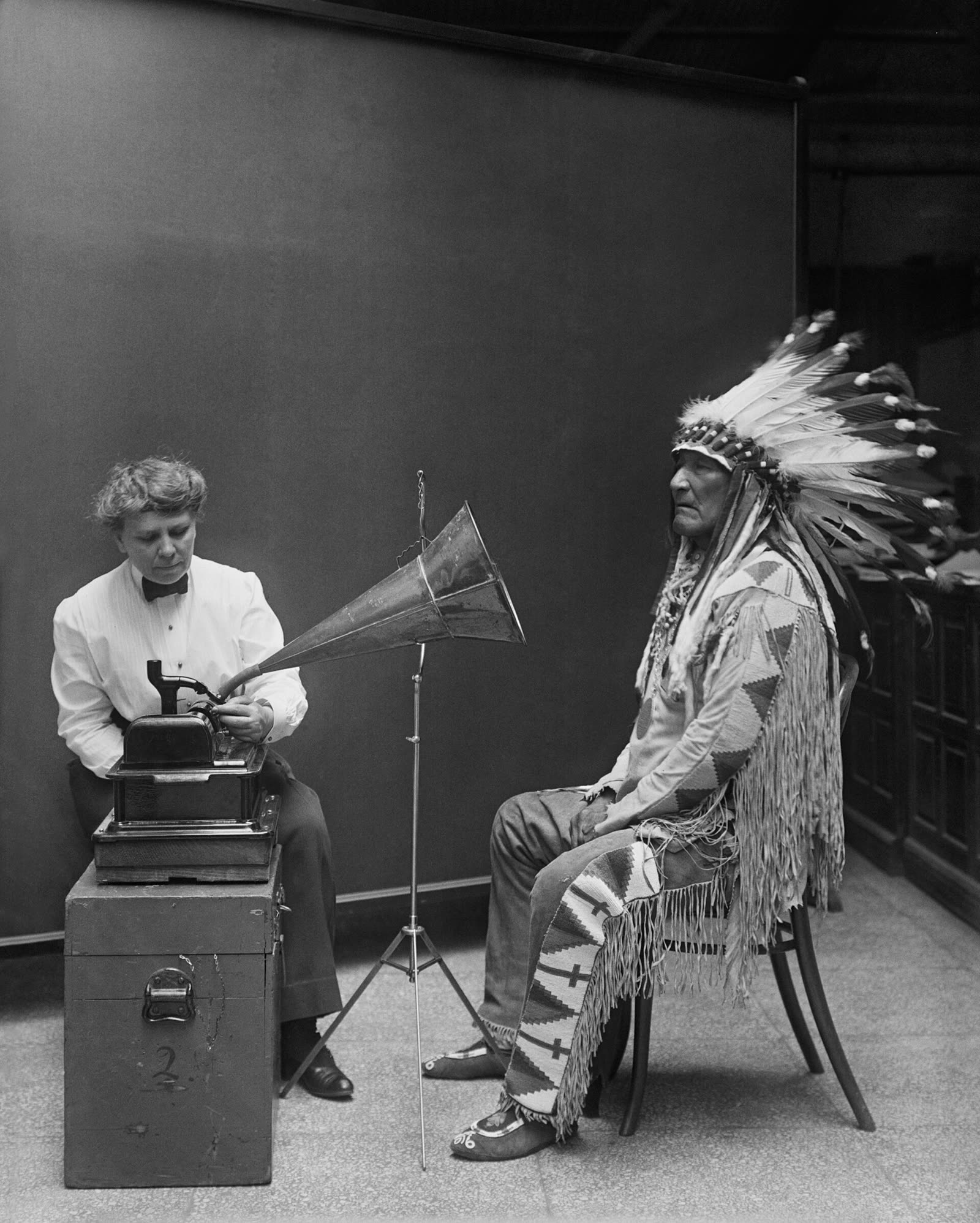
Ethnographers took the phonograph out even earlier. Over three days in Maine in 1890, Jesse Walter Fewkes recorded about three dozen wax cylinders of songs, legends, stories and words from Passamaquoddy tribal members. “The Library of Congress has the largest collection in the world of wax cylinder field recordings of Native Americans,” its blog notes.
Many early recordists took songs from Native and Black communities who had little say in what became of them. Those communities are now reclaiming the recordings, and the Library has written of the Passamaquoddy cylinders finding a new generation of listeners.
Alan Lomax field recordings and the disc recorder
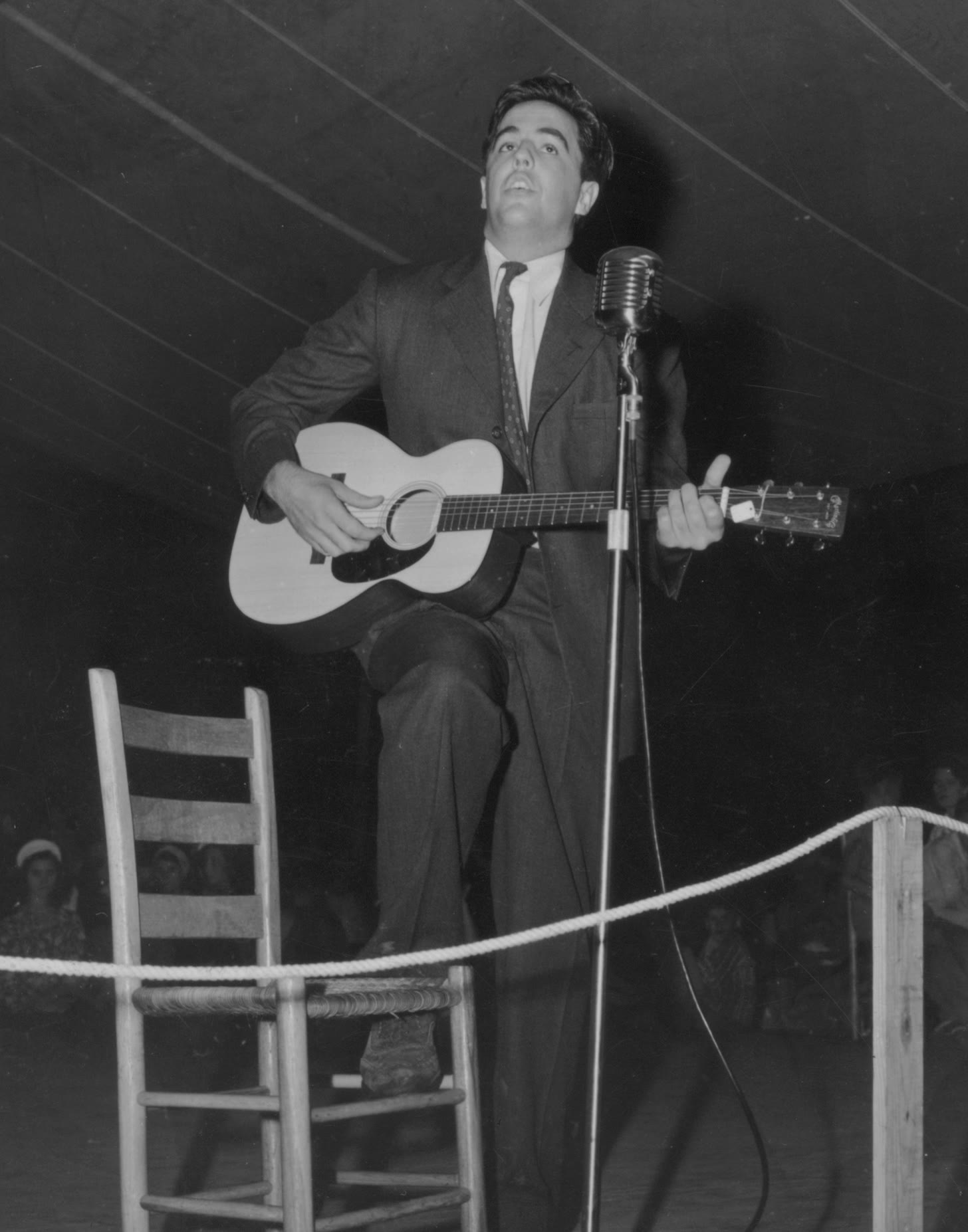
Alan Lomax “began his career in 1933 alongside his father,” John Lomax. They started with an old Edison cylinder machine; then “the Library of Congress supplied the Lomaxes with a state-of-the-art disc-cutting recorder that was mounted in the back of his father’s Model T-Ford.” Their first trip for the Library recorded “in eastern Kentucky and the state penitentiaries of Tennessee, Texas, and Mississippi.”
They recorded Huddie Ledbetter, known as Lead Belly, at Louisiana’s Angola State Penitentiary. Lomax remembered the discs with something like awe: “Every time I took one of those big, black, glass-based platters out of its box, I felt that a magical moment was opening up in time.”
His talks with Jelly Roll Morton were “recorded in 1938 in the Coolidge Auditorium at the Library of Congress,” and on a Delta trip in 1941 and 1942 he “made the first recordings of 29-year-old singer and guitarist McKinley Morganfield, later known as Muddy Waters.” The Association for Cultural Equity’s biography of Alan Lomax follows the whole career.
Tape and the Nagra
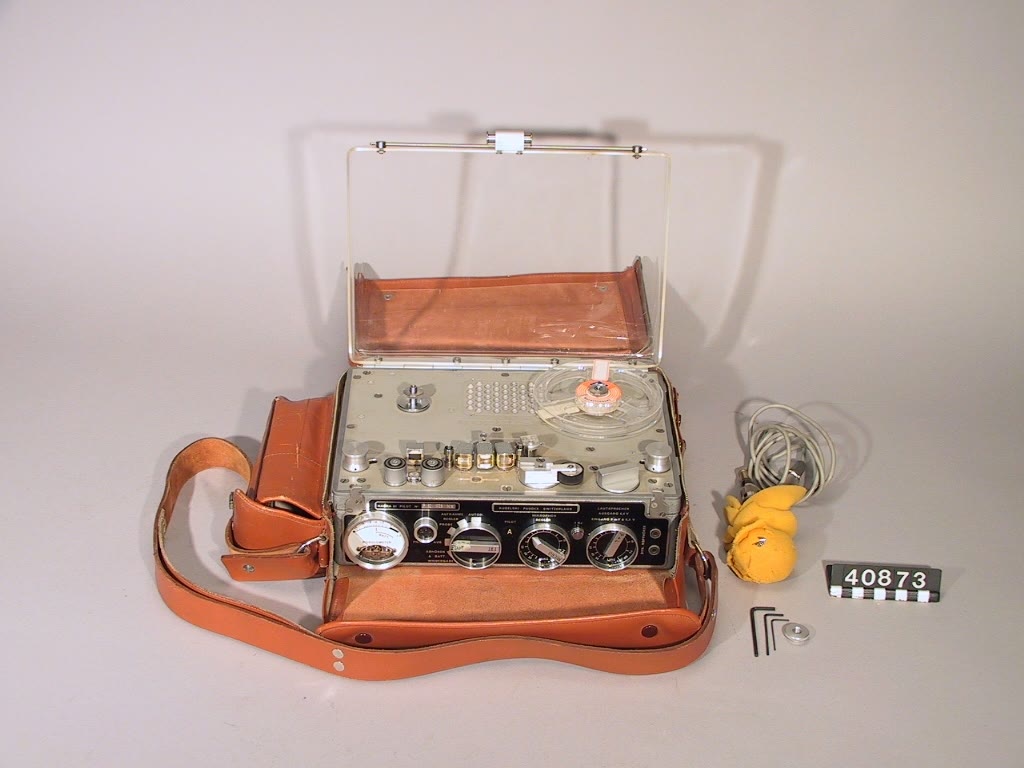
Tape changed the job. “In 1947, for the fifth time, Lomax returned to Mississippi with the first portable tape recorder to make high-fidelity recordings of Delta church services and of the prisoners’ work songs at Parchman Farm.”
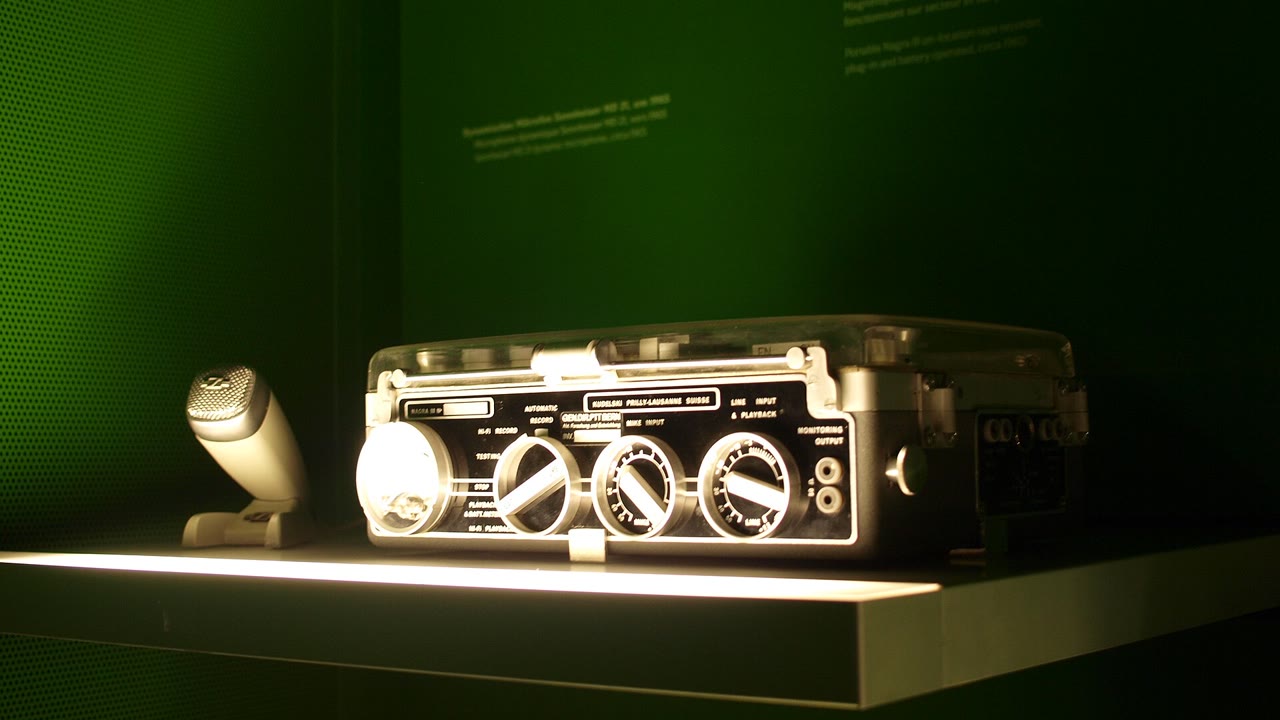
Then came the Nagra. In What Hi-Fi’s history of the Nagra tape recorder, “Stefan Kudelski founded Nagra (it’s a Polish word that means ‘will record’) in Switzerland in 1951.” It was “mechanically driven by a spring, with battery power for the valve electronics,” making recording “in all sorts of remote locations a practical option.” The film industry later gave the company two Oscars, in 1978 and 1991.
| Era | Machine | What the sources say |
|---|---|---|
| 1889 to 1910s | Edison phonograph, wax cylinder | Koch’s father’s phonograph; Fewkes’s cylinders in Maine |
| 1930s | Disc cutter in a car or van | The Lomaxes’ recorder in the family Ford; Koch’s seven-ton van |
| Late 1930s | Steel tape | Swedish radio’s Marconi recorder, up to thirty minutes at a time |
| 1947 | Portable magnetic tape | Lomax’s first portable tape recorder at Parchman Farm |
| 1951 on | Nagra | Spring-driven, with battery-powered electronics |
| 1958 on | Stereo in the field | Lomax’s stereo Southern Journey recordings |
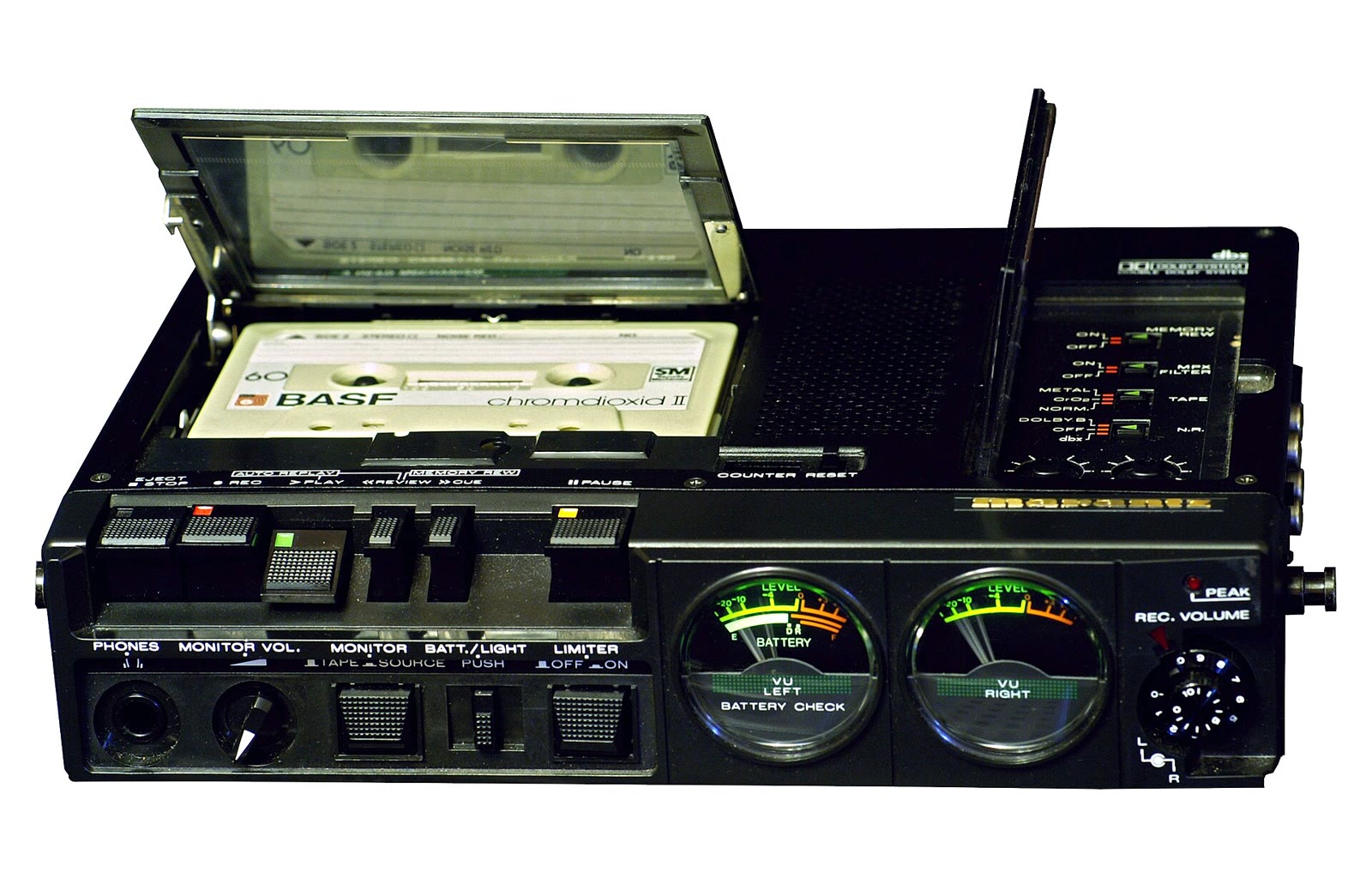
The next portable format, a generation later, is the subject of our history of the cassette tape and its recorders.
Bernie Krause and biophony: listening to whole places
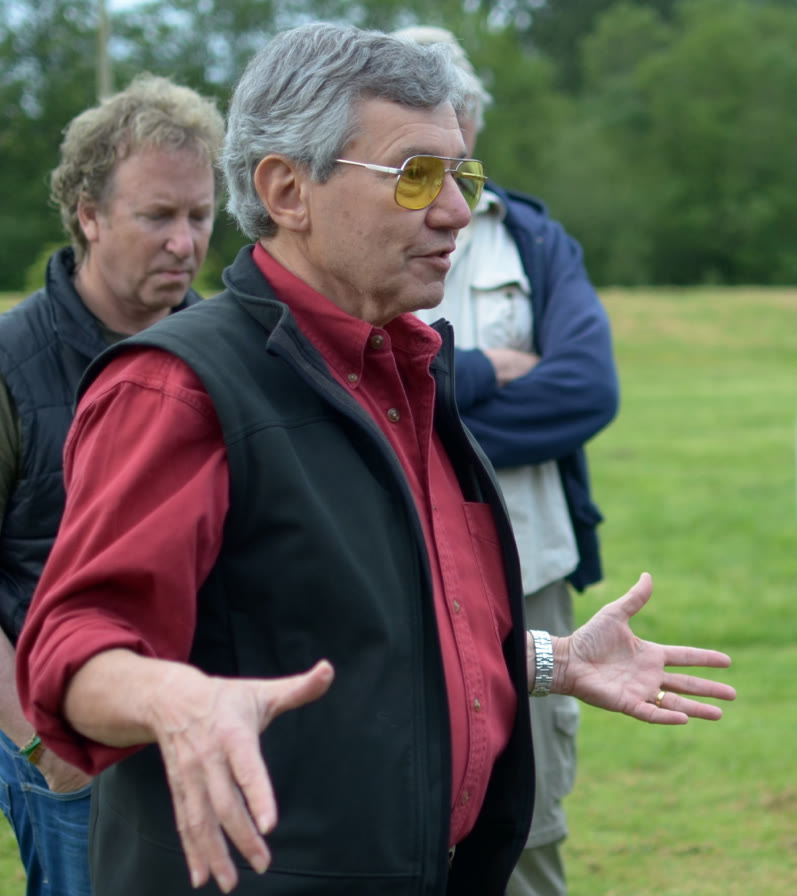
“Since 1968, Bernie Krause has traveled the world recording and archiving the sounds of creatures and environments large and small.” He had played in the Weavers and, with Paul Beaver, introduced the Moog synthesizer to pop music and film. From his base in Glen Ellen, in Sonoma County, he named the sound of a living habitat as a whole: biophony, “the collective sound produced by all of the organisms in a given habitat at a moment in time.”
His work “helped establish the foundation of a new bioacoustic discipline: soundscape ecology.” At Lincoln Meadow, logged in 1988, the place “appeared unchanged” to the eye. “But an audio recording revealed the loss of birds and frogs.”
TED reports that more than half the habitats in his archive “have gone silent or been altered.” Krause’s own summary: “a soundscape is worth a thousand pictures.” A parallel listening tradition is traced in the soundwalk and the World Soundscape Project.
Recorded voices, carried back: Antenna Theater
Field recording has two branches: the naturalist’s, from Koch to Krause, and the ethnographer’s and oral historian’s, from Fewkes to the Lomaxes. Antenna Theater’s work ran parallel to the second, though no source links the company to any field recordist. For Etiquette of the Undercaste, the London Times reported, “Hardman began by first recording conversations with homeless men and women and with those who deal with them here.”
The habit went back further. Pink Prom (1982) used “a master tape composed of interviews with high school girls after prom night that everyone could hear.” In 2002 students on High School, Antenna’s walk-through of a real campus, took part by “selecting interview topics,” “being recorded” and “engaging and recording others.” Robert Hurwitt wrote that High School “occasioned a minor revolution in the taped audio tours at museums and historic sites.”
Chris Hardman’s own CV described works that “combined cutting-edge audio technology with interview-driven sound designs.” Where the Lomaxes carried voices to an archive, Antenna carried them back to the place they described, into the listener’s headphones. Our guide to cutting found sound into a sound collage follows the editing side of that work. The book version of the same impulse is Studs Terkel’s oral history, from tape recorder to page.
Frequently asked questions
What was the first field recording?
Ludwig Koch’s 1889 cylinder of his pet shama is the first known bird recording. Jesse Walter Fewkes recorded Passamaquoddy songs and stories in Maine in 1890, and Cherry Kearton recorded wild birds in 1900.
What equipment did Alan Lomax use?
An Edison cylinder machine at first, then a Library of Congress disc recorder mounted in the family Ford. In 1947 he took the first portable tape recorder to Mississippi.
What is a Nagra?
A portable, spring-driven tape recorder first built by Stefan Kudelski in Switzerland around 1951. What Hi-Fi says the name is Polish for “will record.”
What is biophony?
Bernie Krause’s term for the collective sound produced by all of the organisms in a given habitat at a moment in time.
For more, see Walkmanology and Antenna’s other new theater forms and Dial-A-Poem, John Giorno’s poetry by telephone.