Is There a Calendar That Starts on the Winter Solstice?
People who look for a calendar that starts on the winter solstice usually want the year to begin when the days start getting longer again. It is a reasonable wish, and almost no civil calendar grants it. Here is what the solstice is, which seasonal calendars do anchor their year to the sky, and how they compare.
Quick answer
Is there a calendar that starts on the winter solstice?
Few calendars start on the winter solstice. Most civil calendars, including the Gregorian, begin on fixed dates unrelated to the sun’s turning points. Some seasonal calendars do anchor the year to an astronomical moment: the French Republican calendar began at the autumn equinox, Nowruz at the spring equinox, and Antenna Theater’s ECOlogical Calendar at the winter solstice.
What the winter solstice actually is
A solstice is a position in Earth’s orbit, not a festival. NASA’s Watch the Skies blog explains that “during the solstices, Earth reaches a point where its tilt is at the greatest angle to the plane of its orbit,” a tilt that “is more or less constant (23.5˚).”
The result, in NASA’s words: “The December solstice brings the shortest day and longest night of the year for locations in the northern half of the globe.” It is a moment rather than a whole day. NASA’s December solstice explainer gives the 2021 solstice as Dec. 21 at 15:59 UTC.
Two ways to count the seasons
Before choosing where a year starts, a calendar maker has to decide what a season is. NOAA’s National Centers for Environmental Information describe two systems. The astronomical seasons “are based on the position of Earth in relation to the sun,” so winter begins at the December solstice.
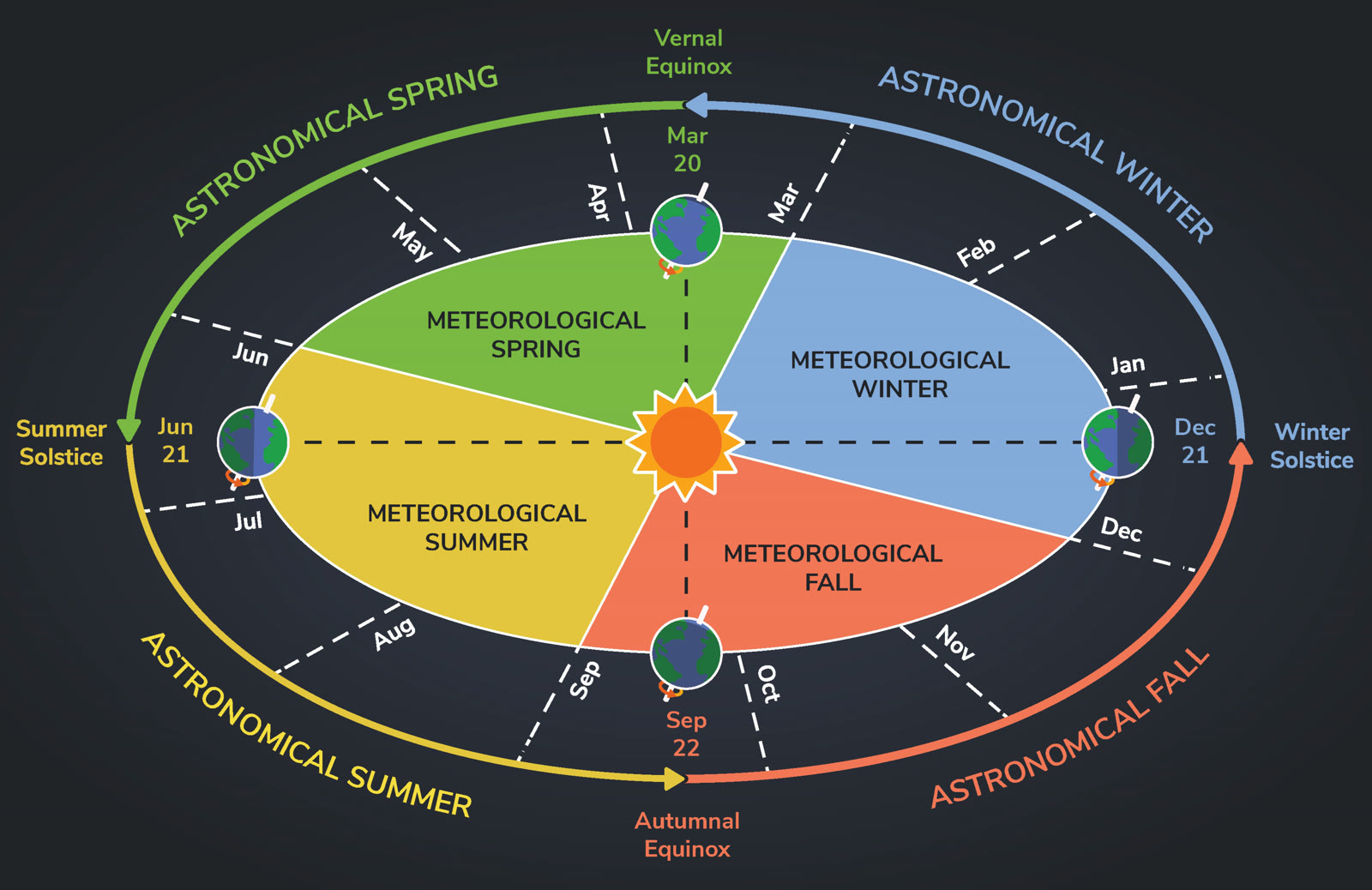
Because Earth’s orbit is not a perfect circle, NOAA notes, the astronomical seasons “vary between 89 and 93 days.” That makes it “very difficult to consistently compare climatological statistics,” so forecasters use meteorological seasons, “based on the annual temperature cycle,” in whole months. Meteorological winter is December, January and February.
Calendars that start at a turning point of the year
A solstice or an equinox makes an obvious starting line, and several traditions have used one. The surprise is how few chose the winter solstice.
Equinox years: the French Republican calendar and Nowruz
Revolutionary France came closest to a fully seasonal civil calendar. The Fondation Napoléon’s history of the French Republican calendar and its nature-named months says its start was “fixed as the autumn equinox, 22 September, 1792,” the day the Republic was proclaimed. Adopted in 1793, it was abolished by Napoleon in 1805.
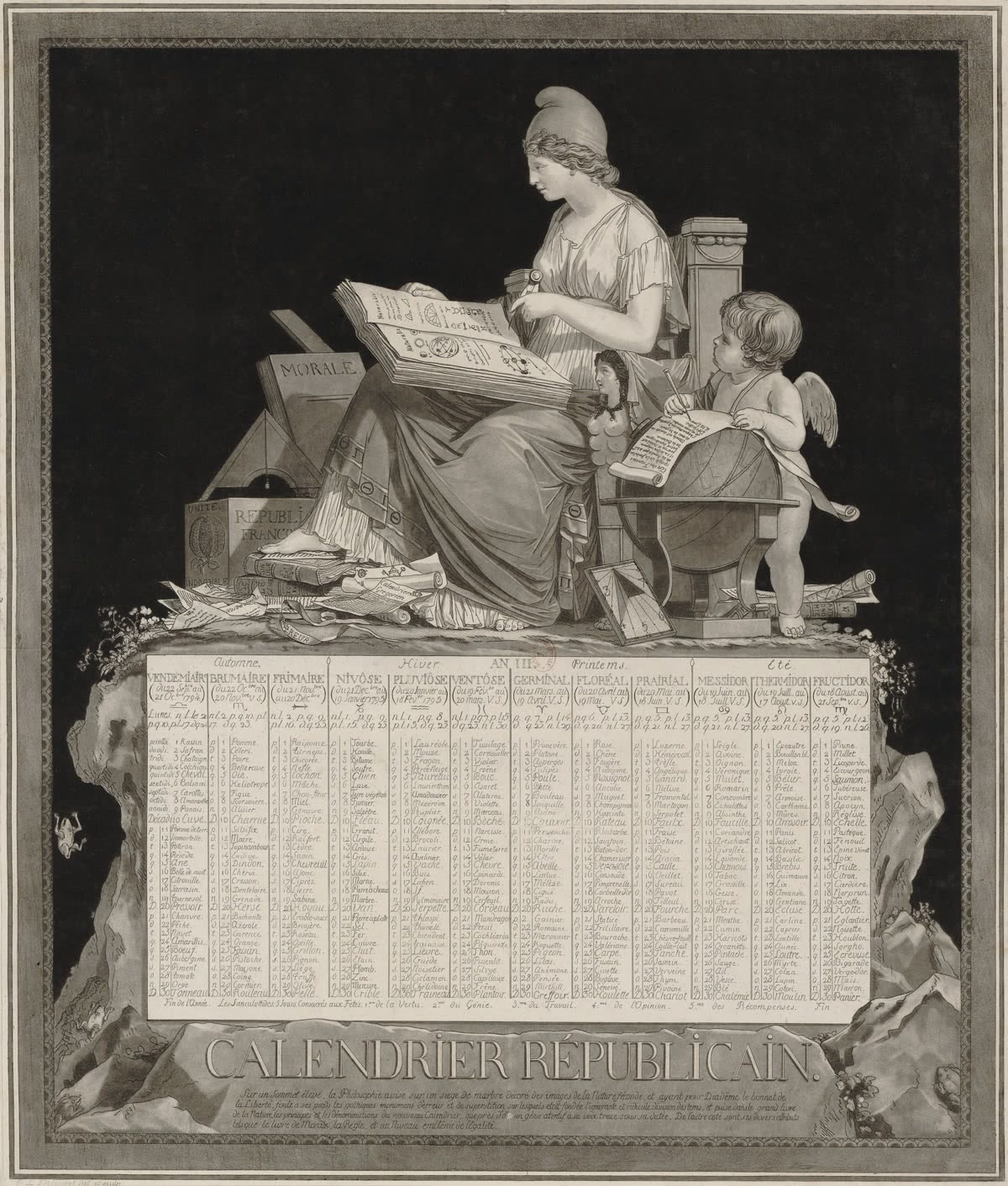
Fabre d’Eglantine named the months after “the seasons and the events in Nature associated with them,” and the day names “were chosen from the names of flowers, trees, plants, animals and farm tools.” Nowruz, the Persian new year, takes the other equinox. The United Nations says it “is celebrated on the day of the vernal equinox, usually March 20 or 21.”
The Wheel of the Year usually begins at Samhain
The modern Pagan Wheel of the Year marks both solstices and both equinoxes, and Yule falls on “20-25 December.” Yet World History Encyclopedia says “Samhain marks the beginning of the cycle of the year, a kind of New Year’s Day.” It also notes the wheel was fixed in its present form by the Wicca movement in the 1950s and early 1960s.
Stonehenge and Newgrange marked the turn
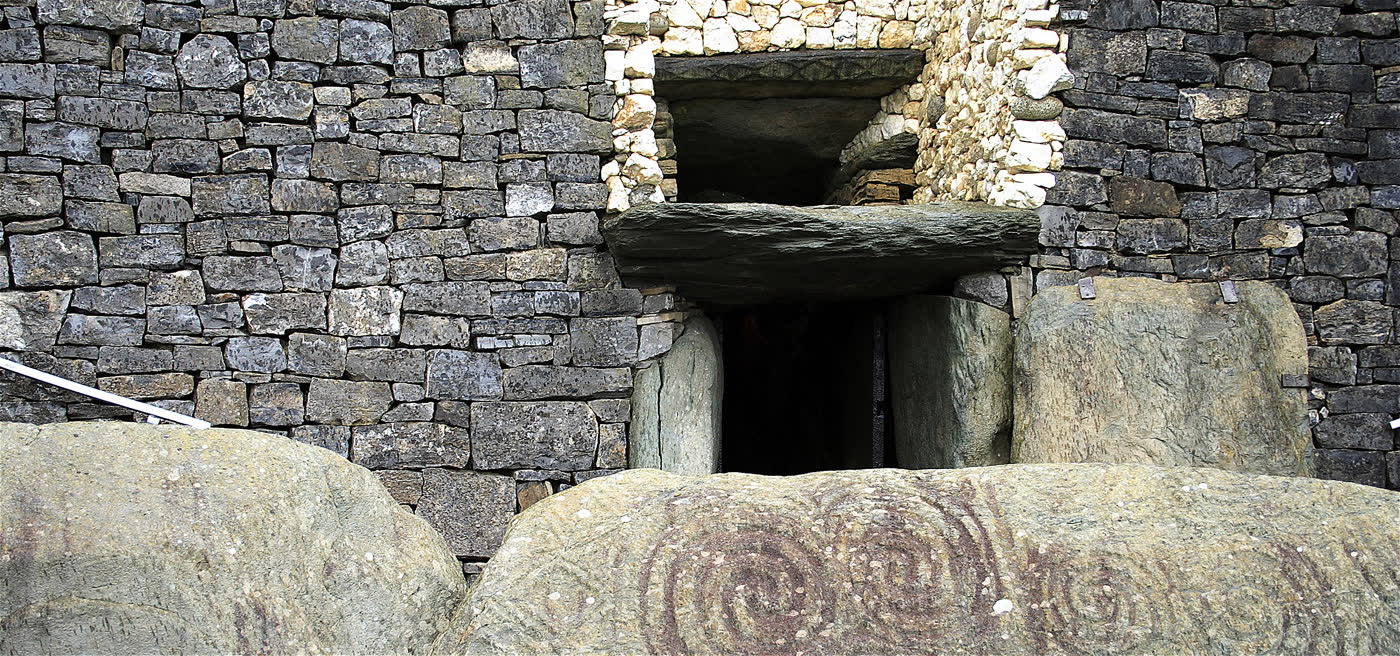
Prehistoric builders clearly watched the winter solstice. The Science Museum’s blog says Stonehenge “is built on a solstitial alignment” and that Newgrange in Ireland “is orientated on the mid-winter solstice.” That shows they marked the turning of the year. It does not prove that any calendar began there.
A modern solstice calendar: the ECOlogical Calendar
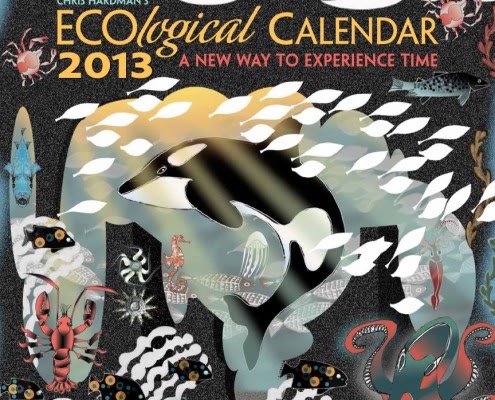
The clearest published answer came from a theater company. From 2005 to 2021, Antenna Theater produced the ECOlogical Calendar, a calendar that runs season by season, designed by Chris Hardman and published by Pomegranate. Antenna’s chronology calls it “a mix of artistic interpretation and scientific facts relating to the cycle known as a year.”

A 2006 DailyGood feature described a calendar that “begins not on January 1, but on the winter solstice, December 21.” Antenna’s own description says “each section of the ECOlogical CALENDAR shows one season starting and ending at a solstice or equinox.” Each edition had four foldout panels, one per season, with the familiar Gregorian dates and holidays alongside.
The idea grew past paper. Antenna added a spiral-bound version from 2007 and an iPhone edition in 2008. Antenna’s theater followed the same wheel: its seasonal performances for each turn of the year gave winter “The longest night” and spring Pandemonium, one of the outdoor works in the Journal’s history of site-specific theater in the Bay Area.
What a seasonal calendar does differently
A calendar built on the sky has to rethink more than its first page. Antenna’s notes on why the ECOlogical Calendar drops the seven-day week list the choices, and most of them echo the French Republic.
- Seasons first. “The first and most profound division of the year is the four seasons. Few calendars even pay lip-service to this fact.”
- Real moons. A Gregorian month is “approximately twelve moon cycles forced into a solar year,” so the calendar shows the actual phases.
- No weeks. “There is no natural phenomenon that cycles every seven days,” so the days flow forward.
- Day names. A date could read “Winter, Ember, SilentSnow” where the Gregorian says Dec. 23rd.
Calendar start points compared
The table sets the main options side by side. Two rows are season systems rather than calendars.
| System | Year or season begins | Basis | Seasons |
|---|---|---|---|
| Gregorian | January 1 | Solar year, fixed months | Not marked |
| ECOlogical Calendar (2005-2021) | Winter solstice, Dec. 21 (DailyGood, 2006) | Solar seasons and real moon phases | Each season runs solstice to equinox |
| French Republican (adopted 1793) | Autumn equinox, 22 September 1792 | Solar, months named for nature | Month names follow the seasons |
| Nowruz, Persian new year | Vernal equinox, usually March 20 or 21 | Solar | New year opens spring |
| Wheel of the Year | Usually Samhain, 31 October | Eight festivals | Yule is a festival, not New Year |
| Astronomical seasons | Winter at the December solstice | Earth’s position to the sun | 89 to 93 days each |
| Meteorological seasons | Winter on December 1 | Temperature cycle | Whole three-month blocks |
China’s 24 solar terms are a reminder that the solstice can be a fixed point inside a year without opening it. The Hong Kong Observatory lists the Winter Solstice among them, at 18:44 Hong Kong Time on 21 December in 2016.
Frequently asked questions
Is there a calendar that starts on the winter solstice?
No widely used civil calendar does. Antenna Theater’s ECOlogical Calendar, published from 2005 to 2021, began “not on January 1, but on the winter solstice, December 21,” according to a 2006 DailyGood feature.
Why does winter start on the solstice in some places and December 1 in others?
Astronomical seasons follow Earth’s position relative to the sun. Meteorological seasons follow the temperature cycle and use whole months so climate statistics can be compared, NOAA explains.
Which calendars begin at an equinox?
The French Republican calendar counted from the autumn equinox of 22 September 1792. Nowruz, the Persian new year, falls on the vernal equinox.
Does the Wheel of the Year start at Yule?
Usually not. World History Encyclopedia says Samhain marks the beginning of the cycle of the year. Yule is the winter solstice festival.
Time was a long thread in Antenna’s work, back to the name of Snake Theater, named for the ouroboros and cyclical time. The beach piece in the Journal’s history of Sands of Time turned the same idea into a walk, and the Antenna chronology of productions and projects lists the rest.