Site-Specific Theater in the Bay Area: A History by Place
When Bay Area audiences first met site-specific theater in the late 1970s, it did not happen in a studio. It started on a Marin beach, outside a city hall and in an abandoned gas station. This history follows the work place by place, from Snake Theater to forts, buses and the sky.
Quick answer
Where did site-specific theater in the Bay Area begin?
Bay Area site-specific theater took shape on the Marin waterfront in the late 1970s, when Snake Theater staged plays on Fort Cronkhite beach, outside Sausalito City Hall and in an abandoned gas station. Antenna Theater added headphone-guided walks in the early 1980s, and We Players later took work to Fort Point and Alcatraz.
What “site-specific” means
Site-specific work is made for one place rather than adapted to a stage. Snake Theater described its 1978 California Series as plays “primarily performed in locations integral to their purposes.” The place supplies part of the story. The broader word, immersive, is covered in the Journal’s look at how immersive theater differs from traditional theater.
The 1970s: Snake Theater’s location plays
Snake Theater was founded in 1972 in Venice, California, by co-directors Laura Farabough and Chris Hardman. Antenna’s chronology records the pair’s move to San Francisco and, in 1977, to the Sausalito waterfront.
Fort Cronkhite, Sausalito City Hall and a gas station
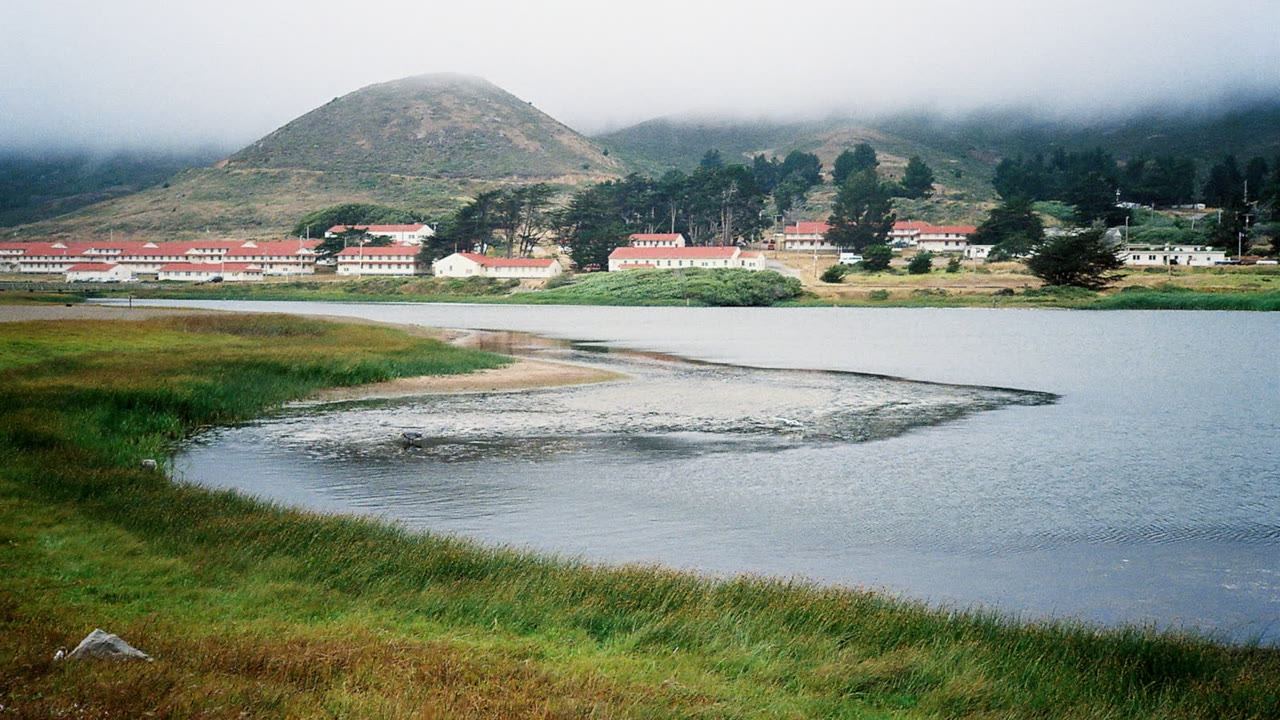
In 1978 Snake began the California Series. The spring play, Somewhere in the Pacific, “was presented on the beach at Fort Cronkhite, Marin County.” Her Building followed in front of Sausalito City Hall that summer. The archive dates Somewhere in the Pacific to 1978, while Laura Farabough’s Wikipedia entry gives 1977.
The Bay Area Drama Critics Circle gave Snake an award for “New Directions In Theater” in 1978. In 1979 came Auto, “a major new location piece” performed “at an abandoned Mohawk gas station in Sausalito.” The archive keeps the full record of Snake Theater’s location plays of the 1970s.
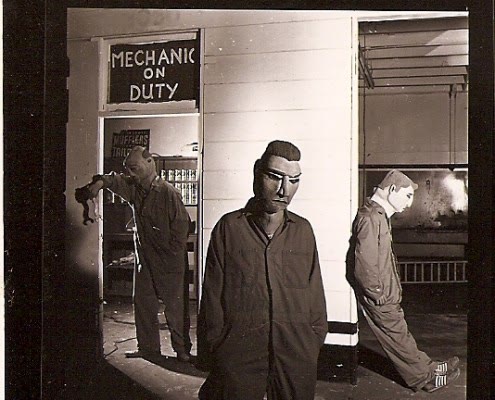
Farabough later took the idea to swimming pools, Wikipedia records. The Sausalito Historical Society wrote that Snake “created site-specific pieces that told stories utilizing existing environments.”
The Cardboard Front
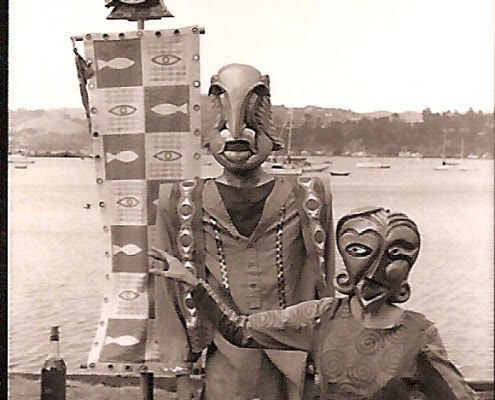
Antenna’s own history says it “started as a community Agit-Prop theater in response to the arrival of developers” with plans for the waterfront. In the account of the Sausalito waterfront agit-prop years, about 50 painted cardboard flats of madonnas and sailors went “right where the bulldozer was meant to drive.” They “stopped the dozer for about two weeks.”
The 1980s: headphones turn any building into a stage
High School and the audient
High School was first staged in 1981, according to Antenna’s chronology, at Tamalpais High School in Mill Valley. It was “a narrated walk-through of the campus from the perspective of the students,” which the chronology calls “the first use of Walkman technology by an artist.”
Each listener walked alone, guided by tape: what Antenna meant by an audient. The method is set out on the page about how Walkmanology guided audiences through a site.
Piers, post offices and army warehouses
In 1982 Artery took over the Mill Valley Post Office Annex. Reviewing Artery for the Christian Science Monitor in June 1983, David Sterritt wrote that “an usher hangs a Sony Walkman tape player around your neck,” and that “the possibilities of ‘Walkman theater’ are enormous.”
Fairplay (1985) took 25 audio tape events on San Francisco history to Fort Mason Pier. Radio Interference opened in 1987 at the MIT Media Lab and came home in 1988 to the FEMA Warehouse at Fort Baker.
The 1990s: the national park as a theater
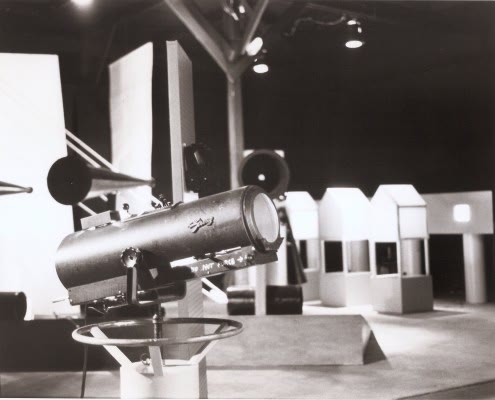
In the 1990s Antenna worked inside the Golden Gate National Recreation Area. The Appearance of Civilization (1992) took place at night on Rodeo Beach. Enola/Alone (1994), “an interactive theater maze,” was staged at the Presidio warehouse in San Francisco.
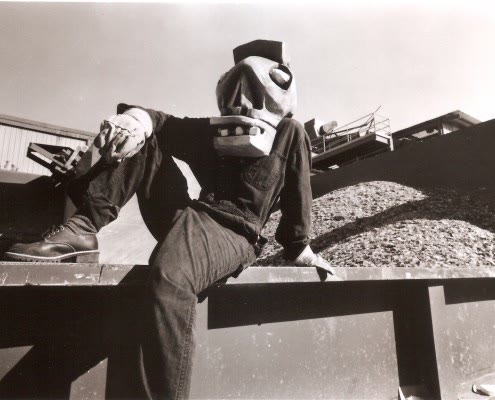
A whole town, then a recycling center
On Sight in Sausalito (1993) “used the city of Sausalito as its stage.” Audience members “encountered scenes in private homes, the city hall, local businesses, public parks, and the city’s streets.”
Skin & Bones/Flesh & Blood played the autumns of 1995 and 1996 at the Marin County Recycling Center in San Rafael. Voices of Marin County residents reached audients “through localized FM radio transmission.”
Forests, meadows and beaches
Pandemonium (1997-1998) sent audience members in headphones through the woods at Fort Barry “to encounter 35-foot puppets.”
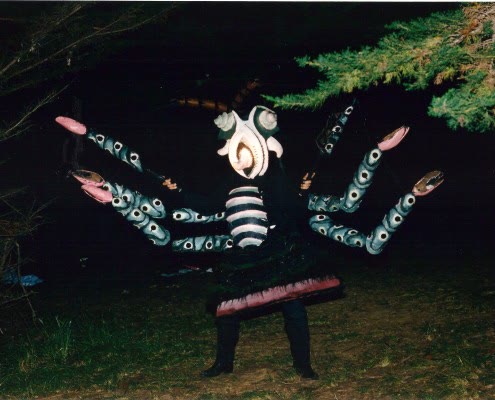
Sands of Time (1998-2002) was “Carved into 1,000 yards of beachfront,” first at Rodeo Beach in 1998 and later at Ocean Beach. The Journal’s history of Sands of Time on Rodeo Beach and Ocean Beach follows it further.
The 2000s: new companies, new sites
Antenna kept going to the water. Fire and Ice (2006) dramatized “an overnight tugboat fire and unprecedented ice storm” on the Sausalito waterfront, with the tugboat anchored off the Bay Model. Euphor!um also belongs to this decade: see the history of the Euphor!um Kubla Khan walk-through.
We Players at Fort Point and Alcatraz
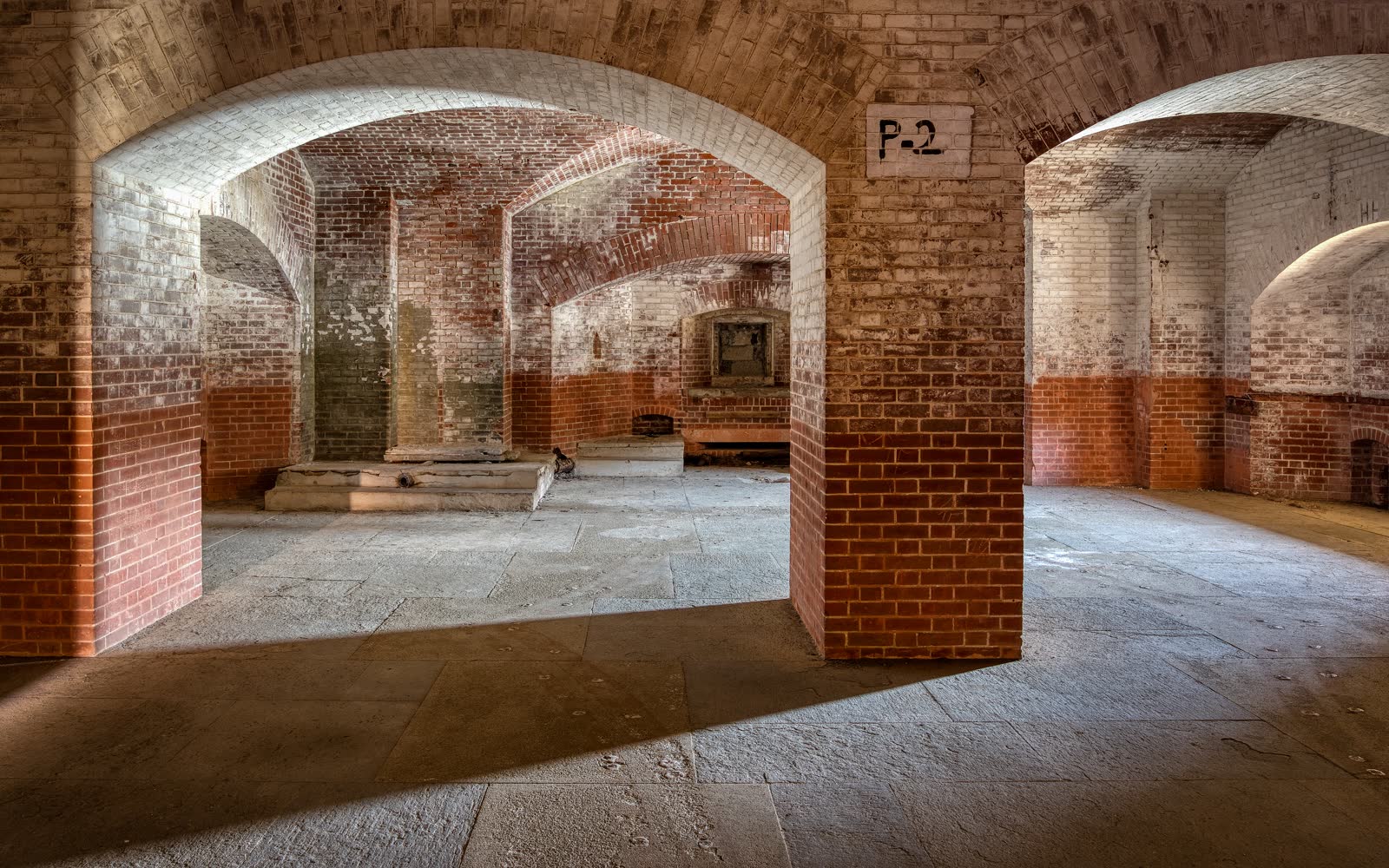
In 2011 the National Park Service described We Players as “a local collective which presents site-specific performances.” The Golden Gate National Parks Conservancy records its Macbeth at Fort Point in 2008 and a residency on Alcatraz from 2009 to 2011, including Hamlet.
Scrap and Salvage and Zaccho Dance Theatre
Scrap and Salvage ran roughly from 2002 to 2009 and required that “all material generated for performance be derived from the space in some way.”
Zaccho Dance Theatre, founded in 1980, took dance to landmarks. KQED Arts lists NOON (1995) in the Ferry Building clock tower and The People’s Palace (2024) on the steps and halls of San Francisco City Hall.
Moving sites and the sky
From 2010 to 2019 the site moved. Magic Bus was “a 90-minute virtual tour of the 1960s Summer of Love” aboard a transformed bus rolling through North Beach, Haight-Ashbury and Golden Gate Park, told in the Journal’s history of the Magic Bus in San Francisco.
In 2017 and 2019, Heart of San Francisco put “sky-written Hearts and parades of boats” above the Golden Gate Bridge, as the page on the sky-written hearts over the Golden Gate describes. KQED’s Stage Left documentary on San Francisco theater history names Snake Theater and Antenna Theater among the experimenters of the 1970s and 1980s. It never uses the term site-specific, one reason this lineage is easy to miss.
Timeline: Bay Area site-specific work by place
The table sets Bay Area companies’ site-specific work side by side. Antenna rows come from the full chronology of Antenna Theater productions.
| Year | Company and work | Site | Kind of place |
|---|---|---|---|
| 1978 | Snake Theater, Somewhere in the Pacific | Fort Cronkhite beach | Beach, former army post |
| 1979 | Snake Theater, Auto | Mohawk gas station, Sausalito | Derelict commercial |
| 1981 | Antenna, High School | Tamalpais High School | School campus |
| 1993 | Antenna, On Sight in Sausalito | Homes, shops, streets | Whole town |
| 1995-96 | Antenna, Skin & Bones/Flesh & Blood | Marin County Recycling Center | Industrial |
| 1997-98 | Antenna, Pandemonium | Fort Barry woods | National park |
| 2008 | We Players, Macbeth | Fort Point | Civil War-era fort |
| 2009-11 | We Players, Alcatraz residency | Alcatraz | Island prison |
| 2010-19 | Antenna, Magic Bus | A moving bus | Vehicle |
| 2017, 2019 | Antenna, Heart of San Francisco | Sky over the Golden Gate | Sky and water |
Frequently asked questions
What is site-specific theater?
Theater made for one place rather than a stage, where the location supplies part of the story. Snake Theater described its 1978 plays as “primarily performed in locations integral to their purposes.”
When did site-specific theater start in the Bay Area?
The history of site-specific theater in the Bay Area has no single starting point, but Snake Theater’s location plays are well documented: Fort Cronkhite beach in 1978 and an abandoned Sausalito gas station in 1979.
Which national park sites have hosted theater in the Bay Area?
Antenna used Fort Barry and Rodeo Beach in the Golden Gate National Recreation Area. We Players staged Macbeth at Fort Point in 2008 and held a residency on Alcatraz from 2009 to 2011.
Is site-specific theater the same as immersive theater?
Not exactly. Site-specific work draws on a real place. Many immersive shows build their world inside a venue instead.
For the productions themselves, start at Antenna Theater’s archive home page and its production pages.