Immersive Theater vs Traditional Theater: What Changes for the Audience
Immersive theater vs traditional theater is usually framed as a choice between sitting and wandering. The real differences run deeper: where you stand, what you hear, how many people share the moment, and whose story it becomes. The usual histories also skip twenty years, and that gap is where Antenna Theater worked.
Quick answer
What is the difference between immersive and traditional theater?
Traditional theater seats the audience in the dark, facing a distant stage. Immersive theater removes that separation: audiences move through the performance space, often choose their own path, and may interact with performers. Some immersive work, like Antenna Theater’s 1980s Walkman shows, gave each person a private soundtrack that made them the protagonist.
Immersive theater vs traditional theater at a glance
The table sets the two models side by side, with a third column for the audio-led version Antenna developed. Each cell paraphrases or quotes a named source.
| Aspect | Traditional (proscenium) theater | Immersive theater | Antenna’s audio-led version |
|---|---|---|---|
| Where you are | In fixed seating facing a stage | Inside the performance space | Walking a built set, maze or real site |
| What you do | Sit still in a darkened auditorium | Move on a guided plan, sometimes by choice | Become “the main actor in the center of the play” |
| What you hear | The same performance as everyone else | Usually a shared environment | Your own soundtrack, which may differ from your neighbor’s |
| How many at once | A full house | Varies; Viola’s Room takes six at a time | Often one; Artery had “one member of the audience” |
| The space | A purpose-built theater | Found or converted buildings | A school, a post office annex, a whole town |
| Lineage | The late-nineteenth-century “Fourth Wall” | Happenings, Schechner, then Punchdrunk | Walkmanology, from 1981 |
Traditional theater: the seat, the dark, the Fourth Wall
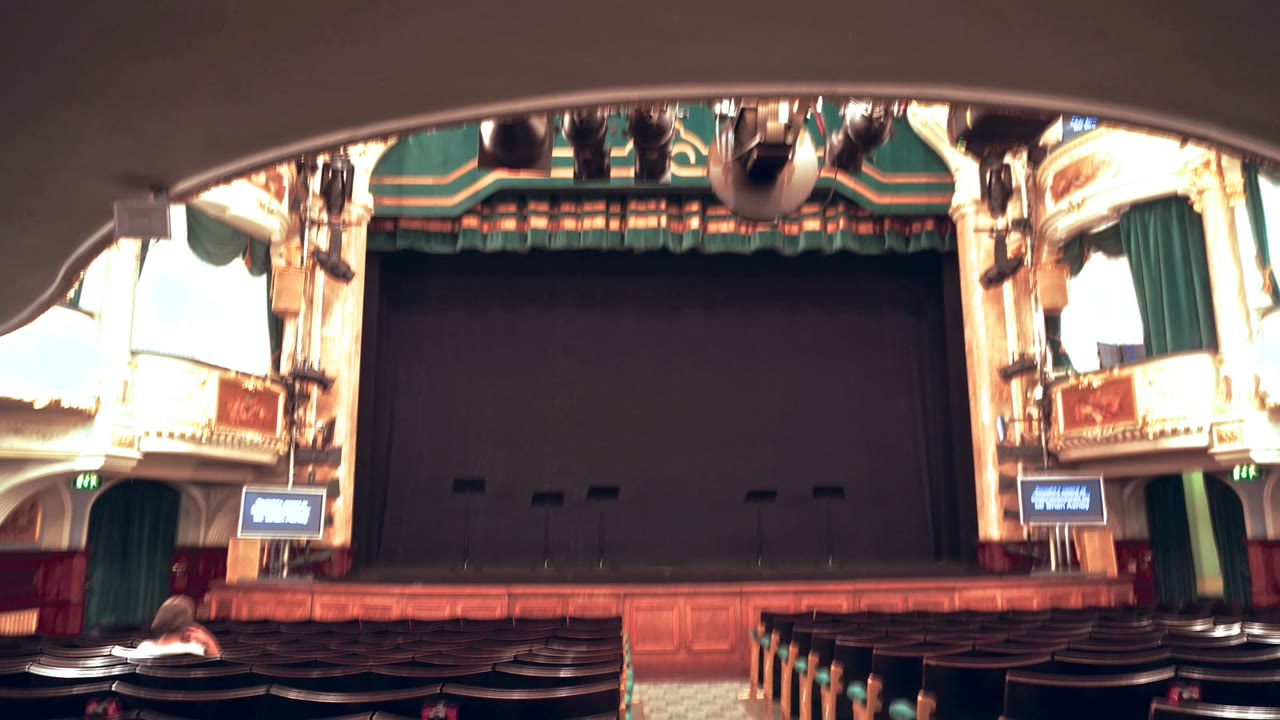
In Erick Neher’s essay “The New Immersive Theater” in The Hudson Review (Spring 2016), the conventional audience sits in a “darkened auditorium” where “audience members are expected to sit still.” Neher dates that “Fourth Wall” arrangement to the late nineteenth century, when electric lighting and Naturalism took hold.
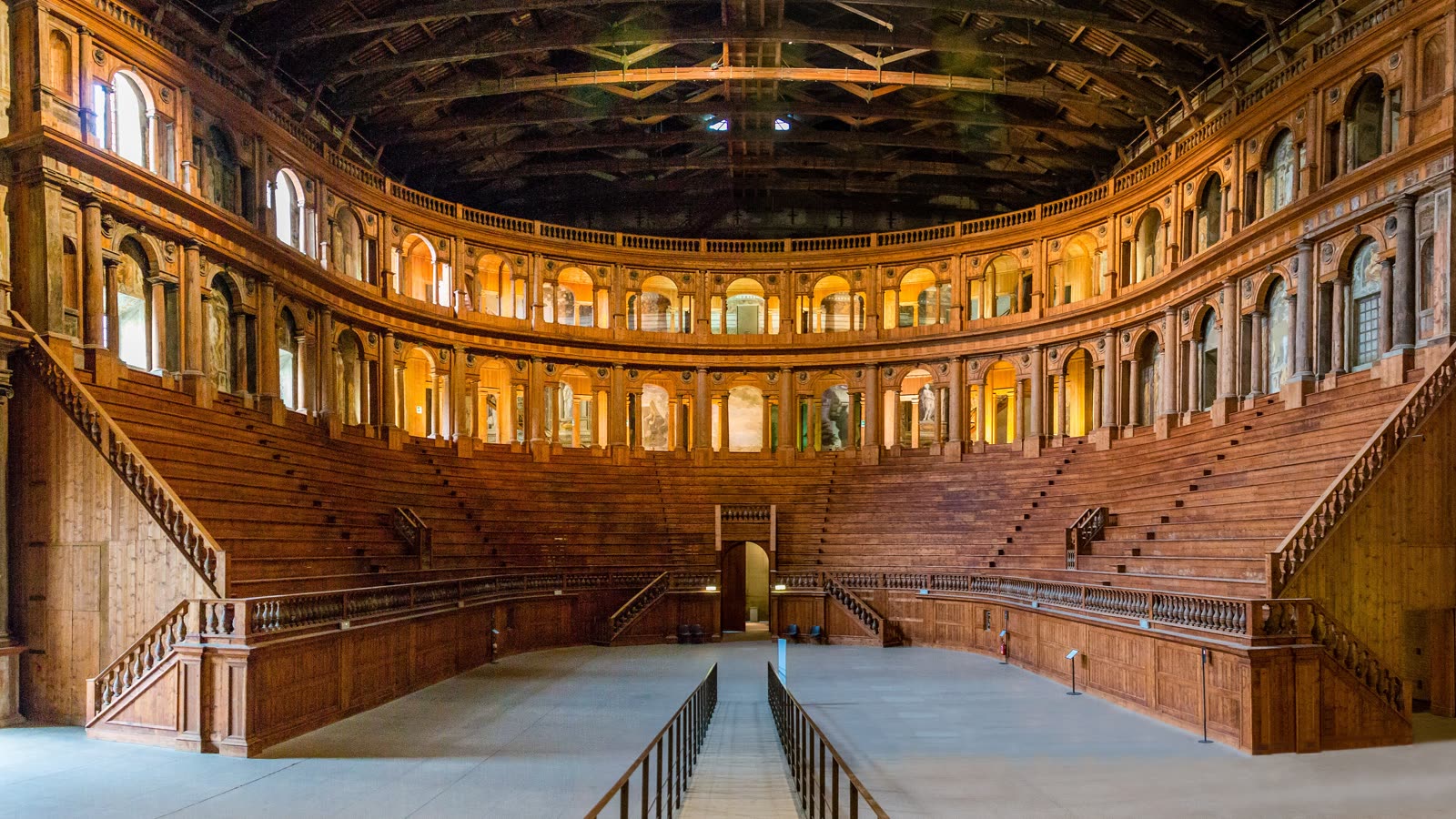
He also argues that earlier audiences, Greek, Shakespearean and Baroque, were less passive than the modern stereotype suggests. Antenna’s archive put the modern convention bluntly: “Traditionally, audience members are supposed to sit in their seats while actors strut the stage.”
Immersive theater: removing the separation
Neher’s one-line definition of the change is that “The spatial separation between the audience and the performers disappears.” Everything else follows from that.
Moving through the space
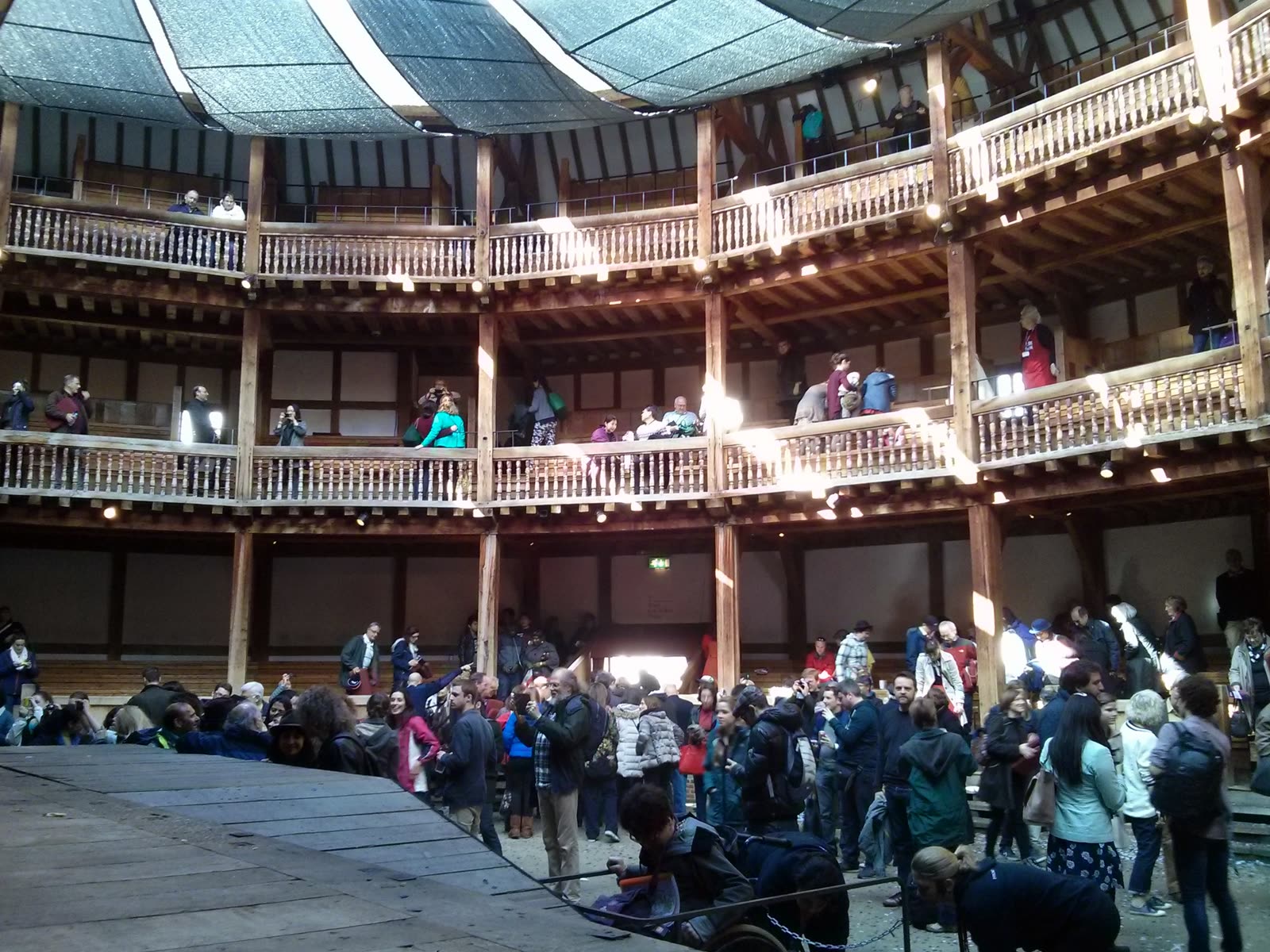
Spectators in the new work, Neher writes, move through the space “according to a strictly guided plan and sometimes on its own volition.” He adds that by decentralizing the space, newer shows rarely put a spectator on the spot, which answers the most common worry about taking part.
Antenna’s archive describes the same shift from inside: “Once the audience is free from their seats and able to walk around the stage, they stop being a cohesive audience and instead turn into individual preceptors” (sic). Site-specific versions, which take the show out of the building entirely, are covered in our history of site-specific theater in the Bay Area.
More senses, smaller audiences
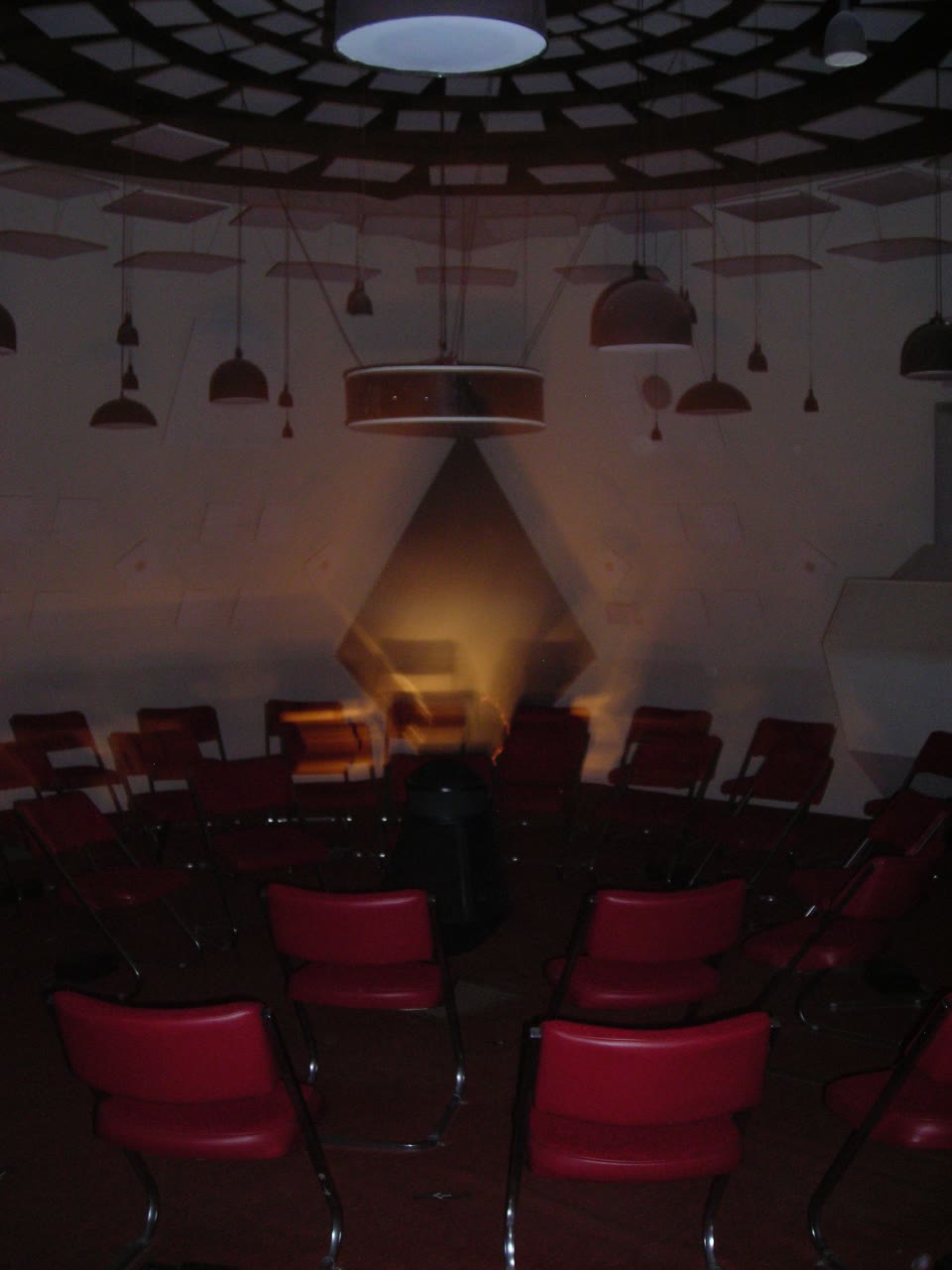
Immersive audiences are often small. Punchdrunk’s Viola’s Room, NPR reported in 2025, admits “six people at a time.” Antenna went further: the Christian Science Monitor’s 1983 review of Artery described “one member of the audience.” How a show for a single visitor is built is explained in our guide to one-to-one theater and maze productions.
The history the usual timeline skips
Most accounts jump from 1960s environmental theater straight to Punchdrunk in 2000. T. R. Howson-Griffiths’s 2019 article on sensory labyrinth theatre, in Studies in Theatre and Performance, notes that the field “has largely focussed on a selection of urban theatre companies,” leaving other practitioners’ methods “largely undocumented.”
1960s: Happenings and environmental theater
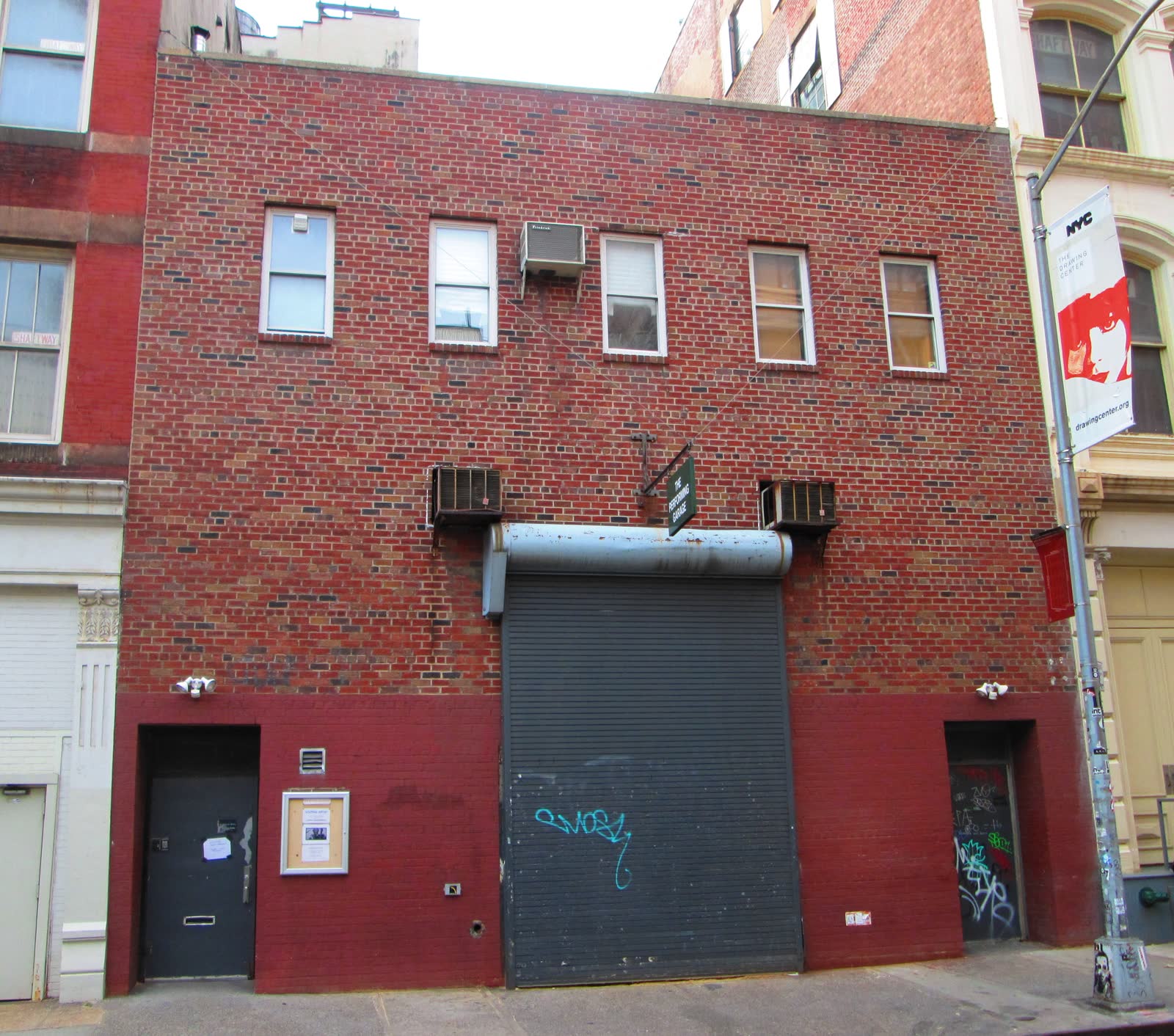
Neher credits the Living Theater with trying to “tear down the Fourth Wall.” A University of Pennsylvania course page quotes Richard Schechner’s 1967 Six Axioms for Environmental Theater, among them “all the space is used for performance,” and Allan Kaprow’s wish to keep art and life “as fluid, and perhaps as indistinct, as possible.”
1980s: immersion through headphones
Antenna’s chronology says High School, in 1981, “was the first use of Walkman technology by an artist.” Boling’s 2014 case study of the Alcatraz tour, which opened in 1987, credits Chris Hardman with “generating immersive audio experiences” before it and states simply, “The tour is immersive.” Hardman himself billed Etiquette of the Undercaste as an “immersive maze show.” The decade is laid out year by year in our headphone theater history timeline.
2000s: Punchdrunk and the boom

Howson-Griffiths writes that “Immersive theatres have emerged since the turn of the millennium as a popular form of performance,” and finds early uses of “immersive” in writing on Enrique Vargas’s labyrinths, with Ariadne’s Thread “cited as taking place in 1996.” Punchdrunk was founded in 2000 by Felix Barrett. NPR reported in August 2025 that Sleep No More in New York “ran for almost 13 years and just closed in January.”
| Year | Milestone | Source |
|---|---|---|
| Late 1800s | The proscenium and “Fourth Wall” model takes hold | The Hudson Review |
| 1967 | Schechner’s Six Axioms: “all the space is used for performance” | University of Pennsylvania |
| 1981 | High School, the first artist’s use of the Walkman | Antenna chronology |
| 1983 | Artery reviewed as a “one-man audience” show | Christian Science Monitor |
| 1987 | The Alcatraz tour, described as “immersive” | Boling, 2014 |
| 1992 | Etiquette of the Undercaste at the Smithsonian | Smithsonian Institution |
| 1996 | Vargas’s Ariadne’s Thread | Howson-Griffiths, 2019 |
| 2000 | Punchdrunk founded | Wikipedia |
| January 2025 | Sleep No More closes in New York | NPR |
Immersion by sound: one soundtrack per person
Most comparisons define immersion by sets and touch. Antenna’s version ran through the ear: “with headsets on they can receive entirely separate information,” the archive says, and “They become actors.” That idea is set out in Antenna’s idea of the audient, the audience member as main actor.
Big Brother (2007) tested it on groups, giving audients “soundtracks with differing instructions, causing each participant to experience story segments distinctively.” NPR reported in 2025 that in Viola’s Room the headphones make “it feel like the story is being told only to you.”
Is it still theater? A forty-year-old question
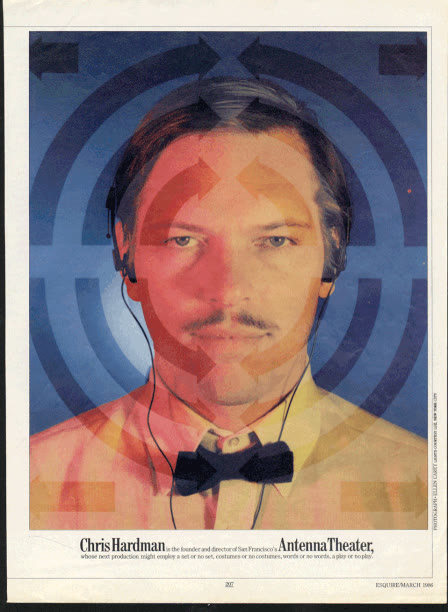
The argument over whether immersive work counts as theater is not new. In March 1986 Esquire’s Steve Erickson asked, “Is Chris Hardman sabotaging the American theater or is he saving it?” The quote is collected on Antenna’s press page, including the 1986 Esquire question.
Antenna did not abandon the stage either. Its chronology lists Russia (1985), “A stage play that featured sliding projections, sound effects, masked actors, and audio collages,” at BAM’s Next Wave Festival.
Which should you choose?
- Choose traditional theater if you want a shared performance, a fixed view and the freedom to simply watch.
- Choose immersive theater if you want to move, pick a path and stand close to performers.
- Choose an audio-led piece if you want a story addressed to you alone.
Frequently asked questions
What is the main difference between immersive and traditional theater?
In traditional theater the audience sits in fixed seating facing a stage. Immersive theater removes the separation between audience and performers, so spectators move through the performance space.
Is immersive theater new?
Its popularity is. Howson-Griffiths dates the boom to the turn of the millennium, but Schechner’s 1967 axioms and 1980s audio walk-throughs such as Antenna’s High School came earlier.
Who pioneered immersive audio theater?
Elizabeth Boling’s 2014 case study says Chris Hardman had pioneered mobile audio as a form of theater before designing the 1987 Alcatraz tour.
Do I have to participate in immersive theater?
The Hudson Review reports that newer shows decentralize the space, so spectators are rarely put on the spot.
Can immersive theater be for one person?
Yes. Antenna’s Artery had one member of the audience at a time, the Christian Science Monitor reported in 1983.
To see the audio-led strand in full, start with Walkmanology and Antenna Theater’s new theater forms, then browse four decades of immersive productions in the Antenna chronology and the list of Antenna Theater productions.