
Transforming Art: Antenna Theater’s Gallery Show, from the Bay Model to the Presidio (2004-2008)
Between 2004 and 2008, Chris Hardman carried the tricks of Antenna Theater’s stage and maze work into the gallery. Transforming Art was an exhibition of mirror sculptures, endless reflections and 3-D anaglyph prints, shown in Sausalito, San Rafael and finally at San Francisco’s Presidio. Two Presidio Trust press releases and the company’s own pages are the main sources here.
Quick answer
What was Transforming Art?
Transforming Art was an exhibition by Antenna Theater founder Chris Hardman, shown in Sausalito, San Rafael and at San Francisco’s Presidio between 2004 and 2008. Mirror sculptures, infinite reflections and 3-D anaglyph prints made viewers see things that were not there, to show how the mind builds what the eye sees.
From funhouse to gallery
The roots go back to 1970, when Hardman’s first paid commission was refurbishing the Dragons Cave ride at Coney Island, while living on Surf Avenue and painting a sideshow banner (Alena, Girl turns into Gorilla), a world covered in the history of haunted attractions and funhouse rides. He wrote that the sideshow’s Pepper’s ghost illusion was one he later put to “high art” use, in Transforming Art and in Euphorium, whose virtual reality helmet used the same illusion.
The Presidio Trust called it “Chris Hardman’s first major multi-gallery installation of sculptural and theatrical ideas, which he developed while creating his performance pieces with Antenna Theater of Sausalito, California.” Those pieces had combined “puppetry, masked movement, 3-D projections, sensor-tripped animation, sculptural objects.” Masked movement links that work to mask theatre and its long tradition.
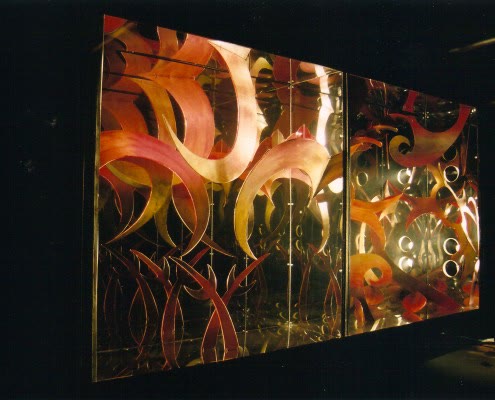
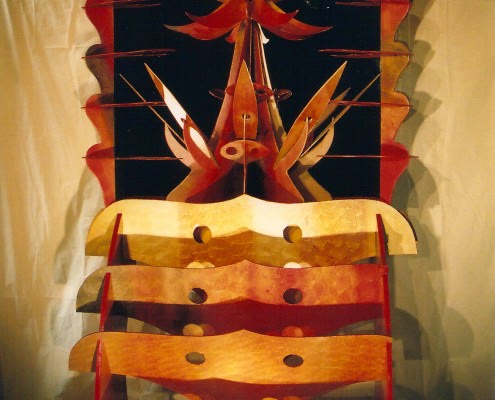
Hardman called the show “an experimental funhouse where scientific understanding of perception is manipulated and presented in an artistic context.” The Transforming Art Antenna Theater described on its 2007 gallery page was built on mirrors: “The sculptures use mirrors to complete the image and create different illusions depending on where you view them from in the Gallery.”
What visitors saw

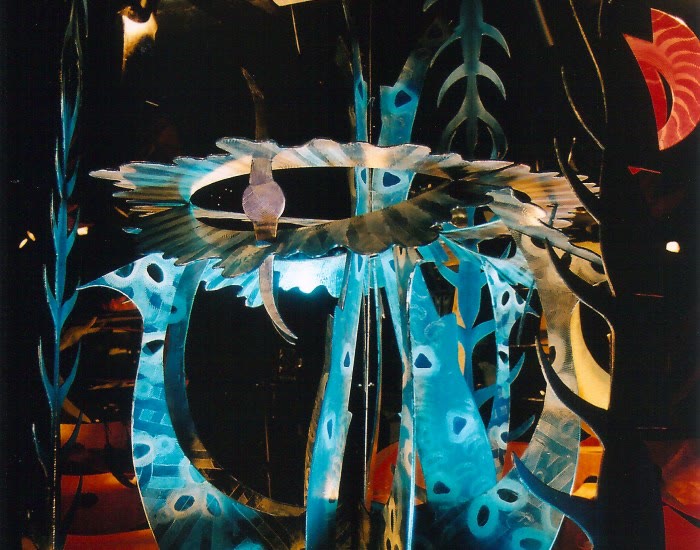
Antenna’s chronology lists “sculptural works, anaglyph drawings (3-D), infinite mirrors, slotted sea creatures, furniture, and shadows.” The company’s own captions explain the main tricks in a sentence each.
| Piece or technique | What the viewer saw | Antenna’s caption |
|---|---|---|
| Red Flower | A whole flower, mostly made of reflection | “Only one quarter of this object exists. The rest is mirror reflection.” |
| Infinite mirror | A tunnel of reflections | “Two convex mirrors face each other creating infinite reflection.” |
| Large anaglyph print | Shapes floating in front of the print | Images “you can put your hand through” |
| Slotted fish | A flat board becoming a solid creature | “Three dimensional fish in front of the two dimensional boards it came from.” |
| Slotology | Furniture from flat sheets | “Flat pieces of birch slot together to make 3D furniture.” |
Photographs in Antenna’s archive are filed under headings such as reflective symmetry, dimension shift, infinite mirror and anaglyph immersion. The company keeps photographs of the Transforming Art pieces and other artifacts on its exhibitions page.
Slotology had a life of its own: in autumn 2005 the slotted furniture appeared at the Bay Area Furniture Art Show at the Blue Room Gallery in San Francisco and at the San Luis Obispo Art Center. The anaglyphs had stage roots too, since Antenna’s 2000 mission statement already listed “3-D slides, sensor-tripped animation” among its tools.
Pepper’s ghost, briefly
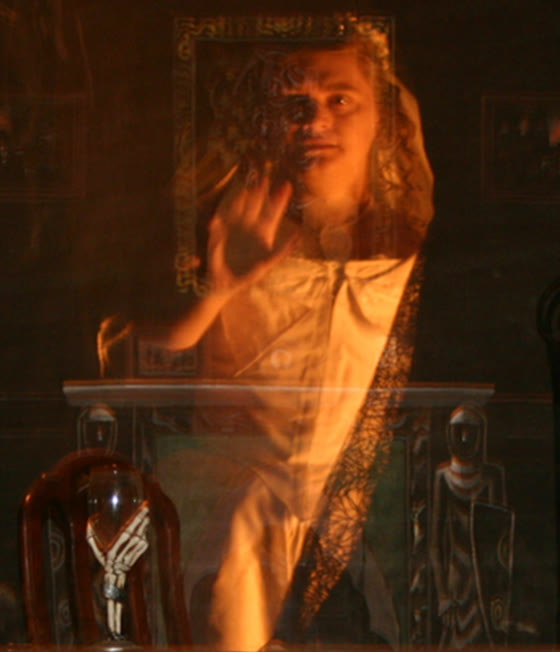
The illusion Hardman borrowed is Victorian. Scientific American’s history of Pepper’s ghost credits Henry Dircks, a Liverpool civil engineer, and John Henry Pepper, a London chemist, and explains the trick: “A large piece of glass was angled so that it could reflect a view of the pit toward the audience.”
It premiered at the Royal Polytechnic Institution in London on December 24, 1862. No source says which Transforming Art piece used it; Hardman wrote only that he put the illusion to use in the exhibition.
Three venues in four years
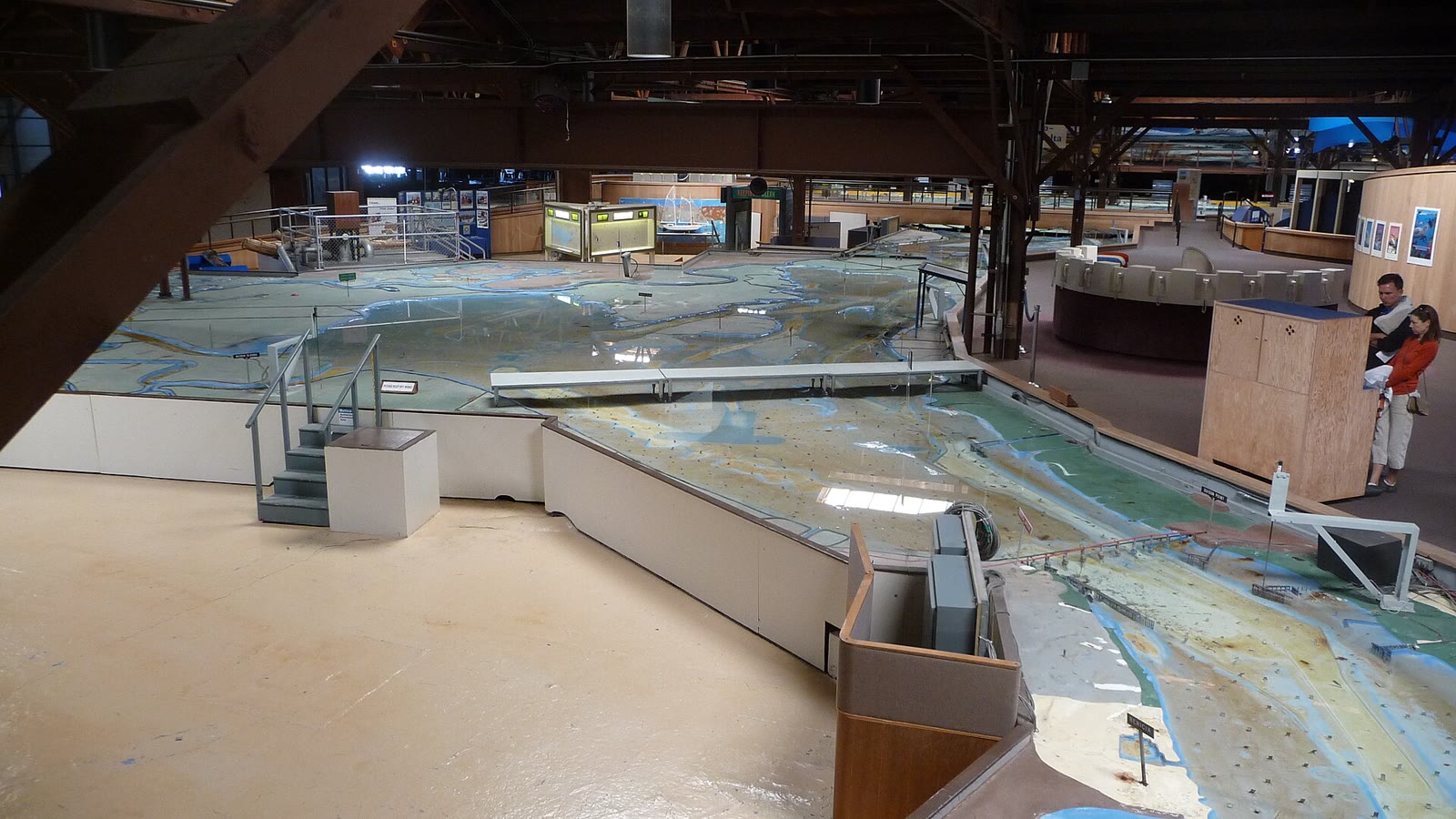
The sources do not agree on every date. Antenna’s chronology puts the first showing at the Bay Model in Sausalito in 2004 and the second at Art Works Downtown, the San Rafael arts center, in 2005; the company’s gallery page dates the San Rafael run January 19 to February 24, 2006, and Hardman’s own timeline lists the solo show in 2006.
| Venue | Dates | Source |
|---|---|---|
| Bay Model Gallery, Sausalito | 2004 | Antenna chronology |
| Art Works Downtown, San Rafael | 2005, or January 19 to February 24, 2006 | Chronology; company gallery page |
| Presidio Officers’ Club, San Francisco | January 23 to May 4, 2008, extended to June 15 | Presidio Trust releases |
The largest run filled the Officers’ Club Exhibition Hall on the Presidio’s Main Post. Presidio Trust director Craig Middleton invited visitors to “come see this thought-provoking art installation, which transforms the Officers’ Club exhibition space.” The chronology says the show was “extended for six months.”
Bringing a theater-maker’s tricks into exhibition halls puts the show near museum theatre, where performance meets the gallery, though here the objects did the performing.
“Not just passive observers”: Hardman’s aim
Hardman explained the purpose in the Presidio release: “Transforming Art presents art forms that introduce visual clues which reveal how our mind transforms information to create our view of the world.” He went on: “We are all active participants in seeing the world around us; we are not just passive observers. I want us to notice how we actually experience the world.” His hope: “With this information, we may begin to rethink our relationship to our surroundings and events.”
The Trust summed it up: “Hardman’s work investigates how our minds alter the visual information we receive.” It added that “The sculptural elements fuse light, reflection and shift from two to three dimensions in colorful, immersive environments.”
The Presidio run added an evening with the artist on January 30, 2008, and on March 26 a talk, “The Eye and the Brain: The Latest Science”, by Dr. Julie Schnapf of UCSF’s Department of Ophthalmology.
There was also a theatrical audio walk narrated by Hardman, which tied the show back to the difference between an audio walk and an audio tour. A companion book appeared during the extension; its title is not recorded. Hardman gave a free tour and signed copies on April 16.
How it was received
Coverage was thin. One line survives, quoted by Antenna from John Rapko in Artweek: “Hardman’s works induce a sustained delight in the pleasures of making, experiencing and never quite grasping visual illusions.” Its date and the venue reviewed are unknown, and no other review or online discussion has been found.
Frequently asked questions
Where was Transforming Art shown?
At the Bay Model Gallery in Sausalito in 2004, at Art Works Downtown in San Rafael in 2005 or early 2006 (sources differ), and at the Presidio Officers’ Club in San Francisco from January to June 2008.
What did Hardman want viewers to notice?
That seeing is active. He said: “We are all active participants in seeing the world around us; we are not just passive observers.”
Was there an audio guide?
Yes. At the Presidio, visitors could take a theatrical audio walk narrated by Hardman.
What is Pepper’s ghost?
A Victorian stage illusion in which angled glass reflects a hidden figure toward the audience. Hardman wrote that he put it to use in Transforming Art and in his Euphorium helmet.
The exhibition and its venues are listed in Antenna Theater’s full production chronology.