
What Is Mask Theatre? What Masks Do on Stage
Put on a mask and your face stops working for you. Everything the audience reads now comes from your head, your spine and your feet. That is the short answer to what is mask theatre, and it explains why the form keeps returning, from ancient Athens to a Sausalito company that gave its masked actors other people’s voices.
Quick answer
What is mask theatre?
Mask theatre is performance in which masks are a central convention, not just costume. The mask fixes a character type, so the actor must play through posture and movement. Traditions include Greek drama, Japanese Noh, commedia dell’arte, Lecoq’s neutral mask training, Bread and Puppet’s pageants and Trestle’s full-mask plays.
What a mask does to an actor and an audience
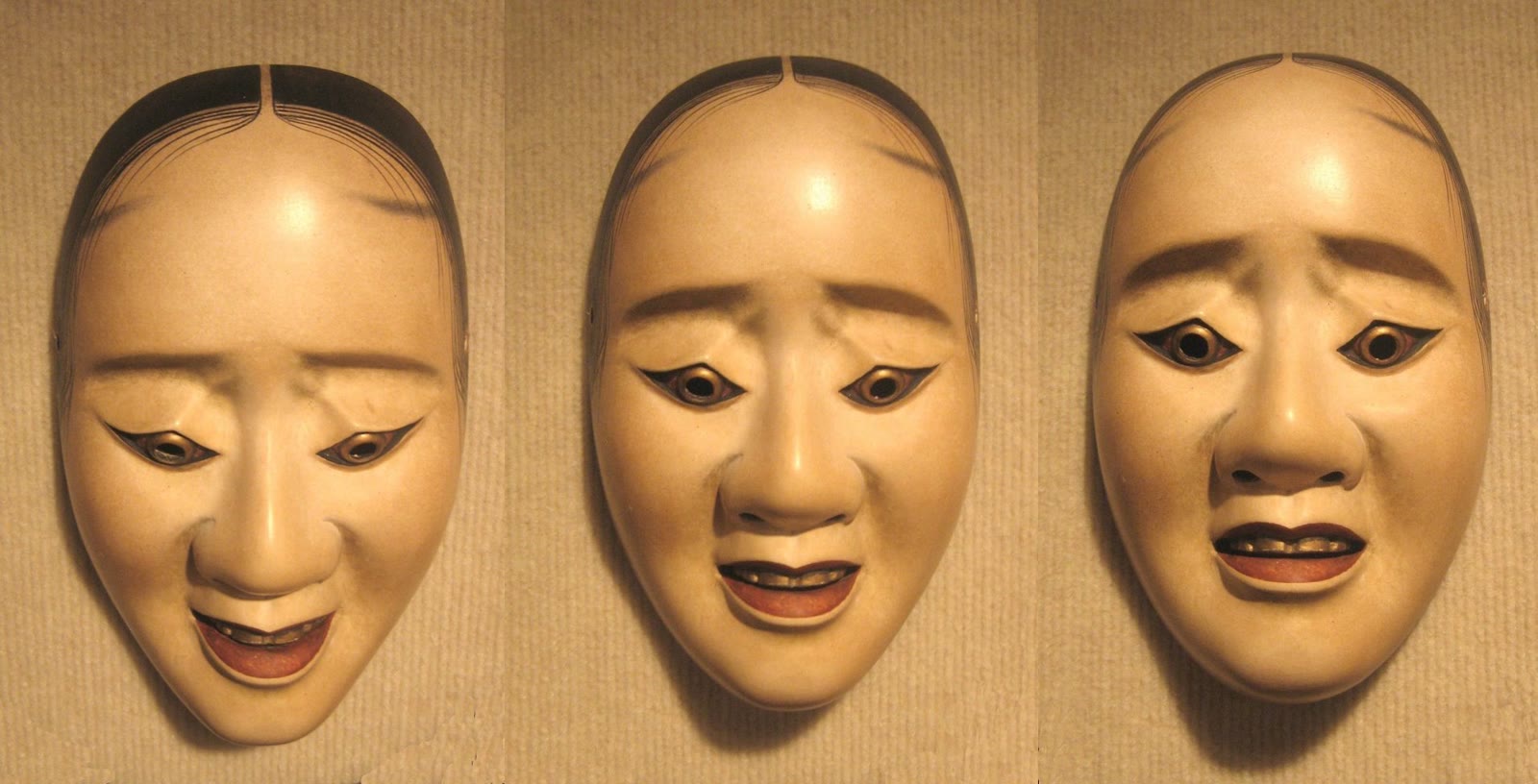
A mask takes away the actor’s most mobile tool and hands the work to the body. In Noh, the Nohgaku Performers’ Association’s guide to Nō masks explains, “When worn, masks severely restrict the vision of the actors.” So performers “keep a low center of gravity and walk with their feet sliding on the floor.”
The audience changes too. When University of Glasgow researchers had actors perform Greek comedy in rebuilt masks, “Audiences reacted differently to the masks than to a human face, making the costume do part of the work in a large theatre without microphones or close-up screens.”
Full, half, neutral, larval: the main kinds of mask
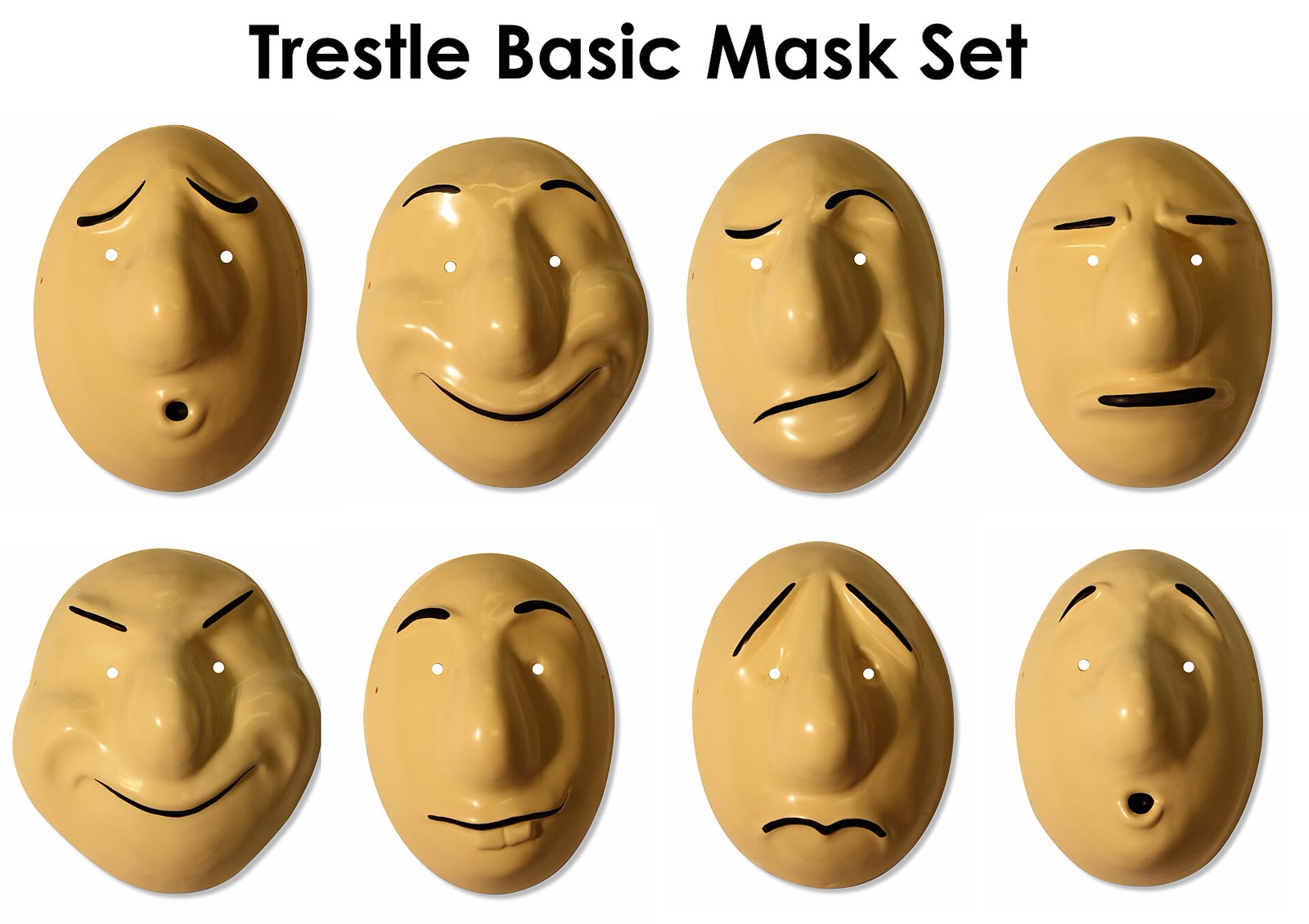
Masks in theatre come in a few working families. A full mask covers the whole face, and Trestle’s full-mask plays were wordless. A half mask leaves the mouth free, which is why Trestle Theatre Company later made “a new set of half masks, which unite the company’s skills in mask and vocal theatre.”
Training masks are their own family. They exist to train actors, a path the school describes as “discovering the art of acting with masks.” The Jacques Lecoq school lists “The neutral mask (calm, silence, balance )” in its first year, followed by “Expressive, larval, utilitarian masks.” Character masks, from Noh to commedia, fix a type the audience recognises at once.
A short history of mask theatre in six traditions
The history of mask theatre is really several histories that rarely met. This table sets six of them side by side.
| Tradition | Where and when | Mask | What it does |
|---|---|---|---|
| Greek drama | Athens and Greek Italy | Full masks, known now from terracottas | Helps the costume carry a large theatre |
| Noh | Japan, from the Muromachi period | Carved wooden omote, over 200 types | Joy or sorrow by tilting |
| Commedia dell’arte | Italy; revived at the Piccolo from 1951 | Leather character masks | Fixes a stock type |
| Lecoq training | Padua 1947-48, then Lecoq’s school | Neutral, larval, expressive masks | Trains the body |
| Bread and Puppet | New York 1963; Vermont from 1970 | Huge, stark generic masks | Pageant, ritual, protest |
| Trestle | Britain, from 1981 | Full masks, later half masks | Wordless shows for any language |
Greek masks, rebuilt from terracotta

No Greek theatre mask worn on stage survives, so modern makers start from clay. Glasgow’s project “has recreated Greek theatre masks directly from ancient objects,” turning terracottas into moulds. Actors then “used the masks to perform plays by the ancient Greek playwright Menander,” which Professor Elizabeth Moignard called “an eye opener about how that kind of theatre might work.”
Noh: a face that brightens and clouds
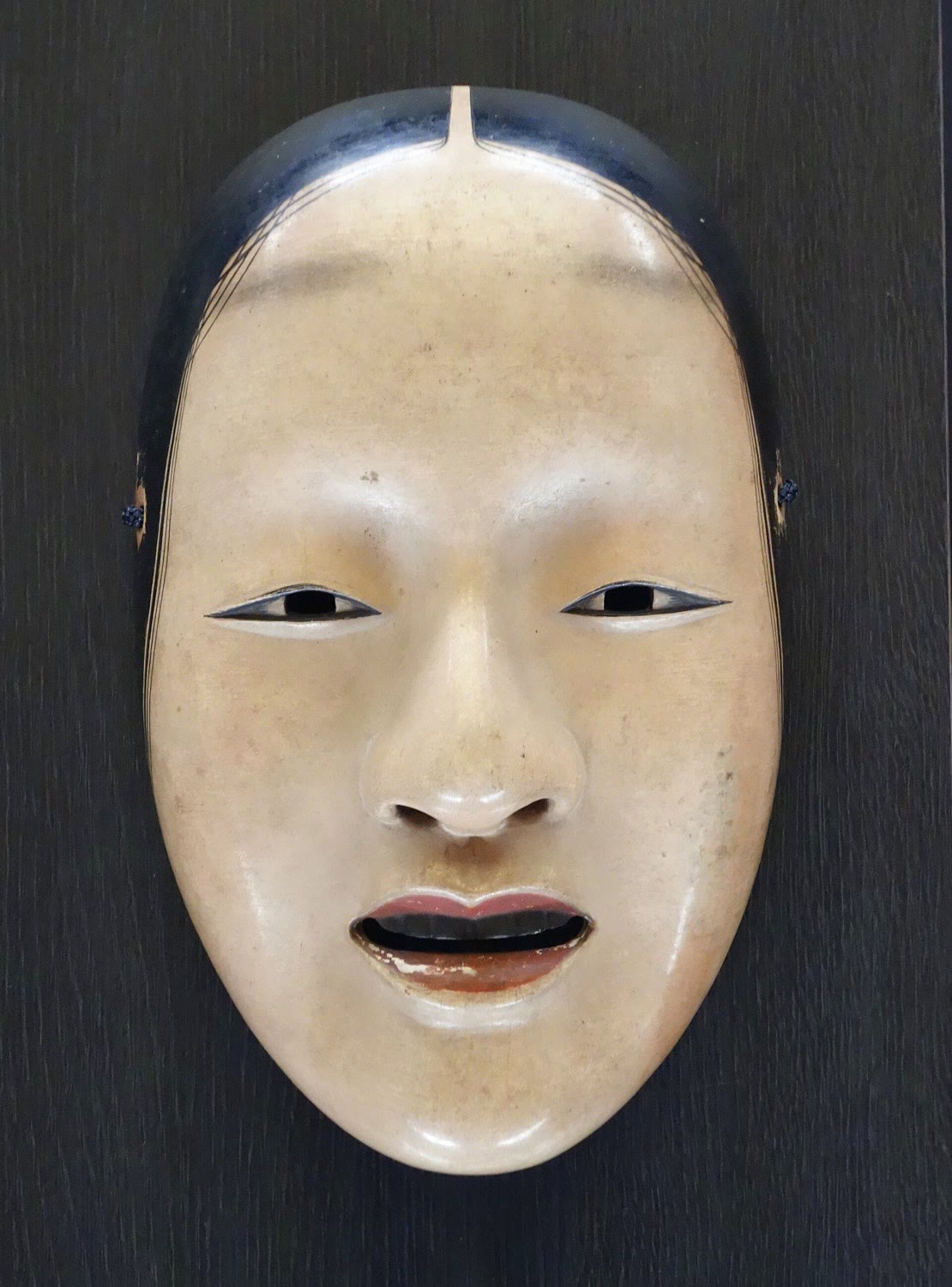
Nō masks “are carved from a single block of wood” and “generally represent a character type”. Their trick is light: “The actors can produce expressions of joy or sorrow by slightly tilting the mask up or down, effects known as teru (to brighten) or kumoru (to cloud).”
They are called omote, meaning face, a name suggesting “an object of revelation rather than concealment.” The guide at the-noh.com counts “well over 200 different kinds in use” today, up from about 60 basic types.
Commedia, Sartori and Lecoq

Commedia’s masks returned to the stage through one meeting. The Museo Correr describes “the meeting between the French mime artist, Jacques Lecoq, and sculptor Amleto Sartori at the Teatro dell’Università di Padova (1947-48),” from which “sprang the neutral mask, the ‘mother of all masks’.” Sartori’s leather masks then went into Giorgio Strehler’s commedia at the Piccolo Teatro di Milano from 1951.
Bread and Puppet and Trestle
Peter and Elka Schumann named Bread and Puppet Theater in New York in 1963, moving to Vermont in 1970 and to an old dairy farm in Glover in 1975. A 1985 profile of Chris Hardman singled out Peter Schumann’s “huge, stark generic masks.” Its giant figures belong to the history of giant puppets.
The Trestle Theatre Company archive tells how a group of students leaving Middlesex University founded the company in 1981, dreaming “of travelling around the country with a box of masks and trestle stages.” It went on to tour “mainly with full mask performances, which cross language barriers and entertain all ages.”
An American case: masks that listen
The silent mask leaves a problem: who speaks? Hardman, who met Bread and Puppet in Vermont, answered with tape. Reviewing Vacuum and Russia in 1985, the San Francisco Chronicle described actors in “huge, Cubist-nightmare masks” while “taped voices, from real-life interviews, move the story along.”
Masked bodies, recorded voices

For Vacuum (1981), the interviewees’ “faces became the models for the masks worn by the actors.” For Amnesia’s futurist masks, Artweek praised work “carrying on the Italian futurism of Marinetti with inspiration.” In Caveat Emptor, Antenna’s masked stage play, actors “mostly lip-sync to pre-record-ed tapes.”
| Year | Production | The mask, in critics’ words | The voice |
|---|---|---|---|
| 1981 | Vacuum | “latex masks” | Original taped interviews |
| 1984 | Amnesia | Futurist sculptural masks | A tape for each audience member |
| 1985 | Russia | “Cubist-nightmare masks” | Taped real-life interviews |
| 1991 | Caveat Emptor! | “toothy mask design” | Actors lip-syncing to tape |
| 1995 | Skin & Bones | “Picasso-meets-Easter Island masks” | A “tape-recorded text” from interviews |
Antenna’s 2004 “Masks and Manikins” page also listed Etiquette of the Undercaste, staged from 1988 to 1995 and The Appearance of Civilization, the 1992 beach procession. Masks were even political: in Hardman’s early-1980s run for the Sausalito city council, volunteers campaigned in masks of his face. More of the work survives in Antenna’s photo galleries, including Masks by Antenna.
Why actors still resist the mask
Not everyone loved it. Hardman found that in Los Angeles, “Masks don’t go over too well, because they all wanted photographs for their portfolios.” One Artweek critic said the masked actors of Amnesia had “the eye contact of a toaster oven.”
The defence came from Trestle, Noh and the new theater forms Antenna built around the audience: a mask that crosses “language barriers” asks the audience to do more of the work.
Frequently asked questions
How do Noh masks change expression?
By tilting. Actors produce joy or sorrow by slightly tilting the mask up or down, effects called teru (to brighten) and kumoru (to cloud).
What is a neutral mask?
A training mask that grew from Jacques Lecoq’s meeting with the sculptor Amleto Sartori in Padua in 1947-48. Lecoq’s school links it with calm, silence and balance.
Why are full-mask shows often wordless?
A full mask covers the mouth. Trestle toured mainly full-mask shows built to cross language barriers, and later made half masks to join mask and vocal theatre.
How did Antenna’s masked actors speak?
Mostly they did not. Taped voices, many from real-life interviews, carried the story while the masked actors moved.