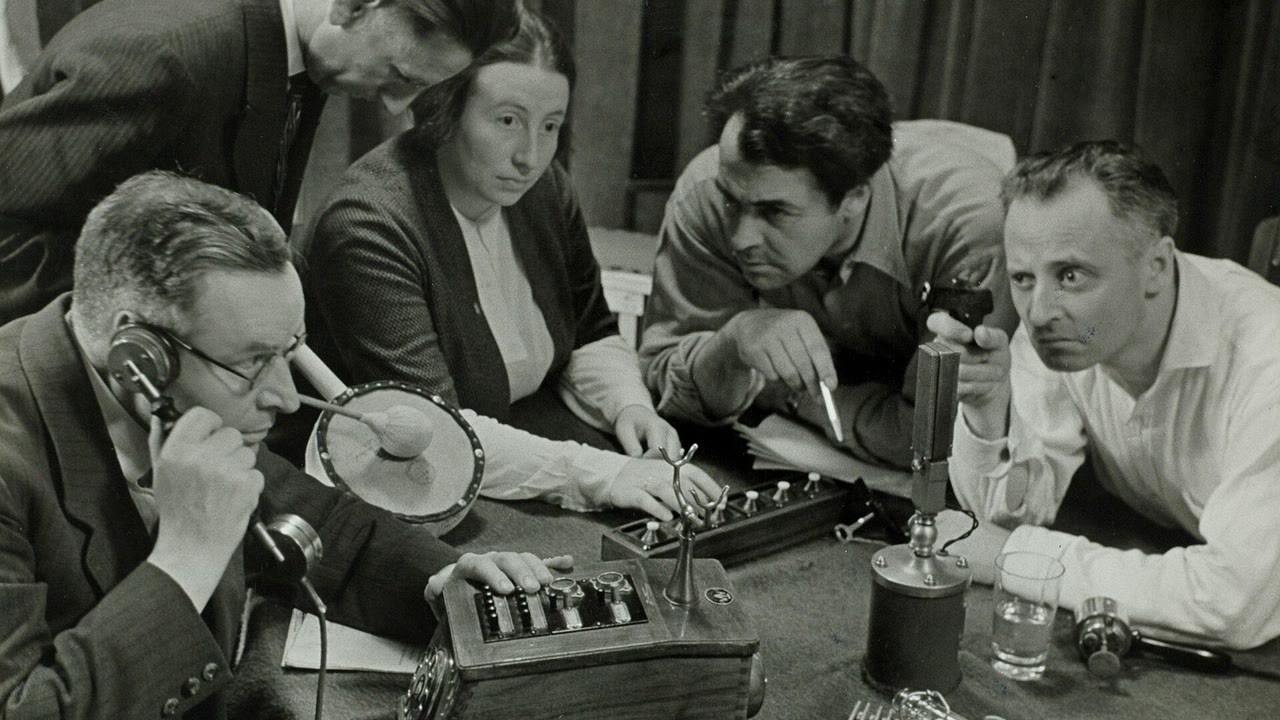
What Is Binaural Audio Drama? A Listener’s Guide
“Use headphones” is the instruction that comes with every binaural podcast, and it is not a suggestion. The whole effect depends on it. Here is what binaural audio drama is, how it is recorded, where it came from, and how one Sausalito theater company chased the same feeling of a voice inside your head.
Quick answer
What is binaural audio drama?
Binaural audio drama is a play recorded or mixed for headphones so that each ear hears what it would in a real space. Makers usually record with a dummy head that has a microphone in each ear, so voices and sounds seem to come from around, behind and close to the listener.
How binaural sound works
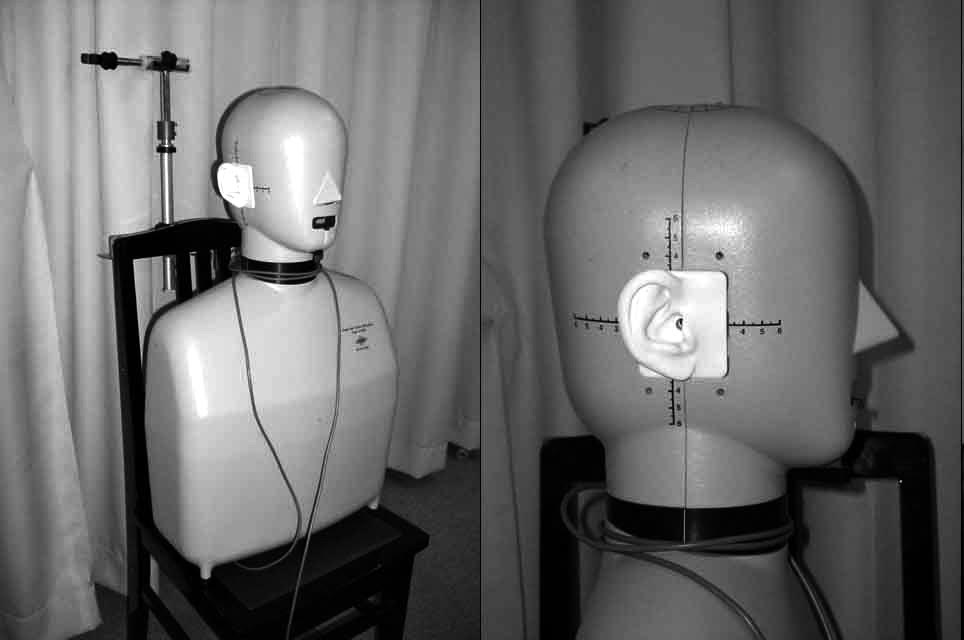
The key tool is a fake head. As a Portland State University course page puts it, “Binaural recording uses a ‘dummy’ or reproduction of a human head (Kunstkopf = artificial head).” In Neumann’s description of its KU 100 dummy head, “Two omnidirectional condenser capsules are built into artificial ears mounted on an enclosure resembling a human head.”
Playback has one rule. A BBC engineer, Tom Parnell, notes that the recordings “could only be reproduced over headphones.” Played that way, binaural sound can carry distance and, to a degree, height and front-to-back position, which ordinary stereo cannot.
| Aspect | Binaural | Stereo |
|---|---|---|
| Recorded with | Two mics in the ears of a dummy head | Any pair of mics |
| Heard on | Headphones only | Speakers or headphones |
| Where sound seems to be | Around the head, with distance and some height | Between the speakers, or inside the head on headphones |
| Drama use | Places the listener in the scene | Narration and voice-led plays |
The BBC’s own warning about stereo, quoted by the scholar Danielle Hancock, is blunt: “listening to stereo programmes over headphones gives a flat impression with sounds coming from inside the head.” If you are making a walk rather than a play, see choosing binaural or stereo for an audio walk.
A short history of binaural radio drama
Paired receivers at the Paris Opera, 1881
The story usually starts with Clément Ader. “In 1881 Ader used twelve of his highly sensitive transmitters mounted in two groups at either side of the stage,” and visitors listened on paired receivers. It was “a sort of stereophonic effect, a world first”: stereo, not binaural, since no head was involved. The longer history of headphone theater picks up the theatrophone from there.
The dummy head arrives, 1973

Neumann’s KU 80 “was introduced at the 1973 IFA trade show,” the work of “Kürer, Plenge and Wilkens.” The company’s own history says that “In the early 70s people began to think beyond stereo,” and the KU 80 could capture a realistic three-dimensional sound image for headphone playback.
German radio began recording plays with a dummy head that same year, building on what the Portland State page calls “the literarily respectable radio play in German culture.” For dummy head recording today, Neumann lists “classical recordings and radio drama productions” among the KU 100’s typical uses.
The Revenge and the BBC

In English, the landmark is a play with no words. Hancock writes: “Most famous, perhaps, is Andrew Sach’s The Revenge (1978),” calling it “an audio play in which narrative is rendered without any dialogue.” It was broadcast by BBC radio in 1978, directed by Glyn Dearman, and one archive describes it as “one of the products of the BBC’s brief fling with binaural stereo.”
The fling never quite ended. “Binaural recordings of music and drama have been broadcast on and off by the BBC for decades,” Radio World noted in 2017.
Theater with a voice inside your head
Walkmanology’s “intervoice”
Antenna Theater’s headphone shows were stereo pieces, not binaural recordings, but they aimed at the same closeness. In 1983 Chris Hardman wrote that “instead of the narrator emoting from the distant edge of the proscenium, this intervoice is inside your head.” Each audient, he wrote, “becomes a separate point of perception with his own private audio-guide,” the idea behind what Antenna meant by an audient.
Esquire’s 1986 account of Artery describes each room as a “three-minute scene, in which you have been the sole actor,” with your thoughts sent through the headphone. A later Antenna page on psycho-acoustics put the idea plainly: “There are voices in our head almost constantly chattering away.”
Radio-Active Theater on KPFA
Antenna also tried radio. Robert Hurwitt’s review, dated March 23, 1984, covers a KPFA series called Radio-Active Theater; the company’s chronology lists the KPFA project as The New Season, 1986, and its old website gives “Radio-Active Theater 1984 to 1986.” Hardman’s first notion was to use AM and FM tracks “so that people wearing headphones could act out a piece of theater,” at home, “each person following a separate set of instructions.”
A mannequin on Alcatraz, 1987

The one true dummy head in Antenna’s story is homemade. For the 1987 Alcatraz cellhouse tour, Chris Tellis told the Examiner that they put microphones in a mannequin’s ears and walked it down the corridor. “When you follow the tour, you’re walking where the mannequin went and the sounds on the cassette have exactly the same quality as If you were hearing them through your ears.”
Binaural drama now: podcasts, The Encounter and Darkfield

Horror has been the form’s best friend. BBC Radio 4’s Fright Night strand ran Ring in 2015, “mixed for binaural listening (3D audio listened to on headphones).” Danielle Hancock’s study of binaural horror podcasts argues that “binaural sound affords a uniquely acoustic virtual reality,” and looks at episodes of Welcome to Night Vale and Earbud Theatre from 2016.
The stage caught up. In Complicite’s The Encounter on Broadway in 2016, “Headphones are strapped to every seat at the Golden Theatre.” Simon McBurney spoke into “a Sennheiser dummy head microphone,” and “When McBurney breathes slowly into the dummy’s ears, we hear his breath in ours.”
Darkfield goes further, with shows that use “complete darkness, binaural sound, sensory effects and shipping containers.” Like the theater without actors that relies on recorded voices, these shows let sound do the acting. Outdoors, the same audio is often tied to place, a story told in the history of location-based audio storytelling.
Timeline of binaural audio drama

| Year | Milestone |
|---|---|
| 1881 | Ader’s paired receivers carry the Paris Opera in stereo |
| 1973 | Neumann’s KU 80 dummy head shown at the IFA trade show |
| 1978 | Andrew Sachs’s wordless The Revenge on BBC radio |
| 1983 | Hardman describes the intervoice “inside your head” |
| 1984 | Radio-Active Theater on KPFA (The New Season in the chronology) |
| 1987 | Alcatraz tour recorded with a mannequin carrying ear microphones |
| 2015 | BBC Radio 4’s Ring mixed for binaural listening |
| 2016 | The Encounter on Broadway, with headphones on every seat |
| 2017 | First live binaural broadcast on BBC Radio 3 |
More of the radio work sits in The New Season and Radio Interference in the chronology.
Frequently asked questions
Do I need headphones for a binaural podcast?
Yes. A BBC engineer notes that binaural recordings could only be reproduced over headphones.
How is binaural different from stereo?
Stereo places sound between two speakers, and on headphones it can feel inside the head. Binaural adds distance and some height and front-to-back cues.
What is the best-known binaural radio drama?
In English it is Andrew Sachs’s The Revenge, broadcast by BBC radio in 1978, a play told without any dialogue.
Can theater be binaural?
Yes. In The Encounter the audience wore headphones while Simon McBurney spoke into a dummy head on stage, and Darkfield stages shows in complete darkness with binaural sound.
For the company behind the headphone shows, see Walkmanology and Antenna’s other new theater forms.