Ant Farm: The Art Collective Behind Cadillac Ranch and Media Burn
Ant Farm lasted ten years, and two of its works became American landmarks: ten Cadillacs planted nose down in a Texas field, and a customized Cadillac driven through a wall of burning televisions. This is the story of the Ant Farm art collective, from its first inflatables to the fire that ended it.
Quick answer
What was the Ant Farm art collective?
Ant Farm was a San Francisco art and architecture collective founded in 1968 by Chip Lord and Doug Michels, later joined by Curtis Schreier. It built inflatables, made early video, buried ten Cadillacs nose down at Cadillac Ranch (1974) and drove a Cadillac through burning TVs in Media Burn (1975). It disbanded after a 1978 studio fire.
Underground architects (1968-1969)
The group’s own chronology says that in October 1968 “Ant Farm was founded by Chip Lord and Doug Michels in San Francisco.” Michels had graduated from the Yale School of Architecture in 1967. Lord explained the name: they were “underground architects,” ready to restructure the built environment of the counterculture, though SFMOMA says a friend simply remarked that they worked like an ant farm.
“When few commissions turned up, we moved to Houston in 1969 to teach at the University of Houston College of Architecture,” Lord wrote. There the group staged happenings he called “architectural songs for a concept album, honed by jamming in the studio and performed live on occasion.”
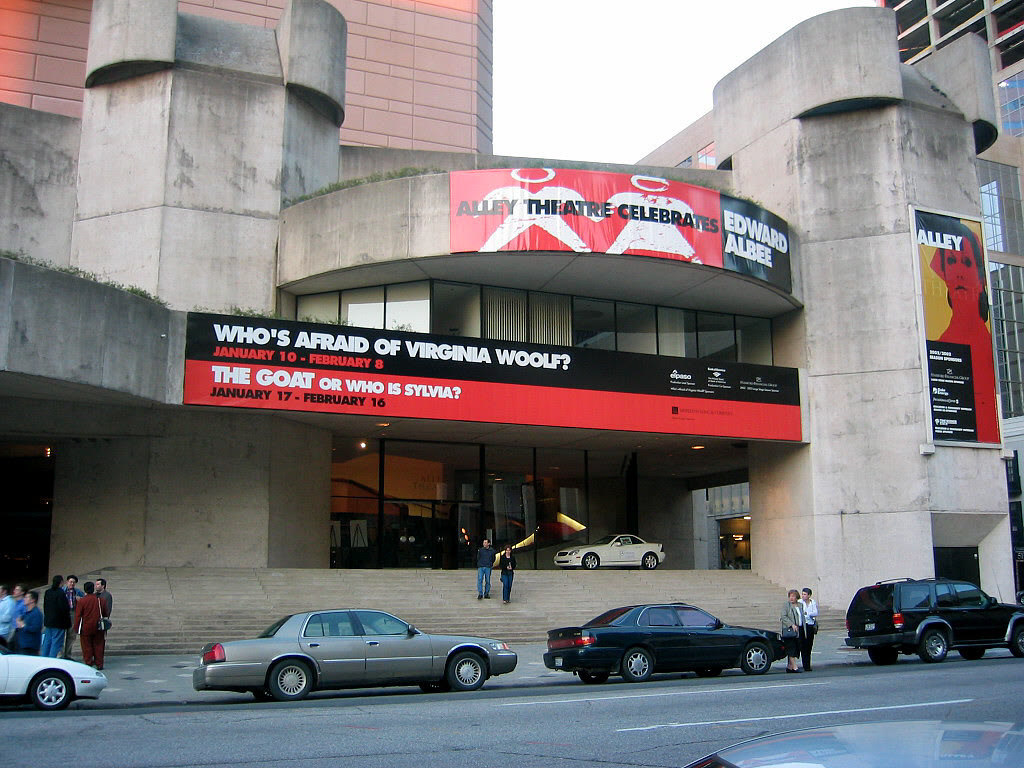
Space Cowboy, at the Alley Theatre, combined “an inflatable, live video, projected slides, an American flag cake” and six performers in white jumpsuits. Plastic Businessman, in which five men in suits handed out cash in a corporate vending room, ended with the five arrested for trespassing.
Ant Farm inflatables on Gate 5 Road (1969-1971)
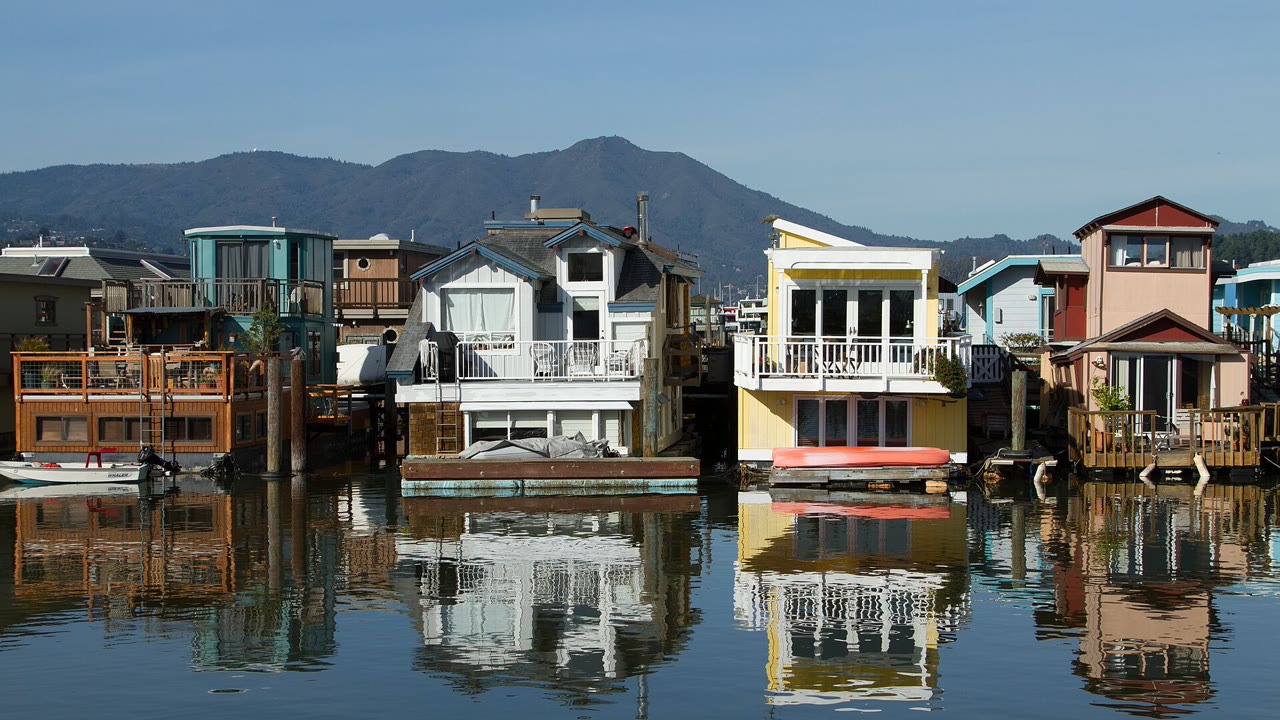
“When the U of H didn’t renew our teaching contracts, we went back to California and set up a studio on Gate 5 Road in Sausalito to design and build inflatable structures,” Lord recalled. The old shipyard ground there has its own story, told in our history of the Sausalito art colony and Gate 5.
The 2004 retrospective’s press release called the inflatables “easy and cheap to build and transport and symbolic of their opposition to the mainstream Brutalist architecture of the 1960s.” At a 1970 show at USC, Gas Station, the group “inflated a giant ‘spare tire’ and projected gas station slides,” dressed in service-station uniforms and gas masks.
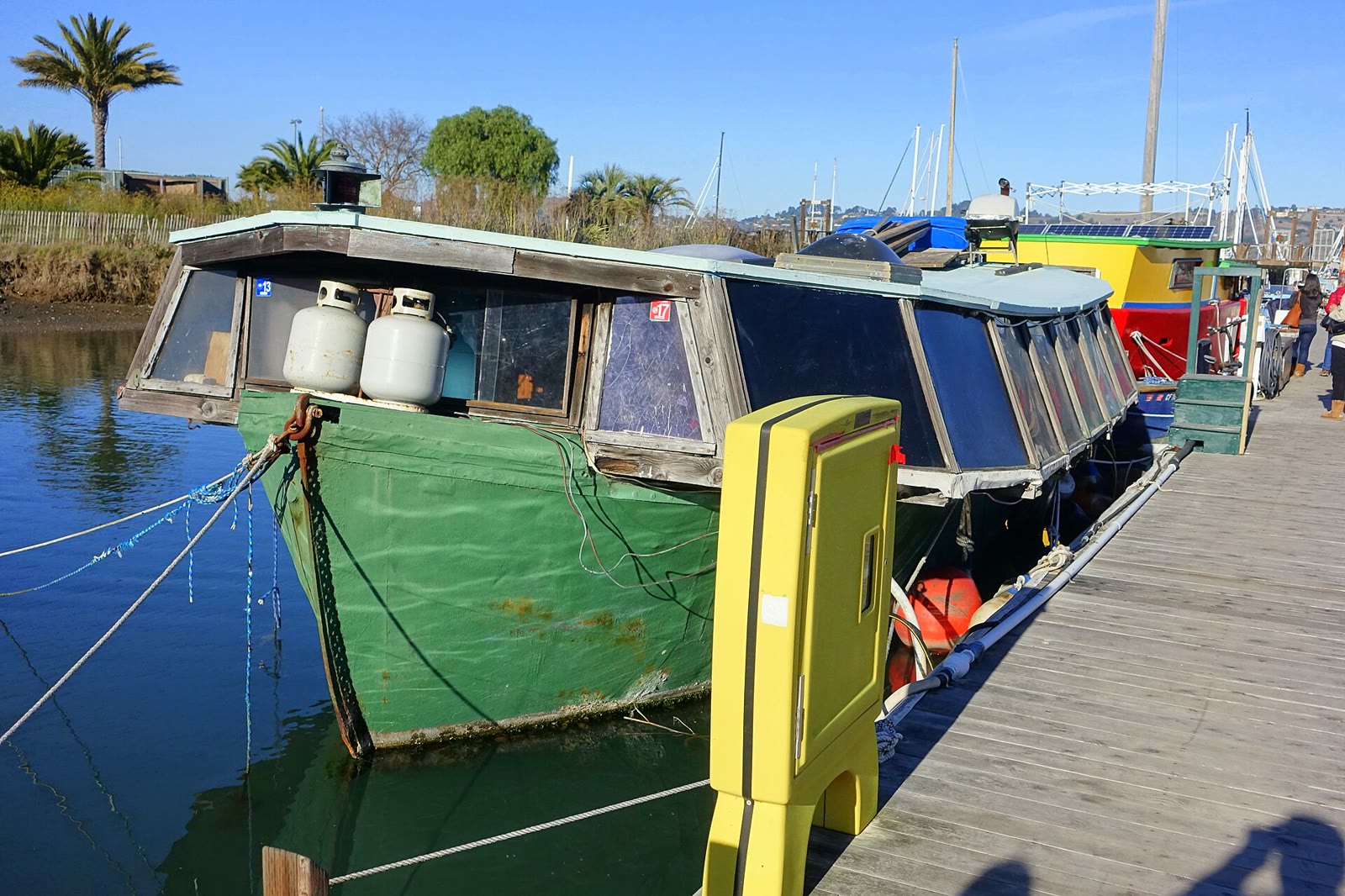
Video came next. On March 6, 1971, the Video Slumber Party at the Sausalito Arts Center was “an all-night environment of inflatables and live and taped video,” and the Inflatocookbook appeared the same year. A five-month college tour with the ICE 9 inflatable followed, events that “were closer to happenings than to architectural demonstrations,” in the sense of our guide to what a happening is in art.
Cadillac Ranch (1974)
After the House of the Century in Texas, the group moved to Pier 40 in San Francisco in 1973. Cadillac Ranch was “designed in our studio at Pier 40 in San Francisco in early 1974 and constructed outside Amarillo in June,” Lord wrote. The Cadillac Ranch artists, Lord, Michels and Hudson Marquez, built it for the patron Stanley Marsh III.
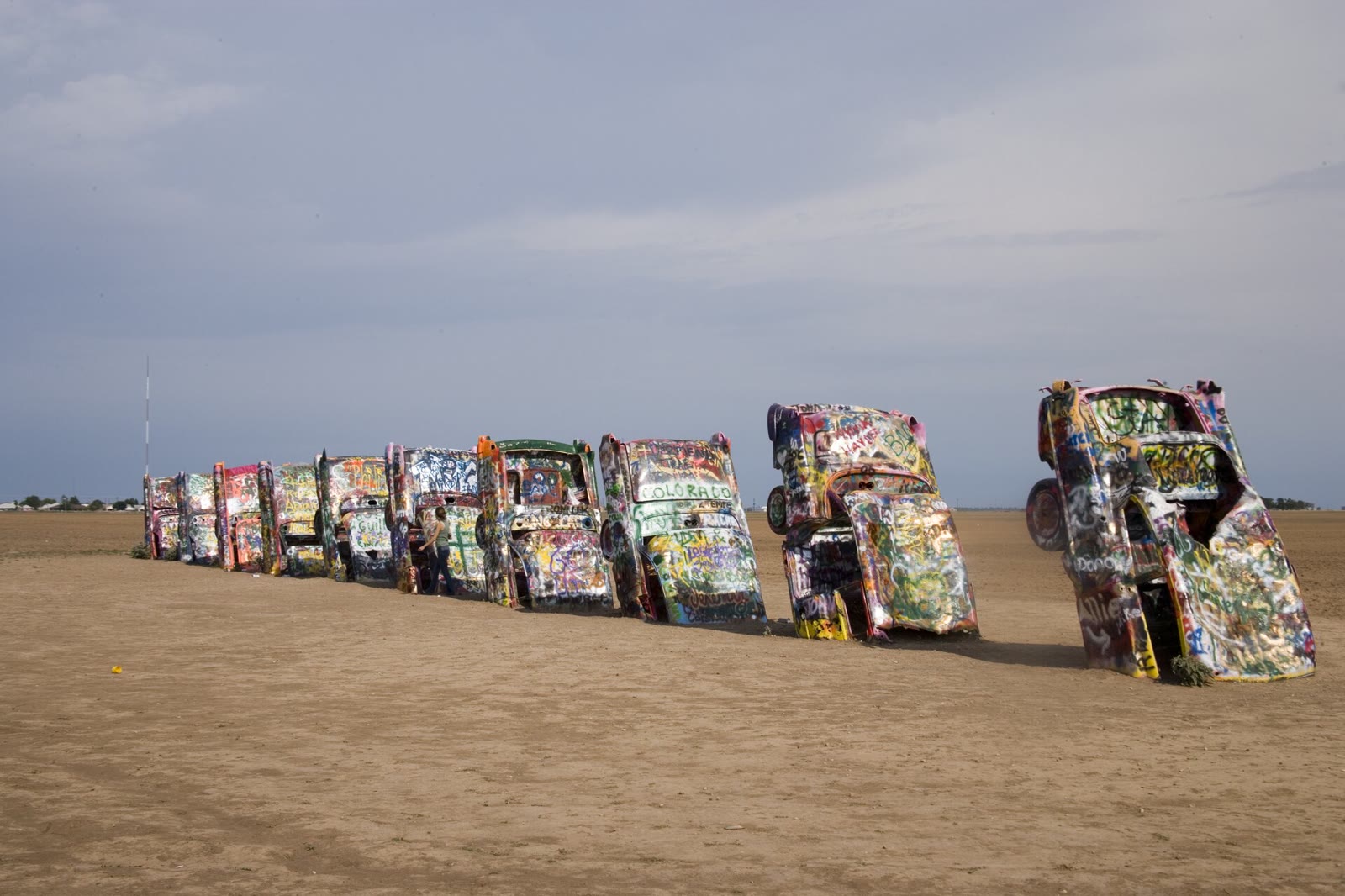
They “partially buried ten Cadillacs nose down in a wheat field,” at once, in the museum’s words, “a celebration of the Cadillac tailfin and a critique of Detroit’s practice of planned obsolescence.” Lord remembered that “it just took four days and a back-hoe to plant the ten different models.” Michels welcomed the graffiti that later covered the cars: “Cadillac Ranch is always right now!”
Media Burn and The Eternal Frame (1975)
On July 4, 1975, at the Cow Palace, “More than 400 spectators attended the patriotic Independence Day event,” by the group’s own count; a 2025 report says “hundreds of spectators.” Schreier and Michels “drove the Phantom Dream Car (a modified 1959 Cadillac Biarritz) at full speed through a pyramid of flaming TVs.” Other sources call the car an Eldorado: it was a customized 1959 Cadillac either way.
The aim, says the 2025 exhibition text, was to “jar loose the tightening grip mainstream media had on a mesmerized public.” Doug Hall delivered a benediction as a reanimated President Kennedy, and four local TV crews covered the stunt. That November, Ant Farm and T.R. Uthco premiered The Eternal Frame, “a faithful re-enactment of the Kennedy assassination.”
Fire and afterlife (1976-2025)
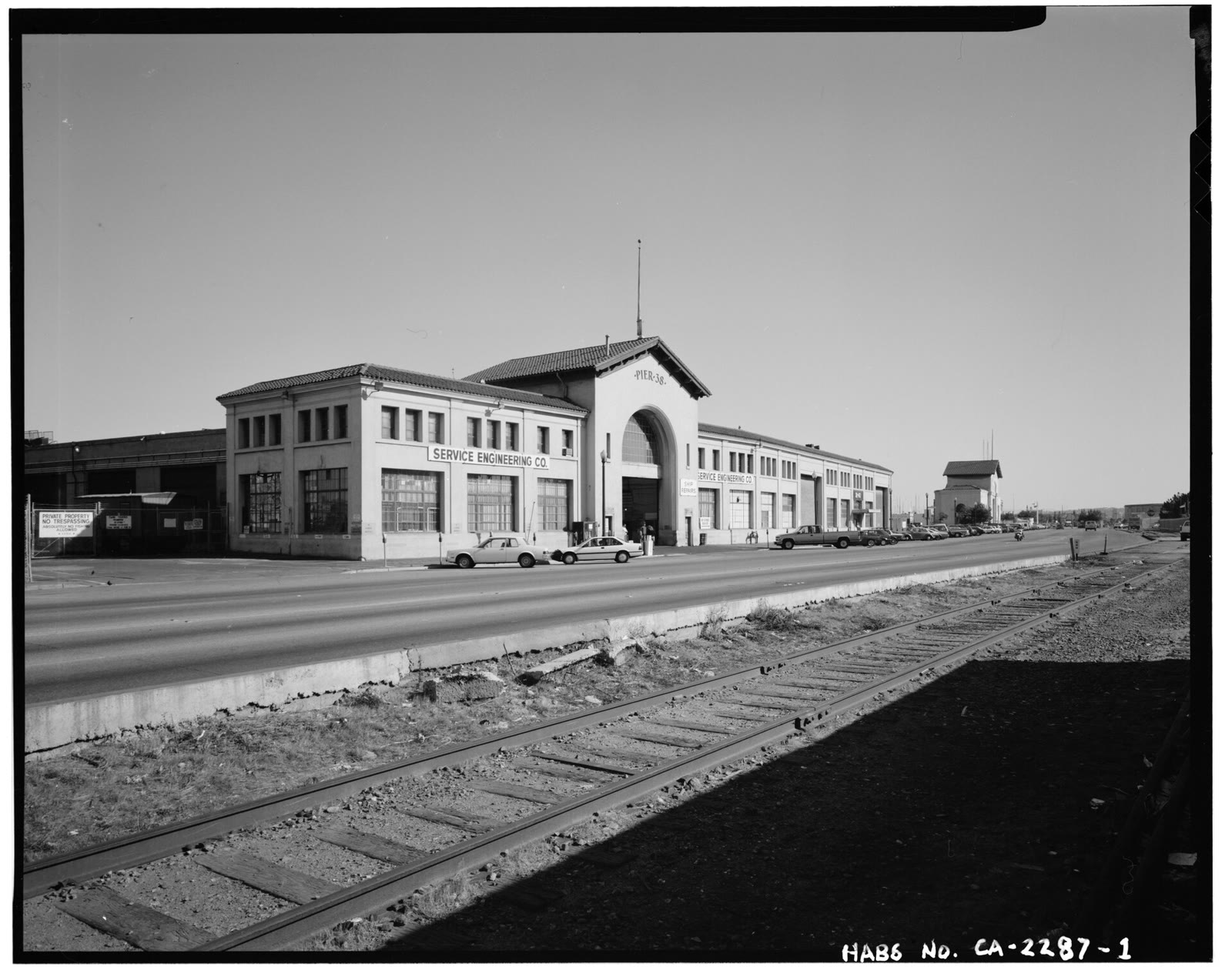
The last years produced CARmen, “an opera for 35 autos at the Sydney Opera House,” and the book Automerica. Then the chronology records the end: “On August 7th, fire destroys the Ant Farm studio at Pier 40, San Francisco. 90% of the slide and video documentation was saved, very little else survived, and Ant Farm disbands.”
Michels died in June 2003 after a fall at Eden Bay in Australia. That June 21, Lord wrote, Cadillac Ranch “was painted black in memory of Doug.” The Berkeley Art Museum’s press release for the 2004 Ant Farm retrospective describes a show of “more than 200 objects” that later toured to Karlsruhe, where ZKM’s event page (German site) carries the group’s own chronology. In 2025, “Still Burning” marked Media Burn’s fiftieth year with new work by Lord and Schreier.
| Year | Event | Where |
|---|---|---|
| 1968 | Lord and Michels found Ant Farm | San Francisco |
| 1969 | Happenings; Space Cowboy | Houston |
| 1969-71 | Gate 5 Road studio; inflatables; Video Slumber Party | Sausalito |
| 1973 | Studio at Pier 40 | San Francisco |
| 1974 | Cadillac Ranch | Amarillo, Texas |
| 1975 | Media Burn; The Eternal Frame | Cow Palace; Dallas |
| 1978 | Fire at Pier 40; Ant Farm disbands | San Francisco |
On the same waterfront: Ant Farm, Snake Theater and Antenna
Ant Farm’s Sausalito studio was on Gate 5 Road from 1969. Chris Hardman, a 2020 Sausalito Historical Society column says, was offered a studio at Gate 3 when he moved back to the West Coast and “ended up staying there for over a decade.” The two sources give no dates that put them there at the same time, and none says the groups met.
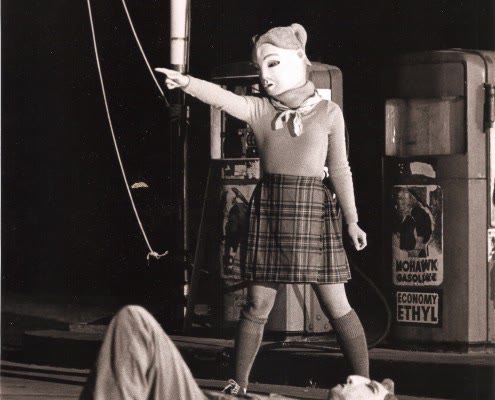
The subjects overlap all the same. Snake Theater, working on the Sausalito waterfront in the 1970s, staged Auto in 1979 at an abandoned Mohawk gas station in North Sausalito. Antenna’s Adjusting the Idle, its Walkman play about cars, made Steven Winn think of “steel and glass capsules that simultaneously take us out into the world and seal us off from our fellow travelers.”
Television too. In 1984 Antenna’s radio play Bad Reception, from The New Season on KPFA, had household appliances sing about a society split into units of “one human per home.” Ant Farm’s TV sets burned; Antenna’s appliances sang.
| Subject | Ant Farm | Snake Theater or Antenna |
|---|---|---|
| Gas station | Gas Station (1970), in uniforms and gas masks | Auto (1979), in an abandoned Mohawk station |
| Car | Cadillac Ranch (1974), Media Burn (1975) | Adjusting the Idle (1984-85) |
| Television | A Cadillac through burning TVs | Bad Reception (1984), singing appliances |
| Audience | 400 spectators and TV crews watching one event | Listeners each on a private tape |
The contrast is the audience. Media Burn was one image for a crowd and the cameras, built to travel as video; the Antenna chronology of productions shows a company that split its crowds into private journeys. Other Bay Area image-makers of the era include George Coates Performance Works and the liquid light shows of the rock ballrooms.
Frequently asked questions
Who made Cadillac Ranch?
Ant Farm members Chip Lord, Doug Michels and Hudson Marquez, for the Amarillo patron Stanley Marsh III, in June 1974.
What was Media Burn?
A Fourth of July performance in 1975 at San Francisco’s Cow Palace, in which a customized 1959 Cadillac, the Phantom Dream Car, was driven through a pyramid of burning television sets.
Why was it called Ant Farm?
Chip Lord said the members were underground architects. SFMOMA says a friend remarked that they worked like an ant farm.
What happened to Ant Farm?
A fire destroyed its Pier 40 studio on August 7, 1978. Most slides and tapes were saved, and the group disbanded.