Euphor!um: Antenna Theater’s Walk-Through of Coleridge’s Kubla Khan
Euphor!um turned Kubla Khan into a place you could walk through, one visitor at a time. The dated reviews place its opening in a Presidio warehouse in February 2001; Antenna’s chronology lists the project from 2000, and no source documents a 2000 performance, so it is best described as conceived around 2000 and opened in 2001. This is the history of Euphor!um, Antenna’s Kubla Khan walk-through, from San Francisco to Burning Man and London.
Quick answer
What was Euphor!um?
Euphor!um was Antenna Theater’s walk-through version of Coleridge’s poem “Kubla Khan”. Visitors entered alone, wore a mirrored helmet that made hanging sculptures appear to float, and heard fragments of the poem triggered by infrared beacons. It opened in a Presidio warehouse in 2001, drew over 12,000 people, then played London’s Roundhouse in 2002-03.
A Coney Island trick for a Romantic poem
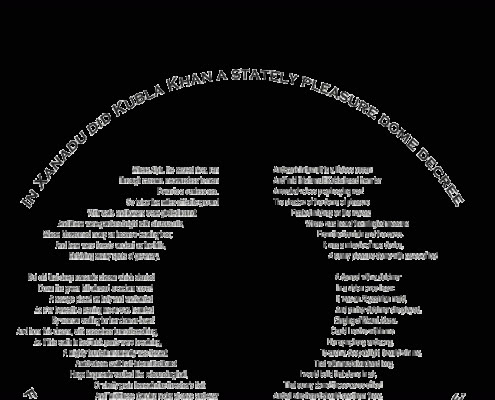
Antenna’s chronology describes “a walk-through dreamscape of Samuel Taylor Coleridge’s poem, Kubla Khan, featuring digital audio effects, infinite mirrors, and a few Coney Island funhouse tricks.” The company’s own page called it “a maze of ten environmental chambers” simulating Coleridge’s imagination “at the moment he was dreaming up his poem.”
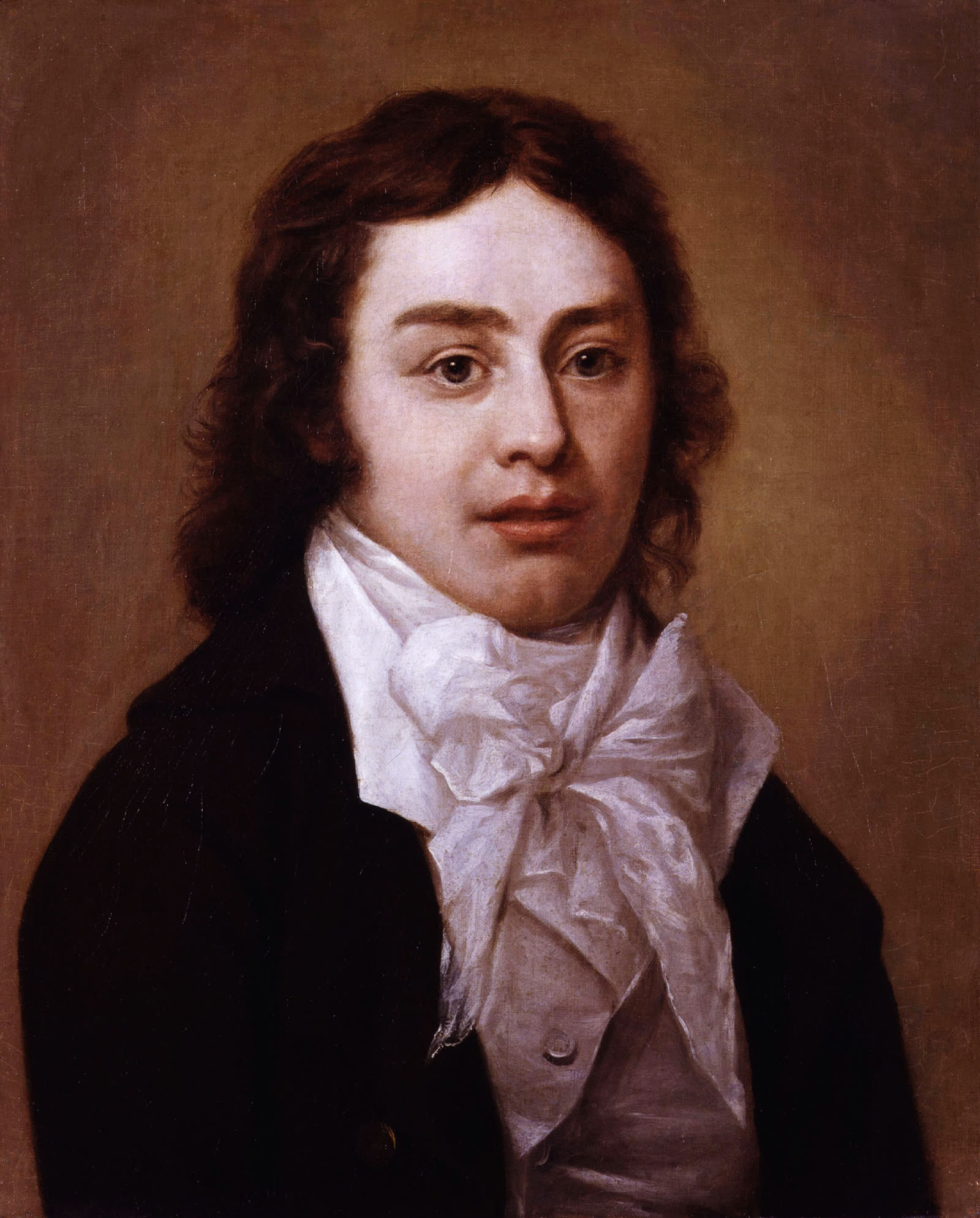
The poem suited the idea. Robert Hurwitt reminded San Francisco Chronicle readers in 2001 that it “was written in 1797, or begun, rather. Coleridge was famously interrupted by an inopportune visitor.” The Evening Standard added that it was published “as a ‘fragment’ at Byron’s insistence 19 years later.”
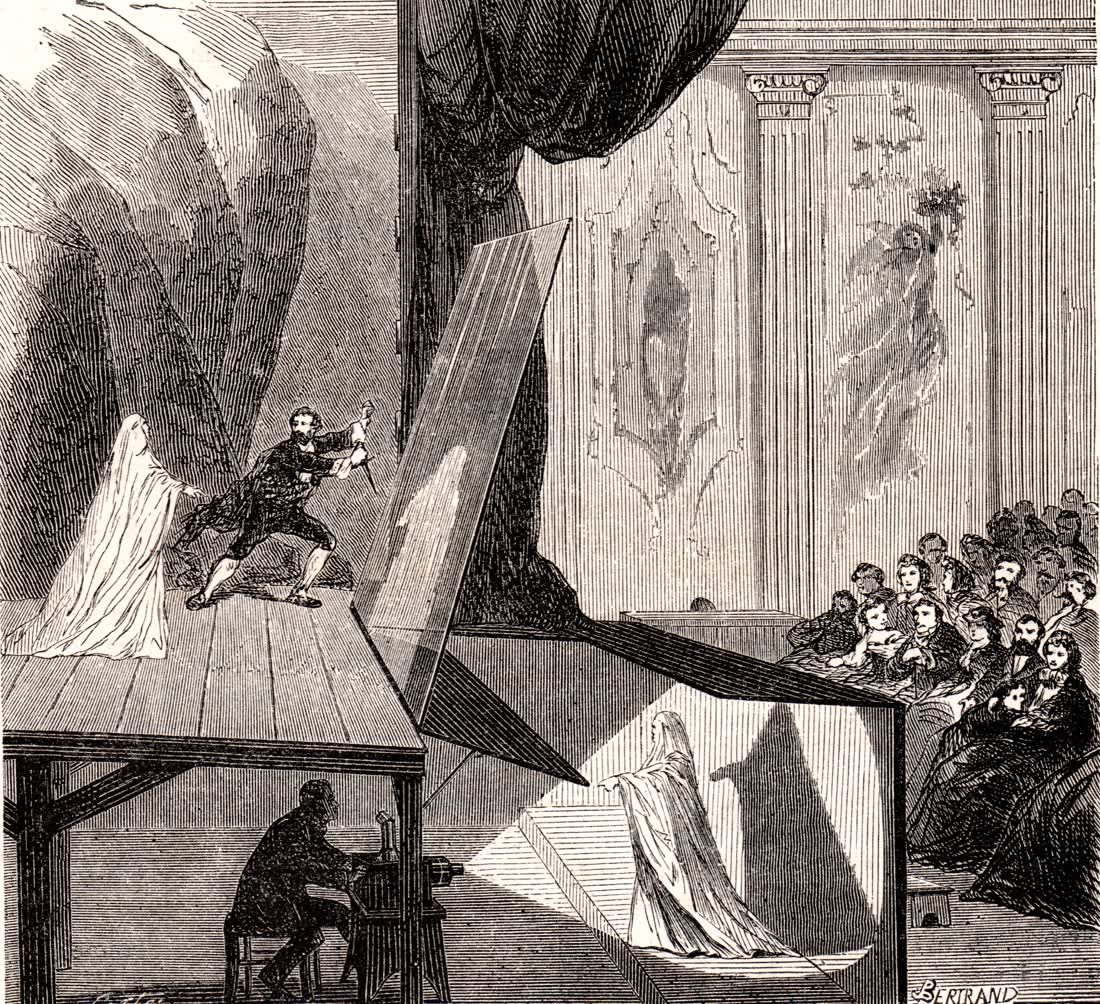
The optics were older still. Hurwitt described “a mix of funhouse tricks Hardman learned in his Coney Island youth and a mid-19th century optical illusion known as ‘Pepper’s Ghost.’” Hardman himself wrote of putting “the Peppers Ghost phenommenon” to high-art use in the Transforming Art exhibition, part of Hardman’s exhibitions and artifacts, and in “my Euphorium virtual reality helmet.”
Inside the dream: the walk, room by room
The Euphor!um maze took visitors alone, a few minutes apart, each one an audient, Antenna’s single participating visitor. Pieced together from the 2001 reviews, the visit ran in this order:
- Briefing. A guide warned, “You are about to enter a highly hallucinatory environment,” and handed over headphones and an audio pouch.
- The red room. A taped story of the opium dream, as “a mirror dissolves to reveal the poet’s sculptured visage.”
- The chair. A revolving chair turned the visitor into Xanadu.
- The helmet. “Invisible hands place a large but light helmet over your head and guide your hand to a thick, unseen handrail,” Hurwitt wrote.
- Decompression. The helmet came off, the poem was heard again, and the exit led to the Opium Lounge.
The floating images “are actually reflections of sculptures suspended above your head,” the Chronicle explained. The Oakland Tribune’s Chad Jones added objects “painted on the floor below you,” merged by “the angles of the glass in the helmet.”
The sound was cued by the room. “As you enter each new chamber, an infra-red beacon triggers your digital audio player to emit the site-specific soundscape,” the company explained. The audio was designed by David Torgerson, spelled Torgersen by the Chronicle.
Where Euphor!um played: Presidio, playa and London
The show had three homes. Building 920 was “on Mason Street bordering Crissy Field,” a 3,000-square-foot warehouse, and the Chronicle told visitors to “look for the hot pink floodlights.” A spring 2001 run was followed by an autumn revival that the company’s Coming Soon page says lasted “through April 28” 2002.
| Dates | Venue | Notes |
|---|---|---|
| Feb. 15 to Mar. 2001 | Building 920, the Presidio, San Francisco | Opened on a Thursday, per the Chronicle of Feb. 17, 2001 |
| Aug. 27 to Sept. 1, 2001 | Burning Man, Black Rock Desert, Nevada | Invited guest art work |
| Autumn 2001 to Apr. 28, 2002 | Building 920, the Presidio | Revival; Opium Bar new, per SF Gate |
| Aug. 14, 2002 to Jan. 2003 | The Undercroft, the Roundhouse, London | With Soho Theatre; closed 26 January (UK page) or 28 January (Coming Soon page) |
Run lengths vary by source. A 2002 release said the show “sold-out its initial ten-week run” and was extended several times, while the chronology says extended runs “totaled eight months.” Antenna reported “attendance of over 12,000” at the Presidio.
Out to the playa: Burning Man 2001
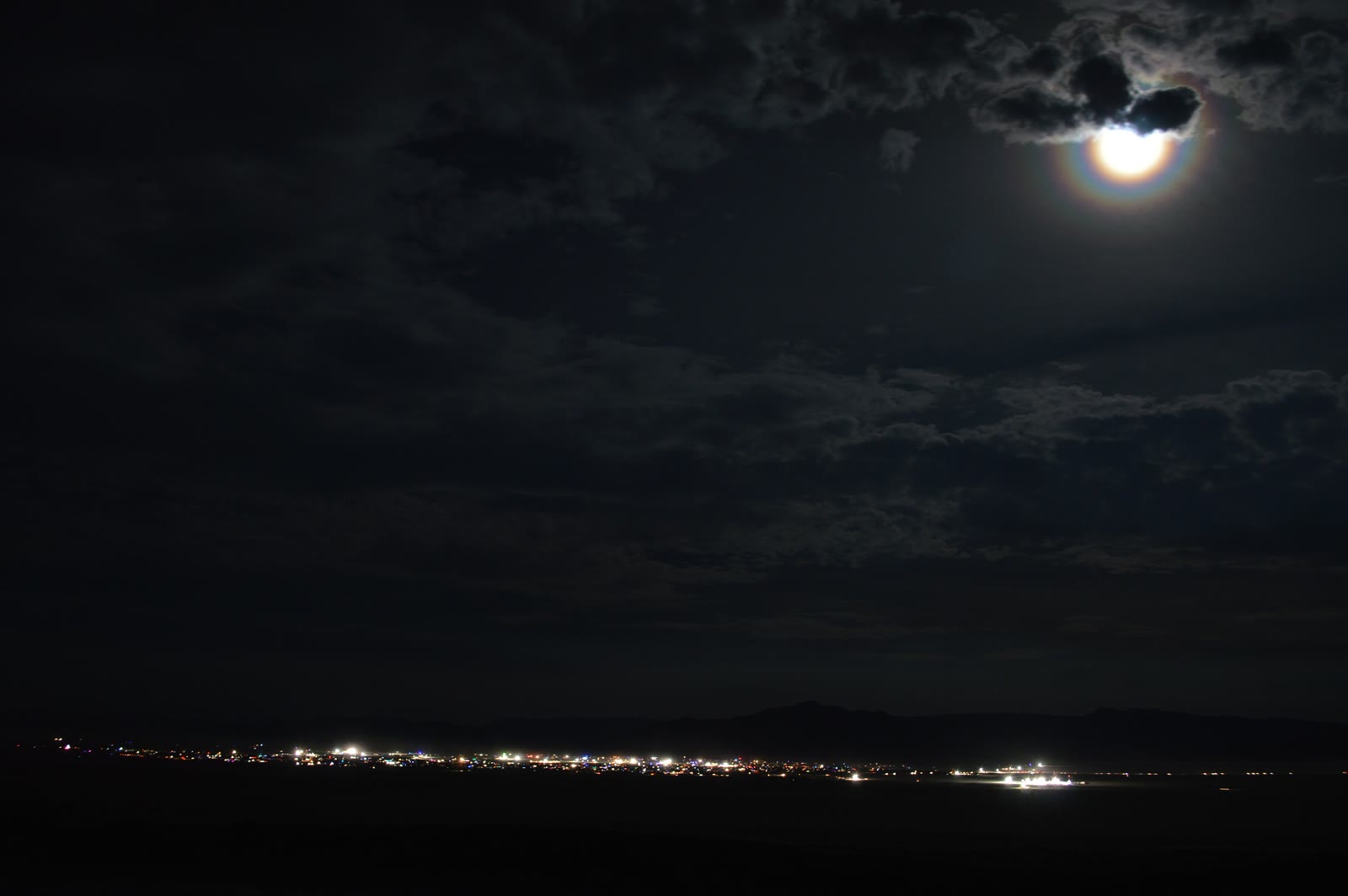
In late summer 2001 Euphor!um went to the desert. The Burning Man archive’s 2001 installation list called it “an audience interactive simulation of the opium-induced dream which led Samuel Taylor Coleridge to write the poem ‘Kubla Khan.’” Antenna had taken earlier work to the playa too, told in the Journal’s history of Sands of Time.
London: the Roundhouse Undercroft
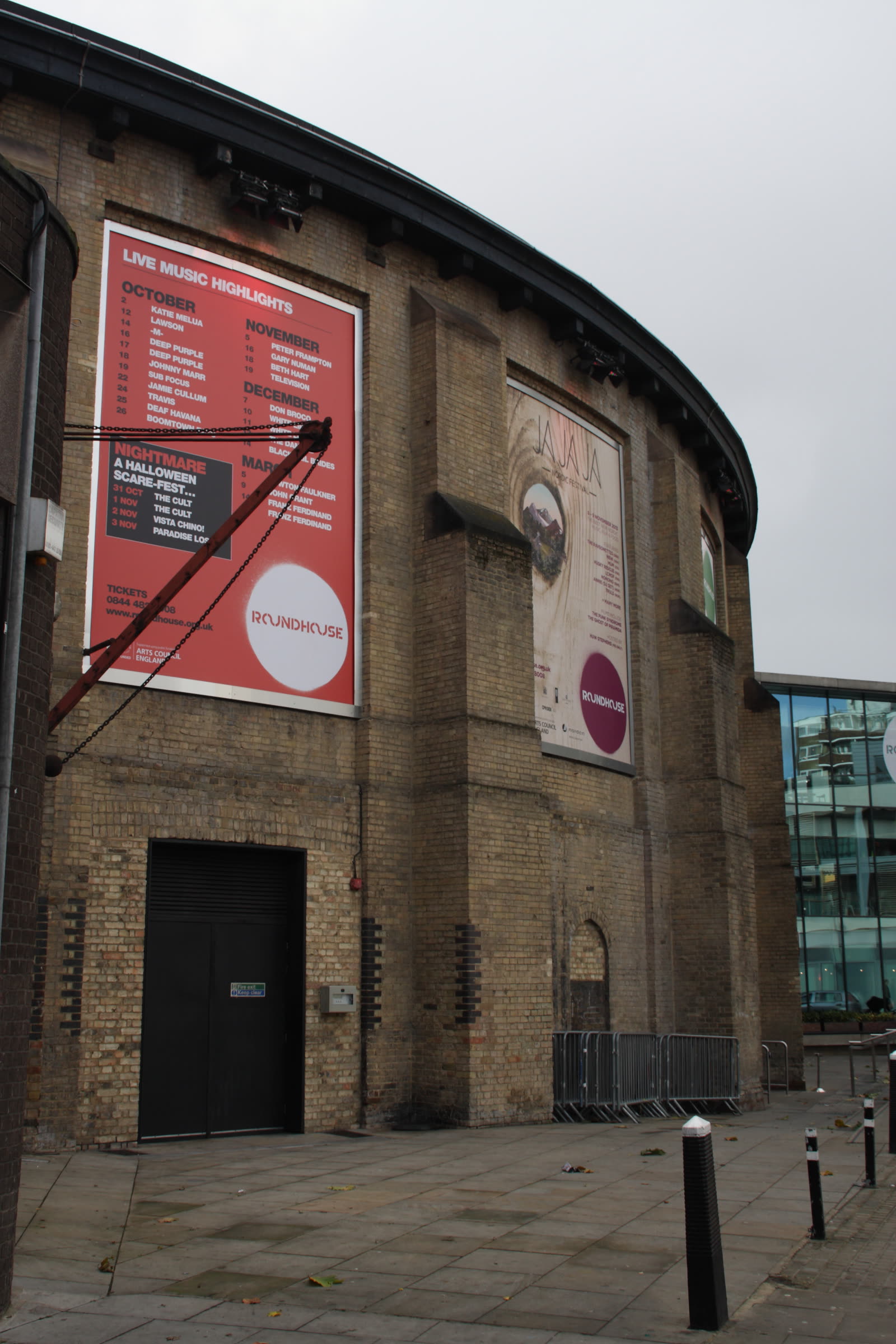
In August 2002 the show crossed the Atlantic, Antenna’s debut in the United Kingdom, presented with Soho Theatre in “the labyrinthine undercroft of the former Victorian train shed,” as the Evening Standard put it. The press release scheduled 14 August to 20 October; the run was then held over into January 2003.
| Detail | San Francisco | London |
|---|---|---|
| Running time | About 30 minutes (company FAQ) | 40 minutes (UK press release) |
| Entry interval | Every 3 minutes | Every 90 seconds (UK press release) |
| Price as published | $12-$15 | £10, then £15 |
| Space | 3,000-square-foot warehouse | Undercroft of a Victorian train shed |
What the critics saw
TIME’s Chris Taylor wrote in March 2001 that “Creator Chris Hardman’s sellout show is the hippest legal high on the West Coast.” Hurwitt called it “about as pleasantly hallucinogenic an experience as you can have without running afoul of the law,” but found the helmet “bulky and impractical for the very tall or even mildly claustrophobic viewer.”
Others were cooler. The Mercury News’s Karen D’Souza saw “essentially a 19th-century parlor trick of mirrors and glass and sound,” and Erika Milvy in the Press Democrat wrote that “the experience doesn’t quite deliver the promised euphoria.” The TIME, Mercury News and Independent reviews quoted here survive as full-text reprints on Antenna’s old website.
London split the same way. The Independent’s Kate Bassett: “This is mad stuff and possibly addictive.” In Jackie Fletcher’s British Theatre Guide review of Euphor!um, the complaint was brevity: “It was, in fact, all over with far too quickly.”
Credits and access
Emma Dunford’s Reviews Gate notice printed the credits. The piece was conceived by Chris Hardman, with sound design and audio production by David Torgerson and voices by Erik Bauersfeld, Jodi Burke, Peter Holmes, John Joss, Loise Page, Tanya Napier, Sarah Roberts and Dee Jones. Photos were by Peter Honig, and a California Arts Council grant supported the work in part.
The San Francisco FAQ promised that “the show is fully accessible by wheelchair,” that hearing aids could connect to the audio devices, and that guides would be provided for visually impaired visitors. No one under 8 was admitted.
Frequently asked questions
What was Euphor!um?
A walk-through installation by Antenna Theater that put visitors inside Coleridge’s imagination as he dreamed “Kubla Khan,” through ten chambers, a mirrored helmet and an infrared-triggered soundtrack.
How did the Euphor!um helmet work?
Its angled glass reflected sculptures hung above and paintings below the visitor, merging them into floating images, while infrared beacons cued an audio player in each room.
How long did Euphor!um take?
About 30 minutes in San Francisco, by the company’s FAQ. The London press release billed 40 minutes.
How many people saw Euphor!um?
Antenna reported attendance of over 12,000 at the Presidio.
Euphor!um’s Presidio warehouse was one of many Bay Area sites Antenna turned into a stage, traced in the Journal’s history of site-specific theater in the Bay Area. Its maze form grew out of Walkmanology and Antenna’s virtual reality experiment, and the rest of the work is in the complete Antenna Theater chronology. Founder Chris Hardman’s background is on the page on Hardman’s Coney Island years and career.