Magic Bus San Francisco: Antenna’s Summer of Love Tour, 2010-2019
For nine years, Magic Bus San Francisco was the strangest theater in town: a painted bus that left Union Square and rolled back into the 1960s. Antenna Theater ran it from 2010 to 2019. This is the history of that run, the route it took and what the critics made of it.
Quick answer
What was the Magic Bus in San Francisco?
Magic Bus was Antenna Theater’s rolling theater tour of 1960s San Francisco, running from 2010 to 2019. Riders boarded at Union Square and watched archival footage on screens that dropped over the windows, while a soundtrack of oral histories and rock music played and the bus passed Chinatown, North Beach, Haight-Ashbury and Golden Gate Park.
From headphone mazes to a theater on wheels
Antenna had spent three decades sending audiences on foot through built worlds with recorded sound, the practice it called Walkmanology, Antenna’s headphone theater form. Magic Bus kept the recorded script and changed nearly everything else. Robert Hurwitt noticed it in the San Francisco Chronicle in 2010: “there are no headsets this time. Instead of walking through one of Hardman’s fantastical environments, the audience sits, facing the side windows.”
Hurwitt also called it “the first new full-scale performance piece by Chris Hardman’s Antenna in far too long,” the first since the eight-month run of Euphorium in 2001. That earlier show, a walk-through dream, is told in the Journal’s history of Euphor!um and Kubla Khan.
How Magic Bus San Francisco worked
The bus and the projectors
The vehicle came first. The San Francisco Examiner reported in 2015 that Hardman bought the psychedelically painted bus in 2008 and launched the show once micro video projectors became available in 2010. The Atlanta Journal-Constitution described “a 1995 Carpenter school bus decorated in primary colors.”
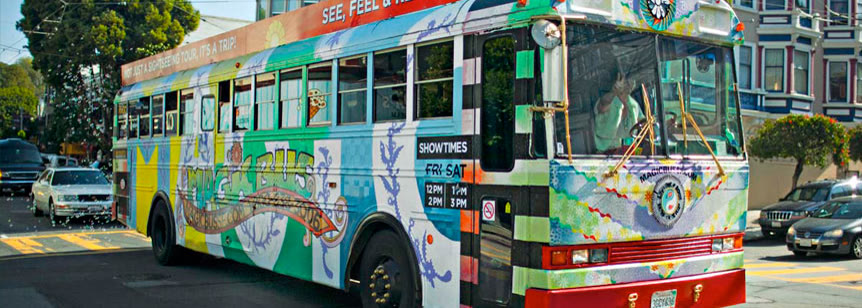
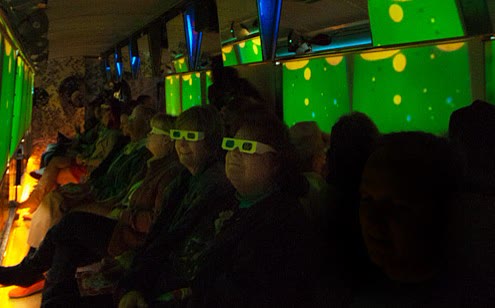
Inside, passengers sat back to back on benches facing the windows, according to the Examiner, and screens dropped at points keyed to the location. The operator quoted Hurwitt that the show was “made possible by the invention of the micro video projector, which uses LEDs.” A 2017 Sausalito Historical Society column counted “16 mini-projectors and sound systems with automatic screens.”
The soundtrack and the guides
The story was “told through broadcast voices (reminiscences, newscasts, Allen Ginsberg, Timothy Leary, Ronald Reagan),” Hurwitt wrote, with music by the Beatles, Bob Dylan, Jefferson Airplane and the Grateful Dead. It grounded the decade “in the conformity of the ’50s, the Cold War, the Beats and the civil rights movement.” The Examiner reported that Hardman created the audio himself and narrated the tour.
A live guide rode along. The archive promised that “our hippie hostess will guide you through time and space.” Named guides over the years included Artemis (KQED, 2012) and Gaia (Examiner, 2015). The AJC added a detail from 2017: “They give you peppermint candies for pretend LSD.”
The route through the Summer of Love
The operator’s 2012 route page, confirmed by later reviews, gives the order below. Each stop was chosen for its part in the story, not for sightseeing alone.
| Order | Stop or pass | What the tour told there |
|---|---|---|
| 1 | Union Square, Geary Street | Boarding near Geary and Powell; by 2016, 280 Geary Street |
| 2 | Chinatown | Eastern philosophy in the 1960s |
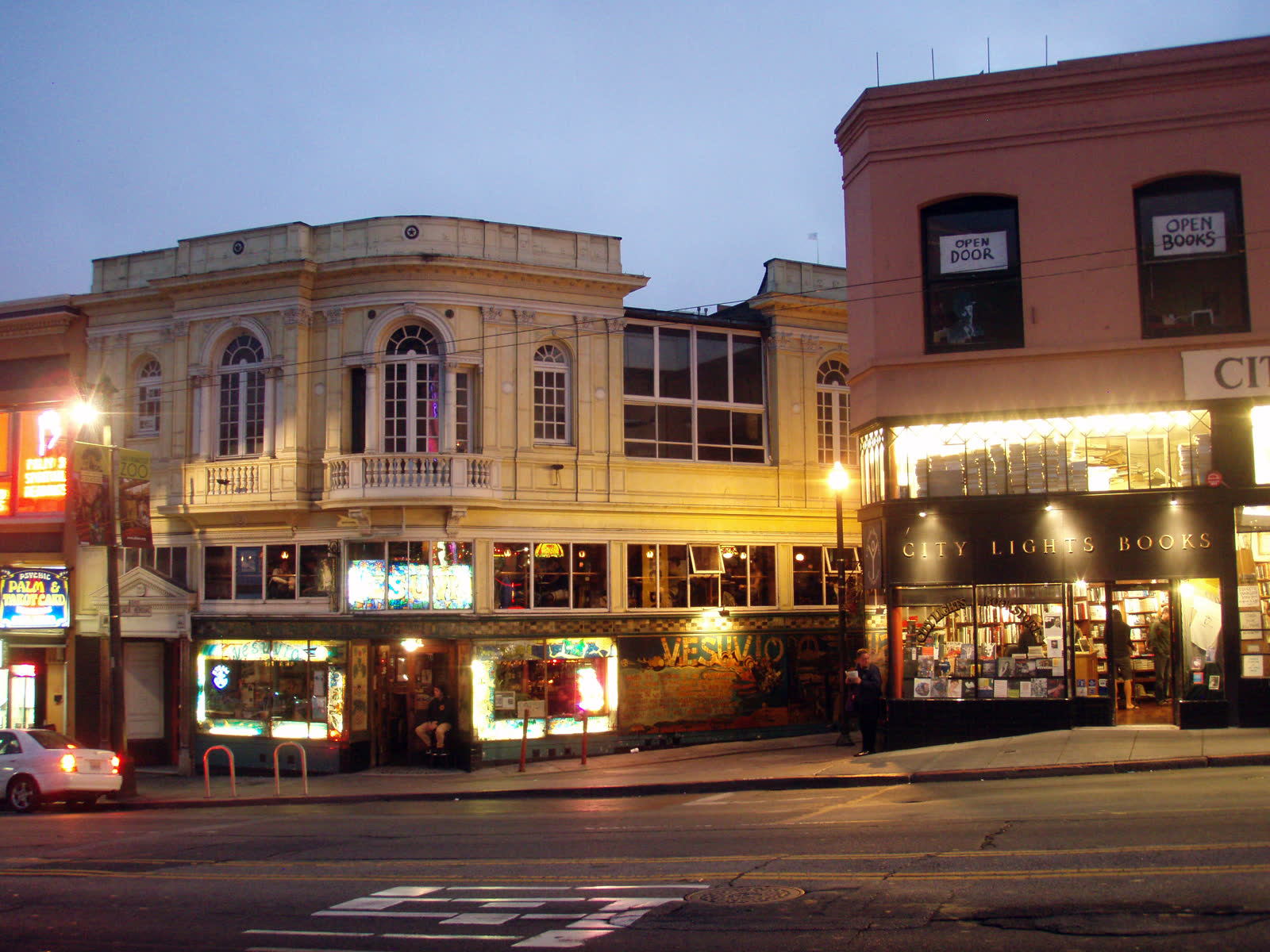
| 3 | North Beach | City Lights bookstore and the Beats |
| 4 | Market Street | The former Fillmore West (Examiner, KQED) or Carousel Ballroom (AJC) |
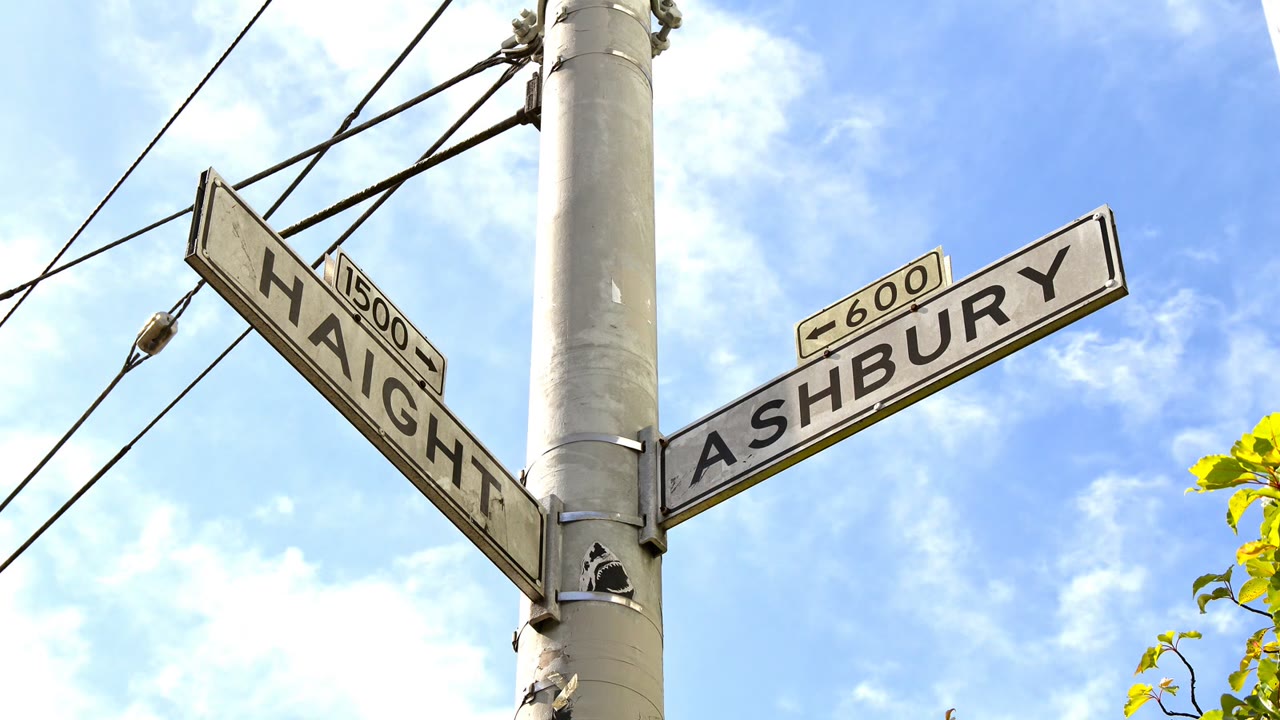
| 5 | Haight-Ashbury | Drive-through only |
| 6 | Golden Gate Park | Stop at the Conservatory of Flowers |
| 7 | Union Square, Post Street | Return |
Downtown and Chinatown
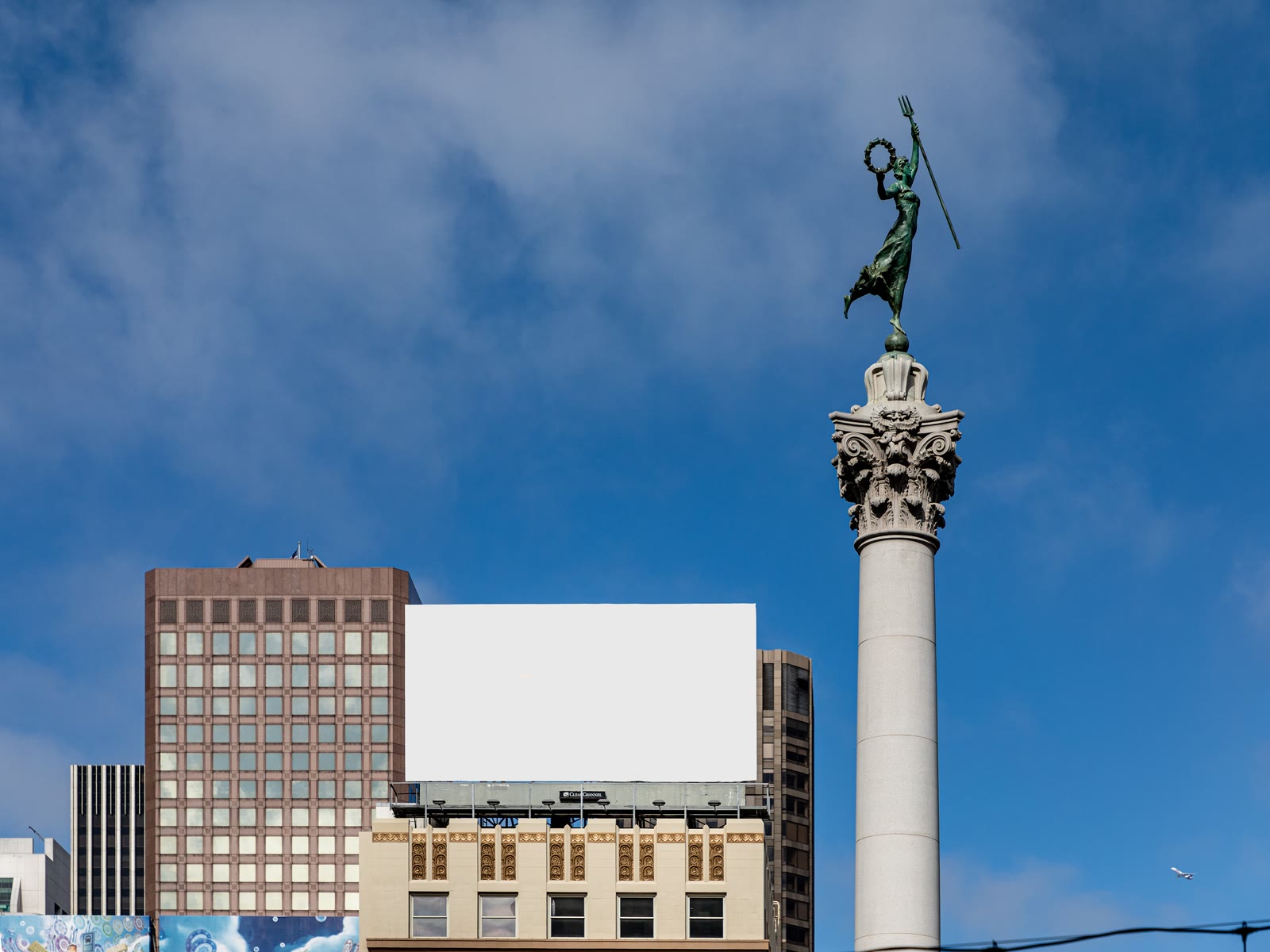
Tours left from Union Square, and the operator advised boarding “closest to the corner of Geary and Powell Streets.” It was a central, easy place to gather a busload.
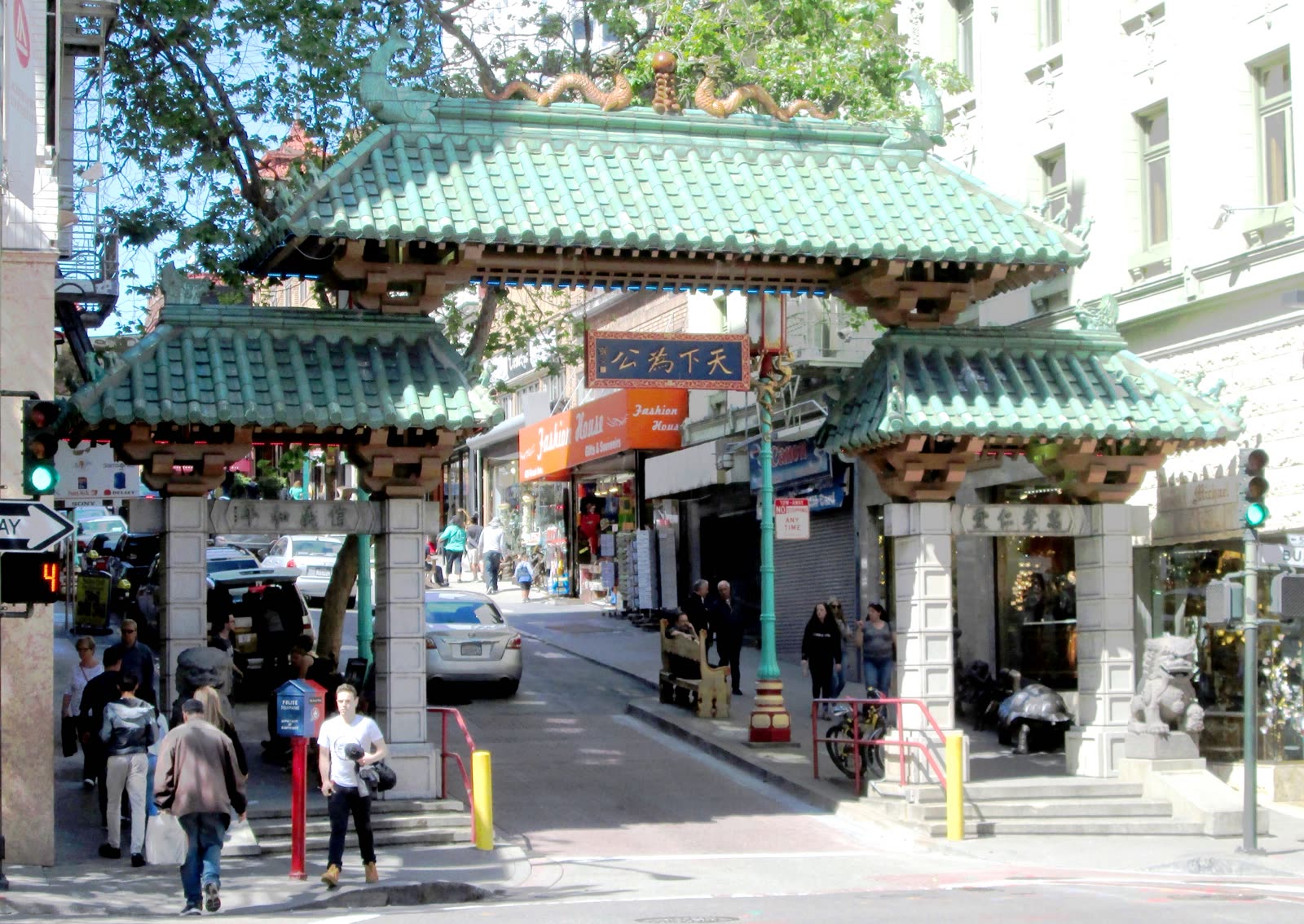
Chinatown came next, presented on the 2012 route page as “a major influence on American exposure to eastern philosophies in the 1960s.” The AJC and KQED both describe the bus passing through it.
North Beach and Market Street
In North Beach the bus passed City Lights, and KQED’s 2012 account added The Purple Onion. On Market Street the sources disagree on a name: the Examiner and KQED say the former Fillmore West, the AJC says the former Carousel Ballroom.
Haight-Ashbury and Golden Gate Park
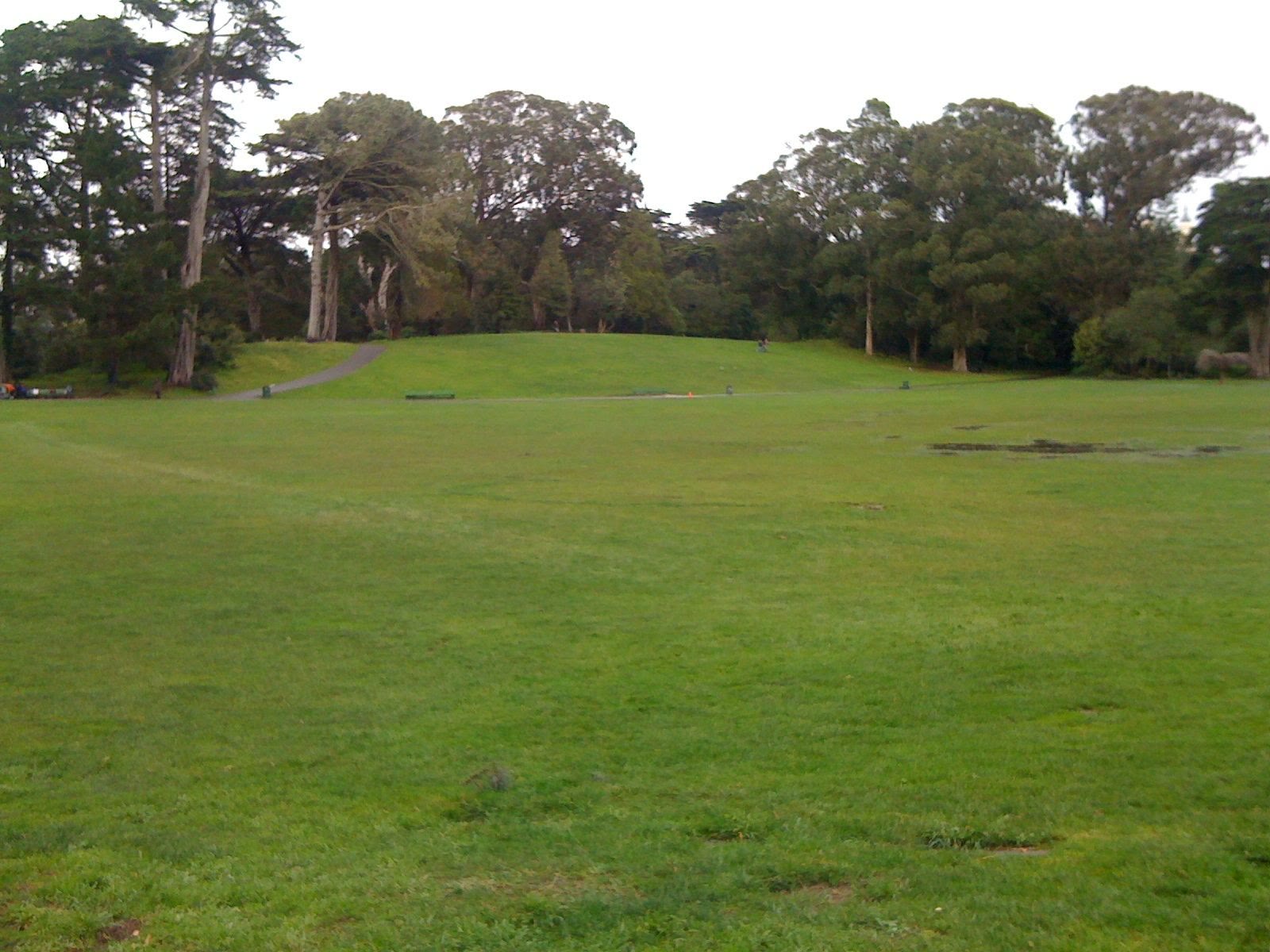
The Haight was a drive-through, because “no tour buses can stop there- not even Magic ones!” The stop was the Conservatory of Flowers, where riders heard “how America’s largest urban park hosted the first Human Be-In and the first Earth Day.”
A decade on Geary Street: 2010-2019
Magic Bus premiered at the San Francisco International Arts Festival, May 28-31, 2010. Antenna’s chronology says it went on to give “from 4 to 11 performances per week,” and its portfolio lists a 2012 appearance at The 1968 Exhibit at the Oakland Museum of California.
The running time grew. The Chronicle’s 2010 listing said 85 minutes and most early sources said 90, while from about 2012 the operator billed two hours, and in 2016 “a bit over 2 hours. The time depends on traffic.” The table records the published figures as history.
| Year | Running time | Price as published | Source |
|---|---|---|---|
| 2010 | 85 minutes | $20-$25 | SF Chronicle listing |
| Oct. 2010 | 90 minutes | $40; students and seniors $30 | Operator site |
| 2012 | About 2 hours | Not stated | Operator FAQ |
| 2015 | 2 hours | $60 | SF Examiner |
| 2016 | A bit over 2 hours | Not stated | Operator FAQ |
| 2017 | 2 hours | $70; students $65 | Atlanta Journal-Constitution |
The archive dates the run 2010-2019. No source found gives the last performance or the reason it ended, and the booking domain now redirects to a for-sale page.
What critics said about the Magic Bus
The San Francisco Chronicle’s 2010 review of the Magic Bus was warm: “It’s a trip,” Hurwitt wrote, “an exciting new step in the ongoing Antenna experiment.” He had reservations: “The organization is thematic rather than chronological, which may confuse younger attendees.”
The Bay Guardian’s Robert Avila found “the conversation between past and present is immediate and captivating,” as the operator quoted him. Five years on, Jean Schiffman’s San Francisco Examiner feature on the time-traveling Magic Bus gave the fullest account of how it worked.
The dissent came from Chloe Veltman on ArtsJournal in 2010. “The conceit is a marvelous one, at least,” she wrote, but “you feel like you could be seeing the presentation just as easily in a regular movie theater or at home on TV.” By 2019 the operator was calling the bus “the engine that powers the fundraising efforts of the Antenna Theater.”
Frequently asked questions
How long was the Magic Bus tour?
About 90 minutes at launch, according to Antenna’s chronology; the Chronicle listed 85 minutes in 2010. From about 2012 the operator billed it as two hours.
Where did the Magic Bus leave from?
Geary Street at Union Square, near Powell Street. By 2016 the operator gave the address as 280 Geary Street.
Did the Magic Bus stop in Haight-Ashbury?
No. It drove through the Haight, where tour buses could not stop, and made its stop at the Conservatory of Flowers in Golden Gate Park.
Who created the Magic Bus?
Chris Hardman and Antenna Theater, with the charter company TeacherBus, whose Jens-Peter Jungclaussen the operator listed as a founder.
Can you still ride the Magic Bus in San Francisco?
No. Antenna’s archive dates the run 2010-2019, and the tour’s booking domain now leads to a domain-for-sale page.
Magic Bus San Francisco tours were one chapter in a longer story of Bay Area places used as stages, told in the Journal’s history of site-specific theater in the Bay Area. For the rest of the company’s work, see every Antenna Theater production since 1980, the audient, Antenna’s word for a participating audience member, Chris Hardman’s career from Snake Theater to Antenna and the Antenna Theater productions archive.