What Is a Soundwalk? Listening Without a Script
What is a soundwalk? It sounds like something you would need an app for, but the original idea asks for nothing except your ears. A soundwalk is a walk taken to listen, to the traffic, birds, footsteps and wind of a place as it actually is. The practice came out of Vancouver in the 1970s, and its founding text is still the best guide to doing one.
Quick answer
What is a soundwalk?
A soundwalk is a walk taken mainly to listen. Hildegard Westerkamp of Vancouver’s World Soundscape Project defined it in 1974 as “any excursion whose main purpose is listening to the environment.” There is no script, narrator or headphones: the walker attends to the sounds of the place itself, including their own.
A walk whose purpose is listening
Westerkamp’s essay starts from a simple fact about hearing: “Since we cannot close our ears, we cannot help hearing all sounds.” Most of the time we filter those sounds out. A soundwalk reverses the filter. As she puts it, “It is meant to be an intense introduction into the experience of uncompromised listening.”
The Handbook for Acoustic Ecology, published by the World Soundscape Project, adds a critical edge. Its entry calls the soundwalk “A form of active participation in the SOUNDSCAPE.” The purpose, it says, “is to encourage the participant to listen discriminatively, and moreover, to make critical judgments about the sounds heard and their contribution to the balance or imbalance of the sonic environment.”
That second definition matters. A soundwalk is not only relaxation. It is a way of noticing which sounds a place has lost, which ones drown out the rest, and which ones give it character.
Where soundwalking came from
The World Soundscape Project in Vancouver
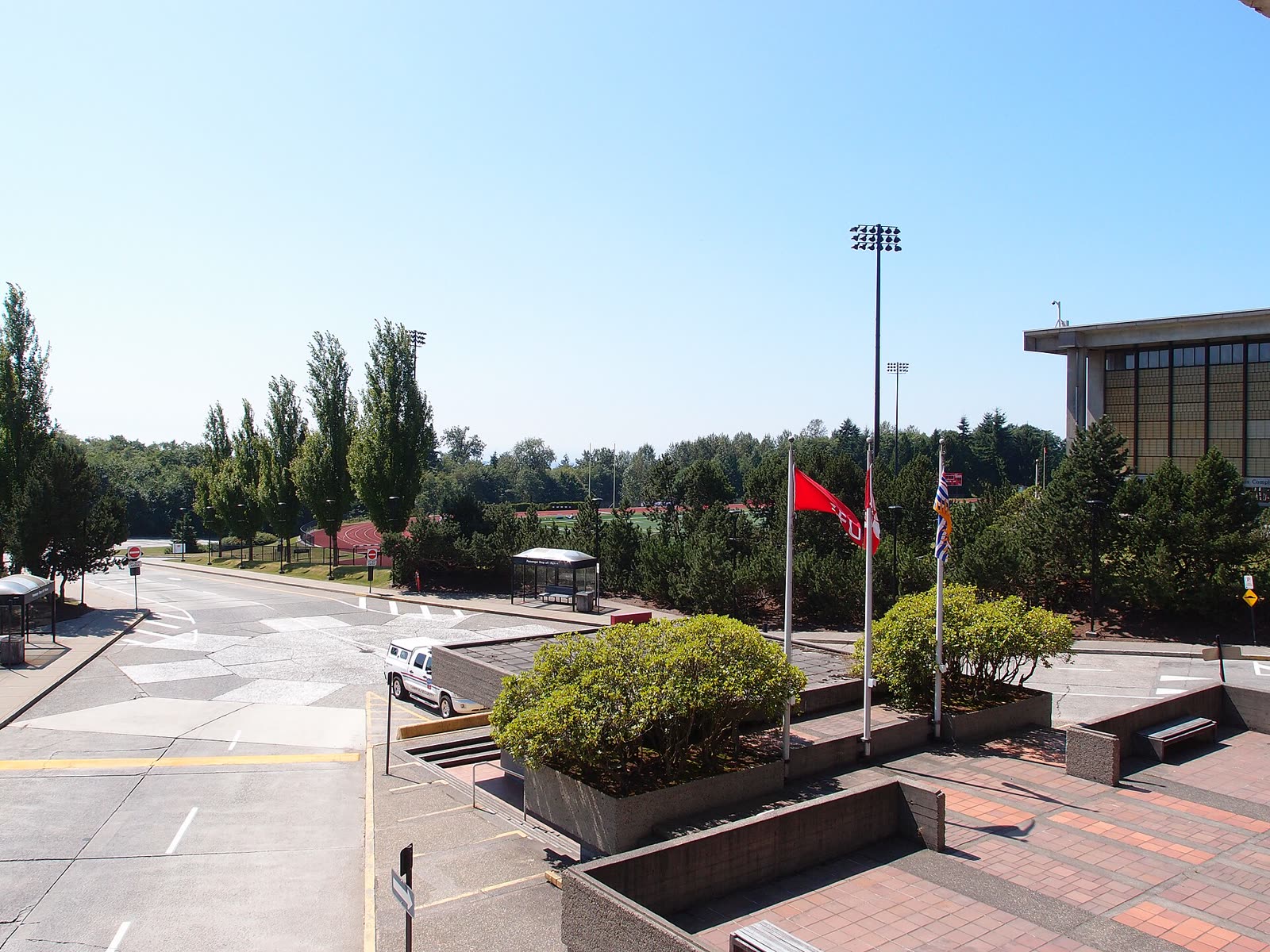
The World Soundscape Project was formed at Simon Fraser University in the late 1960s and early 1970s, led by the composer R. Murray Schafer. It began as a course on noise pollution, with the aim to “draw attention to the sonic environment”. Its members recorded The Vancouver Soundscape in 1973, and Schafer published The Tuning of the World in 1977.
Hildegard Westerkamp soundwalking: the 1974 essay
Westerkamp’s essay “Soundwalking” first appeared in Sound Heritage, a journal published in Victoria, British Columbia, in 1974, and she revised it in 2001. The Handbook for Acoustic Ecology points readers to it for “A series of soundwalks”. You can read Westerkamp’s Soundwalking essay on her own site.
The essay is partly a method and partly an argument about cities. “Each city has its distinct sonic environment which contributes to its singular character,” she writes, and “we must listen to our cities as the indigenous people listen to their forests.” She also expected listening to change behaviour: “When attentive listening becomes a daily practice, requesting sound quality becomes a natural activity.”
A New York parallel: Neuhaus’s LISTEN (1966)
In the same decade, the sound artist Max Neuhaus was taking groups out to listen in Manhattan. The Walker Art Center describes his 1966 piece LISTEN. Neuhaus recalled: “I rubber stamped LISTEN on each person’s hand”, and then “The group would proceed silently”.
He repeated it often: “Across 10 years, Neuhaus performed Listen 15 times”. LISTEN is best seen as a parallel, not the origin. The word soundwalk and its method belong to the Vancouver group.
Soundwalk vs audio walk: no narrator, no track

The two terms get mixed up, but they point in opposite directions. A soundwalk opens the ears to the place. An audio walk closes them around a recorded track, usually a voice and designed sound on headphones. Our guide to how an audio walk differs from an audio tour covers the scripted forms.
Antenna Theater worked at the scripted end. Its audients walked while “listening to their own soundtrack filled with music and dramatic musings about who they are”, and the archive notes that “with headsets on they can receive entirely separate information”. That is exactly what a soundwalk removes. The story of the history of headphone theater and Antenna’s idea of the audient show the other pole.
| Aspect | Soundwalk | Audio walk | Audio tour |
|---|---|---|---|
| What you hear | The place itself, live | A recorded, often binaural track | A recorded commentary on a site |
| Device | None needed; a map score is optional | Headphones and a player | Handheld player or app |
| Narrator | None | The artist’s voice | A guide’s voice |
| Goal | Awareness and judgment of the soundscape | An artwork along a route | Information |
| Origin | World Soundscape Project, 1970s | Janet Cardiff, 1991 | Museums, 1950s |
If you want to build the scripted kind, see how to make an audio walk, step by step. The museum branch has its own story in the history of museum audio guides.
How to do a soundwalk
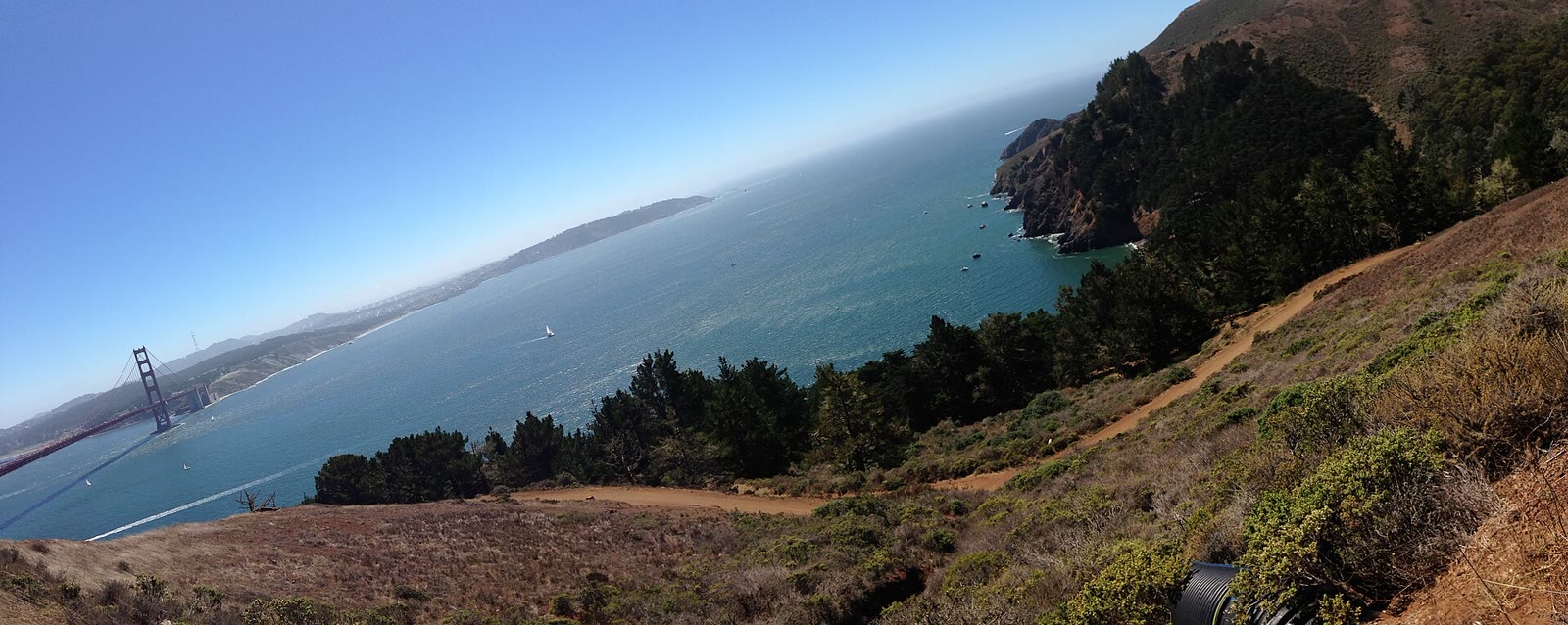
Westerkamp’s essay gives a sequence of exercises that still works. You need no equipment, though the Handbook notes that a soundwalk “may be scored in the form of a map which the participant uses both to guide the route and draw attention to features of acoustic interest.”
- “Start by listening to the sounds of your body while moving.”
- Try to move “Without making any sound.” Is it possible?
- “Lead your ears away from your own sounds and listen to the sounds nearby.” List them, separating continuous sounds from intermittent ones.
- Keep it small at first. “For the sake of intensity it may be wise to limit the walk initially to a small area or even to one particular spot.”
- At the end, put all the sounds back together and hear them as one composition, then ask what an ideal soundscape here would sound like.
The essay also offers variations, such as a theme walk: “Go out and listen to as many sounds created by wind as possible.” For groups, a National Park Service lesson asks that “no one speak so that we can focus on the sounds of our environment,” and that walkers “keep your pace slow and deliberate to control the flow.” Afterwards, the group sits in a circle and shares what it noticed.
Soundwalks and acoustic ecology today
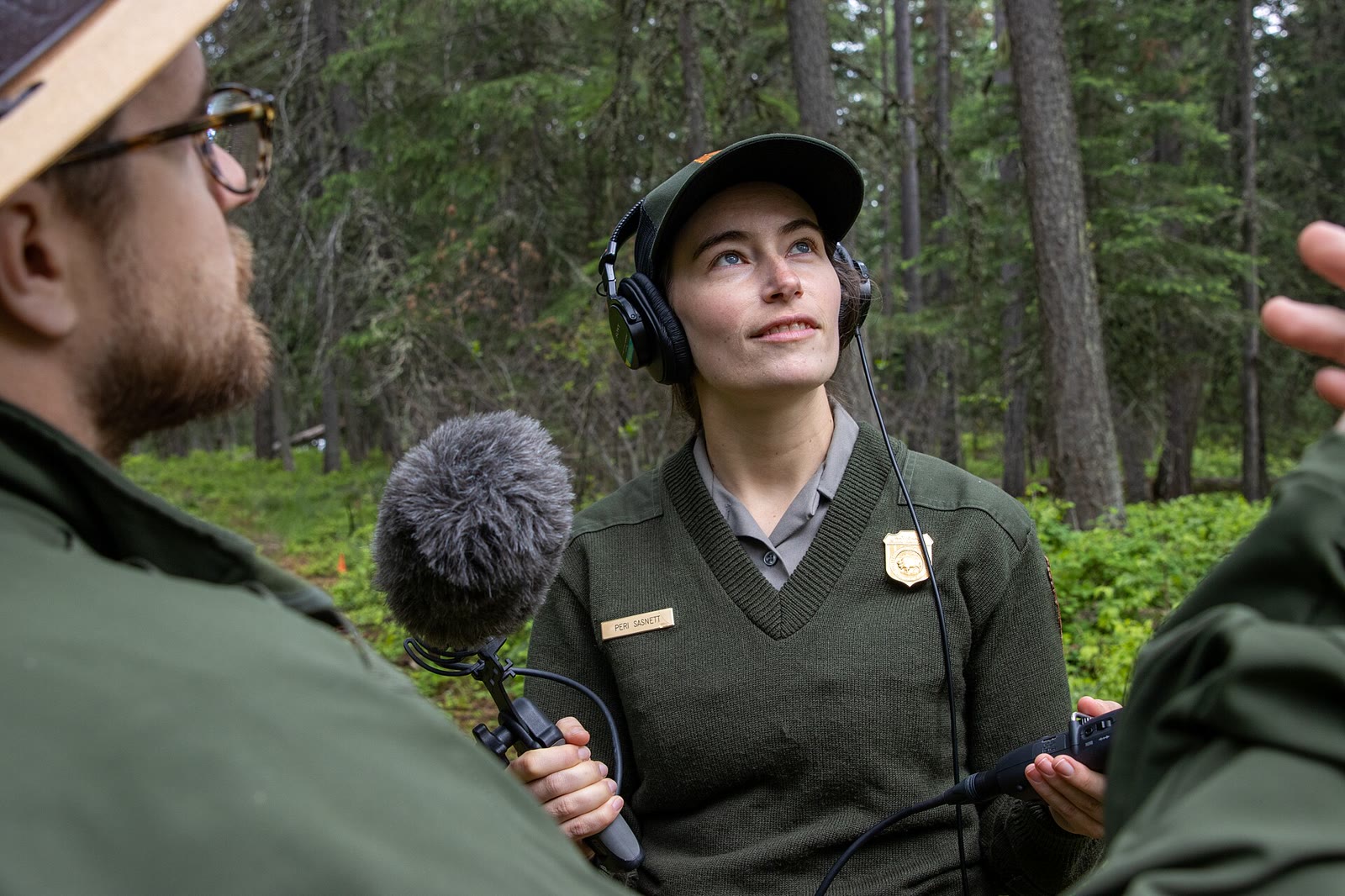
The acoustic ecology soundwalk now has an international home. The World Forum for Acoustic Ecology was “Founded in 1993”, and its scope covers “the social, cultural, and ecological aspects of the sonic environment.” Westerkamp helped found it and edited its journal Soundscape from 2000 to 2012.
Every year, “July 18 is World Listening Day”, chosen “to commemorate the birthday of R. Murray Schafer”. The organisers suggest a simple start: “Take a 1/2 hour out of your day on July 18th and go on a soundwalk.” The Handbook for Acoustic Ecology entry on the soundwalk remains the clearest short reference.
Frequently asked questions
Who started soundwalking?
Members of the World Soundscape Project, led by R. Murray Schafer at Simon Fraser University in Vancouver, in the 1970s. Westerkamp’s 1974 essay in Sound Heritage set out the first series of soundwalks.
Is a soundwalk the same as an audio walk?
No. A soundwalk listens to the place as it is, with no track. An audio walk plays a recorded narrative over headphones along a route.
Do I need equipment for a soundwalk?
No. Westerkamp’s exercises start with the sounds of your own body. The Handbook for Acoustic Ecology notes that a map can act as a score for the route.
How long should a soundwalk be?
World Listening Day suggests half an hour. Westerkamp advises starting in a small area, or even one particular spot, for the sake of intensity.
Listening is where many of Antenna’s experiments began. See Walkmanology and Antenna’s other theater forms.