A History of the Sony Walkman: How a Pocket Tape Player Changed Listening
In 1979 Sony put a blue and silver tape player on sale that could not record, and made only 30,000 of them. The history of the Sony Walkman is the story of how that small box changed the way people moved through cities, angered lawmakers and gave theatre artists, Antenna Theater among them, a new kind of stage.
Quick answer
When did the first Sony Walkman come out?
Sony’s first Walkman, the TPS-L2, went on sale in Japan on July 1, 1979. Built in about four months from a reporter’s tape recorder, it played cassettes in stereo through light headphones. Sony expected modest sales; by October 1982 it had shipped 5.5 million Walkmans, most of them abroad.
A player for one man’s flights
It began as a favour for Sony co-founder Masaru Ibuka. “In February 1979, he made a personal request of executives: an easy-to-carry device that would allow him to listen to operas on cassettes during international flights,” Mental Floss recounts.
Sony’s tape recorder division, under Kozo Ohsone, with Yasuo Kuroki leading development, started from the Pressman, a recorder Sony sold to journalists. A museum record names the model as the Pressman TCM-5000: the team added stereo sound and removed the recording function. Kuroki later wrote that “Young engineers created it just to see if it was possible,” and development took “only around four months.”
Akio Morita tried it on the golf course, was amazed by the sound and wanted it marketed to teenagers. His price target was the equivalent of $125; Icon magazine puts the launch price nearer $150.
Launch day and the names abroad
Sony showed the player to the press in a Tokyo park. Accounts disagree on which: Mental Floss says Yoyogi Park on June 22, 1979, Nippon.com says Meiji Park. Mental Floss describes journalists each handed “a small blue and silver device attached to headphones,” while “models on roller skates, skateboards, and tandem bicycles circled through the park.”
The TPS-L2 went on sale in Japan on July 1, 1979. “The original Walkman had an initial production run of just 30,000 units, showing that Sony was not confident it would be a huge hit,” says Nippon.com’s history of the Walkman’s early years. The first 30,000 sold out in less than three months, and sales reached 140,000 in seven.
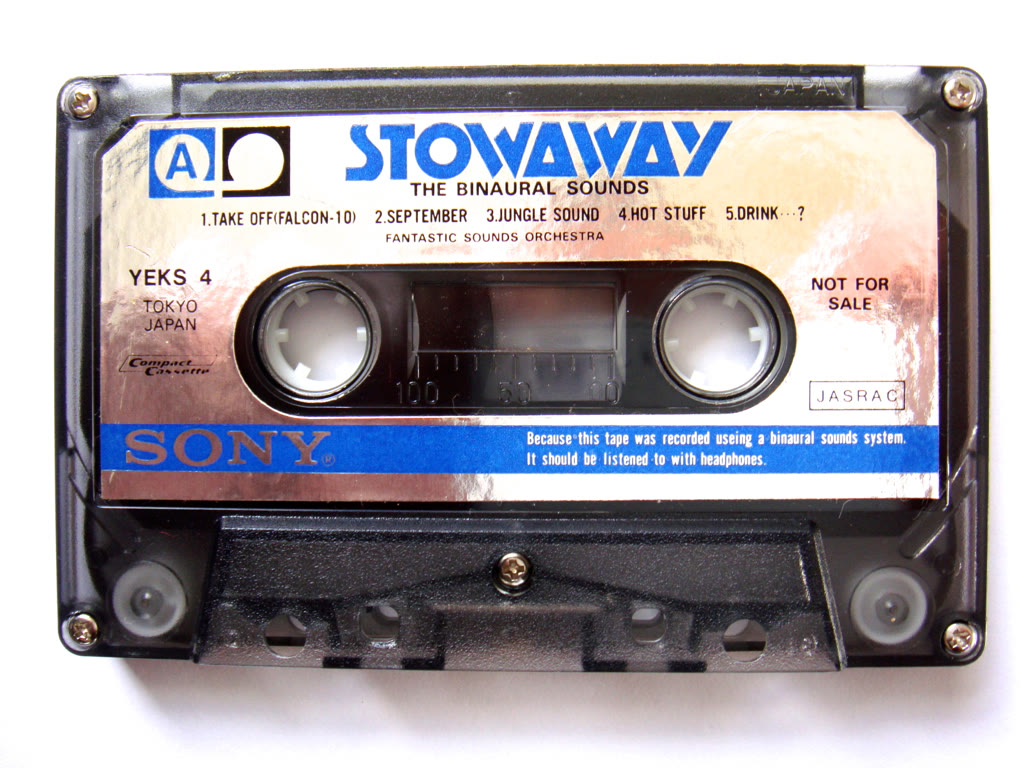
Abroad, the Victoria and Albert Museum notes, “In the U.S. it was known as the ‘Soundabout’, the ‘Stowaway’ in the U.K. and the ‘Freestyle’ in Sweden.” By the early 1980s only Walkman remained.
Design: two jacks and a hotline
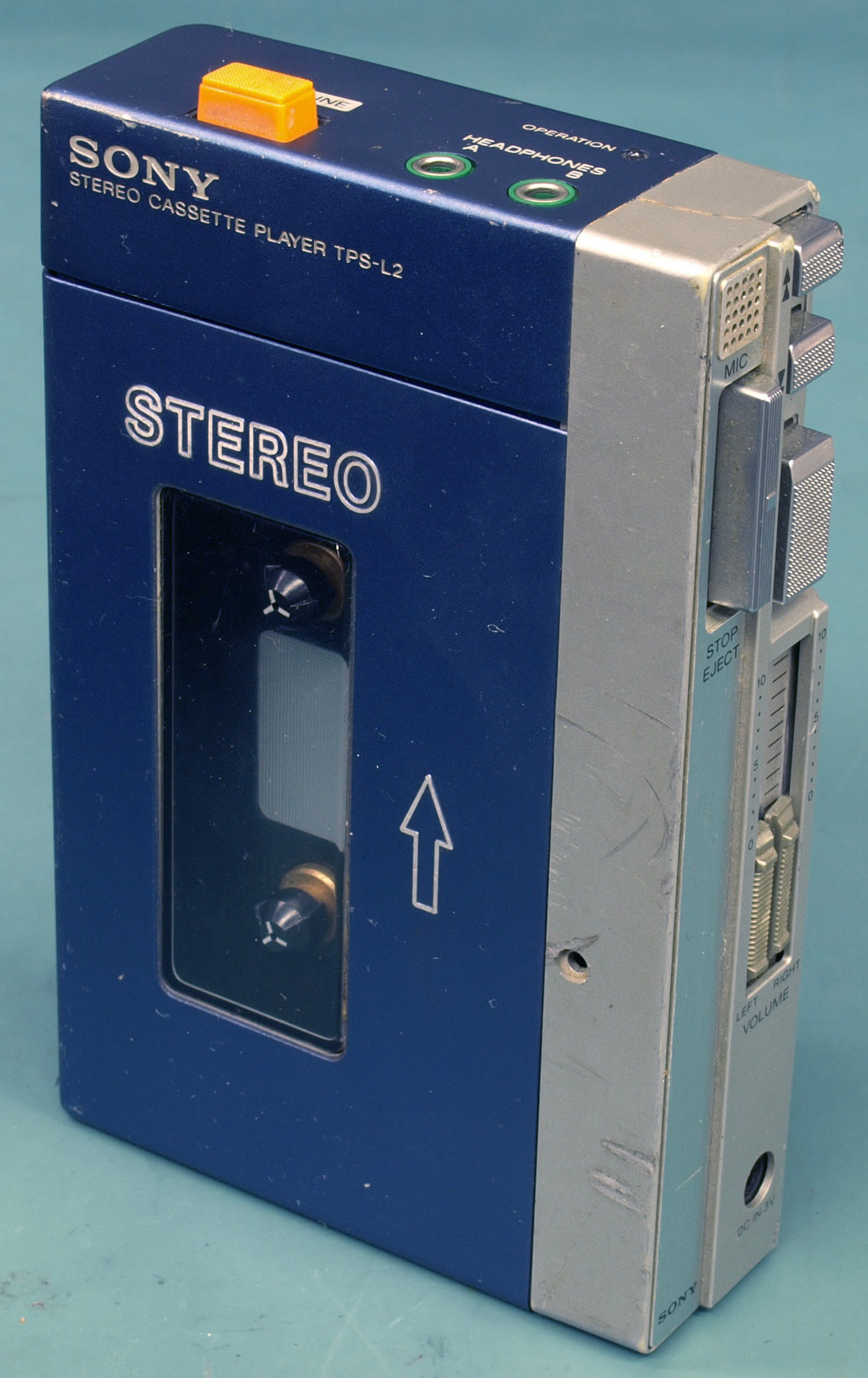
The first Sony Walkman had an aluminium case in blue and silver; later models moved to black plastic. The V&A record notes an extra jack “so two people could listen to music at a time,” and a “hotline” button that switched on a built-in microphone so one listener could talk to the other over the music.
The headphones mattered as much. Sony “had to produce new, more stylish and lightweight headphones, improving on the earmuff-like ones available at the time.”
| Feature | Sony Walkman TPS-L2 |
|---|---|
| Based on | Sony Pressman TCM-5000 reporter’s recorder, recording removed |
| Case | Aluminium, blue and silver |
| Listening | Stereo playback only, two headphone jacks |
| Extra | Hotline button and built-in microphone |
A craze and a backlash
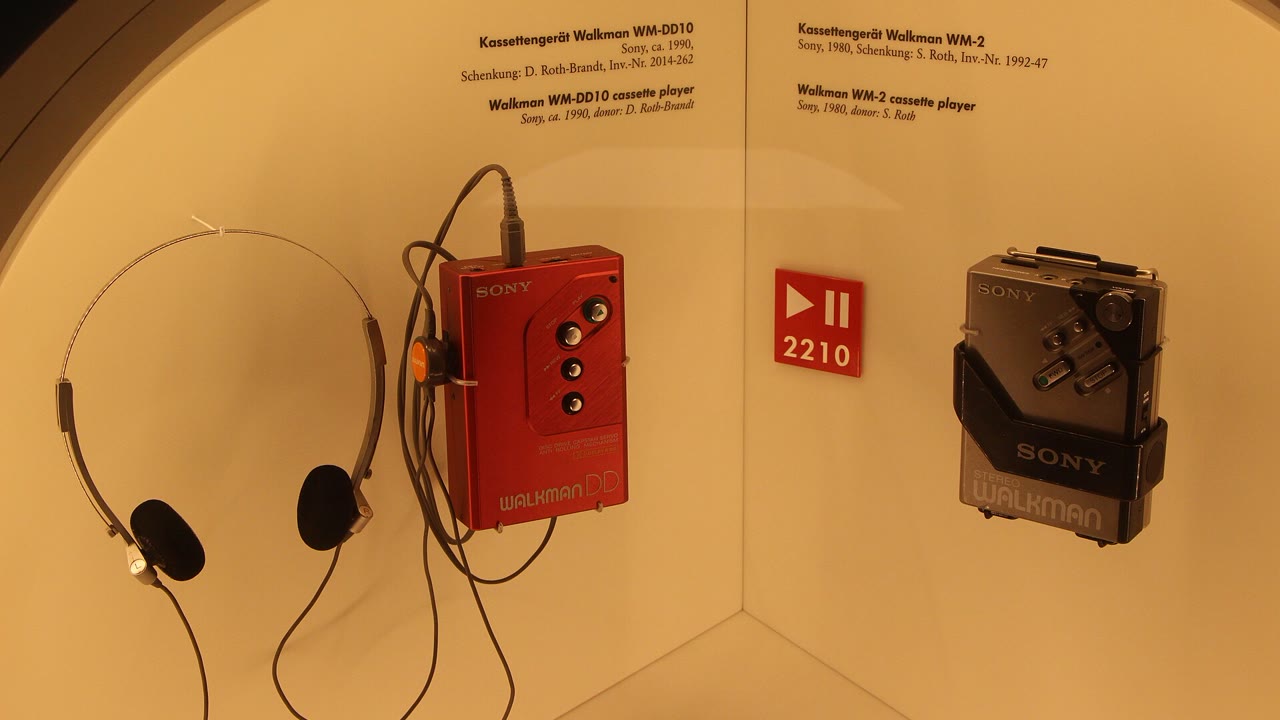
The second model, the WM-2, went on sale in February 1981, designed to shrink toward the size of a cassette case, and the Nikkei reported 1 million sold in nine months. “Of the 5.5 million Walkman units shipped as of the end of October 1982, more than 60% were exported,” Nippon.com notes, and rivals such as Aiwa and Toshiba built their own.
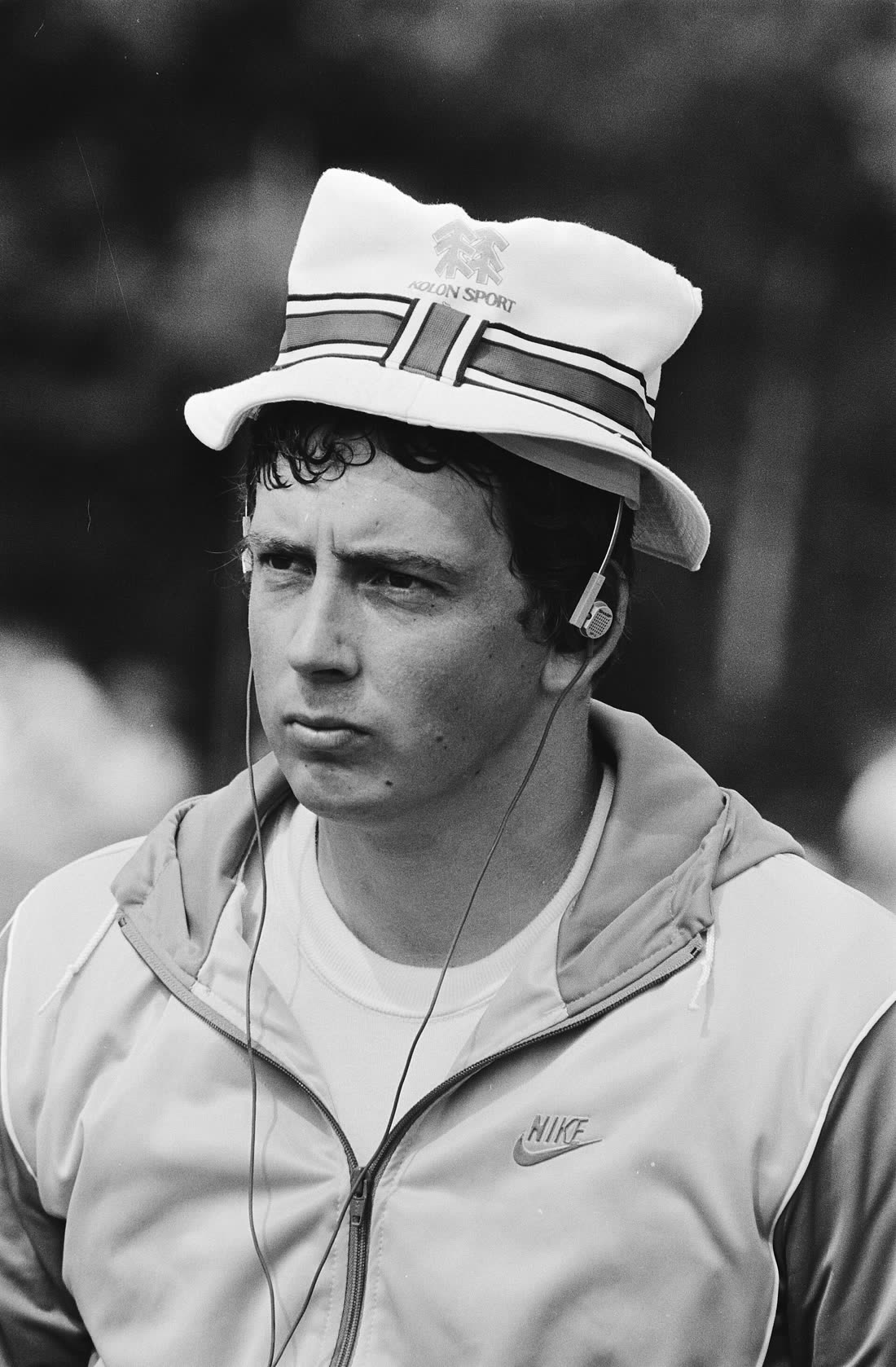
Not everyone cheered. In Japan, Kuroki recalled, “Adults blasted the Walkman as a device for shutting out the world and drowning in narcissism.” In 1982 the Christian Science Monitor reported from New Jersey: “Wearing headphones while jogging, bicycling, or driving has been outlawed in the nine communities that make up Woodbridge.”
Offenders faced a fine of up to $50 or up to 15 days in jail. One resident, Oscar Gross, said “I’m proud to say I got the first summons,” though his headphones were not attached to anything, and a councilman said 200 communities had asked for copies of the ordinance.
The Walkman effect: Hosokawa’s “secret theatre”
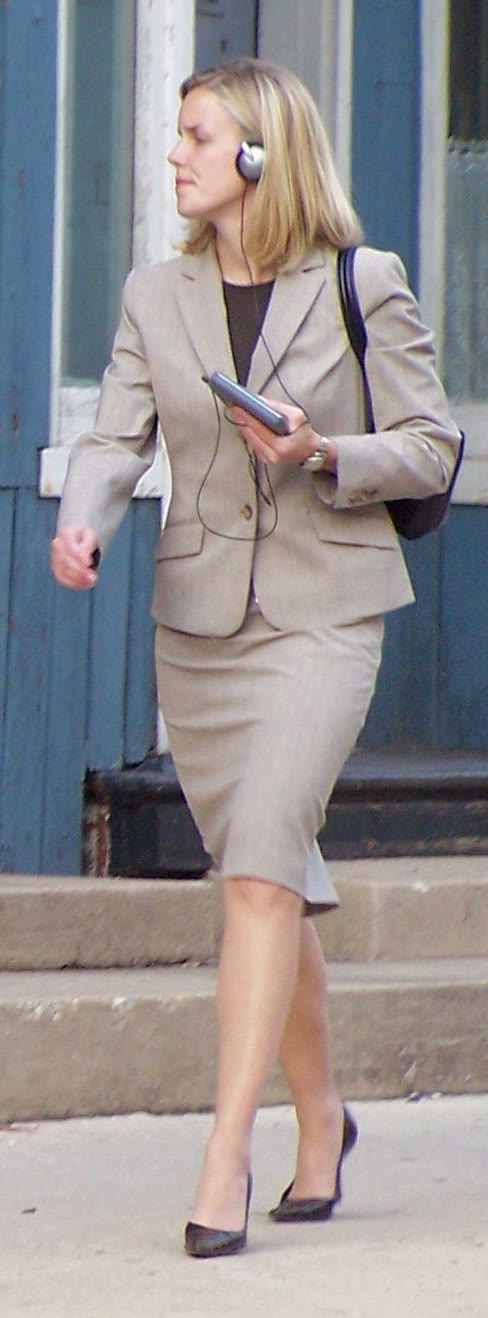
In 1984 the scholar Shuhei Hosokawa answered the critics in “The walkman effect,” a paper in the journal Popular Music. “Walkman users are not necessarily detached,” he wrote, from the environment around them. What the machine gave them was “autonomy-of-the-walking-self.”
He compared it to the instant camera: “The walkman is to the auditory domain what the polaroid is to the visual domain.” One section of his paper is headed “Walkman as secret theatre.” The listener’s body, he wrote, enters “the theatricalisation of the urban – but in secret.”
Listening as an art had other homes, among them the radio documentary and its feature makers. Theatre, meanwhile, had long fooled audiences through the eye, as with Pepper’s ghost, the Victorian glass illusion.
An artist’s first Walkman: Hardman’s 1980 tour
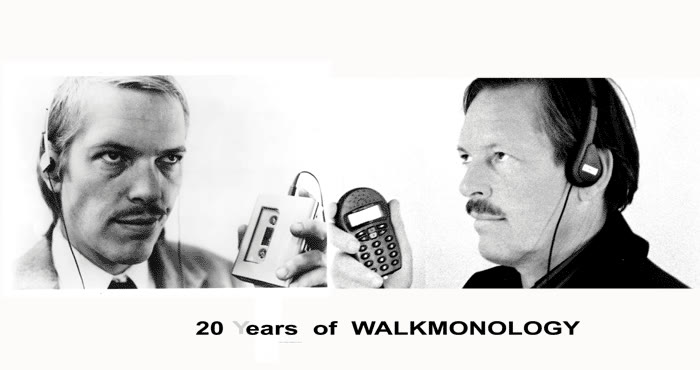
Chris Hardman bought his first Walkman just before Vacuum, the show Antenna took on its 1980 European tour. “I bought it to replace listening to airplane muzak,” he wrote in The Drama Review in winter 1983, the year before Hosokawa’s paper. He hoped it would “fill the pompous silences that engulf museums and cathedrals.”
“I was in rapture combining Wagner with Koln’s cathedral and baroque trumpets with Parisian streets,” he wrote. “I inspected Europe while privately-electronically-stereophonically listening to its musical heritage.” Then: “I also began to contemplate the theatrical ramifications of this latest weapon in the entertainment arsenal.”
Antenna’s 2003 web page joked that the first Walkman to reach California “was immediately commandeered by the skateboarding set; except for a few that were nabbed and put to use as theatrical tools by Antenna.” The first was High School, the first Walkman walk-through; the rest is told in how the Walkman became a theatre tool and Walkmanology and Antenna’s new theater forms, built around the audient, Antenna’s listener-actor.
Patents, CDs and the end of the tape
Sony did not have the idea to itself. “In 1977 Andreas Pavel applied for a patent for a ‘portable small component for the hi-fidelity reproduction of recorded sound’.” British courts ruled against him in 1996, but in 2004 The Register, citing Der Spiegel, reported that Sony had “silently parted with a few million euro” to settle.
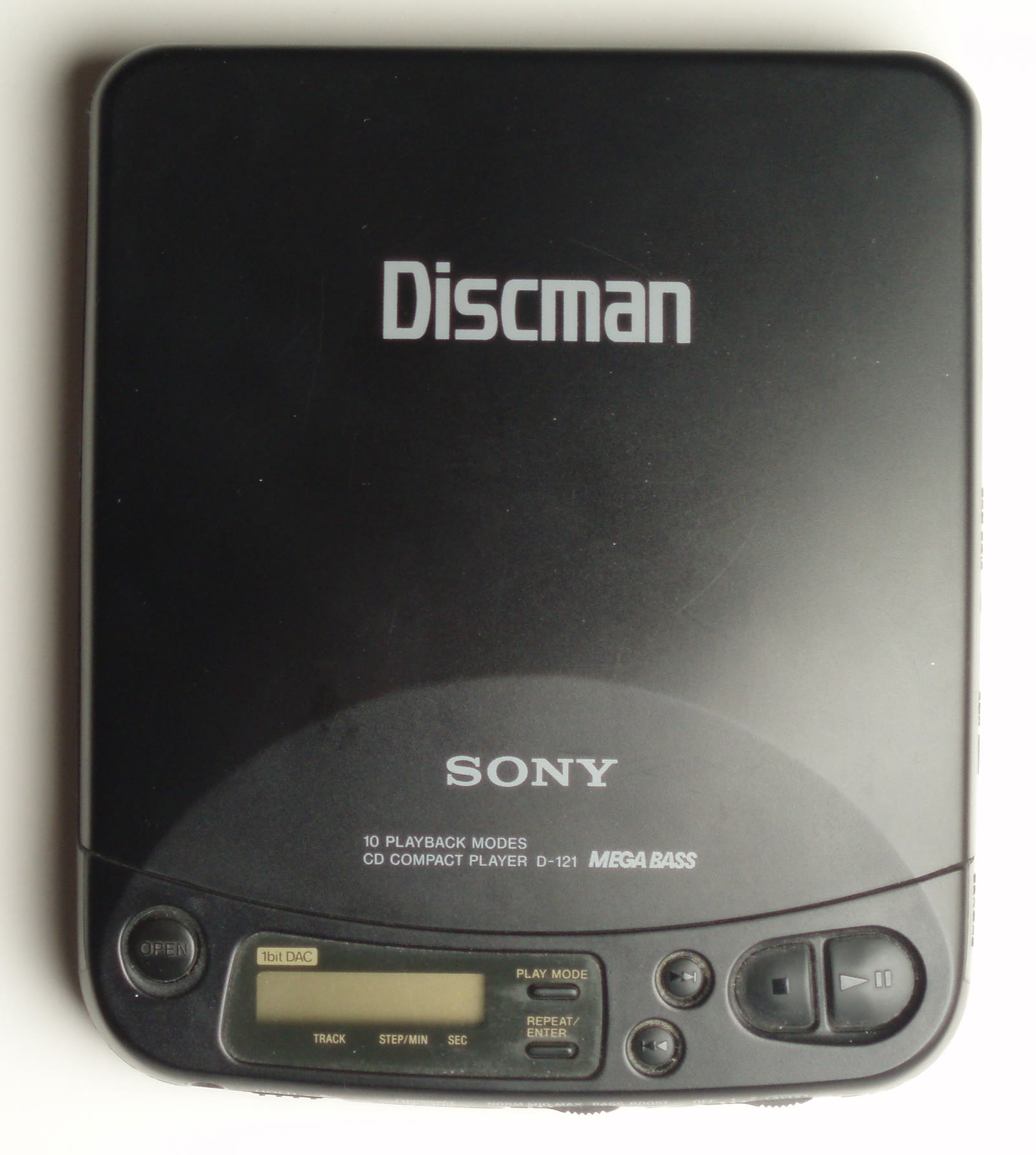
The Discman of 1984 and the MiniDisc Walkman of 1992 kept Sony ahead. In April 2010 it stopped making cassette Walkmans in Japan, as TechCrunch reported when Sony ended cassette Walkman production. The totals differ: AP counted 220 million cassette Walkmans, while Sony’s figures gave “over 400 million Walkmans worldwide until March 2010, and exactly 200,020,000 of those were cassette-based models.”
The history of the Sony Walkman at a glance
| Date | Event |
|---|---|
| February 1979 | Ibuka asks for a player for long flights |
| June 1979 | Press launch in a Tokyo park (Yoyogi or Meiji) |
| 1 July 1979 | TPS-L2 on sale in Japan; first run 30,000 |
| 1980 | Chris Hardman buys his first Walkman before Antenna’s European tour |
| February 1981 | WM-2, aimed at the size of a cassette case |
| 1982 | Woodbridge, New Jersey, outlaws headphones while jogging, cycling or driving |
| 1984 | Discman; Hosokawa’s “The walkman effect” |
| April 2010 | Japanese cassette Walkman production ends |
Frequently asked questions
Who invented the Walkman?
Sony’s tape recorder division adapted its Pressman recorder at Masaru Ibuka’s request. Andreas Pavel had applied for a patent on a similar player in 1977, and Sony later settled with him.
Why did the first Walkman have two headphone jacks?
So two people could listen at once. A hotline button switched on a small microphone, letting one listener talk to the other over the music.
What is the Walkman effect?
It is Shuhei Hosokawa’s 1984 term for the autonomy a personal stereo gives someone walking through a city, which he also described as secret theatre.
When did Sony stop making cassette Walkmans?
Japanese production ended in April 2010. Sony counted 200,020,000 cassette Walkmans sold.