
What Is Pepper’s Ghost? The Glass Illusion Behind Stage Ghosts and “Holograms”
A ghost glides across a lit stage and fades to nothing while the actor beside it carries on. For more than 160 years that effect has come from a single sheet of glass. So what is Pepper’s ghost, and why does a Victorian lecture-hall trick still turn up in theme parks, teleprompters, concert “holograms” and, once, inside a helmet worn by visitors to an Antenna Theater show?
Quick answer
What is Pepper’s ghost?
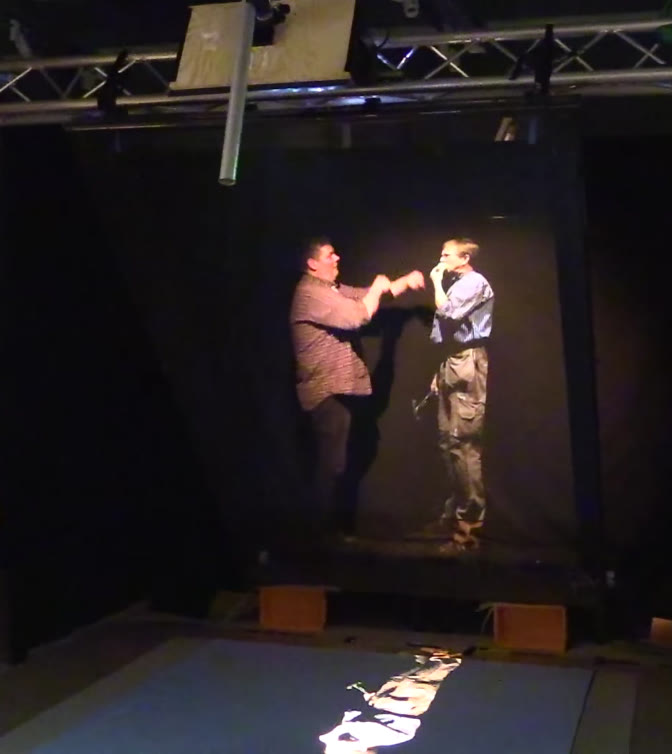
Pepper’s ghost is a stage illusion that uses an angled sheet of glass to reflect a hidden, brightly lit figure, so it seems to stand on stage among real actors. Dim the hidden light and the ghost vanishes. Shown in London at Christmas 1862, it still powers theme-park ghosts and concert “holograms.”
How the trick works
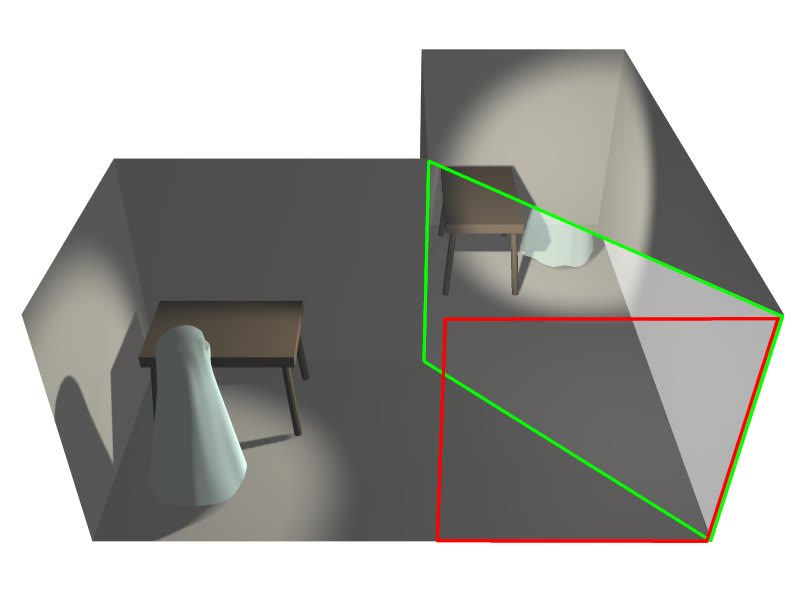
The clearest description is the inventors’ own. Their 1863 patent, reprinted in Pepper’s 1890 book The True History of the Ghost, set out “to associate on the same stage a phantom or phantoms with a living actor or actors, so that the two may act in concert.” The phantom stood on “a second stage at a lower level than the ordinary one, hidden from the audience as far as direct vision is concerned.”
Between the two stages sat the glass. “A large glass screen is placed on the ordinary stage and in front of the hidden one. The spectators will not observe the glass screen,” the patent explains. Light the hidden actor and the glass reflects him into the scene; darken the hidden stage and the image is “made immediately to disappear.”
So how does Pepper’s ghost work without anyone spotting the glass? Very little light bounces back: the University of Arizona’s optics outreach guide to Pepper’s ghost puts it at “about a 4% reflection” for typical glass, plastic or acrylic. So the illusion needs a dark house and a brightly lit hidden figure.
Who invented it: Dircks’s idea, Pepper’s ghost
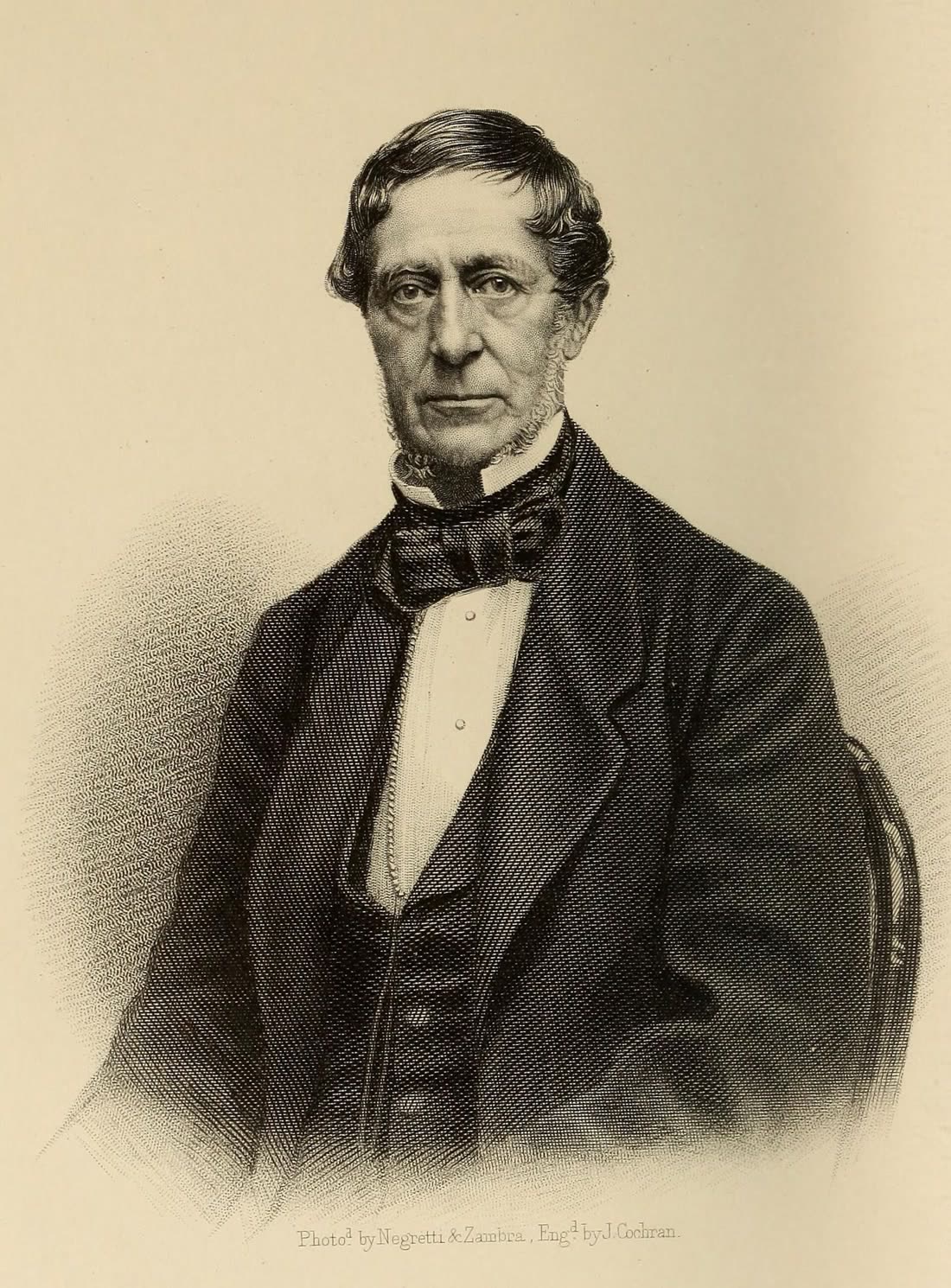
The idea came first from Henry Dircks, a civil engineer from Blackheath. By Pepper’s account, Dircks wrote a paper for the Athenaeum describing “an optical effect that could be performed with sheets of glass.” The catch was the building: Dircks “said that an entirely new theatre must be built to show the effects.”
Pepper, a professor of chemistry and honorary director of the Polytechnic Institution in London, “so improved and simplified the ghost that it could be shown in any lecture hall or theatre,” he wrote.
Christmas 1862 and a disputed first play
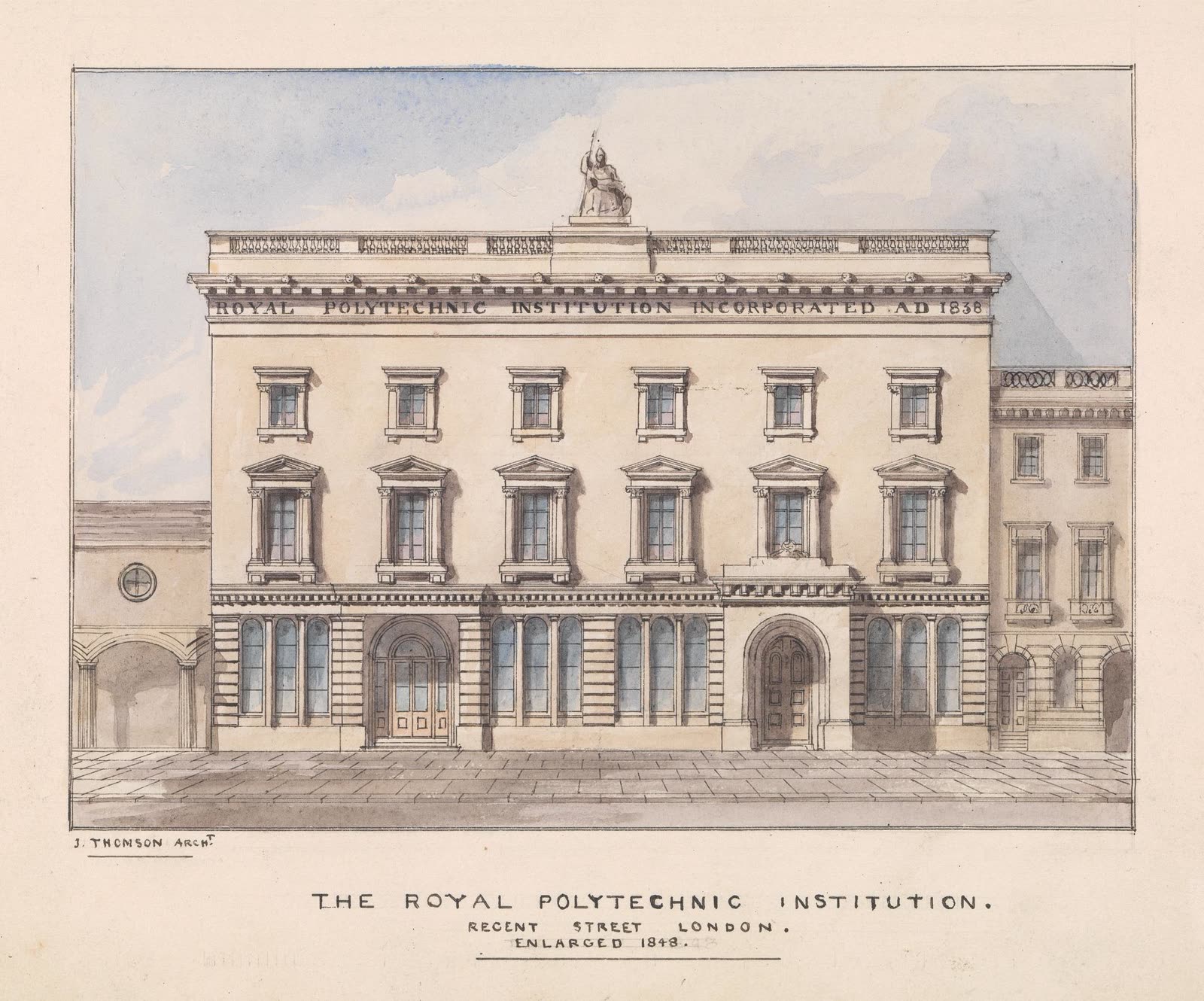
Pepper told the first night himself: “Just before Christmas Day in 1862, I invited a number of literary and scientific friends” to a private view of an illusion meant for a staging of Bulwer-Lytton’s novel A Strange Story. The effect on his guests, he recalled, “was startling in the extreme.”
Later histories tell it differently. The Theatrecrafts glossary dates the first showing to Christmas Eve 1862 at the Royal Polytechnic Institution and says Charles Dickens later used the effect during readings of The Haunted Man, while a Scientific American history places the premiere in a stage version of The Haunted Man itself. Pepper’s account and the later ones do not agree.
The patent in two names

The provisional patent of 5 February 1863 named both men. Pepper wrote that he filed it “in the names, at my request, of Dircks and Pepper,” and that Dircks later “gave me spontaneously whatever profits might accrue from the invention.” That is Pepper’s version, written in 1890.
From Victorian stages to the Haunted Mansion
The trick survived in hobby books. In the Walt Disney Family Museum’s interview with Imagineer Rolly Crump, Crump remembered that his colleague Yale Gracey owned a 1913 copy of The Boy Mechanic, which “had a little illustration in there on how to do Pepper’s Ghost using a little skeleton hanging there.”
“So Yale built a little model of Pepper’s Ghost to show Walt, which he got a charge out of.” Disney had once planned the Haunted Mansion as a walk-through; when it became a ride, Crump said, the ballroom scene was built so that riders could “see through all of the animatronics.” The Mansion opened at Disneyland on August 9, 1969.
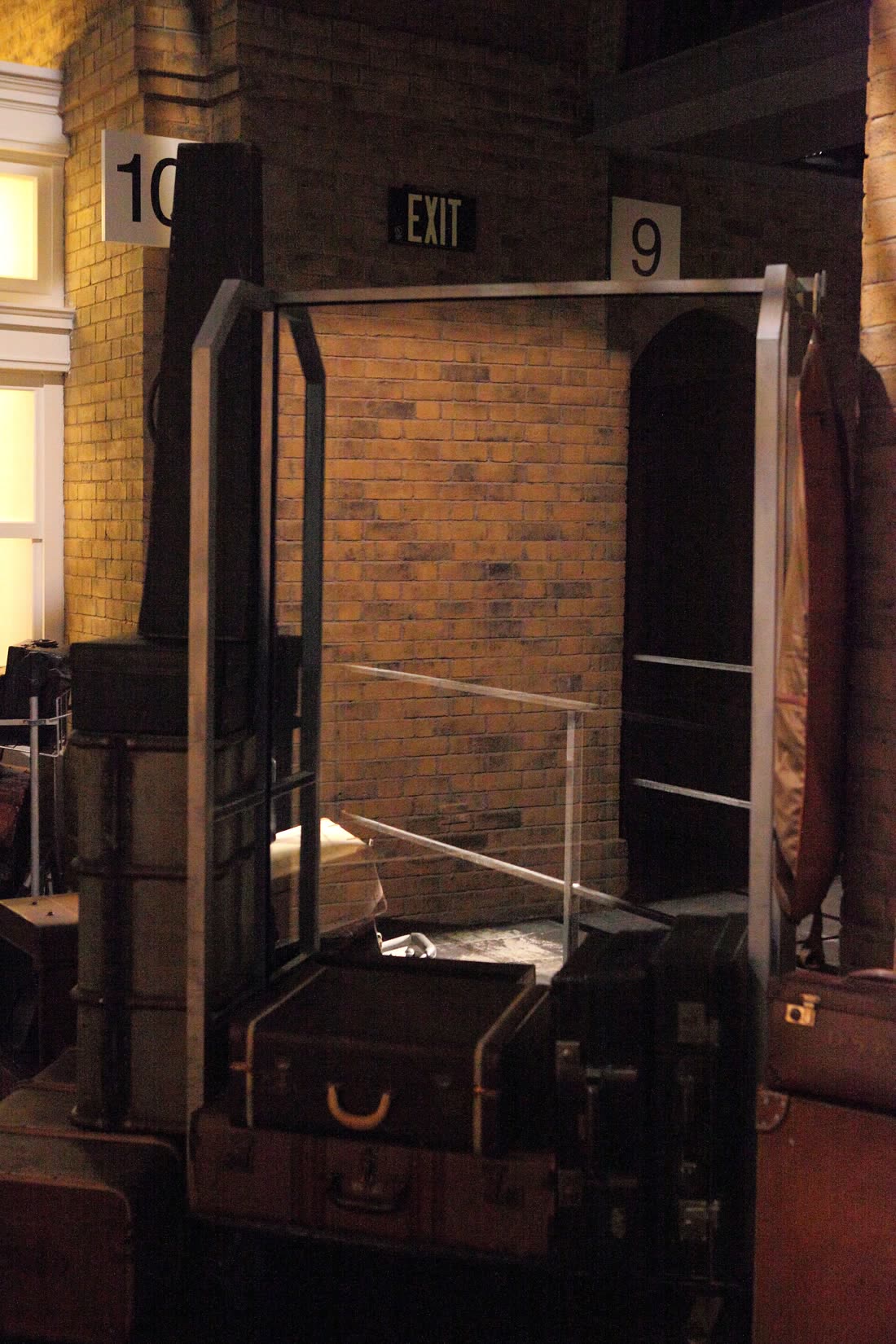
Theme parks still use the Pepper’s ghost illusion, as at the Platform 9 3/4 entrance pictured here, part of the history of haunted attractions and funhouse rides.
Teleprompters and the “hologram” at Coachella
Every speech read from a teleprompter uses the same angled glass: the Arizona optics team notes that “the technique is also the basis for how teleprompters work.” Today the hidden actor is often a video screen.
The most famous recent ghost appeared at the Coachella festival on April 15, 2012, when, as NBC News reported, “the life-like image of a shirtless, tattooed Shakur rises from the darkness.” AV Concepts and London’s Musion Systems sent an animated Tupac Shakur “onto a Mylar-foil screen that was invisible to the Coachella audience.”
Headlines called it a hologram. The man who staged it did not: “It truly isn’t a hologram. It’s a holographic effect, a simulation,” said Nick Smith of AV Concepts, who called the method “an old theater trick from the 1800s.” Any Pepper’s ghost hologram is, strictly, a reflection.
| Aspect | Pepper’s ghost | True hologram |
|---|---|---|
| What makes the image | A reflection in glass, plastic or foil | Laser beams, a beam spreader and photographic plates |
| Depth | A flat image placed in a real space | Changes with the viewer’s position |
| What it needs | A hidden, lit figure or screen and dark surroundings | A recording medium and two laser beams |
A Pepper’s ghost you wear: Antenna Theater’s Euphor!um
Chris Hardman met the illusion young. In 1970 his first paid art commission was refurbishing a Coney Island carnival ride, and he painted the ballyhoo banner for a sideshow billed as “Alena – Girl turns into Gorilla,” an illusion he said used Pepper’s ghost. Coney Island stayed with him, as the mazes and mirror illusions in Hardman’s exhibitions show.
In 1983, writing in The Drama Review about theatre on headphones, he imagined a moment when “you’re approached by a humanoid; it could be a hologram, an actor, or a fellow audient.” Euphor!um, which ran at the Presidio from early 2001 and then at London’s Roundhouse in 2002, put the reflection on the visitor’s head.
Antenna’s own page promised: “You will walk through entirely alone, wearing a specially-crafted helmet that causes illusory images to float before your eyes.” Hardman said the helmet used the Pepper’s ghost principle, and Leslie Katz of the San Francisco Examiner reported that he called the show a “glorified parlor trick.”
Katz described the mechanism: “The goofy headgear is rigged with reflective plastic, which captures images of paintings on the floor and colorful sculptures hanging from the ceiling.” Chad Jones of the Oakland Tribune met a classic stage ghost at the start: “Looking into a mirror, your image disappears and is replaced by a vision of Coleridge.”
The production itself is told in Euphor!um, Antenna’s walk-through dream of Kubla Khan, and its gallery cousin in Hardman’s gallery show of mirror illusions. Both belong to Antenna’s new theater forms and to theatre for one visitor at a time. For another way of fooling two eyes at once, see what anaglyph art is and how red-cyan 3-D works.
Frequently asked questions
Who invented Pepper’s ghost?
Henry Dircks, a civil engineer, devised it. John Henry Pepper made it workable in an ordinary theatre and showed it in London at Christmas 1862. Their 1863 patent named both men.
Is Pepper’s ghost a hologram?
No. It is a reflection in glass, plastic or foil. The University of Arizona’s optics outreach team notes that a true hologram needs a recording medium and two separate laser beams.
Does Disney’s Haunted Mansion use Pepper’s ghost?
Yes, for the ballroom ghosts. Imagineer Rolly Crump said Yale Gracey found the trick in a 1913 copy of The Boy Mechanic.
How did Antenna Theater use it?
In Euphor!um, each visitor wore a helmet rigged with reflective plastic that showed floating images of paintings and sculptures. Chris Hardman called the show a glorified parlor trick.