History of the UCLA Wight Art Gallery: From Campus Gallery to the Hammer
For four decades UCLA’s campus gallery showed Picasso, staged performance in a sculpture garden and opened a landmark survey of Chicano art, then moved its staff into its neighbor, the Hammer Museum. The history of the UCLA Wight Art Gallery is scattered across finding aids and a painting label. Here it is in one place, with the walk-through Antenna Theater installed there in 1995.
Quick answer
What was the Wight Art Gallery?
The Wight Art Gallery was UCLA’s campus art gallery. It opened in 1953 as the University Art Galleries, was named for its first director, Frederick S. Wight, in 1973 or 1974, and showed landmark exhibitions such as CARA. In 1995 its staff and collections moved to the Hammer Museum.
Frederick Wight’s gallery, 1953 to 1973
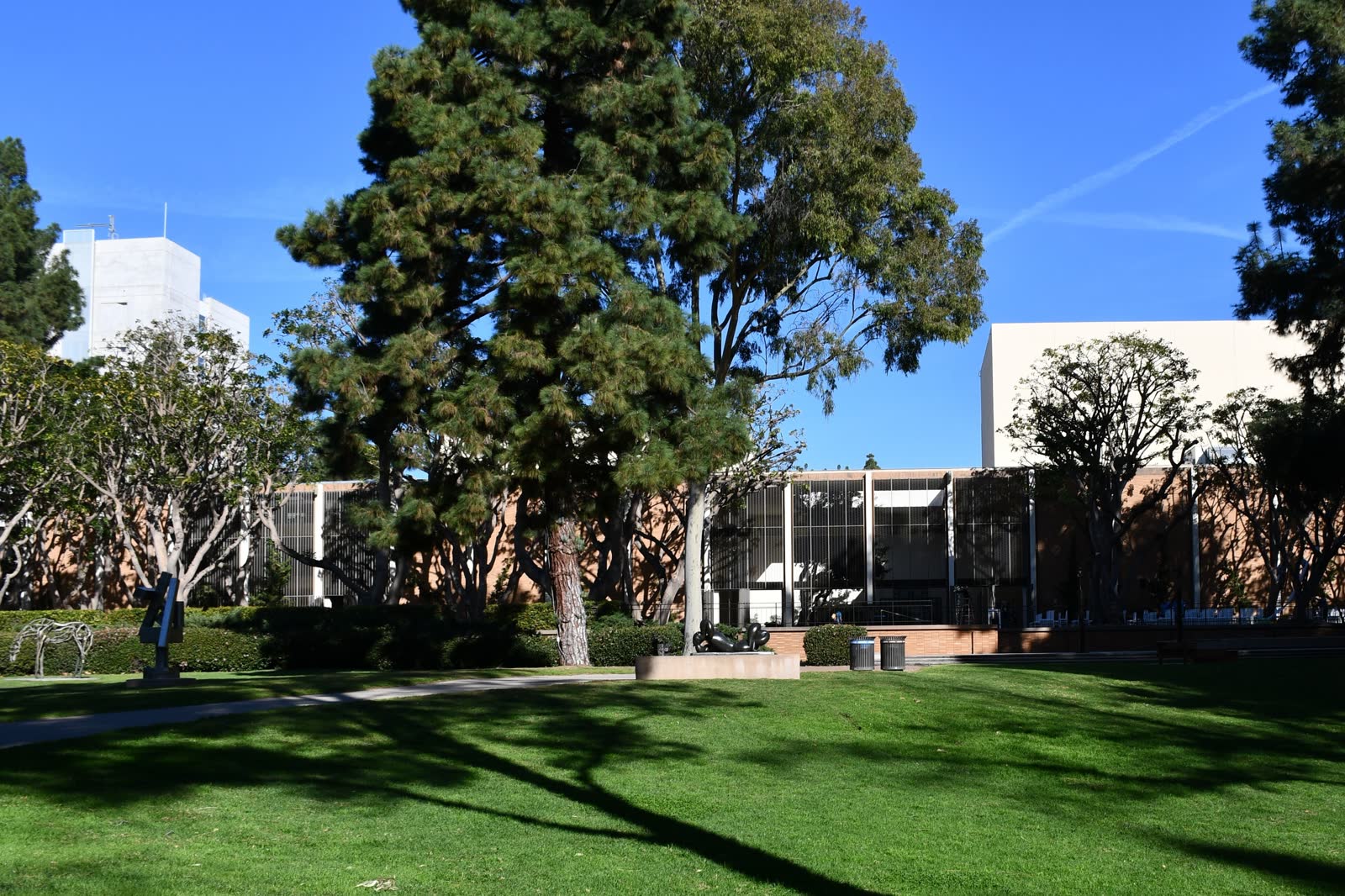
The gallery was “Established in 1953 as the University Art Galleries for the display of fine art in UCLA’s Art Building,” according to UCLA’s finding aid for its exhibition files. That year Wight “came to UCLA to teach in the art department and direct the university’s art gallery,” and, in the words of UCLA’s art tour, “He was responsible for shaping a stellar exhibition program in a period when Los Angeles had relatively few museums.”
Wight, a painter and novelist who had spent six years at the Institute of Contemporary Art in Boston, built support as well as shows. He convened the UCLA Art Council as a patronage group, which helped establish “the Franklin D. Murphy Sculpture Garden,” and he circulated UCLA’s exhibitions to other institutions.
During his 20 years the gallery showed Jean Arp, Morris Graves, Hans Hofmann, Arthur Dove, Henri Matisse and Pablo Picasso. For Picasso’s 80th birthday in 1961, the artist made a lithograph, Flowers for UCLA, “in a limited edition of 100 signed and numbered prints.” In 1965 the gallery moved into the Dickson Art Center.
Wight retired in 1973, and the gallery took his name: in 1973 by UCLA’s finding aid, in 1974 by the art tour and other accounts. His own painting career “took off with surprising force after he retired.”
A gallery that staged performance
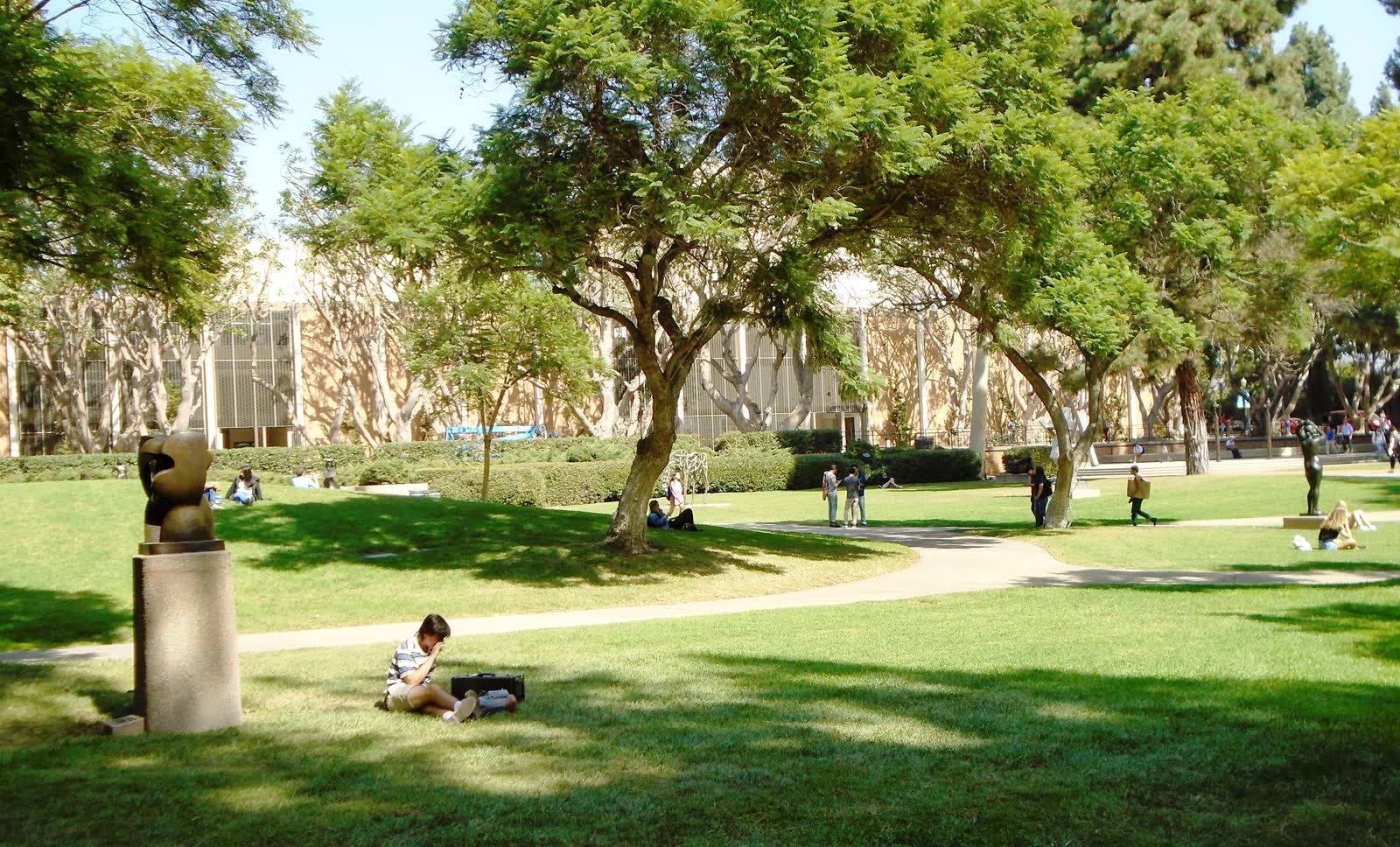
The Wight did not stay inside its walls. On May 31, 1986, Suzanne Lacy’s The Dark Madonna was “Curated by Edith Tonelli for the Frederick Wight Gallery, in the Franklin Murphy Sculpture Garden.” “Fifty women dressed in white posed motionless on white pedestals, while the soundtrack played from speakers in surrounding trees,” the artist records.
Later “150 women dressed in black wandered in small groups,” and “The 2000 audience members were given flashlights of their own and were invited to join the conversations.” Suzanne Lacy’s page on The Dark Madonna credits the soundtrack to Susan Stone, woven from recorded discussions of race among Los Angeles women. A soundtrack built from interviews and an audience given a part to play: both ideas would return to the Wight nine years later.
CARA and the national stage
The Wight’s biggest show began in 1983, when Cecelia Klein, Shifra Goldman and graduate students asked the gallery’s new director, Edith Tonelli, about a Chicano art exhibition. The National Endowment for the Humanities at first turned it down, and the planning ran through “a large committee of over 40 Chicano scholars, artists and administrators.”
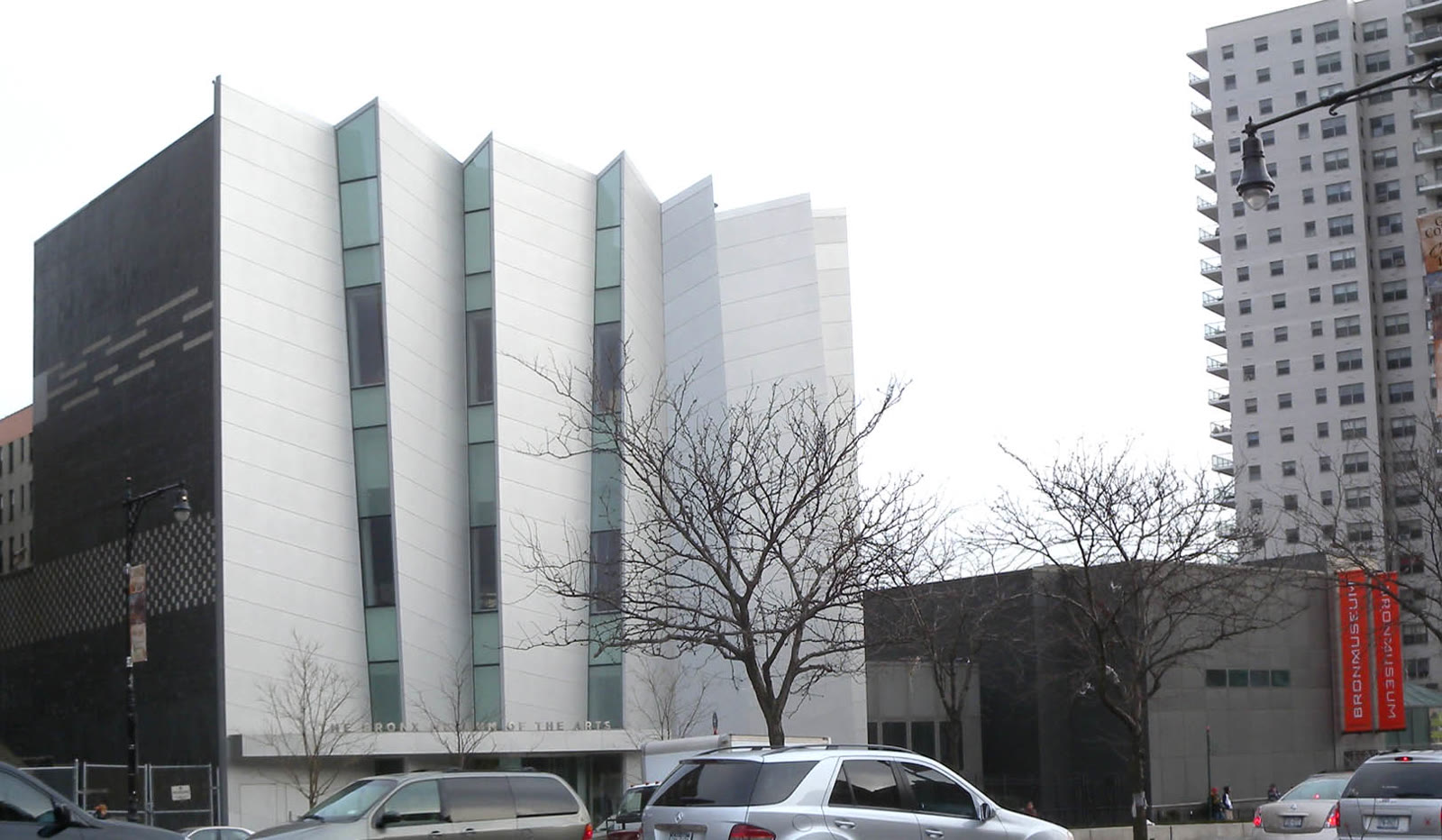
Chicano Art: Resistance and Affirmation opened at the Wight on September 9, 1990, with “some 180 works of art (including projected images of murals) produced between 1964-1985 by about 140 Chicano and 40 Chicana artists.” It then toured ten U.S. cities, among them the Bronx Museum and the National Museum of American Art in Washington. UCLA’s Chicano Studies Research Center calls it “the first major exhibition to showcase Chicanx art for a national audience.”
Museum shows could be fought over in those years. Early in 1995 the Smithsonian replaced its planned exhibition on the bomber with a smaller display, as told in the Enola Gay exhibit controversy.
A walk-through in Westwood, 1995
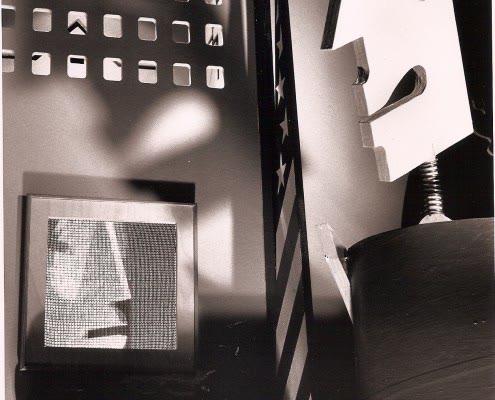
Antenna’s chronology records “1995: UCLA Wight Gallery, Los Angeles, CA” for Etiquette of the Undercaste, Antenna’s walk-through about homelessness. It had begun at SOMAR in San Francisco in 1988, played the Contemporary Arts Forum in Santa Barbara in 1991 and the Smithsonian’s Experimental Gallery in 1992.
Jenny Hsieh reviewed it for the Daily Bruin on January 23, 1995: “Created by Chris Hardman in 1988, this interactive installation incorporates edited interviews of northern California’s homeless, social workers, police, bartenders, soup kitchen volunteers, priests and those who interact on a first hand basis with the underprivileged.” The show ran through February 10, and admission was free.
She saw a local edge: “In Westwood, residents accustomed to the weathered palms pleading for money, have grown desensitized to the plight of these street people.” Next door hung a companion show, Hidden Views, “featuring works by inner city youths, skid row artists, and children from shelters,” and “Exit signs are plenty, aglow for those who can’t handle the intense experience.”
Antenna had first come to UCLA in 1984, with Amnesia at Royce Rehearsal Hall for the 1984 Olympic Arts Festival in Los Angeles. Both visits are in the Antenna chronology of productions.
Into the Hammer
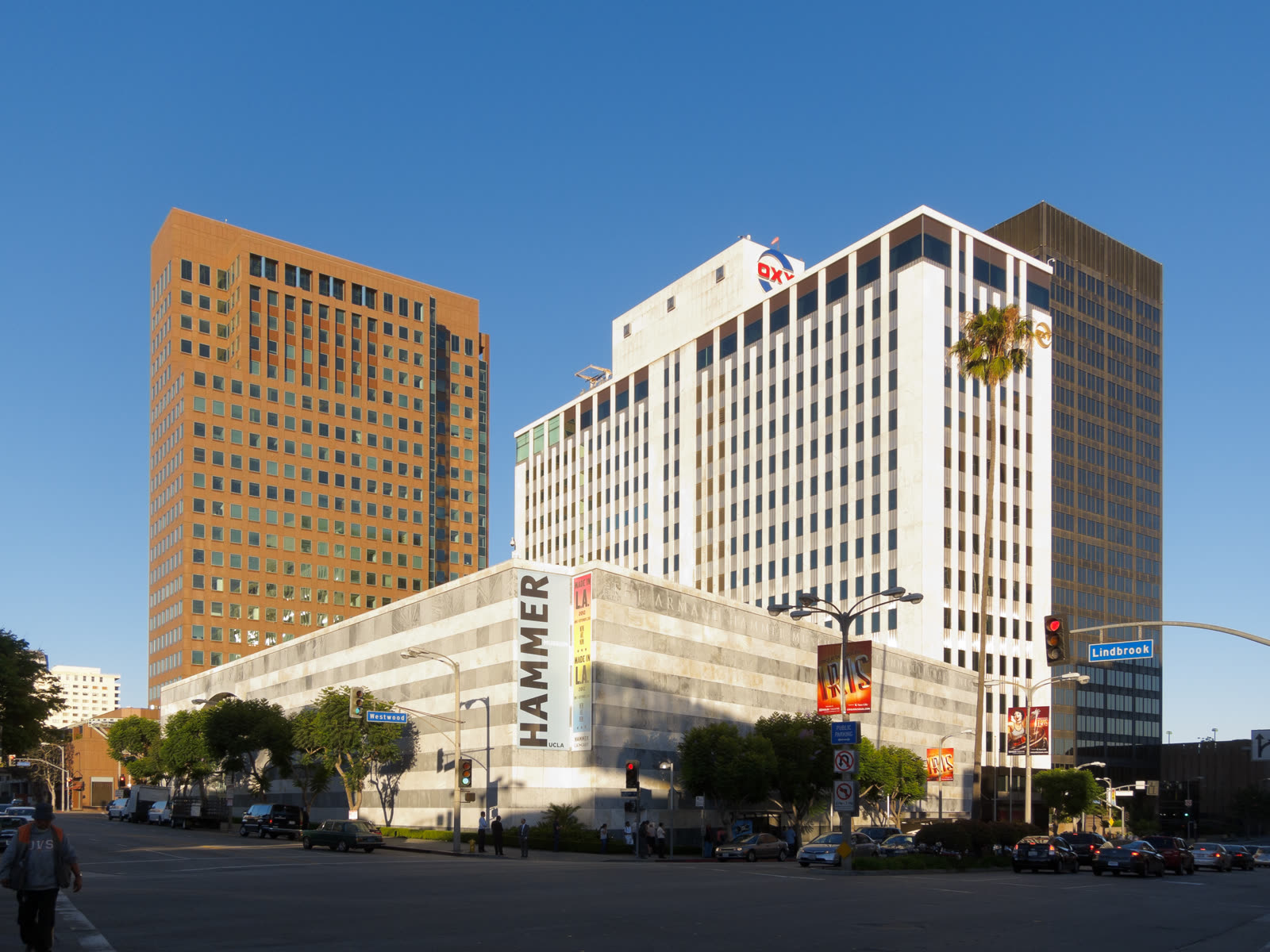
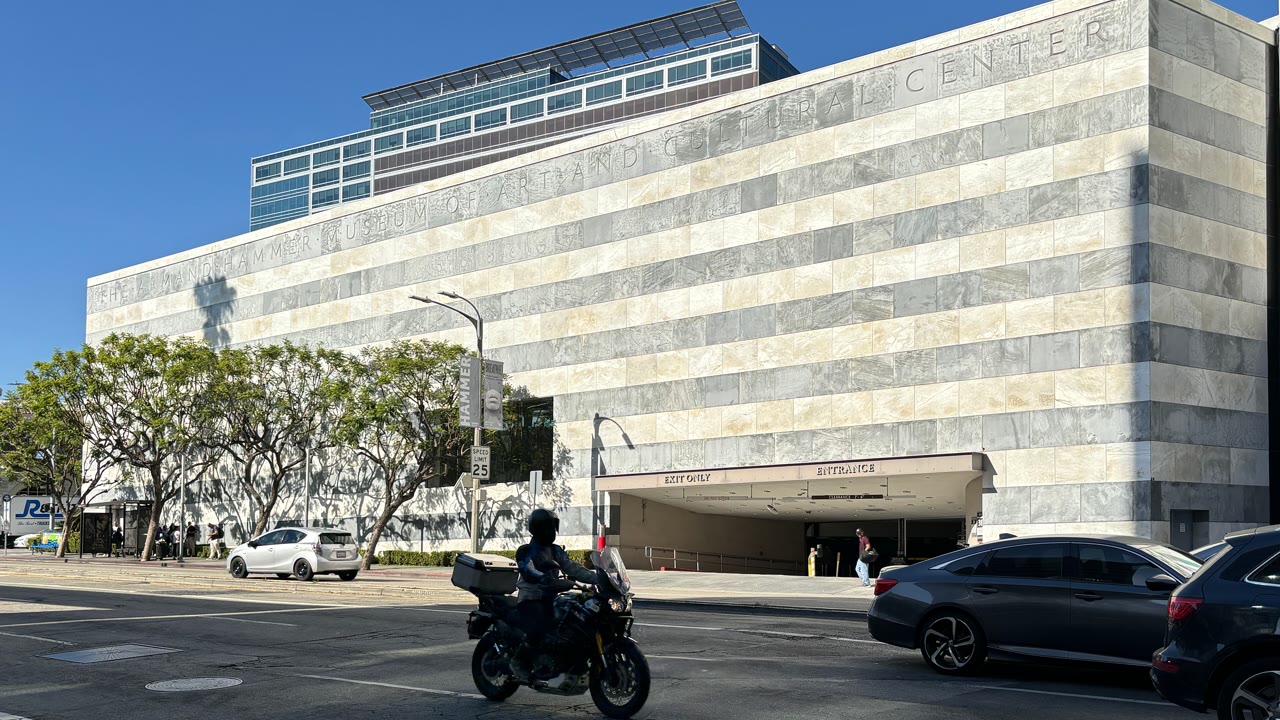
“The Hammer Museum opened to the public in November 1990,” and its founder, Armand Hammer, died three weeks later. “In 1992, the Museum began negotiations with its neighbor, University of California, Los Angeles (UCLA), to assume the management and operations of the institution.”
The Hammer Museum’s own history continues: “In April 1994, the partnership with UCLA was finalized and the following year the University relocated its collections and the staff of the Wight Art Gallery and the Grunwald Center for the Graphic Arts to the Hammer.” Henry Hopkins, “then director of the Wight gallery and professor in the Department of Art, became director of the Museum until his retirement in 1998.”
The New Wight and the Broad Art Center
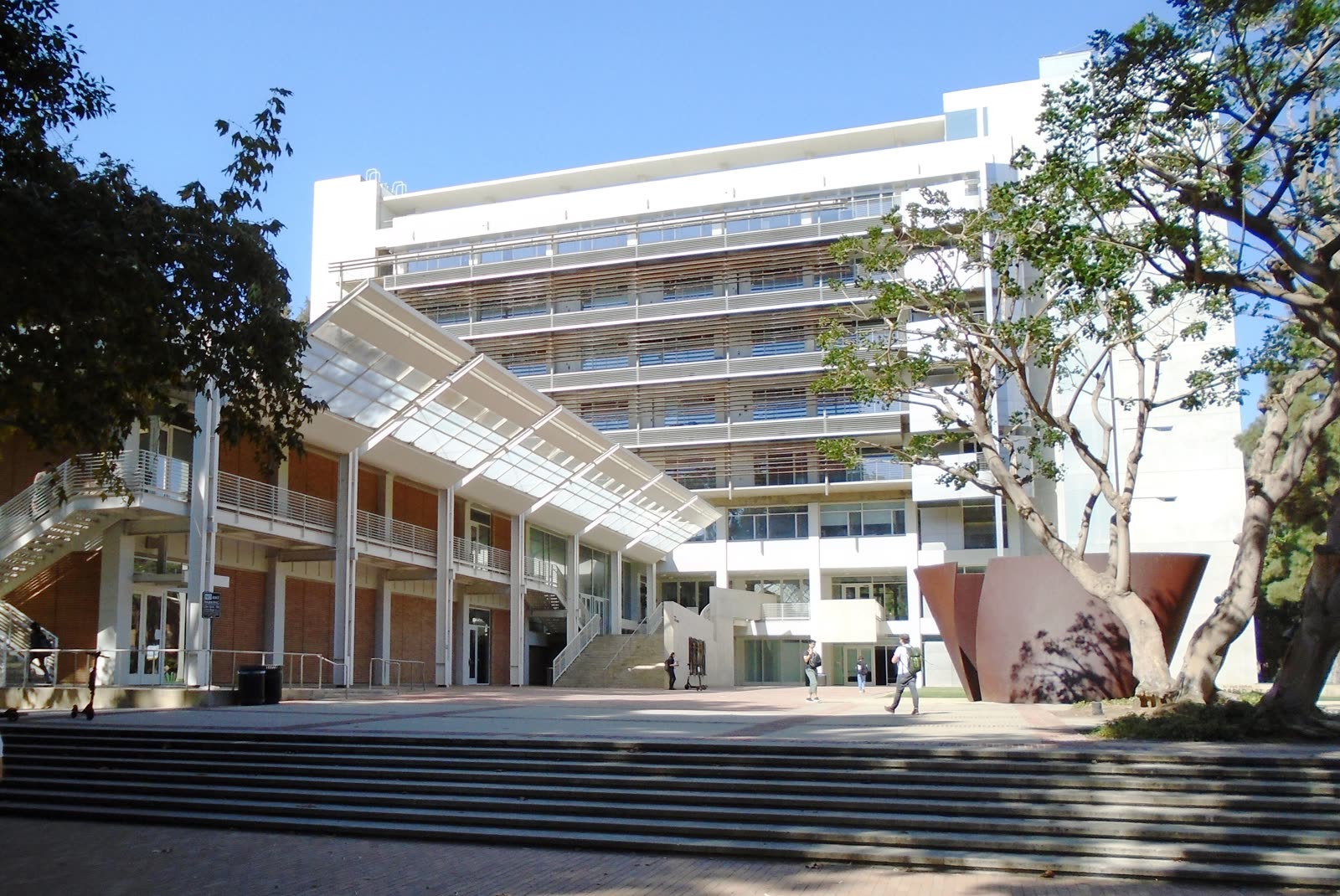
The name stayed on campus. After 1995, UCLA’s finding aid says, “the Wight Art Gallery became known as the New Wight Gallery,” a student gallery today in the Broad Art Center. That building grew out of the Dickson Art Center, damaged in the 1994 Northridge earthquake, and Richard Meier’s renovation opened in 2006.
| Name | When | What it was |
|---|---|---|
| University Art Galleries | 1953 to 1973 or 1974 | UCLA’s campus gallery, run by Frederick Wight |
| Frederick S. Wight Art Gallery | 1973 or 1974 to 1995 | The same gallery, named for him |
| New Wight Gallery | After 1995 | A student gallery on campus |
| Hammer Museum | From 1995 | Took in the Wight’s staff and collections |
The history of the UCLA Wight Art Gallery in dates
| Year | What happened | Source |
|---|---|---|
| 1953 | University Art Galleries open; Frederick Wight hired to run them | UCLA Library; UCLA art tour |
| 1961 | Picasso’s 80th-birthday show and Flowers for UCLA | UCLA art tour |
| 1965 | Move into the Dickson Art Center | UCLA Library |
| 1973 or 1974 | Wight retires; the gallery takes his name | UCLA Library; UCLA art tour |
| 1986 | Suzanne Lacy’s The Dark Madonna (May 31) | Suzanne Lacy; UCLA Library |
| 1990 | CARA opens (September 9), then tours ten cities | UCLA Chicano Studies Research Center |
| 1994 | UCLA’s partnership with the Hammer finalized (April) | Hammer Museum |
| 1995 | Etiquette of the Undercaste; staff move to the Hammer | Daily Bruin; Hammer Museum |
| 2006 | Broad Art Center opens on the Dickson site | Broad Foundation |
Frequently asked questions
Who was Frederick Wight?
A painter, novelist and museum director who came to UCLA in 1953 to teach and run its art gallery, which he led for 20 years.
Is the Wight Art Gallery now the Hammer Museum?
In part. After UCLA’s partnership with the Hammer was finalized in 1994, the university moved the Wight’s staff and collections there in 1995.
What was CARA?
Chicano Art: Resistance and Affirmation, a show of some 180 works that opened at the Wight on September 9, 1990 and toured ten U.S. cities.
Did Antenna Theater show at the Wight?
Yes. Etiquette of the Undercaste ran there until February 10, 1995, with free admission.