The Enola Gay Exhibit Controversy: How the Smithsonian’s 1995 Show Was Cancelled
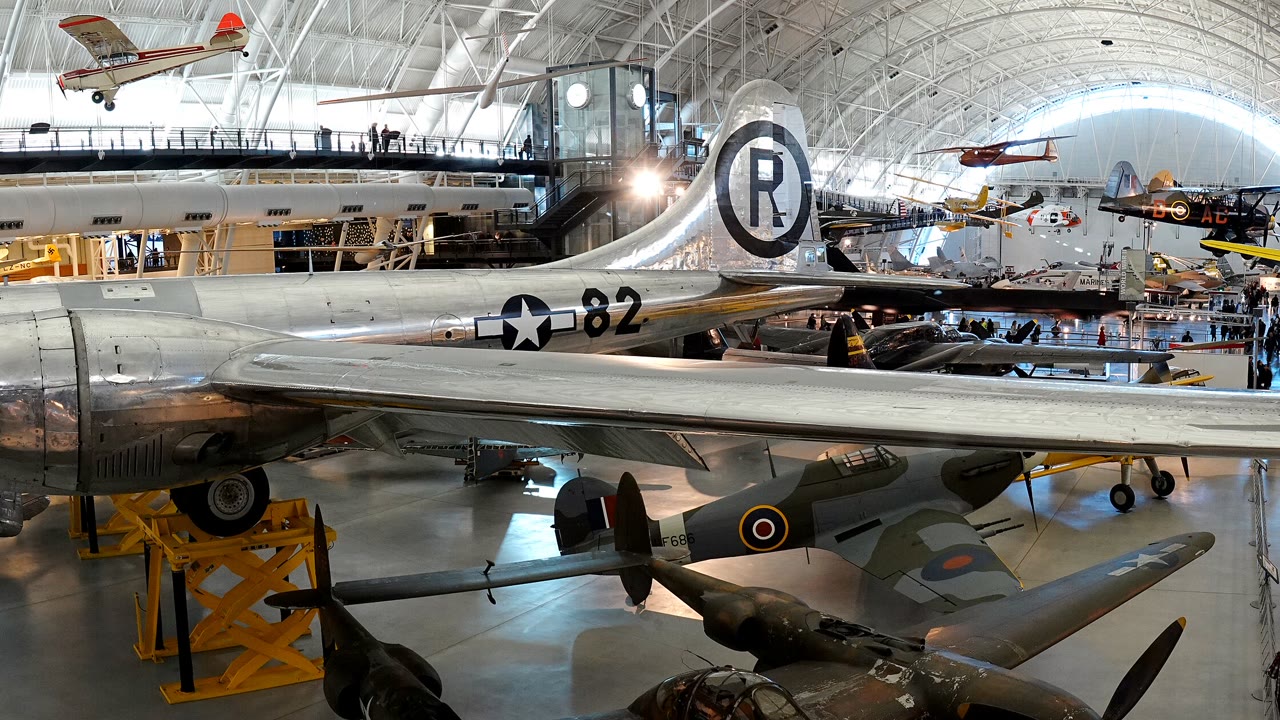
For the 50th anniversary of the end of the Second World War, the National Air and Space Museum planned to show the B-29 that bombed Hiroshima. The Enola Gay exhibit controversy that followed ran from 1994 into 1995, reached the Senate, ended the exhibit as written and cost the museum its director. This is a dated account, with each side quoted in its own words.
Quick answer
Why was the Enola Gay exhibit cancelled?
The museum’s script set the bomber beside the decision to drop the bomb and its aftermath. Veterans’ groups and members of Congress objected that it was unbalanced, and after five drafts the Smithsonian cancelled the exhibit on January 30, 1995. It showed the forward fuselage with little historical text instead.
A bomber in storage (1953-1987)
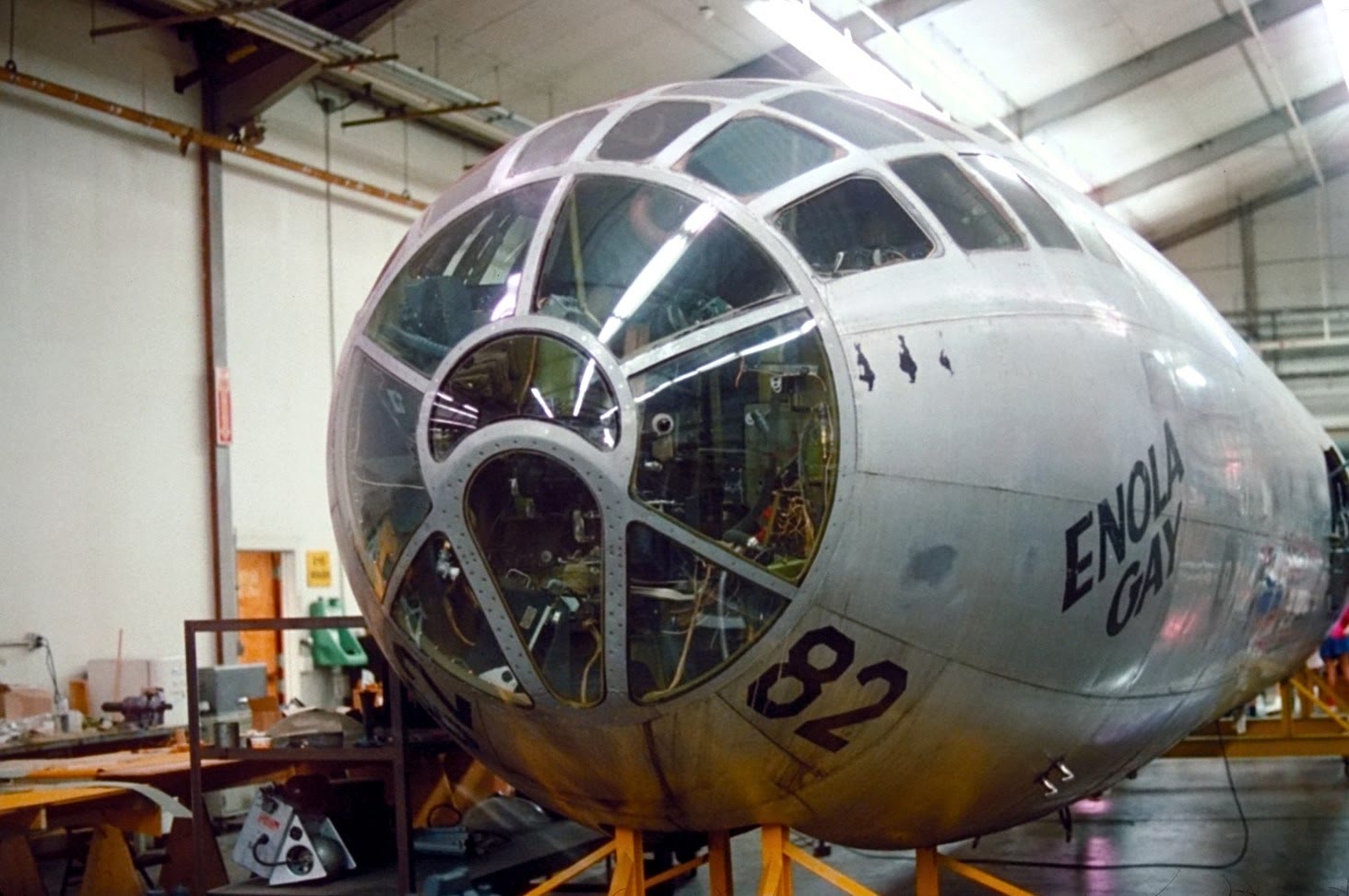
The Atomic Heritage Foundation records that “from 1953 to 1960, its home was Andrews Air Force Base in Maryland. There its wings began to rust and vandals even damaged the plane.” In 1961 it was taken apart and moved to the museum’s Paul E. Garber storage facility.
Veterans of the 509th Composite Group raised money through a committee “for the Restoration and Proud Display of the Enola Gay”. The Smithsonian began restoring the bomber on December 5, 1984, and staff hoped to have it ready for the war’s 50th anniversary.
Harwit’s plan and the “Crossroads” script
Martin Harwit became the museum’s director in 1987. In 1988 Admiral Noel Gayler warned that any exhibition would imply “that we are celebrating the first and so far the only use of nuclear weapons against human beings.” The curators, led by Tom Crouch and Michael Neufeld, finished their script in January 1994, a document of several hundred pages (the sources count it differently).
Its title was “The Crossroads: The End of World War II, the Atomic Bomb and the Origins of the Cold War.” Harwit described the aim as “not an opinion piece but rather the basic information that visitors will need to draw their own conclusions.” Crouch saw the bind early: “Do you want to do an exhibit to make veterans feel good, or do you want an exhibition that will lead our visitors to think about the consequences of the atomic bombing of Japan? Frankly, I don’t think we can do both.”
The campaign (1994)
The Air Force Association led the opposition. Its executive director, Monroe W. Hatch Jr., had written in 1993 that the plan treated Japan and the United States “as if their participation in the war were morally equivalent.” In March 1994 the association went public, and on April 4, by its own account, it gave a copy of the script to the press with an invitation to “judge for yourself.”
Veterans’ groups felt the exhibit “dishonored veterans by discussing the controversy over the decision to drop the bomb and displaying graphic photos of atomic bomb victims.” Tens of thousands of letters reached the Smithsonian. In a Washington Post essay that August, Harwit replied that the museum must “deliver an accurate portrayal that conveys the reality of the atomic war and its consequences.”
In late September 1994 the Senate passed a non-binding resolution calling the script “revisionist and offensive to many World War II veterans.” The new Smithsonian Secretary, I. Michael Heyman, said “Our first script for the exhibition was deficient,” and on October 6 Representative Gerald Solomon threatened the Smithsonian with “the ‘power of the purse’ that Congress wields”.
Five drafts to “The Last Act”
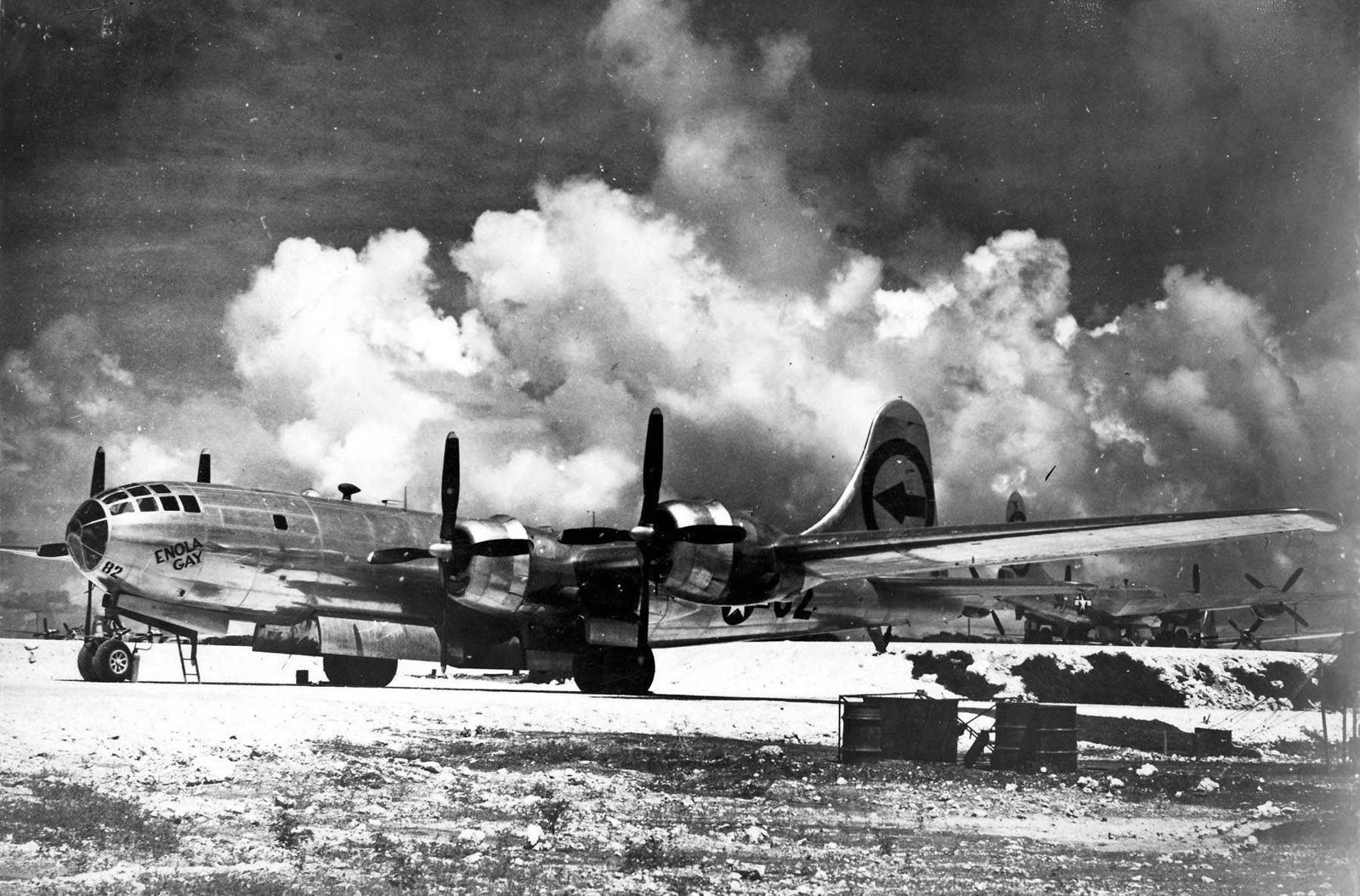
The Smithsonian and the American Legion agreed to review the script line by line. The fourth draft is dated October 3, 1994, and the fifth, of October 26, renamed the show “The Last Act”, adding a first unit on the war in the Pacific. The section on Japanese wartime atrocities was expanded, and most photographs of victims and Hiroshima artifacts were removed.
On November 16, 1994, 48 historians protested what they called “historical cleansing”. The final break came over casualty estimates. Lehigh’s archive records that on January 9, 1995, Harwit told the Legion the best evidence showed about 63,000 casualties had been envisioned, and calls that act “the death knell of the exhibit.”
Cancellation and resignation (1995)
The Legion called for cancellation on January 18, the Air Force Association on January 20, and on January 24 81 members of Congress called for Harwit to resign. On January 30, 1995, Heyman cancelled the exhibit: “We made a basic error in attempting to couple an historical treatment of the use of atomic weapons with the 50th anniversary commemoration of the end of the war”.
The association answered at a Senate hearing that May: “The problem was not the coupling of history with commemoration. It was that the history had been given a countercultural spin.” Harwit resigned on May 2, 1995, saying “nothing less than my stepping down from the directorship will satisfy the Museum’s critics”. The association’s chronology says he resigned at the Secretary’s request.
The Smithsonian Enola Gay exhibit on show (1995-1998)
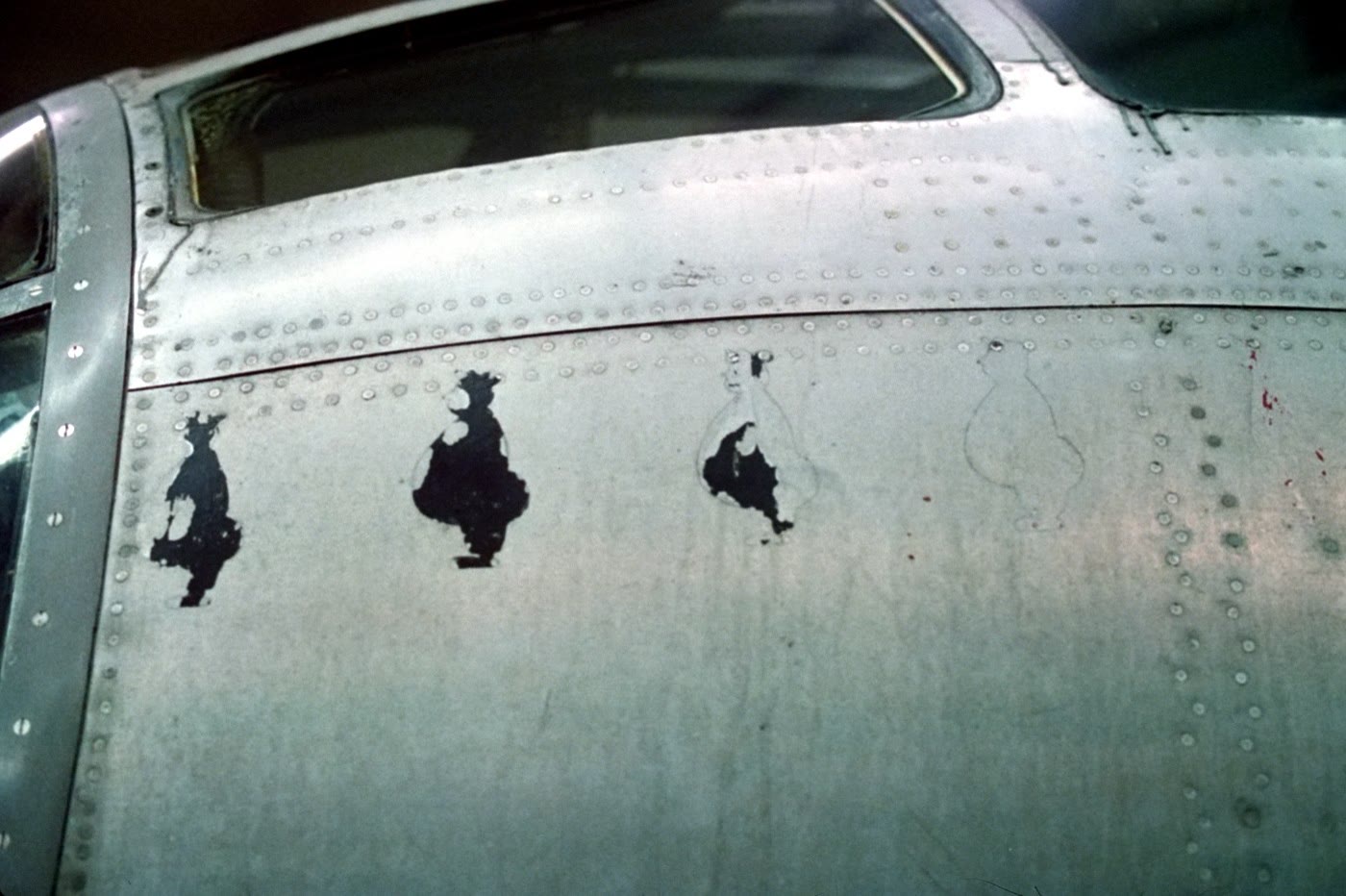
The reduced display opened on June 28, 1995: the forward fuselage, a video with the crew, and text “limited to the history and development of the Boeing B-29 fleet”. During previews someone splashed red paint on the plane. When it closed in May 1998, it had drawn almost four million visitors.
The objects cut from the plan went elsewhere. On July 9, 1995, American University’s museum opened “Constructing a Peaceful World: Beyond Hiroshima and Nagasaki”, with loans from Hiroshima and Nagasaki. For more on how museums stage contested history, see what museum theatre is and how museums use it, and the Smithsonian’s Experimental Gallery, where Antenna showed work.
The same autumn in San Francisco
On October 6, 1994, the day Lehigh’s file dates Solomon’s warning, Antenna’s Enola/Alone, an interactive maze about a bomber pilot, opened in Building 1188 at the Presidio, the month of the Presidio’s handover to the National Park Service. It used interviews with former bomber pilots, Paul Tibbets among them, and Hiroshima survivors. Neither 1994 review mentions the Smithsonian, and no source connects the two: it is a coincidence of dates.
Afterlife: Udvar-Hazy, 2003
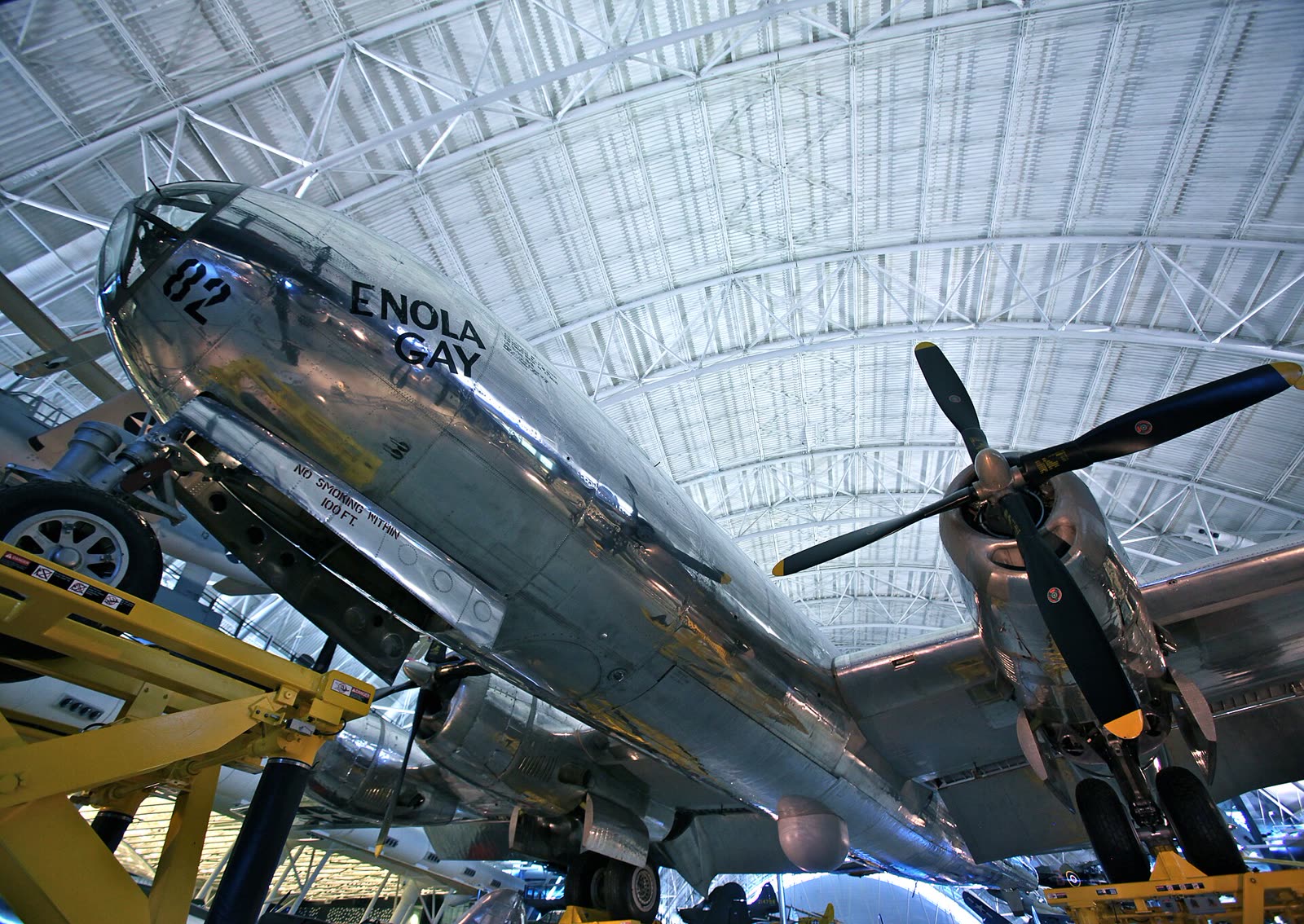
In 2003 the restored bomber went on permanent display at the Steven F. Udvar-Hazy Center, the museum’s annex in Virginia. “Two men were even arrested for throwing red paint, which dented the plane, during protests on opening day.”
The Atomic Heritage Foundation’s account of the Enola Gay controversy gives the full arc, though it dates the display’s opening to January 1995 where other sources give June 28.
The Enola Gay exhibit controversy month by month
| Date | Event |
|---|---|
| Dec 5, 1984 | Smithsonian begins restoring the Enola Gay |
| 1987 | Martin Harwit becomes the museum’s director |
| Jan 1994 | “Crossroads” script completed |
| Apr 4, 1994 | Air Force Association gives the script to the press |
| Late Sept 1994 | Senate resolution (dated September 22 or 23) |
| Oct 26, 1994 | Fifth draft, renamed “The Last Act” |
| Jan 30, 1995 | Exhibit cancelled |
| May 2, 1995 | Harwit resigns |
| June 28, 1995 | Fuselage display opens |
| May 1998 | Display closes after almost four million visitors |
| 2003 | Enola Gay moves to the Udvar-Hazy Center |
Lehigh University’s History on Trial archive on the Enola Gay collects the documents month by month. Another 1990s anniversary that turned into a fight is told in the history of the Columbus quincentennial, and Antenna’s own work of those years is in Antenna’s chronology.
Frequently asked questions
What was “The Last Act”?
The fifth and final draft of the exhibit script, dated October 26, 1994. The first draft had been called “The Crossroads”.
Why did Martin Harwit resign?
He said only his stepping down would satisfy the museum’s critics. He left on May 2, 1995, just before Senate hearings; the Air Force Association says he went at the Secretary’s request.
Where is the Enola Gay now?
At the Smithsonian’s Steven F. Udvar-Hazy Center in Virginia, where it has been on display since 2003.
Was Antenna’s Enola/Alone part of the controversy?
No source connects them. Enola/Alone opened in San Francisco on October 6, 1994, while the Washington dispute was under way.