Mummenschanz, the Mask Theatre That Never Spoke a Word
Mummenschanz mask theatre is the art of a face made from a toilet-paper roll, a lump of clay or a notepad. For five decades the Swiss company told its stories without words, from a festival debut in Avignon to three years on Broadway. This is its history, from the company’s own record and the press.
Quick answer
What is Mummenschanz?
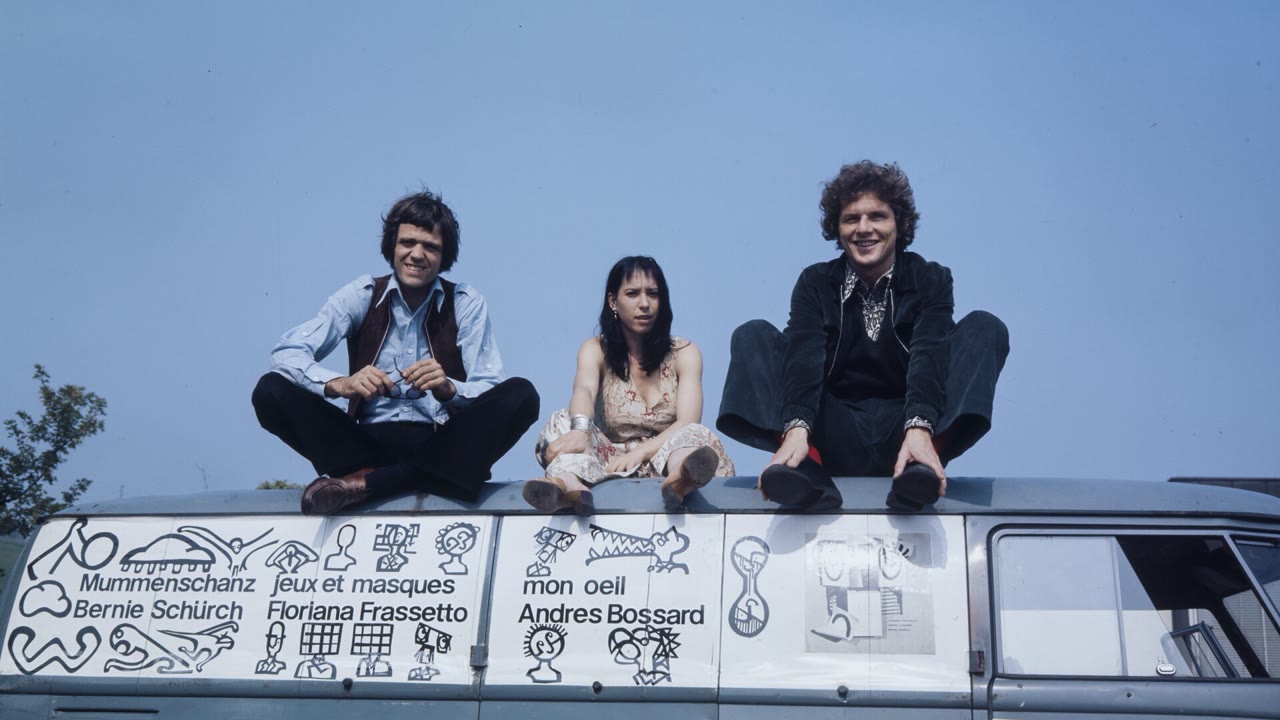
Mummenschanz is a Swiss mask theatre founded in 1972 by Bernie Schürch, Andres Bossard and Floriana Frassetto. Working without words, it turned toilet paper, clay, notepads and tubes into faces and creatures, played the Bijou Theatre on Broadway from 1977 to 1980 and toured the world for five decades.
Two Swiss actors, Frassetto and the Lecoq school
Bernie Schürch, born in Thun in 1944, and Andres Bossard, born in Zurich the same year, met in Paris at Jacques Lecoq’s school in 1970, according to the company’s own history of Mummenschanz. They performed as the street artists “Gody & Pas,” then as “Avant et perdu.” Lecoq’s teaching belongs to the wider history of mask theatre.
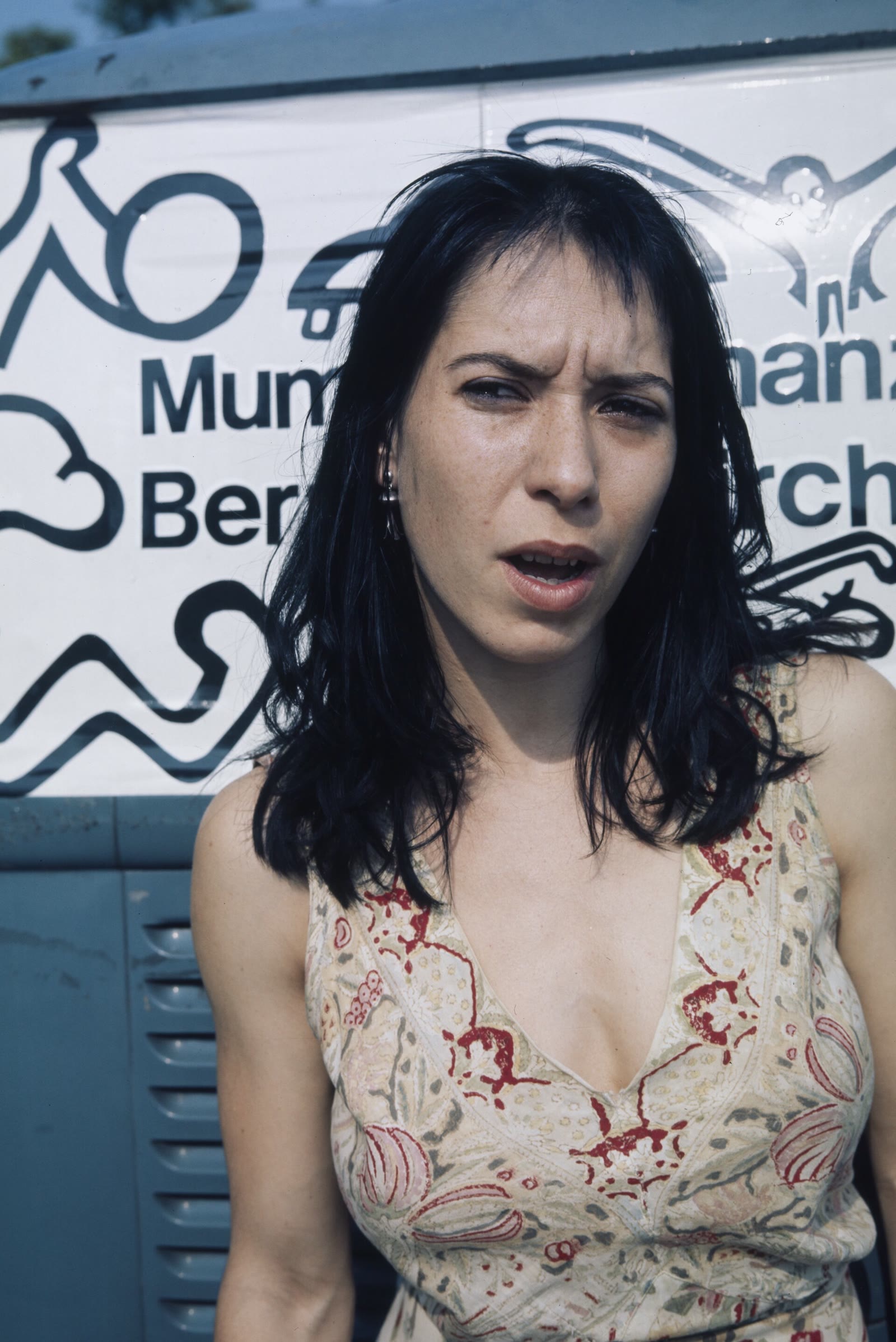
Floriana Frassetto, the daughter of Italian emigrants to the United States, trained in Rome, where in 1970 her teacher took her to see the duo. “Floriana was fascinated by this combination of improvisation and commedia dell’arte,” the company says. Accounts of when she joined differ (1971 in a 2001 Bohemian review, 1972 for SRF), but she followed them to Paris, and by 1972 they were a trio.
“The three then settled in Switzerland and spent three months turning spoken performances into masked plays. MUMMENSCHANZ was born in 1972.” The name is “a combination of ‘Mummen’, meaning to conceal or to mask (similar to the English ‘mummer’), and ‘Schanz’, a play on ‘chance’.” Silence was partly practical: Schürch told the Swiss broadcaster SRF, in our translation, “We saw that we could never make a living from our work in German.”
Avignon to Broadway
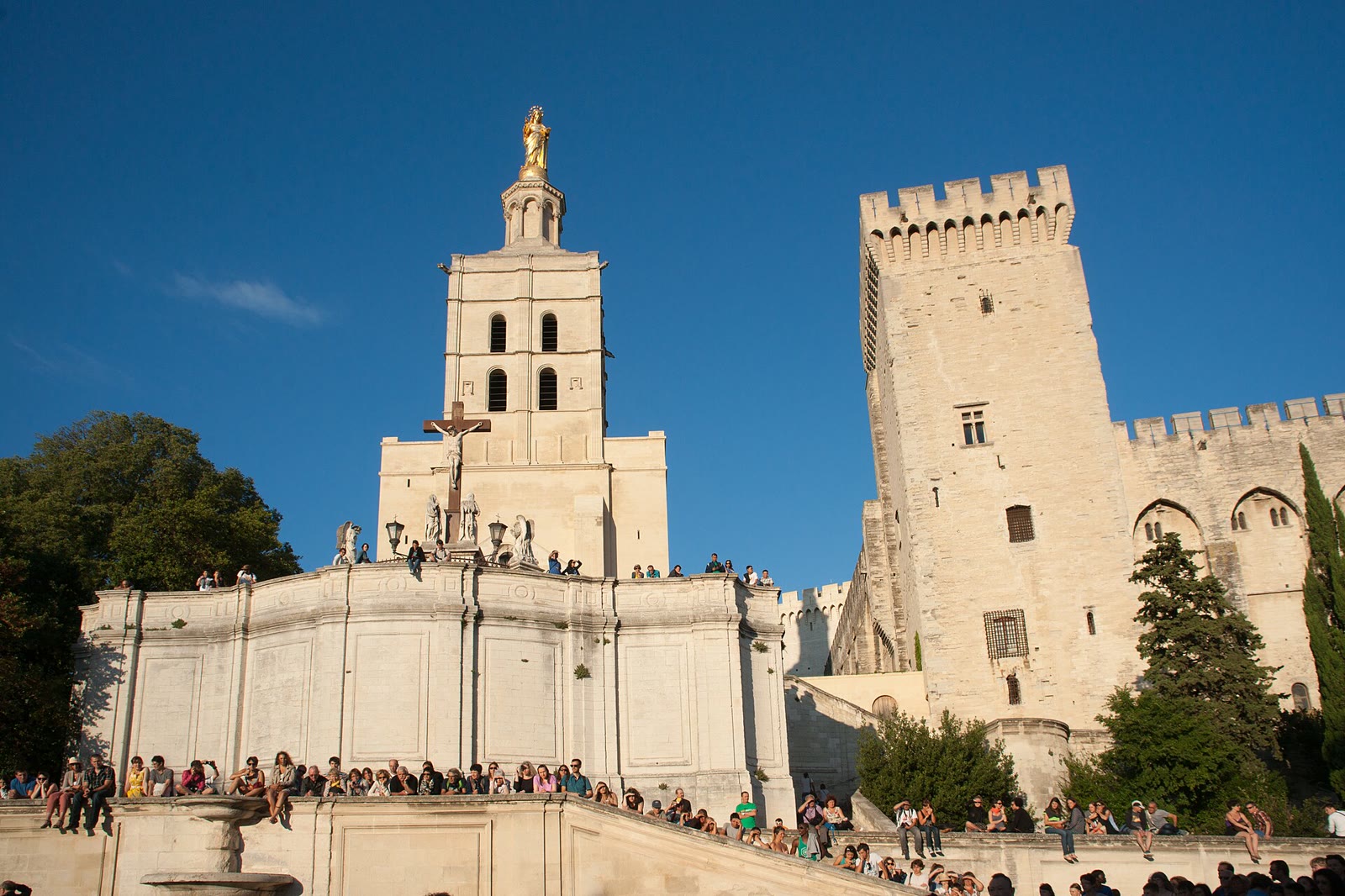
The trio first performed at the Avignon festival on July 11, 1972, SRF reports, and Frassetto recalled that “The audience was skeptical.” Then “The trio enjoyed a meteoric rise,” the company writes. “In fall 1973, Arthur Shaftman, an American theater agent, invited the trio to the United States. What started out as a short trip turned into a three-year stint.”
Mummenschanz on Broadway meant “the ‘Bijou’ theater on Broadway in New York from 1977 to 1980.” The count is disputed: Broadway listings give 1,326 performances, while SRF speaks of over 3,000, and no source explains the gap. Television spread the faces further, on “The Johnny Carson Show, Sesame Street, Muppet Show and The Red Skelton Show.”
The pace told. “Travel, performing and management were all taking their toll. In 1980, the trio took a break: a year’s vacation, then a year on hiatus.”
How Mummenschanz mask theatre worked: toilet paper, clay and notepads
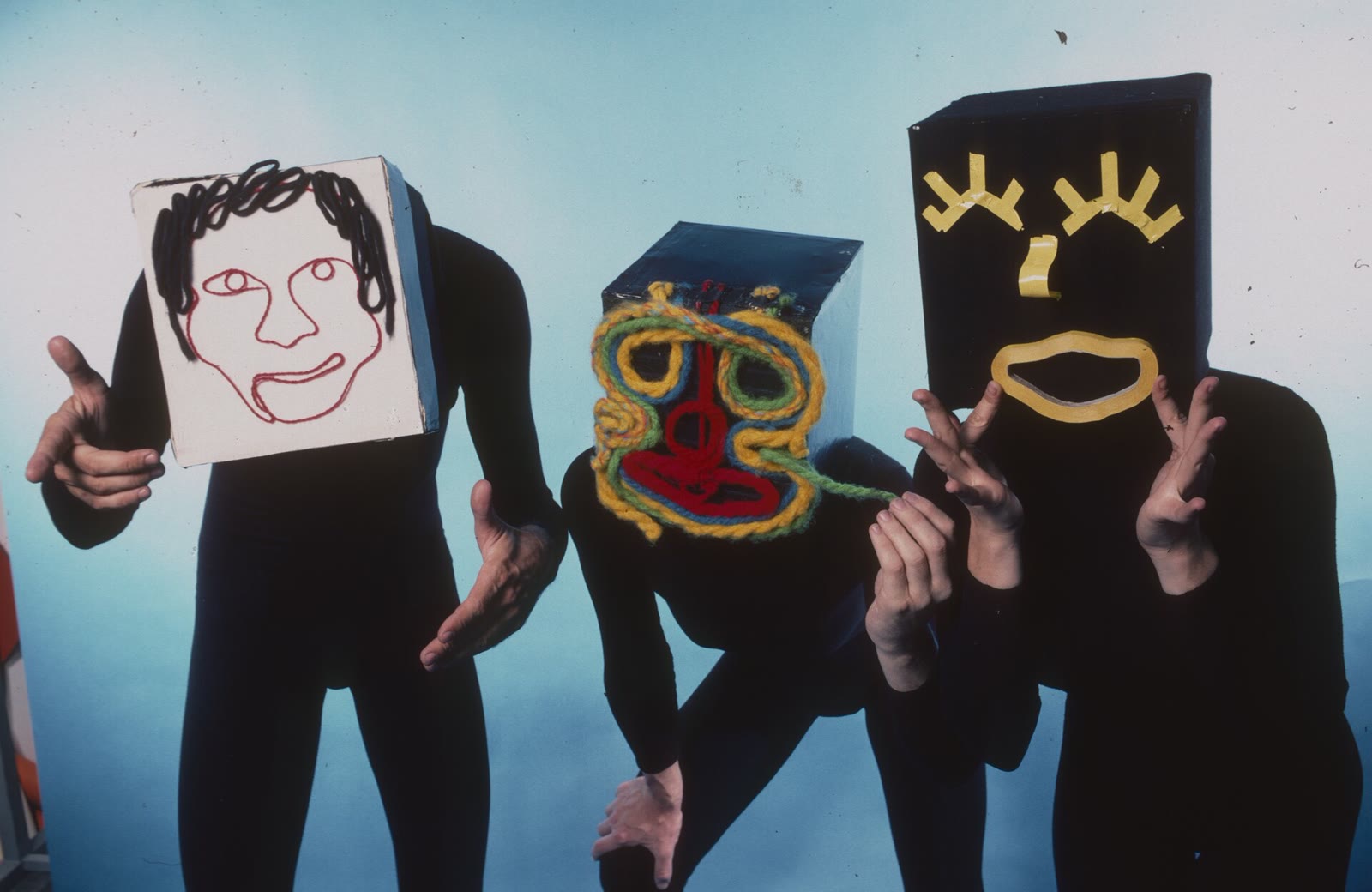
The early masks came from ordinary things: SRF lists plastic sheeting, toilet-paper rolls and ventilation pipes. One face set toilet-paper holders at the eyes, ears and mouth, and when two such figures met, “gestures of love, rejection, desperation, and understanding gushed forth,” Marina Wolf wrote in the Bohemian’s 2001 preview of Mummenschanz’s Next.
Another mask was a “puttylike substance that could be slapped, pulled, and pushed,” and another was “composed of notepads on which facial features could be drawn and ripped away.” “In a way we’re a bit like sculptors,” Frassetto told Wolf. A TheaterMania writer in 2019 still remembered a 1970s television appearance by “a person dressed in black whose eyes, ears, and mouth were made of rolls of toilet paper.”
These were things made to act, which ties Mummenschanz to object theatre and, further back, to the history of automata, though here a hidden human always moved the thing.
The New Show and the loss of Andres Bossard
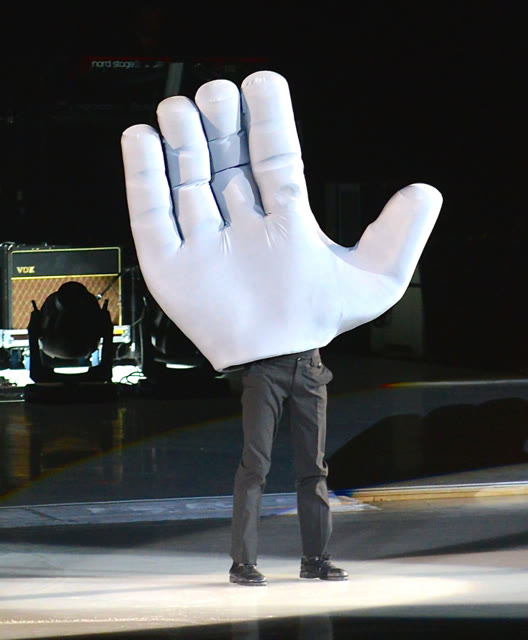
The trio reconvened in May 1981 and set up a studio at the Rote Fabrik in Zurich, where “New routines included the 13-foot octopus and the two big hands.” “In 1986, ‘The New Show’ was staged at the Broadway theater ‘Helen Hayes’ for three months,” and “The ‘Mumms’, as they’re known in the US, were at the height of their success.” In 1988 the Swiss National Circus Knie hired them for a season.
“At the height of their success, Andres Bossard fell ill with AIDS and passed away in March 1992 at the age of 48.” Schürch and Frassetto decided to go on, the company says, for Andres.
Parade, Next and Expo.02
The two combined early routines with The New Show as the Parade retrospective, and “‘Parade’ was a huge hit in the US.” Next premiered at the St. Galler Stadttheater on March 18, 2000, and played Marin Center in San Rafael on February 23, 2001, the Bohemian reported. The Bay Area’s own clowns have their story in the history of the Pickle Family Circus.
In 2002 the company gave daily performances at Expo.02 in Biel. Bernie Schürch “took his final bow on June 17, 2012 after 5,700 performances, aged nearly 68,” and retired, leaving Frassetto “the last ‘Mumm’ standing from the original founding trio.”
| Year | Event |
|---|---|
| 1970 | Schürch and Bossard meet at the Lecoq school in Paris; Frassetto first sees them in Rome |
| 1972 | Mummenschanz is born; first trio show at Avignon, July 11 |
| 1973 | First European tour; invited to the United States |
| 1977-1980 | The Bijou Theatre, Broadway |
| 1986 | The New Show at the Helen Hayes, three months |
| 1992 | Andres Bossard dies, aged 48 |
| 2000 | Next premieres in St. Gallen |
| 2002 | Daily shows at Expo.02 in Biel |
| 2012 | Bernie Schürch’s final bow, after 5,700 performances |
| 2021 | 50 Years premieres in Zurich |
Frassetto’s company today
Frassetto has led the company since. Its 2016 show you & me was made “without words or music,” and 50 Years premiered in Zurich in December 2021. Clemson University’s 2022 release said that show revisited “legendary characters from their past performances,” among them the Toilet Paper Faces, the Pipe Creature and the Clay Masks. “In March 2026, MUMMENSCHANZ announced their farewell tour, ‘Adieu!’.”
A mask with pages: Antenna Theater’s Russia
In 1985 the San Francisco Chronicle’s Bernard Weiner reviewed Antenna Theater’s Russia at Theater Artaud and saw something familiar. One character had “a face-mask that is essentially featureless, but (in a device reminiscent of a Mummenschanz character) pages can be torn from his face. He can be anything and anybody.” Russia also played BAM’s Next Wave Festival that year.
Weiner admired the other masks too: “The ‘tears’ are large shower-curtain hooks that slide down an invisible wire attached to Jim’s mask, near the eye. The effect is wonderful.”
The likeness stopped at the paper. Mummenschanz made its pieces in silence, while Antenna’s masked actors moved to recorded sound: Artweek’s Will Torphy wrote that the masks, “along with the exclusive use of taped voices and highly stylized gestures, transform individual characters into archetypes.” No source says Chris Hardman saw or drew on Mummenschanz’s work. Russia’s place in the company’s record is in the Antenna Theater chronology.
Frequently asked questions
What does Mummenschanz mean?
The company explains it as Mummen, to conceal or to mask, like the English mummer, plus Schanz, a play on the word chance.
How long was Mummenschanz on Broadway?
Three years at the Bijou Theatre, from 1977 to 1980, and The New Show returned for three months at the Helen Hayes in 1986.
Is Mummenschanz still performing?
Floriana Frassetto leads the company, and in March 2026 it announced a farewell tour called Adieu.