Morton Heilig’s Sensorama: The 1962 Machine That Fed All the Senses
Long before anyone spoke of virtual reality, the filmmaker Morton Heilig built a booth that blew wind in your face and released scents while a 3-D motorcycle ride rolled through Brooklyn. The Morton Heilig Sensorama was one of three inventions, each dated by a US patent, in which he tried to carry every sense into the cinema. All three survive in a university archive.
Quick answer
What was the Sensorama?
The Sensorama Simulator was a booth patented by the filmmaker Morton Heilig (1926-1997) in 1962. A viewer sat in a single seat, looked into a hood and watched short 3-D films with stereo sound while a fan blew a breeze, scents were released into it and the seat vibrated. It is often called a forerunner of virtual reality.
A cinematographer’s idea: “The Cinema of the Future”
Heilig “worked as a director and cameraman on over 60 documentaries,” according to the Morton Heilig Collection finding aid at USC’s moving image archive, which notes that he “has been described as the ‘Father of Virtual Reality.’” In Mexico in 1955 he wrote an essay, “The Cinema of the Future.”
Cinerama and Cinemascope were adorning marquees, but most of these systems, Engadget observed in 2014, “only dealt with enhanced visual or audio delivery of a film, leaving other senses out of the picture.” Heilig’s essay, as Engadget quotes it, held that “without the active participation of the spectator there can be no transfer of consciousness, no art.”
The Telesphere Mask (1957-1960)
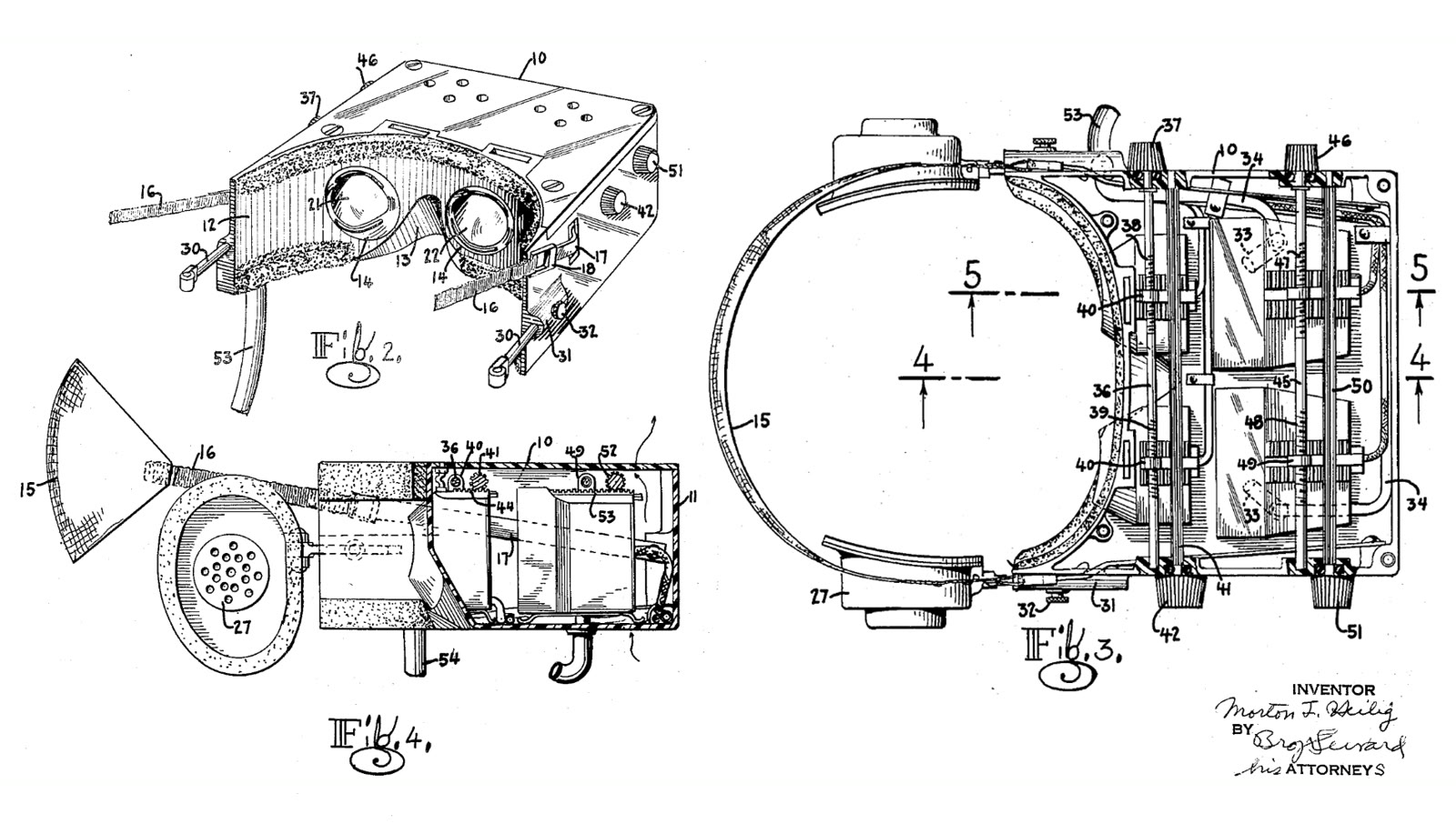
Heilig’s first patent, US 2,955,156, was filed on May 24, 1957, and granted on October 4, 1960, as a “Stereoscopic-television apparatus for individual use.” It describes “a hollow casing, a pair of optical units, a pair of television tube units, a pair of ear phones and a pair of air discharge nozzles.” The nozzles would bring the wearer “air currents of varying velocities, temperatures and odors.”
The USC archive calls this Telesphere Mask “the first ever head-mounted 3-D display.” TechRadar found the drawings “so uncannily modern” that they could pass for a recent headset. It was, TechRadar adds, a commercial failure.
How the Morton Heilig Sensorama worked
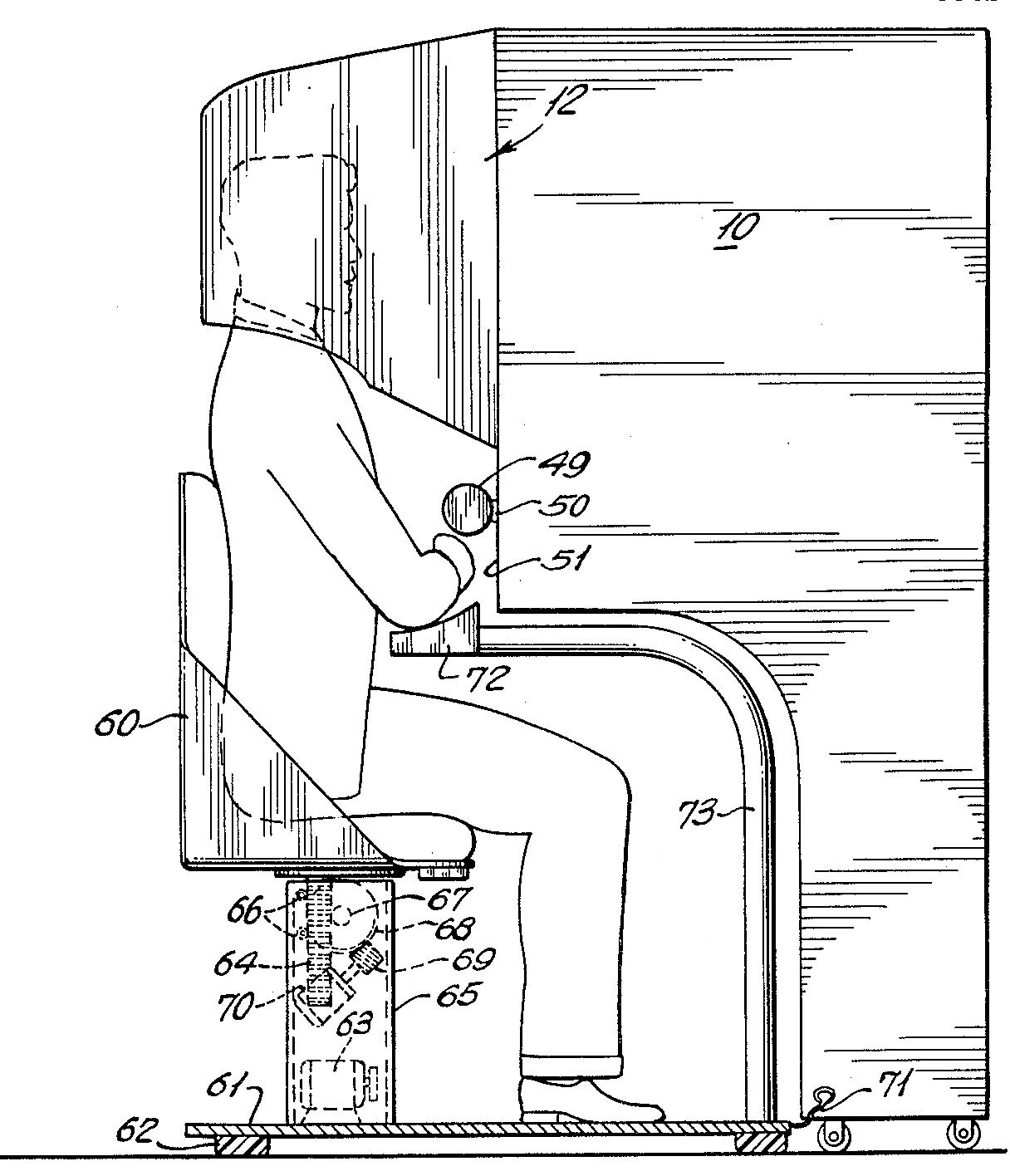
The Sensorama Simulator patent, US 3,050,870, was filed on January 10, 1961, and granted on August 28, 1962; TechRadar dates the work to 1957, so it is fair to say it was developed in the late 1950s. Heilig pitched it as a teaching machine: “A basic concept in teaching is that a person will have a greater efficiency of learning if he can actually experience a situation as compared with merely reading about it or listening to a lecture.”
Engadget described “a bucket seat for a single viewer (although his designs could be expanded for four),” with handles and viewing holes under a hooded canopy. In 1964 Lewis Lapham wrote that it resembled “a monstrous hair dryer,” stood six feet high and was painted cerulean blue.
| Sense | How the Sensorama reached it |
|---|---|
| Sight | Stereoscopic 3-D film filling “complete peripheral vision” |
| Hearing | “binaural sound” (Engadget: full stereo) |
| Smell | Scents released into a fan breeze on cue |
| Touch | The breeze, plus a vibrating seat, foot platform and arm rest |
Motorcycle, belly dancer and the other films
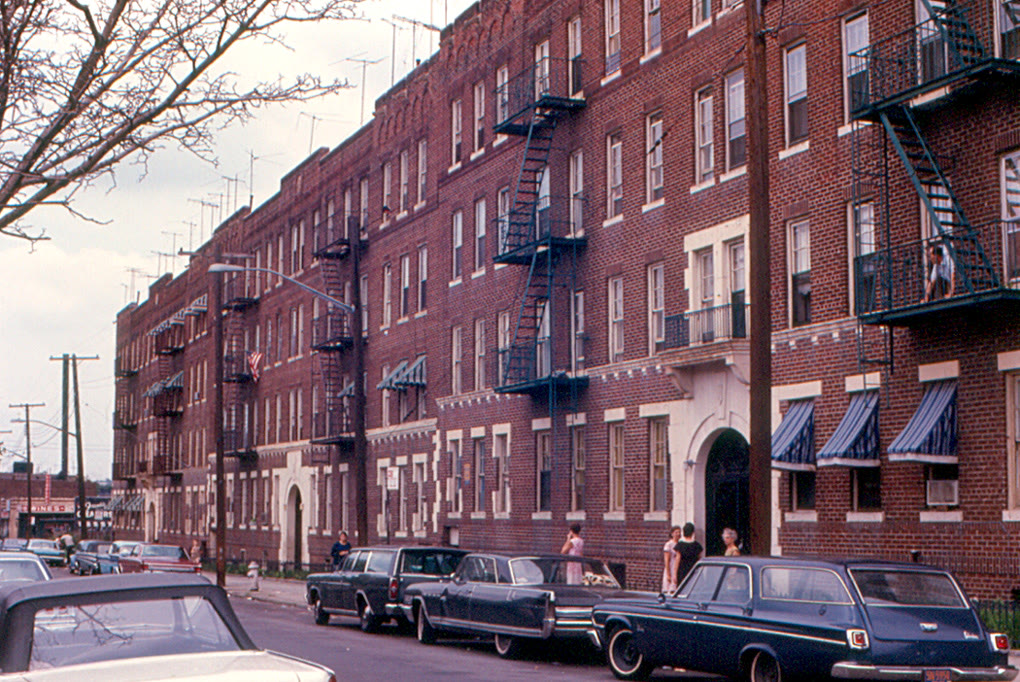
Heilig shot the films himself. Sources count them differently, five in most accounts and six in one, but all agree on a motorcycle ride and a belly dancer. Engadget puts the rider “atop a motorcycle, cruising through Brooklyn with the wind whipping through your hair,” until “your tokens run out.” For the dancer, “perfume wafted from the Sensorama any time the dancer gyrated close to the camera.”
Piers, arcades and the investor who left
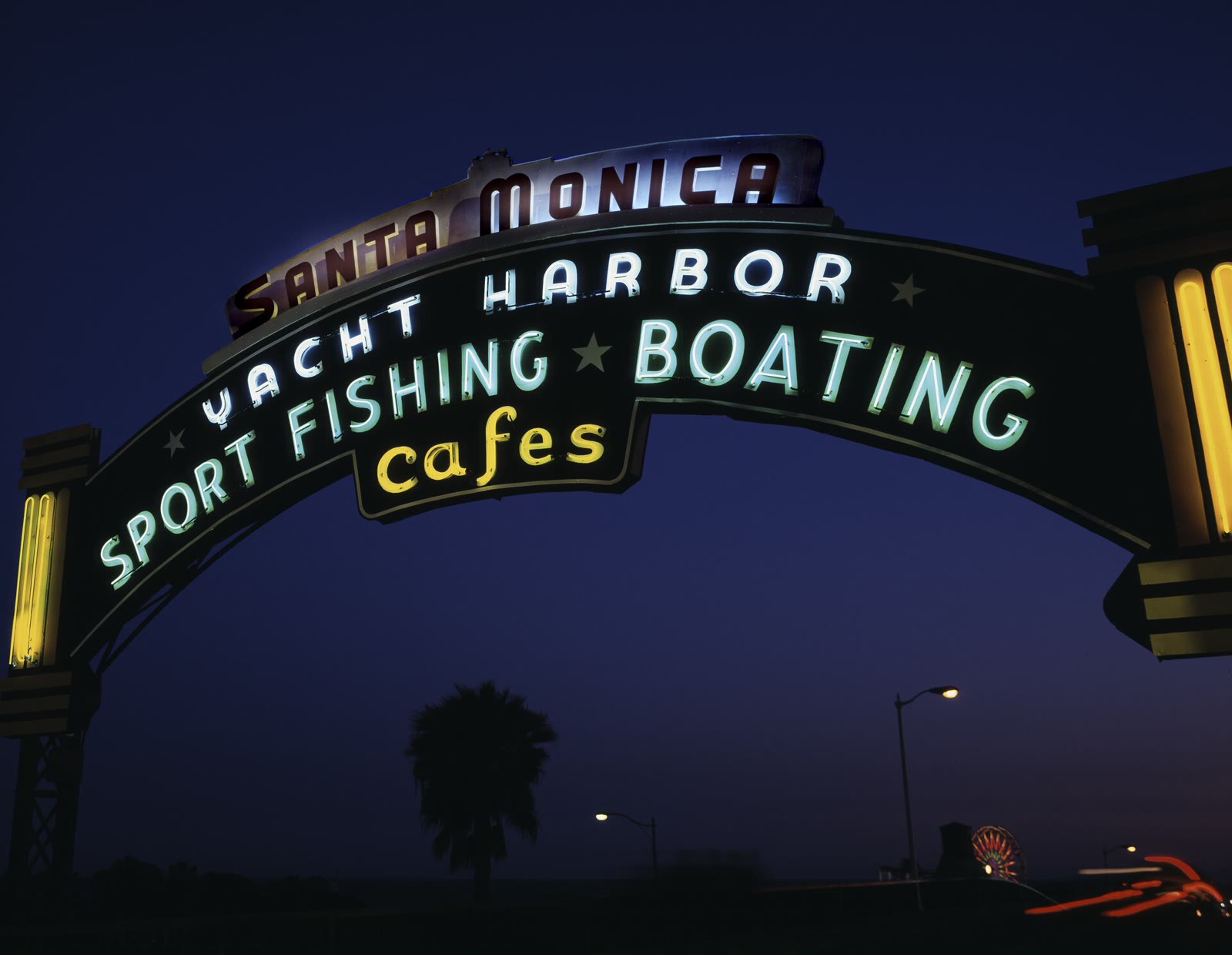
The Sensorama “made it into Universal Studios, Santa Monica pier, and Times Square as an attraction,” says The Saturday Evening Post’s 2019 history of the first virtual reality. Marianne Heilig told TechRadar that Universal’s managers “thought it was too much for a family company, so we had to take it out and put it on piers.”
She also recalled an investor who walked away because “Mort was ten minutes late.” “Unfortunately, the money from a big-time investor never came,” the Post concludes. Heilig still believed in it: “It’s an empathy machine, and if we can develop it right, maybe we can get it to inject feelings of warmth and love.”
Morton Heilig’s Experience Theater (1969)
The third patent, US 3,469,837, “Experience Theater,” was filed in 1966 and granted on September 30, 1969. It proposed “a new and improved type of theater designed to completely involve a mass audience into a new and exciting world of experience.” Each seat would work like a Sensorama, facing a curved screen covering 170 degrees across and 120 degrees high, with “5 to 30 speakers” around it.
No source says it was ever built. The Post adds, with a hedge, that Heilig consulted for Disney, “supposedly sparking the company’s interest in 3-D video.”
Where the Sensorama is now

Heilig died in 1997. The USC collection holds “37 boxes of Heilig’s papers” and “over 50 of his inventions, including three Sensorama machines, a 3-D 35mm motion picture camera, the Telesphere Mask, a peanut-dispensing clown.”
| Invention | Patent | Filed | Granted |
|---|---|---|---|
| Telesphere Mask | US 2,955,156 | May 24, 1957 | October 4, 1960 |
| Sensorama Simulator | US 3,050,870 | January 10, 1961 | August 28, 1962 |
| Experience Theater | US 3,469,837 | 1966 | September 30, 1969 |
One visitor, all the senses: Antenna Theater’s parallel
No source connects Heilig with Antenna Theater; the comparison is ours. In 1983 Chris Hardman listed cinema’s add-ons, from cardboard 3-D glasses to “smell-o-ramas,” as attempts to take audiences through a looking-glass (the passage is in our guide to anaglyph art). Theatre had tried too: “In live theatres we’ve had stages thrust at us and sat in the round.”
Antenna’s answer was to move the visitor rather than the machinery, and scent came along. Writing in Esquire in 1986 about Artery, the Walkman maze Esquire described, Steve Erickson noted, “You come to a room and there’s a waft of perfume.” He heard High School’s tape as “adolescent Sensurround” sounds of student fights and the woodshop.
The closest match is Euphor!um, Antenna’s mirrored-helmet walk through Kubla Khan. The BBC’s reviewer wrote that the “opium goddess” kits you out “in Walkman and ‘virtual reality’ goggles,” and SF Weekly, admitting the “decidedly low-tech methods,” said the sculptures “are crude because they are real.”
| Aspect | Sensorama | Telesphere Mask | Euphor!um |
|---|---|---|---|
| Viewer | Seated, one at a time | One wearer | One walker at a time |
| Picture | 3-D film | Stereoscopic TV tubes | Real sculptures seen through a helmet |
| Other senses | Wind, scent, vibration | Air, temperature, odor nozzles | Rooms to walk through, with a soundtrack |
Heilig built machines to bring the senses to a seated viewer; Antenna built rooms and tapes to carry a walking visitor through them. Today’s version is traced in the history of immersive exhibitions, and the hub is Walkmanology and Antenna’s other new theater forms. Neighbouring posts cover Ken Kesey’s Merry Pranksters bus and the history of drive-in theaters.
Frequently asked questions
When was the Sensorama invented?
Heilig filed the Sensorama Simulator patent on January 10, 1961, and it was granted on August 28, 1962. Some accounts date his work on it to 1957.
What films did the Sensorama show?
Short films Heilig shot himself, usually counted as five. The best known is a motorcycle ride through Brooklyn; another featured a belly dancer, with perfume released as she came close.
What was the Telesphere Mask?
A head-worn stereoscopic television viewer with earphones and air nozzles for air currents and odors, patented by Heilig in 1960. The USC archive calls it the first head-mounted 3-D display.
What was the Experience Theater?
A 1969 patent for a theater in which a mass audience would face a curved screen, with each seat working like a Sensorama. No source says it was built.
Where is the Sensorama today?
The Morton Heilig Collection at USC’s HMH Foundation Moving Image Archive lists three Sensorama machines and the Telesphere Mask among more than 50 inventions.