The History of the Moving Panorama: Banvard’s Mississippi and the Scrolling Picture Show
Before film, a picture could move only if someone cranked it. The history of the moving panorama is the story of painters who rolled hundreds of feet of canvas past seated audiences, while a lecturer talked and a pianist played. For a few decades in the nineteenth century it was one of the most popular shows in America and Britain.
Quick answer
What is a moving panorama?
A moving panorama was a long painting wound between two rollers and cranked past a seated audience while a lecturer described each scene and a musician played. The form peaked in the 1840s and 1850s with John Banvard’s Mississippi, advertised as three miles long. A few survive, and crankies keep the idea alive.
How a moving panorama worked
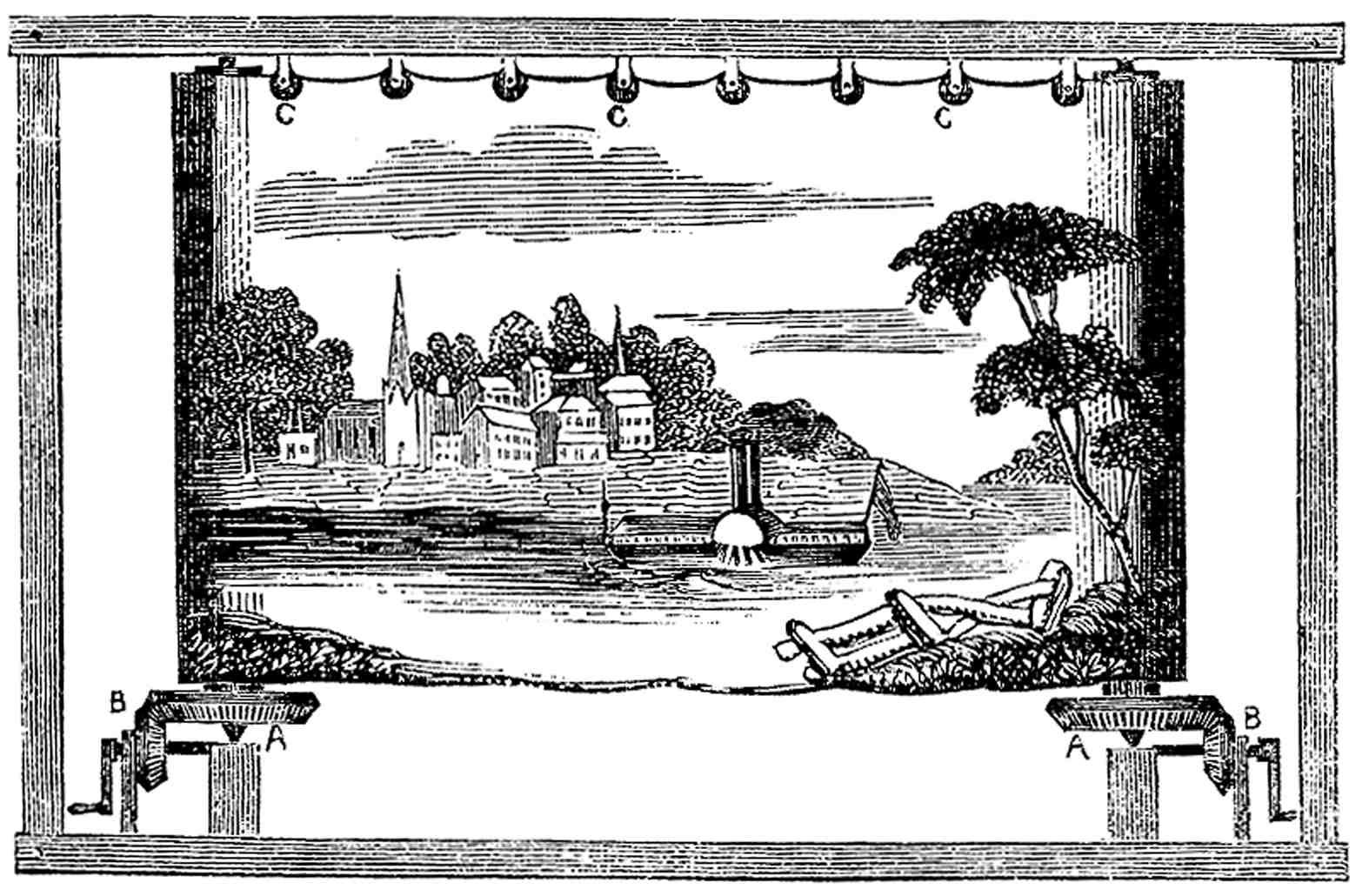
The media historian Erkki Huhtamo defines the form simply: “The moving panorama was a long painting that unscrolled behind a ‘window’ by means of a mechanical cranking system, accompanied by a lecture, music, and sometimes sound and light effects.” Showmen took them everywhere, “from opera houses to church halls.”
It was a cousin of a better known spectacle. Barker’s static panorama and the cycloramas surrounded viewers with one huge circular scene; the moving kind unrolled a journey instead, scene after scene. Huhtamo notes that there were “hundreds, and probably thousands of them,” and that their history “has been largely forgotten.”
Banvard’s Mississippi, “three miles” of canvas
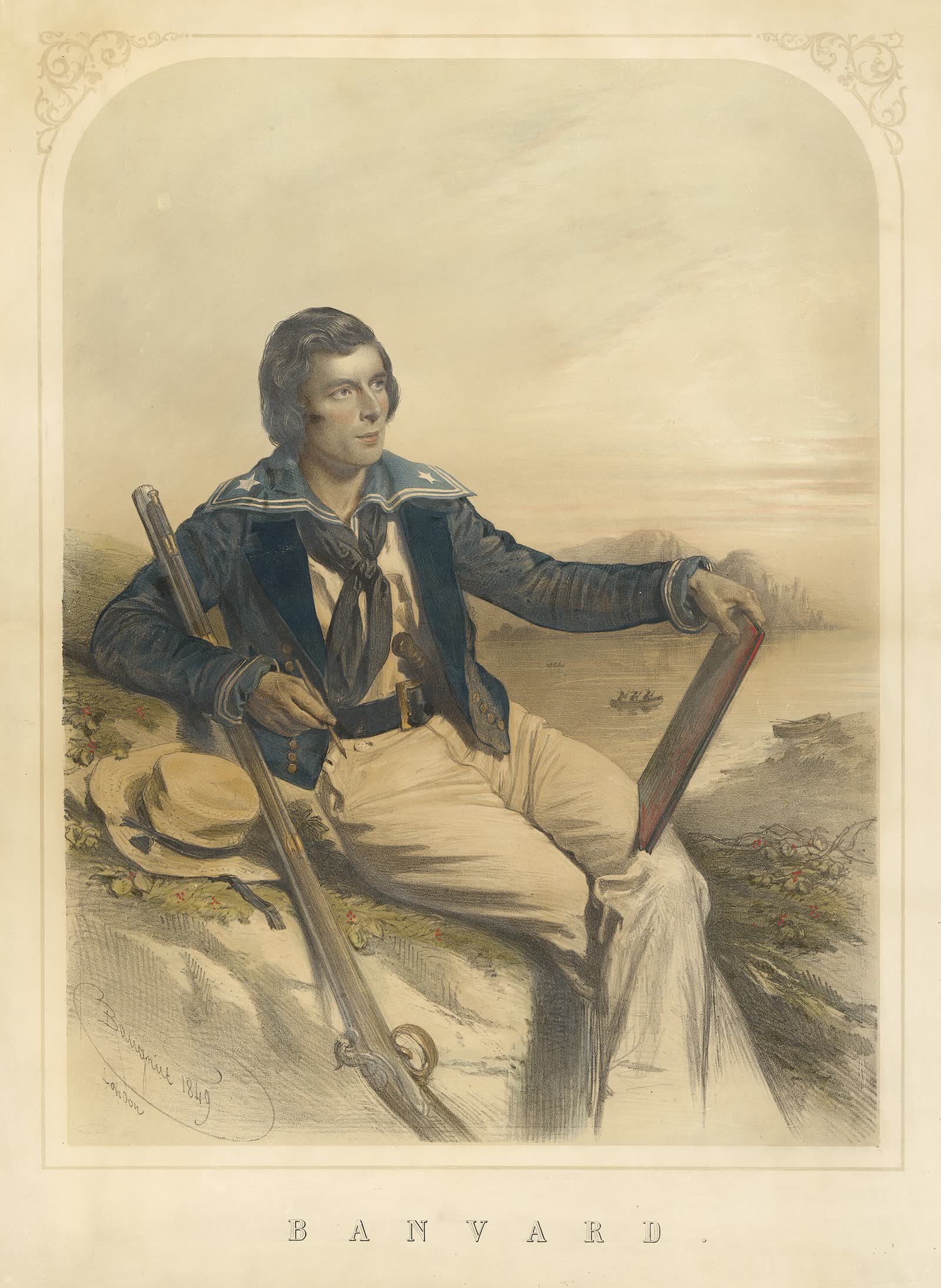
John Banvard wanted his painting to be “superior to all others, in point of size, as the Mississippi is superior to the streamlets of Europe.” He billed it as three miles long. The South Dakota Historical Society Foundation’s history of Banvard gives the finished canvas as “12 feet high and 1,300 feet long,” so the three miles were a showman’s claim.
The show itself was a performance. “He explained each scene to the audience as it rolled by while a pianist played in the background,” the Foundation writes, and the whole took nearly two hours. Banvard later married his accompanist, Elizabeth Goodnow.
It was first shown in Louisville in 1846, where on opening night, a newspaper reported, “he received not a cent.” Then it became a hit in Boston from late that year. An estimated 251,702 people saw it in Boston, more than 400,000 in New York and more than 600,000 in England, and in 1849 Banvard showed it to Queen Victoria at Windsor Castle.
Rivals followed. John Rowson Smith exhibited a Mississippi panorama “in what he claimed was four miles of canvas,” and none of the four competing Mississippi panoramas survive. Banvard’s own canvas is lost too: theories say it became opera-house scenery, was shredded for house insulation, or was shipped to India.
Whales, pilgrims and the Mississippi: the panoramas that survive
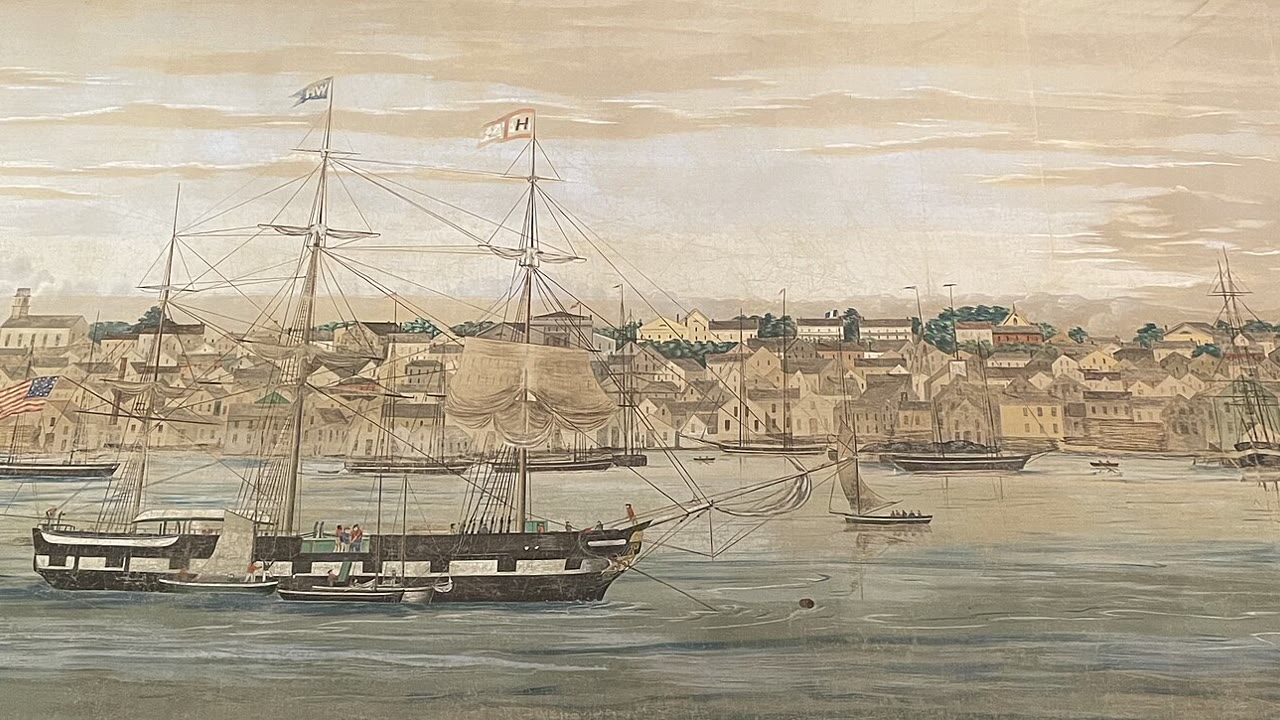
A handful outlived the craze. The New Bedford Whaling Museum keeps a moving panorama painting by Benjamin Russell and Caleb Purrington, “over 1,275 feet long and 8 feet high, separated onto four spools,” following a whaling voyage from New Bedford to the Azores, Rio de Janeiro and the Pacific. Russell, a failed merchant, had gone to sea to gather the images.
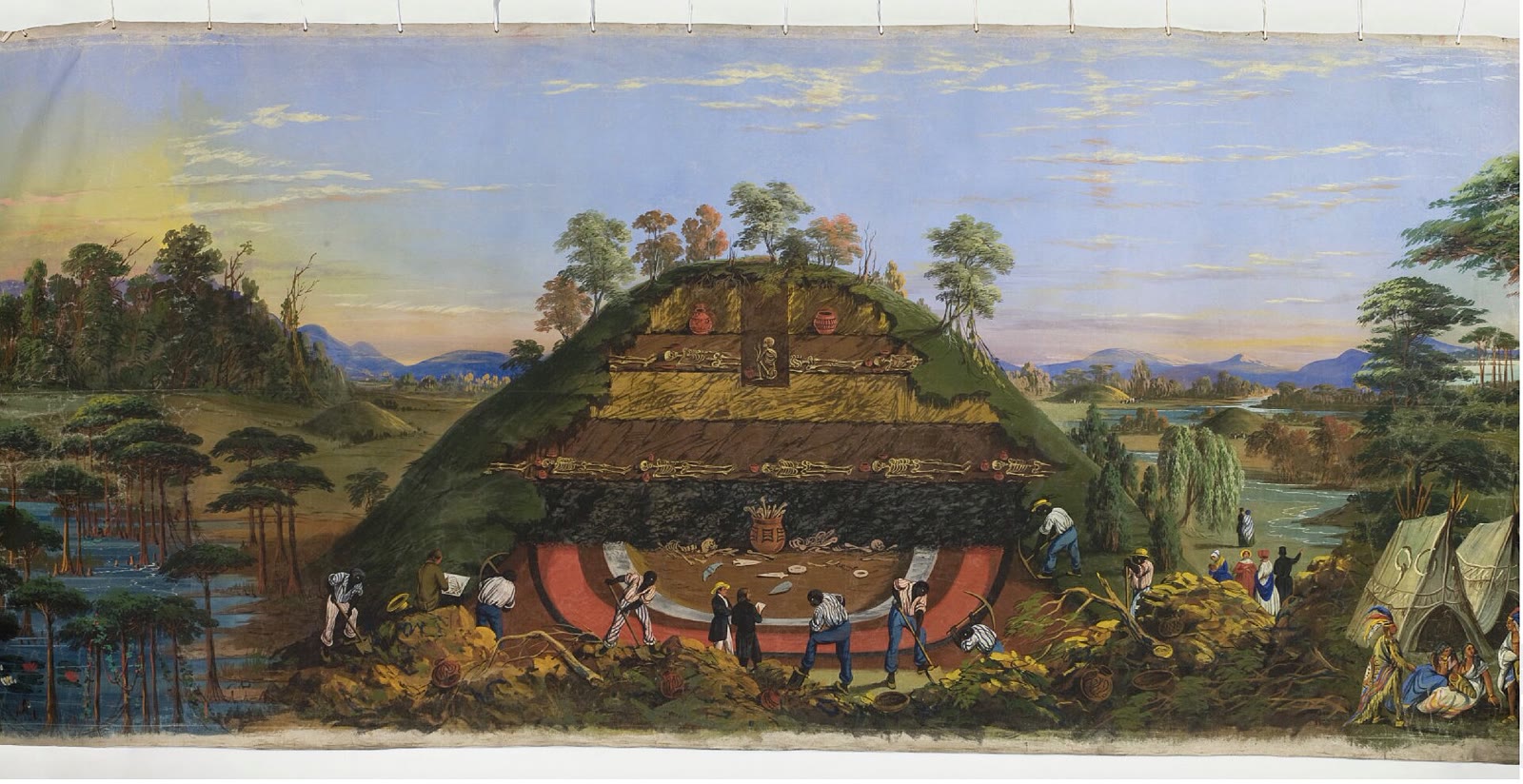
John J. Egan’s Monumental Grandeur of the Mississippi Valley was painted for Montroville Dickeson, who “traveled with this panorama and narrated the scenes.” The Saint Louis Art Museum has called it the only surviving Mississippi panorama. In Maine, a Pilgrim’s Progress panorama lay “utterly forgotten until 1996,” and is so fragile that a full-size photographic replica was made to crank.
| Panorama | Painted | Size | Held by |
|---|---|---|---|
| Grand Panorama of a Whaling Voyage ‘Round the World | 1848 | About 1,275 ft by 8 ft, on four spools | New Bedford Whaling Museum |
| Monumental Grandeur of the Mississippi Valley | About 1850 | 348 ft by about 7.5 ft, 25 scenes | Saint Louis Art Museum |
| Moving Panorama of Pilgrim’s Progress | 1851 | 800 ft by 8 ft | Saco Museum, Maine |
A panorama against slavery: Henry Box Brown (1850)
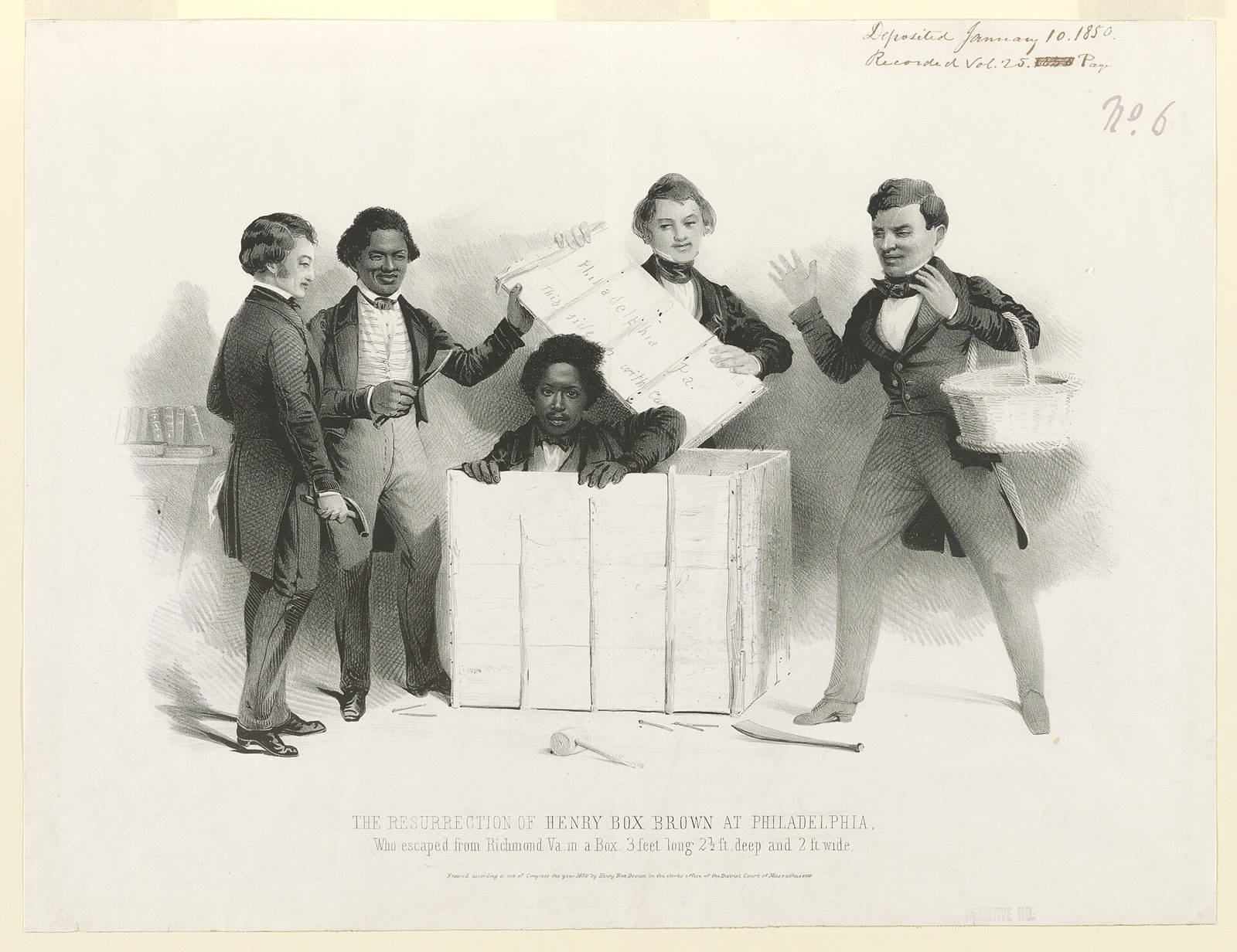
The form could argue as well as entertain. Henry Box Brown, as the title of an 1850 lithograph puts it, had escaped from Richmond, Virginia, in a box three feet long. Encyclopedia Virginia’s entry on Henry Box Brown records that late in 1849 he worked with the Boston artist Josiah Wolcott and others on “an ambitious moving panorama about slavery.”
“On April 11, 1850, the moving panorama, Henry Box Brown’s Mirror of Slavery, opened in Boston.” That autumn he took it to England, showing it in Liverpool and Manchester, and as late as 1864 he still sometimes showed it. That lithograph probably reproduces an image made for the panorama.
Panoramania and the end of the scroll
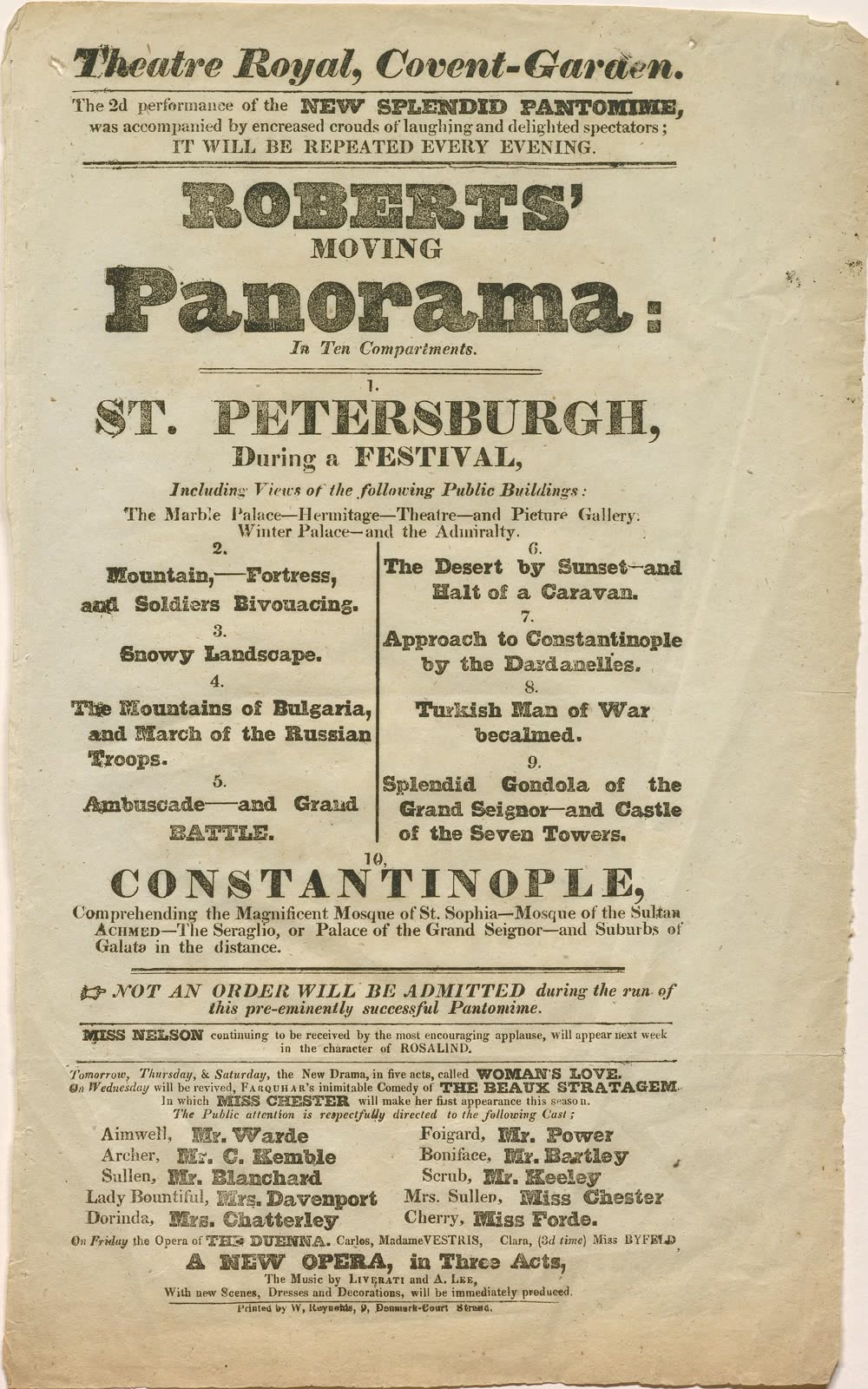
In London the craze peaked with Albert Smith, whom Huhtamo calls “the most successful showman of that era.” At the Egyptian Hall in Piccadilly, Smith gave his Mont Blanc lectures in front of a mock Swiss chalet. More than 200,000 people saw it in the first two seasons, and it spawned prints, dances and “even a Mont Blanc game.”
Competition came from the magic lantern, the panorama’s rival, and from other spectacles such as Daguerre’s Diorama. Cinema finished the job. As Hyperallergic puts it, most moving panoramas disappeared, “going on to be sliced into smaller paintings, used as theater backdrops, or just discarded.”
Crankies: the moving panorama comes back
The form survives in miniature as the crankie. Sue Truman’s definition: “Start with a long illustrated scroll that is wound onto two spools. The spools are loaded into a box which has a viewing window.” According to the American Craft Council, Peter Schumann of Bread and Puppet Theater “is credited with coming up with the term cranky (or crankie).”
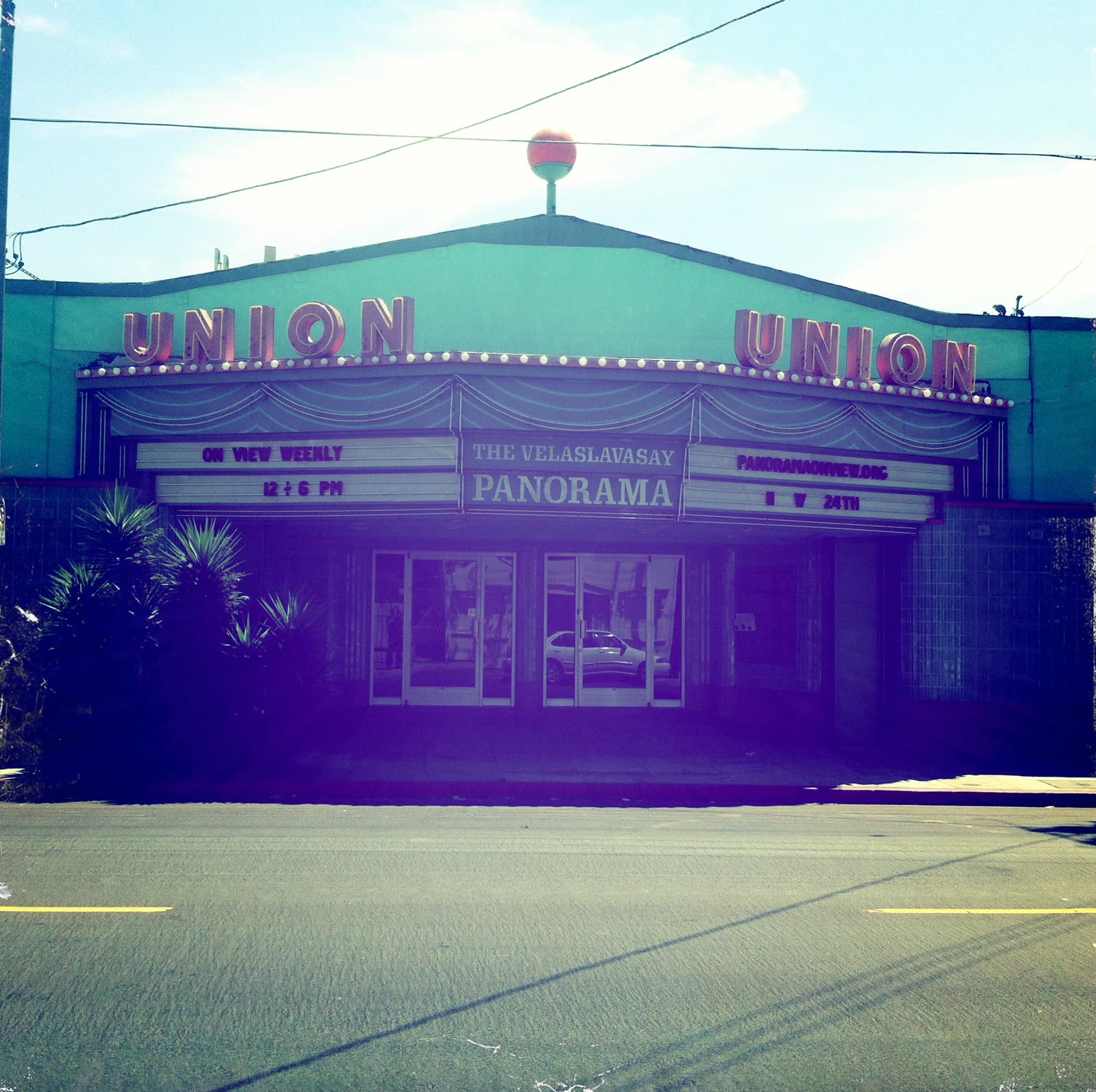
Older shows have come back too. An 1853 script for The Grand Moving Mirror of California, found at the Saco Museum, reached Sara Velas of the Velaslavasay Panorama in Los Angeles in 2005. The painting itself was lost, so a new one was made, and the recreated show premiered in 2010. In March 2018 it was performed at the Exploratorium in San Francisco.
A journey told past the windows: Antenna’s Magic Bus
Antenna Theater never made a moving panorama, and no source links Chris Hardman to the form. Its Magic Bus San Francisco tour (2010 to 2019) offers a parallel in reverse: the pictures stayed put and the audience rolled. Robert Hurwitt wrote in the San Francisco Chronicle that the focus was “the story told through broadcast voices” and “the footage on screens that roll down over the windows.”
Like Banvard’s audiences, the riders sat while a narrated journey passed them, except that between the screens lay the real city. On foot, Sands of Time, a narrated walk along the beach, did something similar with sculpted sand and a recorded voice. Esquire once called Adjusting the Idle “a Hardman panorama about America’s love affair with, or bondage to, the automobile,” a critic’s word for a big walk-through, not a scroll.
Frequently asked questions
How long was Banvard’s panorama?
It was advertised as three miles long. The South Dakota Historical Society Foundation gives it as 12 feet high and 1,300 feet long.
Does Banvard’s panorama survive?
No. Theories say it became theatre scenery or house insulation, or was shipped abroad. The Egan panorama in Saint Louis is described as the only surviving Mississippi panorama.
What is a crankie?
A small modern moving panorama: an illustrated scroll on two spools in a box with a window, hand-cranked while a story is told or a song is played.
For Antenna’s own narrated journeys, see Walkmanology and Antenna’s other new theater forms. Another guide in this series follows sound designed for the background: the history of Muzak.