The History of the Exploratorium, From the Palace of Fine Arts to Pier 15
The history of the Exploratorium begins with a physicist who lost his job and found a classroom. Frank Oppenheimer spent his second career teaching people to trust their own senses, and in 1969 he opened a museum where touching was the point. This is how it grew, and what changed when it moved.
Quick answer
Who founded the Exploratorium, and when did it open?
Physicist Frank Oppenheimer founded the Exploratorium, a San Francisco museum of science, art and human perception. It opened quietly in 1969 in the exhibition hall of the Palace of Fine Arts, let visitors touch everything, added the dark Tactile Dome in 1971 and moved to Pier 15, with almost three times the space, on April 17, 2013.
The physicist who became a teacher (1949-1965)
Frank Oppenheimer (1912-1985) joined the Manhattan Project at Los Alamos in 1945, a project “directed by Frank’s brother, J. Robert Oppenheimer.” In 1949, the museum’s biography says, “he was forced to resign as a result of harassment by the House Un-American Activities Committee.” He spent the next decade as a cattle rancher in Colorado.
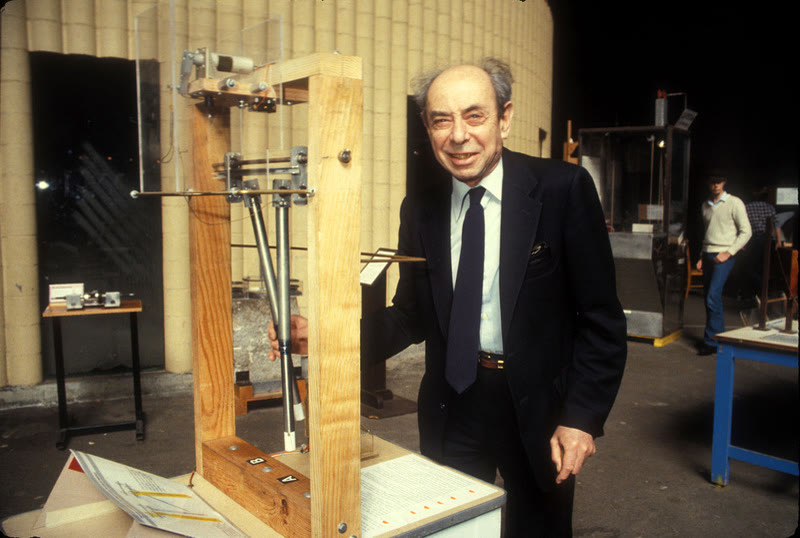
In 1957 he became the science teacher at the local high school in Pagosa Springs, where “he took students to the dump and used abandoned auto parts to teach principles of mechanics, heat, and electricity.” From 1959, at the University of Colorado, he built “a ‘library of experiments’ that was in many ways a prototype for the Exploratorium.”
A Guggenheim fellowship took him to Europe in 1965 to study its museums. Afterwards, “Frank was invited to plan a new branch of the Smithsonian, but he declined, preferring instead to work on what he called his ‘San Francisco project’.”
“With no publicity or fanfare”: the Palace of Fine Arts (1969)
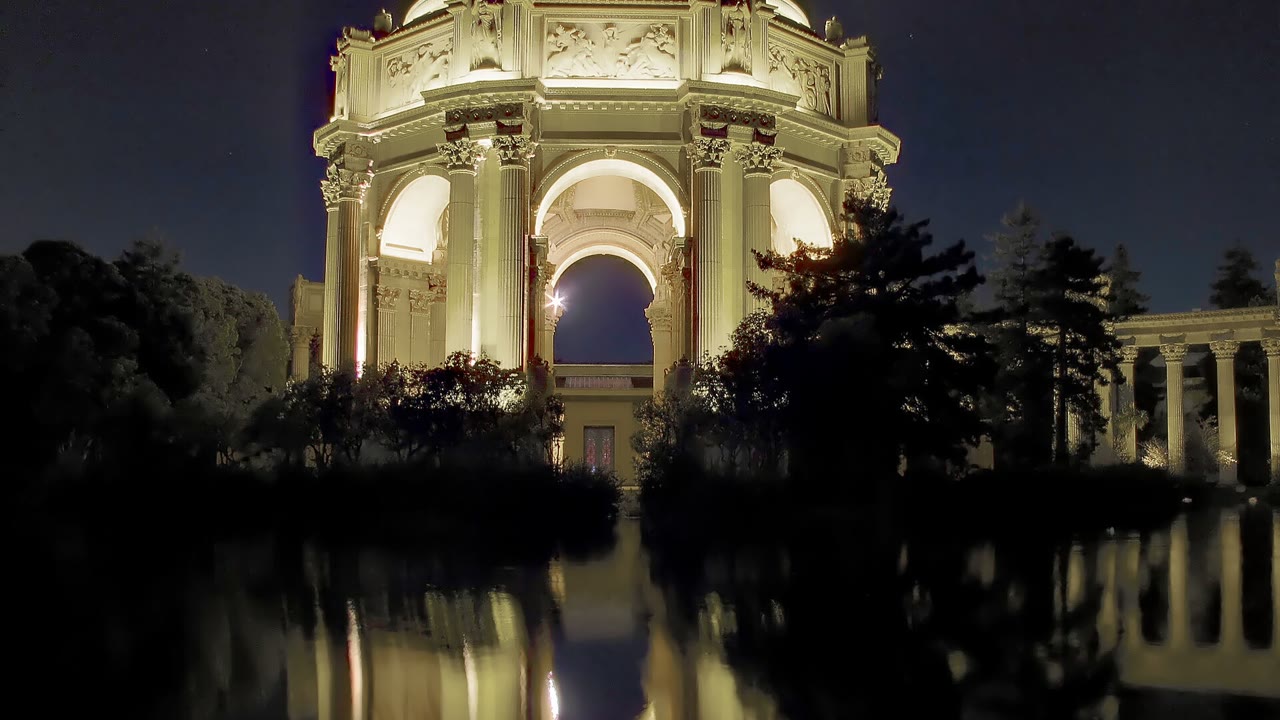
The Palace of Fine Arts was “originally built for the 1915 Panama-Pacific International Exposition,” and was rebuilt in the 1960s. Reif Larsen, writing in the Harvard Review, notes that before the museum “its great hall contained tennis courts, WWII jeeps, limousines for diplomats, and a gigantic repository of telephone books.” KALW reported in 2013 that Oppenheimer leased the hall “for one dollar a year from the city of San Francisco.” A sign still above the workshop reads “Here is Being Created the Exploratorium, a Community Museum Dedicated to Awareness.”
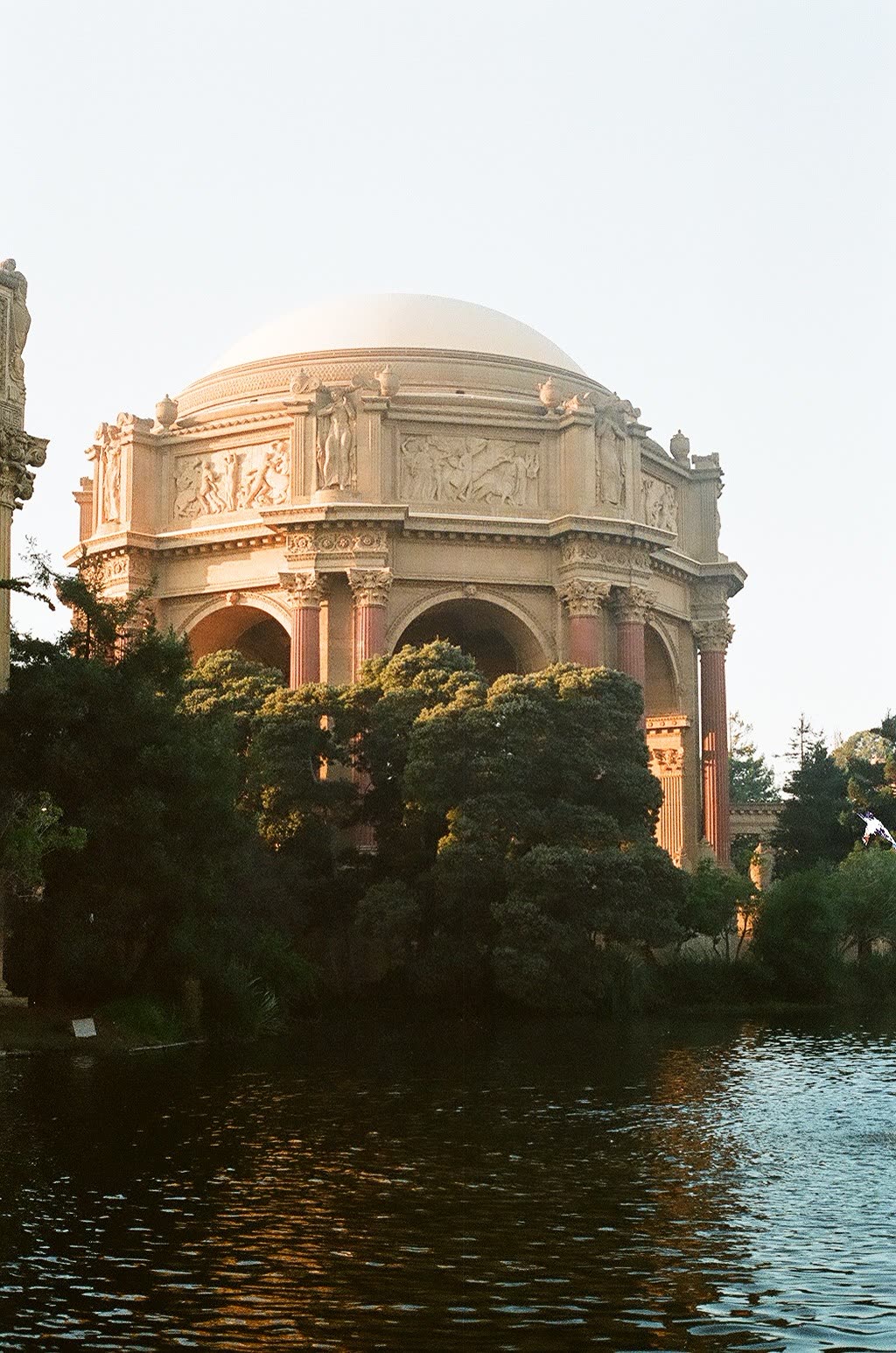
The exact opening date is unsettled. The museum says it “opened to the public in the fall of 1969”; Wikipedia, citing K. C. Cole’s 2009 biography, puts it in late August.
Both agree it was quiet: “with no publicity or fanfare, the doors opened to Frank’s Exploratorium.” Hands-on was the novelty. As ABC7 put it, “Instead of ‘don’t touch the exhibits,’ touching them was essential. At first it was a hard sell.”
Art in a science museum
From the start the Exploratorium was more than a physics lab. The SFO Museum describes it as “a place where natural phenomena, art, and human perception meet.” Oppenheimer’s aim, in his own words, was “to make it possible for people to feel they understand the world around them.”

The Tactile Dome (1971)
The Exploratorium’s Tactile Dome went on exhibit on September 9, 1971, according to the original press release. It was “encased in a geodesic dome about the size of a large weather balloon,” where “Visitors enter through a light-lock room into a totally dark maze (path),” and spent “an hour and fifteen minutes” feeling their way through it.
Its creator was August F. Coppola (1934-2009), working with Carl Day. The release called them “leaders in an art revolution which uses people as participants in art experience rather than as targets at which to hurl artistic messages.” Coppola’s own line: “touch is still the test of reality.”
Joe Kissell noted that the dome had a twin: Audium, “located across town, shares all these attributes,” though it was built for hearing rather than touch. That story is in the history of Audium, San Francisco’s theatre of sound.
After Oppenheimer (1985-2013)
“Frank nurtured and shaped the growing museum until 1985, when he died from lung cancer,” the museum records. Directors followed: Robert L. White from 1987, Goéry Delacôte from 1991 and Dennis Bartels from 2005. A year after his death, the Wave Organ was dedicated to him, as told in our guide to sound installations and the Wave Organ.
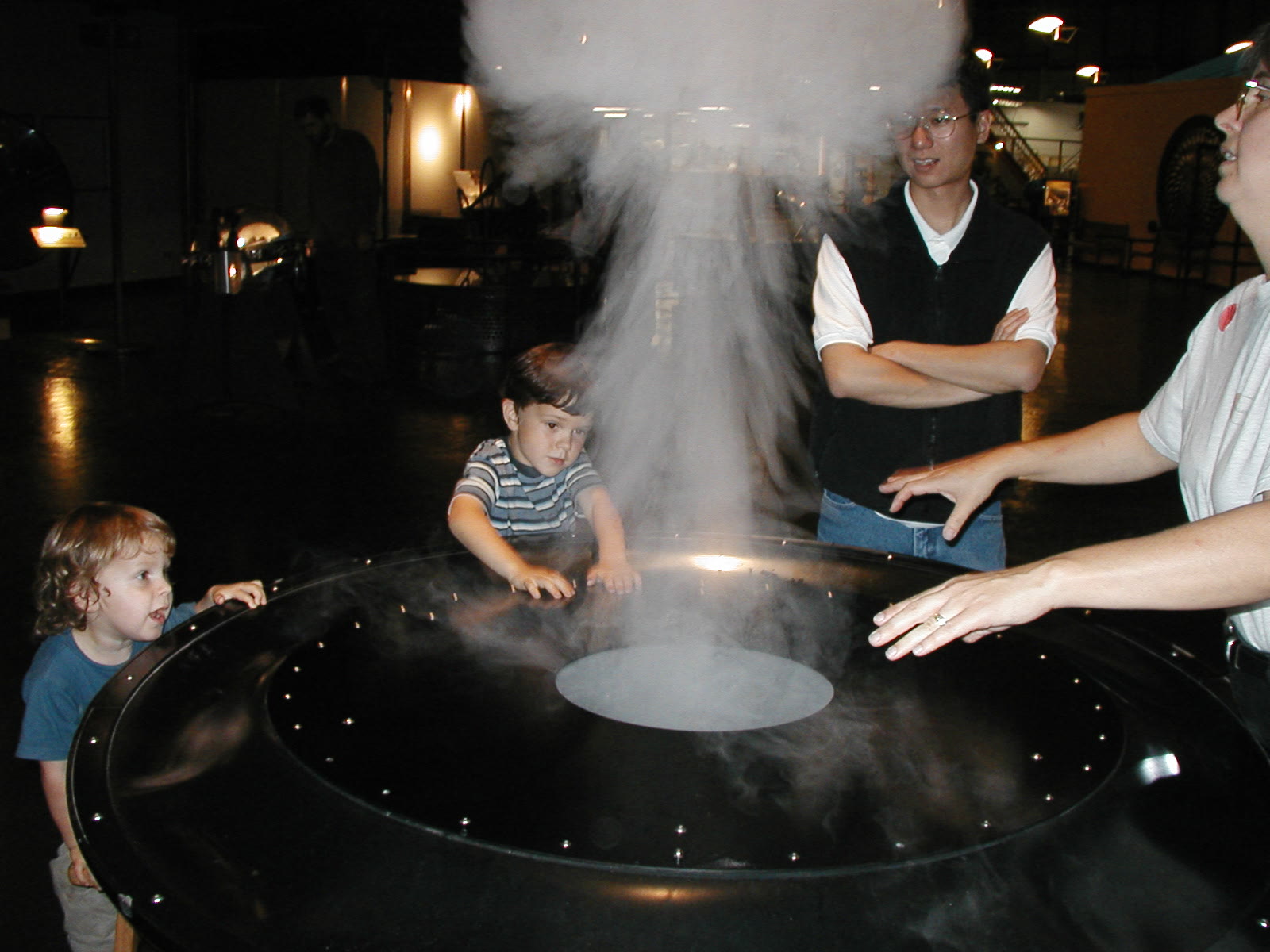
The museum’s reach grew beyond the hall. “The staff estimates 80 percent of the world’s science centers have exhibits developed here,” ABC7 reported, and “the Exploratorium makes many copies of its exhibits for other museums and publishes plans.”
Pier 15 (2013): what moved, what stayed
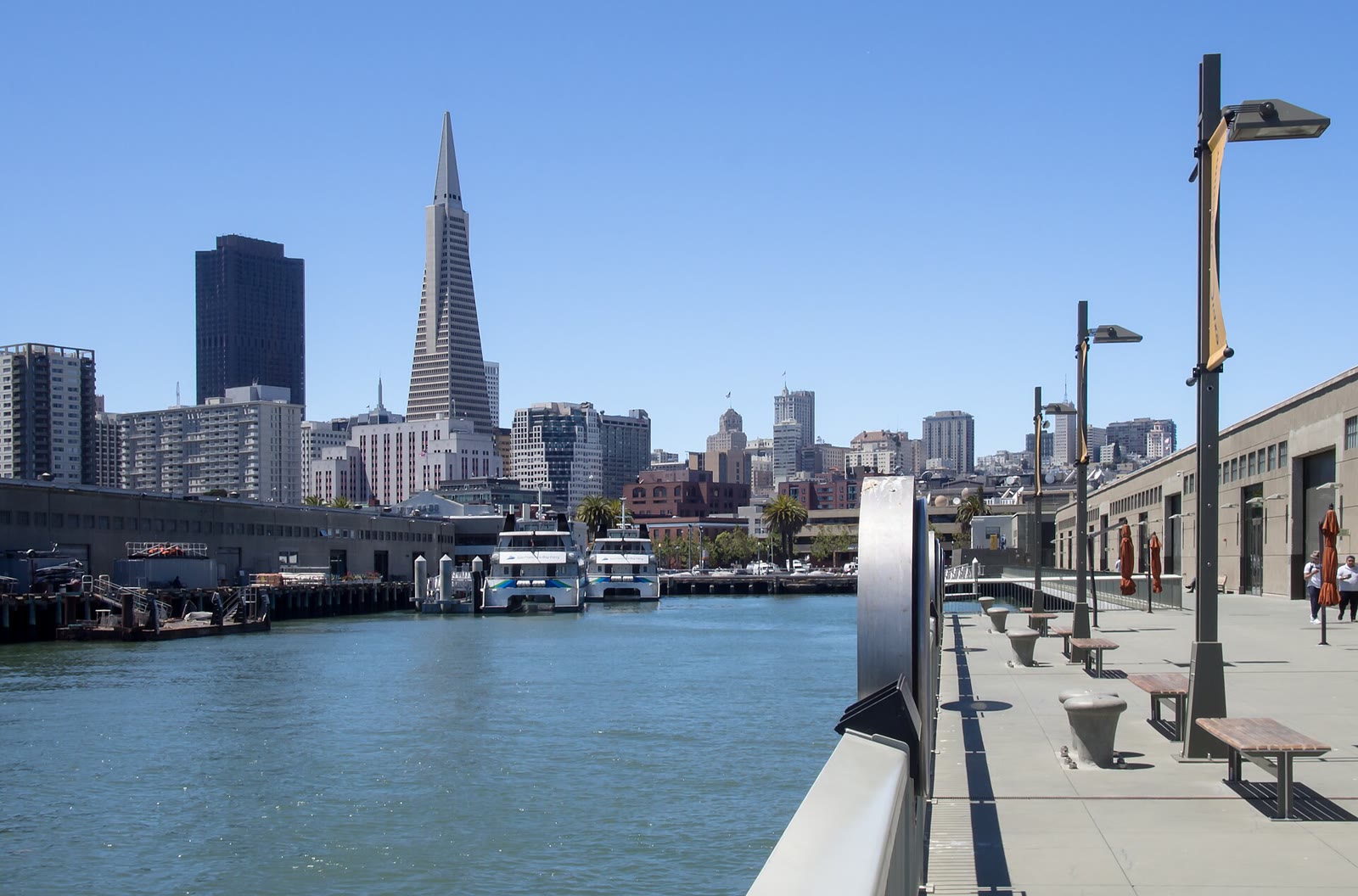
“By the early 2000s, it was clear that the museum had outgrown its first home,” says the SFO Museum’s exhibition on the evolving Exploratorium. The new building opened on April 17, 2013, with “almost three times as much space as the original site.” The rebuilt Tactile Dome reopened there on October 30, 2013.
| Aspect | Palace of Fine Arts (1969-2013) | Pier 15 (2013 on) |
|---|---|---|
| Building | Exhibition hall of the 1915 Palace | A renovated pier on the Embarcadero |
| Space | About 90,000 square feet, per Harvard Review | Almost three times as much, per SFO Museum |
| Workshop | Open to view | “just as prominent as before” |
| Tactile Dome | Original, 1971 | Rebuilt, reopened October 30, 2013 |
| Left behind | A camera obscura, the Rotunda Echo, the Sound Column | Not moved, per KALW |
Some things did not change. Writing in 2025, Larsen found that “much of the museum’s ethos has remained the same,” and his Harvard Review essay on the Exploratorium closes on a small detail: “The beach ball still floats.”
“An Exploratorium with plenty to look at”: a theatre parallel
Antenna Theater was never part of the Exploratorium, but critics reached for the comparison. Reviewing Radio Interference in 1987, The Tech at MIT wrote: “It is a media mad spree, a carnival, an Exploratorium with plenty to look at and things to do.” It was a parallel, not a link: no source says the two worked together.

Later, Antenna made exhibitions about seeing. In Transforming Art, Hardman’s perception show, he described “an experimental funhouse where scientific understanding of perception is manipulated and presented in an artistic context.” Its mirrors connect with mirror rooms and infinite reflections.
| Aspect | Exploratorium | Antenna Theater |
|---|---|---|
| Visitor | Touches and experiments | An audient who walks and acts |
| Path | Free to wander | A set route, though Radio Interference let audients choose the order |
| Darkness | The Tactile Dome’s dark maze | Lit sets and mazes |
| Perception | Science, art and perception together | Perception presented in an artistic context |
For more on that crossover, see theatre made for museums and Antenna’s own exhibitions and artifacts.
Frequently asked questions
Was Frank Oppenheimer related to Robert Oppenheimer?
Yes. Frank was the brother of J. Robert Oppenheimer, who directed the Manhattan Project at Los Alamos, where Frank worked from 1945.
Why did the Exploratorium leave the Palace of Fine Arts?
By the early 2000s it had outgrown its first home. Pier 15 gave it almost three times the space, and it opened there on April 17, 2013.
Who made the Tactile Dome?
August F. Coppola, working with Carl Day. It opened on September 9, 1971, and was rebuilt for Pier 15, reopening on October 30, 2013.
Is the Exploratorium a science museum or an art museum?
Both, by design. The SFO Museum describes it as a place where natural phenomena, art and human perception meet.
Next, read the history of the planetarium, from Munich to Golden Gate Park, or explore Walkmanology and Antenna’s other new theater forms.