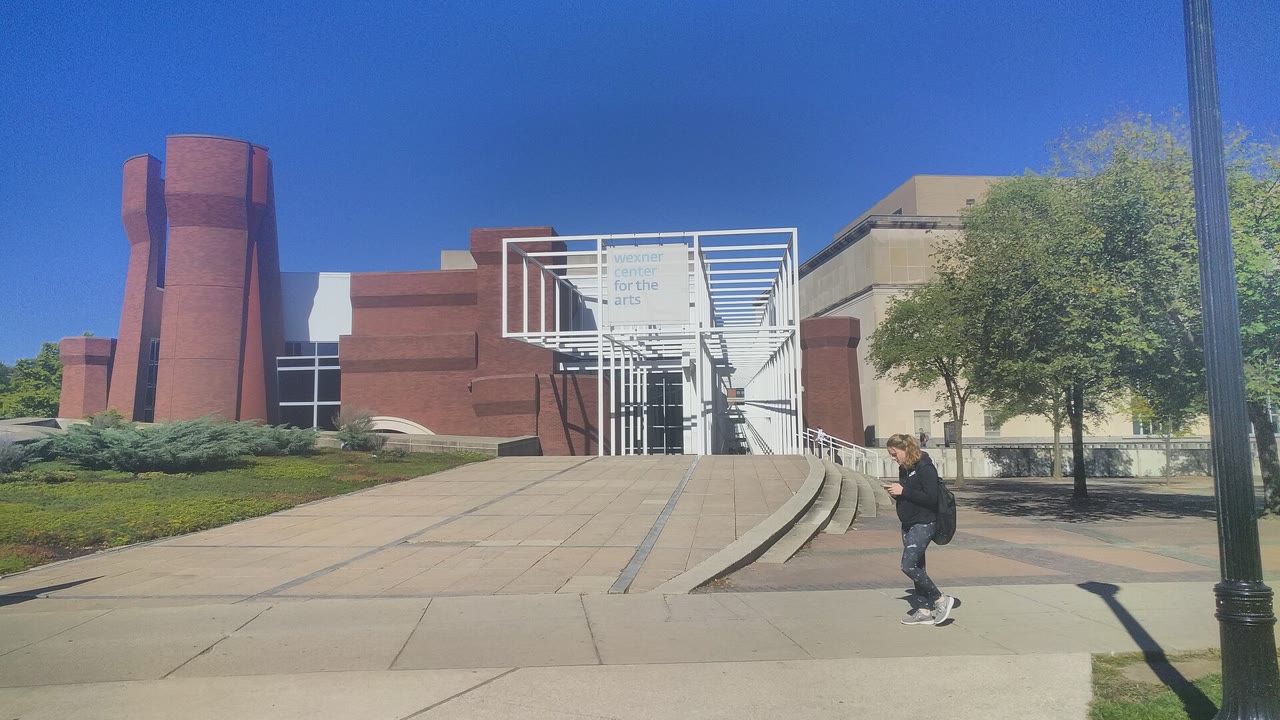
The History of the Wexner Center for the Arts: Ohio State’s Laboratory and Its Famous Grid
The history of the Wexner Center for the Arts starts two decades before its famous white grid went up in Columbus, Ohio. It runs from a campus gallery through a competition and a celebrated, troubled building to decades of artist residencies, with Antenna Theater on the opening bill.
Quick answer
What is the history of the Wexner Center for the Arts?
The Wexner Center for the Arts opened at Ohio State University in Columbus in November 1989. Peter Eisenman and Richard Trott won a competition run in 1982 and 1983 to design it, and Leslie H. Wexner’s $25 million gift named it for his father. Conceived as a laboratory for all the arts, it is known for residencies and commissions.
Before the Wex: a gallery in Hopkins Hall (1968-89)
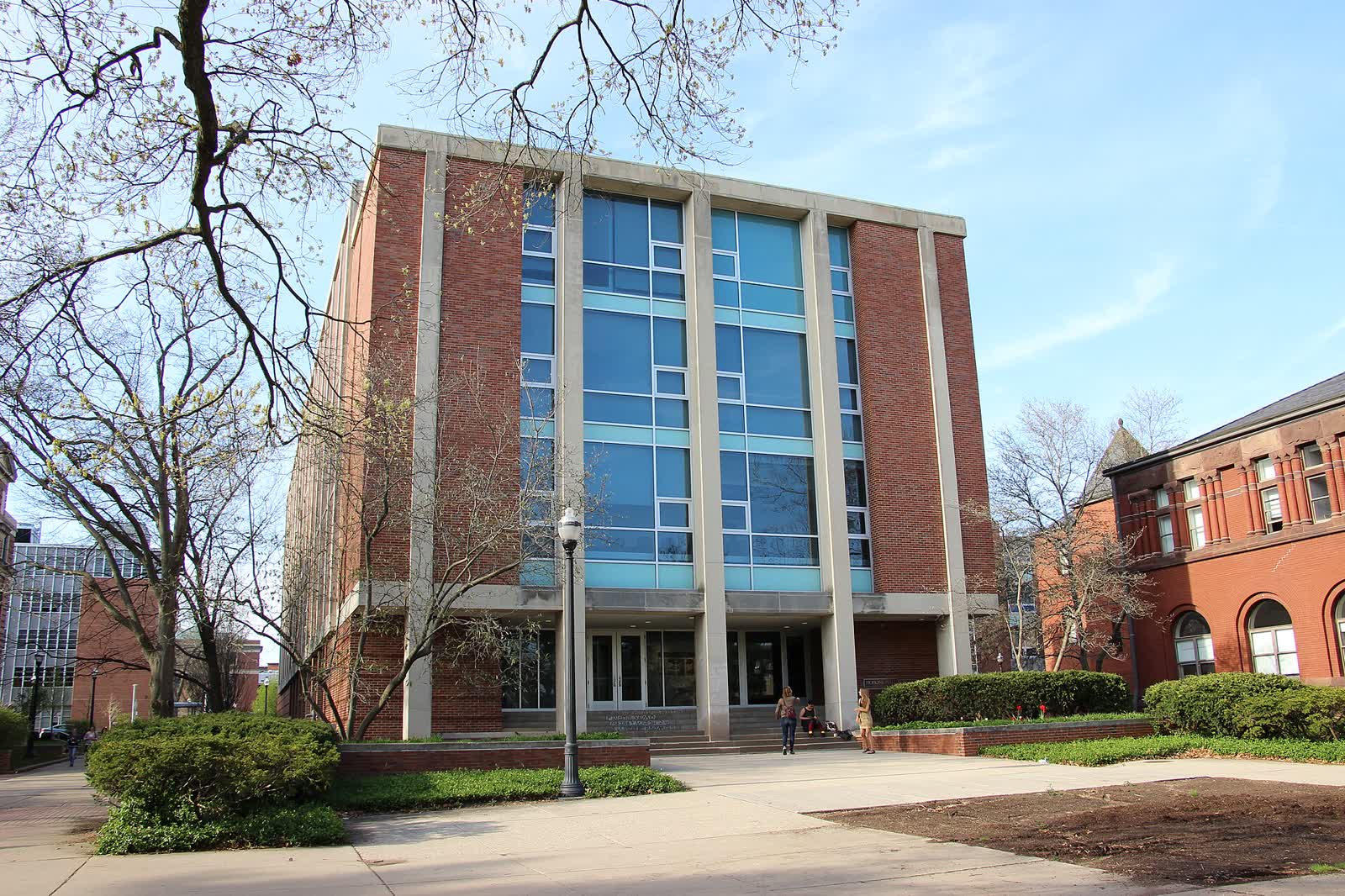
Before there was a Wexner Center, Ohio State showed contemporary art through the University Gallery of Fine Art. The center’s own 2022 prehistory, written by Daniel Marcus, places it in “a small exhibition space on the ground floor of Hopkins Hall.” When the new center opened, the gallery ceased operations and passed on its holdings, “a group of approximately 3,000 objects.”
The little gallery was not timid. Chris Burden performed Shadow there in April 1976. In 1982 Jonathan Green’s Kitsch project asked for “tchotchkes from the gallery audience to be exhibited in place of the expected high-art fare,” and a 1984 show had graffiti artists paint “before a live audience.”
Green, director of the University Gallery, steered the new project through construction. Robert Stearns became the center’s first director.
A laboratory, not a museum
The idea behind the building came before the building. A draft statement of purpose from the mid-1980s, quoted in the same 2022 publication, said art centers were “in the process of shifting from storehouses of historical objects to research and experimental facilities.” The new center would be “a hybrid of gallery, movie house, theater, and music hall.”
Some of that wording dates back to a 1982 paper on basic premises for an art center at Ohio State. The center still describes itself in those terms: “Conceived as a research laboratory for all the arts, it has emphasized commissions for new work and artist residencies since its inception.”
The competition: Cobb’s jury and five teams
The design came out of a competition run in 1982 and 1983. A nine-person jury chaired by Henry Cobb, then head of architecture at Harvard’s Graduate School of Design, picked five invited teams. Even the site was open, somewhere “between the east edge of Ohio State’s beloved Oval and the High Street entrance to campus.”
| Finalist | Result |
|---|---|
| Peter Eisenman, with Richard Trott | Winner |
| Michael Graves | Finalist |
| Cesar Pelli | Finalist |
| Kallmann McKinnell & Wood | Finalist |
| Arthur Erickson | Finalist |
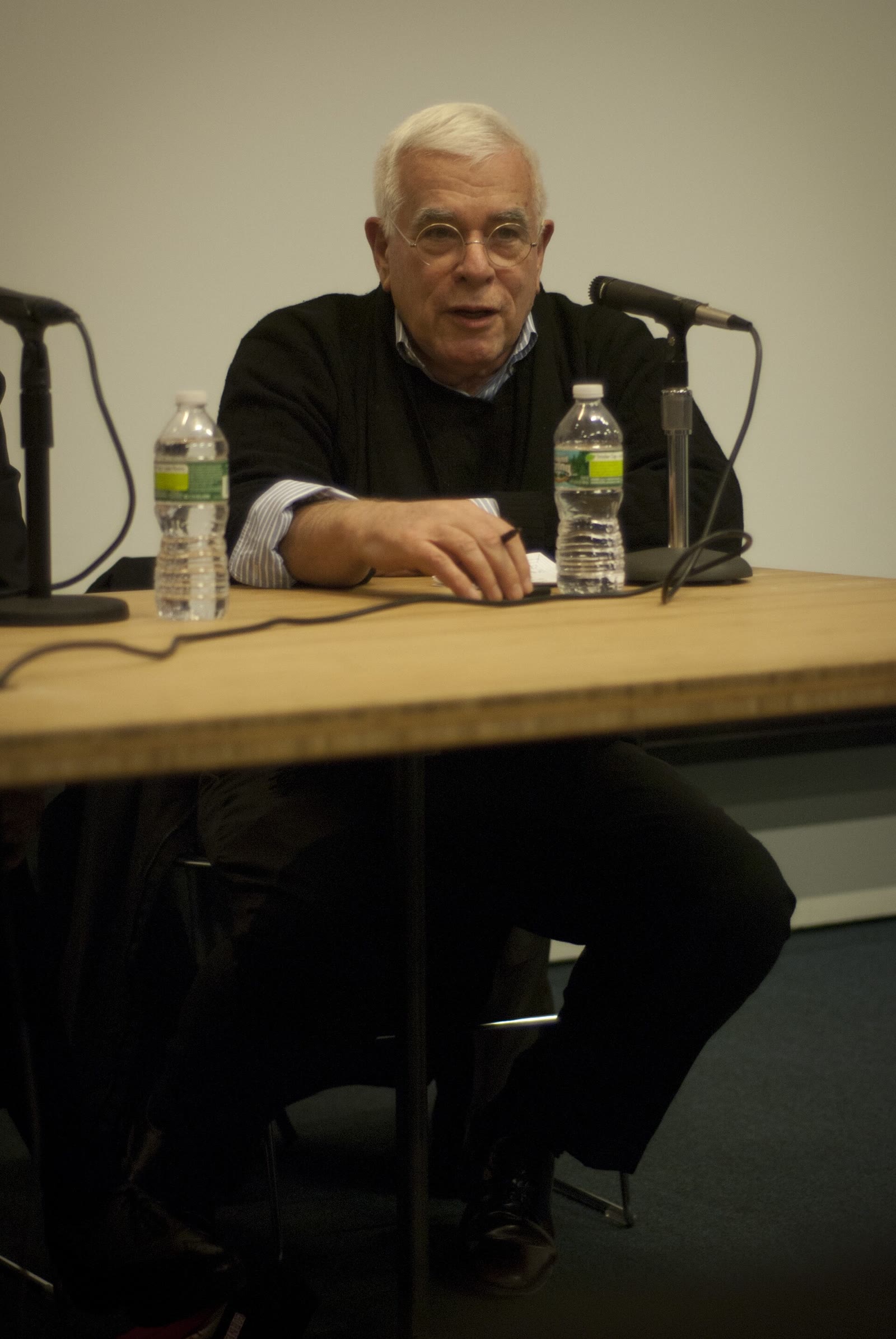
ArchDaily’s AD Classics study of Peter Eisenman’s Wexner Center puts it plainly: “To the surprise of many, Eisenman won the competition despite his relative inexperience with large-scale buildings.” Eisenman of New York worked with Richard Trott of Columbus and the Philadelphia landscape architect Laurie Olin, and the jury said the scheme “captured the spirit, dynamism, and open-endedness of the new center’s programmatic needs.”
Peter Eisenman’s Wexner Center was his first major public commission. Until then he was known mainly as a theorist and teacher, and the building wedged itself between Weigel Hall and Mershon Auditorium, with a plaza reaching out toward High Street and 15th Avenue.
Ground broken, a name given
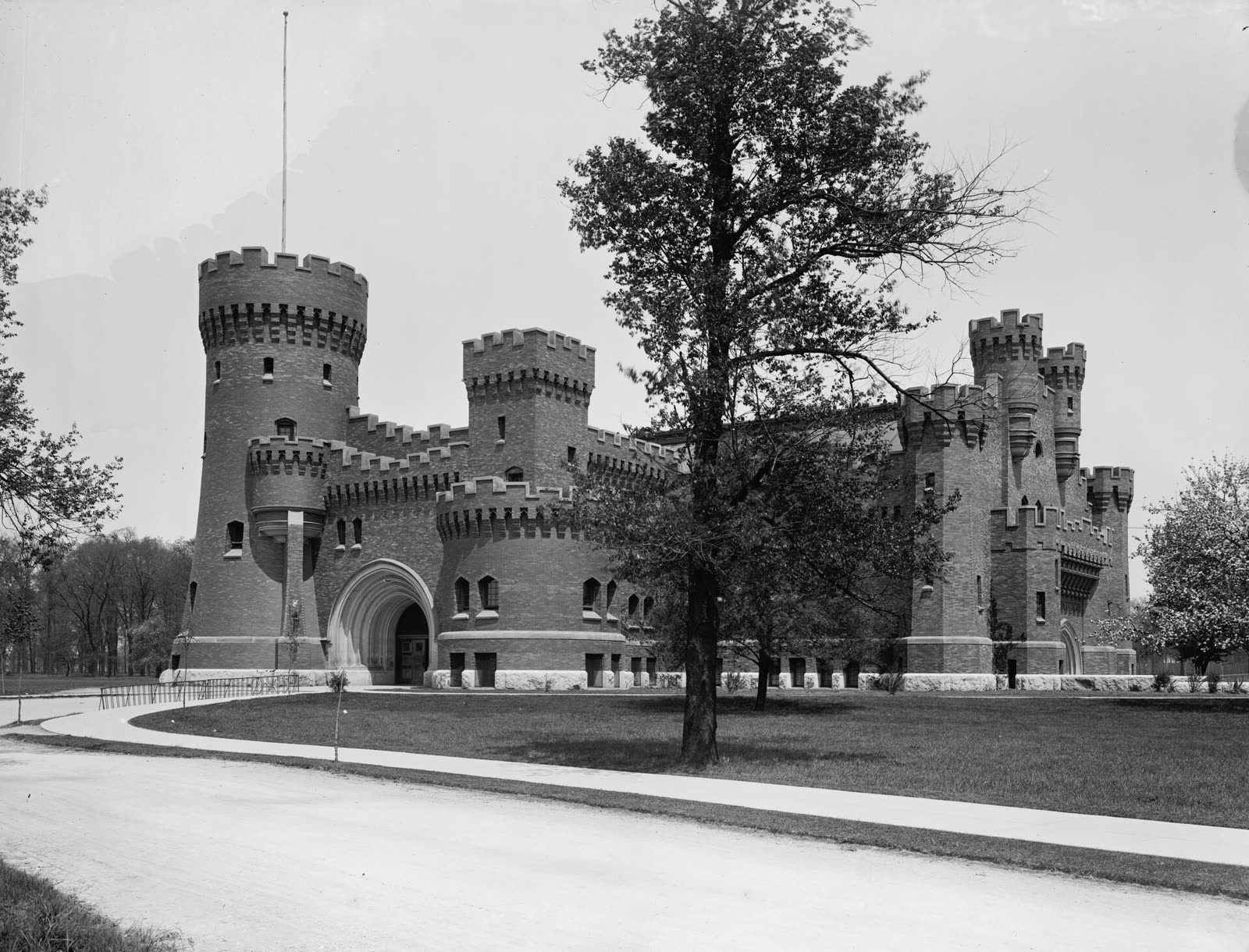
Ground was broken on September 28, 1985, with Dennis Oppenheim’s Power Fingers, “a pyrotechnic sculpture ignited in celebration of the Wexner Center’s groundbreaking.” The commission cost $43 million, according to ArchDaily.
The Lantern reported that $25 million came from Leslie H. Wexner, chairman of The Limited, who dedicated the building to his father, Harry L. Wexner. It opened as the Wexner Center for the Visual Arts.
| Item | Detail |
|---|---|
| Competition | 1982-83; jury chaired by Henry Cobb; five invited teams |
| Architects | Peter Eisenman with Richard Trott; landscape by Laurie Olin |
| Cost | $43 million |
| Lead gift | $25 million from Leslie H. Wexner, named for his father |
| Opened | November 1989 |
| Renovation | About 2002 to October 2005, about $12 million |
“The Museum That Theory Built”
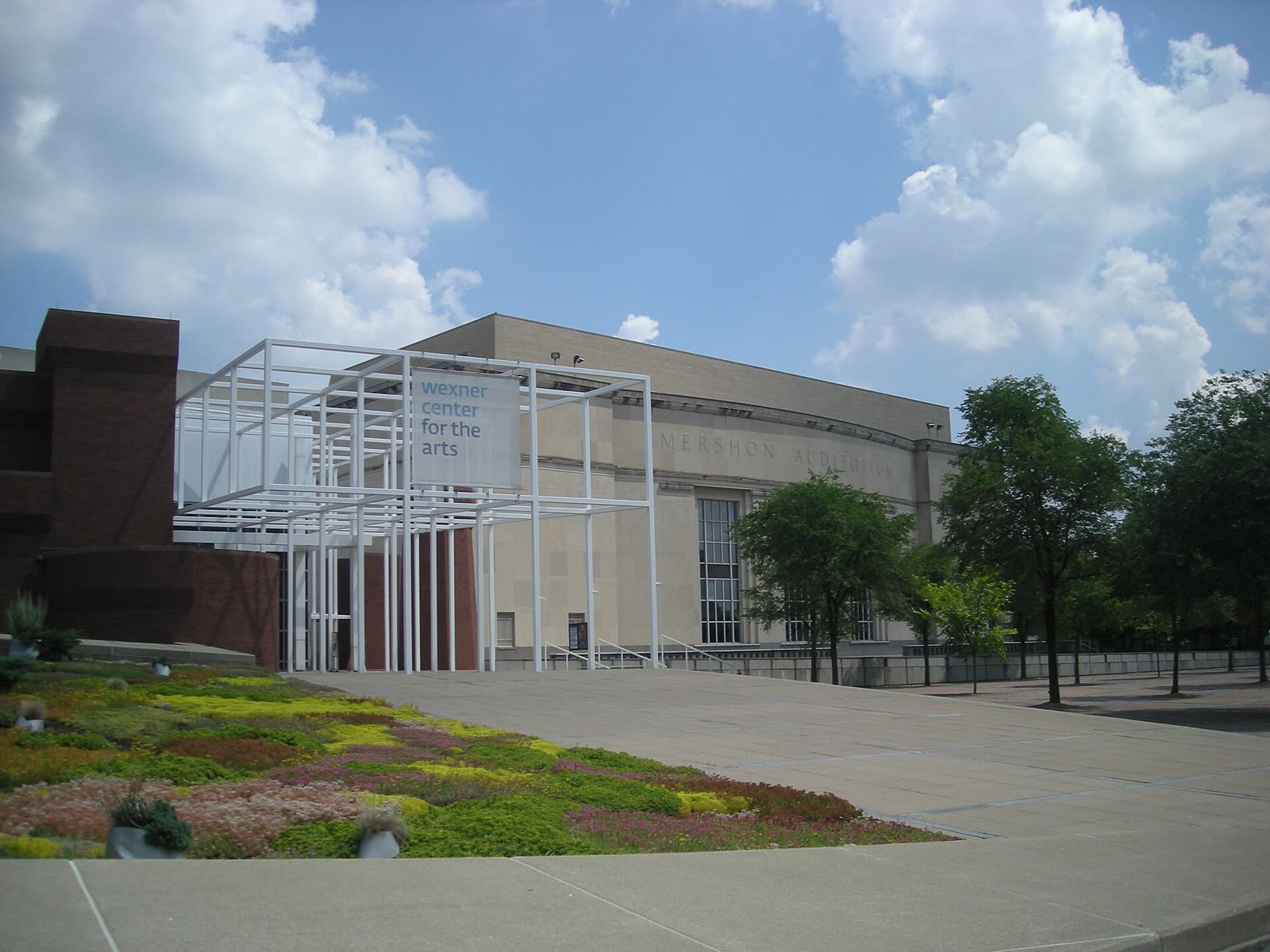
The building opened in November 1989 to enormous attention. Paul Goldberger of The New York Times called it “One of the most eagerly awaited architectural events of the last decade,” and ArchDaily reports his headline as “The Museum That Theory Built.” Newsweek found that it “in its oddball way is a triumph,” calling it “crazy, inventive, and full of life.”
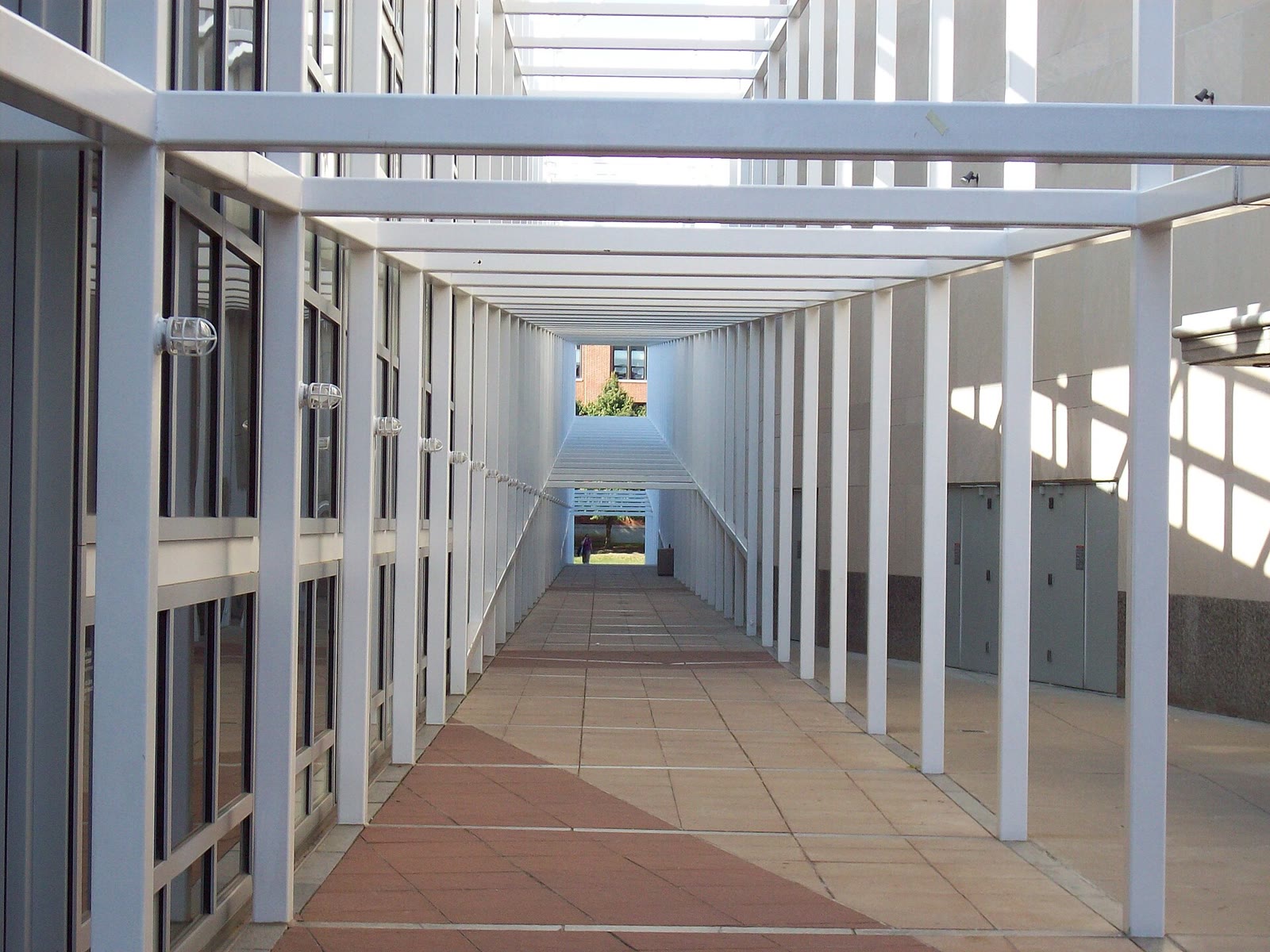
The American Institute of Architects said it “challenges assumptions of what architecture should be.” ArchDaily’s later verdict cuts both ways: “For some, it heralded a validation of deconstructivism and theory, while its problems provided ammunition for others.” The grids, the empty galleries and the sharpest reviews are covered in our post on The Grid, Antenna’s audio tour for the opening.
Leaks, heat and a three-year repair
Those problems were physical. A 2005 report excerpted by ArtsJournal summed them up: “But it leaked. And the temperature inside swung wildly during the day.” The basement storage needed proper ventilation, and the director, Sherri Geldin, said the facilities had to “comply with prevailing industry standards.”
Planning began in autumn 2000, covering heating, cooling, light control and leaks, and Eisenman said, “I fully support these engineering improvements.” The Lantern’s 2003 report on the Wexner Center put the university-funded cost at approximately $12 million. The Chronicle of Higher Education later noted that the building “closed for a three-year renovation just 13 years after it was completed.”
Exhibitions moved to the Belmont Building in downtown Columbus, and the galleries reopened in October 2005, by the center’s own account.
Residencies, the Wexner Prize and the directors
The laboratory idea lives on in the residencies. The Artist Residency Award program sets aside “A total of $200,000 annually” across the center’s disciplines. Recipients named by the center include Barbara Kruger, Todd Haynes, Bill T. Jones, the Wooster Group and Kronos Quartet.
Opening programmes featured Laurie Anderson, John Cage, Martha Graham and Nam June Paik, whose work runs through the history of video art. The Wexner Prize was first awarded in 1992 to the theater director Peter Brook. Winners receive $50,000 and a silver sculpture designed in 1991 by Jim Dine.
| Years | Director |
|---|---|
| To 1989 | Jonathan Green, University Gallery; steered the project |
| From 1989 | Robert Stearns, first director |
| 1993-2018 | Sherri Geldin |
| From 2019 | Johanna Burton |
| 2022-2025 | Gaetane Verna |
Antenna Theater on the opening bill
Antenna Theater was commissioned for the opening and made The Grid, an interactive audio tour that led each audient through the new building and explained the site and Eisenman’s intentions. The center’s 2022 prehistory confirms that it premiered on opening day. For the place of such tours in museums, see the history of museum audio guides and how an audio tour differs from an audio walk.
A tour that turns a building into the subject sits close to what a theatre installation is. The year is in the Antenna chronology, and another 1980s home for art and technology is told in the history of the MIT Media Lab.
Frequently asked questions
Who designed the Wexner Center for the Arts?
Peter Eisenman of New York, in association with Richard Trott of Columbus, with the landscape architect Laurie Olin. Their team won a competition Ohio State ran in 1982 and 1983.
When did the Wexner Center open?
In November 1989, as the Wexner Center for the Visual Arts. Its precursor, the University Gallery of Fine Art, closed and passed on about 3,000 objects.
Who is the Wexner Center named after?
Harry L. Wexner, the father of Leslie H. Wexner, who gave $25 million toward the building and dedicated it to him.
Why was the Wexner Center renovated?
It leaked and its temperatures swung. A university-funded repair of about $12 million covered climate and light control and leaks, and the galleries reopened in October 2005.