
The Grid: Antenna Theater’s 1989 Audio Tour of the Wexner Center
When the Wexner Center for the Visual Arts opened at Ohio State University in November 1989, there was no art on its gallery walls. What visitors could do was walk the building itself with a recorded guide: The Grid, an audio tour by Antenna Theater. No script, credits or review of the tour survives, so this is the story of what the records say, and of the building the tour was made to explain.
Quick answer
What was The Grid at the Wexner Center?
The Grid was an audio tour by Antenna Theater, commissioned for the opening of Ohio State’s Wexner Center for the Visual Arts in November 1989. With no art yet on the walls, visitors carried Sony Walkmans through Peter Eisenman’s building while a recorded program explained the site’s history and the architect’s intent.
A museum that opened with nothing on the walls
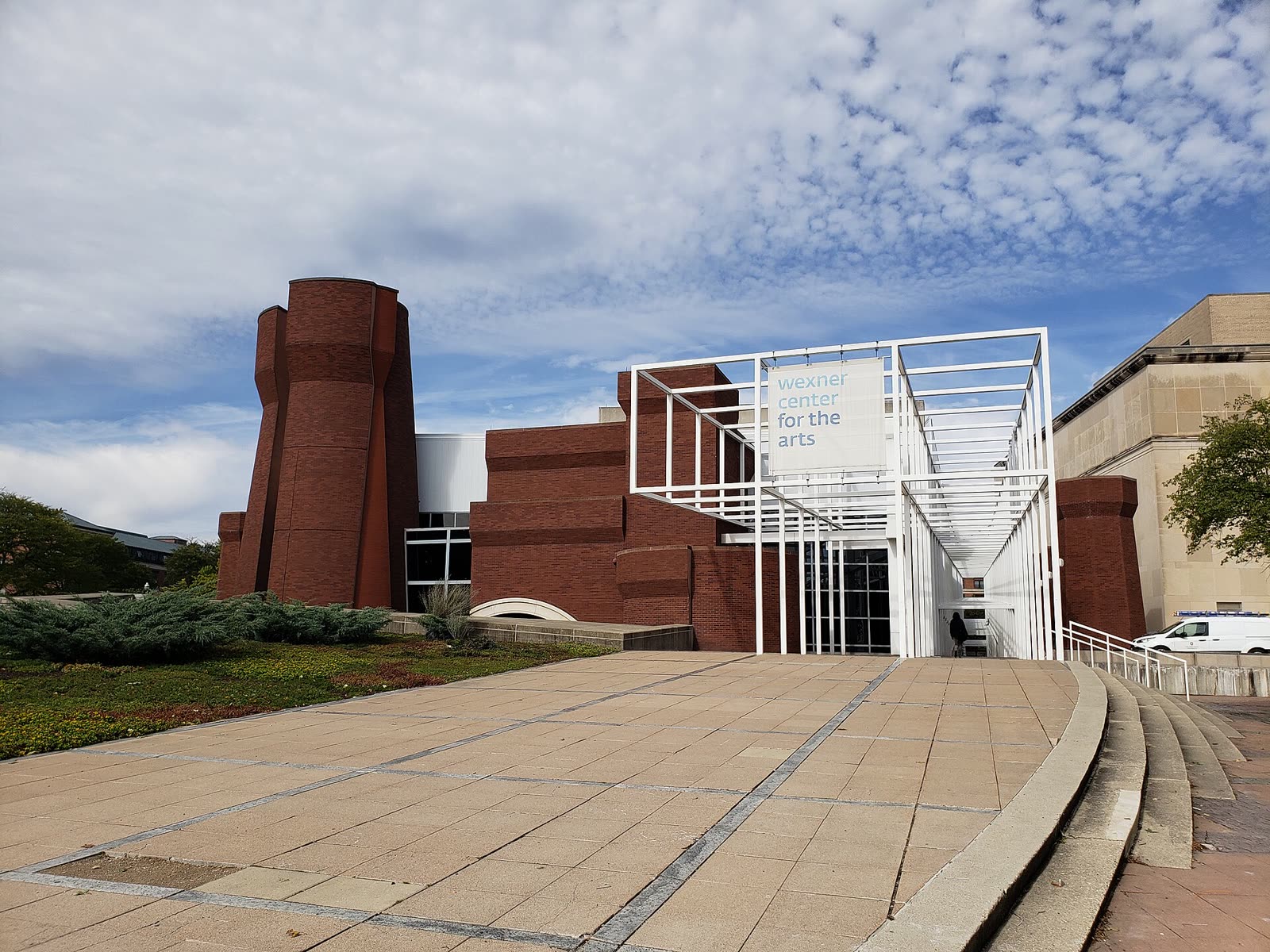
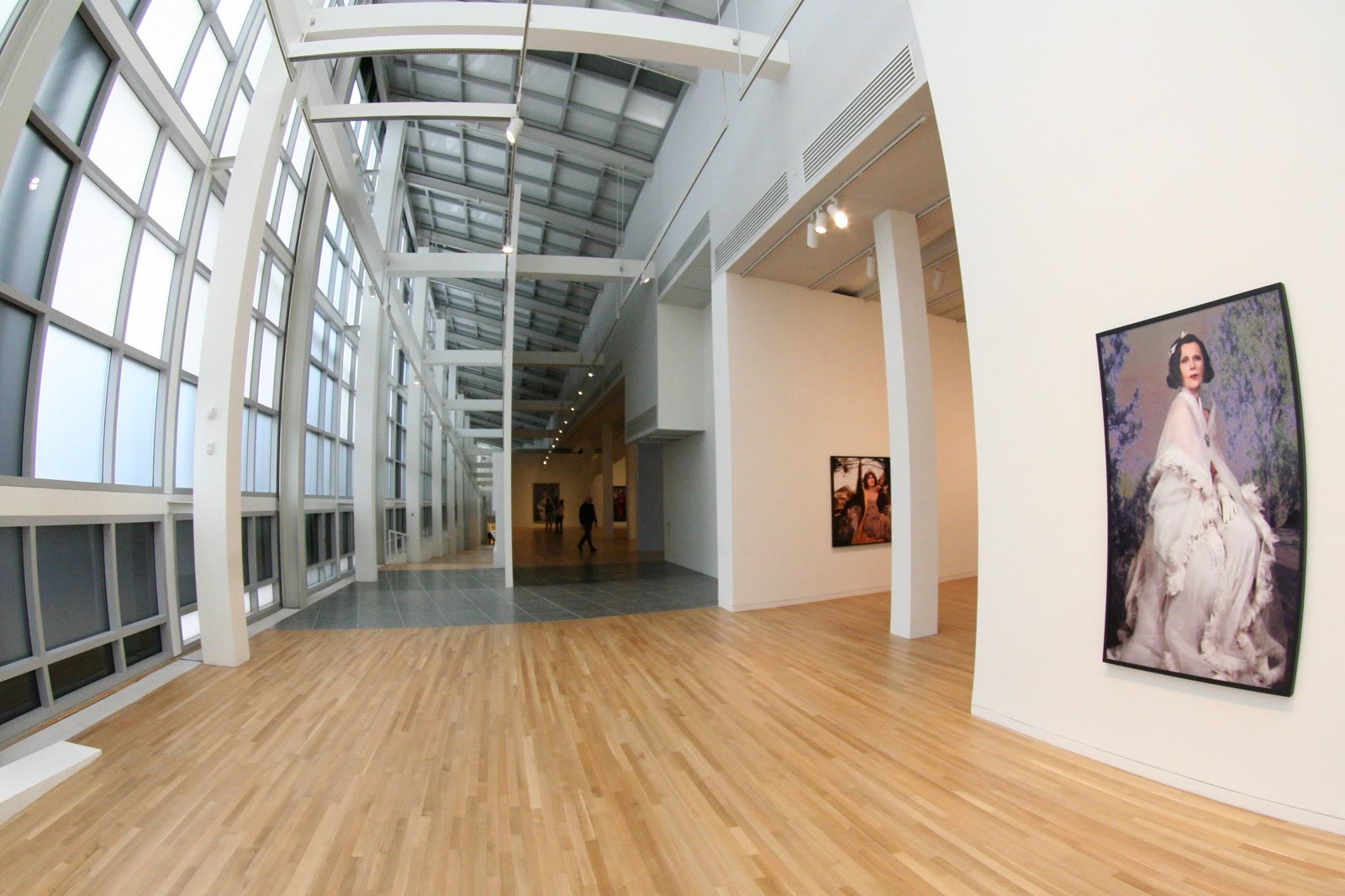
The Wexner Center’s own history, To Begin, Again: A Prehistory of the Wex, 1968-89, records that “its galleries were unveiled without a single artwork on the walls, permitting visitors to survey Peter Eisenman’s architectural design (coauthored with Richard Trott) free of distraction.” Daniel Marcus, who wrote its introduction, calls this “A calculated gesture on the part of founding director Robert Stearns.”
Stearns explained the idea to the Christian Science Monitor: “It’s not just a blank canvas, it’s an active container.” The first art did not arrive until 1990. Hilton Kramer, writing in The New Criterion that December, put it at “Not until February 16, three months after the opening.”
Sony Walkmans and “a participatory theatrical event”

The best description of the tour comes from a hostile witness. Kramer quoted the Wexner’s press material: “when the Center opens its doors, the vanguard California-based group Antenna Theater will offer tours of the building through an inventive audio production.” Visitors would be given Sony Walkmans, and “the recorded program will direct them on an adventure through the building, thus involving them directly in a participatory theatrical event.”
The Wexner Center’s 2022 history confirms that it happened. Marcus writes that “two audio projects premiered at the Wex on opening day”: John Cage’s Essay and “Antenna Theater’s interpretive tour, The Grid.” The only artwork on view that day was Julia Scher’s video installation Occupational Placement. The Wexner Center dates opening day to November 16, 1989, while Kramer gave November 17.
What the tour had to explain
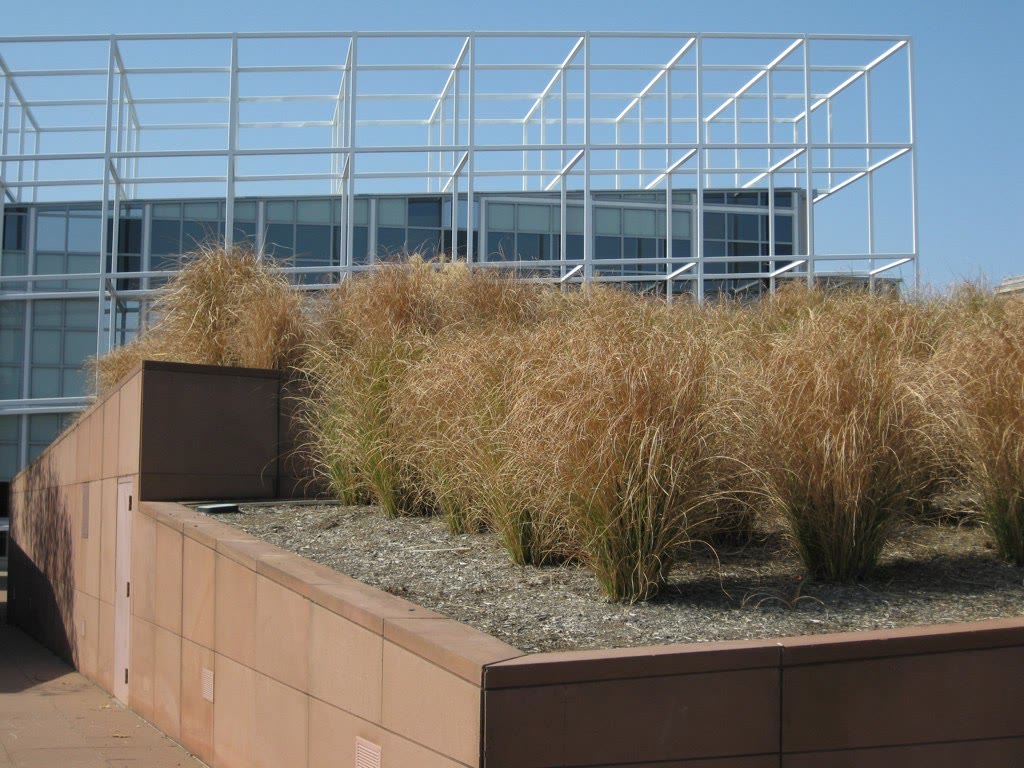
Antenna’s chronology says the tour “explained the history of the site and the intent of the Center’s architect, Peter Eisenman, to visitors.” That was no small job. The campus street grid, the Monitor explained, “is out of alignment with the city grid by 12 and one-quarter degrees,” and the architects “decided to base the entire structure of the new building on the intersection of those two grid systems, to form a symbolic bridge between town and gown.”
No source explains the tour’s title, but the building offers two grids to choose from: those offset street plans, and the white scaffolding that runs its length. Eisenman called the Wexner “a building that is waiting to be a building,” and Kramer likened the scaffold to “the largest Sol LeWitt sculpture ever made.” Eisenman also said, as Kramer quoted him, that “you cannot ever be entirely sure where you are,” which reads, in hindsight, like an argument for handing visitors a guide.
| Feature | What it referred to | Source |
|---|---|---|
| Two grids | Campus and city street grids, 12 1/4 degrees apart | Christian Science Monitor |
| White scaffolding | “Construction in progress” | Monitor; Wexner Center |
| Brick towers | An armory built in 1897, damaged by fire in 1958 and demolished in 1959 | The Lantern; Wexner Center |
| Planting plinths | Earthwork mounds near Chillicothe, Ohio | Monitor |
| Entrance | “no recognizable entry in the classical sense” (Eisenman) | Kramer |
| Galleries | Empty of art until February 1990 | Kramer; Monitor |
A Monitor reporter wrote that “A visitor has to wander around to find an entrance,” and quoted the building’s self-guided audio tour: “It’s reason out of control, reason gone crazy, obsessive, mad!” The Monitor does not name the tour’s makers. The tour announced in the opening press material was Antenna’s, but that line cannot be credited to its script with certainty.
Two descriptions of one piece

Antenna’s own records describe The Grid in two ways that do not quite agree. One is a guided tour of a building; the other is a piece about the art world itself.
| Record | How it describes The Grid |
|---|---|
| Chronology (Weebly era) | An interactive audio tour that led each audient “through the new facility and explained the history of the site” |
| Show page (2003 to 2005) | “An interactive audio installation that dissects the relationship between art, artist, museum, and curator” |
| Production history (2007) | A one-line listing for 1989 |
The show page also says the piece was “Originally developed for” the opening, which hints at later use, but no later venue is recorded. The chronology’s word audient is Antenna’s own coinage, explained in what Antenna meant by an audient.
Masterpiece or “guided tours of new campus facilities”?
The building split the critics. Philip Johnson called it “a masterpiece” and said, “It may be one of the turning points in the history of architecture.” Richard Meier wrote: “For the first time, one can see that Eisenman is a supremely sophisticated and infinitely subtle orchestrator of space.”
Kramer found it “so completely designed for shortlived effects” that “the visitor finds himself mentally correcting the architect’s mistakes at every turn of its labyrinthine design.” He saved a jab for the tour: “Well, we know that ‘vanguard’ groups aren’t what they used to be, but who would have guessed that they have now been reduced to providing guided tours of new campus facilities?”
Where The Grid sits in Antenna’s work
The Grid came two years after Antenna’s Alcatraz cellhouse tour of 1987, and the company’s audio-tour work later became Antenna Audio, a former division now owned by Antenna International. How a tour differs from a walk is set out in the difference between an audio walk and an audio tour, and the wider story in the history of museum audio guides.
Five years later the company sent visitors alone through Enola/Alone, its bomber maze at the Presidio, and its Walkman methods run through the history of Antenna’s headphone theater. For the GPS era that came later, see how location based audio storytelling learned where its listener was.
Frequently asked questions
What was The Grid?
An Antenna Theater audio tour commissioned for the opening of the Wexner Center for the Visual Arts at Ohio State University in 1989, leading each visitor through the new building.
When did it premiere?
On the Wexner Center’s opening day in November 1989: November 16, according to the Wexner Center, or November 17, according to Hilton Kramer.
How did it work?
Visitors were to be given Sony Walkmans, and a recorded program would guide them through the building, according to the Wexner press material quoted by Kramer.
Why was it called The Grid?
No source explains the title. The building is laid out on two street grids 12 1/4 degrees apart and wrapped in a white scaffolding grid.
The Grid has a one-paragraph entry in Antenna Theater’s full production chronology, among four decades of walk-through work.