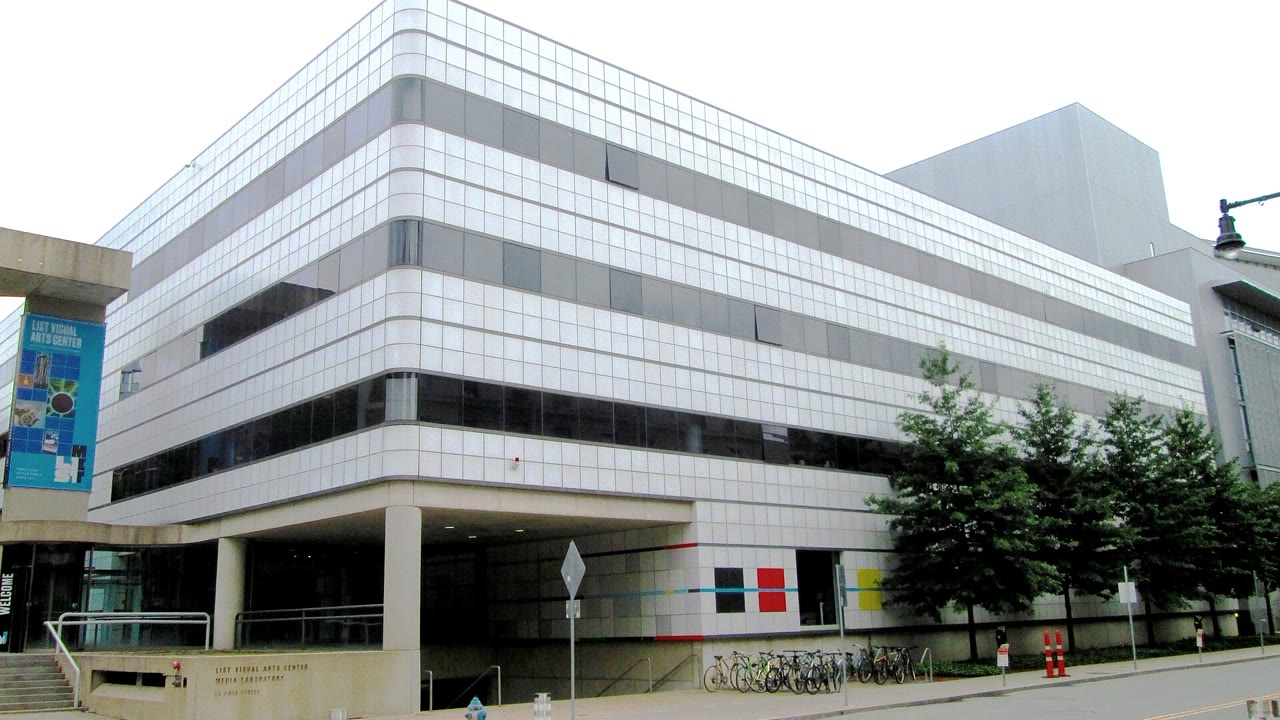
The History of the MIT Media Lab: Machines, Artists and the Cube
The history of the MIT Media Lab is usually told as a story about computers. It is also a story about artists: a council for the arts, a building designed with painters and sculptors, and a theatre space in the basement that a touring company from Sausalito opened in 1987.
Quick answer
Who founded the MIT Media Lab, and when?
Nicholas Negroponte and former MIT president Jerome Wiesner founded the Media Lab in 1985, after first shaping the idea in 1980. It grew out of Negroponte’s Architecture Machine Group and opened in the I. M. Pei-designed Wiesner Building, joining computing, graphic design, electronic music, film, video and holography, funded largely by corporate sponsors.
Two founders: a machine group and an arts council
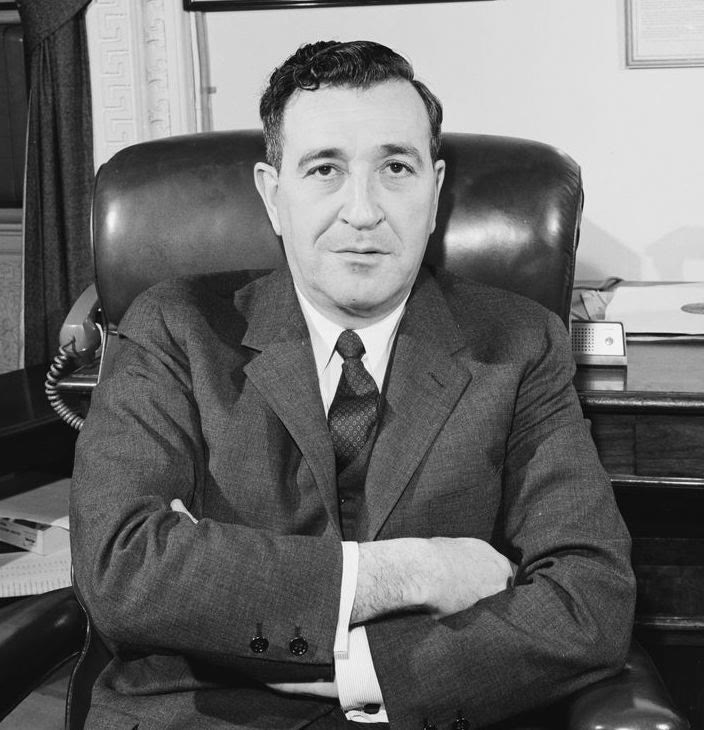
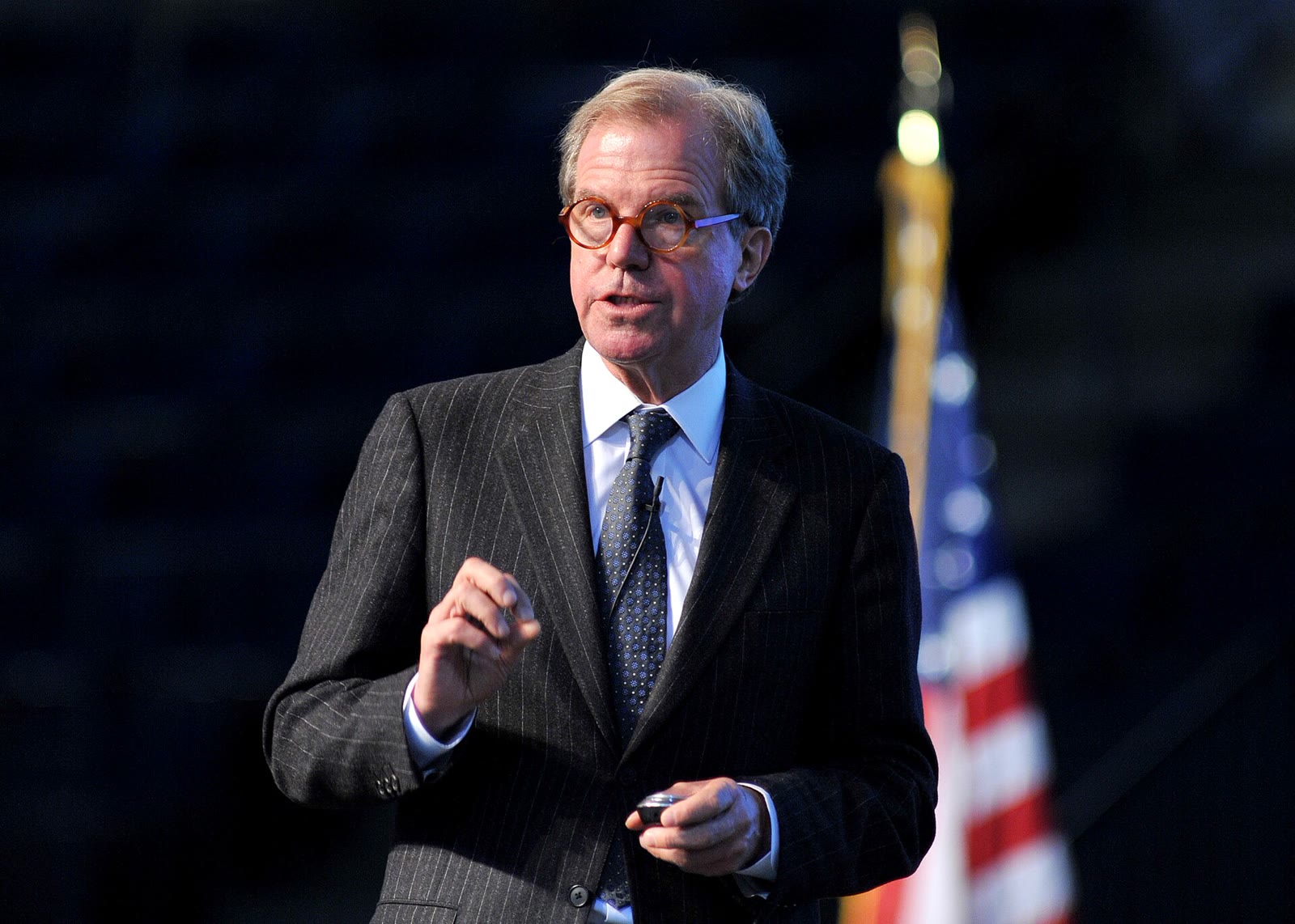
In the lab’s words, “The idea for the Media Lab came into being in 1980 by Professor Nicholas Negroponte and former MIT President … Jerome Wiesner.” It “grew out of the work of MIT’s Architecture Machine Group,” which Negroponte had started, and it stayed within the School of Architecture and Planning.
Arch Mach, as it was known, built the Spatial Data Management System, the Aspen movie-map and Put That There. A 1996 paper by the Media Lab researcher Chris Schmandt notes that “At the Lab’s founding, the majority of faculty and research staff joined from Arch Mach.” Negroponte, on the MIT faculty since 1966, directed the lab for its first 20 years.
Wiesner, President Kennedy’s science adviser and MIT’s president from 1971 to 1980, brought the other root. He founded the Council for the Arts at MIT in 1972 and died in October 1994, at 79. At the building’s dedication in 1985 he said, “Now the laboratory is a direct consequence of the establishment of the Council for the Arts by alumni and friends.” At the council’s first meeting, he recalled, the poets Stanley Kunitz and Archibald MacLeish “challenged us to see science and the arts as a part of a total human experience.”
A building made with artists
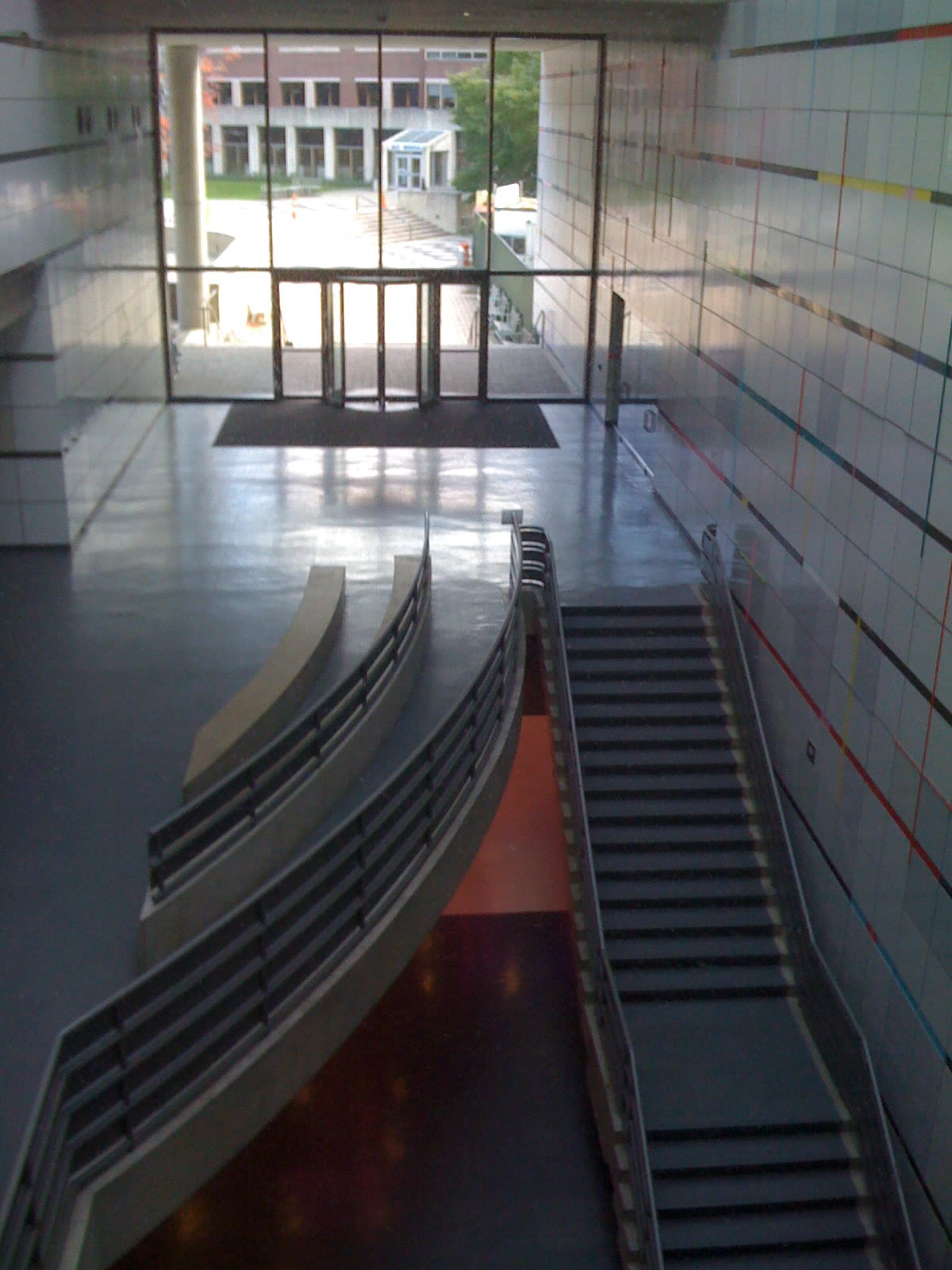
“The Media Lab opened the doors to its I.M. Pei-designed Wiesner Building in 1985,” the lab says. The Wiesner Building at MIT had three tenants at the start: the Media Laboratory, the Council for the Arts and the List Visual Arts Center. Paul Gray told the dedication that nearly 100 individuals, corporations and foundations had paid for it.
Gray also thanked the National Endowment for the Arts for a grant supporting “a pioneering experiment among architect I. M. Pei and artists Scott Burton, Richard Fleischner, and Kenneth Noland in the design of the building.” MIT’s video of Jerome Wiesner’s dedication keynote records the speeches.
| Who | Contribution |
|---|---|
| I. M. Pei & Partners | Architecture |
| Kenneth Noland | Colour on the walls; the work Here-There (1985) |
| Scott Burton | The atrium bench and the curve of the stair |
| Richard Fleischner | The courtyard |
The founding groups
The MIT Media Lab founding brought together groups that already existed around the institute. Schmandt’s ten-year paper lists them, and the lab’s fact sheet sums up the mix as “cognition, electronic music, graphic design, video, and holography, as well as work in computation and human-machine interfaces.”
| Group | Leader | Note |
|---|---|---|
| Architecture Machine Group | Nicholas Negroponte | Supplied most of the first staff |
| Visible Language Workshop | Muriel Cooper | Early interest in print media |
| Experimental Music Studio | Barry Vercoe | Electronic music |
| Film/Video | Richard (Ricky) Leacock | A Film/Video section |
| Computer holography | Stephen Benton | Rose from the former Creative Photography Lab |
| Learning and AI | Seymour Papert, Marvin Minsky | Joined from elsewhere at MIT |
The sponsor model
The lab’s charter was ambitious: “to invent and creatively exploit new media for human well-being and individual satisfaction, without regard to present-day constraints.” By 1995 it was a research and teaching organisation of more than $23 million a year.
Schmandt explains how it was paid for: “Approximately 85% of our contract research funding is provided by more than 100 corporate sponsors.” He adds, “This is a unique formula at MIT.” Wiesner himself had taken on the fundraising as what Schmandt calls “a pet project.”
The Cube: theatre in a laboratory
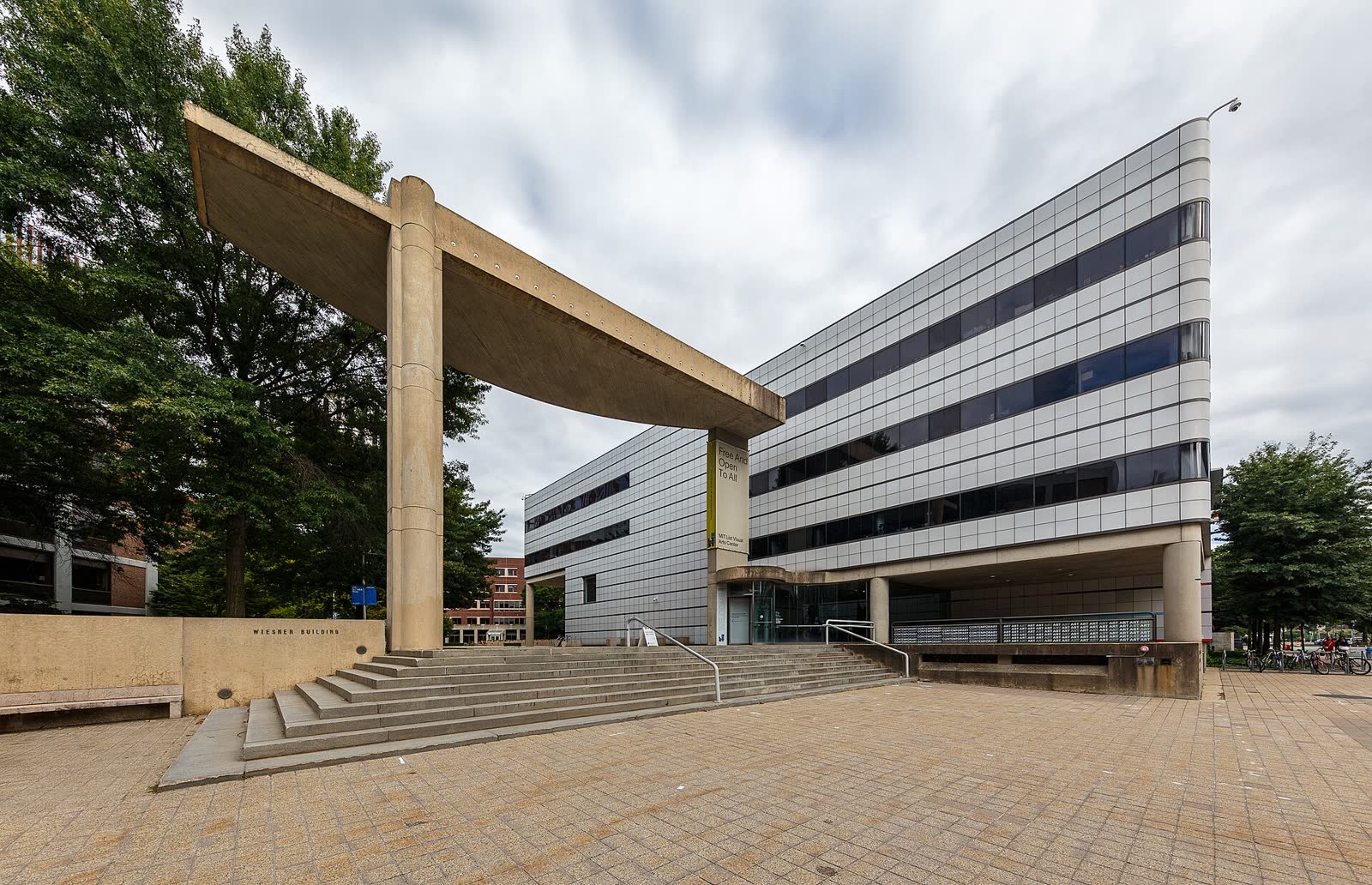
On the building’s lower level was the Philippe Villers Experimental Media Facility, known to everyone as the Cube. Its first big event was a theatre piece. “TO INAUGURATE its amazing theater space, The Cube, the MIT media lab has created its own media event,” Barbara Masi wrote in The Tech on March 20, 1987.
The event was Antenna Theater’s Radio Interference, written and directed by Chris Hardman, with an MIT collaboration led by Richard Leacock and Glorianna Davenport. Masi called it “the first fully developed project of the Visiting Artist Program, initiated by the MIT Council for the Arts.” Students had joined through an IAP activity, though Masi found their “contribution for ‘Radio’ is barely visible this time around.”
The best effects were the lab’s own. In one scene created by Davenport, Masi wrote, “you appear as if you were walking through a waterfall.” Antenna’s chronology says the audients wore infrared headsets, while Masi describes each one outfitted with a walkman. Her verdict: “unless you arrive in an exceptionally receptive state of mind, you will not be quite sure what you’re doing there, but you will have a good time.”
The show’s rooms included the War of the Worlds room in Radio Interference, and the headsets belong to the history of Antenna’s headset theater. Tod Machover’s opera VALIS, after its Paris premiere in December 1987, toured the United States with performances in the Cube, and in 1998 students staged Cubestock before renovations closed the space for a while.
Decades two to four and a new building
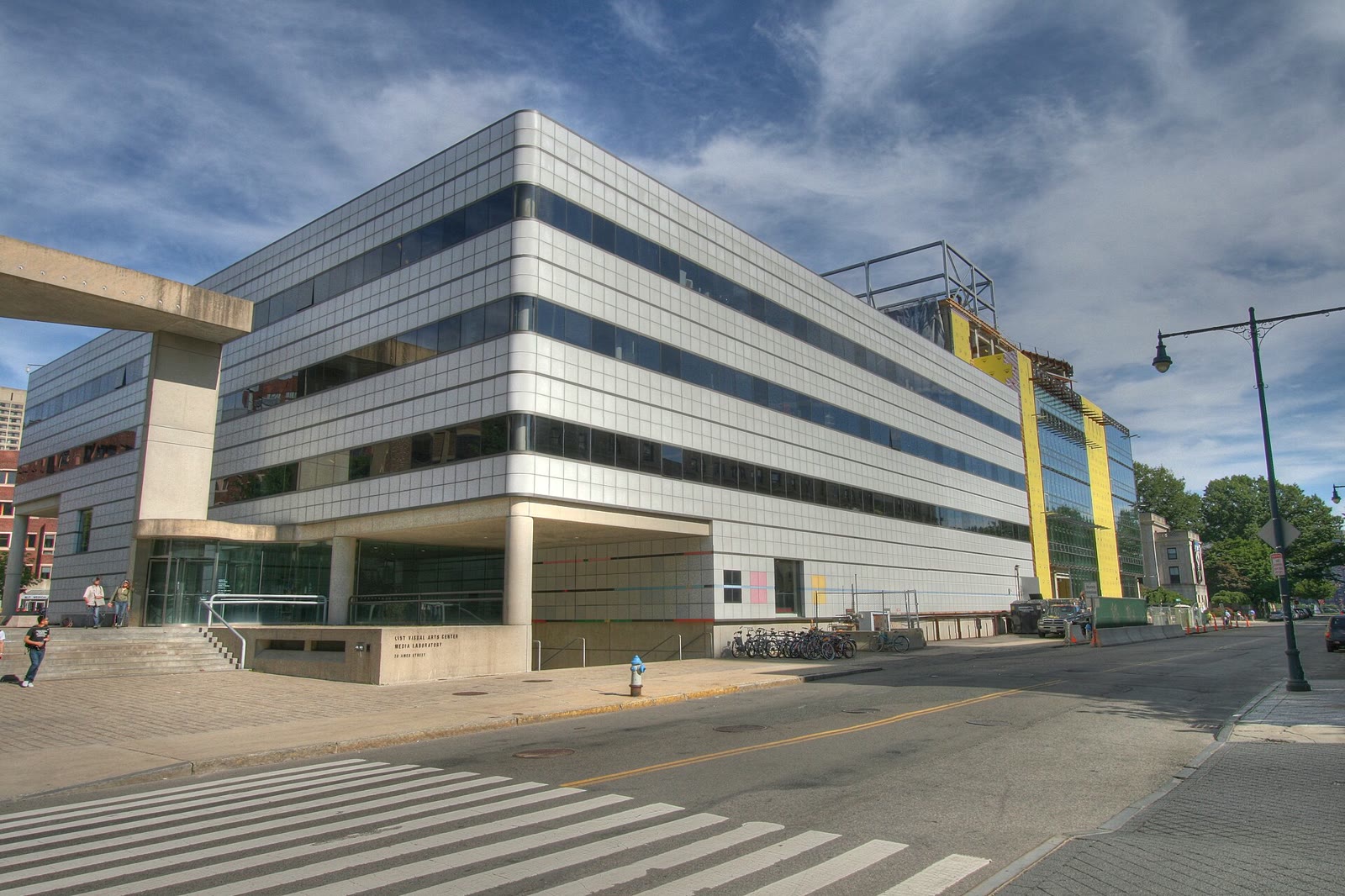
The lab describes its decades in broad strokes. The first showed how new technologies “might transform learning, entertainment, and self-expression.” The second added “wearable computing, sensor networks, tangible media, and affective computing,” and the third “layered in biological sciences and technologies.” From 1991 through 2008 it published a monthly newsletter, FRAMES.
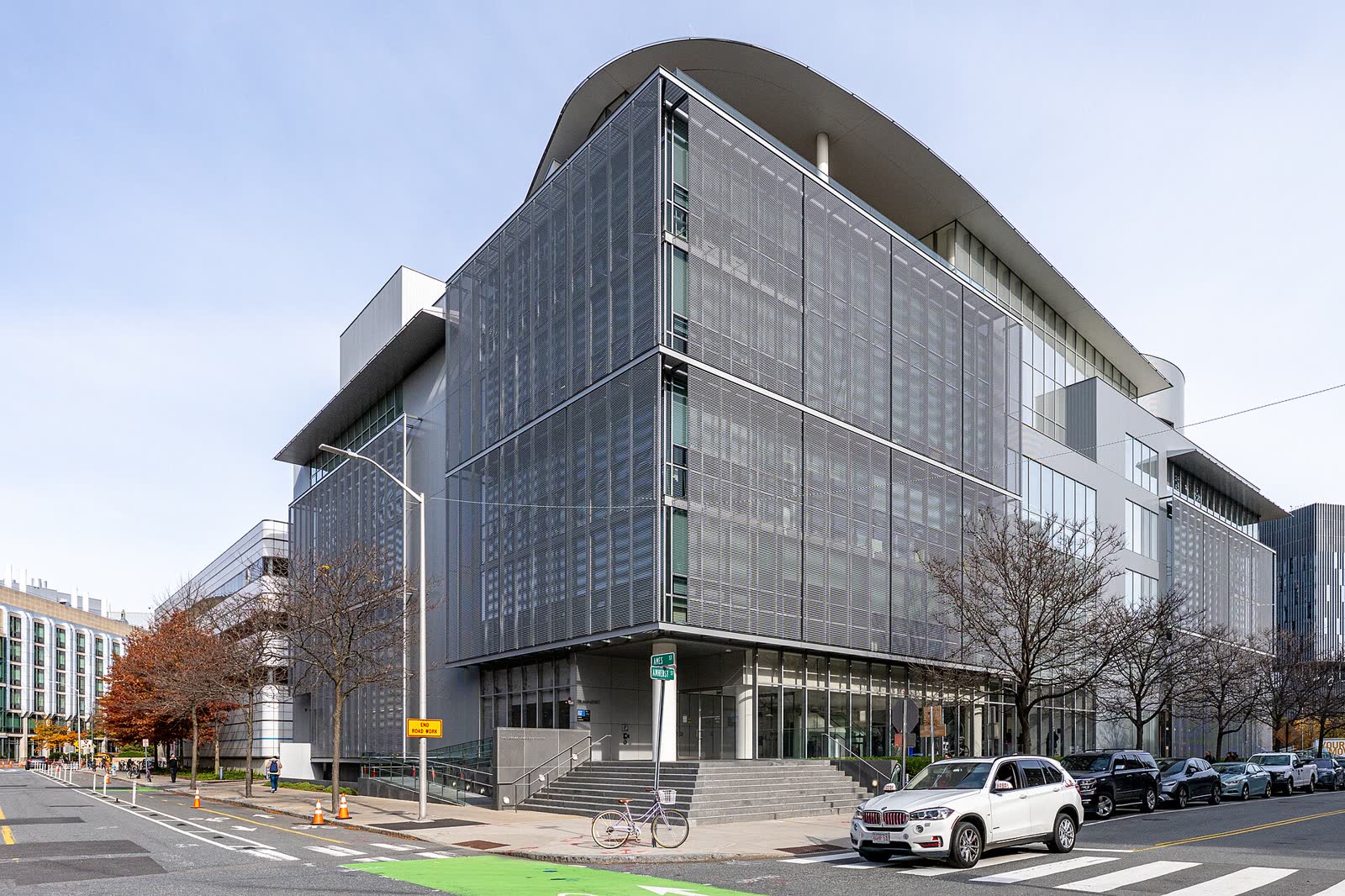
The lab outgrew the Pei building. Its extension, by the Tokyo firm Maki and Associates, is a six-floor structure of about 163,000 square feet joined to the Wiesner Building.
The history of the MIT Media Lab in dates
| Year | Event |
|---|---|
| 1972 | Wiesner founds the Council for the Arts at MIT |
| 1980 | Negroponte and Wiesner shape the idea; NEA Art in Public Places grant for the building |
| 1985 | The lab opens in the Pei-designed Wiesner Building |
| 1987 | Radio Interference inaugurates the Cube (March); VALIS premieres in Paris (December) |
| 1998 | Cubestock, before the Cube’s renovation |
| 2019 | Joi Ito resigns |
| 2021 | Dava Newman becomes director |
2019 and after
“Media Lab Director Joi Ito resigned Saturday afternoon following weeks of escalating revelations and outrage over his financial ties with Jeffrey Epstein,” The Tech reported on Joi Ito’s resignation in September 2019. MIT Technology Review reported that Ito admitted taking $525,000 from Epstein for the lab and $1.2 million for his own ventures.
In December 2020 MIT named Dava Newman director, effective July 1, 2021. For an earlier bridge between artists and engineers, see Experiments in Art and Technology, and closer to home, the history of the Exploratorium.
Frequently asked questions
What did the MIT Media Lab grow out of?
Mainly Nicholas Negroponte’s Architecture Machine Group, joined by the Visible Language Workshop, Barry Vercoe’s music studio, Ricky Leacock’s Film/Video section and Stephen Benton’s holography group.
Who designed the Wiesner Building?
I. M. Pei, working with the artists Kenneth Noland, Scott Burton and Richard Fleischner, with support from the National Endowment for the Arts.
What is the Cube at the Media Lab?
The Philippe Villers Experimental Media Facility on the lower level of the Wiesner Building, used for performances. Antenna Theater’s Radio Interference inaugurated it in March 1987.
Why did Joi Ito resign?
Over his financial ties with Jeffrey Epstein. He resigned in September 2019, and Dava Newman became director in July 2021.
More places from this series: the history of the Wexner Center for the Arts, the Alcatraz occupation and Radio Free Alcatraz and the Antenna chronology.