Marinship Sausalito History: The Wartime Shipyard and What It Left Behind
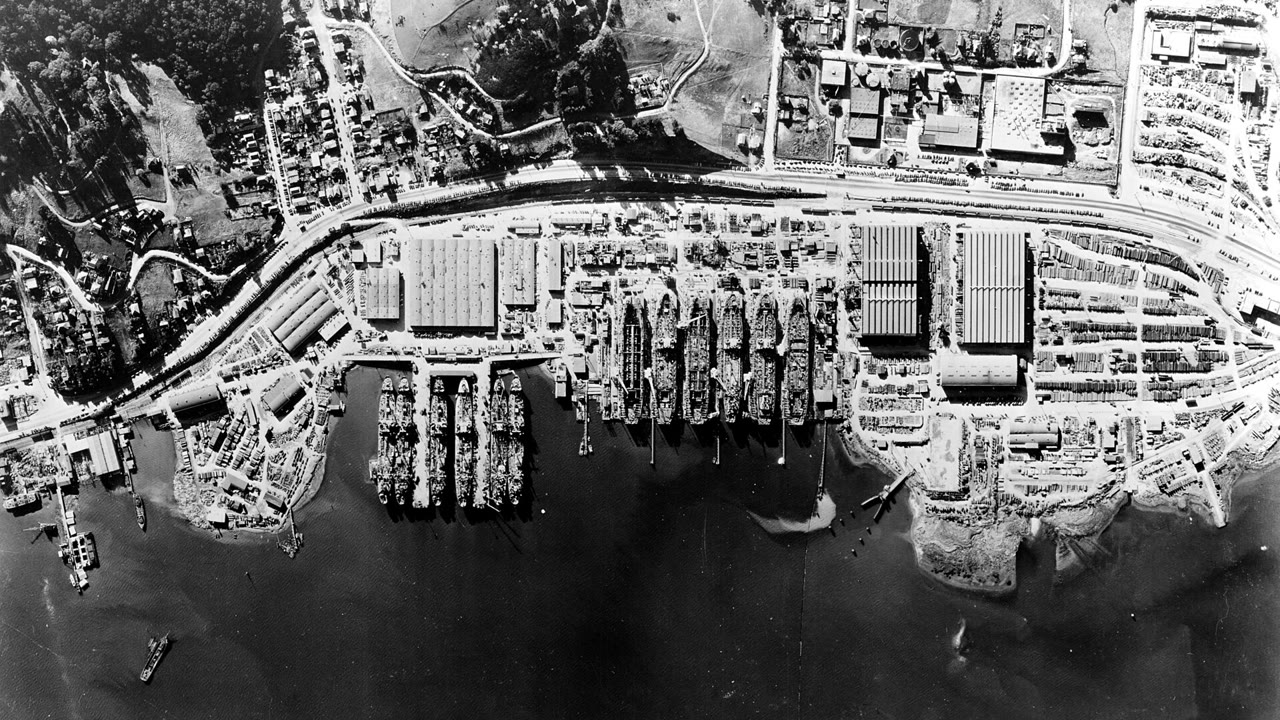
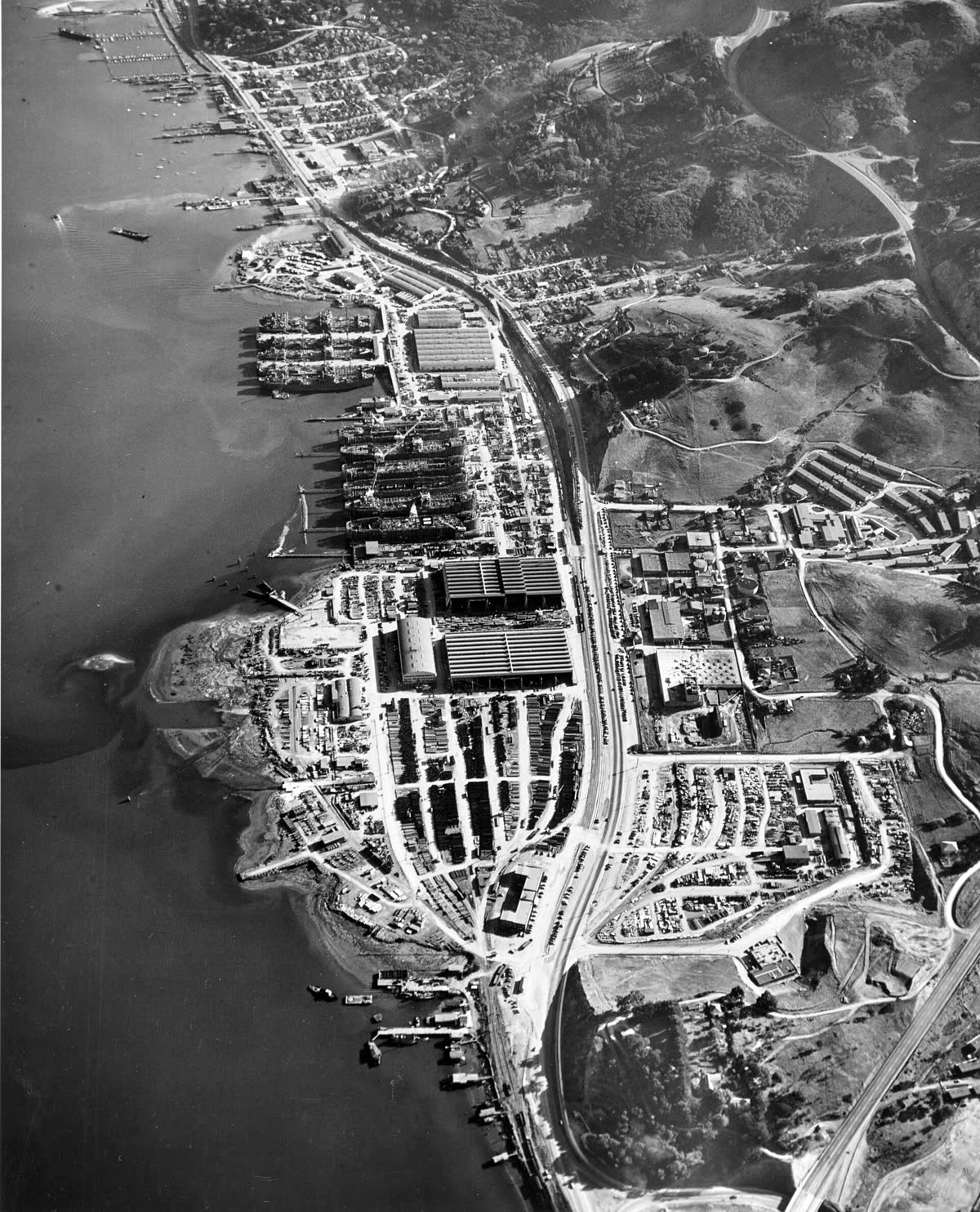
Marinship Sausalito history fits into less than four years, yet the yard still shapes the town’s northern waterfront. In that time it built ships at a furious pace, brought thousands of workers to a new Marin City and lost a landmark civil rights case. After the war it was sold off in pieces, and a bohemian waterfront grew in its shell.
Quick answer
What was Marinship in Sausalito?
Marinship was the emergency shipyard Bechtel built and ran in Sausalito under a Maritime Commission contract signed on March 12, 1942. Before it closed in 1946 it delivered 93 ships, housed workers in a new Marin City and gave its name to James v. Marinship, a 1944 California Supreme Court ruling against a segregated union.
A shipyard in three months
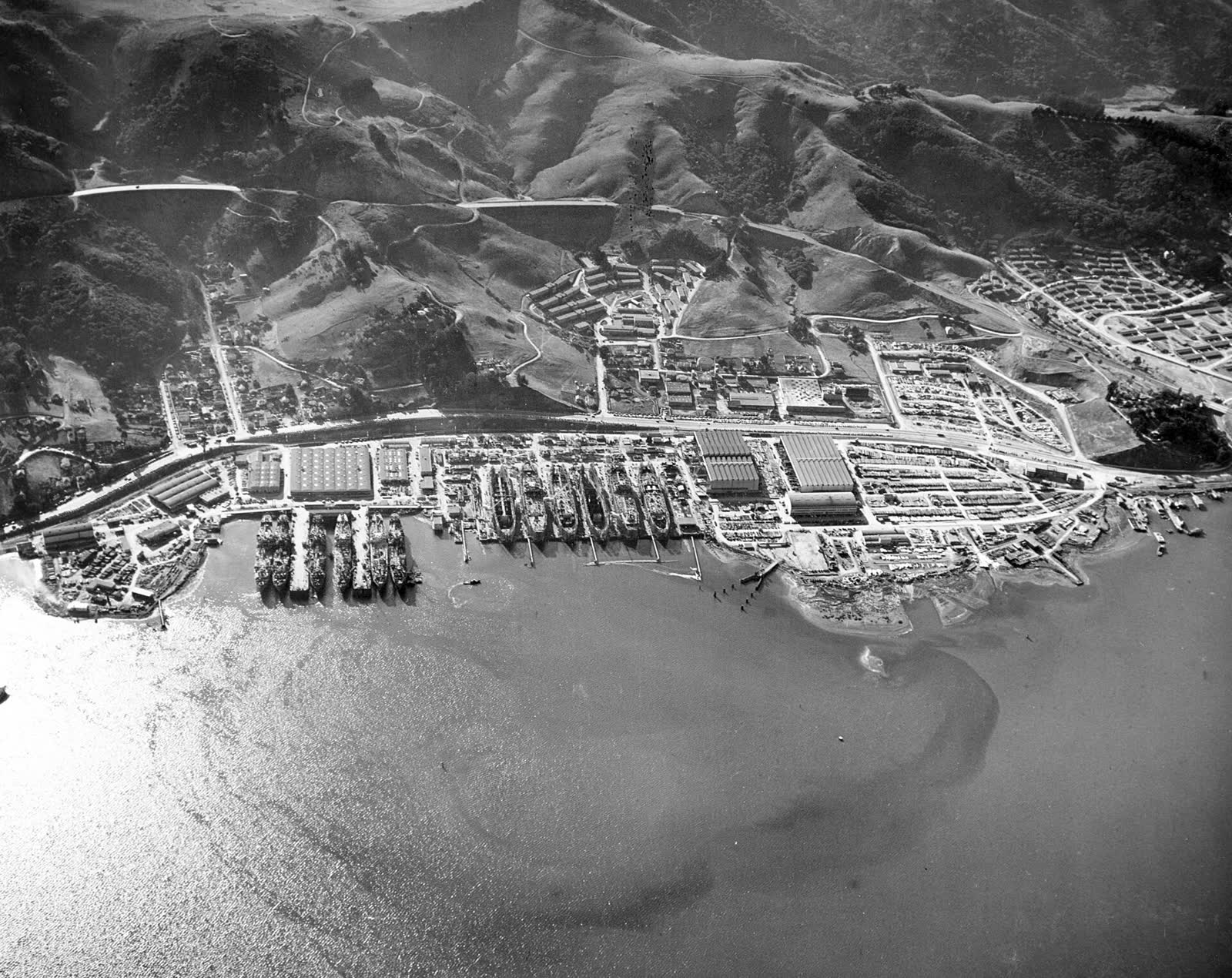
“On March 12, 1942, three months after Pearl Harbor, the Bechtel Company signed a U.S. Maritime Commission contract to build and operate a shipyard in Sausalito,” the Mill Valley Historical Society records. It was an emergency yard with six shipways, one of only four yards that built T-2 tankers, and it laid its first keel within three months.
Making room cost a neighbourhood. More than 40 homes were removed from Pine Point, and the Sausalito Historical Society writes that the area “was literally cut in half, ground up and then spewed into Richardson’s Bay to become landfill for the new shipyard.” The yard’s first keel, and the warehouse that later became a scale model of the bay, are in the history of the Marinship warehouse that became the Bay Model.
Liberty ships, then tankers
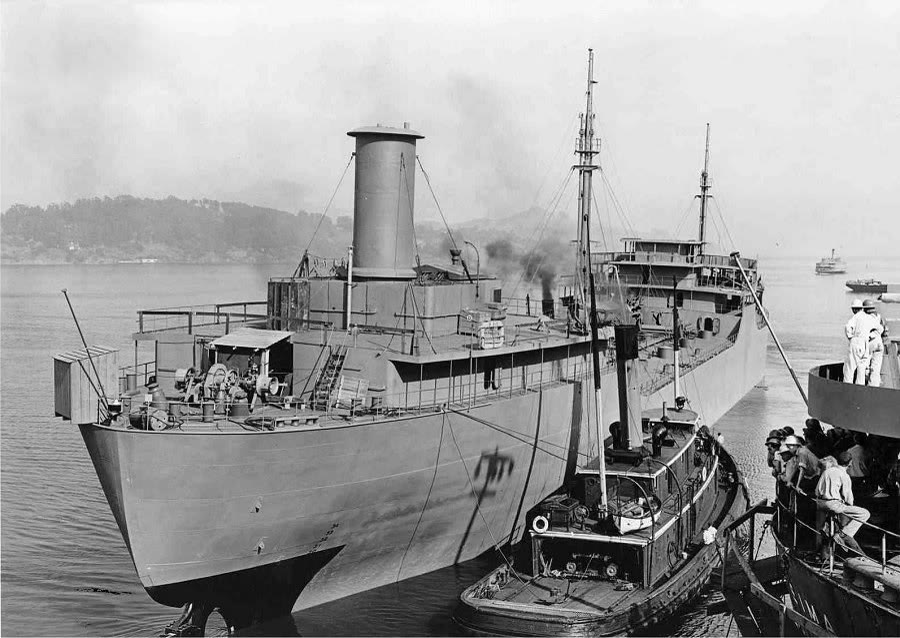
Marinship began with Liberty ships named for Californians and others: William A. Richardson, John Muir, Jack London. In the fall of 1942 it switched to oil tankers, and a local column says it could launch one every 10 days. The tankers took names in “Mission” and “Hills” series, such as Mission Dolores and Marin Hills.
The Naval Marine Archive’s Marinship hull list shows how fast the yard learned. Hull 1, the William A. Richardson, took 126 days from keel to delivery; hull 18, the Jack London, took 59. Hull 11, Sebastian Cermeno, was torpedoed and lost in the Indian Ocean in 1943, while one tanker, Mission De Pala, served into the 2000s.
| Item | Figure |
|---|---|
| Contract signed | March 12, 1942 |
| Shipways | 6 |
| Vessels delivered | 93: 15 Liberty ships, 78 tankers and oilers |
| Hulls cancelled | 7 (numbers 94 to 100) |
| Other work | 20 Army invasion barges; 20 battle-damaged ships repaired |
| Marin City population, end of 1943 | Nearly 6,000 |
| Last delivery | October 22, 1945 |
Who built them
Marinship shipyard workers came from everywhere. Many lived in San Francisco, “many in the Fillmore district, from which Japanese families had been relocated,” and by the summer of 1942 recruiting reached the Midwest and the South. The rolls held names like “Annie Obedience, Orange Mary Green, Empress Lovely, Early Pluck Buggs, Cave Outlaw.”
On June 9, 1942, work began on Marin City in Waldo Valley, and by the end of 1943 nearly 6,000 people lived there. BlackPast calls it “a surprisingly diverse, racially integrated community” at a time when segregation was widely practised. On July 7, 1942, Dorothy Gimblett arrived “dressed in new welder’s leathers,” the first woman in the yard.
Joseph James and Auxiliary A-41
The Boilermakers union held the yard’s closed-shop contract, and it admitted Black workers only into separate auxiliaries, sponsored by white locals whose business they had no say in. Auxiliary A-41 was chartered for Marinship on August 14, 1943. Joseph James, a baritone who had come to sing in the Swing Mikado at Treasure Island in 1939, was by then an expert welder who “regularly sang at the Marinship launching ceremonies.”
James called the auxiliaries “a racket and a scheme and a device whereby the Boilermakers exact tribute.” The historian Reuel Schiller writes that in late November 1943 Local 6 asked Marinship to dismiss 430 Black workers who had refused to join, and that 800 workers protested at the gates just after Thanksgiving.
| Date | Step |
|---|---|
| August 14, 1943 | Boilermakers charter Auxiliary A-41 for Black workers at Marinship |
| Late November 1943 | Local 6 asks Marinship to dismiss 430 Black workers who refused to join |
| November 27, 1943 | Walkout and protest at the yard gates; a rally in the Fillmore the next day |
| 1943-44 | James sues for himself and about 1,000 other workers and wins an injunction |
| December 30, 1944 | California Supreme Court affirms, unanimously |
The decision and its limits
James v. Marinship reached the California Supreme Court with Thurgood Marshall among the counsel for James. The yards, the court noted, were federally owned and run under contracts that barred discrimination “because of race, color, creed, or national origin.” On December 30, 1944, Chief Justice Gibson wrote for a unanimous court that “the union may not maintain both a closed shop and an arbitrarily closed or partially closed union.”
Schiller sums up its reach: “In Marinship, the court dramatically limited the ability of unions to exclude African Americans from membership.” He also notes its limits: it “did nothing to get African Americans jobs,” and seniority meant layoffs of thousands of Black workers when the war ended. The union’s own history says that in 1945 it agreed to stop forming new auxiliary locals.
Sold off in pieces
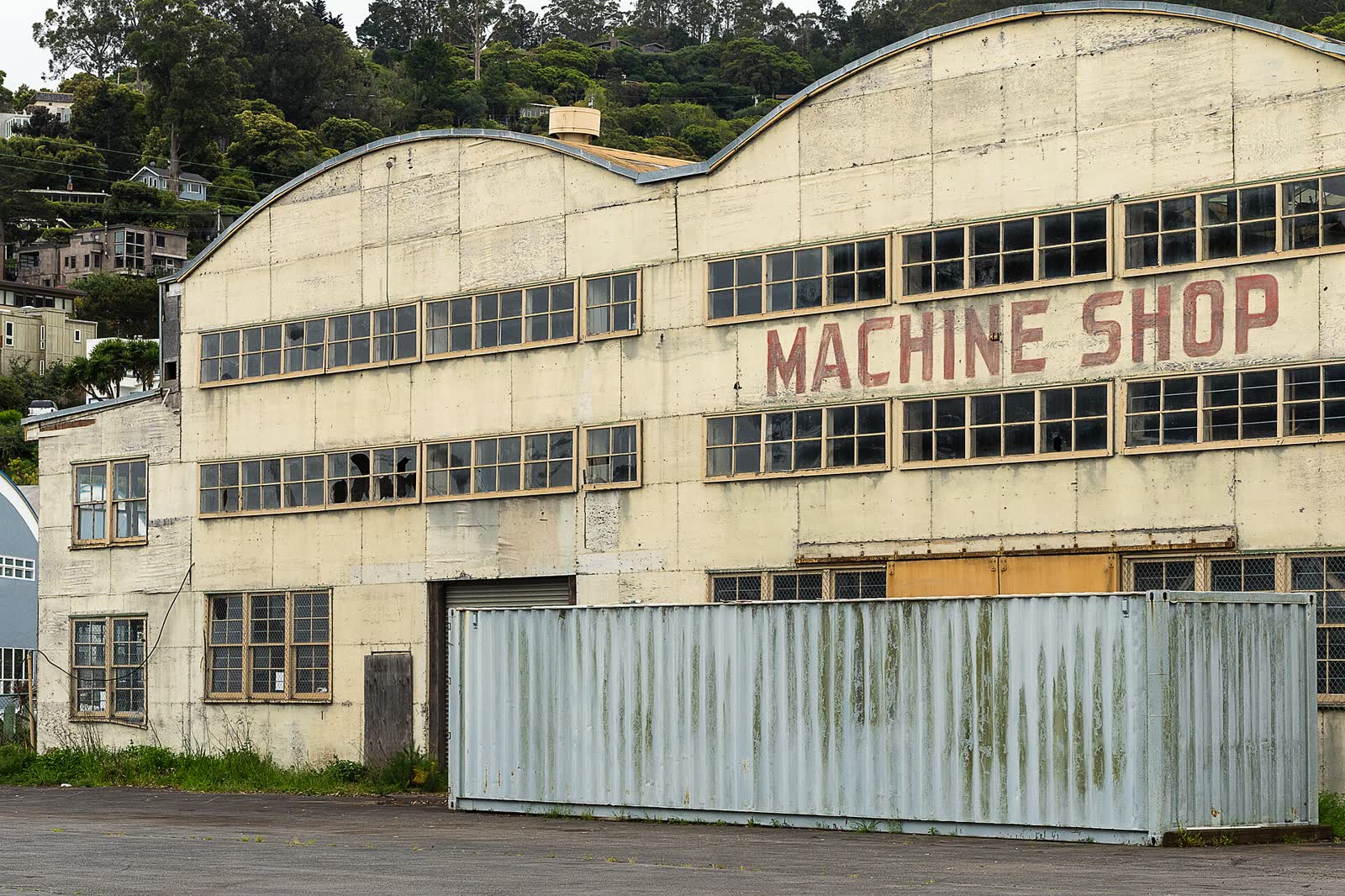
“Designed to be temporary, the shipyard lasted only four years, closing down in early 1946.” The last ship was delivered on October 22, 1945, when only 600 workers were left. Most of the property went to the War Assets Administration, and Marinship “was sold off piecemeal by sealed bid auctions.”
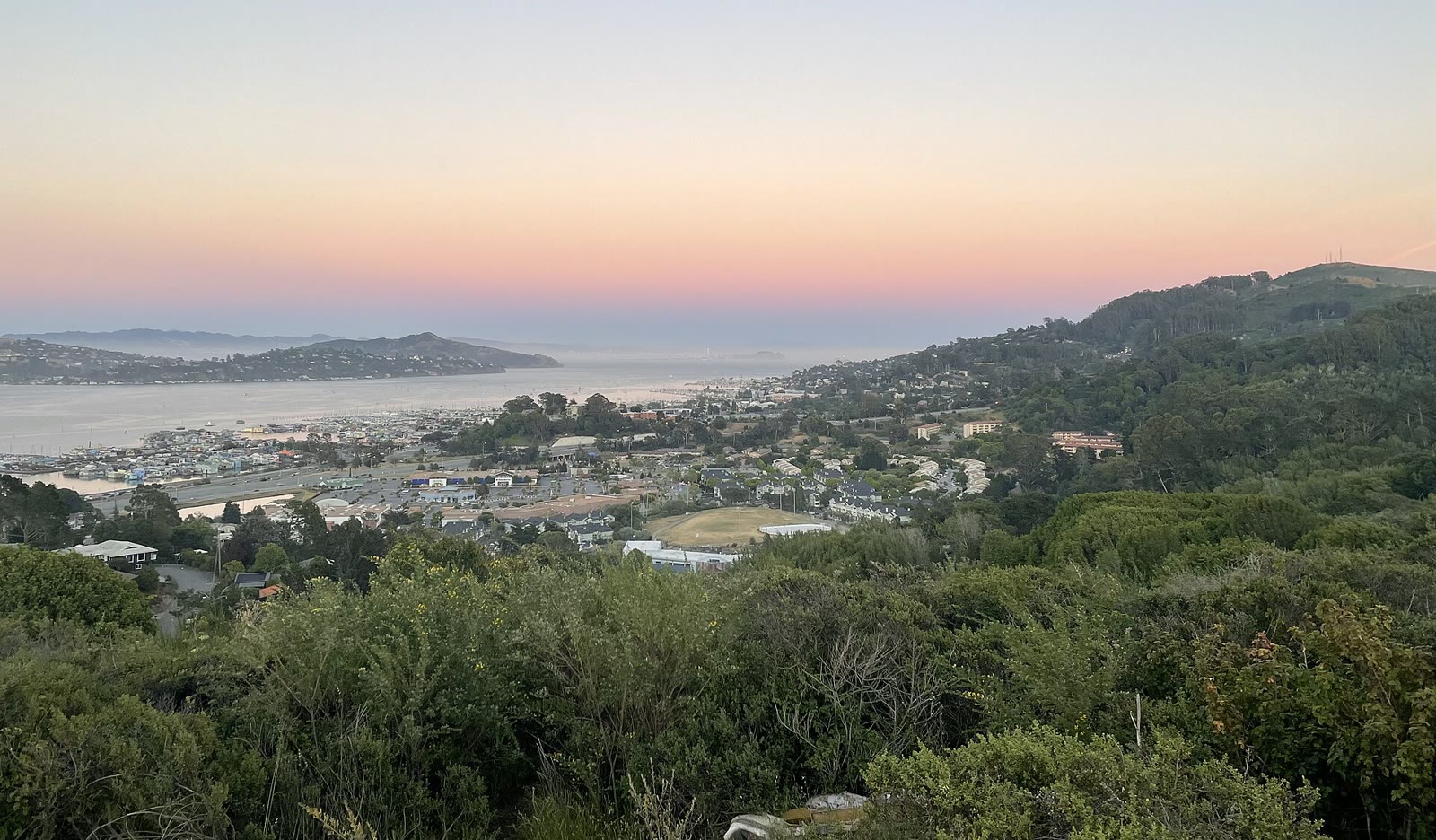
Donlon Arques bid on waterfront parcels and opened them to some of the first waterfront communities of artists, maritime workers and fishermen. Their story is in the history of the artists who moved into the empty yard. A survey by VerPlanck Historic Preservation Consulting on Marinship’s surviving buildings found “several dozen buildings and remaining structures,” more than at any similar emergency yard in the Bay Area “and possibly the nation.”
Gate 3 and Antenna
Antenna’s founder worked for years on former Marinship land. When Chris Hardman moved back to the West Coast, a friend offered him a studio at Gate 3, warning that “it wouldn’t be there for more than three months before the whole thing got torn down.” He stayed more than ten years, until the evictions of 1984. He had come to Sausalito in the 1970s with Snake Theater, the company that came before Antenna.
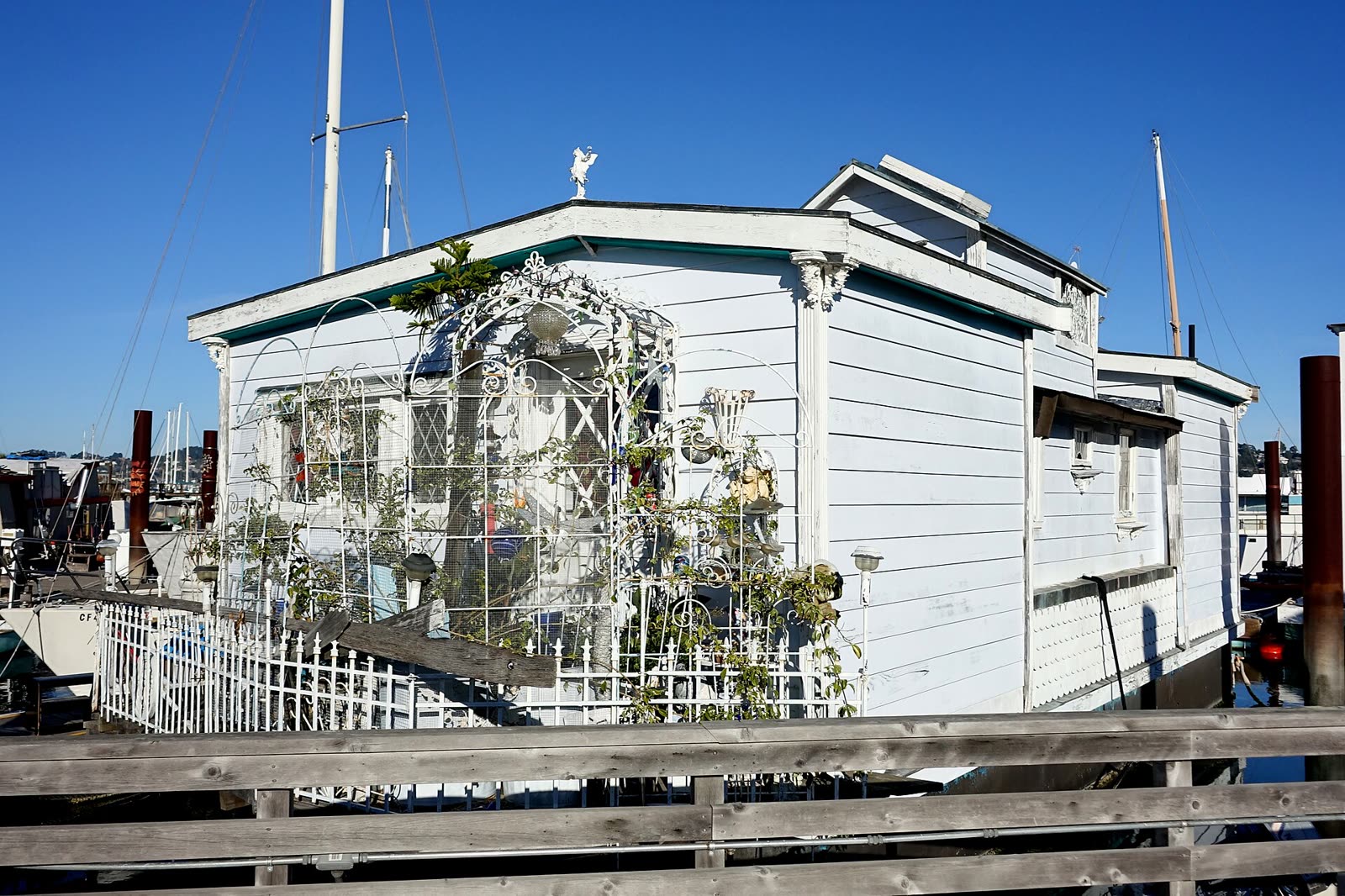
In 1983 Gate 3 was a waterfront enclave of 42 families, on land and water. In the spring of 1984 the developer Rick Moran appeared next door, and in June 1984 Hardman made a “Moranship” poster for a protest march. The evictions went ahead, and the residents moved to Gate 6 or to Galilee Harbor, where many Gate 3 families went.
Antenna came back to the old yard’s streets. Robert Hurwitt’s Chronicle review places Dracula in the Desert in late 1986 at the Gerhardt Warehouse, 2340 Marinship Way, “the cavernous former sheet metal warehouse” (the chronology lists the show under 1985). The show and its 3-D glasses are in Dracula in the Desert and anaglyph art.
Frequently asked questions
How many ships did Marinship build?
Ninety-three: 15 Liberty ships and 78 tankers and oilers. Seven more hulls were cancelled.
What was James v. Marinship?
A December 30, 1944 California Supreme Court decision that a union with a closed shop could not keep Black workers out of full membership.
Was Marin City built for Marinship workers?
Yes. Work began on June 9, 1942, and by the end of 1943 nearly 6,000 people lived there.
What is left of Marinship today?
Several dozen buildings and structures, including the former machine shop, more than at any similar emergency shipyard in the Bay Area.
More places from this series: the history of the Alcatraz occupation, the history of Aquatic Park in San Francisco and the Antenna chronology.