Bay Model Visitor Center History: From Shipyard Warehouse to Model Bay
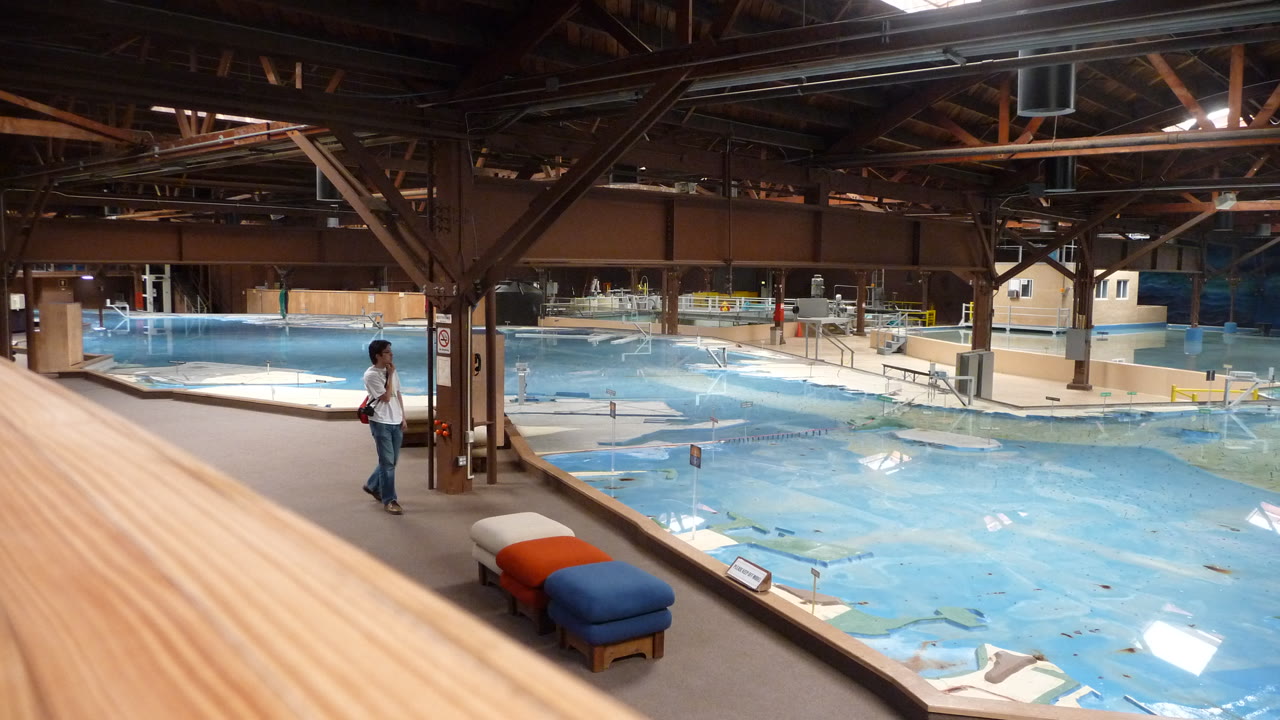
In a long warehouse on the Sausalito waterfront lies San Francisco Bay in miniature, a hydraulic model laid out in painted concrete. Bay Model Visitor Center history covers three lives of one building: a wartime shipyard, a research laboratory built to test a plan to dam the bay, and a visitor center with a gallery where artists, and one theatre company, have shown their work.
Quick answer
What is the Bay Model Visitor Center?
The Bay Model Visitor Center in Sausalito houses a hydraulic model of San Francisco Bay and the Delta, finished by the Army Corps of Engineers in 1957 inside a former Marinship shipyard warehouse to test a plan to dam the bay. It became a visitor center in 1980 and stopped research around 2000.
A Marinship warehouse (1942-1946)
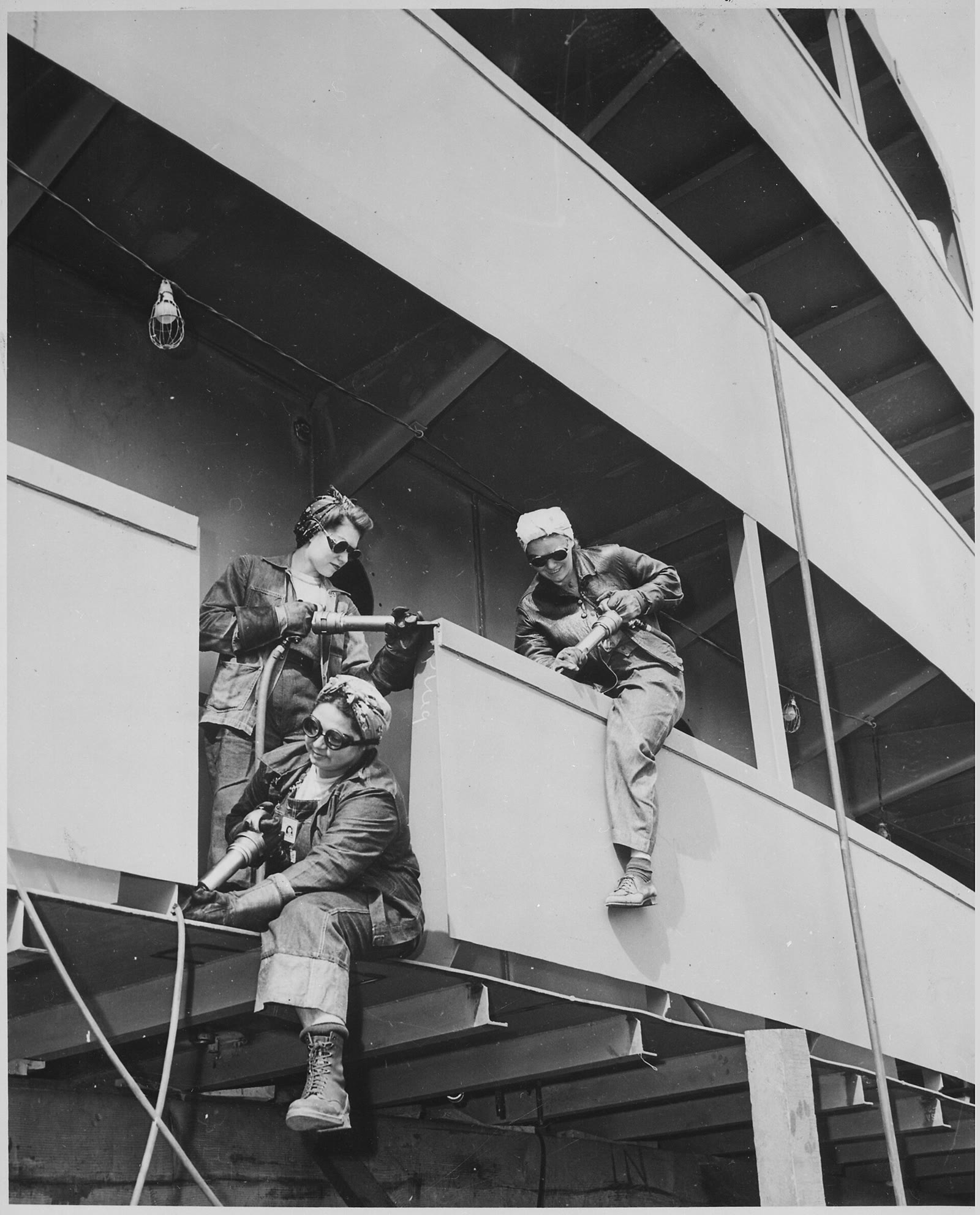
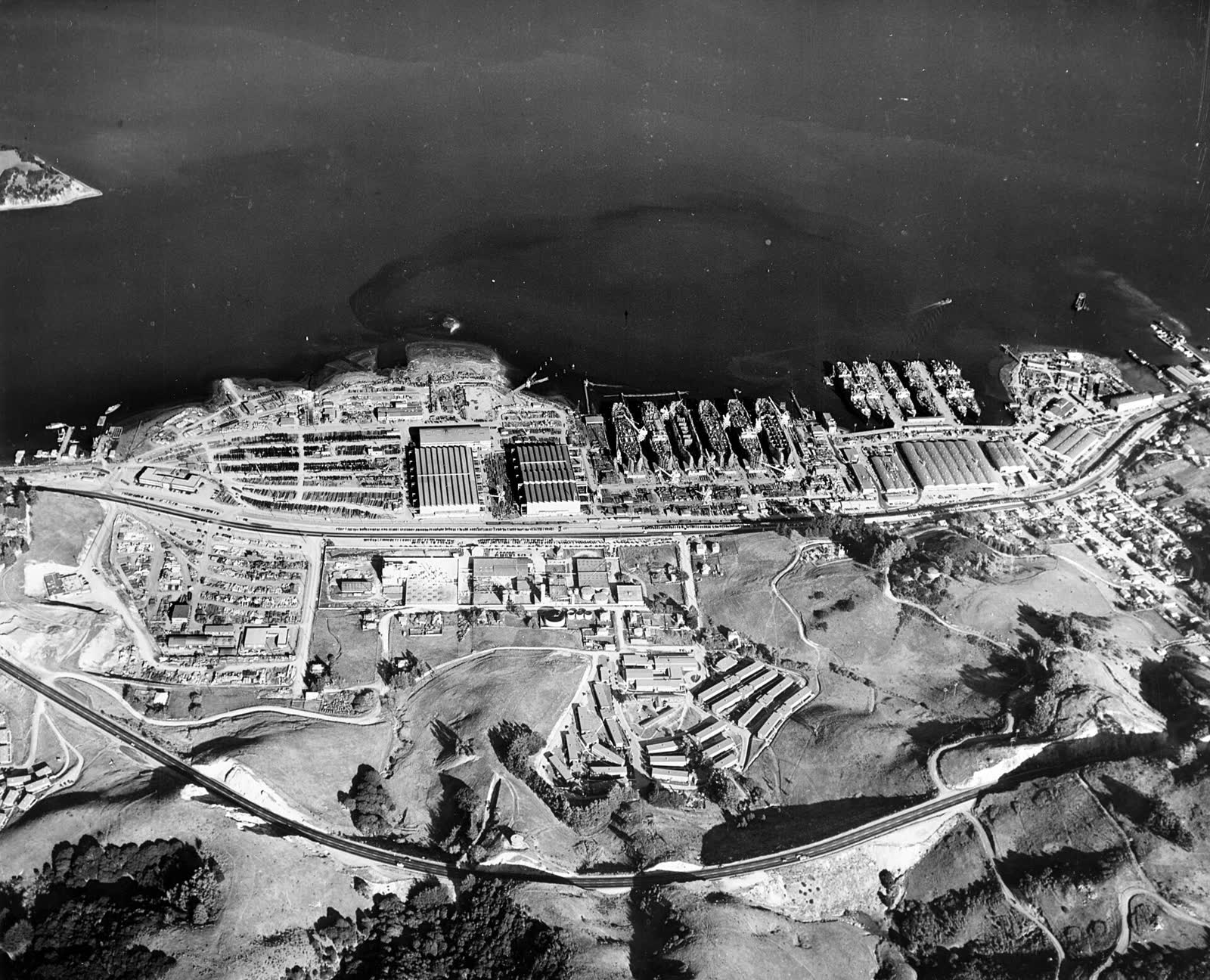
The building began as part of Marinship, “the Bechtel shipyard in Sausalito from 1942-1945”. The first keel, for the Liberty ship William A. Richardson, was laid on 27 June 1942, and the yard went on to build 93 ships, Liberty ships and tankers.
At its peak Marinship employed 20,000 workers, and by 1943 more than 20 percent of them were women. On 16 June 1945 the yard set a world record by delivering the tanker SS Huntington Hills in 33 days. At midnight on May 16, 1946, the Army Corps of Engineers took over.
A plan to dam the bay: John Reber
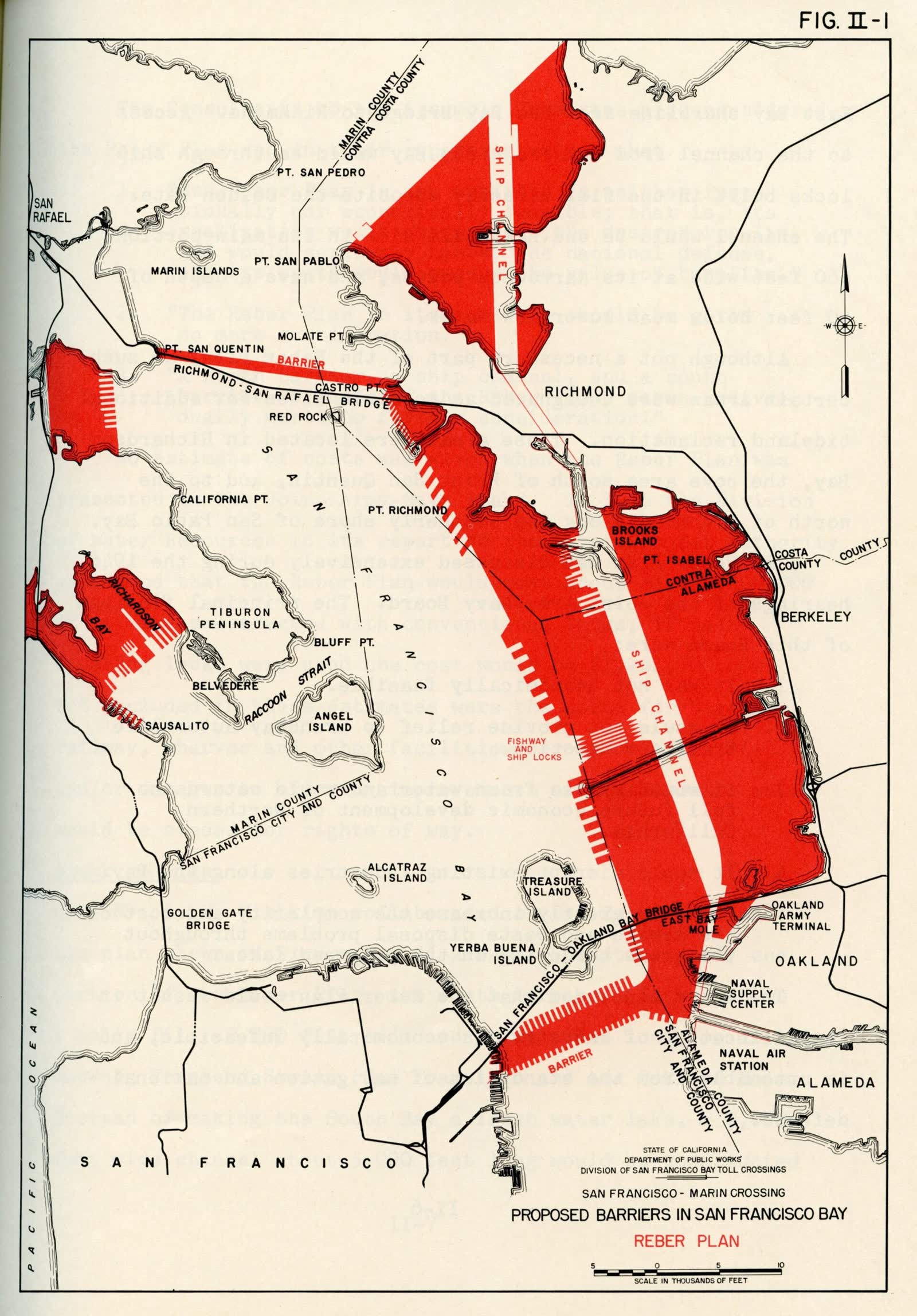
In the 1940s John Reber proposed to block river flow through the Delta and fill more of the bay. As KQED put it, “To test the Reber Plan, Congress allocated funds for the construction of the Bay Model.” The Rivers and Harbors Act of 1950 authorized the work.
The Corps at first wanted to build the model in Vicksburg, Mississippi, until Californians lobbied to keep it near the bay. The old Marinship warehouse, “which churned out Liberty Ships during World War II,” was handed to the Corps for the job.
Building a bay in concrete
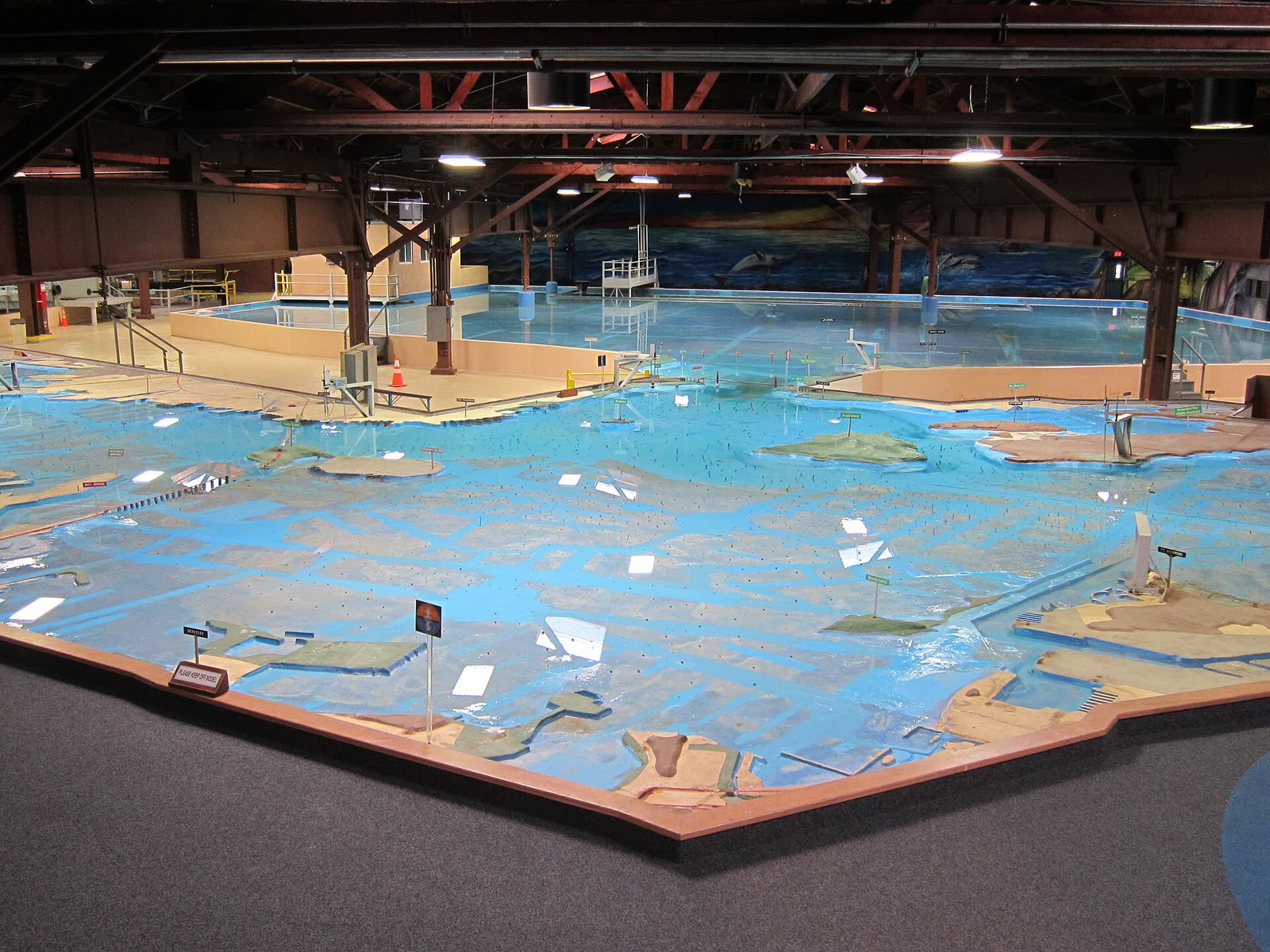
The Army Corps of Engineers finished the model in 1957, and testing of the Reber Plan followed; Pacific Standard gives 1959 instead. It covers about one and a half acres, made of “286 five-ton, 12-by-12 foot slabs of painted concrete”.
Horizontally, “1,000 feet is scaled down to one foot of painted concrete”, but the vertical scale is 1:100, so depths are exaggerated. In all, “1.5 acres replicate a 1,600-square-mile area.” The Sacramento-San Joaquin Delta was added from 1966 to 1969.
What the model tested
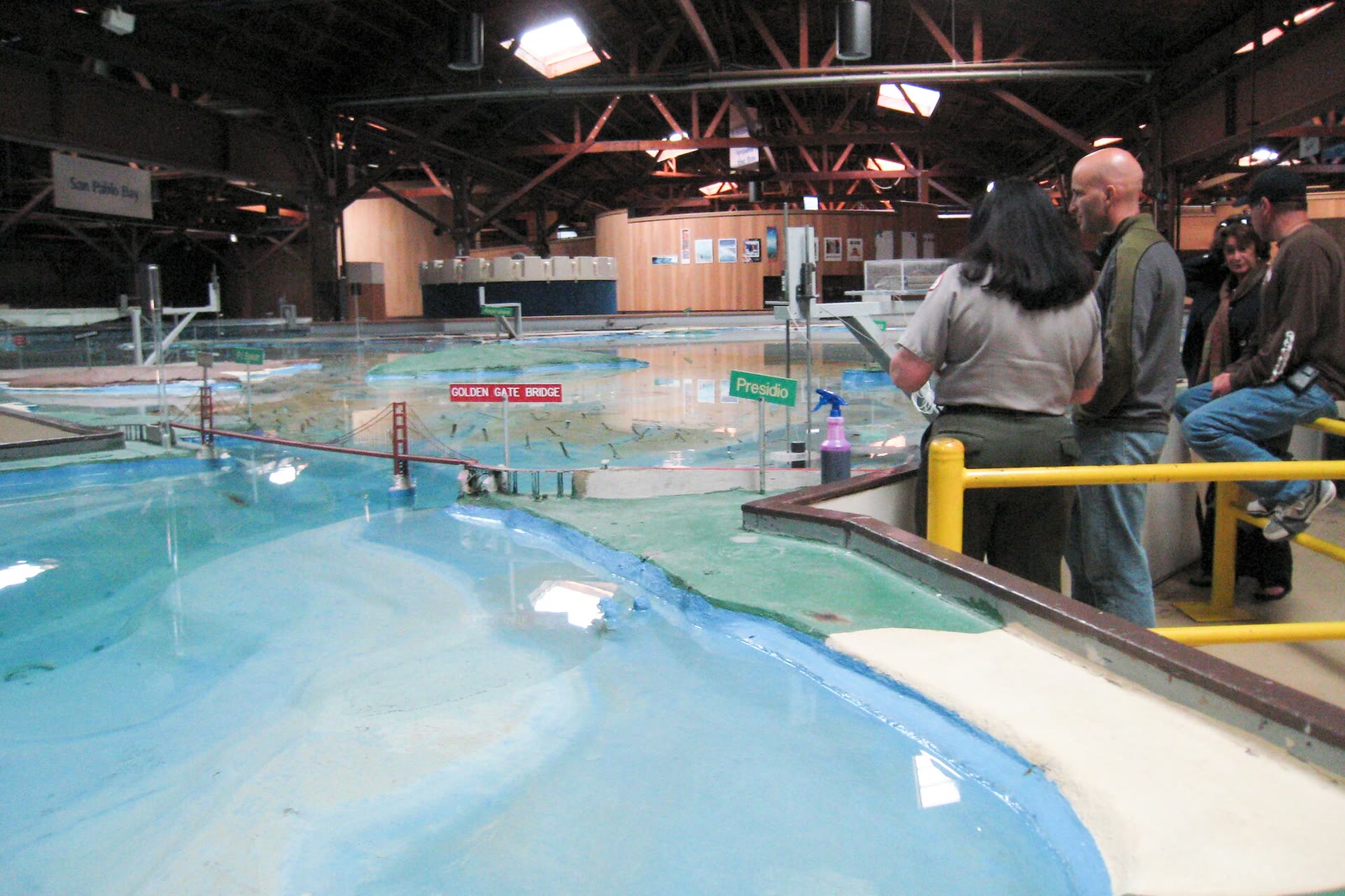
The tests showed the Reber Plan was not viable, and it was dropped. Pacific Standard reports that the model found the bay too shallow for the planned reservoirs to work, which is exactly the kind of answer a physical model could give before anyone poured a dam.
After that, “the Bay Model proved itself an indispensable tool”. The Corps lists studies of “chemical/oil spills, altering of shipping channels”, along with levee failures and bay filling.
From laboratory to visitor center
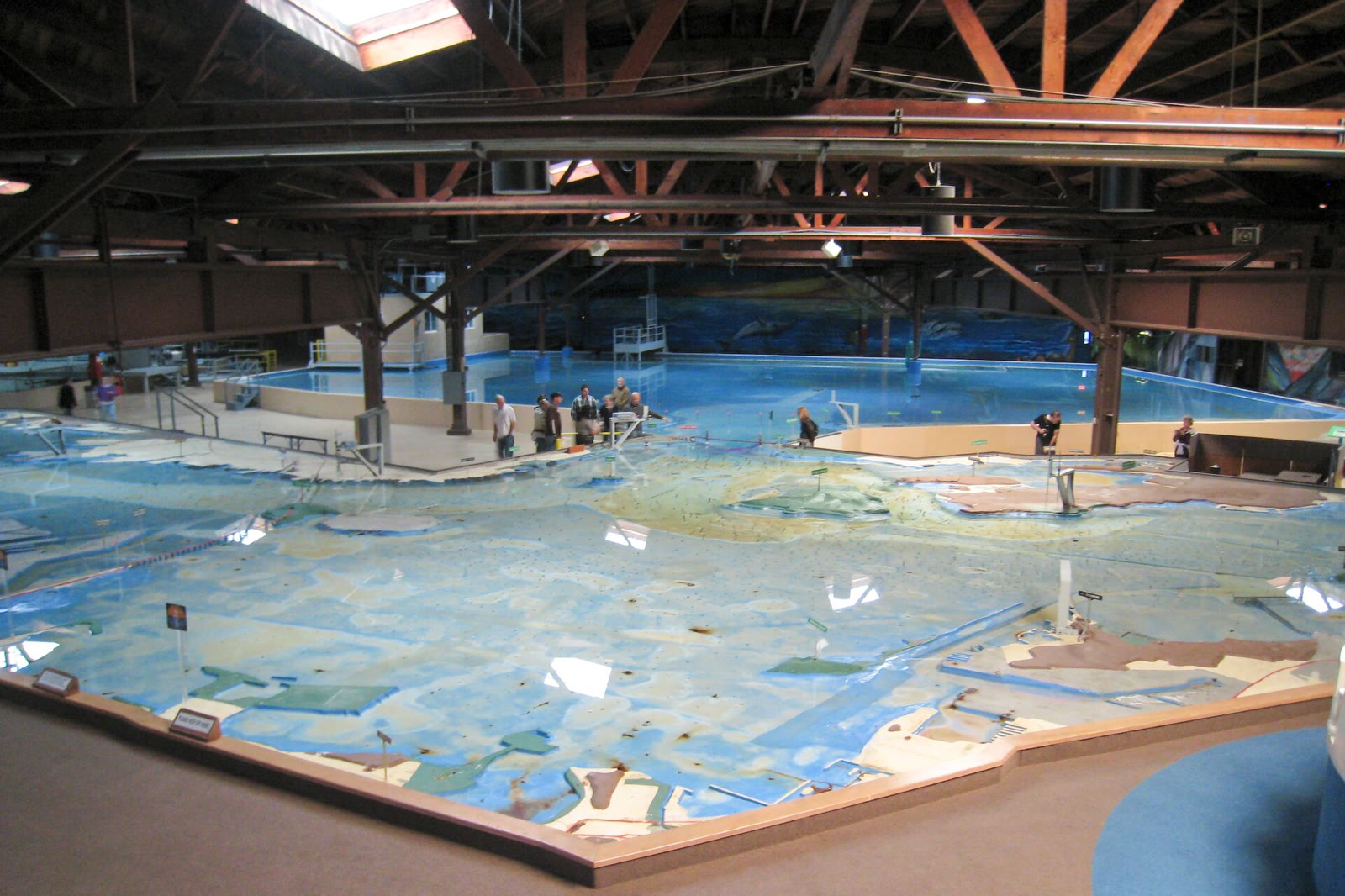
“In 1980 the Visitor Center portion was added, and the Model adopted the function of an Educational Center,” the Corps records. Nancy Rogers “managed the visitor center for the Corps from 1985 to 2001.”
Around 2000 the model “morphed from active laboratory to educational center”, and Pacific Standard’s report on the fitness of physical models describes how physical modeling ended under a new Corps supervisor. The Corps says that “no active research takes place using the actual Model”.
Inside, the watershed display’s curved walls carry “wonderful and surprisingly intact paintings”. The Sausalito Historical Society, with the Corps, set up a Marinship exhibit of “pictures, memorabilia, oral histories and other artifacts.”
The gallery
The building also has a gallery. In 2009 the Art of Parks exhibition brought “35 local Sausalito Artists” to the Bay Model Gallery from August 20 to September 13. In 2012 Bay Crossings covered The Outsiders’ Golden Gate painting show, “more than 50 paintings” in the “Gallery of the Bay Model Visitors Center, 2100 Bridgeway”.
The gallery’s earlier years are barely documented online. Antenna Theater’s archive fills in part of them.
Antenna Theater at the Bay Model
Antenna’s chronology calls the space the Army Corps Bay Model Gallery, a reminder that this gallery sits inside a federal building. The company’s record there runs over two decades.
| Year | Event | What Antenna brought |
|---|---|---|
| 1987 | Audio tour, in progress | A taped tour for the Corps’ model |
| 1993 | California Coastal Cleanup Celebration | All You Can Eat, its farce about the bay’s appetite |
| 2004 | Gallery show | Transforming Art: anaglyphs, infinite mirrors, slotted sea creatures |
| 2006 | A Night of Fire and Ice | A benefit, and a piece staged off the shore |
In August 1987 the San Francisco Examiner listed, among Antenna Audio’s first tapes, “a tape in progress for the Army Corps of Engineers’ Bay Model in Sausalito”. No source says it was finished; the wider story is in Antenna Audio’s first taped tours.
In 1993 the chronology lists the California Coastal Cleanup Celebration at the Bay Model, with All You Can Eat, a farce that “satirizes Bay Area history, illustrating how man’s greedy appetite has unbalanced the natural environment.” It belongs with All You Can Eat and Antenna’s ecological theatre.
In 2004 the Bay Model Gallery showed Transforming Art, Hardman’s gallery show of illusions, with “sculptural works, anaglyph drawings (3-D), infinite mirrors, slotted sea creatures, furniture, and shadows”. The slotted pieces are explained in slotted cardboard sculpture and its wooden cousins.
On May 18, 2006, the building hosted A Night of Fire and Ice, a benefit with “Live Bands, puppet parades, sculptures on display, and a theatrical spectacle”. For the piece, “the tugboat was anchored off the Army Corps Bay Model Gallery where the pre-recorded audio was broadcast to the shore-bound audience.” See the night of fire and ice, and the piece staged off the Bay Model.
Three lives of one building: Sausalito Bay Model history in dates
| Years | Use | What happened |
|---|---|---|
| 1942-1945 | Marinship warehouse | Bechtel yard builds 93 ships |
| 1946 | Corps takes over | Army Corps of Engineers takes the yard |
| 1957 | Model finished | Built to test the Reber Plan |
| 1966-1969 | Delta added | Model extended to the Delta |
| 1980 | Visitor center | Becomes an educational center |
| Around 2000 | Research ends | Laboratory work stops |
| 2009 on | Gallery shows | Local painters and community exhibitions |
Another industrial building turned arts venue is the subject of our history of Theater Artaud, a can factory that became a stage.
Frequently asked questions
Why was the Bay Model built?
To test the Reber Plan, John Reber’s proposal to dam the bay and fill more of it. Congress funded the model for that test.
Is the Bay Model still used for research?
No. It moved from active laboratory to educational center around 2000, and the Corps says no active research takes place using the model.
What was the building before?
A warehouse of Marinship, the Bechtel shipyard that built 93 ships in Sausalito between 1942 and 1945.
When did the visitor center open?
The Corps says the visitor center portion was added in 1980.
How big is the Bay Model?
About one and a half acres, made of 286 five-ton slabs of painted concrete, each 12 feet square, modelling a 1,600-square-mile area.
Does the Bay Model show art?
Yes. Its gallery has hosted local shows, such as Art of Parks by 35 Sausalito artists in 2009 and more than 50 paintings by The Outsiders in 2012.
Antenna’s four visits sit among the rest of its work in the full Antenna chronology and Antenna’s exhibitions.