Complicite’s The Encounter: A Play Heard Through Headphones
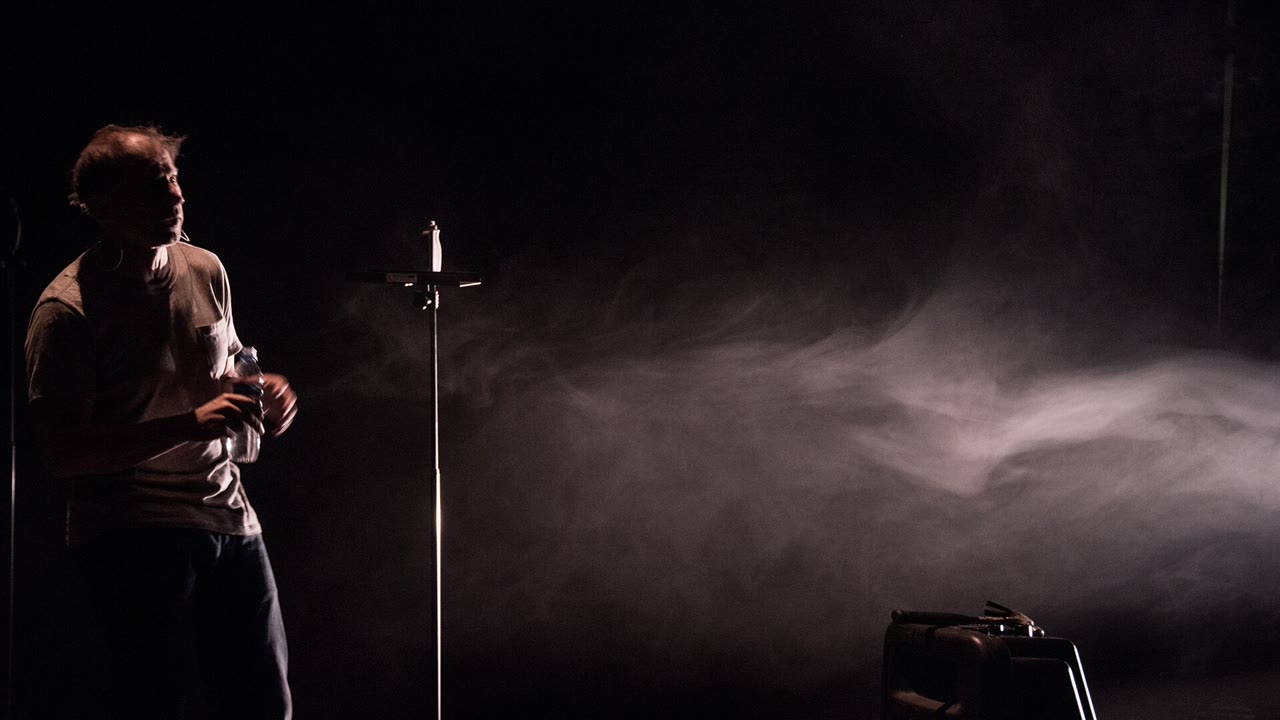
In August 2015 an audience at the Edinburgh International Festival sat down, put on headphones and heard one man become a whole rainforest. The man was Simon McBurney, and the show was Complicite’s The Encounter, a solo play about a photographer lost in the Amazon in 1969. It went on to London, a world tour and Broadway, and its sound won a Special Tony Award.
Quick answer
What is Complicite’s The Encounter?
The Encounter is a solo play by the theatre company Complicite, made and performed by Simon McBurney and first staged at the Edinburgh International Festival in August 2015. Every audience member wears headphones while McBurney, speaking into a binaural dummy head, tells how photographer Loren McIntyre was lost among the Mayoruna people in 1969.
A photographer lost in 1969
The story belongs to Loren McIntyre. In the words of the Broadway announcement, “In 1969, Loren McIntyre, a National Geographic photographer, found himself lost among the people of the remote Javari Valley in Brazil.” He stayed for weeks with the Mayoruna, who are also known as the Matses. Sources differ on how long: one says six weeks, another says months.
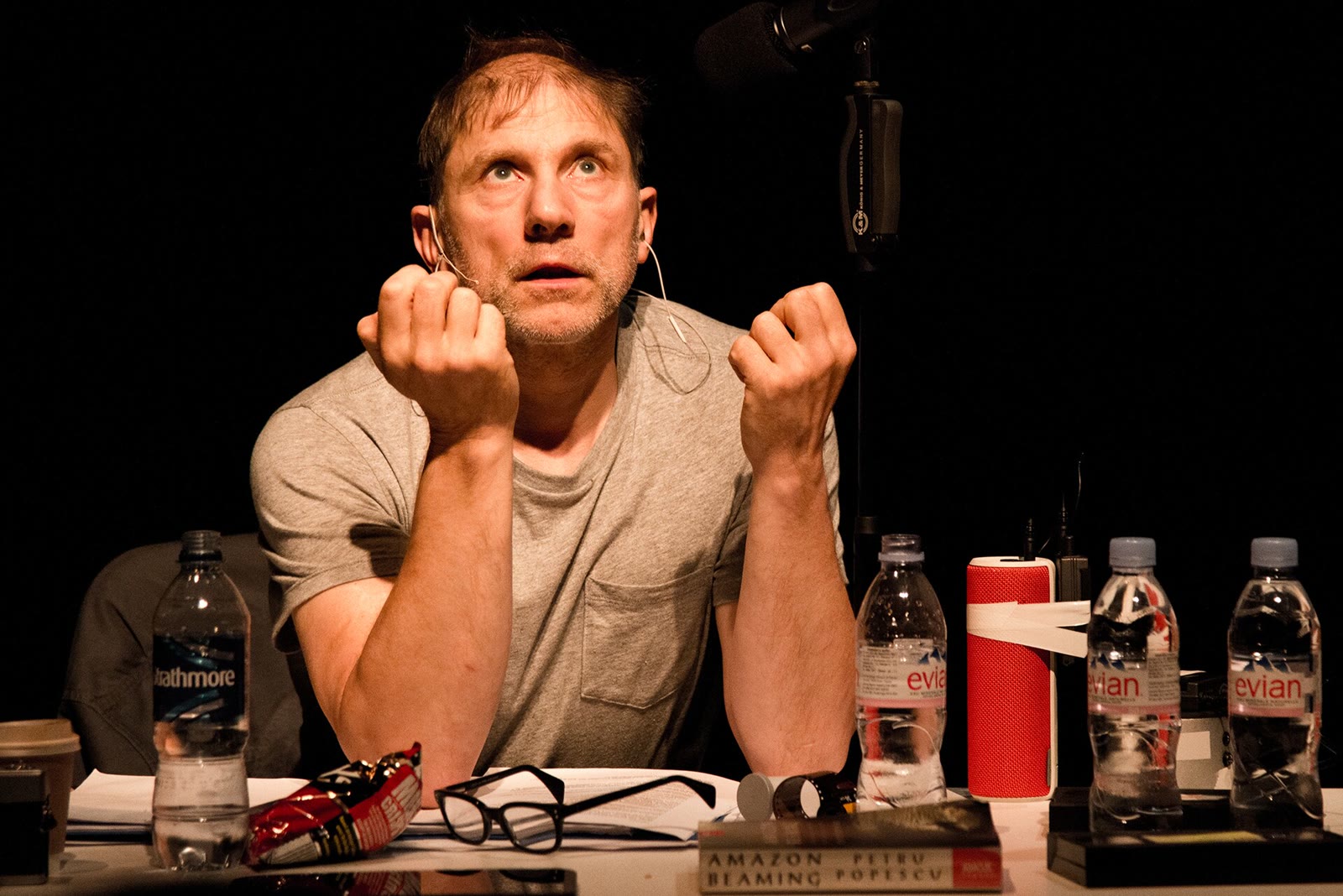
McIntyre and his hosts shared no language. By his own account he came to understand the chief without words, a contact he called beaming. Science & Film describes the chief as speaking to him “without speaking, as a voice inside his head.” National Geographic reported in 2016 that it was, McIntyre later said, “the first time he’d told anyone.”
The teller was the writer Petru Popescu, whose 1991 book Amazon Beaming was “based on interviews he conducted with Loren McIntyre.” Not every reader was persuaded: National Geographic notes that the New York Times reviewer of the book was sceptical. McIntyre himself admitted, “I’m pretty reluctant to voice very much about the beaming experience because I didn’t want my friends to think I’d gone around the bend.”
Five years with a dummy head
The show was slow to make. The Tony Awards record that sound designer Gareth Fry “spent five years working with Simon McBurney on the creation of The Encounter,” and that he “has worked with Complicite since 1999.”
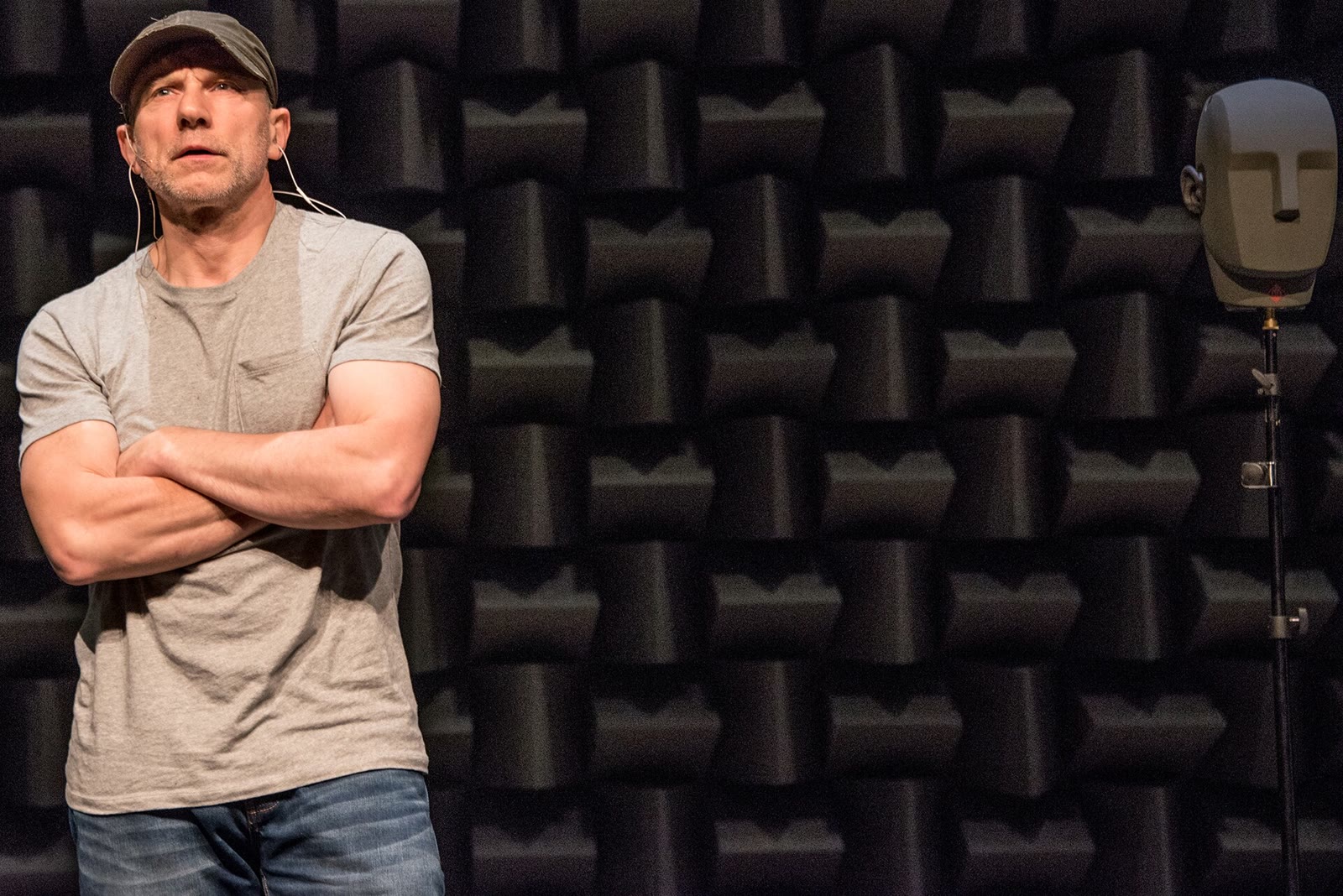
The binaural head lived in his house while he worked. That detail made it into the play: his five-year-old daughter, whose voice is heard on stage, wonders what the floating head is doing in their home.
Complicite itself appears in our guide to devised theatre and the companies that build work in rehearsal.
How The Encounter works
The published script sets the rules in a short note: “During the introduction the audience are asked to put on a set of headphones, which they then wear for the duration of the performance. Everything they hear is through these headphones.” On stage, the note adds, “The actor also creates a variety of live foley sound effects onstage, and uses loop pedals to create exterior soundscapes.”
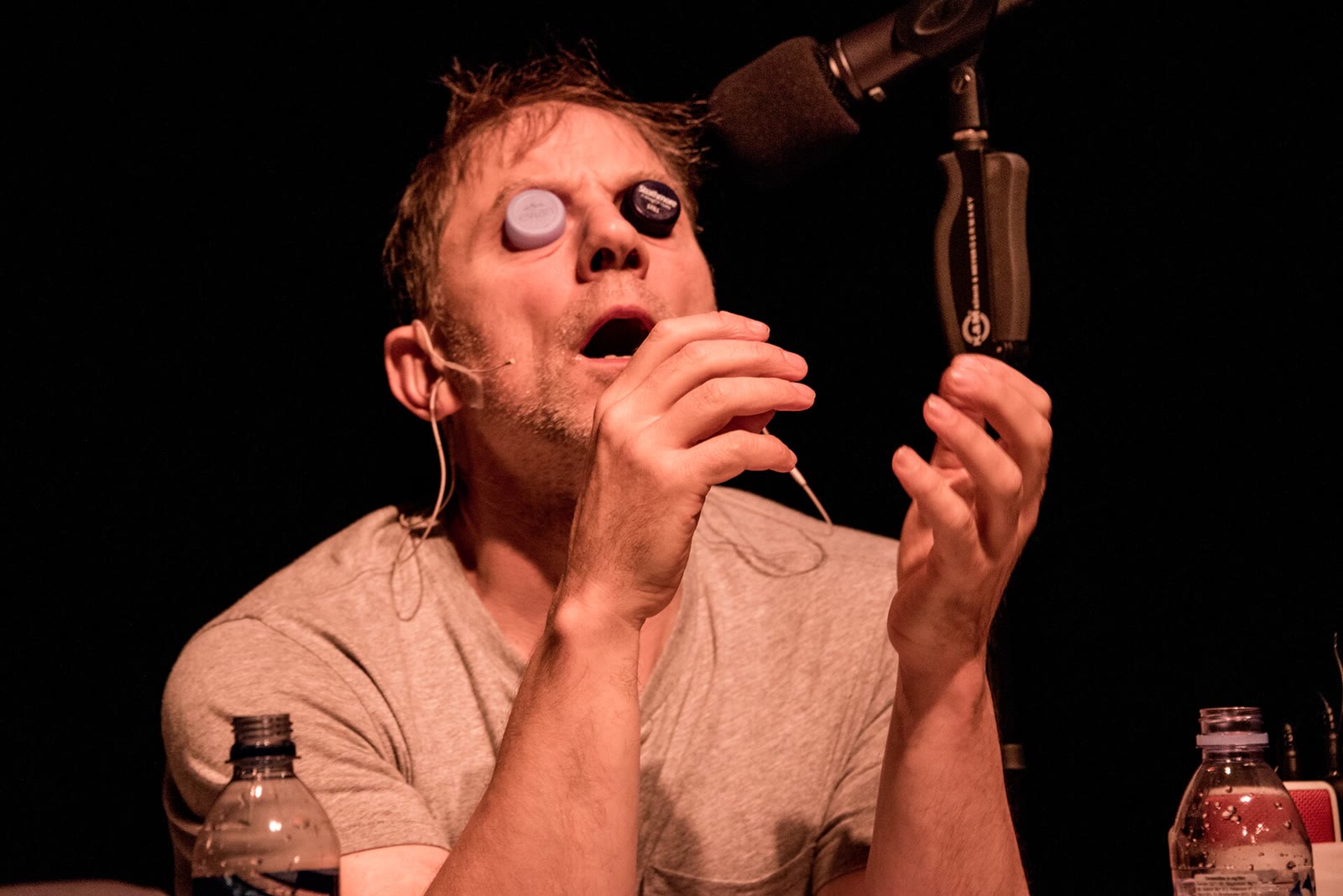
The centre of the set is the dummy head. Science & Film explains that “Each member of the audience is wearing a headset with right and left channel isolation so McBurney’s whispers are transmitted into the ear corresponding with the side of the mannequin into which McBurney vocalizes.” McBurney plays both himself and McIntyre, telling them apart by accent. The principle behind the head is set out in how binaural audio drama works.
Critics described the effect in physical terms. Time Out wrote: “An aeroplane goes overhead and you can hear the roar move across the space above you.” For WNYC, “When you hear a door, it sounds like a door is actually opening to your right.”
From Edinburgh to Broadway
The Encounter premiered at the Edinburgh International Festival in August 2015, at the Edinburgh International Conference Centre. The Edinburgh Guide saw it as “a stand up show” at heart, “a man and a microphone on stage.”
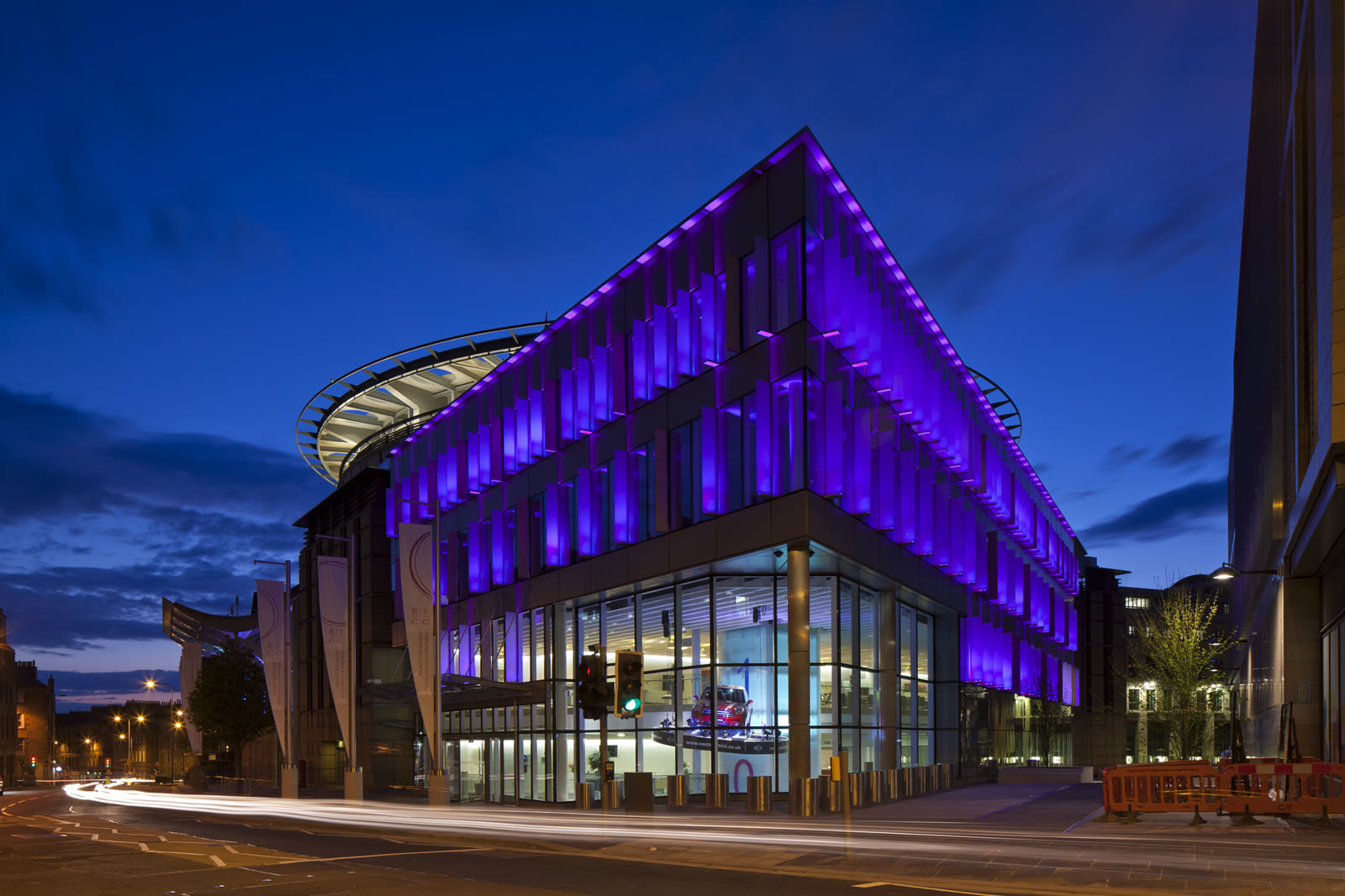
London saw it at the Barbican in February 2016, and a world tour followed. On Broadway it played the John Golden Theatre on West 45th Street, with previews from September 20, 2016, an opening on September 29 and a run to January 8, 2017, according to the Shubert Organization’s Broadway announcement.
| Fact | Detail |
|---|---|
| Company | Complicite |
| Made and performed by | Simon McBurney |
| Source | Amazon Beaming by Petru Popescu (1991) |
| Premiere | Edinburgh International Festival, August 2015 |
| London premiere | Barbican, February 2016 |
| Broadway | John Golden Theatre, September 2016 to January 8, 2017 |
| Sound | Gareth Fry and Pete Malkin |
A Special Tony for sound
In 2017 Fry and Malkin received a Special Tony Award for the show’s sound design. The Tony Awards’ announcement of the 2017 special awards quoted Heather Hitchens and Charlotte St. Martin: “Gareth and Pete take the audience on a journey in The Encounter that is infused by the intimacy of sound.”
| Year | Award | Who |
|---|---|---|
| 2015 | Herald Angel | Simon McBurney |
| 2016 | Evening Standard Award for Best Design | Gareth Fry and Pete Malkin |
| 2017 | Special Tony Award for Sound Design | Fry and Malkin |
| 2017 | Outer Critics Circle, Outstanding Solo Performance | McBurney |
Listening at home in 2020
In May 2020 Complicite and partner theatres streamed a filmed performance free online, “available to watch on demand for a week until 22 May 2020.” The instructions were plain: “Audiences must wear headphones to watch The Encounter online, or the effect of the binaural recording will be lost.”

McBurney’s introduction named the theme: “The Encounter is at its heart a story about ‘listening’, not ‘hearing’ but listening; to other, older narratives.” The same distinction sits at the centre of Pauline Oliveros and her Deep Listening practice, a different art with a similar question.
Headphones for every audience member, decades earlier
A headset for everyone in the room was not new in 2015. In 1984 the Los Angeles Times ran Sylvie Drake’s review of Antenna Theater’s Amnesia under a headline saying that Chris Hardman “Equips All the Members of the Audience With Walkman Cassette Players.” Antenna had worked that way since High School in 1981, which the company described as the first use of the Walkman by an artist. The history of headphone theater traces the line.
The bodies were different. Complicite’s audience sat still while one mix reached every ear at once; Antenna’s audients, the walking audience members Hardman wrote for, moved through a set with their own tapes. Steve Erickson, writing in Esquire in 1986 about Amnesia, Antenna’s 1984 Walkman maze, found everyone “confined to their particular Walkman spaces.” No source connects the two companies; the comparison is the Journal’s own.
| Aspect | The Encounter (2015) | Antenna’s Walkman shows (from 1981) |
|---|---|---|
| Audience | Seated, headphones at each seat | Walking, each audient with a Walkman |
| Source of sound | Live voice and loops mixed with recordings | Prerecorded tapes |
| Who hears what | One mix for the whole house | A personal track for each listener |
| Key device | A binaural dummy head on stage | The Sony Walkman |
Frequently asked questions
What is The Encounter about?
It tells how the National Geographic photographer Loren McIntyre was lost in 1969 among the Mayoruna people of the Javari Valley in Brazil, as told on stage by Simon McBurney.
Is The Encounter a true story?
It is based on McIntyre’s own account, given to Petru Popescu for the 1991 book Amazon Beaming. The telepathic contact he called beaming is his account, and the New York Times reviewer of the book was sceptical.
Why does the audience wear headphones?
Everything in the show is heard through them. McBurney speaks into a binaural dummy head, so a whisper into one side of the head reaches the same ear of every listener.
Who designed the sound for The Encounter?
Gareth Fry and Pete Malkin, who received a Special Tony Award for the show’s sound design in 2017.
Where did The Encounter premiere?
At the Edinburgh International Festival in August 2015. It then played the Barbican in London and the John Golden Theatre on Broadway.
For the wider picture, see Walkmanology and Antenna’s other new theater forms.