
What Is Devised Theatre? How Companies Make Plays Without a Script
Most plays begin with a writer alone at a desk. Devised theatre begins with a room full of people and a question. If you are asking what is devised theatre, here is the plain answer, the companies that shaped it, and a Bay Area case in which the audience helped make the show.
Quick answer
What is devised theatre?
Devised theatre is theatre created by the whole company rather than staged from a finished script. Actors, designers and sometimes a writer start from a question, image or event, improvise and research together, then edit the material into a fixed show. Complicite, Forced Entertainment and Frantic Assembly are well-known devising companies.
Devised theatre, defined
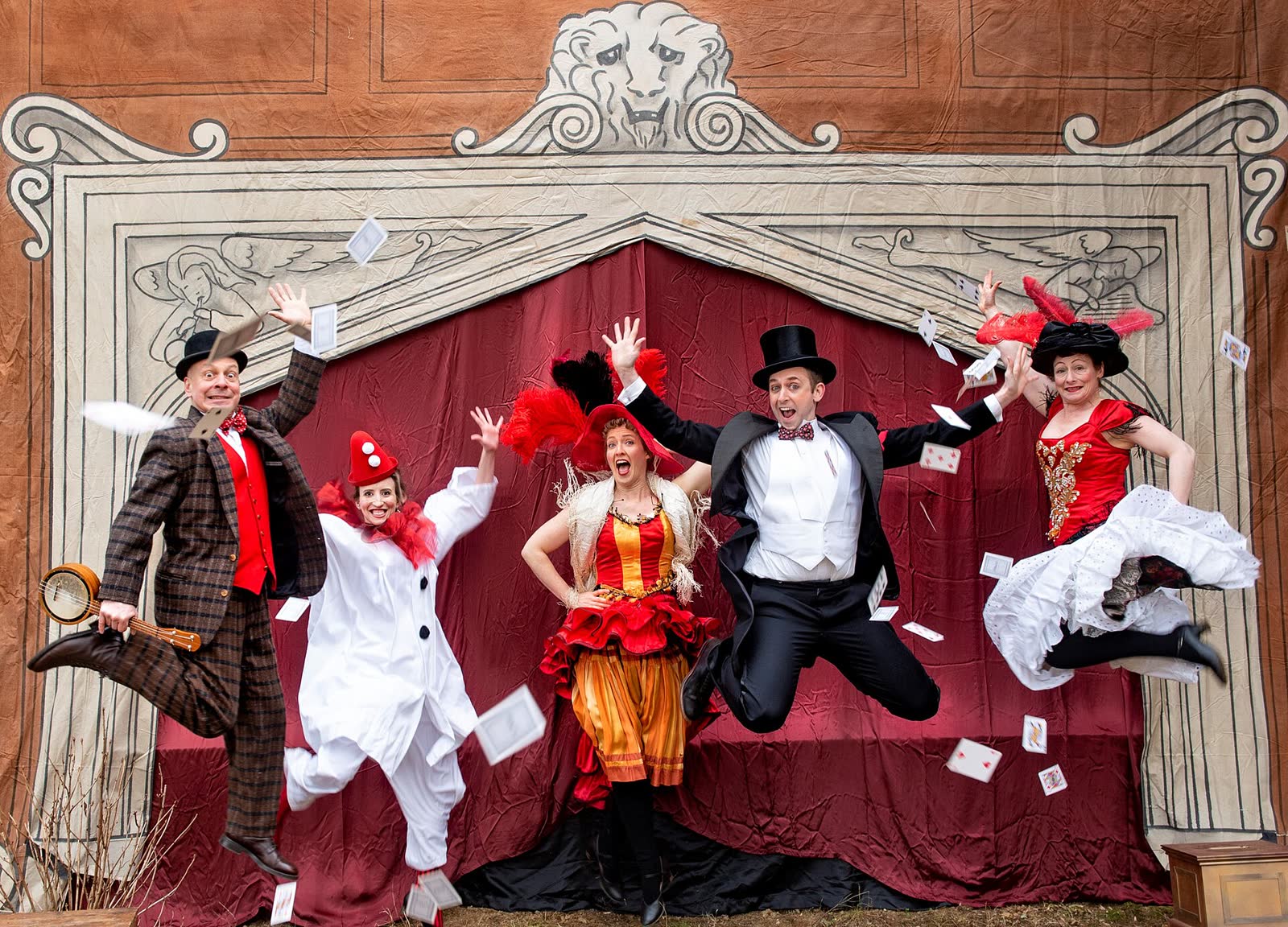
Santa Clara University’s library guide gives the clearest definition: “In devised theatre all the ensemble members, from actors to designers, participate in all or most stages of the creative process, from conception to presentation.” It adds that devising “often involves collective creation, in which every member of the group works on an equal footing with the rest.”
The same guide stresses that the word describes a method, not a look. There are dance pieces and documentaries made this way, and “the term “devised” denotes a process more than a product.” So devised theater (the American spelling) can be silent in one company and talky in the next.
How a devised show is made

Every devising process needs somewhere to begin. The Santa Clara guide calls it the “departure point,” which “is sometimes a question (such as “What do you call home?”) or an organizing image.”
The Sheffield company Forced Entertainment describes the middle stage in detail on its page on how Forced Entertainment works in rehearsal. “Combining discussion, improvisation and writing, our rehearsal process is a creative laboratory,” it says. Shows usually start with the company in a room “improvising a scene until something starts to stick.”
The group will “experiment with it, debate it, videotape it, watch it, adapt and edit it before trying it on an audience.” Improvisation finds the show; it is not the show itself.
Where devised theatre came from
Nobody invented devising. Deirdre Heddon and Jane Milling’s history, Devising Performance: A Critical History, asks “Why have theatre-makers, since the 1950s, chosen to devise performances?” and follows the practice through Britain, America and Australia.
| Year | Company or work | Where | What it added |
|---|---|---|---|
| 1963 | The Open Theater (Joseph Chaikin) | New York | An actors’ collective making work through exercises and improvisation |
| 1970 | San Francisco Mime Troupe becomes collectively run | San Francisco | No single artistic director; collaborative playmaking |
| 1974 | Joint Stock Theatre Group | London | The workshop: actors, writer and director improvise, then the writer writes |
| 1978 | Somewhere in the Pacific (Snake Theater) | Fort Cronkhite beach, Marin | Four co-directors; the Chronicle called it devised by the team |
| 1978-1979 | Cloud Nine (Caryl Churchill with Joint Stock) | Dartington, then the Royal Court | A play born from a workshop on sexual politics |
| 1983 / 1984 | Complicite / Forced Entertainment | London / Sheffield | Long-running devising ensembles |
| 2002 | High School Project (Antenna with Tamalpais High) | Tamalpais High School, Marin | Devising as a school residency, with students scripting the walk-through |
1960s collectives: the Open Theater and the Mime Troupe
Joseph Chaikin’s Open Theater ran from 1963 to 1973 on his principle, “Working together, we teach ourselves.” In San Francisco, the Mime Troupe became collectively run when its founder R.G. Davis left in 1970, and it still teaches “its unique method of collaborative playmaking.”
Joint Stock’s workshop and Cloud Nine

Joint Stock Theatre Group was “founded in 1974 by Max Stafford-Clark, David Hare, and David Aukin.” Its method was “to bring in a playwright, actors, and a director to improvise on a subject.” After the workshop, “the playwright would have a period of time to write the script before rehearsal began.”
Caryl Churchill’s Cloud Nine “was born out of Joint Stock in 1978-1979 in a workshop on sexual politics.” Even the title came from the room: the rehearsal hall’s caretaker told the company, “Now we have sex sometimes as much as twice a week and I’m on Cloud 9.”
Complicite, Forced Entertainment and Frantic Assembly
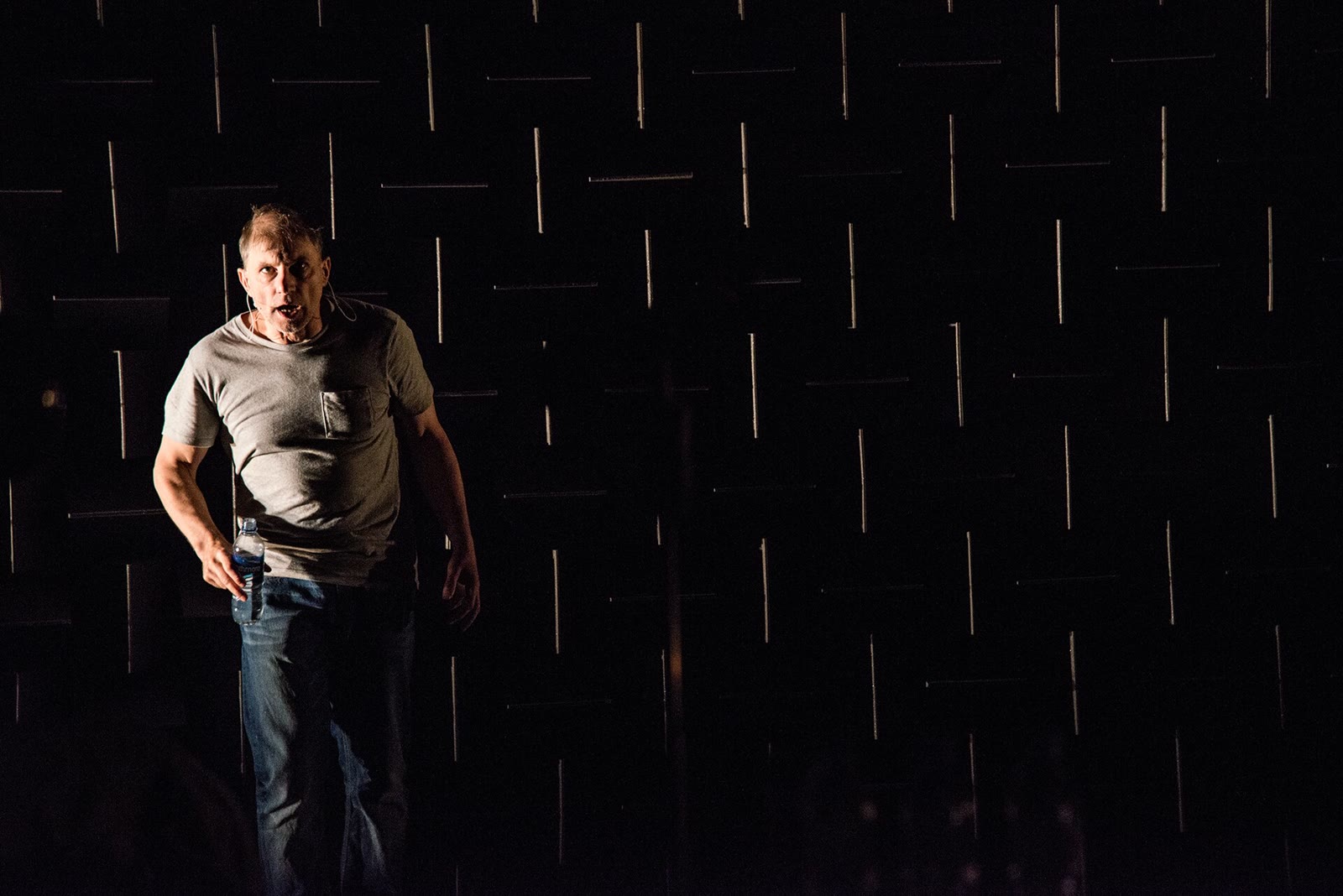
These are the devised theatre companies students meet first. Complicite was founded in 1983 and is led by its co-founder Simon McBurney. Forced Entertainment’s six artists have been “collaborating to make original theatre and performances together since 1984.”
Frantic Assembly began, in its own words, as “a reckless leap into the unknown.” Its Frantic Method treats devising “as a series of tasks, each broken down into building blocks.”
Three ways to devise
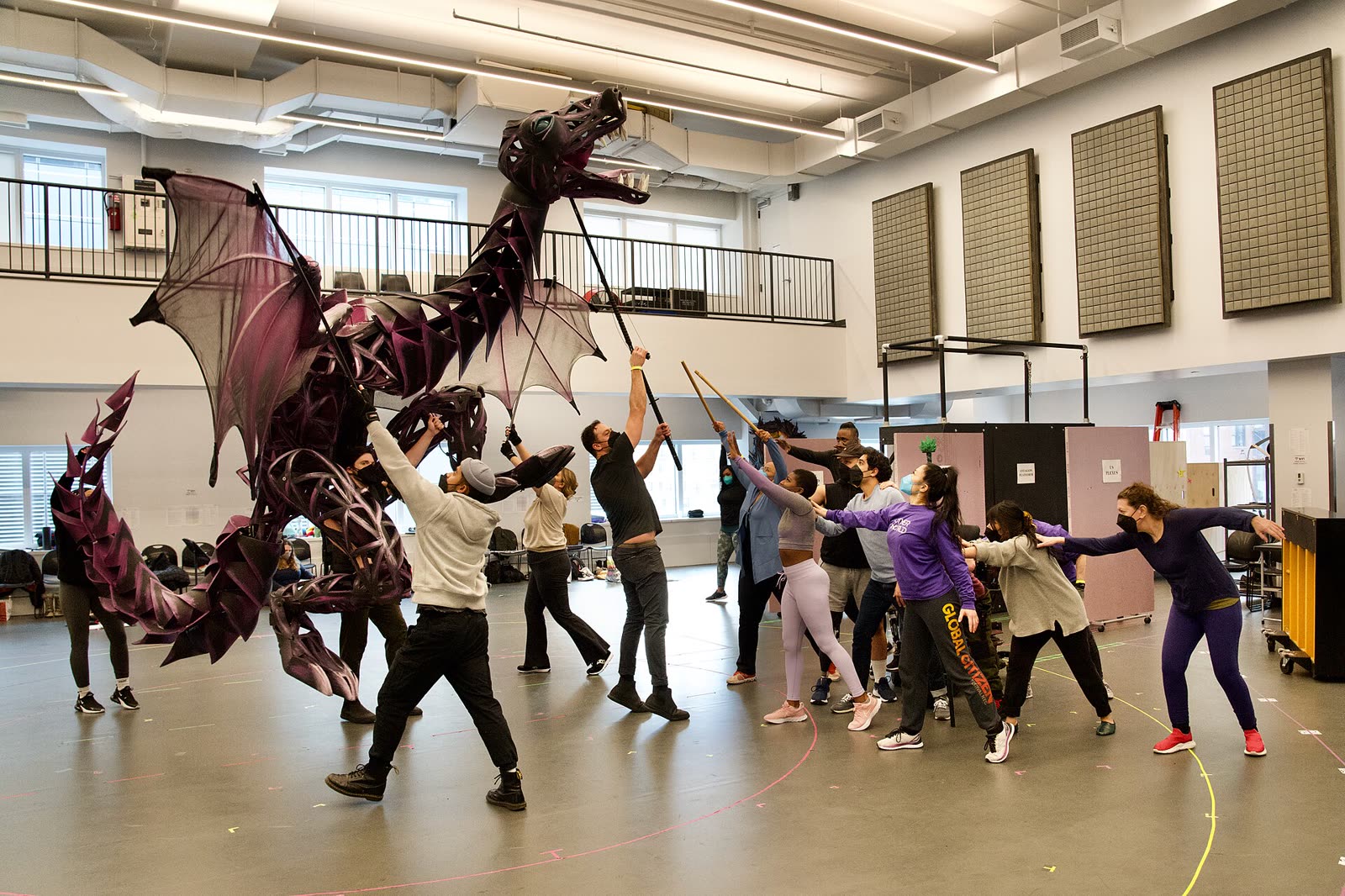
The models differ on one question: who writes the words the audience finally hears? Verbatim theatre, which builds scripts from interview recordings, is a close cousin of the third model below.
| Model | Who writes the final text | Starting point | Example |
|---|---|---|---|
| Ensemble devising | The company together, edited in rehearsal | A question, image or object, improvised until something sticks | Forced Entertainment |
| Workshop, then writer | A playwright, after a research and improvisation workshop | A subject explored by the actors | Joint Stock, Cloud Nine |
| Devising with the audience | The director, from material the public supplied | Questionnaires and taped interviews collected around town | Antenna’s Vacuum (1981); students in the High School Project (2002) |
Devised theatre examples from the Bay Area
The word was used about a Bay Area company in the 1970s. Antenna Theater and its predecessor, Snake Theater, offer two less familiar devised theatre examples.
“Devised by” four directors on a Marin beach, 1978
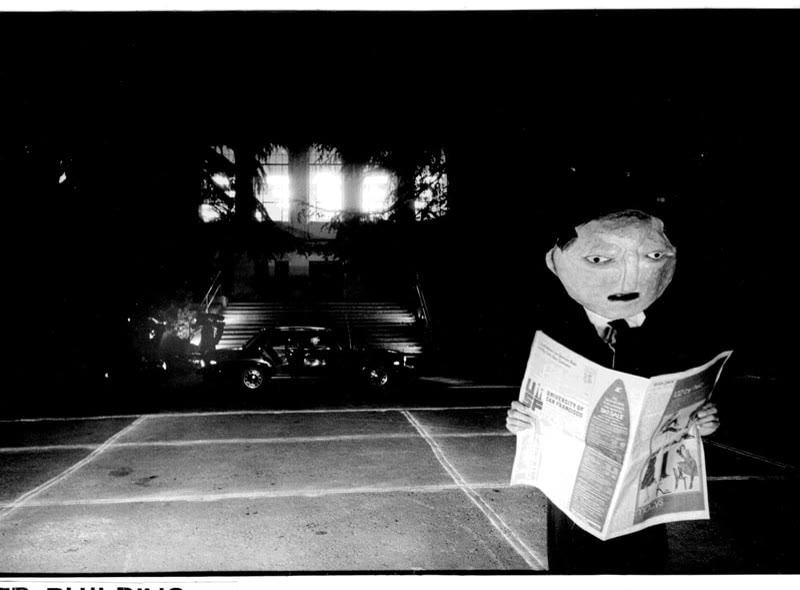
“SNAKE was an experimental performing arts company which produced only original work,” the archive says. After 1977, all its productions were a collaboration of four artistic directors: Laura Farabough, Chris Hardman, Lary Graber and Evie Lewis. See Snake Theater’s productions from the 1970s.
Reviewing Somewhere in the Pacific in the San Francisco Chronicle on March 29, 1978, Bernard Weiner wrote that the piece “was devised by Laura Farabough and Chris Hardman, who wrote the script,” with “Larry Graber (music director) and Evie Lewis (choreographer).” It was “performed by the 21-member Snake ensemble with superb precision.”
Devising with the audience: Vacuum’s questionnaires
Hardman explained the name of his next company as a method: “To Receive input, To Transform it, and then To Transmit it back.” Esquire wrote in 1986 that Vacuum, the 1981 play its audience helped write, had “an audience that not only wrote the script but delivered all the lines.”
The taped voices came from “questionnaires from the community and interviews conducted around town.” Hardman’s question, as Esquire quoted it, was how much of the audience Antenna could entangle in the preproduction. In his own account, the salesmen and housewives he interviewed “became co-collaborators.”
The High School Project’s student workshops
In 2002 the idea became teaching. Hardman planned “a series of workshop residencies and performances at a variety of high schools,” and “much of the pre-production work and performances will be created and enacted by the students themselves.” Students recorded each other and helped script the walk-through.
Backstage West reviewed the result as “Antenna’s High School, produced in collaboration with Tamalpais High School’s Conservatory Theatre Ensemble.” It grew from High School, the 1981 walk-through made with students.
Frequently asked questions
Is devised theatre just improvisation?
No. Improvisation is a making tool. Forced Entertainment improvises early, then spends its late rehearsals learning to repeat that material convincingly, night after night.
How do you start devising?
With a departure point, such as a question (What do you call home?) or an organizing image, which the ensemble then explores together.
Did American companies devise?
Yes. The Open Theater worked as a collective from 1963, the San Francisco Mime Troupe has been collectively run since 1970, and in 1978 the Chronicle described Snake Theater’s beach play as devised by its co-directors.
Devising has neighbours with their own histories: read what street theatre is and where it came from and what a happening in art was in the 1950s and 60s. For the company’s own approach, see Walkmanology and Antenna’s other new theater forms.