
Coney Island Sideshow History: Ten-in-Ones, Talkers and Painted Banners
Coney Island sideshow history runs from a tent pitched on smoking ground in 1911 to a 1917 restaurant building on Surf Avenue where the old form survives. In between came the talkers, the painted banners, a city crackdown and a long silence. This guide puts the story in order and shows where the sources disagree.
Quick answer
What is the history of the Coney Island sideshow?
Each of Coney Island’s three big parks had sideshows, and Samuel Gumpertz’s Dreamland Circus Sideshow, opened the day after Dreamland burned in 1911, led the field for over twenty years. Robert Moses’s crackdown from 1938 closed many shows, and by the 1970s the tradition had died out. Coney Island USA brought it back for Labor Day weekend 1985.
What a ten-in-one was
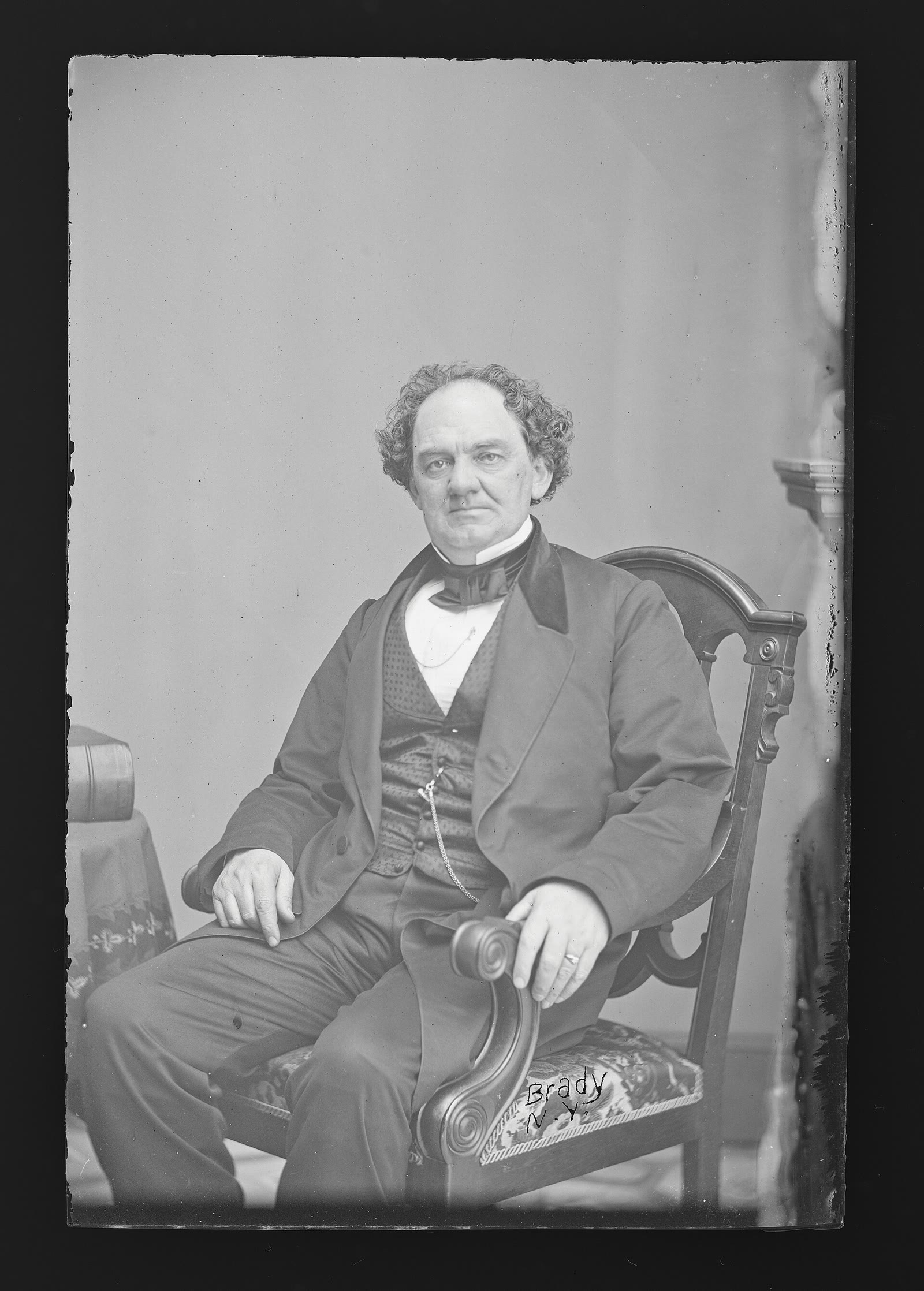
The form is older than Coney Island. Brian Childs, writing in The Brooklyn Rail in 2007, traces it to P. T. Barnum, who paired sword swallowers and fire eaters “with human oddities such as the little General Tom Thumb in a tent on the side of the main tent called the sideshow.”
The name explains the format. “Most sideshows offered up ten acts in their shows (which is why they are called ‘ten-in-ones’),” according to Coney Island USA’s history of its Circus Sideshow. Coney’s own version is a “ten-and-one,” Childs explains, with an extra act “thrown in for free.”
| Term | Meaning |
|---|---|
| Ten-in-one | About ten acts for one admission, run continuously |
| Ten-and-one | Ten acts plus one extra act thrown in free |
| Talker | The man outside who pitches the show; “barker” offends the trade |
| Banner line | Painted canvases, often 10 by 8 feet, hung outside to stop passers-by |
Coney Island sideshow history: the Dreamland years

“Each of Coney Island’s three major parks (Steeplechase, Luna Park, and Dreamland) featured sideshow performances,” Coney Island USA writes. Steeplechase’s rides belong to the history of haunted attractions and Coney’s dark rides.
“The day after Dreamland burned to the ground in 1911, the park’s general manager, Samuel Gumpertz, pitched a tent on the still-smoldering soil and opened the Dreamland Circus Sideshow.” For more than twenty years it was “the flagship for the world of sideshow,” with up to twenty acts a show. The Coney Island History Project bills it as the “Congress of Curious People and Living Curiosities,” so the two names may describe one show.
Coney Island USA says that “Far from being exploited, these ‘born different’ performers found a community within their shows, and an opportunity to make a living that might otherwise have been denied to them.” The History Project records the other side: “Reformers criticized Gumpertz’s sideshows as exploitative.” The sources do not settle it.
Talkers, not barkers
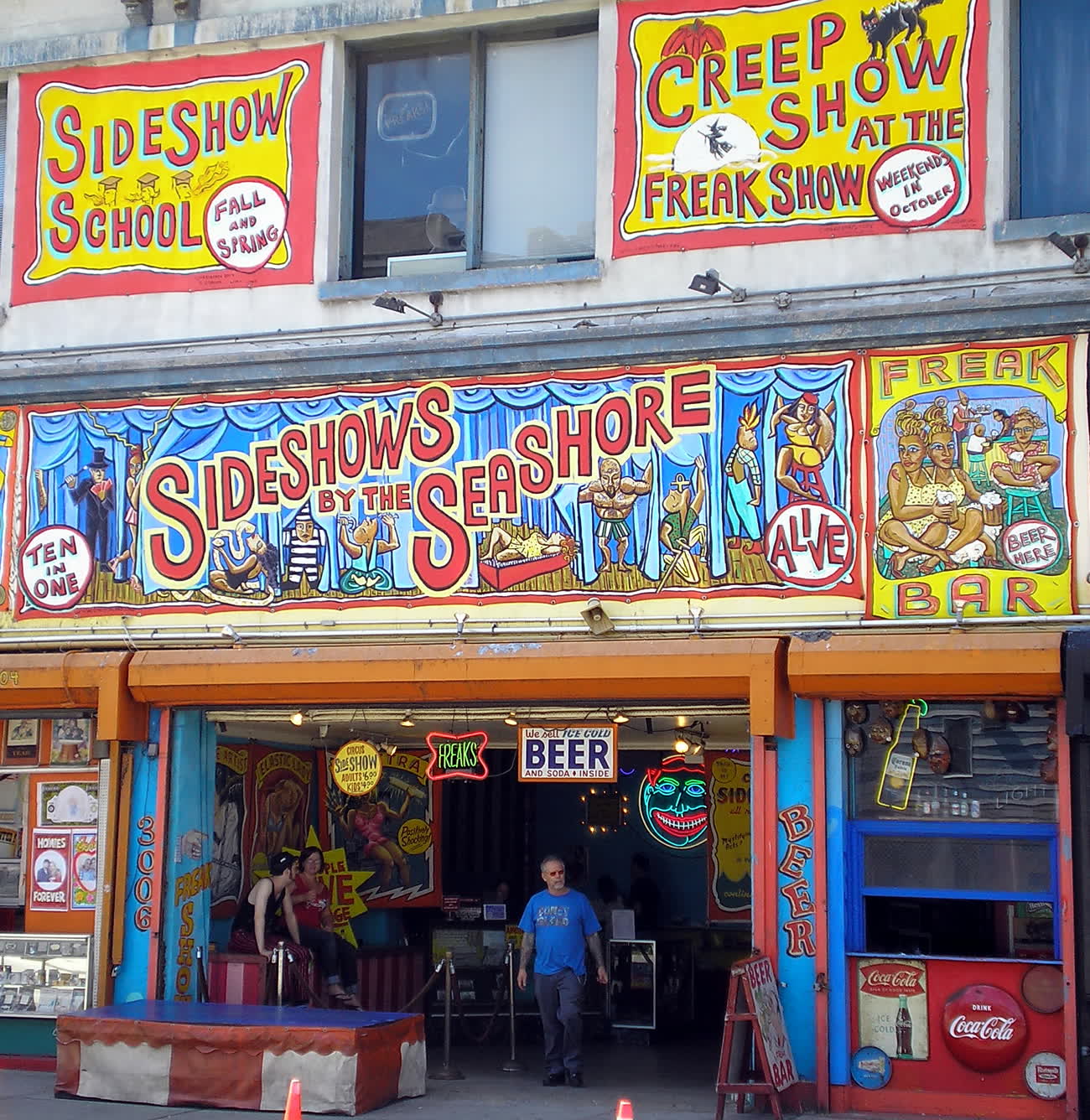
The man outside the tent was not a barker. “You don’t say ‘barker!’ It offends carnies. It’s a ‘talker,’” Dick Zigun, one of the founders of Coney Island USA, told Brooklyn Paper Radio in 2018.
The long-windedness was the point. By “using 15 words to describe something that can be described in three, you attract the attention of the passerby,” Zigun said. A classic spiel, quoted by Childs, promises “There is nothing in this show that is dead, stuffed, pickled, mummified, preserved in formaldehyde.”
The banner line and its painters

Outside every show hung the banner line. “The banner is part of what gets people to stop and be interested,” Coney’s banner painter Marie Roberts told NY1 in 2019. The banners pictured hung on a travelling circus midway in 1935, not at Coney Island.
According to UCF’s announcement of its Sideshow Wonders banner exhibition, “The most common size of the era’s historic sideshow banners was 10 feet wide and 8 feet high,” and most were “created by commercial artists working for tent and awning companies.” A 2010 University of Florida show named five legendary sideshow banner painters: Fred Johnson, Snap Wyatt, Jack Cripe, Jack Sigler and Johnny Meah.
Per the Coney Island History Project, Roberts’s uncle Lester worked the front of the Dreamland Circus Sideshow as its talker (NY1 calls him a carnival barker). NY1 dates her return as a professional artist to 1997, and she has painted the banners and taught banner painting for Coney Island USA since.
Chris Hardman, who later founded Antenna Theater, painted a banner of his own in 1970, for the Pepper’s ghost illusion behind a girl-to-gorilla act, during Hardman’s summer on the Coney Island midway.
Moses and the long decline
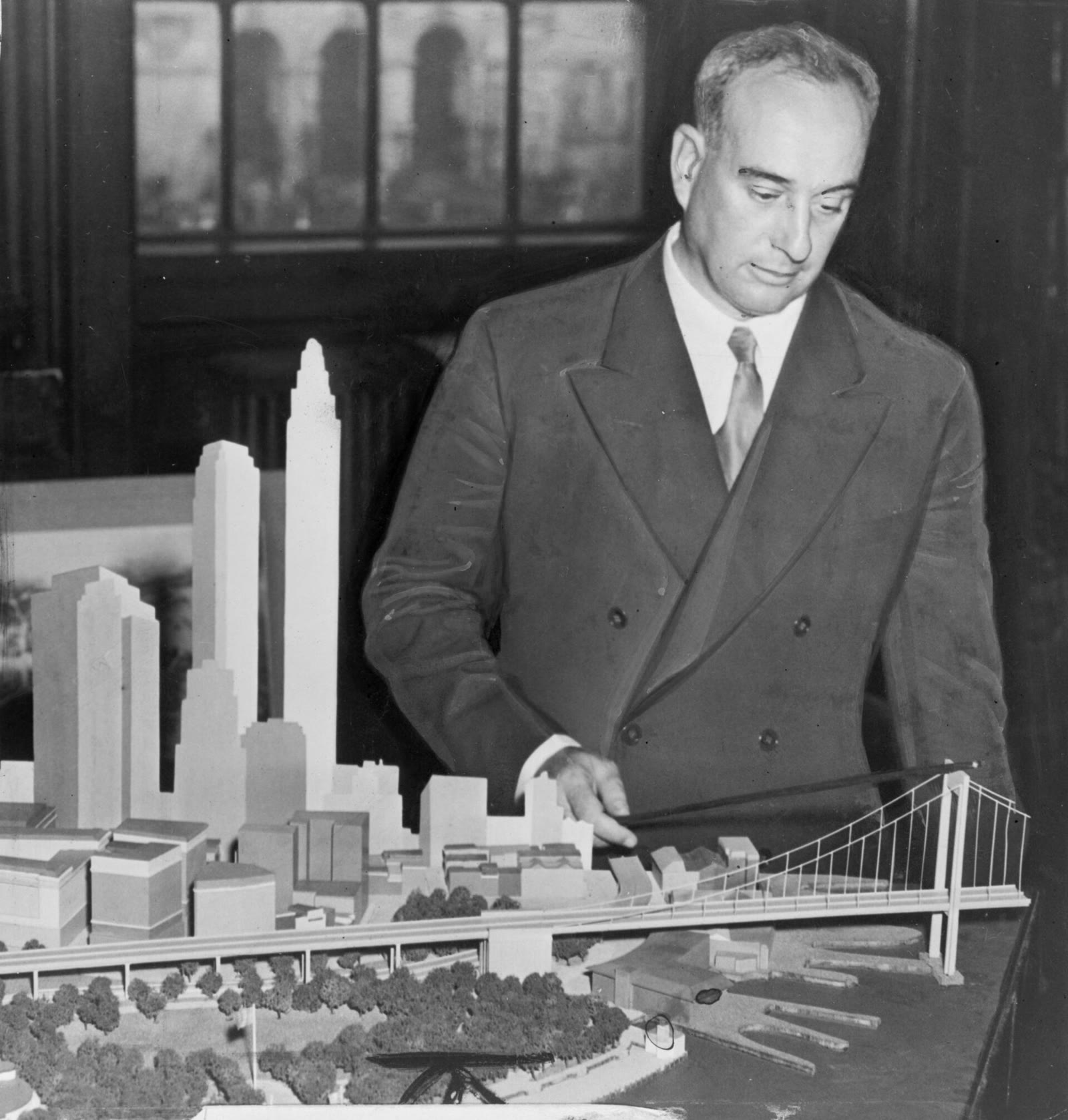
“In 1938, Robert Moses persuaded Mayor Fiorello LaGuardia to let him regulate Coney Island’s beach and boardwalk,” Untapped New York writes. He felt “Coney Island’s carnival workers and sideshow advertisers were too rowdy, so he issued violations that ended many of their businesses.”
Shows such as Hubert’s Museum and the Wonderland Circus Sideshow held on for a time, but “By the 1970’s, the tradition of the sideshow in Coney Island had died out.” The penny arcade, a cousin of the midway shows, has its own story in our guide to the Musée Mécanique and its coin-operated machines.
Sideshows by the Seashore
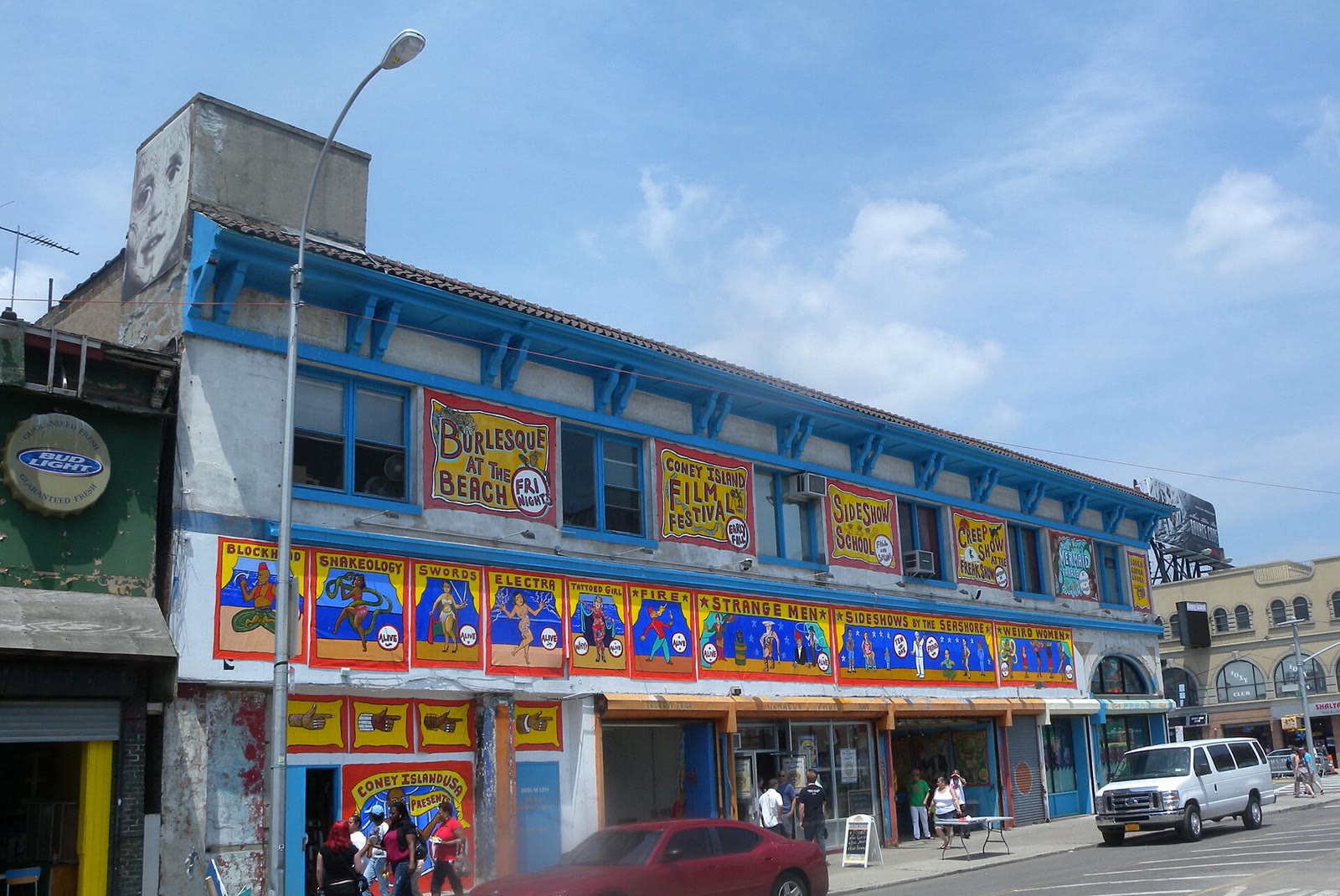
Coney Island USA was “founded in 1980 by Costa Mantis, Jane Savitt-Tennen and Dick D. Zigun,” with a mission “to defend the honor of American popular culture.”
The dates vary. Coney Island USA says that “in 1985, Coney Island USA invited carnival showman John Bradshaw to perform for the Labor Day weekend,” and that a full season followed; Childs dates the show’s “creation in 1986.” After five seasons Bradshaw left, and Coney Island USA went on producing the sideshow, long known as Sideshows by the Seashore.
The company moved into the 1917 Childs restaurant building at 1208 Surf Avenue in the mid-1990s (one source says 1995, another 1996), bought it with city funding in 2008 and saw it landmarked in 2011. It calls its show “the last permanently housed Circus Sideshow in the USA.”
| Year | Event |
|---|---|
| 1911 | Dreamland burns; Gumpertz opens the Dreamland Circus Sideshow in a tent |
| 1938 | Robert Moses takes control of the beach and boardwalk |
| 1970s | The sideshow tradition at Coney Island has died out |
| 1980 | Coney Island USA is founded |
| 1985 | John Bradshaw plays Labor Day weekend (one account says 1986) |
| 1997 | Marie Roberts returns to paint the banners |
| 2011 | The 1917 building is landmarked |
A Bay Area echo: Antenna Theater’s carnival form
Critics kept reaching for the sideshow when they wrote about Antenna Theater. In Mother Jones in 1989, Misha Berson called Hardman “a 38-year-old maverick who may be the techno-avant-garde’s answer to P. T. Barnum.” Reviewing Antenna’s Euphor!um maze of mirrors and sound in 2001, the San Jose Mercury News asked: “Is this site-specific performance art or an artsy fun house sideshow?”
In 2002 the San Francisco Chronicle’s Robert Hurwitt described what Hardman called “the carnival form,” glossed as “multistage environments in which the audience, directed on headsets, acts out the stories.”
The comparison half fits. Both were built from many acts and lived on the crowd’s curiosity, but where the talker sold a look through the canvas, Antenna’s headset put the visitor inside the show. No source records any contact between Antenna and Coney Island USA; the company’s record is in the Antenna Theater chronology of productions.
A quieter popular form put people on show by having them hold perfectly still: what a tableau vivant is, from Paris to Laguna Beach.
Frequently asked questions
What is a ten-in-one sideshow?
A show of about ten acts for one admission. Most sideshows offered ten acts, which is why they were called ten-in-ones, and Coney Island’s version adds a free extra act.
Why did the Coney Island sideshows close?
After Robert Moses took control of the beach and boardwalk in 1938, he issued violations that ended many sideshow businesses. By the 1970s the tradition at Coney Island had died out.
Who started Sideshows by the Seashore?
Coney Island USA, founded in 1980, invited the showman John Bradshaw for Labor Day weekend 1985 and a full season after. One account dates the show’s creation to 1986.