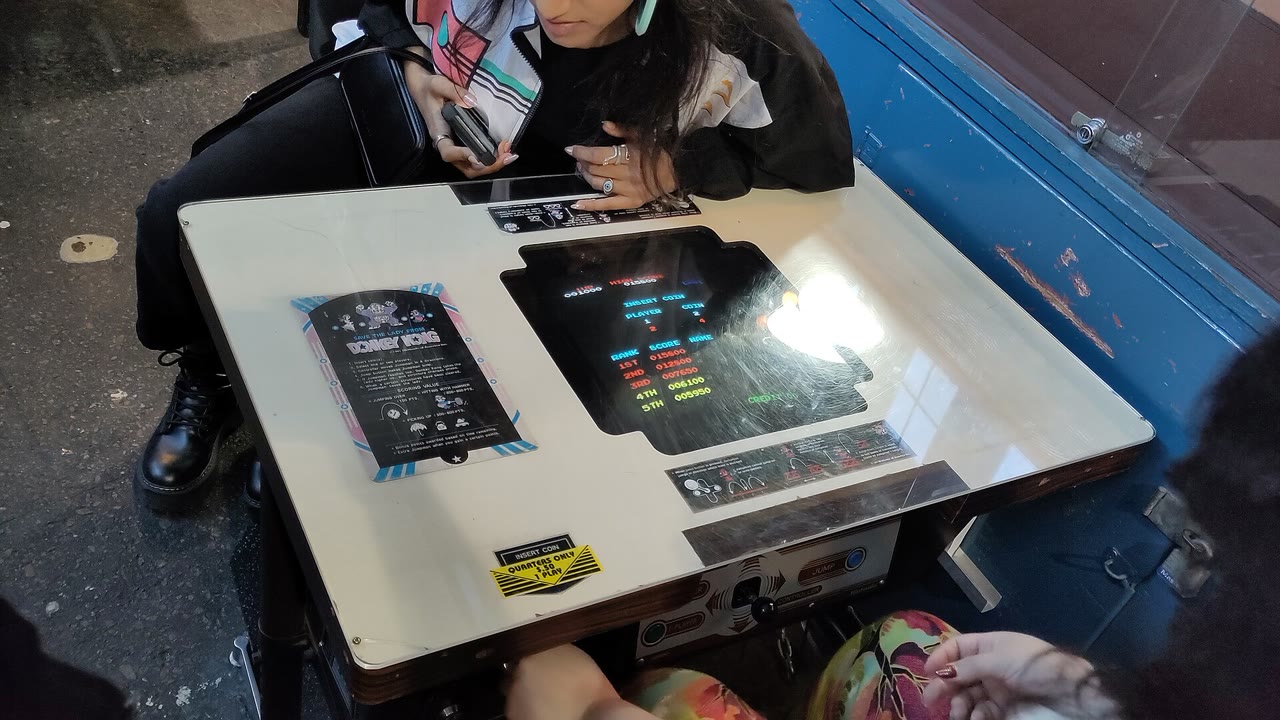
The History of the Musée Mécanique: From the Cliff House to Pier 45
The history of the Musée Mécanique starts with a boy who won five quarts of motor oil at a bingo game. Ed Zelinsky traded the oil for a penny game in 1933 and kept collecting for seventy years. His coin-operated machines lived in the basement of the Cliff House before moving to Pier 45 at Fisherman’s Wharf.
Quick answer
What is the Musée Mécanique?
The Musée Mécanique is a San Francisco arcade of antique coin-operated machines that grew from Ed Zelinsky’s collection, begun in 1933. When Playland at the Beach closed in 1972 he bought machines including Laffing Sal and showed them in the Cliff House basement. Evicted for a renovation in 2002, the arcade moved to Pier 45.
A boy, a bingo game and a penny machine (1933 to 1950s)
In Ed Zelinsky’s own account, “How It All Began”, the collection starts at the Ellis Theatre on Fillmore Street: “I started my collection when I was about 11 years old.” He won the motor oil at an intermission bingo game, sold it “to my piano teacher for 75 cents,” and rode the streetcar to Golden Gate Avenue, where “For 5 cents I bought a penny skill game.”
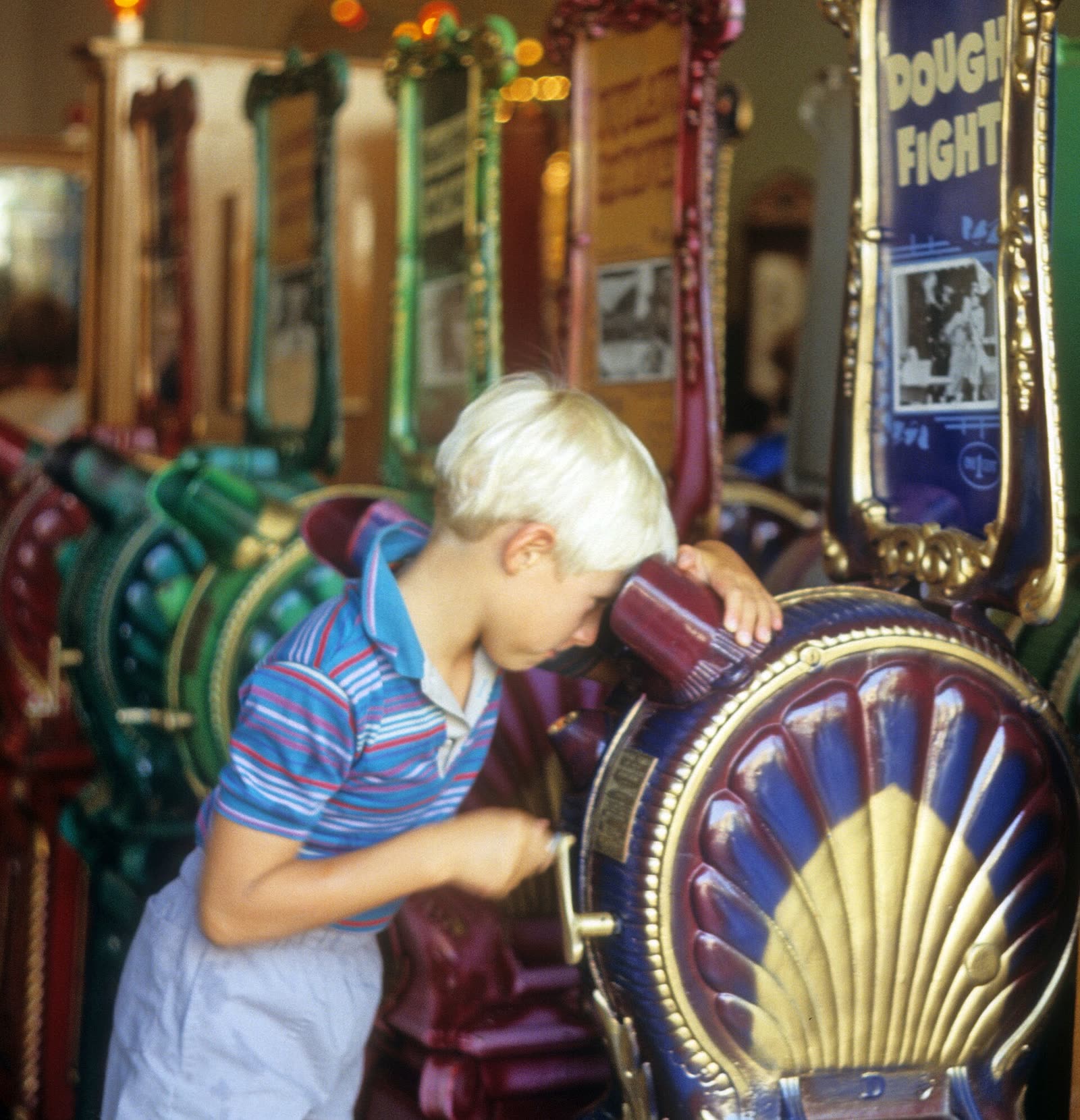
After the war he found eight picture machines in a warehouse basement, coin-operated viewers like the one pictured here (that one is in Disneyland’s Penny Arcade). In 1946 he bought a Seeburg piano at the Mills Novelty Company in Oakland and repaired it himself, blowing cigarette and then cigar smoke through its tubes.
Trading with Playland’s Whitneys: the steam motorcycle and Laffing Sal
“I seldom sell, but I love to trade,” Zelinsky wrote, and much of his trading was with George Whitney of Playland at the Beach. After one long lunch, Whitney told him: “Ed, you are the proud owner of a steam motorcycle,” built about 1912 in Sacramento.
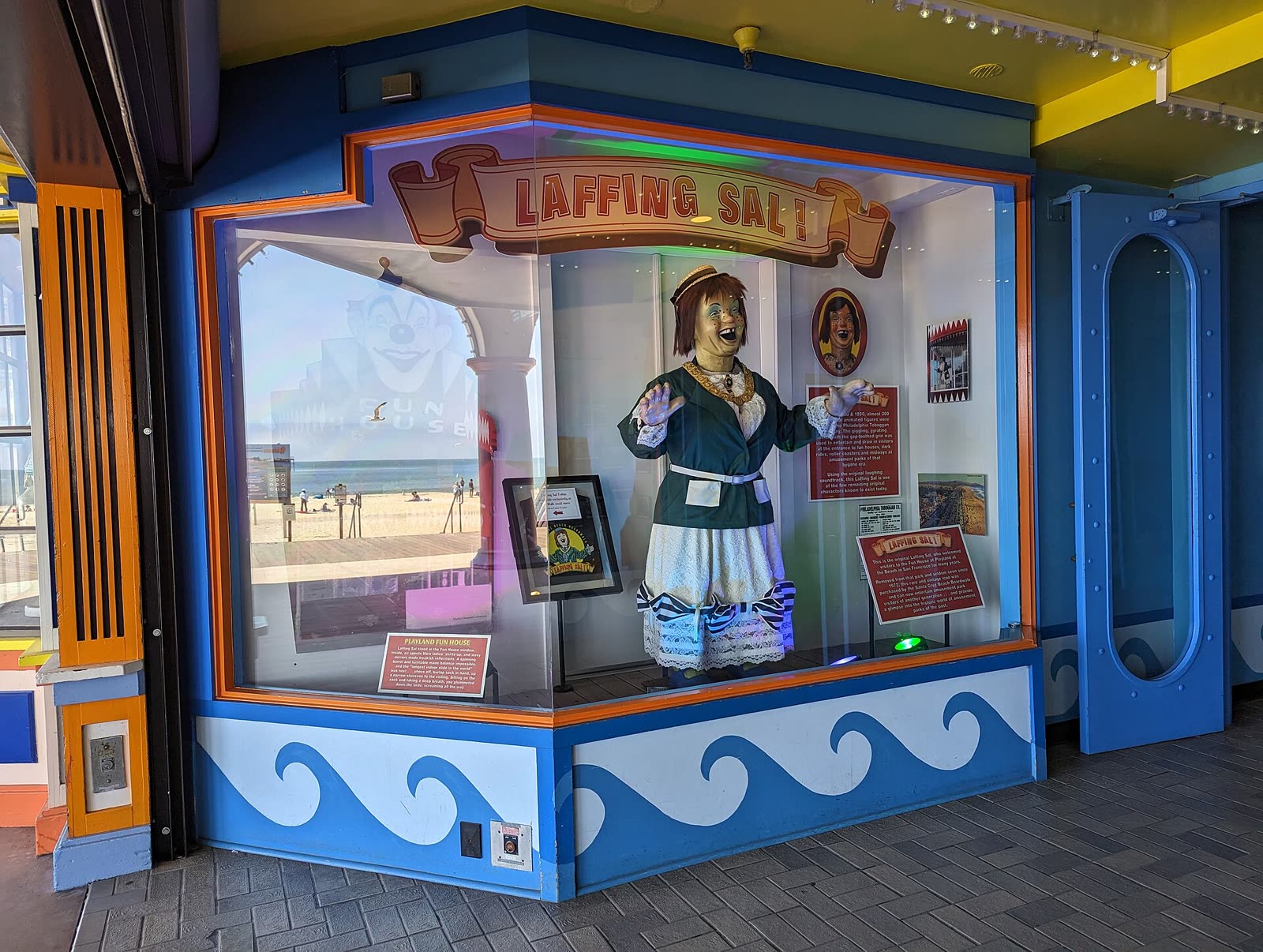
When Playland closed in 1972 (its rides and Fun House are covered in our history of Ocean Beach and Playland), Zelinsky bought Laffing Sal, “a mannequin whose peals of mechanical laughter sounded for years over the entrance to the Fun House at Playland,” the Chronicle wrote. The arcade’s releases name George Whitney Sr. as the seller, but he had died in 1958, so the safe version is that the machines came from the Whitney family.
Sal “was built by the Philadelphia Toboggan Company of Germantown, PA in the early 1930’s out of paper mache, springs, gears and cams.” She was not unique: Sals and Sams stood in “almost every funhouse across the United States.” The one pictured belongs to the Santa Cruz Beach Boardwalk, and when Santa Cruz bought its Sal, Zelinsky wrote to the papers that his was the true original.
The basement of the Cliff House (1970s to 2002)
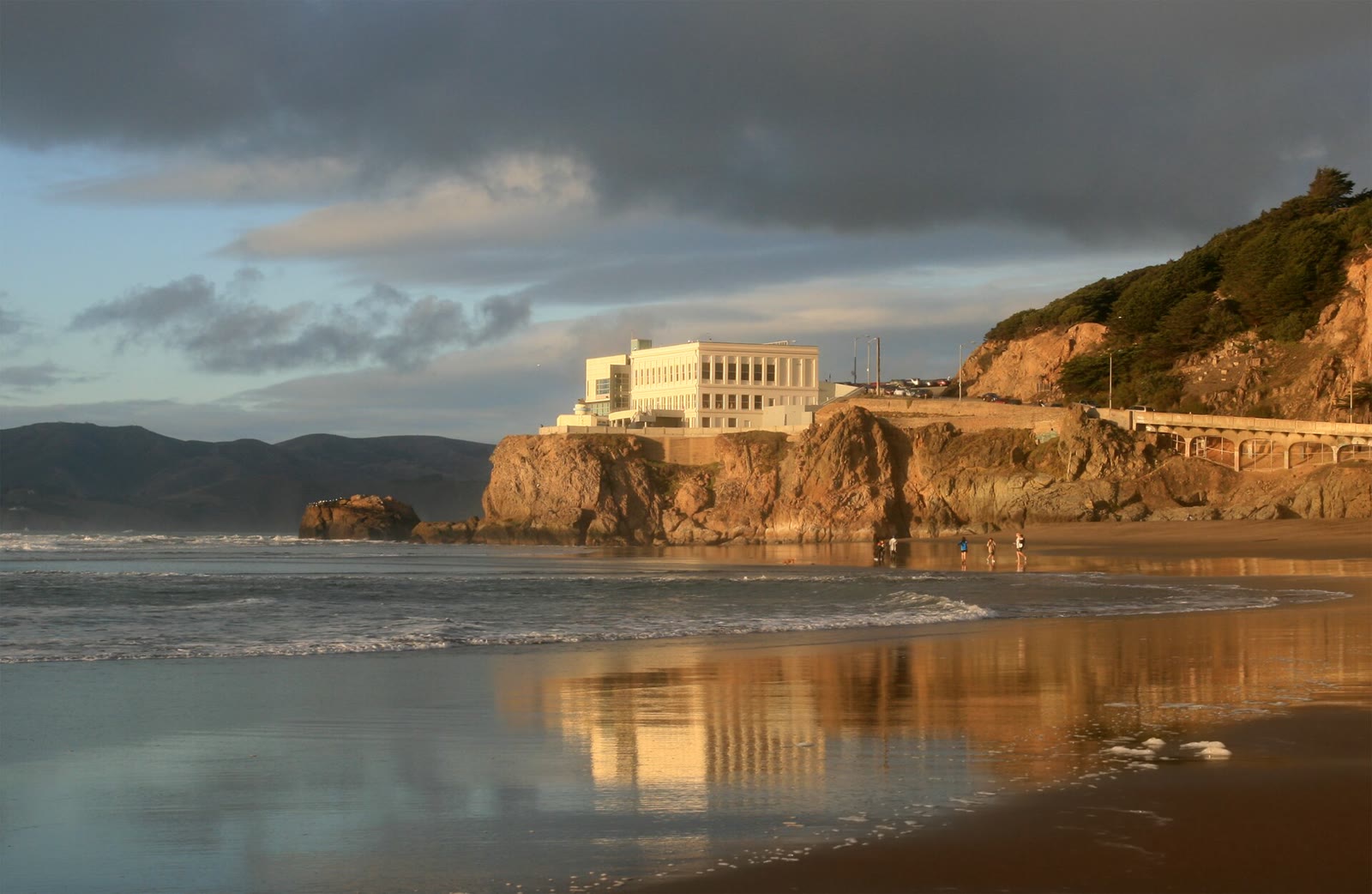
By the 1970s the machines were on show in the basement of the Cliff House, though accounts differ on when that began. The writer Joe Kissell says Zelinsky moved them there “Shortly after acquiring the Playland machines,” while a 2020 Bay City News report says he “bought Musée Mécanique in the 1960s.” The National Park Service acquired the building in 1977.
Kissell remembered “a large room with peeling paint and a crumbling ceiling,” marked only by “a small, folding wooden sign on the sidewalk.” Dan Zelinsky grew up there: “My dad had this room in the basement full of these machines; I grew up with them like furniture.”
Evicted, petitioned, moved: Pier 45 (2002)
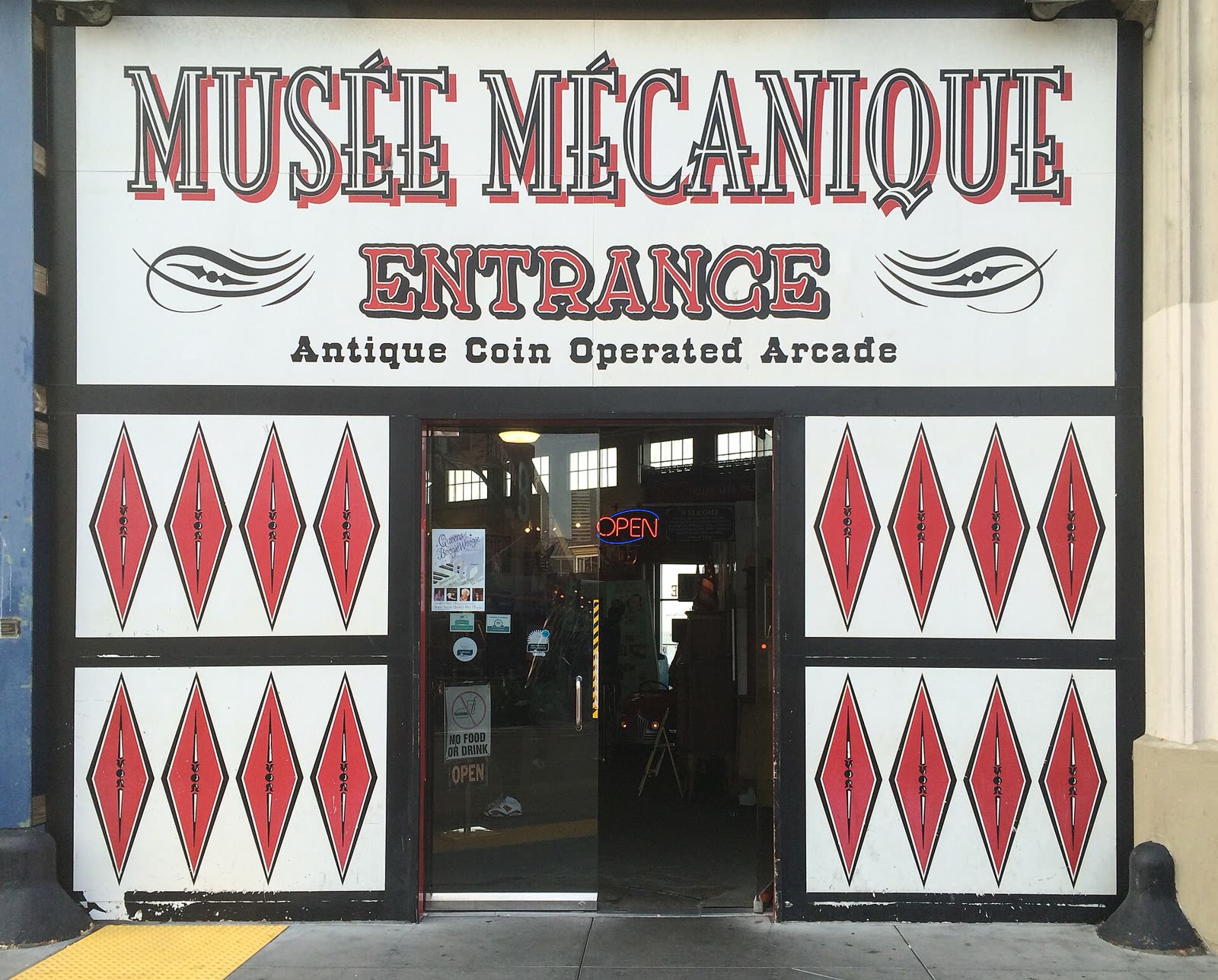
In 2002 the Park Service evicted the museum to renovate the Cliff House, and fans gathered tens of thousands of signatures: 25,000 by the arcade’s count, more than 20,000 by Kissell’s. Zelinsky, Kissell wrote, was weighing storage or an auction. Instead, “In late 2002, Musée Mécanique reopened at Pier 45 amid the hustle-and-bustle of Fisherman’s Wharf.”
The plan was to return to the Cliff House in 2004, “but that never happened.” Until 2013 the wharf also had its own wax museum, a late chapter in the history of wax museums.
What is inside: four machines
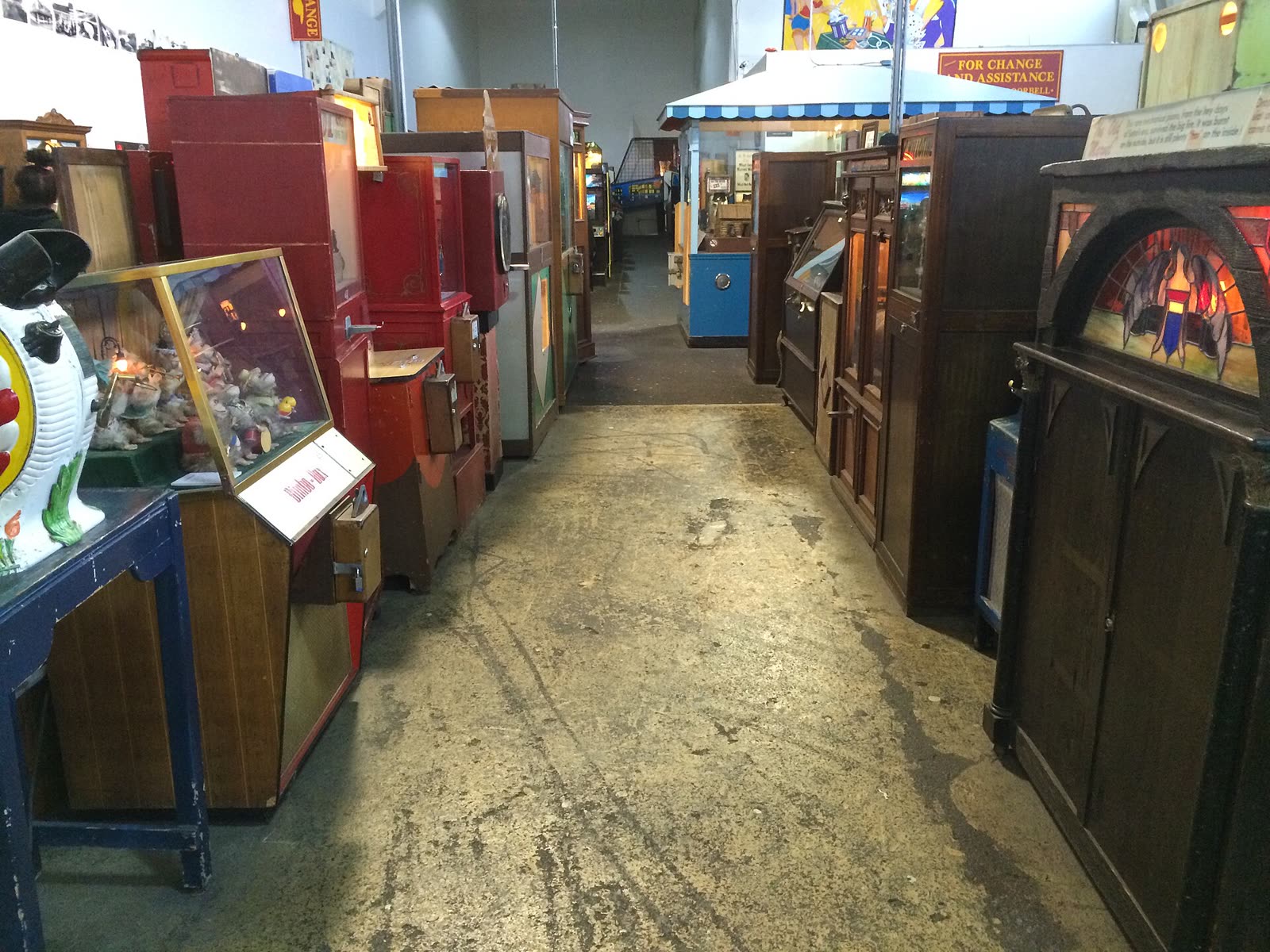
The arcade calls itself “one of the world’s largest privately owned collections of mechanically operated musical instruments and antique arcade machines.” Four machines show the range.
- Cail-o-Scope: “a coin operated, hand cranked, animated picture machine invented in 1904 by the Caille Brothers.”
- Royal Court: a mechanical diorama “originally seen at the San Francisco Panama Pacific Exposition in 1915.”
- The Carnival: “over 100 different moving parts housed inside a glass cabinet.”
- Gypsy Fortune Teller: an automaton who “passes her hands over the magic tarot cards to read your fortune.”
| Year | Event |
|---|---|
| 1933 | Ed Zelinsky, about 11, buys a penny skill game |
| Early 1930s | Laffing Sal built by the Philadelphia Toboggan Company |
| 1972 | Playland closes; Zelinsky buys Laffing Sal |
| 1970s to 2002 | The collection in the Cliff House basement (start date disputed) |
| 2002 | Eviction, petition and reopening at Pier 45 |
| 2004 | Ed Zelinsky dies; his son Dan carries on |
| 2020 | Pandemic closure; spared by the Pier 45 fire |
After Ed: the fire and the pandemic (2004 to 2020)
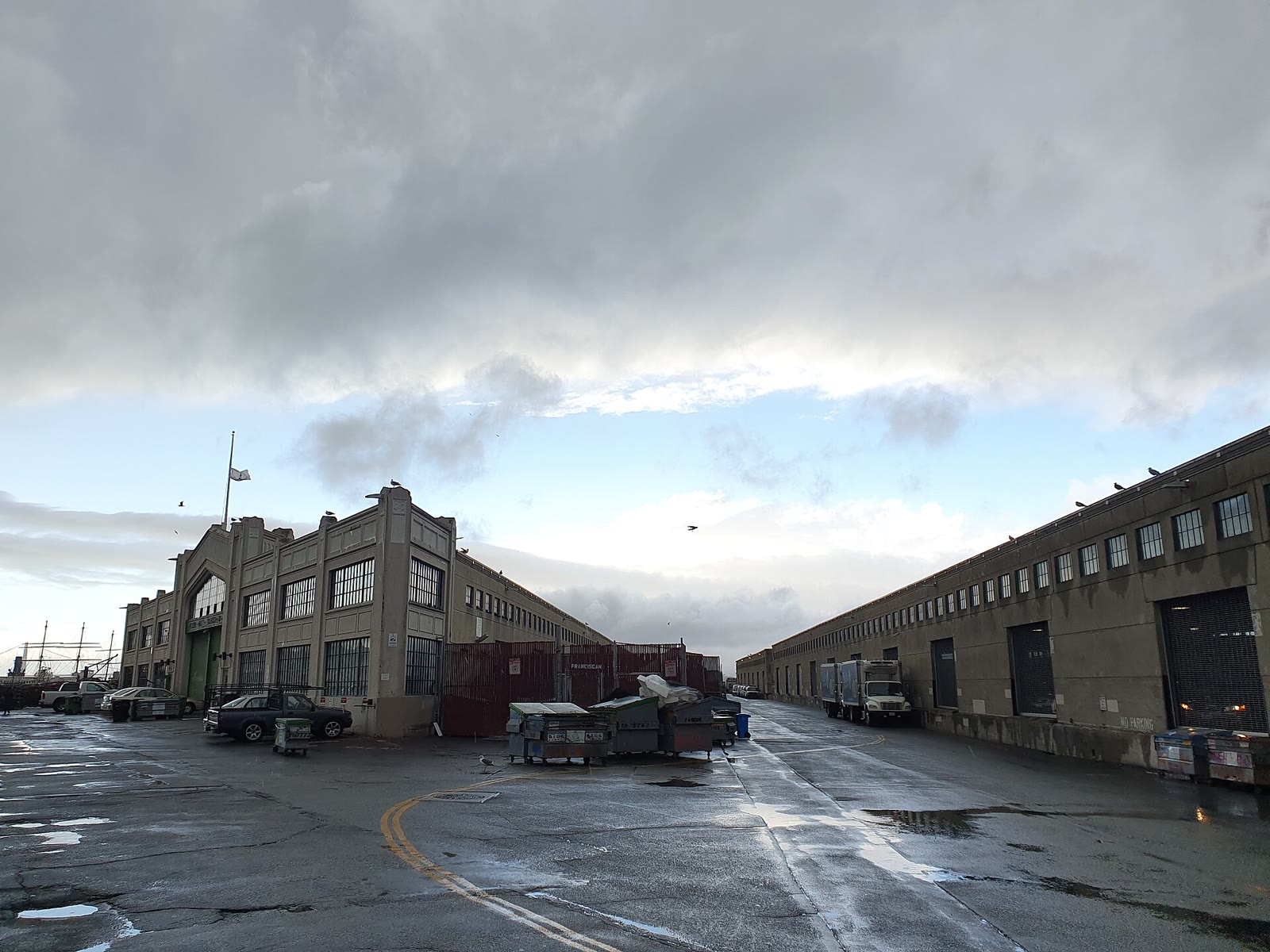
Ed Zelinsky died on September 23, 2004, and “Dan has kept the motors running and guillotines falling,” as Bay City News put it. In 2020 the arcade closed from March 15 for the pandemic. On May 23 a fire engulfed a warehouse on Pier 45, but it “was confined to the end of the pier, well away from the Musée Mécanique.”
The wind blew the other way, Local News Matters reported in July 2020, leaving the arcade “as lucky as lucky will get.” Dan Zelinsky explained why the machines need players: “Dozens of these machines will stop working if you don’t play them. We’re right above the ocean. Parts oxidize.”
Scenes that wait for you: Antenna’s triggered walk-throughs
A coin-operated diorama is a tiny staged scene that waits until someone sets it going. Antenna Theater’s walk-throughs waited too, but started when the visitor arrived. In Euphor!um, Antenna’s walk through Kubla Khan, the audio was “digitally triggered by infrared beacons each step of the way,” Robert Hurwitt wrote in 2001, and the company listed sensor-tripped animation among its formats (see Transforming Art, Hardman’s experimental funhouse).
Chris Hardman came from the same popular tradition. His first paid commission, in 1970, was to refurbish Coney Island’s Dragons Cave, built in the 1930s with lifesize automata diaramas (his spelling) of elephants crushing papier-mache victims. Moving Sculptures, Antenna’s plywood figures of local residents (1982), needed no coin at all.
| Aspect | Musée Mécanique | Antenna Theater |
|---|---|---|
| Trigger | A coin, penny then quarter | The visitor’s arrival: sensors, infrared beacons |
| Visitor’s place | Outside the glass, watching | Inside the scene, on headphones |
| Moving parts | Springs, gears and cams | Figures, sound and light cued in sequence |
| Popular roots | Playland and the penny arcade | Coney Island’s Dragons Cave and carnival games |
No source says Hardman visited or drew on the Musée Mécanique; the two simply share scenes that come to life. For another San Francisco collection built to be touched, see the history of the Exploratorium, and for Antenna’s forms, Walkmanology and Antenna’s new theater forms.
Frequently asked questions
How old is the Musée Mécanique?
The collection began in 1933, when Ed Zelinsky, about 11, bought a penny game. It was shown at the Cliff House until 2002 and has been at Pier 45 since late 2002.
Why did the Musée Mécanique leave the Cliff House?
The National Park Service evicted it in 2002 to renovate the building. After a petition with tens of thousands of signatures, it reopened at Fisherman’s Wharf.
Is Laffing Sal from Playland?
Yes. Zelinsky bought the Sal that laughed over Playland’s Fun House when the park closed in 1972. She was built in the early 1930s, and other Sals existed.
Did the Musée Mécanique survive the Pier 45 fire?
Yes. The May 23, 2020 fire was confined to the end of the pier, well away from the arcade.