Enola/Alone: Antenna Theater’s World War II Bomber Maze at the Presidio (1994)
In the autumn of 1994, as the Army was leaving San Francisco’s Presidio, Antenna Theater put visitors, one at a time, into the boots of a World War II bomber pilot. Enola/Alone was a walk-through maze with no actors, made of paper models, real interview tapes and a Walkman. Two full reviews survive, reprinted on the company’s former website, and they are the main sources here.
Quick answer
What was Enola/Alone?
Enola/Alone was a 1994 walk-through maze by Antenna Theater, staged in a former Army building on San Francisco’s Presidio. Each visitor walked alone with a Walkman through 31 stations, from an Uncle Sam poster to the ruins of Hiroshima, hearing real interviews with bomber crews, survivors and Enola Gay pilot Paul Tibbets.
A bomber maze in an Army building, the week the Army left
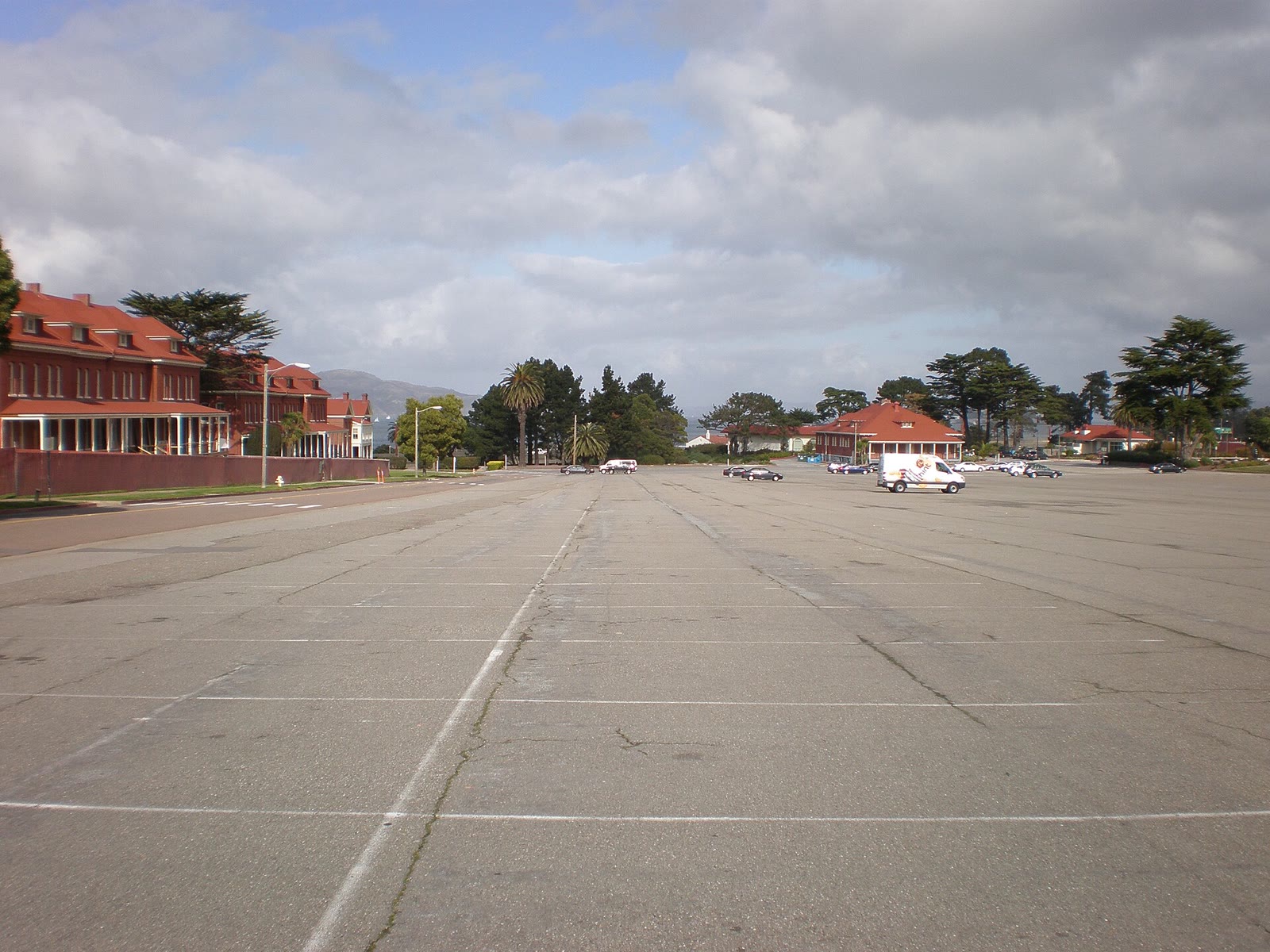
The San Francisco Chronicle announced on October 6, 1994, that the show “opens today” and “continues through November 6.” Its home was “the anonymous-looking Building 1188 off Marina Boulevard,” which Antenna’s chronology calls “the Presidio warehouse” and American Theatre called “an army barracks on the Presidio’s former grounds.”
The timing was the point. The Presidio Trust’s account of the park’s first 25 years records that the Presidio formally transferred to the national park system in a ceremony on October 1, 1994. American Theatre’s Jean Schiffman asked: “What more ironic way could there be to celebrate the transfer of a military base from the business of war to post Cold War peace than an anti-war theatrical installation?”
The Chronicle’s Steven Winn saw the same irony in “a symbolic last stand for the military at the Presidio Army Base.” The title appears as Enola/Alone in Antenna’s chronology and as Enola Alone in the 1994 reviews. Read backward, Enola spells alone, though no source says that was the intent.
Thirty-one stations, one visitor at a time

Each visitor walked alone. American Theatre wrote that “each audience member is, indeed, alone with a personal Walkman,” moving “from station to station (31 in all).” The Chronicle described visitors “Following a zigzag line taped on the floor” from a “comically sculpted” Uncle Sam Wants You poster onward.
| Station | What the critics saw | Source |
|---|---|---|
| Start | A “comically sculpted” Uncle Sam poster | Chronicle |
| Clouds | “Audiences walk through fluffy gauze clouds” | American Theatre |
| Model towns | A London church like “a tab-and-slot cardboard playhouse” | Chronicle |
| The bomber | “A fake propeller, nose cone, fuselage and mirrors create the illusion of an overhead bomber” | American Theatre |
| Pilot’s seat | A cardboard pilot and “a kaleidoscopic swirl of targets” | Chronicle |
| Shelter | A simulated bomb shelter and dangling binoculars | American Theatre |
| Atomic blast | “Silver paper and flickering lights suggest the walls of flame of an atomic blast” | American Theatre |
| Hiroshima | A red tarp of shattered remains, “actually smashed circuit boards” | American Theatre |
| Near the end | Your own shadow on “a wavering panel of gauzy muslin” | Chronicle |
The two reviews order the ending differently: the Chronicle places the muslin shadow after Hiroshima, while American Theatre ends on the tarp and a pilot’s breaking voice. Timings differ too. The Chronicle called it a “40-minute audio headset tour,” while American Theatre described “a complex 35-minute tape” and a show that “accommodates about 180 people per performance.”
Flying higher, seeing less: the scale trick
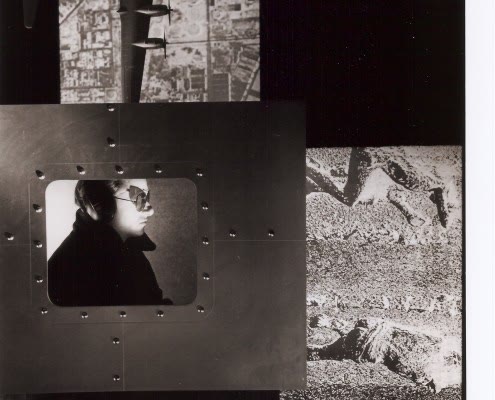
“What makes Enola Alone different from other Antenna maze productions is its use of varying scales,” Schiffman wrote. Chris Hardman explained: “In other walkthroughs, you’re dealing with people and images that are life-size.” Then, he said, “it popped into my mind that you could fly and actually be the plane’s point of view.”
So the audience viewed the war “from progressive levels of height,” past scale models “that decrease in size” as the plane climbs. Winn noticed “an eerie dissonance between the pristine, toy-like quality of the models” and the testimony on tape. Hardman’s subject was that distance: “With scales this large, people couldn’t perceive of it as part of the human condition.”
Real voices: Tibbets, veterans and survivors
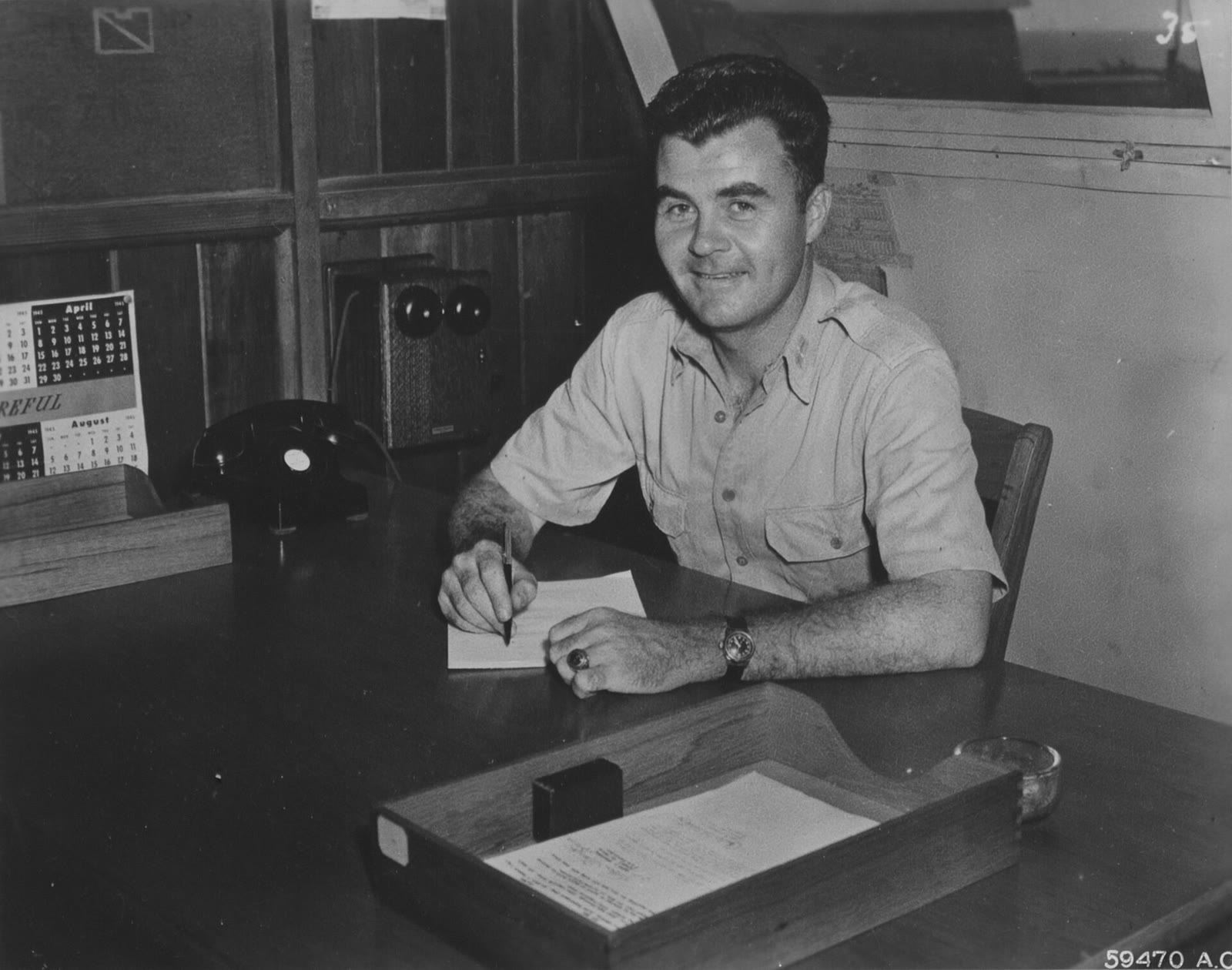
“Like all Antenna scripts, Enola Alone is composed entirely of interviews with real people,” American Theatre reported, and “the taped interviews themselves are used, not actor voiceovers.” The Chronicle listed “World War II vets, Japanese and English survivors, Colonel Paul Tibbets” among the voices. American Theatre credited audio technology “by Digi Design” for mixing and manipulating them.
Tibbets is heard saying, “I made up my mind then that the morality of dropping the bomb was not my business.” A Hiroshima survivor says, “Everywhere you turned you were surrounded by fire.” A bombing veteran remembers: “Frankly, it was almost relaxing.”
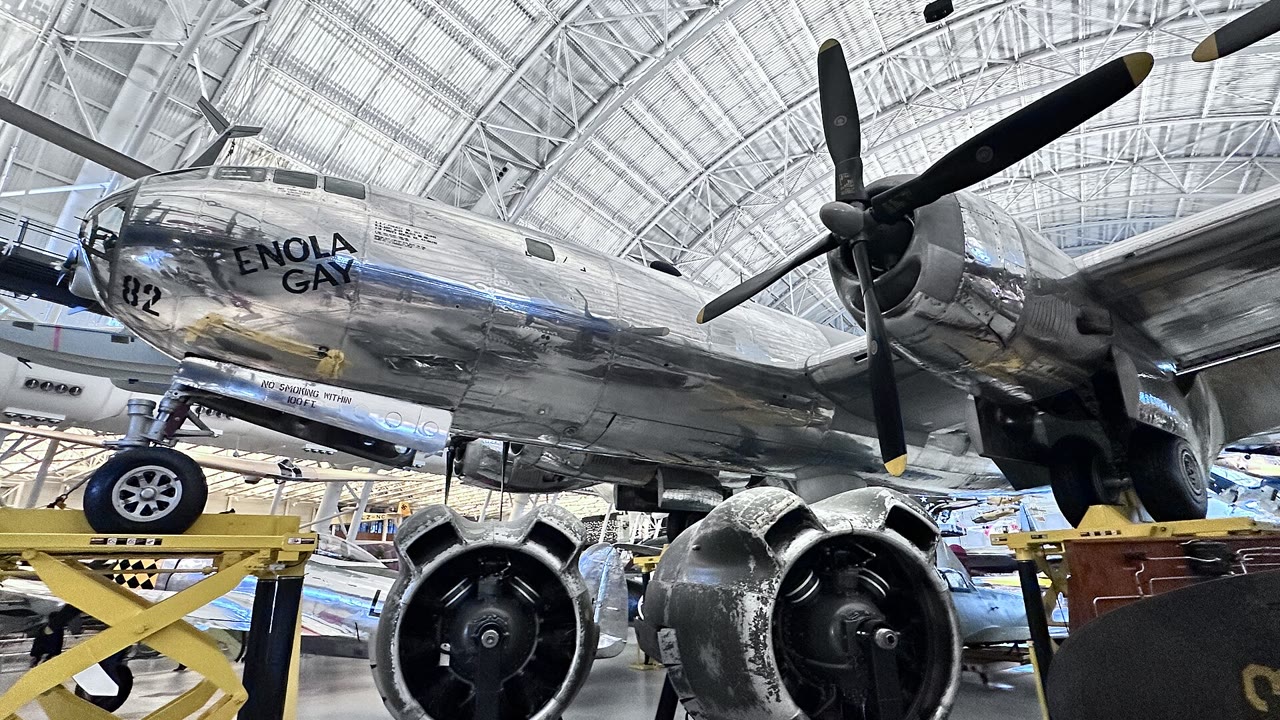
The plane itself survives. The National Air and Space Museum’s record of the B-29 Enola Gay states: “On August 6, 1945, this Martin-built B-29-45-MO dropped the first atomic weapon used in combat on Hiroshima, Japan.” Tibbets named the bomber after his mother.
Who made it
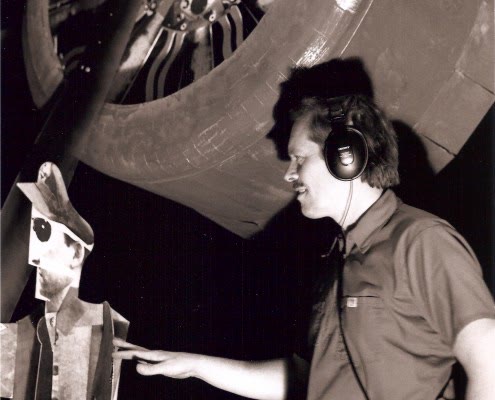
Hardman created the piece with Ronald M. Davis, Antenna’s associate artistic director, who “primarily uses paper in designing the show’s various scenic effects,” according to American Theatre. The Chronicle credited “Davis and Dan Collard’s spooky lighting.”
| Item | Detail |
|---|---|
| Year | 1994 |
| Venue | Building 1188 off Marina Boulevard, Presidio of San Francisco |
| Run | October 6 to November 6 (Chronicle) |
| Length | A 35-minute tape (American Theatre); about 40 minutes on foot (Chronicle) |
| Stations | 31 (American Theatre) |
| Capacity | About 180 people per performance (American Theatre) |
| Actors | None |
| Credits | Chris Hardman; Ronald M. Davis; lighting by Davis and Dan Collard |
What the critics said
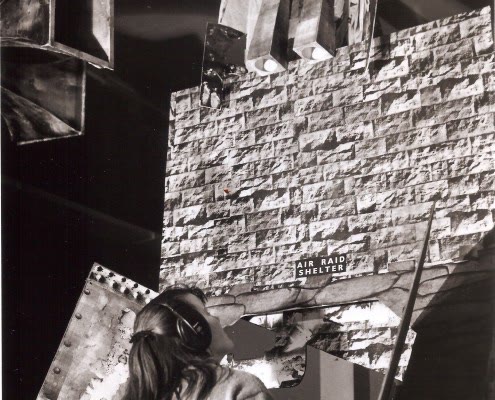
Winn called it “Hauntingly delicate and disturbing, if perhaps too broad in its field of coverage,” and “an ingeniously fashioned cocoon.” He added: “Hardman isn’t out to rewrite history or argue a point of view. Rather, he wants us to see ourselves projected on the crowded screen of the war’s myth and imagery.”
He also called it “a kind of solo house of horrors,” a phrase that places the piece in the history of haunted attractions and walk-through funhouses. His last word was this: “You emerge enmeshed in a web of history and denial, self-justification and pain.” Three years later the San Francisco Examiner counted it among “the best Antenna pieces.”
After the Presidio
American Theatre reported that Antenna would tour the piece “throughout the country this year.” A national tour was planned, according to American Theatre, but the company’s records list only the Presidio run. The soundtrack did travel: a 2008 Hearing Voices radio episode, Mushroom Cloud: Tales of the Atomic Age, aired a segment with Tibbets’ voice credited to Antenna Theater.
Enola/Alone belongs with the pieces in how one-to-one maze productions guided a single visitor, beside Artery, the Walkman maze in which each audient played the lead. It followed The Grid, Antenna’s audio tour of the Wexner Center, and shows how far a maze can go as theater without actors.
Frequently asked questions
Where and when did Enola/Alone run?
In Building 1188 off Marina Boulevard on the Presidio of San Francisco, from October 6 to November 6, 1994, the same month the Presidio passed to the national park system.
Were there actors?
No. Each visitor walked alone with a Walkman through 31 stations, according to American Theatre.
Whose voices did visitors hear?
Real interview tapes of World War II veterans, Japanese and English survivors, and Colonel Paul Tibbets, pilot of the Enola Gay.
How long did it take?
About 40 minutes, according to the San Francisco Chronicle, with a 35-minute soundtrack, according to American Theatre.
The production sits in Antenna Theater’s full production chronology, and one critic’s view of it as a walking drama is taken up in what promenade theatre is and how it moves an audience.