The History of Mirror Mazes, from Berlin Patents to Pier 39
Every corridor looks open until your hand meets glass. The mirror maze feels timeless, but the history of mirror mazes is surprisingly precise: a Berlin showman’s patents, two national exhibitions, a San Francisco pleasure ground and a black-light attraction on Pier 39. Along the way, one popular origin story turns out to be impossible.
Quick answer
Who invented the mirror maze?
The mirror maze is a nineteenth-century attraction. Gustav Castan of Berlin patented one in France in 1888, using identical mirrors set on a grid of equilateral triangles. Exhibition mazes followed: Prague’s opened in 1893 and Lucerne’s, built for Geneva in 1896, in 1899. Both still operate, as does San Francisco’s Pier 39 maze.
Before the maze: palace mirrors and a legend
Mirrors as spectacle are older than the maze. At Versailles, the Hall of Mirrors was built between 1678 and 1684, with “the 357 mirrors bedecking the 17 arches.” It is a gallery, though, not a puzzle you walk through.
A story repeated online says the first mirror maze was built by Peter Stuyvesant, inspired by that hall, before he returned to New Amsterdam. The dates rule it out. New Amsterdam passed to the English in 1664, Stuyvesant died in 1672, and work on the Hall of Mirrors only began in 1678.
A patent built on triangles
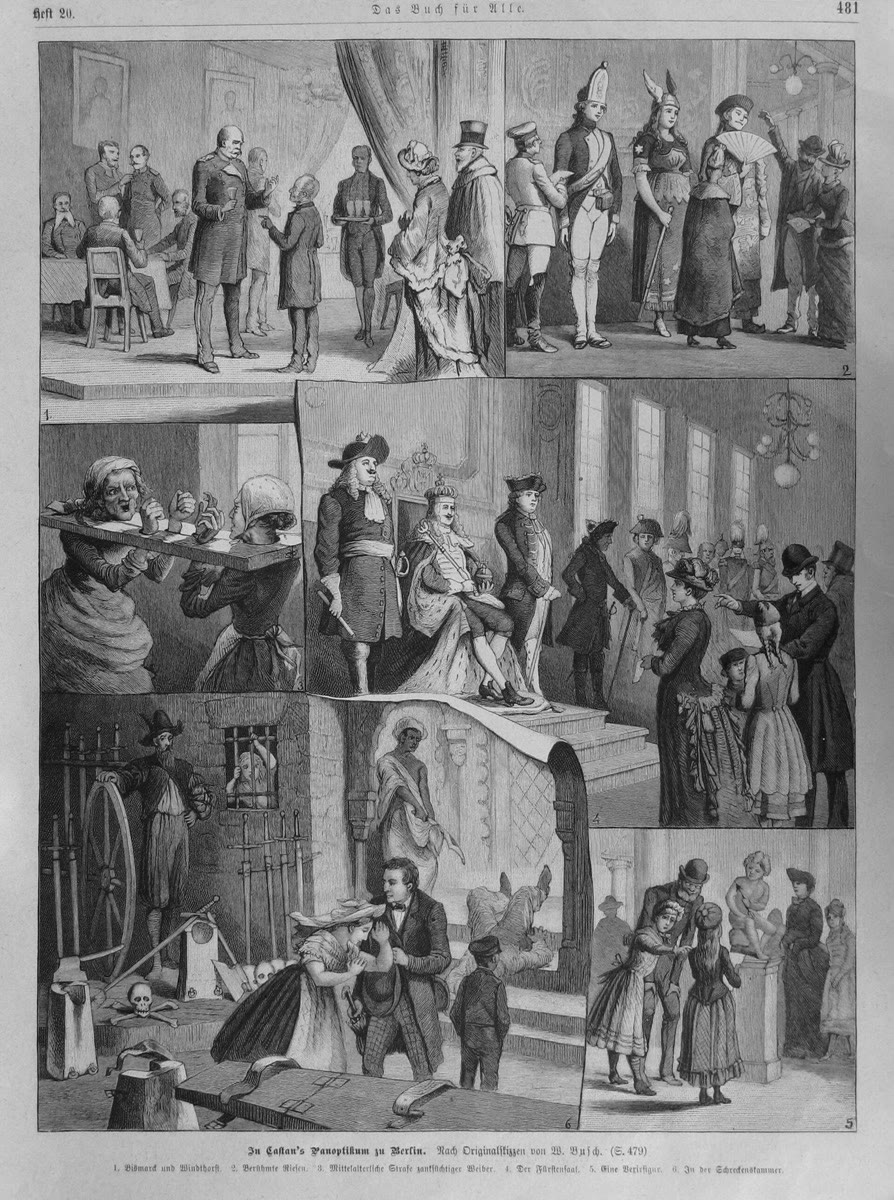
The earliest documented patents belong to Gustav Castan, who gave his address as Berlin, the city where the Castan brothers ran their Panoptikum waxworks. His 1895 US patent for a mirror maze recites earlier grants in France and Belgium in September 1888 and in England in 1889.
The patent is a recipe for getting lost. Its “dotted lines arranged in Fig. 1 to produce equilateral triangles represent the architectural lines into which the apartment must be divided.” Each mirror forms a side of one triangle, “so that all the mirrors are of the same width,” and they “should be alike in height and in the matter of their frames or borders.”
Castan had a rival. In 1893 Gustav von Prittwitz Palm, an Austro-Hungarian living in New York, patented mazes in which “reflection and counter-reflection” from angled mirrors produce “the effect of a labyrinthian device.”
Mazes for the exhibitions
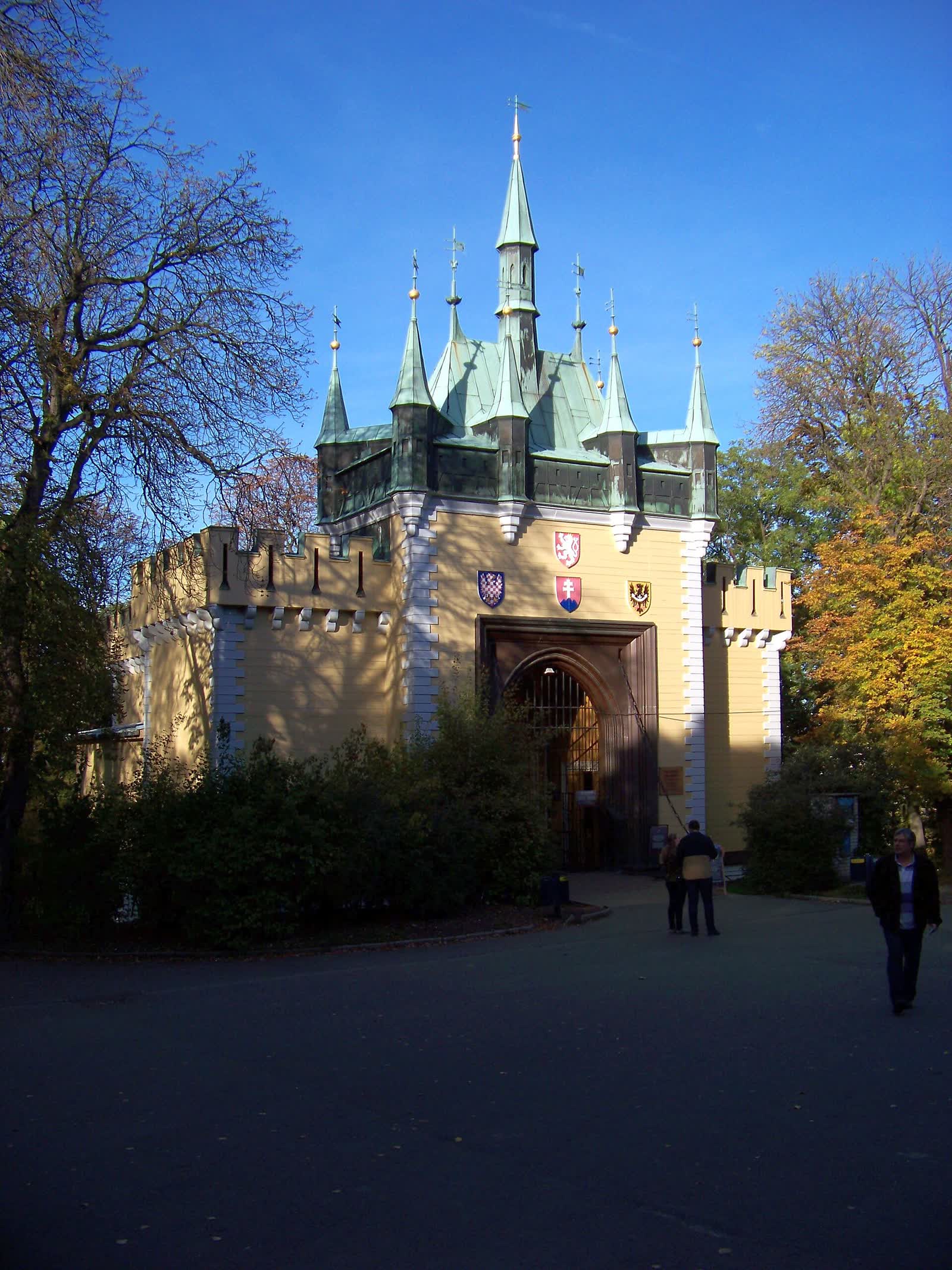
Two of the oldest surviving mazes were born at national exhibitions. The City of Prague’s history of the Petřín Mirror Maze says the building “opened on May 25, 1891, at the Jubilee Provincial Exhibition,” moved to Petřín Hill in 1892, and was then “outfitted with 35 mirrors and inaugurated as the Mirror Maze on May 14, 1893.”
Prague names its model: “The mirror maze at Prater in Vienna probably served as an inspiration.” Its maze replaced a peep-show panorama of stereoscopic slides and leads to a painted diorama of a 1648 battle on the Charles Bridge. A second room of convex and concave mirrors became a hall of laughter.
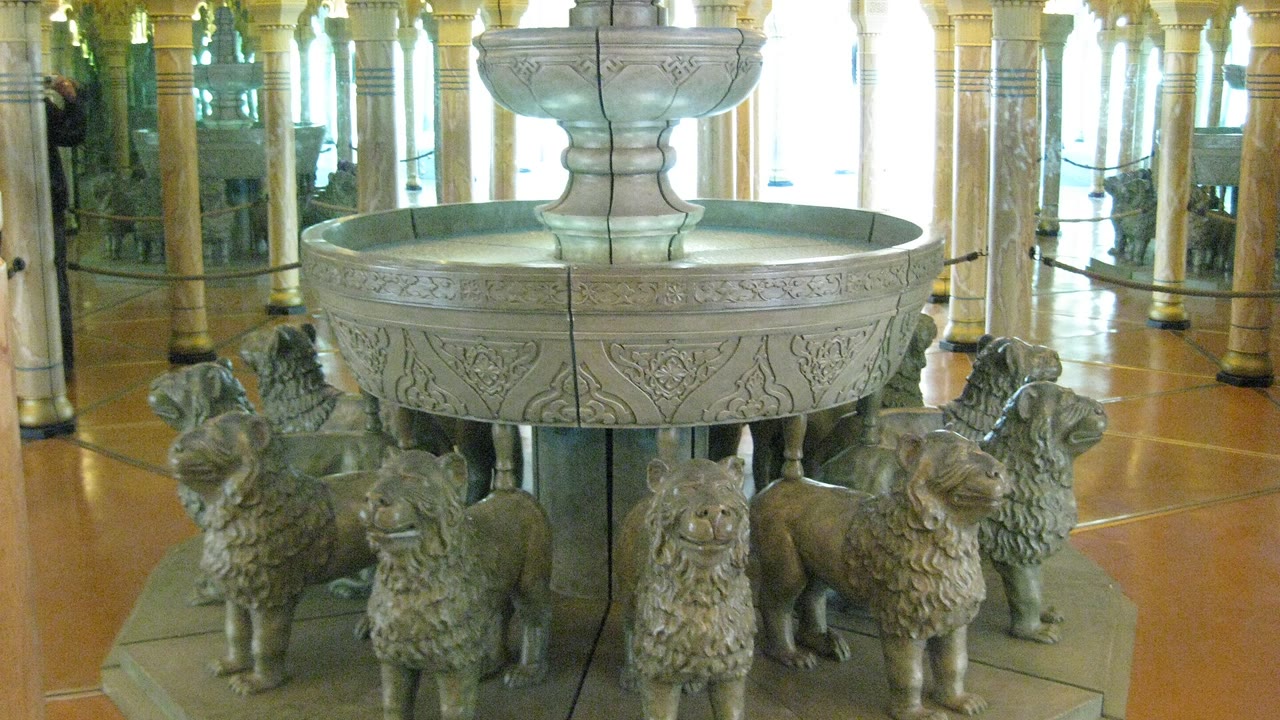
Lucerne’s maze, built in a Moorish style after the Alhambra in Granada, premiered at the 1896 national exhibition in Geneva. After a short stay at a Zurich hotel it was sold to Lucerne and opened in the Glacier Garden on June 25, 1899, the Lucerne paper zentralplus reported when it reopened in 2020.
Paris went bigger. At the 1900 Exposition the engineer Eugène Hénard showed a palace of mirrors, “un kaléidoscope géant,” later installed at the Musée Grévin. Strictly, it is a mirror hall rather than a maze.
Fairgrounds and amusement parks
San Francisco had a mirror maze in the 1890s. The National Park Service records that Merrie Way opened beside Sutro Baths in 1895 with rides moved from the 1894 Midwinter Exhibition, and “At its peak, Merrie Way had a Ferris wheel, roller coaster, indoor mirror maze and a ‘Haunted Swing.’” The fad was over by about 1910.
Amusement parks made the maze a fixture. At Rye Playland in New York, the ride historians at Laff in the Dark place “Lost in 1001 Troubles, a mirror maze opposite Magic Carpet and next to Laff In The Dark.” Its neighbouring funhouse had “rotating barrel, spinning disk and distorted mirrors,” the same family of tricks traced in funhouses, dark rides and Hardman’s Coney Island job.
How a mirror maze fools you
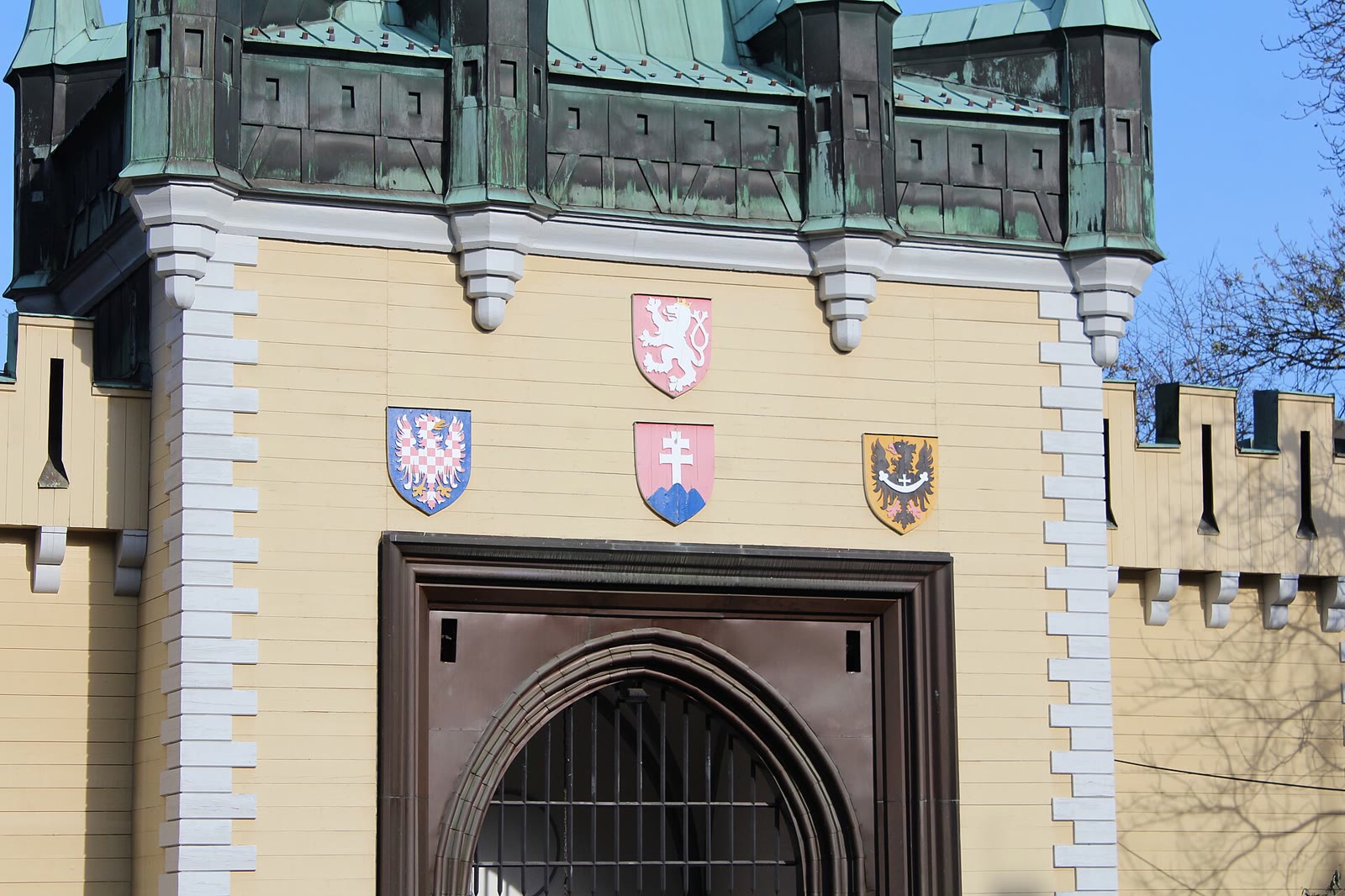
The trick is the grid. Because every mirror is the same width and sits on a side of an equilateral triangle, each reflection lines up with the real walls, and the eye reads them as corridors running on and on. Identical frames hide the joins, which is why Castan insisted on them.
Mirror mazes are often confused with two cousins: the funhouse mirror and the art-world infinity mirror rooms. The table separates them.
| Aspect | Mirror maze | Hall of laughter | Infinity mirror room |
|---|---|---|---|
| Mirrors | Flat, same size, on a triangle grid | Convex and concave, to distort the body | Flat mirrors on every wall, often with lights |
| What you do | Walk and get lost | Stand and laugh | Stand still and look |
| Where | Exhibitions, parks, fairs | The same buildings, as at Prague and Rye | Art museums |
| Example | Petřín, 1893; Lucerne, 1899 | Petřín’s 14 distorting mirrors | Kusama, 1965 |
Theatre in the maze
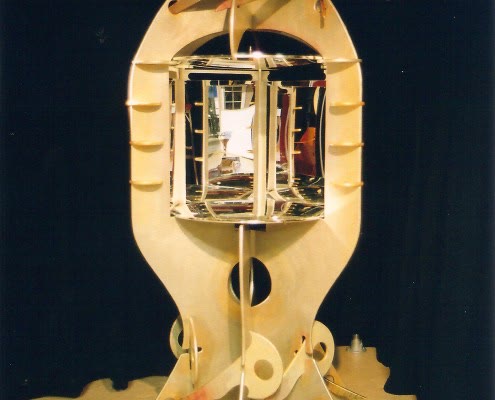
Antenna Theater never built a mirror maze, but its work offers a contrast. Chris Hardman served an apprenticeship at Coney Island, and the company archive says: “Coney island was, no doubt, an inspirations, not only for mazes but also an ongoing interests in mirror illusions” (spelling as written).
Antenna’s mazes were theatre: walk-through rooms with sets, recorded sound and a story, where mirrors were one trick among many. In Euphor!um, Antenna’s walk-through Kubla Khan, Kate Bassett of The Independent wrote in 2002, “An optical box of tricks is slipped over your head creating a mini-hall of mirrors.” A real mirror maze offers no story at all: the reflections are the whole show.
Black lights and Pier 39
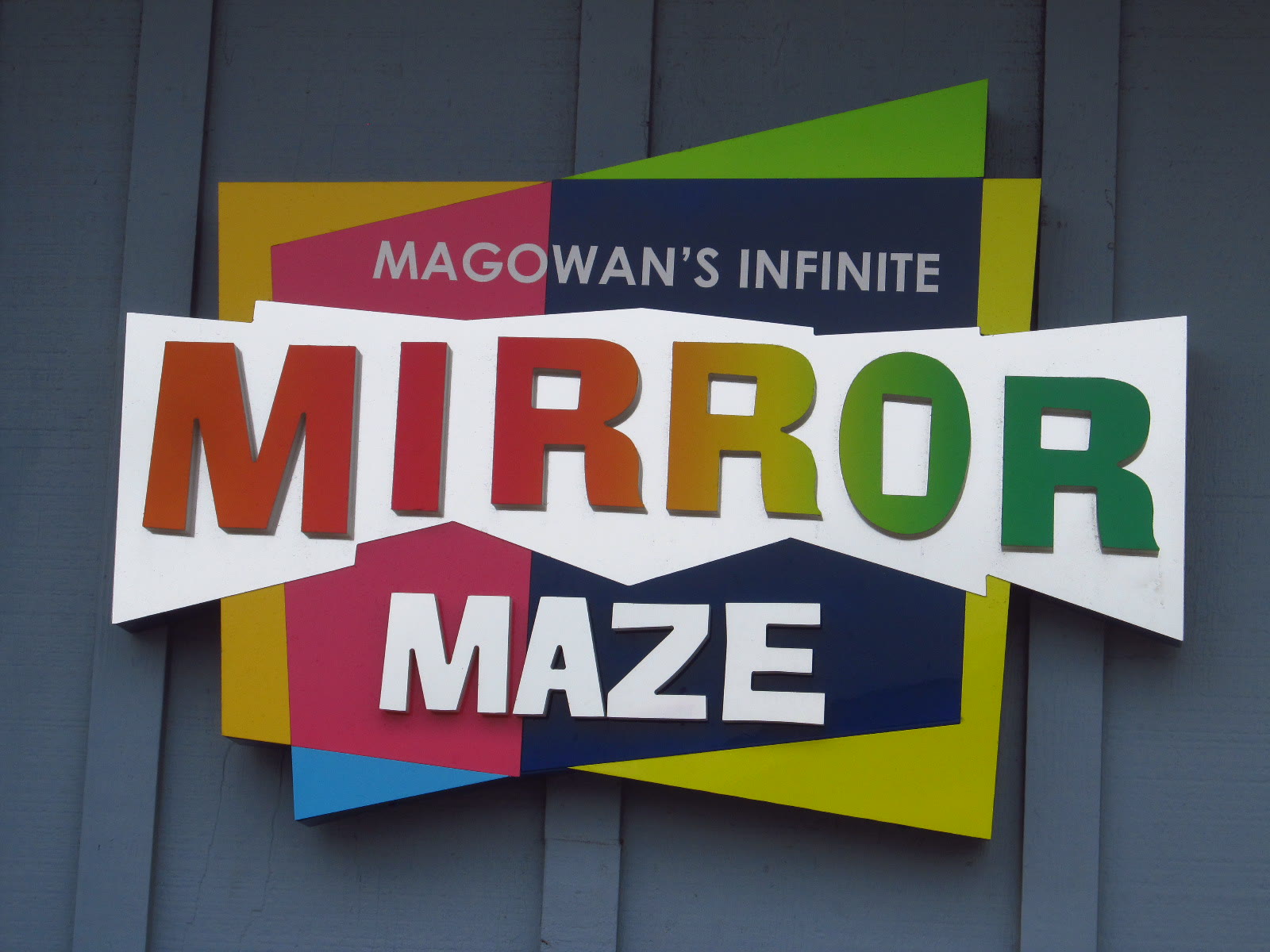
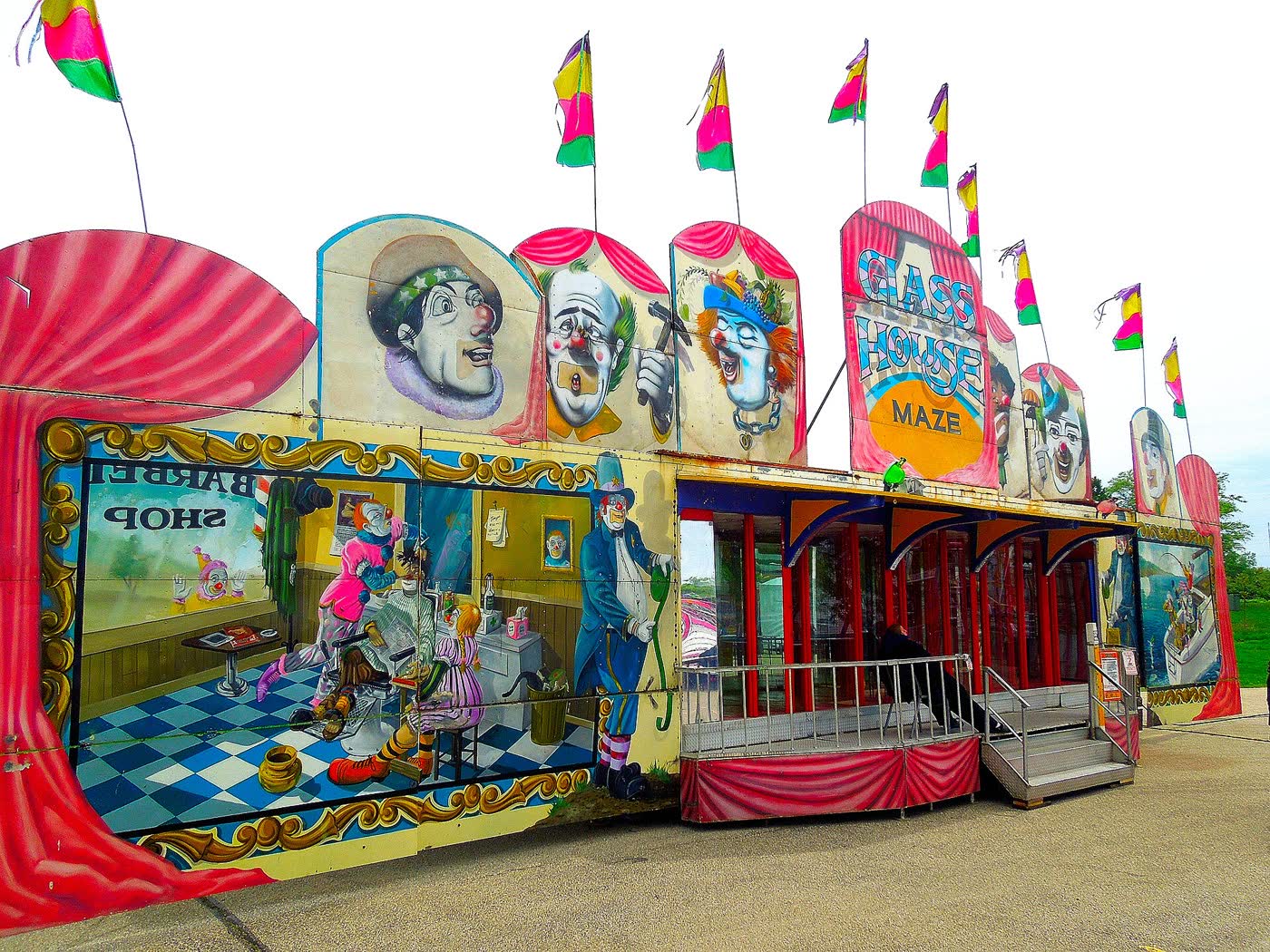
San Francisco has a mirror maze again. AFAR describes Magowan’s Infinite Mirror Maze at Pier 39 as a “labyrinth of 77 mirrors and black lights” that “is reminiscent of a carnival fun house,” a “2,000-square-foot kaleidoscope” created by Charles Magowan. The pier’s own page quotes SF Weekly calling it “possibly the most psychedelic place one can legally reach within the city limits.”
Walk-in worlds now come in many forms, from the history of Meow Wolf’s art worlds to the history of immersive exhibitions. Antenna’s own walk-through experiments are in Walkmanology and Antenna’s new theater forms.
| Year | Event | Source |
|---|---|---|
| 1678-1684 | Versailles’s Hall of Mirrors built, a gallery, not a maze | Château de Versailles |
| 1888 | Gustav Castan patents a mirror maze in France and Belgium (England 1889) | US Patent 545,678 |
| 1893 | Prague’s exhibition pavilion opens on Petřín as a mirror maze; a rival US patent | City of Prague; US Patent 507,159 |
| 1895 | Merrie Way at Sutro Baths, San Francisco, with an indoor mirror maze | National Park Service |
| 1896-1899 | Moorish maze shown in Geneva, then opened in Lucerne’s Glacier Garden | zentralplus |
| 1900 | Hénard’s mirror palace at the Paris Exposition | Paris Zigzag |
| Today | Magowan’s Infinite Mirror Maze, Pier 39: 77 mirrors and black lights | AFAR |
Frequently asked questions
Did Peter Stuyvesant build the first mirror maze?
No. The story says he copied Versailles’s Hall of Mirrors, but that hall was begun in 1678 and Stuyvesant died in 1672.
How do mirror mazes work?
Identical mirrors stand on the sides of equilateral triangles, so the reflections line up into what look like endless corridors.
What is the oldest mirror maze you can still visit?
Two from the 1890s survive: Prague’s Petrin maze, opened in 1893, and Lucerne’s Glacier Garden maze, built for Geneva in 1896 and in Lucerne since 1899.
Is there a mirror maze in San Francisco?
Yes, Magowan’s Infinite Mirror Maze at Pier 39, with 77 mirrors and black lights. The city also had one in the 1890s on Merrie Way beside Sutro Baths.