
The History of the Planetarium, From Munich to San Francisco
The history of the planetarium is usually told as a story of optics and gears. It is also the story of a theatre: a darkened room, an audience in the round and a show that has changed from live lecture to electronic concert to laser rock and digital film. This guide follows the dome from Munich to San Francisco.
Quick answer
When was the first planetarium?
The first projection planetarium opened at the Deutsches Museum in Munich on 7 May 1925. Its Zeiss projector, first lit in Jena in 1923, threw 4,500 stars onto a dome. Chicago’s Adler Planetarium followed in 1930, Griffith Observatory in Los Angeles in 1935 and San Francisco’s Morrison Planetarium in 1952.
Before projection: globes and spheres
Before anyone projected a sky, people built one to sit inside. The Atwood Sphere, designed by Dr. Wallace Atwood for the Chicago Academy of Sciences, debuted in 1913. The Adler Planetarium now calls it “the oldest sky simulator in the world still operating.”

Interest in the sphere declined “from 1930 onwards due to the opening of the more sophisticated Adler Planetarium.” Projection had taken over.
The miracle of Jena: Zeiss and the Deutsches Museum (1913-1925)
The idea came from Oskar von Miller of the Deutsches Museum, around 1913 (IEEE Spectrum dates his question to 1912). The museum records that he “approached Zeiss in 1913 concerning the manufacturing of a ‘rotating star sphere’,” and that in 1914 “he came up with the groundbreaking idea of making these functions possible through projection.”
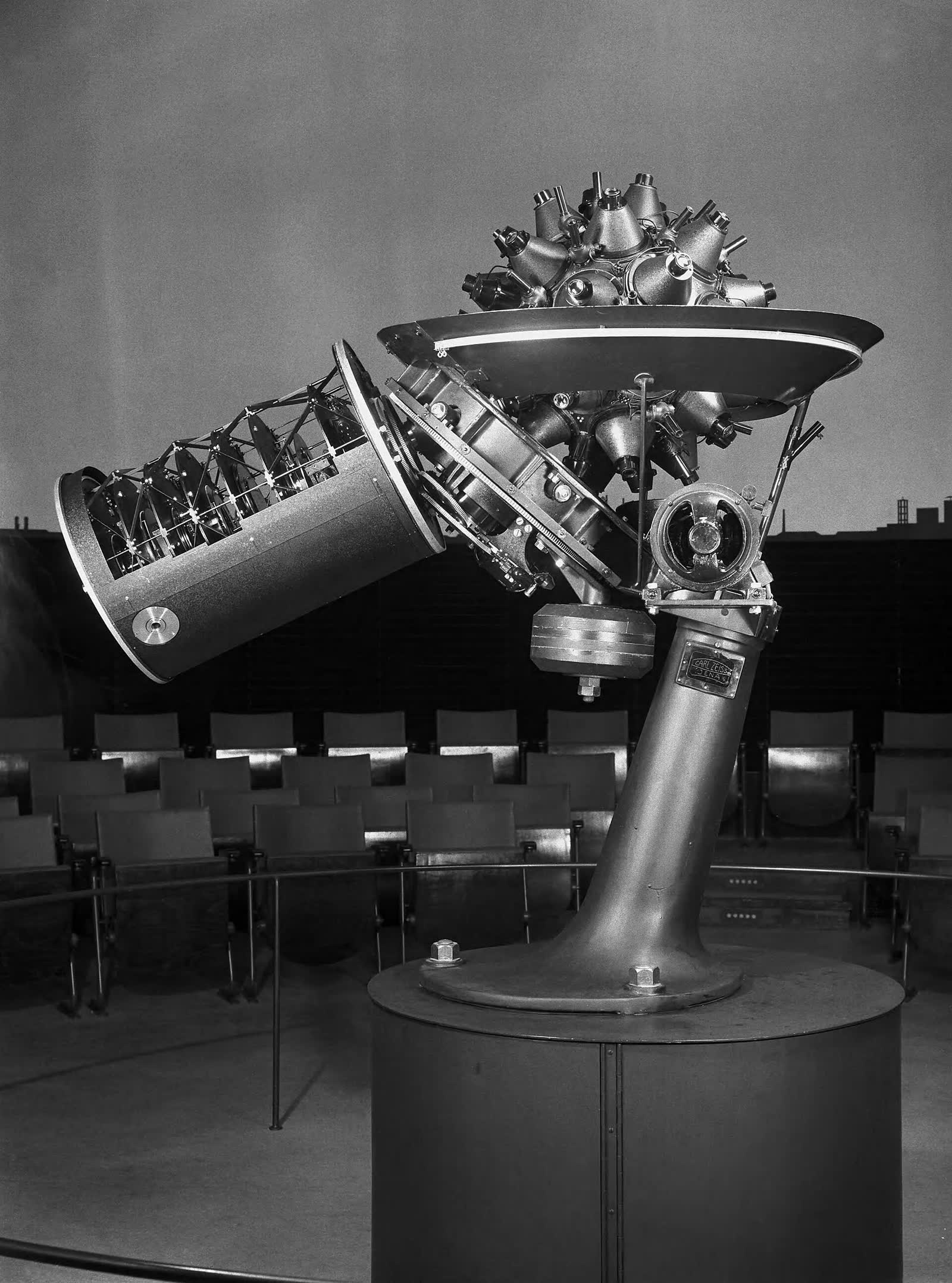
World War I delayed the work. “The world’s first planetarium projector was developed and built by Zeiss between March 1919 and July 1923,” under the engineer Walther Bauersfeld. IEEE Spectrum describes it as “a concatenation of many smaller projectors and a host of gears,” tested under a dome built on the roof of the Zeiss works.
The sources give two 1923 milestones. The Deutsches Museum says “In the summer of 1923, the first artificial starry sky shone in Jena”; Zeiss dates Bauersfeld’s presentation of the projector in Munich to 21 October 1923. The public opening came on 7 May 1925, when “The first Zeiss projector illuminated the dome in Munich with 4500 stars.”
The Deutsches Museum’s own history of its planetarium counts “more than 8.5 million visitors” since. That first projector is the answer to the question of the first planetarium projector, and its descendants spread fast.
The dome crosses the Atlantic: Adler and Griffith
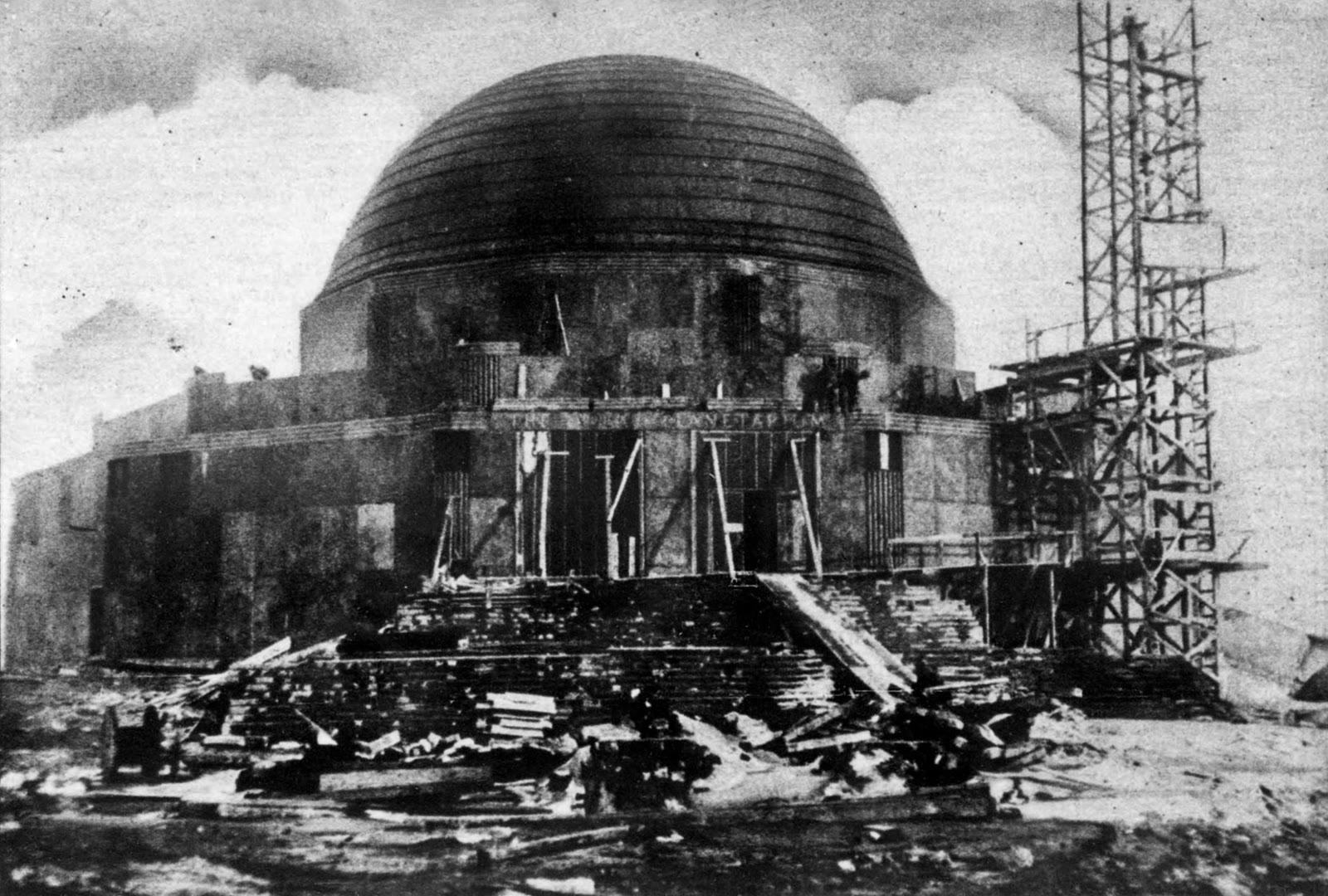
On May 12, 1930, “The Adler Planetarium, the first planetarium in the western hemisphere, opened to the public.” The Chicago business leader Max Adler paid for the building and its Zeiss projector.
Los Angeles followed. “When the Observatory opened in 1935, its planetarium was the third in the U.S., and the first on the Pacific rim,” Griffith Observatory says. Its Zeiss Mark II projector was replaced by a Mark IV in 1964, and Griffith “remains one of the only theaters in the world to present all programs live.”
The Theater of the Stars: Morrison Planetarium, San Francisco
Morrison planetarium history starts on November 8, 1952, in Golden Gate Park. The California Academy of Sciences says it “was the first American-made planetarium star projector for a large dome,” under a dome 65 feet across.
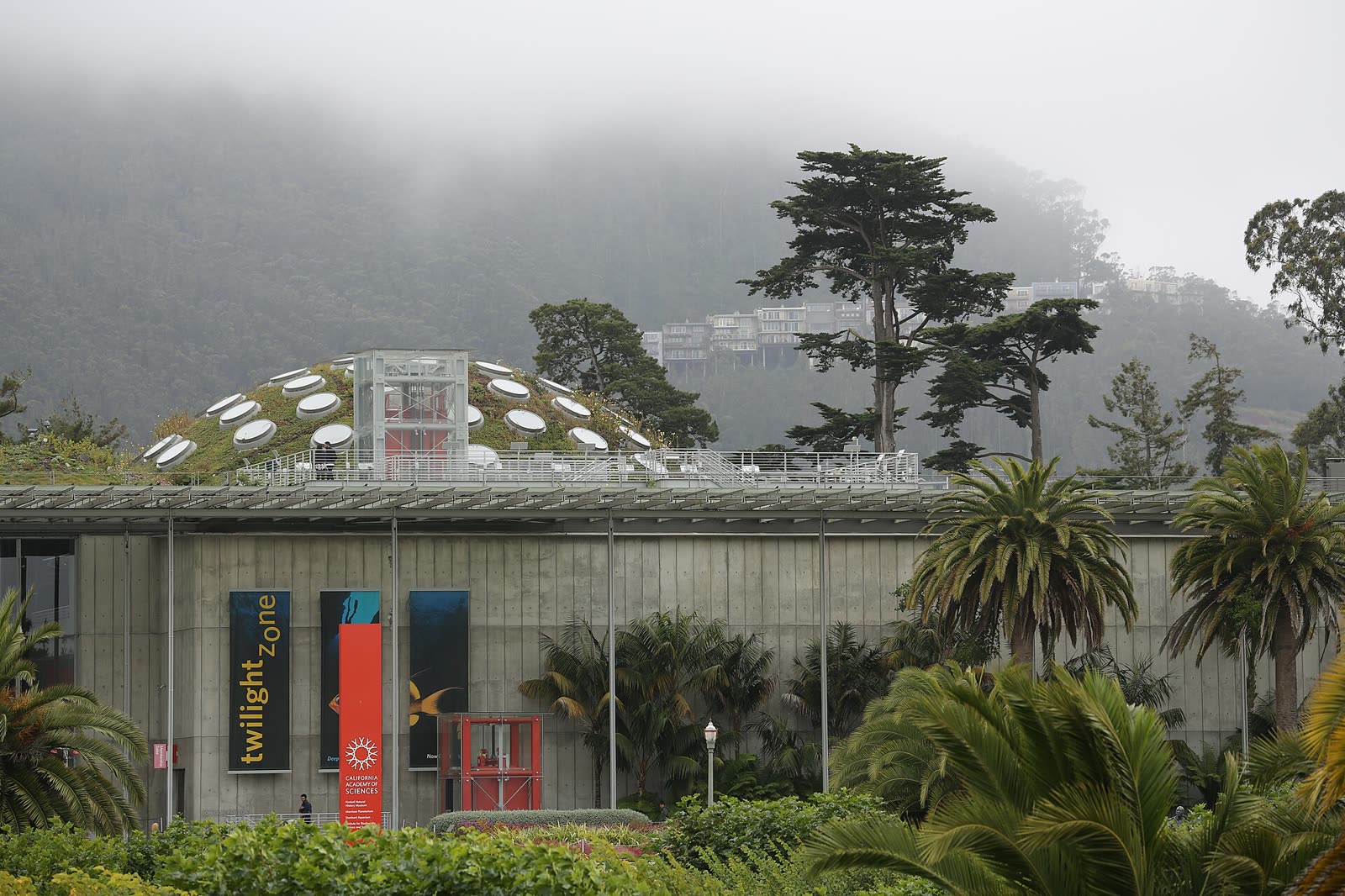
The room worked like theatre in the round. “All the seats faced the star projector at the center of the theater,” giving “a sense of sitting around a campfire on a starry night.” Shows “were operated manually by a live lecturer who turned things on and off while speaking,” and an early automation system “was great at turning things on, but not so good at turning them off.”
Vortex: sound and light under the dome (1957-1959)
The Vortex concerts at Morrison Planetarium began in May 1957: “a series of electronic music concerts illuminated by various visual effects.” Henry Jacobs curated the music, and Jordan Belson made illusions on the dark dome, “at times using up to 30 projection devices.” Jacobs used the speakers spread around the dome to send sound swirling about the audience.
“Five Vortex series were performed through 1959, with over 38 concerts,” before management “cancelled in 1959.” The Academy’s own account says administrators thought Vortex drew the “wrong kind of crowd.” Its legacy, says SFMOMA’s Open Space, shows in “1960s psychedelic light shows, live multiple-projector shows, and VJ culture.”
From lecturer to laser to digital
Laserium “premiered in Los Angeles in 1973, then came to San Francisco the following year,” running at Morrison from 1974 to 1979 and again from 1983 to 2000. In January 1974 the Adler premiered “Comet Tales,” its “first pre-recorded planetarium show.” The live lecturer was no longer the only voice in the dark.

Digital projection came next. The Adler opened “the world’s first all-digital, interactive planetarium theater” in 1999. The California Academy of Sciences’ history of the Theater of the Stars records that the original Morrison “was retired at the end of 2003, after 51 years of continuous operation,” and reopened as an all-digital dome in 2008.
| Kind of show | Who runs it | Example |
|---|---|---|
| Live sky lecture | A lecturer at the console | Morrison from 1952; Griffith still all live |
| Light-and-sound concert | A composer and a visual artist | Vortex, 1957-1959 |
| Laser show | A laser operator, to recorded music | Laserium at Morrison, 1974-2000 |
| Recorded or digital show | A pre-recorded soundtrack, then digital projection | Comet Tales, 1974; all-digital domes, 1999 and 2008 |
The form keeps growing. “Today more than 4,000 planetariums are in operation globally,” according to IEEE Spectrum’s 2024 history. Its cousins are panoramas and immersive exhibitions, the history of the diorama and, in a hands-on key, the history of the Exploratorium.
Taking the universe out of the dome: Antenna’s Sands of Time
A planetarium seats its audience under a projected sky and narrates the cosmos to them. Antenna Theater’s Sands of Time did the opposite, as a contrast rather than a borrowing: no source links Antenna to any planetarium. The Marin Independent Journal called it “a 1,300-foot walk along Rodeo Beach and through 13 billion years of cosmic history.”

Geotimes reported: “Under an almost full moon, they traversed a triangle across the beach while listening to a soundtrack from portable audio players hanging around their necks.” The full story is in Sands of Time, Antenna’s walk through 13 billion years.
| Aspect | Planetarium show | Sands of Time (1998-2002) |
|---|---|---|
| Sky | Projected, 4,500 stars in 1925 | The real night sky |
| Audience | Seated, facing the projector | Walking 1,300 feet of beach |
| Narration | Live lecturer or recorded show | Recorded soundtrack on Walkmans |
| Subject | The sky and the solar system | 13 billion years of cosmic history |
Frequently asked questions
Who invented the planetarium projector?
Zeiss engineers led by Walther Bauersfeld built it between March 1919 and July 1923, for Oskar von Miller’s Deutsches Museum in Munich.
What was the first planetarium in the United States?
The Adler Planetarium in Chicago, which opened on May 12, 1930, as the first planetarium in the western hemisphere.
What were the Vortex concerts?
Electronic music with projected visuals on the Morrison Planetarium dome in San Francisco, curated by Henry Jacobs with images by Jordan Belson. Over 38 concerts ran from 1957 to 1959.
Are planetarium shows live or recorded?
Originally live. The Adler premiered its first pre-recorded show in 1974, while Griffith Observatory still presents all of its programs live.
Before the projector, there was the lantern: read the history of the magic lantern and its painted slides, or explore Walkmanology and Antenna’s other new theater forms.