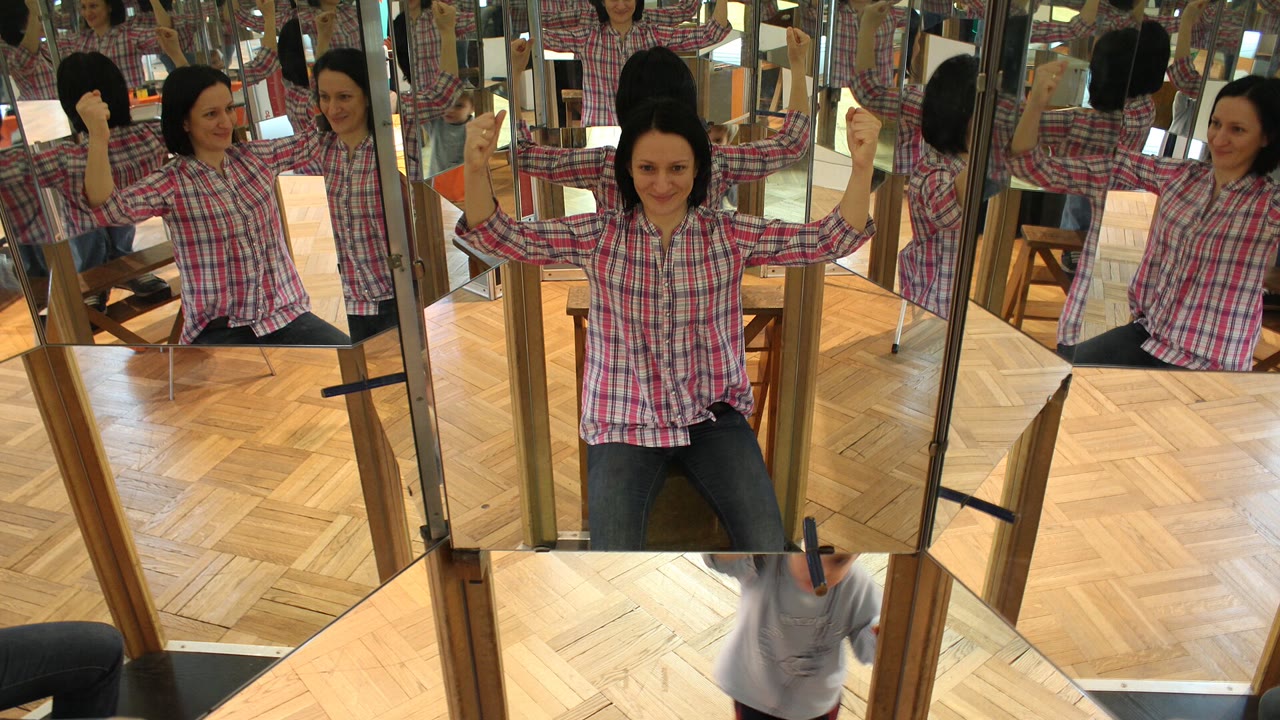
A History of Infinity Mirror Rooms: Kusama, Samaras and the Room That Goes On Forever
Step into a dark room lined with mirrors and the walls seem to fall away into endless space. The history of infinity mirror rooms begins in New York in the mid 1960s, with two artists who reached the idea months apart, and runs through a long silence to the queues of the 2010s.
Quick answer
What is an infinity mirror room?
An infinity mirror room is an artwork lined with mirrors so its contents and visitors seem to repeat forever. Yayoi Kusama made the first, Phalli’s Field, in New York in 1965; Lucas Samaras’s walk-in Mirrored Room followed in 1966. The reflections fade, because every mirror absorbs a little light.
Why two mirrors look like forever
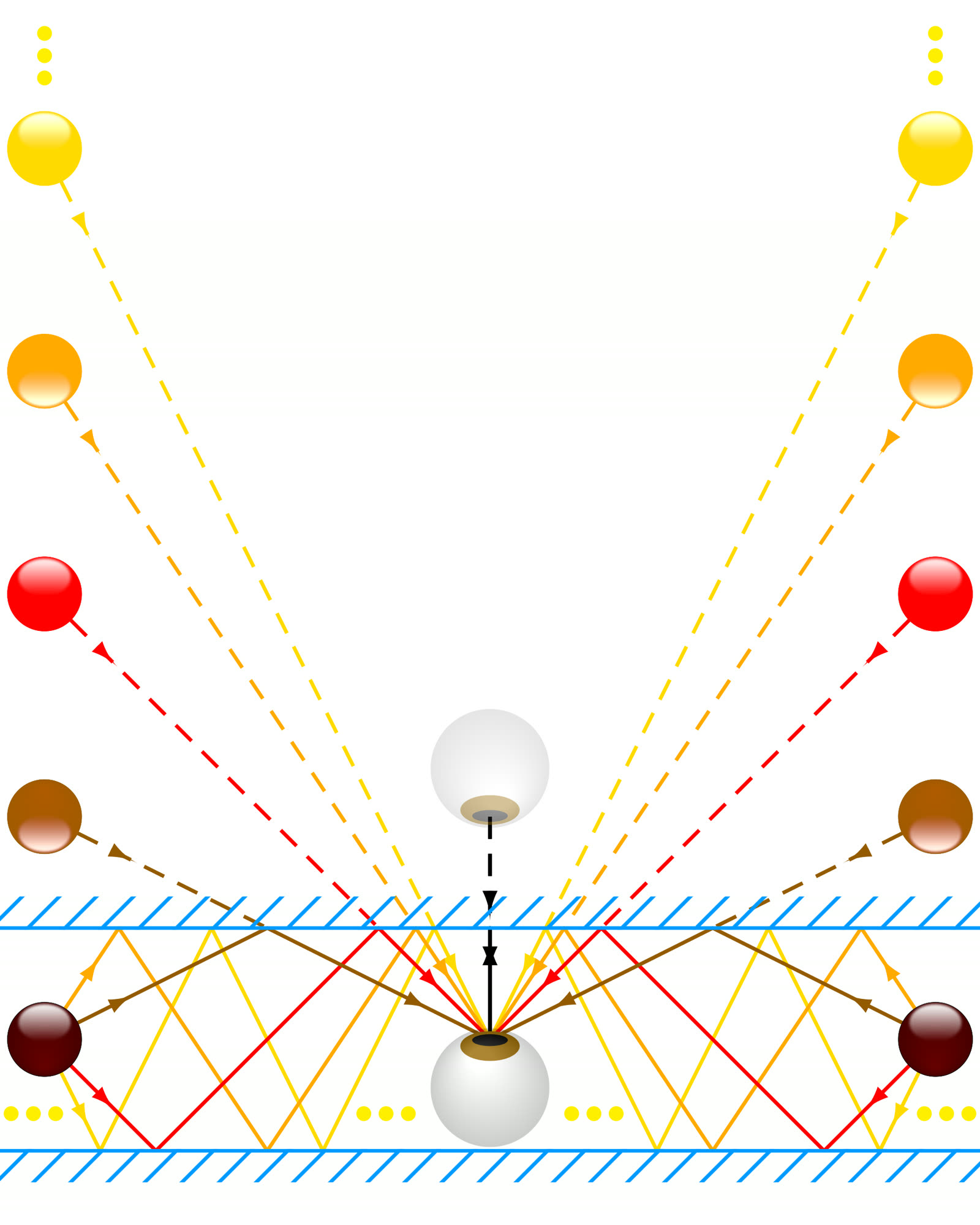
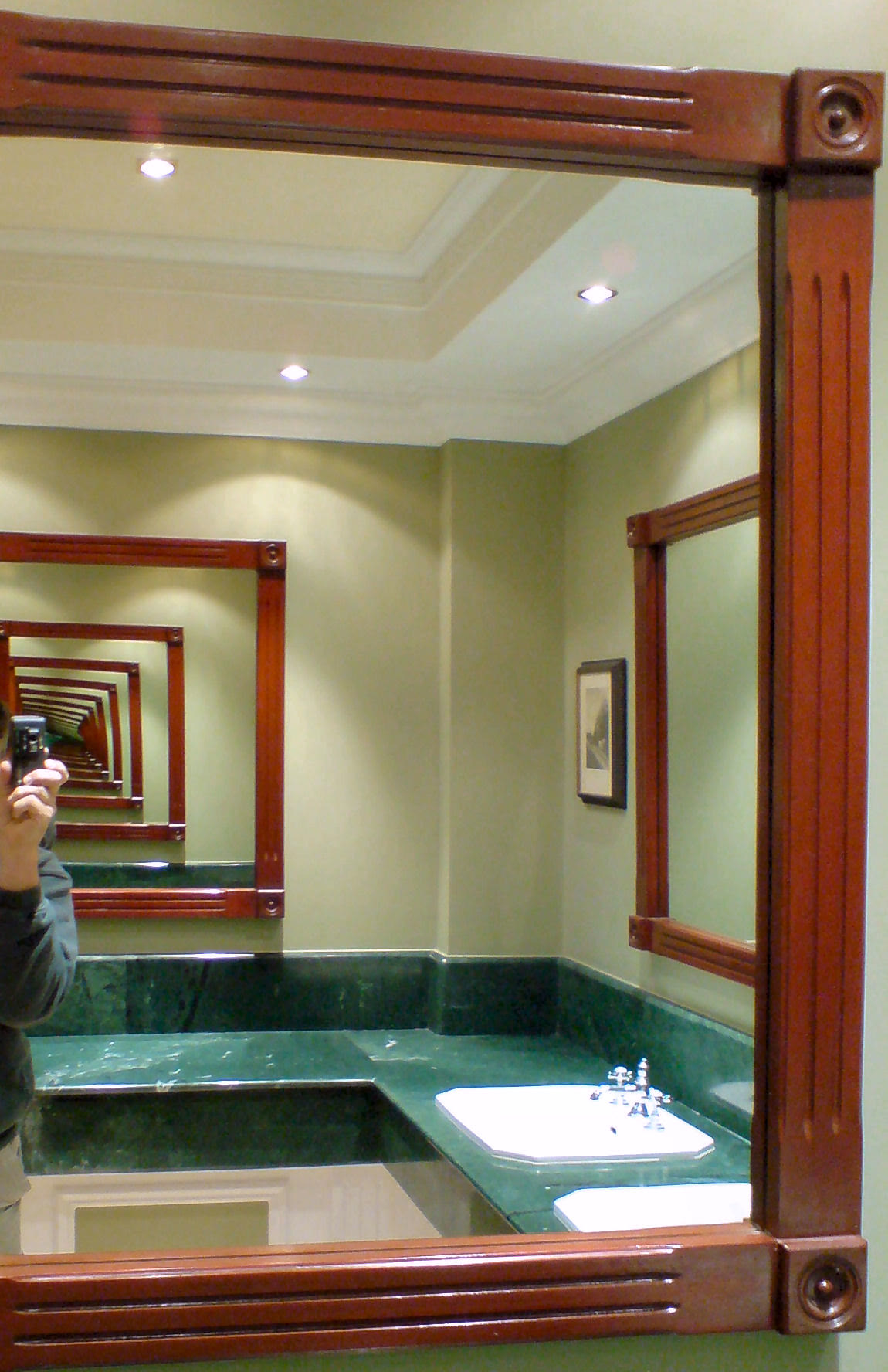
Every infinity mirror room rests on one trick: two mirrors facing each other. Light bounces from one to the other and back, and each bounce makes a fresh image a little farther away, so the room seems to open into a tunnel.
The tunnel is not truly endless. In BBC Science Focus’s answer on whether facing mirrors make infinite reflections, Robert Matthews explains that the reflections “get progressively darker and fade into invisibility long before they get there. That’s because mirrors absorb a small fraction of the energy of the light striking them each time.” In practice, “even the best mirrors are unlikely to generate more than a few hundred visible reflections.”
Most of us know the effect from what Matthews calls “multiple reflections formed by opposing mirrors in lifts, washrooms and the like.” The artists put a person, and a world of objects, between the glass.
1965: Kusama’s Phalli’s Field
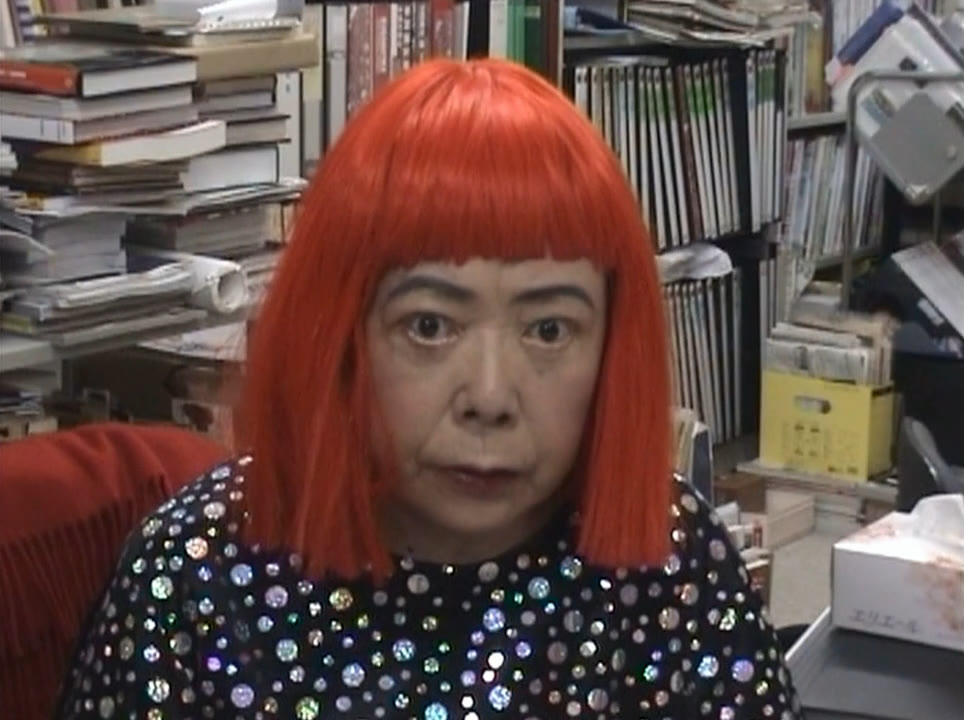
Yayoi Kusama (1929-2026) came to New York from Matsumoto, Japan, and was already painting her endless Infinity Nets. Tate Etc. says that “to achieve her desired effect of endless accumulation, she began incorporating mirrors into her work.”
In 1965 she made “her first Infinity Mirror Room: Phalli’s Field, a room-sized installation lined with mirrors that reflected the viewer to infinity.” It appeared in the exhibition Floor Show at the Castellane Gallery in New York. “On the floor were several hundred phallic protuberances, sewn from red and white polka-dot fabric and stuffed with wadding.”
The mirrors solved a practical problem too. The Hirshhorn curator Betsy Johnson told Smithsonian Magazine that Kusama found “the physical assembly of so many soft, phallic objects to be exhausting” and hit on a “mirrored environment as a way to have it go on and on and on for infinity”.
Peep Show, 1966
A year later the mirrors closed in. Peep Show, also called Endless Love Show, was “A mirrored hexagonal room with coloured lights that flashed in time to piped-in rock and roll”, in a description quoted by the People’s Graphic Design Archive. Like its namesake, it was seen through slots at eye level, so visitors looked into infinity without entering it. Kusama made several more mirror works before she returned to Japan in 1973.
1966: Lucas Samaras walks in
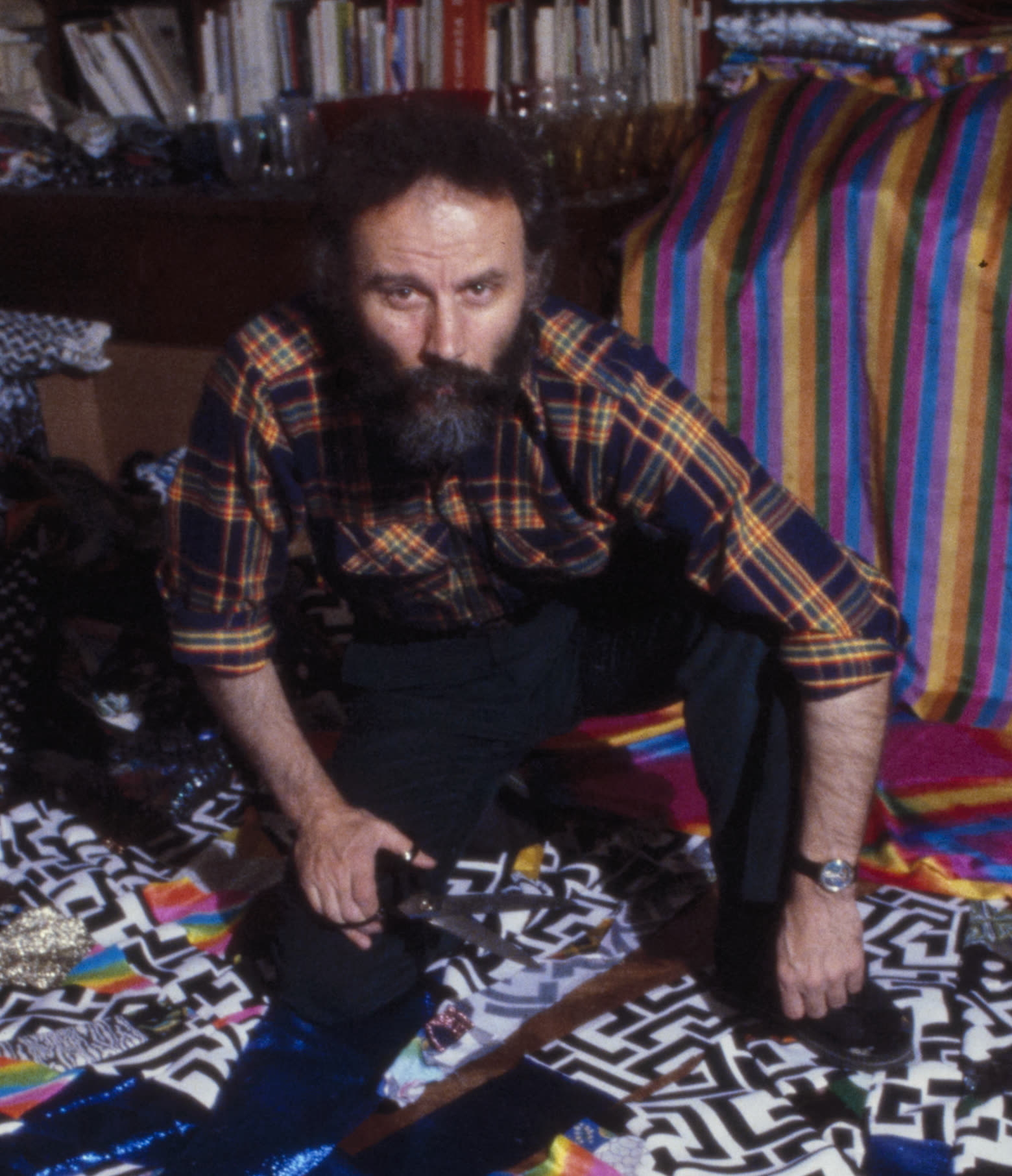
Lucas Samaras, born in Greece in 1936, came from a different scene. He studied under Allan Kaprow and George Segal, and the Buffalo AKG Art Museum says “his involvement with Happenings” shaped his sculpture, a link back to the Happenings where Samaras began. He reached the idea, the museum says, “in 1963 while writing a short story in which the character lived in a mirrored house.”
Mirror boxes came first, and Pace Gallery calls the room “A culmination of his mirrored boxes”. Mirrored Room, also known as Room No. 2, is mirror on wood, 96 by 96 by 120 inches, and you walk into it. Bought by the Albright-Knox in 1966, it was “his first installation to become a part of a museum collection”.
Samaras put the feeling into words in a 1968 letter: “this feeling of suspension, this feeling of polite claustrophobia or acrophobia, this feeling of fakery or loneliness seems complex”. The Buffalo AKG guide to Samaras’s Mirrored Room adds that “This artwork is best appreciated when people are reflected in it.”
Kusama had shown the first infinity room in 1965, and Samaras’s room followed in 1966. She felt he had taken her idea: Smithsonian Magazine writes that “Kusama was so aggrieved by his actions” when his room opened seven months after hers. The Buffalo guide dates his own idea to that 1963 story.
The return: pumpkins, LEDs and queues
After those early rooms, Tate Etc. notes, “it would be 25 years before Kusama would return to making her infinite worlds. In 1991, she made Mirror Room (Pumpkin) for a solo exhibition in Japan.” She showed it again at the Venice Biennale in 1993, an appearance that Smithsonian says “felt like a coronation”.
Light-emitting diodes changed the rooms. Filled with the Brilliance of Life (2011) “features hundreds of colourful, pulsing LEDs that reflect around the mirror walls and in the shallow pool of water covering the floor.” The Broad’s 2013 room lists LED lighting, acrylic balls and water among its materials.
Then came the crowds. Tate Etc. says “millions of visitors have queued to get a glimpse of what the artist describes as ‘Kusama World’.” The Hirshhorn’s 2017 show “smashed attendance records”, and The Broad told Hyperallergic that waits ran “from just a few minutes to several hours”.
The history of infinity mirror rooms in six works
Set side by side, the landmark rooms show the form moving from soft sculpture to light and water.
| Year | Work | Artist | What it was |
|---|---|---|---|
| 1965 | Infinity Mirror Room (Phalli’s Field) | Yayoi Kusama | Mirror-lined room with a floor of stuffed polka-dot forms |
| 1966 | Peep Show (Endless Love Show) | Yayoi Kusama | Mirrored hexagonal room seen through eye-level slots |
| 1966 | Mirrored Room (Room No. 2) | Lucas Samaras | Walk-in room of mirror on wood, bought by the Albright-Knox |
| 1991 | Mirror Room (Pumpkin) | Yayoi Kusama | Her return to mirror rooms, for a show in Japan |
| 2011 | Filled with the Brilliance of Life | Yayoi Kusama | Pulsing LEDs, mirror walls and a shallow pool |
| 2013 | The Souls of Millions of Light Years Away | Yayoi Kusama | Mirrors, LED lighting and water, at The Broad |
Infinite mirrors in theatre: Antenna’s contrast case
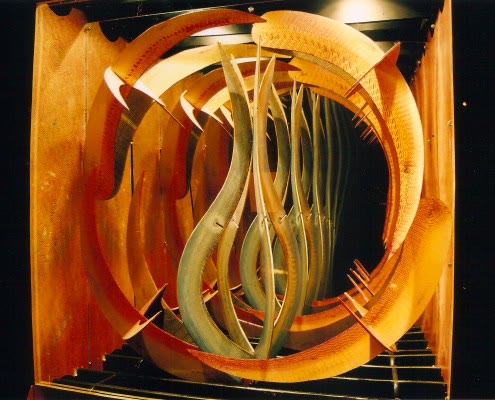
Antenna Theater enters the history of infinity mirror rooms only as a contrast: it never built a Kusama-style room, and its infinite mirrors were one effect among many. The company’s chronology lists infinite mirrors, digital audio and Coney Island funhouse tricks among the ingredients of Euphor!um, Antenna’s walk-through Kubla Khan.
Chad Jones of the Oakland Tribune followed the route to its end in 2001, where “another shadowy figure approaches to remove the helmet and guide you into a sort of debriefing salon outfitted with spinning mirrors and floating text.” The helmet belonged to a different trick, partial reflection in angled glass, which is the story of Pepper’s ghost, the older stage trick of glass and reflection.
Mirrors returned in Hardman’s exhibition of mirror sculptures and infinite reflections, billed as “An art exhibition exploring perception and dimensionality by Chris Hardman.” It sits among Hardman’s mirror illusions and exhibitions in the company archive.
The difference is the mirror’s job. In Kusama’s and Samaras’s rooms the endless space is the artwork. In Antenna’s work it served a story or a lesson in perception, closer to installations you walk into that work as theatre, or to the diorama, another scene built to be looked into. Both lines belong to the new theater forms Antenna explored.
Frequently asked questions
Who made the first infinity mirror room?
Yayoi Kusama, with Infinity Mirror Room (Phalli’s Field), shown in the exhibition Floor Show at the Castellane Gallery in New York in 1965.
What was Lucas Samaras’s Mirrored Room?
A walk-in room of mirror on wood, made in 1966 and bought that year by the Albright-Knox in Buffalo. It was the first of his installations to enter a museum collection.
Are the reflections really infinite?
No. Each mirror absorbs a little light, so the images grow darker, and even the best mirrors give no more than a few hundred visible reflections.
Did theatre use infinite mirrors too?
Yes. Antenna Theater’s Euphor!um listed infinite mirrors among its effects and ended in a salon with spinning mirrors and floating text.