Squat Theatre in New York: A Storefront Where the Street Was the Backdrop
Squat Theatre in New York played to two audiences at once: the people on risers inside a storefront and the people walking past its window on West 23rd Street. The company had been banned at home in Hungary and arrived in Manhattan in 1977. Here is its story from Budapest apartments to a lost lease, with the dates the sources give.
Quick answer
What was Squat Theatre?
Squat Theatre was a Hungarian collective, banned from public performance at home, that from 1977 to 1985 lived and performed in a storefront at 256 West 23rd Street in Manhattan. Its audience faced a plate-glass window, so the street outside became the backdrop and passersby became a second audience.
Apartment theatre in Budapest (1969-1976)
The group began as the Kassák House Studio, formed in Budapest by Anna Koós, Péter Halász and Stephan Balint. The company archive says it began in 1969; Electronic Arts Intermix, in its biography of Squat Theatre, gives 1970.
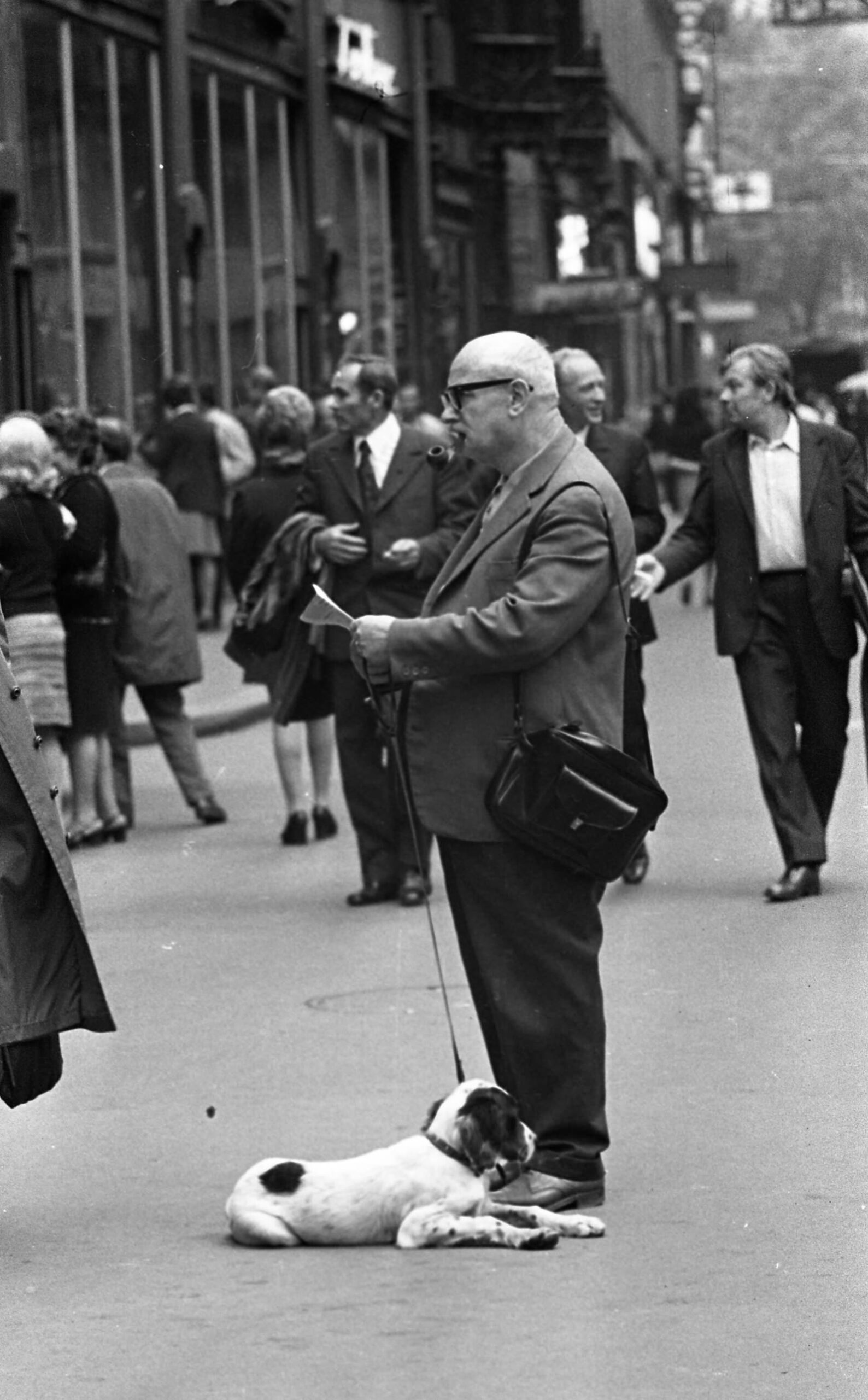
In 1972 the authorities banned it from public performance, and for four years it worked in members’ apartments, stairwells, streets and the countryside. Its passports were taken after a performance in Wroclaw, Poland, in 1973. In 1976, by one account, “the authorities gave them the ‘choice’ to either cease doing theater or leave the country and never return.” They left for France early that year.
A storefront in Rotterdam, then New York (1977)
“Calling itself Elephant Theatre, the troupe performed in western Europe for one year.” In Paris the artist Tamás Szentjóby suggested the name Squat, and Don Shewey later wrote that it fitted a company able to make “a theater and a home from unoccupied space.”
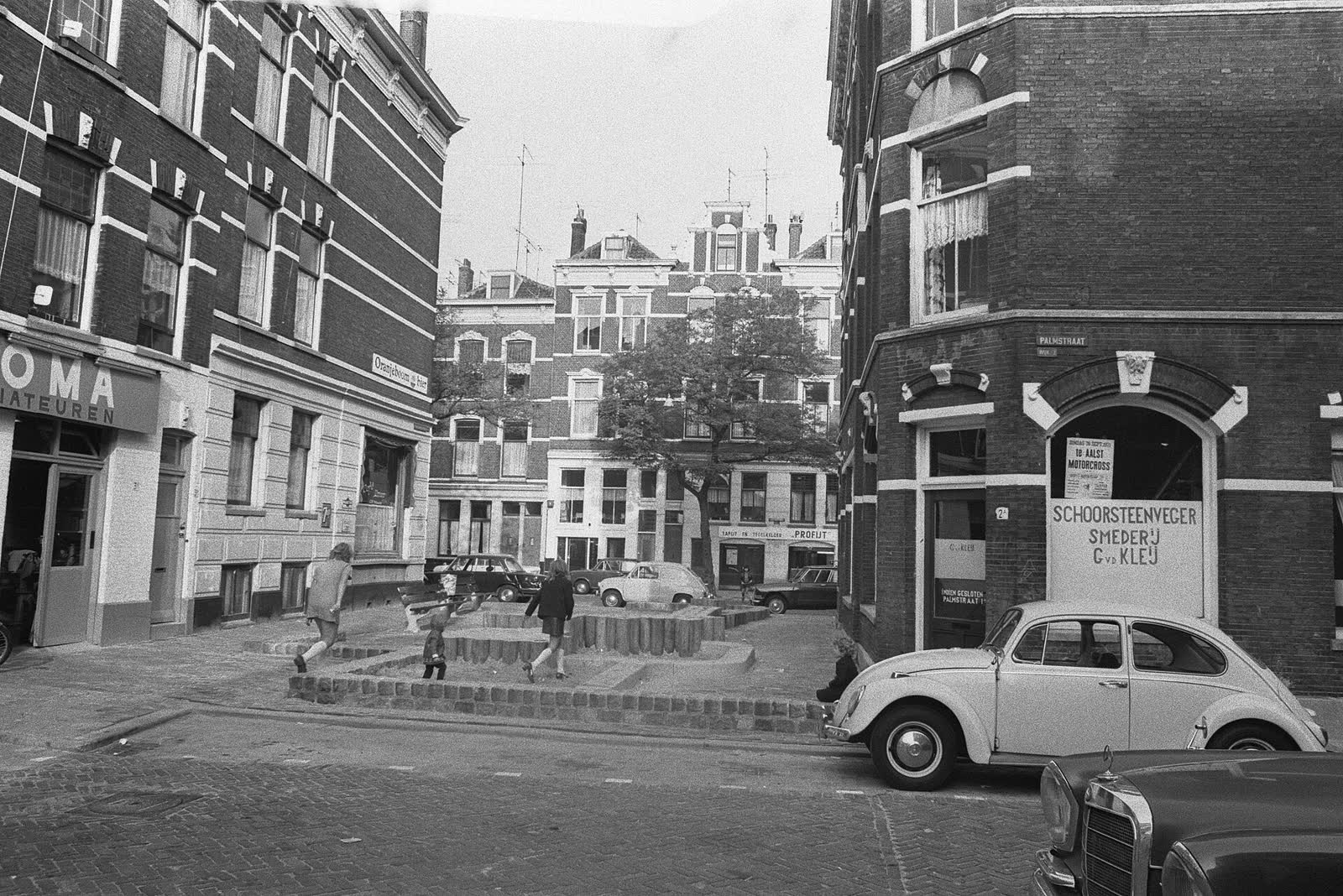
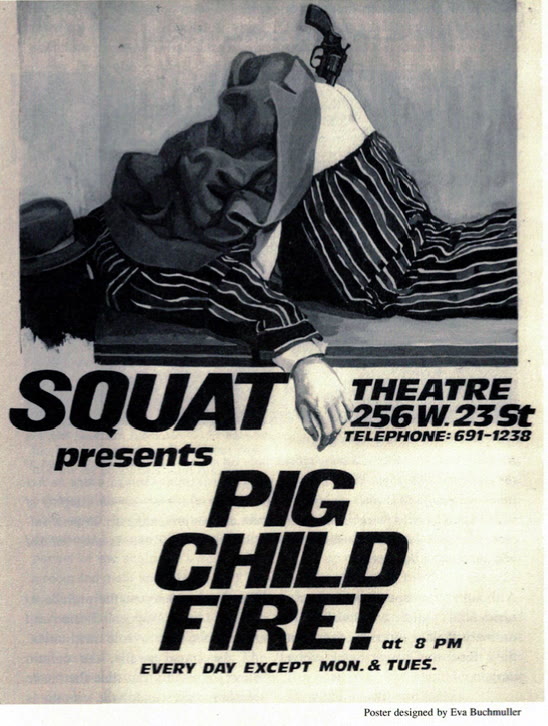
In spring 1977, commissioned by the Rotterdam Arts Council, “the company presented their first storefront play,” Pig, Child, Fire! In June they moved to the United States, playing a garage in Baltimore and a storefront at the Shiraz Festival of Arts in Iran. They reached New York in July and first stayed at the Hotel Chelsea.
Squat Theatre on 23rd Street
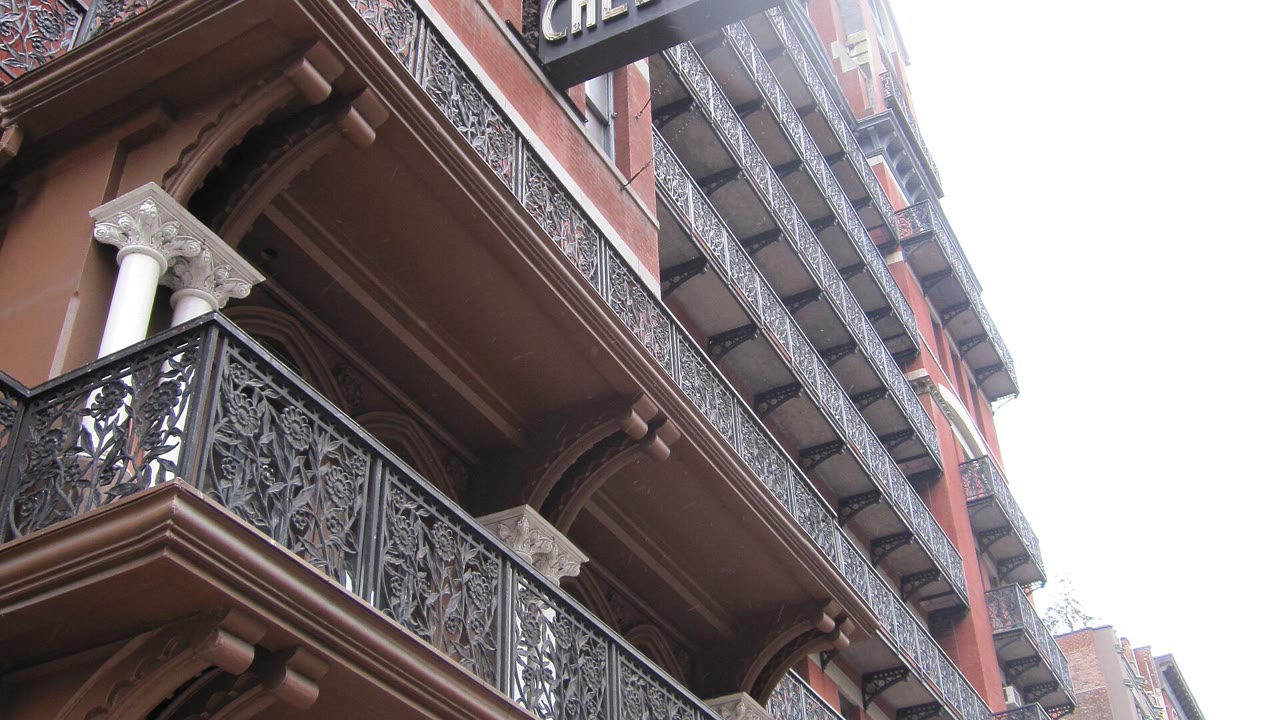
The archive’s timeline puts it simply: “Squat Theatre moves to a permanent location at 256 West 23rd street and stays in the house for the next 8 years.” The company lived upstairs and staged the plays downstairs, “next to Chelsea Hotel on West 23rd Street.” Sources differ on whether the building had three stories or four.
Spectators sat on risers at the back of the store, facing a stage and, beyond it, “a large plate-glass window facing the sidewalk,” as David Sterritt described it in 1982. The backdrop was street life “complete with passing vehicles and pedestrians.” The company’s own words: “Through the store window, we opened the Theatre to the Real, inviting trouble and fun.”
Alisa Solomon later wrote that “Squat made spectators regard themselves in the act of spectating.” The archive also recalls the building’s “New Orleans cast iron facade.”
Three plays for one window
Pig, Child, Fire! opened its four-month run on 23rd Street in November 1977. Reviewing it in the New York Times, Mel Gussow wrote, as Wikiquote transcribes him: “At approximately 9:30 pm a taxicab pulls up outside, a bearded man gets out, and points a gun across 23rd street.” He also called the piece “a throwback to Happenings.”
In Andy Warhol’s Last Love (1978), a curtain was drawn back to reveal the window, so passersby watched the events inside while the audience watched them watching. Mr. Dead and Mrs. Free (1981) premiered in Cologne. Jonathan Demme, in a 1998 interview the archive quotes, remembered how “they had this military jeep, with four soldiers in it, do a screaming U-turn in the middle of Twenty Third Street.”
| Play | Year | What the window did | Award |
|---|---|---|---|
| Pig, Child, Fire! | 1977 | A taxi pulls up and a man points a gun across 23rd Street | Obie, 1978 |
| Andy Warhol’s Last Love | 1978 | A curtain opens on the street; passersby watch the audience watching | None claimed here |
| Mr. Dead and Mrs. Free | 1981 | A jeep of soldiers U-turns on 23rd Street | Obie, best new American play (dated 1980, 1981 or 1982) |
A theatre that was also a club
“We were also running a movie theatre and a rock club in our storefront theatre,” the archive says. Its players included Nico and John Cale, Sun Ra, the Lounge Lizards, DNA and James Chance, and Kid Creole and the Coconuts made their debut there.
After the lease
In summer 1985 the company lost its lease, and several members left. Hyperallergic says the collective “self-imploded circa 1985,” while other accounts have it continuing until 1991. Balint’s Dreamland Burns followed, and L-Train to Eldorado premiered at BAM’s Next Wave Festival in 1987, the series that had revived Robert Wilson’s Einstein on the Beach in 1984.
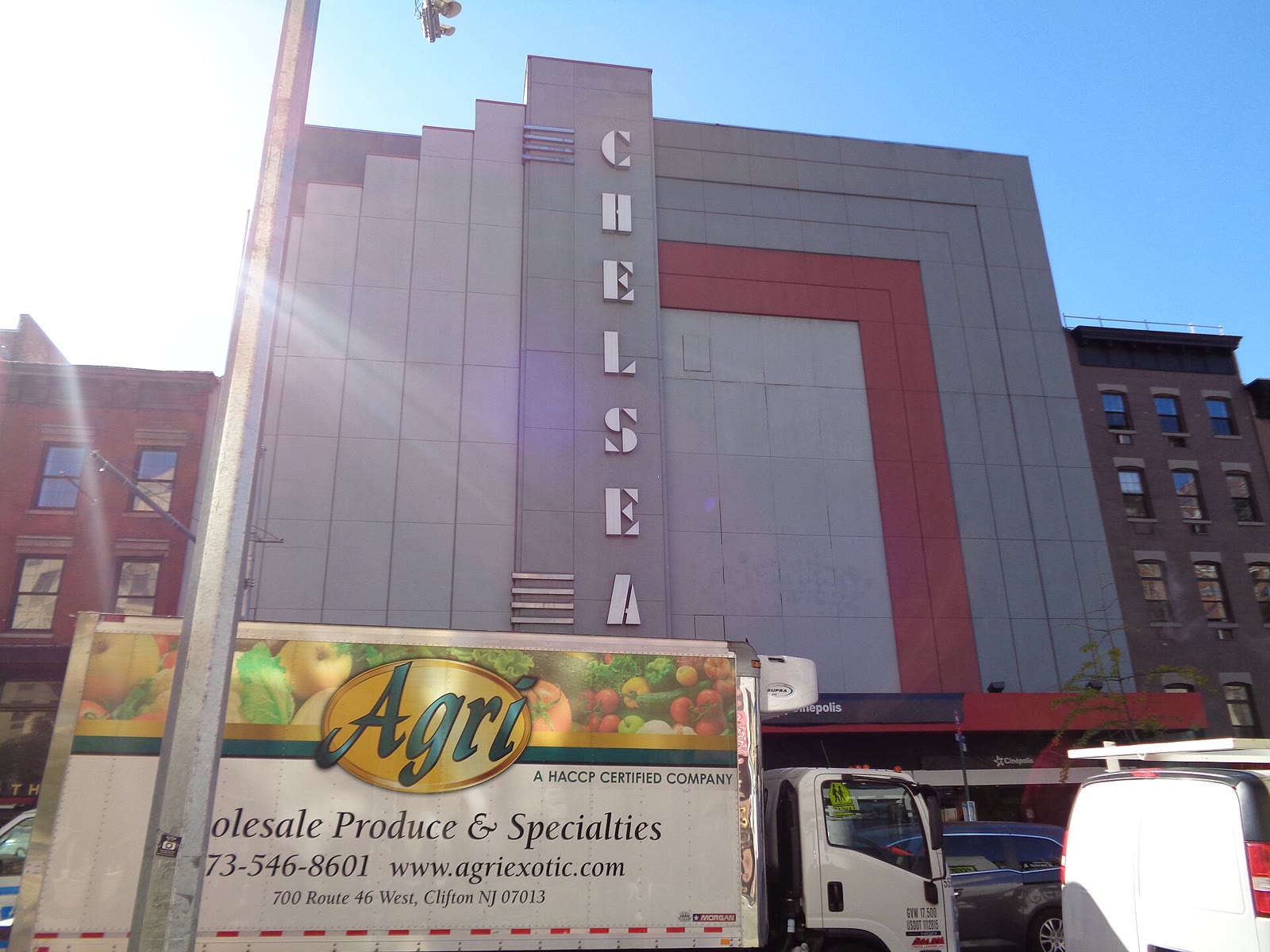
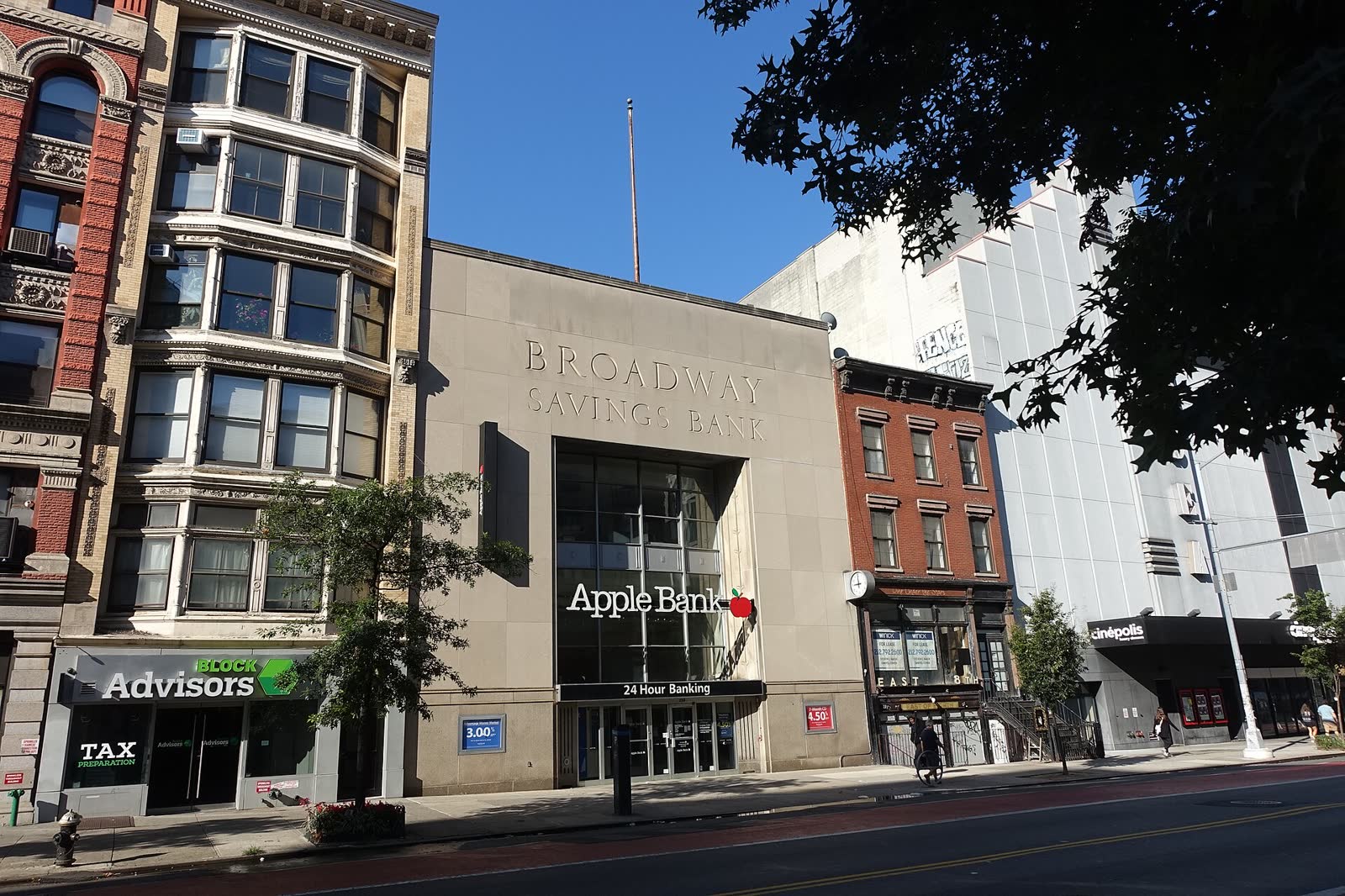
The archive notes that a multiplex now stands “on the spot where the Squat building used to stand.” Shewey’s 1987 essay on Squat Theater and the art of living catches the company near the end of its New York decade. Balint told him: “every time we do a new piece, we always have the tendency to put people to sleep and then wake them up again.”
| Year | Where | What happened |
|---|---|---|
| 1969-70 | Budapest | Kassák House Studio formed |
| 1972 | Budapest | Banned from public performance; apartment theatre follows |
| 1976 | Paris, London | Exile in western Europe |
| 1977 (spring) | Rotterdam | First storefront play, Pig, Child, Fire! |
| 1977 (summer) | Baltimore, Shiraz, New York | Arrival in the US; the Hotel Chelsea |
| 1977-1985 | 256 West 23rd Street | Storefront theatre, homes upstairs, a club |
| 1985 | New York | Lease lost; several founders leave |
| 1987 | Brooklyn | L-Train to Eldorado at BAM’s Next Wave |
A West Coast parallel: Snake and Antenna Theater
No source records any contact between Squat and Antenna. The one documented thread is a historian: Theodore Shank’s survey Beyond the Boundaries (2002) gives chapters to Squat Theatre, to Snake Theater, Antenna’s predecessor, and to Antenna Theater. Both companies, in different ways, let the real world into the show, the old idea behind street theatre.
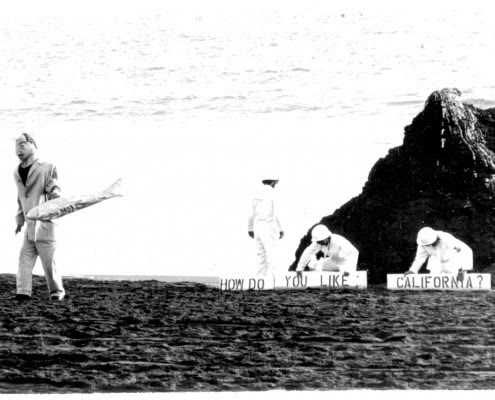
In spring 1978, as Squat settled on 23rd Street, Snake seated its audience on the sand at Fort Cronkhite for Somewhere in the Pacific, Snake’s 1978 beach play. Bernard Weiner heard the crowd react to a figure by the rocks: “‘I didn’t see him,’ people are whispering.” Chris Hardman later went further than glass: “instead of watching from afar, I was literally inside the event.”
The closest echo came decades later. On Magic Bus, Antenna’s rolling tour of San Francisco, Robert Hurwitt noted that “the audience sits, facing the side windows,” and Antenna described the view: “Passing streets blend with historic projections on retractable window screens.” The rest of the record is in the Antenna chronology.
| Aspect | Squat Theatre, New York | Snake and Antenna Theater |
|---|---|---|
| Audience | Seated on risers at the back of a store | Seated on a beach (1978), walking a town (1993), seated on a bus (2010s) |
| The real world | A city street seen through plate glass | A beach, a school, a town, the city through bus windows |
| Passersby | A second audience | Not described as part of the show |
| Sound | Live, in the room | Recorded, mostly through headphones |
Frequently asked questions
Where was Squat Theatre in New York?
In a storefront at 256 West 23rd Street, next to the Hotel Chelsea, from 1977 to 1985. The company lived upstairs.
What was special about the storefront?
The audience sat facing a large window onto the street, so traffic and passersby became the backdrop and a second audience.
Did Squat win awards?
Obies for Pig, Child, Fire! in 1978 and for Mr. Dead and Mrs. Free as best new American play.
Was Squat connected to Antenna Theater?
No source records any contact. Theodore Shank’s survey of American alternative theatre gives chapters to both, and to Antenna’s predecessor Snake Theater.