Laterna Magika in Prague: How Radok and Svoboda Put Film and Actors on One Stage
Laterna Magika in Prague is the theatre where an actress once stood on stage and talked with her own filmed image. The idea was built for a world’s fair in Brussels, carried home to Czechoslovakia, and outlasted a censor, an invasion and a revolution. Here is how it worked, who made it, and why the company and the Czech press call it the first multimedia theatre in the world.
Quick answer
What is Laterna Magika?
Laterna Magika is a Prague theatre company that combines film projection with live actors and dancers. It began at Expo 58 in Brussels, where the director Alfréd Radok and the designer Josef Svoboda had a live presenter talk with her own filmed images. It opened in Prague in 1959 as a company of the National Theatre.
Expo 58: a presenter and her filmed doubles
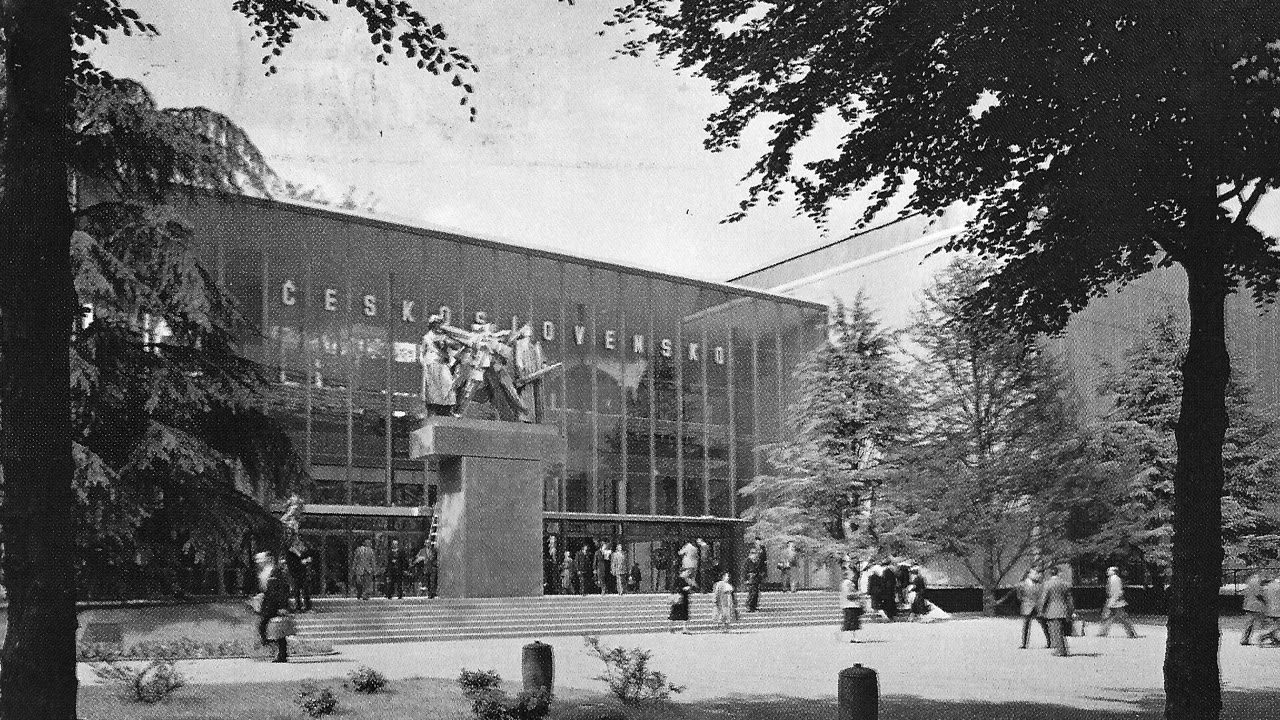
The National Theatre’s own history says the show “initially came into being as a representative cultural programme devised with the aim to promote the Czechoslovak Socialist Republic at Expo 58,” the fair that ran from April to November 1958. The project went to the stage director Alfréd Radok and the set designer Josef Svoboda. Radok’s brother Emil worked with them, and Miloš Forman, “who had not yet started directing films, wrote the script,” according to Expats.cz.
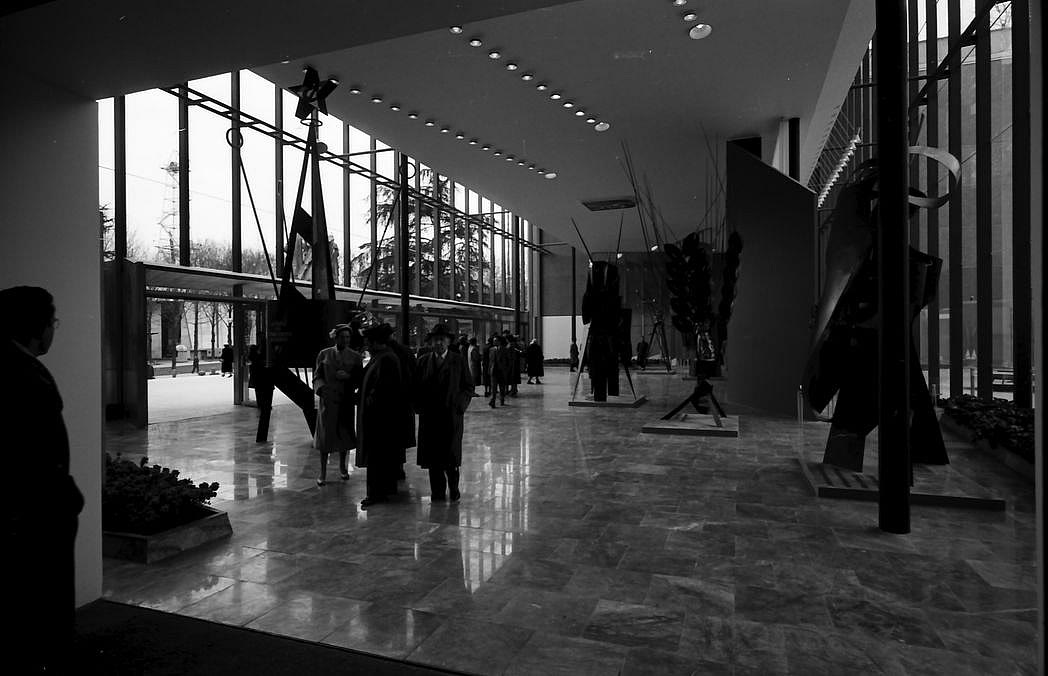
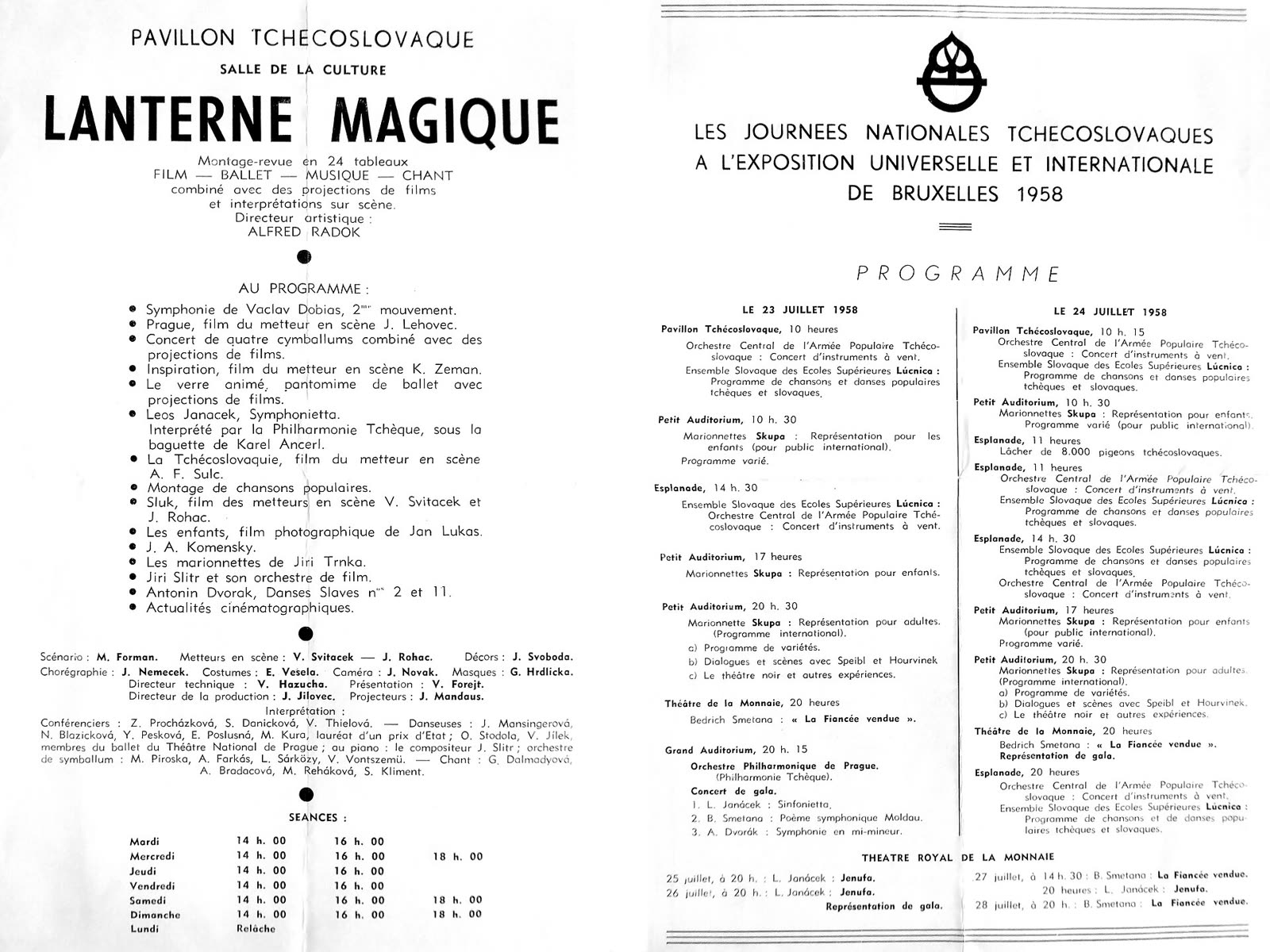
The Bureau International des Expositions says it was “Initially called Non-stop revue as it played all day long.” It was a revue of short numbers, held together by a presenter whose scenes were “pre-recorded in several languages and screened in a manner that came across as a seeming interaction of the actress on stage with her images and between each of these.”
Svoboda’s profile at the National Theatre puts it more vividly: “They created a stir as the mistress of ceremonies and her two filmed alter egos addressed both the audience and each other.” The BIE counts 13 scenes; Expats.cz, describing the Prague version, counts 24.
Crowds followed: the BIE counts “a total of 150,000 spectators during its run,” and the pavilion won the Gold Star and 56 other prizes. The Belgian press named the show after the 17th-century magic lantern projector.
How Laterna Magika works
In the company’s words, “projection is not only a mobile backdrop, nor does it only create an appearance of reality, the key factor is the interconnection between the content of what is happening on stage and the action on the film screen.”
The hardware was a battery of screens. The BIE says Svoboda’s system “consisted of eight projectors on different screens at the same time.” As Expats.cz puts it, “Layers of film screens put the live cast in the midst of the recorded action.”
Svoboda called the projected set “kinetic scenography.” It meant that “Live productions could now change settings at the same pace as motion pictures.” That ambition places Laterna Magika in the family of total theatre, where every art works on one stage.
The Prague company and its politics
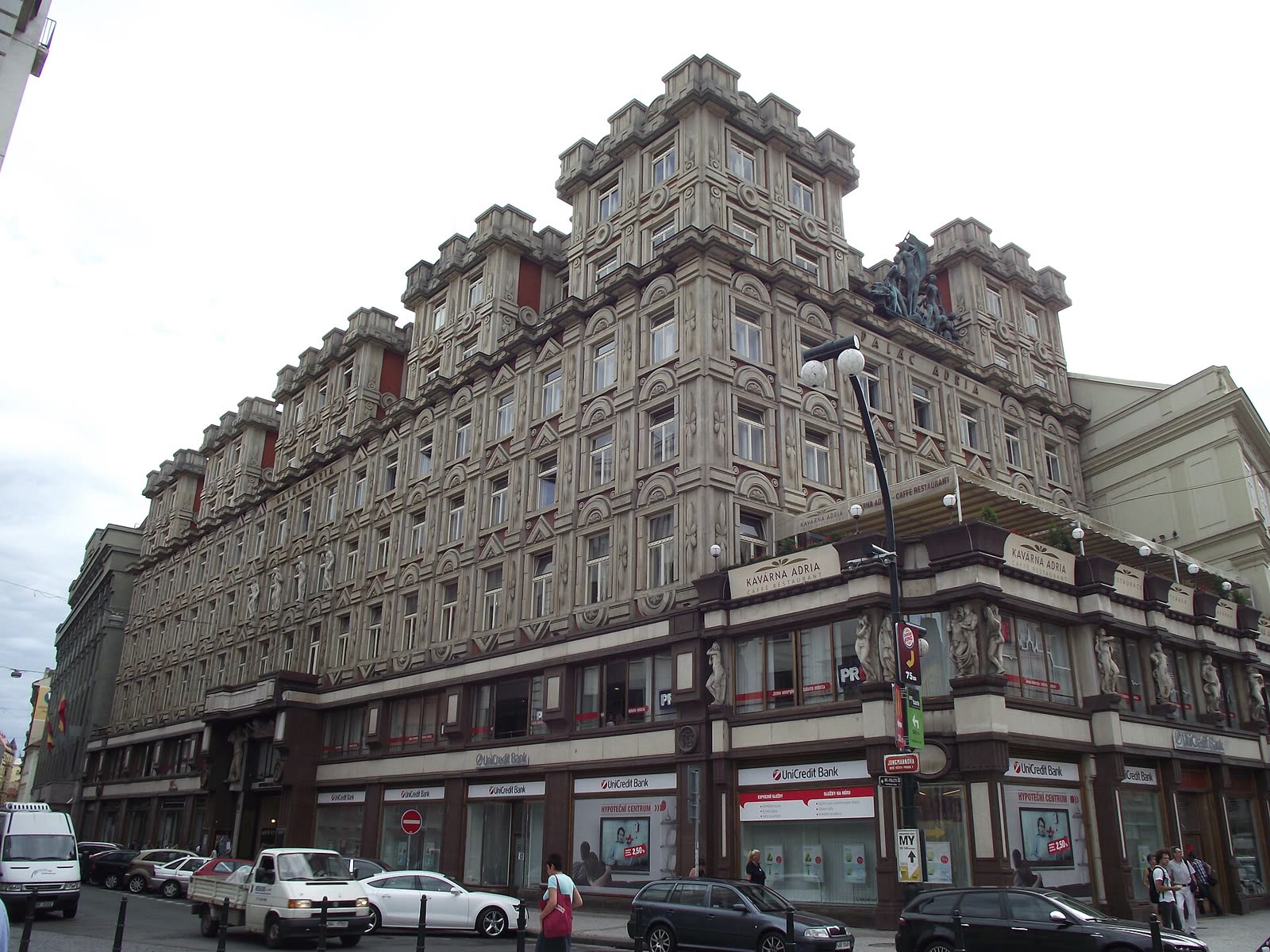
Back home, Laterna Magika opened on 9 May 1959 as an independent company of the National Theatre, at the Adria Palace on Národní třída. Radok was its first artistic director. Svoboda’s profile says it soon became “almost a research institute in theatre technology.”
Politics arrived with the second programme, which premiered in Leningrad in December 1960. The Minister of Culture, Václav Kopecký, would not allow the dance-film number The Opening of the Springs, set to Martinů’s music, and Radok resigned. The number came back in 1966, and so did Radok.
After the Soviet-led invasion of 1968 Radok left Czechoslovakia and worked in Sweden. The National Theatre declared him an emigrant in 1972, and he died in Vienna in April 1976. In November 1989 the company’s home became the base of the Civic Forum, and for three weeks it was, in the company’s words, “the most closely observed place in Czechoslovakia.”
| Year | Event |
|---|---|
| 1958 | Laterna Magika opens in the Czechoslovak pavilion at Expo 58, Brussels |
| 1959 | The Prague company opens on 9 May at the Adria Palace, with Radok as artistic director |
| 1960 | The second programme premieres in Leningrad; a number is banned and Radok resigns |
| 1967 | Expo 67, Montreal: a short programme played up to twelve times a day |
| 1968 | Radok leaves after the Soviet-led invasion |
| 1973 | Josef Svoboda becomes artistic director |
| 1977 | Wonderful Circus premieres |
| 1984 | The company moves to the National Theatre’s New Stage |
| 1989 | Its premises serve as the Civic Forum’s base in the Velvet Revolution |
| 2002 | Svoboda’s last work, Graffiti; he dies on April 8 |
| 2010 | Laterna Magika is reintegrated into the National Theatre |
Josef Svoboda’s Laterna Magika
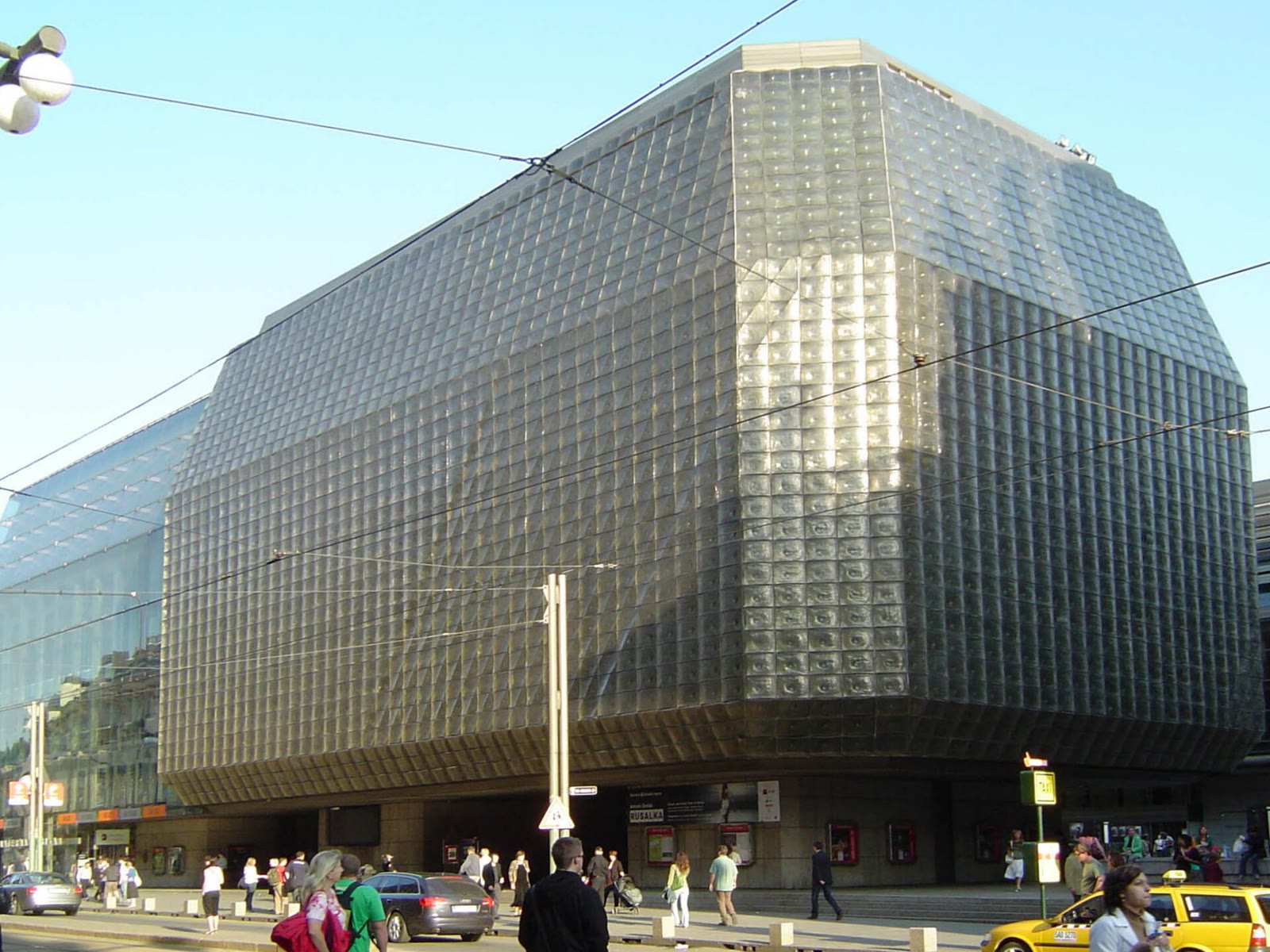
Svoboda trained as an architect and became the National Theatre’s principal designer from the late 1940s. Live Design’s 2002 obituary counts “more than 700 credits” and notes that he preferred to call himself a scenographer rather than a designer.
In 1973 he took over Laterna Magika as artistic director. Wonderful Circus followed in 1977, built, he said, around “a panoramic moving screen bearing the cinematic image and also representing a circus big-top.” It passed 6,000 performances, and Expats.cz reported that its long run was scheduled to end in September 2022.
The company kept adding firsts. Night Rehearsal (1981) used television cameras to screen the action live, Minotaur (1990) brought in computer animation, and Svoboda’s virtual screen, projecting in front of the stage, appeared in The Trap (1999). Graffiti (2002) was his last work, and he died that April, aged 81.
Laterna Magika in Prague today
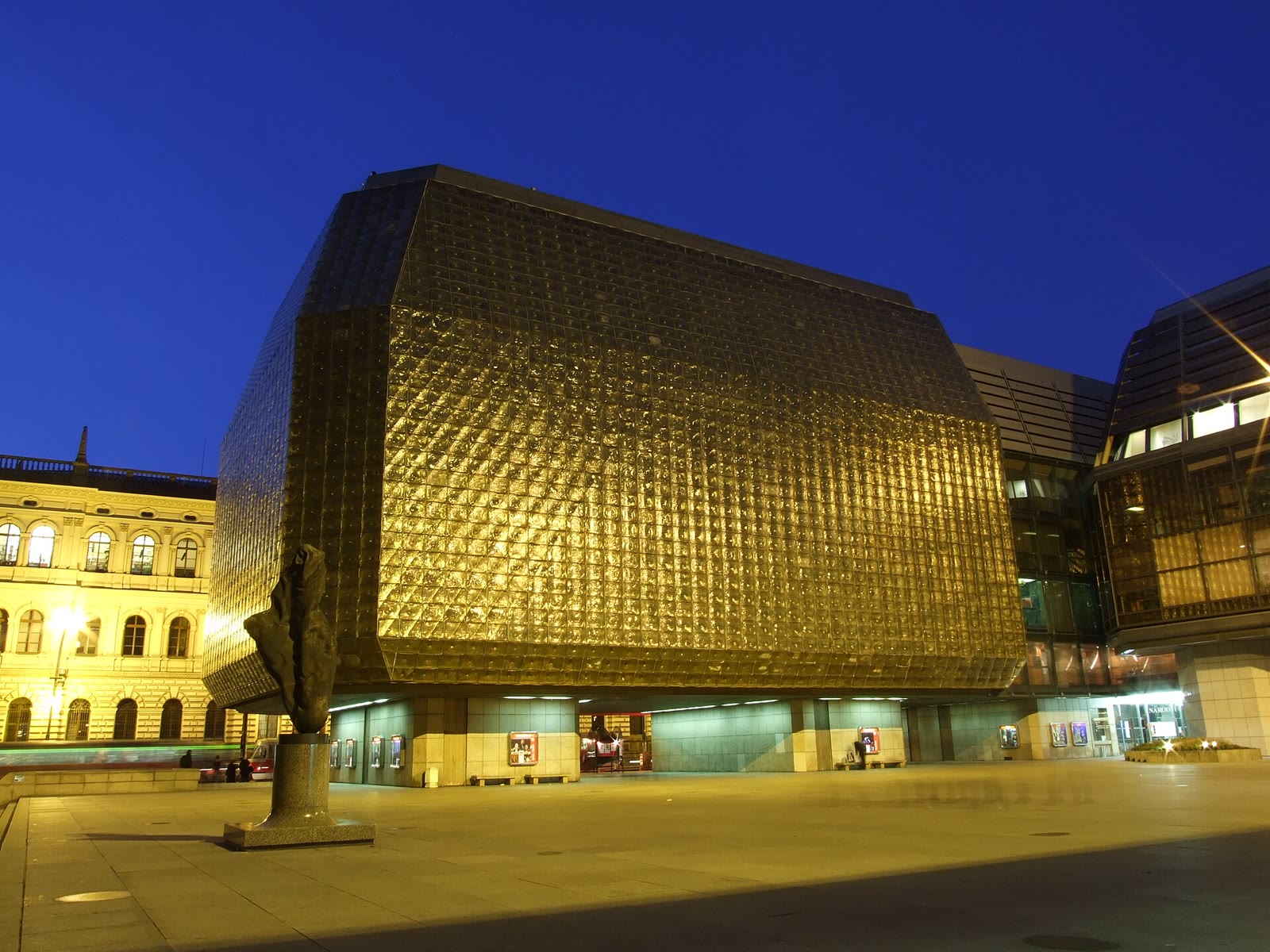
Since 1984 the company has worked at the National Theatre’s New Stage, which opened in 1983. It became an independent organisation in 1992 and was reintegrated into the National Theatre in 2010. The National Theatre’s history of the Laterna Magika ensemble tells the full story production by production.
The technology has moved on. In Anticodes, built on Václav Havel’s poems, Georgetown University’s performance lab describes film footage replaced “by projection and sounds from live sources,” with real-time tracking of people on stage. Projection-led performance took other paths in the West, from liquid light shows in the rock ballrooms to George Coates’s projection-and-opera company in San Francisco.
A Bay Area parallel: film among the masks at Antenna Theater
No source connects Antenna Theater with Laterna Magika, Radok or Svoboda. But one Antenna show used the same raw materials. In Russia (1985), Will Torphy wrote in Artweek, “a ‘home movie’ of the ball is projected onto the set. We view hilarious tuxedo- and gown-clad figures wearing huge immobile masks as they dance and chatter in polite little circles.”
Torphy also noticed the scenery: three vertical scrims and a few cutouts “keep the set continually kinetic.” That is close to Svoboda’s own word for his projected sets. You can find the show in Russia’s entry in the Antenna chronology.
The difference is the partner. Radok’s actress spoke with her filmed self, timed to the screen. Antenna’s four masked characters moved to tape: Torphy singled out “the exclusive use of taped voices” as what turned them into archetypes. Film stayed one layer among many, as it did decades later on Magic Bus, with its projections on the bus windows.
Frequently asked questions
Who created Laterna Magika?
The stage director Alfréd Radok and the designer Josef Svoboda, with Radok’s brother Emil and a young Miloš Forman, who wrote the script, among the collaborators.
Was Laterna Magika the first multimedia theatre?
The company and the Czech press bill it that way. Directors had put film on stage before, so it is safer to call it one of the first and the most famous.
What happened at Expo 58?
A revue of short numbers in the Czechoslovak pavilion mixed live performers with films on several screens. About 150,000 people saw it, and the pavilion won the Gold Star.
What is Wonderful Circus?
A 1977 Laterna Magika production built around a moving panoramic screen that doubled as a circus big top. It passed 6,000 performances.
For another postwar Central European stage built around one artist’s vision, read about Tadeusz Kantor’s theatre of death and Cricot 2, or browse the Antenna Theater chronology.