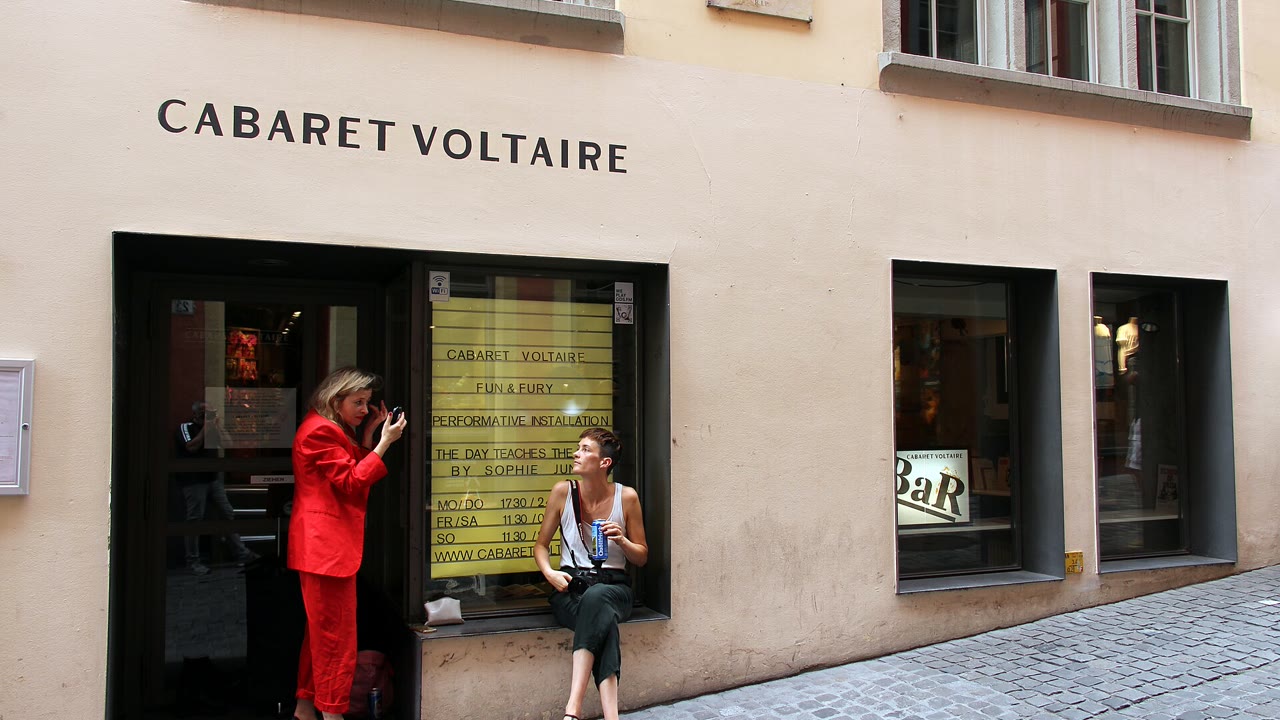
Cabaret Voltaire and Dada: Zurich’s Five-Month Nightclub
For five months in 1916, a back room in Zurich’s old town held one of the loudest experiments in European art. At the Cabaret Voltaire, exiled writers and painters launched Dada and invented two new kinds of poem. Here is what happened there, with the dates the sources dispute.
Quick answer
What was the Cabaret Voltaire?
The Cabaret Voltaire was a small Zurich nightclub opened by Hugo Ball and Emmy Hennings on February 5, 1916, where the Dada movement began. For five months exiled artists performed there almost nightly, inventing the sound poem and the simultaneous poem. Its last known night was July 6, 1916.
A back room in a neutral city
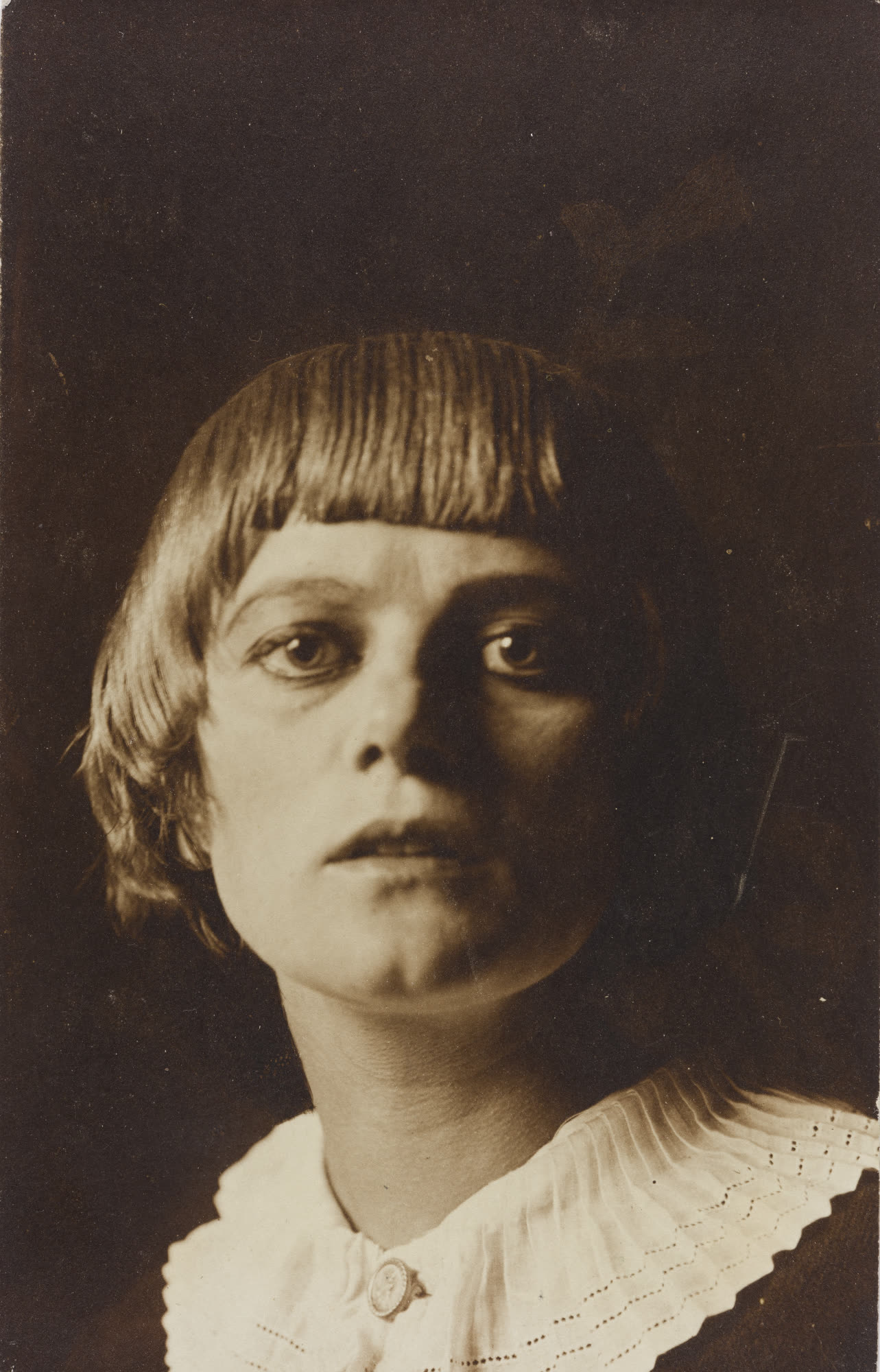
The Cabaret Voltaire’s own history of the birthplace of Dada sets the scene: “While the First World War was raging, many intellectuals, writers, anarchists, artists, and opposition members sought refuge in «neutral» Switzerland.” Hugo Ball and Emmy Hennings arrived in May 1915 and worked in variety theatres, Ball as a pianist while Hennings “sang and danced as an experienced diseuse.”
Ball then rented the Holländerstübli, a room in Jan Ephraim’s dairy at Spiegelgasse 1. He wanted “an international cabaret, a place of artistic entertainment and intellectual exchange, whose stage was open to everyone.” Richard Huelsenbeck said the name honoured Voltaire, who had fought “for the liberation of the creative forces from the tutelage of the advocates of power.”
Opening night, February 5, 1916
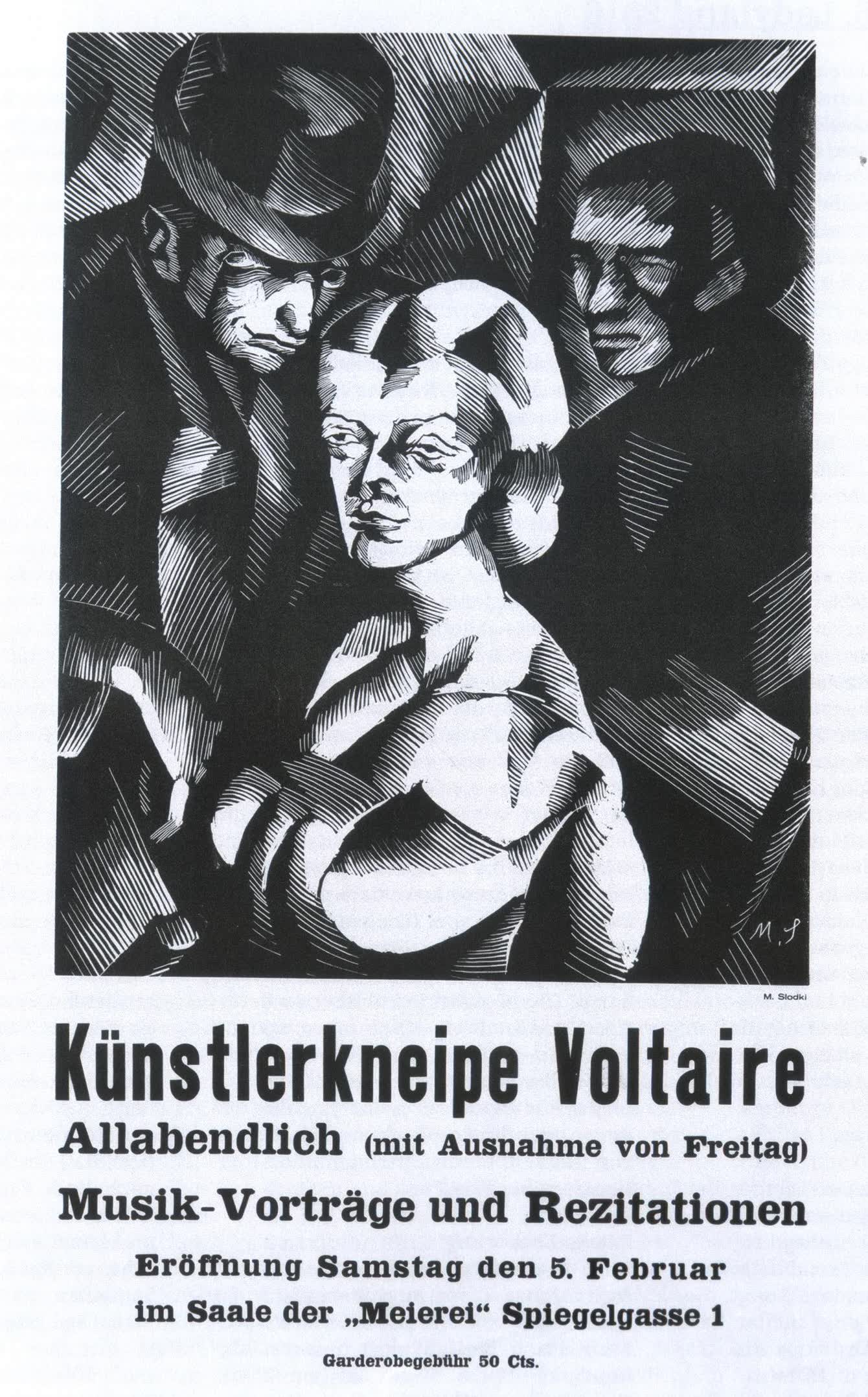
The venue dates the opening to the evening of February 5, 1916, while an EBSCO summary says Ball opened it “In the winter of 1915”; this post follows the venue. Sophie Taeuber and Hans Arp painted the ceiling blue and the walls black, Tristan Tzara recited Romanian verses, and Emmy Hennings at the Cabaret Voltaire “sang some chansons on the stage, which was nailed together from planks,” while a balalaika orchestra played Russian folk songs.
The audience “sat in the crowded room at tables with red tablecloths, separated from the stage by a green curtain.” There were soirées “every evening except Fridays,” and Marcel Janco recalled a crowd of “painters, students, revolutionaries, tourists, international crooks, psychiatrists, the demimonde, sculptors, and polite spies.” Janco also hung the room with masks he had made, objects with a long history traced in our guide to mask theatre.
The word Dada
Ball’s diary first uses the word on April 18, 1916, as a possible magazine title, but the venue admits that “it remains unclear who actually found the word «Dada» and when, and what its origin is.” Ball joked: “Dada comes from the dictionary. It is terribly simple. In French, it means ‘hobby horse.’”
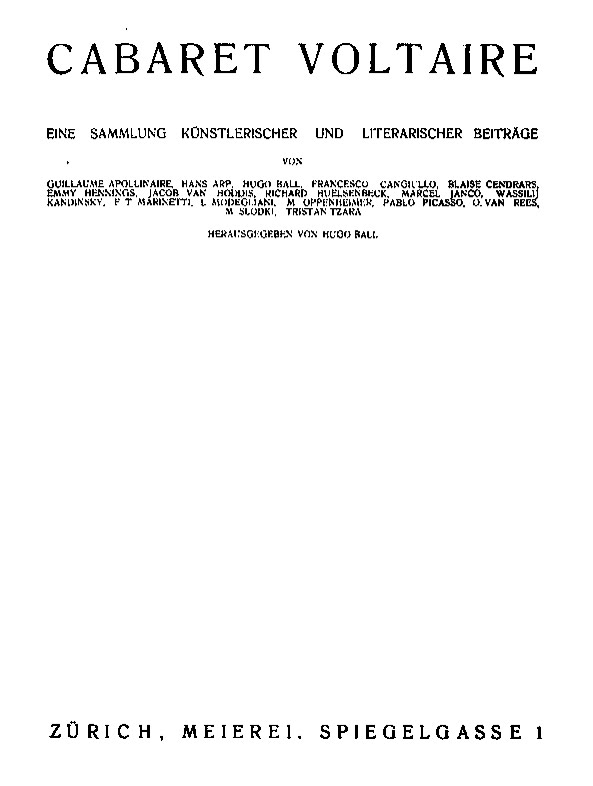
The magazine Cabaret Voltaire appeared on May 15, 1916, with Ball’s foreword and a poem by Hennings. Scans of it are held by the International Dada Archive at the University of Iowa, founded in 1979.
Two new kinds of poem
The Dada simultaneous poem
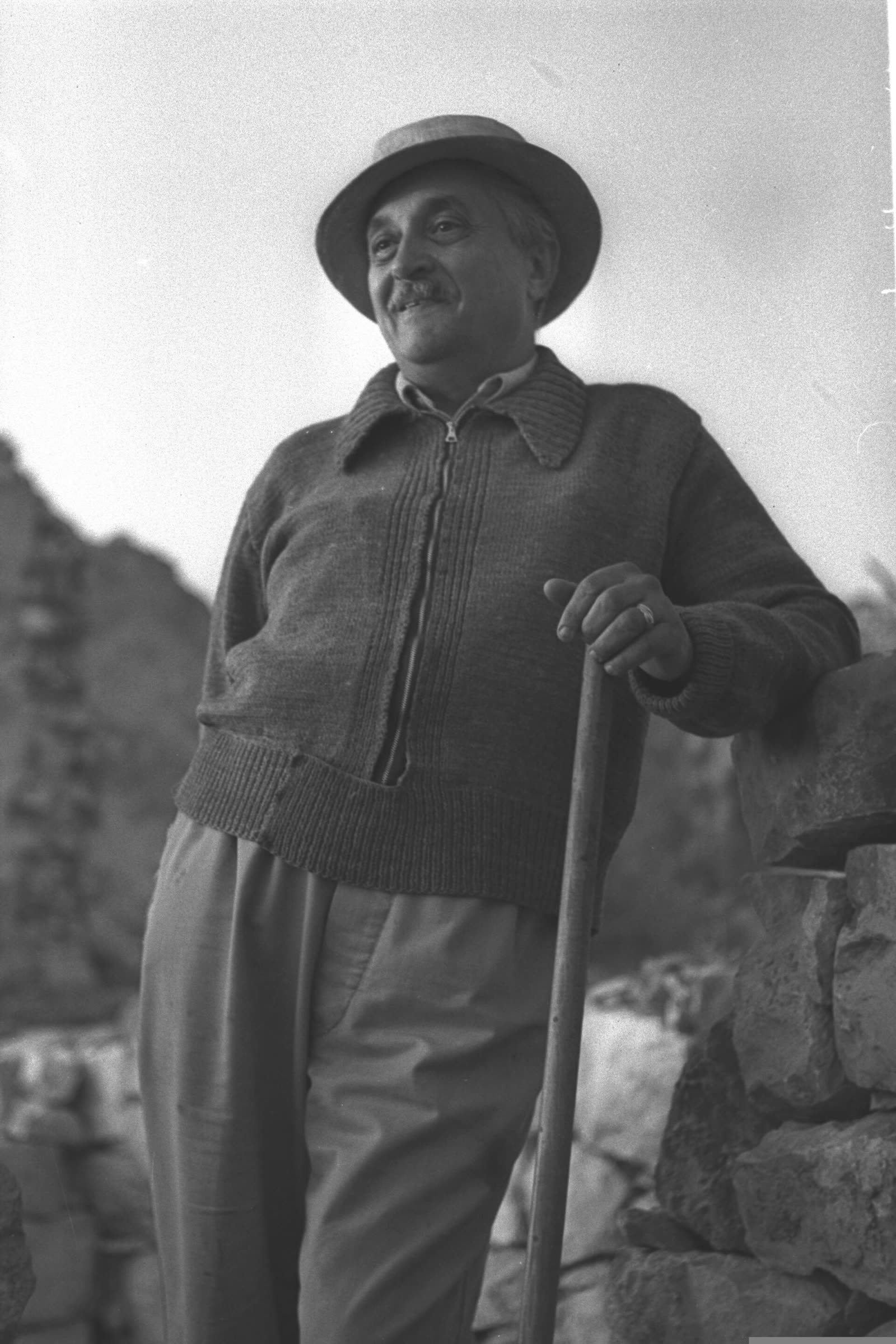
A simultaneous poem had “several people reading poems in different languages and using contrasting tonalities and rhythms at the same time.” The first, L’amiral cherche une maison à louer, was performed in March 1916 by Huelsenbeck, Janco and Tzara. Sources differ on whose idea it was: The Art Story credits Tzara, EBSCO credits Huelsenbeck, and the Encyclopaedia Universalis names all three.
EBSCO adds that “The concept of simultaneity was borrowed from the Italian Futurists,” whose stage experiments are told in our guide to Futurist synthetic theatre.
Hugo Ball’s sound poetry and the cardboard bishop
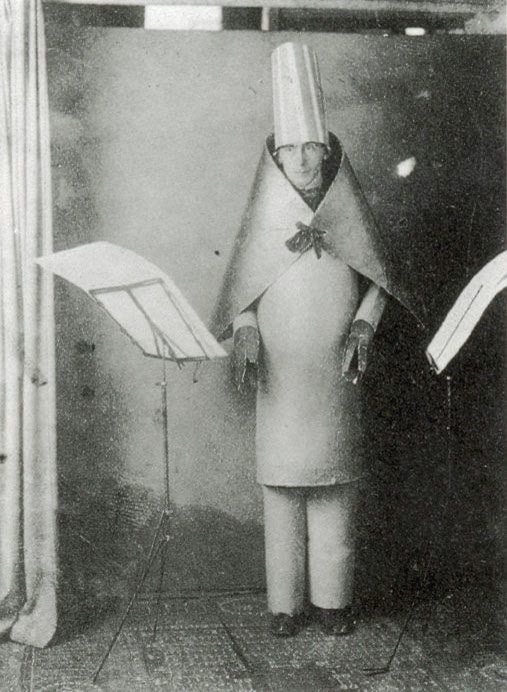
On June 23, 1916, Ball presented his first sound poems “in cubist costume for the first time as a magical bishop.” His legs and body were in blue cardboard tubes, under a collar “gold on the outside and red on the inside” and a towering hat. He began offstage in the dark and kept speaking as he climbed into the light.
His aim, in translation: “I don’t want words that other people have invented.” He recited lines such as “gadji beri bimba glandridi laula lonni cadori,” and Karawane, performed in 1916, was later printed in the Dada Almanach. Unlike Marinetti’s onomatopoeia, The Art Story notes, Ball’s poems “were meant to disconnect completely from coherent language.”
| Aspect | Sound poem | Simultaneous poem |
|---|---|---|
| Voices | One reciter | Several at once |
| Words | Invented sounds | Real words in different languages |
| First at the cabaret | June 23, 1916 | March 1916 |
| Best-known piece | Karawane; Gadji beri bimba | L’amiral cherche une maison à louer |
| Credited to | Hugo Ball | Huelsenbeck, Janco and Tzara (disputed) |
After the cabaret
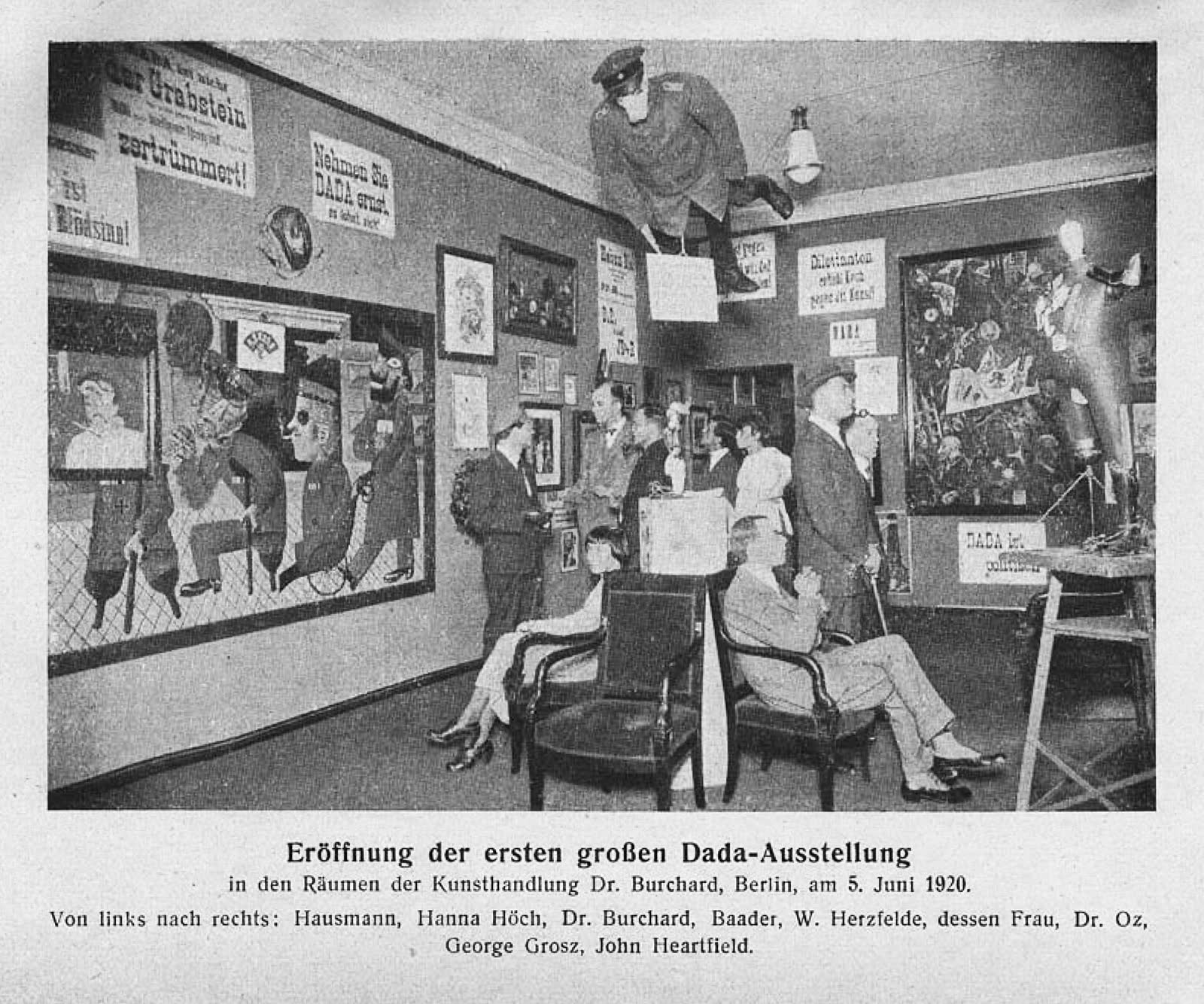
The last known event at the Cabaret Voltaire was on July 6, 1916. On July 14 the first Dada evening took place in the Zunfthaus zur Waag, where Ball read the Dada Manifesto. The group opened the Galerie Dada on March 29, 1917, gave it up on June 1 after money troubles and a dispute between Ball and Tzara, and held the last Zurich soirée on April 9, 1919.
By then Dada had moved on. A Dada Club was founded in Berlin in 1918, Tzara reached Paris in 1920 at André Breton’s invitation, and a 1923 quarrel between the two began, in the venue’s words, “the death of Dada and the birth of surrealism.” Ball returned to the Catholicism of his youth and died in 1927.
Words nobody had invented, voices everyone had heard
No source links Antenna Theater to Dada or records Chris Hardman naming it, so what follows is a contrast. Ball wanted no words “that other people” had invented. Antenna wanted little else: for Vacuum, Esquire reported, “The taped voices Hardman used in the play were of actual salesmen and housewives, compiled from questionnaires from the community and interviews conducted around town.”
“The question was,” Hardman explained, “how much of our audience could we entangle in the preproduction?” American Theatre wrote in 1994 that every Antenna script was composed “entirely of interviews with real people.” The same method shaped Antenna’s Vacuum, built from the taped voices of salesmen and housewives.
The other difference is the record. The venue states that no sound or film recordings exist of the 1916 performances, and every recording of them is later. Antenna’s shows were built as tapes, so the voices survived the evenings. Both drew a similar charge: in 1983 Stephanie von Buchau wrote that “The most dubious part of Antenna and Nightfire’s work lies precisely in its lack of conventional ‘meaning.’”
The Cabaret Voltaire today
After 1916 the rooms were put to “various temporary purposes.” In 2002 a group occupied the building to revive the birthplace of Dada, and in 2004 it reopened under a supporting association. The venue traces Dada’s afterlife through Lettrism, Fluxus and Conceptual Art, and Tate links it to happenings, which grew in part from Dada’s theatre.
Frequently asked questions
How long did the Cabaret Voltaire last?
About five months, from February 5 to a last known event on July 6, 1916, with shows every evening except Fridays.
What is a Dada sound poem?
A poem of invented sounds meant to be performed. Hugo Ball first performed his on June 23, 1916, in a cardboard costume.
Is there a recording of Karawane from 1916?
No. No sound or film recordings of the 1916 performances exist; all recordings are later.
Does the Cabaret Voltaire still exist?
Yes. After an occupation in 2002 it reopened in 2004 as a cultural venue at Spiegelgasse 1.
Two more chapters of the same century: Bertolt Brecht’s epic theatre and the Berliner Ensemble, and Antenna Theater’s production chronology.