
The History of El Teatro Campesino, from Delano to San Juan Bautista
It began with three farmworkers, some cardboard signs and a crowded kitchen. The history of El Teatro Campesino, “The Farm Workers’ Theater”, runs from the Delano grape strike of 1965 through four homes in California to a Broadway stage, and it continues in a small mission town south of San Jose.
Quick answer
What is El Teatro Campesino?
El Teatro Campesino (“The Farm Workers’ Theater”) was founded by Luis Valdez in Delano, California, in November 1965, during the grape strike. Farmworkers performed short improvised “actos” with signs and masks to win strikers. The company moved to Del Rey, Fresno and, in 1971, San Juan Bautista, and created Zoot Suit in 1978.
A playwright from the Mime Troupe (1964-1965)
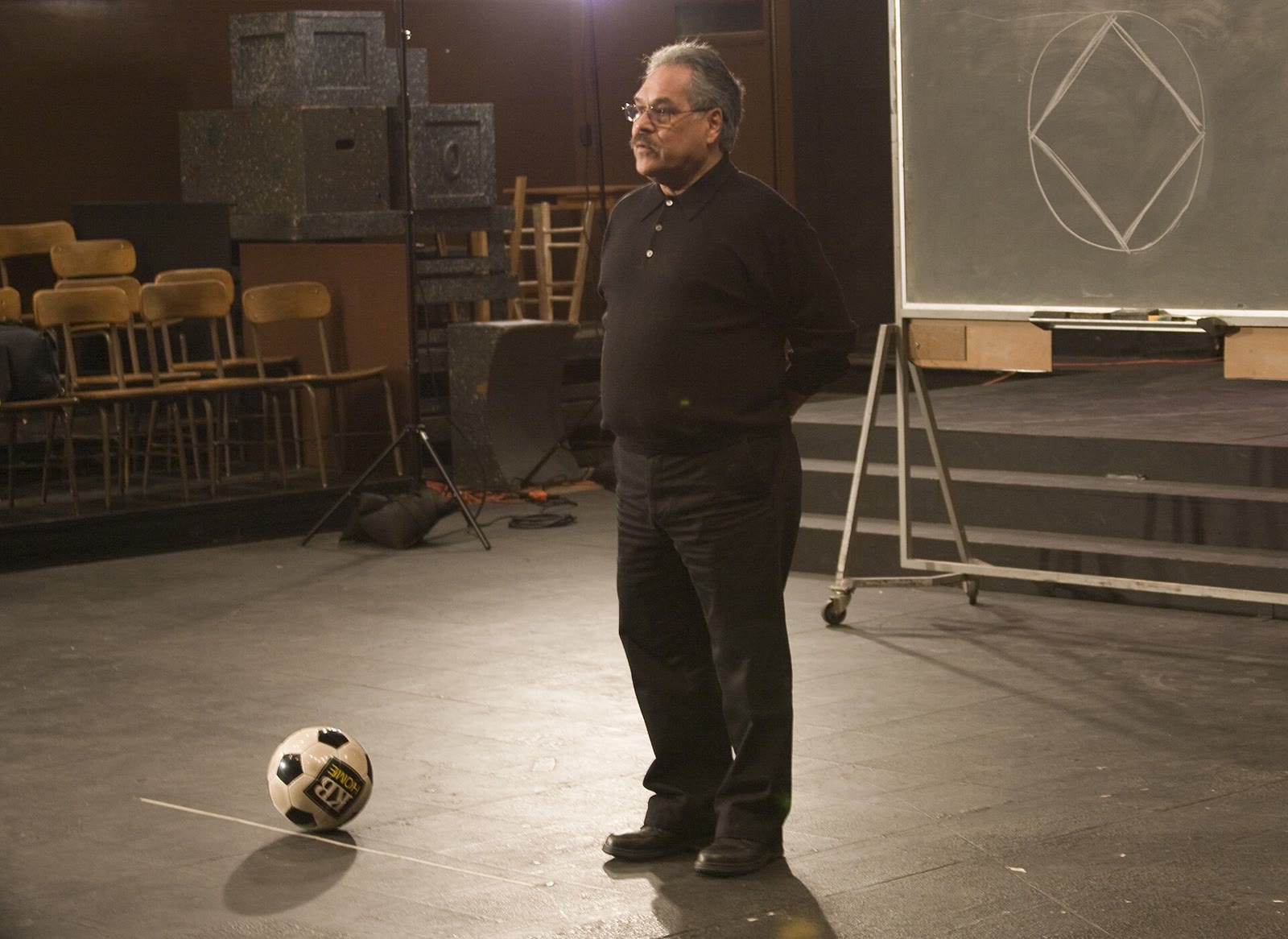
Luis Valdez was born in Delano in 1940 and raised in the labour camps where his parents worked; he began working in the fields at six. At San Jose State he wrote his first plays, and in 1964 he joined the San Francisco Mime Troupe, where Valdez learned his trade.
“I figured if any theater could turn on the farmworker, it would be that type of theater,” he said later, “outside, that lively, that bawdy.” When the grape strike broke out in 1965, Valdez recalls proposing “a theater of, by and for farm workers” to César Chávez, the union’s leader, who told him there was no money, no actors and no stage in Delano.
The pink house: how the first acto was made
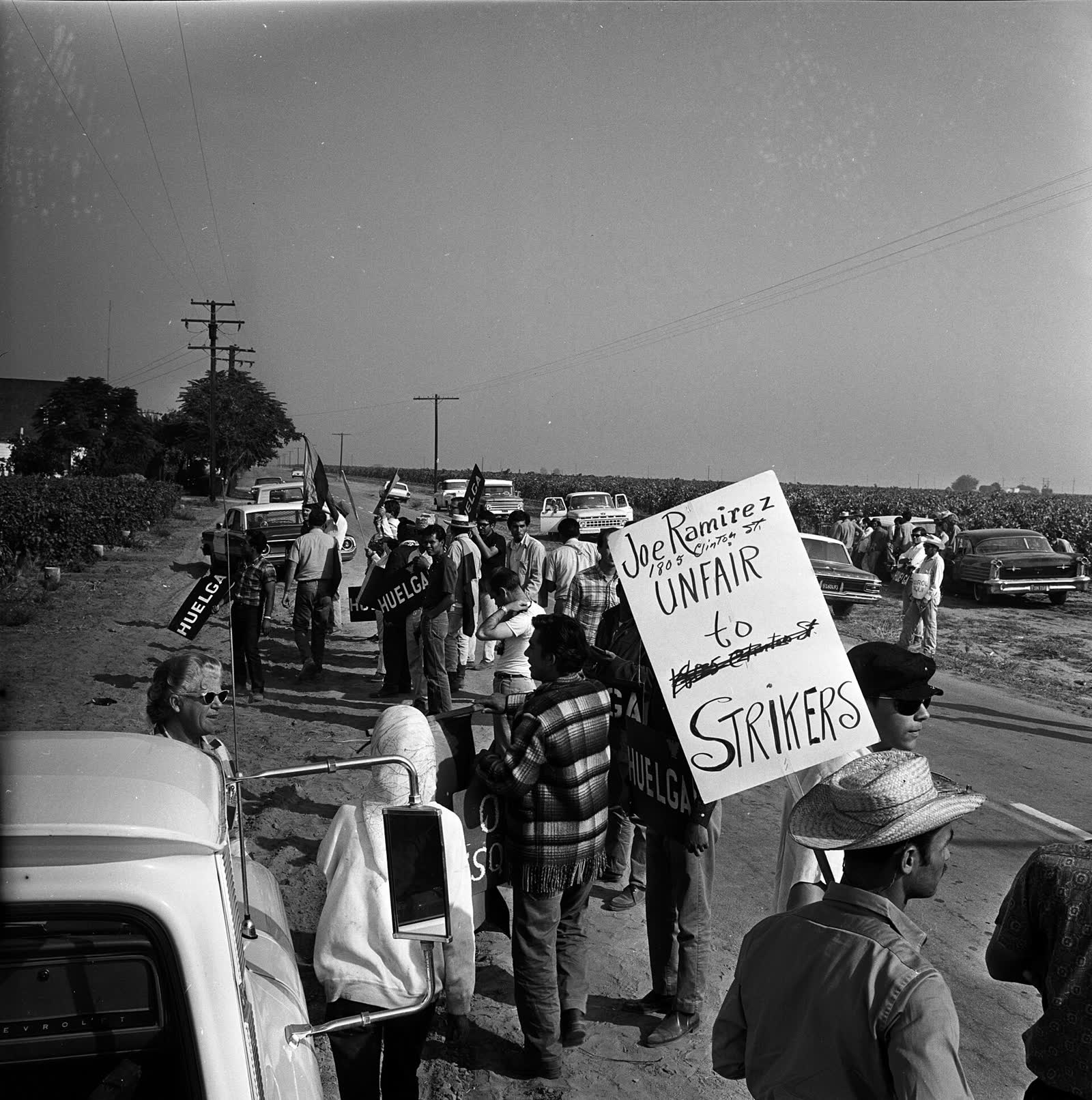
Jorge Huerta’s 1977 study, Chicano Agit-Prop: The Early Actos of El Teatro Campesino, quotes Valdez on the first rehearsal in Delano’s “pink house” in November 1965. “I talked for about ten minutes, and then realized that talking wasn’t going to accomplish anything,” he said. He hung Huelgista (striker) signs on two volunteers and an Esquirol (scab) sign on a third.
“All of a sudden people started coming into the pink house from I don’t know where; they filled up the whole kitchen.” Huerta defines the result: “The basic acto can be defined as a short, improvised scene dealing with the experiences of its participants.”
Two faces of the boss: masks, signs and allegory

In Las dos caras del patroncito (The Two Faces of the Boss), the grower “wears a yellow pig face mask”. He swaps roles with his worker, and when the worker takes off the mask he finds that the boss looks just like him: “Patrón, you look like me!” Huerta notes that Valdez had picked up masks at the Mime Troupe and here used them “to represent more vividly the hated grower.”
La quinta temporada (1966) added allegorical figures: an actor announces that he is Summer, his shirt covered with play money. “Often, the scenery was real: the edges of the grape fields,” and “campesino audiences were often moved to leave the fields and join the strike.” Valdez joked in 1966 that, minus actors, “the entire Teatro can be packed into one trunk.”
| Element | What it did | Example |
|---|---|---|
| Signs | Named each character at once | Huelgista, Esquirol |
| Masks | Showed who held power | The grower’s yellow pig mask |
| Real setting | Played where the audience was | The edges of the grape fields |
| Allegory | Turned ideas into characters | Summer, with play money on his shirt |
| Purpose | Moved the audience to act | Workers leaving the fields to strike |
Del Rey and Fresno: beyond the fields (1967-1971)
“The teatro left Delano and the Union in September of 1967 to establish El Centro Campesino Cultural in Del Rey, California,” Huerta writes, and began to take on problems beyond the farmworker’s. Los vendidos (1967) was set in “Honest Sancho’s Used Mexican Lot and Mexican Curio Shop”. A 1968 puppet show, La conquista de Mexico, showed “far better than live actors could” how disunity helped the Conquest.
In January 1969 the company moved to Fresno. That April it played the world theatre festival at Nancy, France, where Le Monde wrote: “They do not go to the people; they come from the people.” The same year brought an Obie for “demonstrating the politics of survival.”
San Juan Bautista and the mission plays
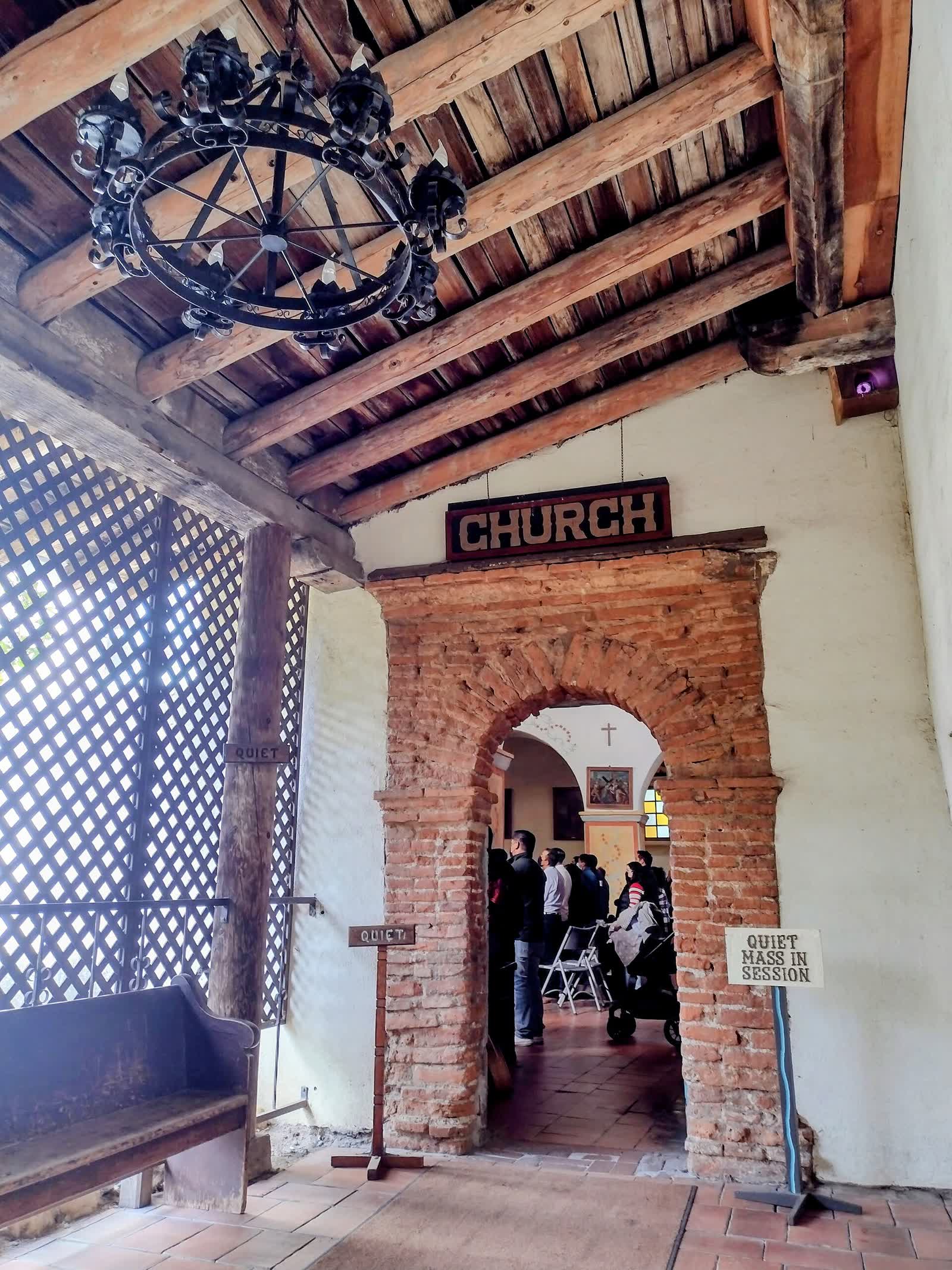
In 1971 the company moved to San Juan Bautista, which its own history describes as “a rural town of 1,600 people”. In the 1970s it developed a cycle of mission plays: La Virgen del Tepeyac and the shepherds’ play La Pastorela are still staged in the Old Mission in the holiday season, in alternate years.
In the summer of 1973 Peter Brook’s Paris company spent eight weeks in workshop with the Teatro, then toured farmworker communities in the San Joaquin Valley with it. In 1976 an extended tour went through eight western European countries.
Zoot Suit and the big stage (1978-1987)

A Rockefeller Foundation grant in 1977 let Valdez write Zoot Suit, about the Sleepy Lagoon trial of 1942 and the riots of 1943, for the Mark Taper Forum. A Los Angeles Times photograph of the cast is dated 1978, though PBS gives 1979 for the Los Angeles premiere. On Broadway in 1979 it became, the company and PBS say, the first play by a Latino presented there.
In 1981 the Teatro turned a warehouse into its playhouse. Corridos won a Peabody Award in its 1987 PBS version, and I Don’t Have to Show You No Stinking Badges ran for six months at the Los Angeles Theatre Center in 1986.
A new generation (1996-2025)
By 2006, according to El Teatro Campesino’s own history, the company “had returned to its roots as an ensemble theater company” under Kinan Valdez. UC Santa Barbara opened the Teatro’s archives around 2010, including video from “the first 25 years of the company’s history.” The company marked its sixtieth anniversary in 2025.
The history of El Teatro Campesino, year by year
| Year | Event |
|---|---|
| 1964 | Valdez joins the San Francisco Mime Troupe |
| 1965 | First actos in Delano’s pink house (November) |
| 1967 | Leaves Delano and the union for Del Rey (September) |
| 1969 | Moves to Fresno; Nancy festival; Obie Award |
| 1971 | Moves to San Juan Bautista |
| 1973 | Workshop with Peter Brook’s company |
| 1978-1979 | Zoot Suit at the Mark Taper Forum, then Broadway |
| 2006 | A new ensemble under Kinan Valdez |
| 2025 | Sixtieth anniversary |
A California contemporary: Snake and Antenna

Snake Theater, and then Antenna Theater, worked in the same state in the same years. No source records contact between them and El Teatro Campesino; the parallels are the Journal’s. Both took theatre out of theatres: Snake’s 1978 California Series was “primarily performed in locations integral to their purposes”, much as the Teatro played the edges of the fields and the Old Mission.
Both used masks, from different teachers: Valdez from the Mime Troupe, Chris Hardman from Bread and Puppet (see what mask theatre is). Both passed through the Mark Taper Forum, which with the Los Angeles Museum of Contemporary Art commissioned Antenna’s Adjusting the Idle in 1984. Valdez was a founding member of the California Arts Council, which sponsored Snake Theater’s touring 24th Hour Cafe.
The purposes differed. The Teatro set out to organise farmworkers, while Antenna built private, technological experiences, often for one listener at a time. More companies in this series include Welfare State International’s community celebrations and the Pickle Family Circus, founded by Mime Troupe jugglers; Antenna’s own record is in Antenna Theater’s full production chronology.
Frequently asked questions
What is an acto?
A short, improvised scene dealing with the experiences of its participants, in Jorge Huerta’s definition, played with signs, masks and little or no scenery.
Why did the company leave Delano?
In September 1967 it left Delano and the union to set up a cultural centre in Del Rey and take on subjects beyond the farmworker.
When did El Teatro Campesino move to San Juan Bautista?
In 1971. It stages La Virgen del Tepeyac and La Pastorela in the town’s Old Mission in alternate years.
Was Zoot Suit the first Chicano play on Broadway?
The company and PBS describe it as the first play by a Latino presented on Broadway, in 1979.