History of the Herbst Theatre: The Hall Where the UN Charter Was Signed
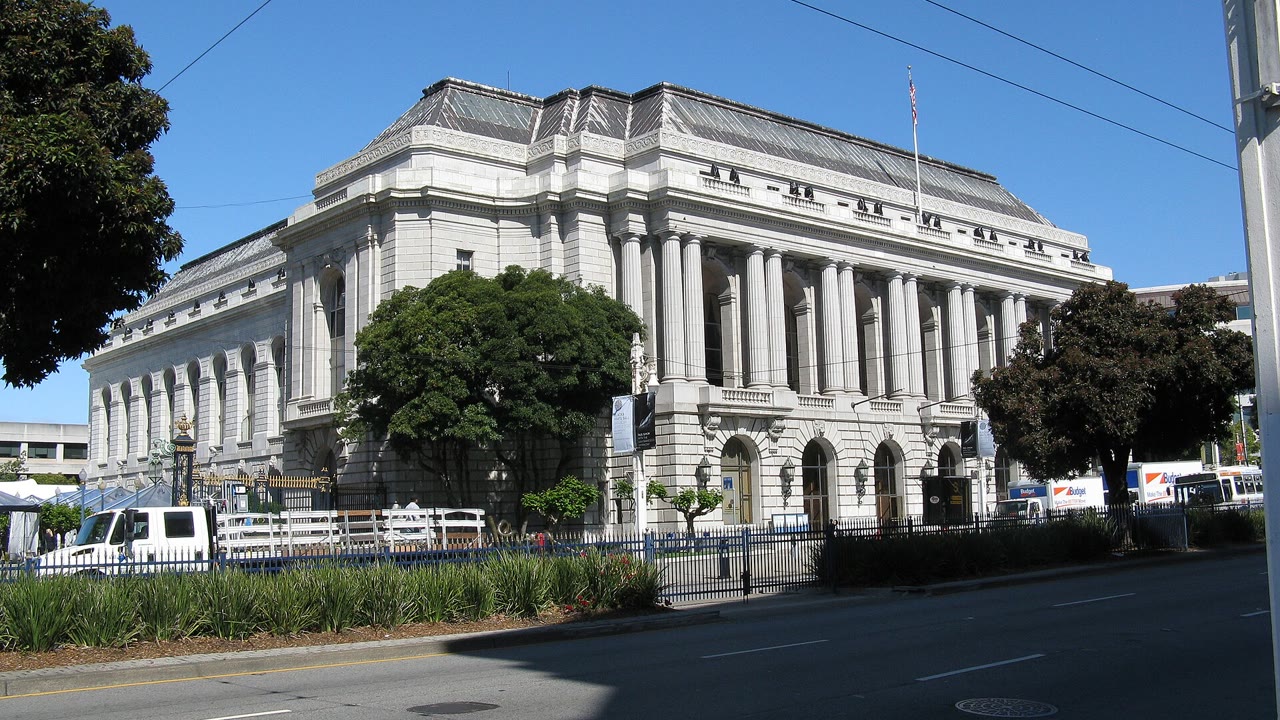
On Van Ness Avenue, inside a granite civic building, there is a hall of about 900 seats with painted walls from a world’s fair. The history of the Herbst Theatre runs from those 1915 murals through the founding of the United Nations to a long life of lectures, recitals and the odd experiment in new theatre.
Quick answer
What is the Herbst Theatre?
The Herbst Theatre is a hall of about 900 seats in San Francisco’s War Memorial Veterans Building, opened in 1932 as the Veterans Auditorium. Frank Brangwyn’s murals from the 1915 Exposition line its walls, and on June 26, 1945, delegates signed the United Nations Charter on its stage.
Murals from a world’s fair (1915 to 1934)
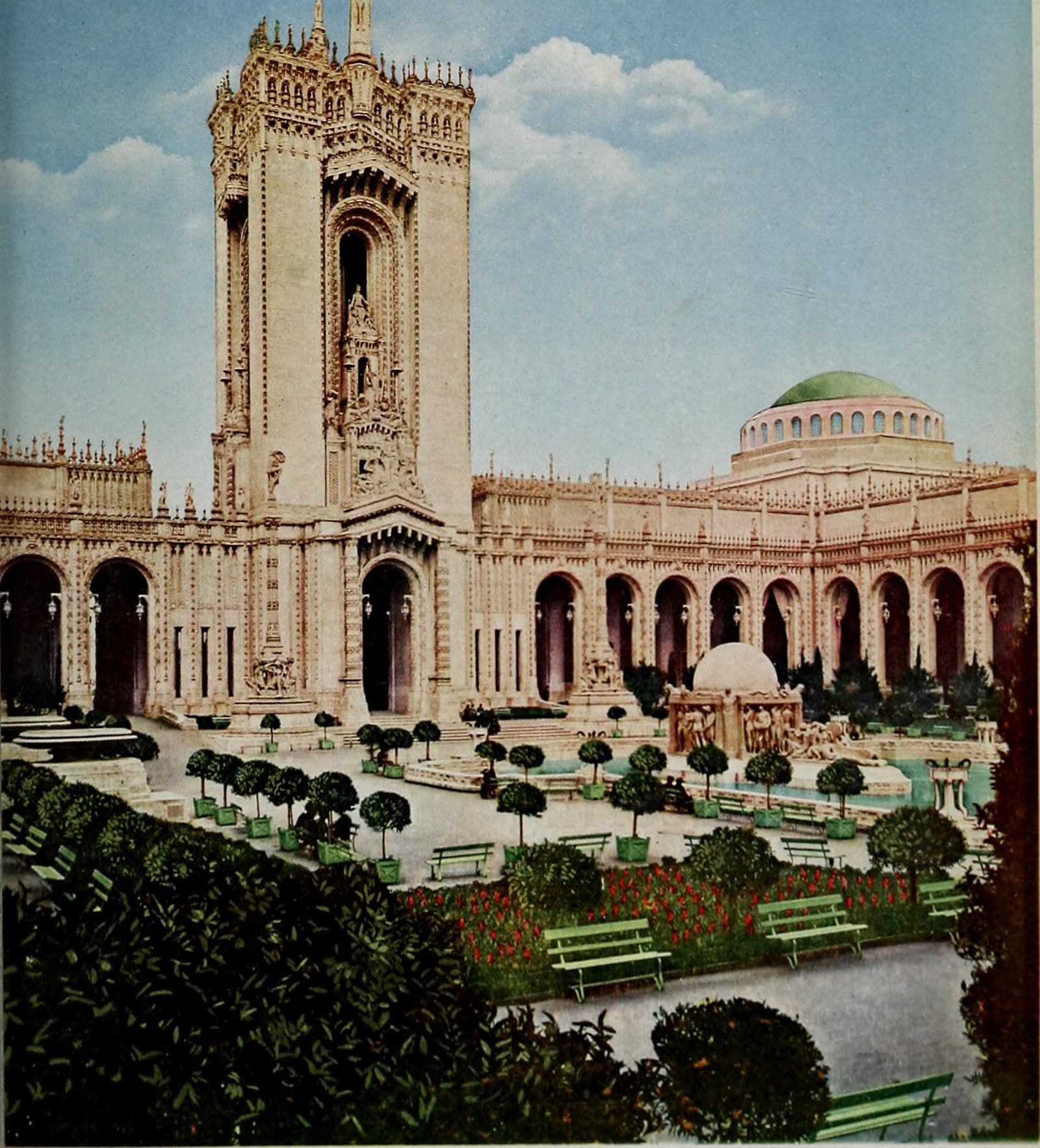
The oldest things in the room are older than the room. Frank Brangwyn painted eight murals, each 11 by 24 feet, for the Panama-Pacific International Exposition of 1915. They came down after the fair closed in 1916, and in 1934 they were reinstalled in the auditorium, according to the conservators at EverGreene.
The War Memorial describes “stunning murals by Frank Brangwyn portraying the four elements.” That date explains a common mix-up: some short histories say the hall opened in 1915. The murals date from 1915; the hall opened with the Veterans Building in 1932.
A building for veterans and art
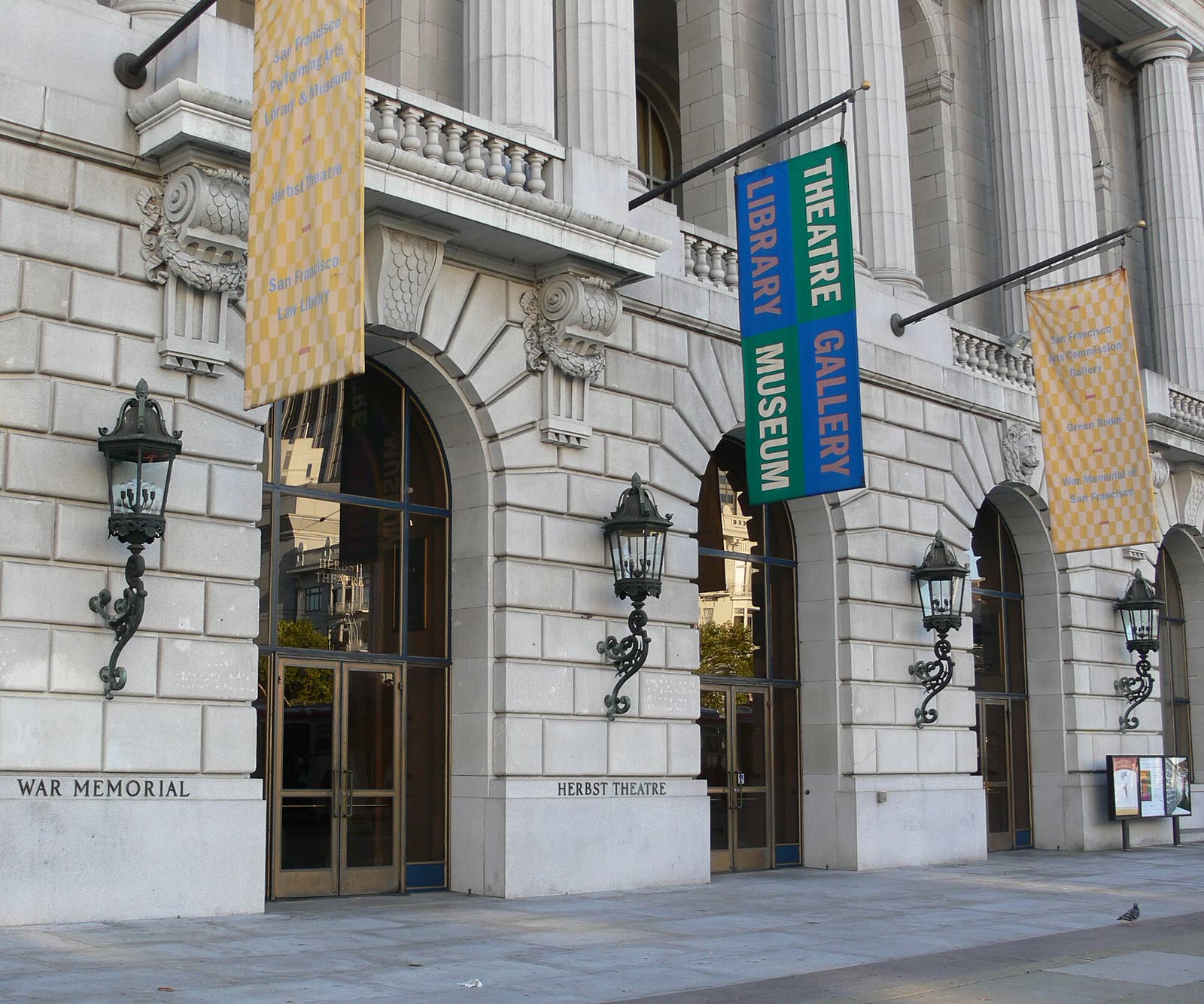
Construction began on January 28, 1931, and the cornerstone was laid on November 11 that year. The War Memorial Veterans Building opened on Armistice Day, November 11, 1932, a month after the Opera House beside it. Its architect was Arthur Brown, Jr., who also designed City Hall.
The building, its owner says, was “designed for and has been devoted to veterans organizations, arts organizations and the administrative offices” of the War Memorial. The hall on its ground floor was called the Veterans Auditorium. San Francisco Public Works counts the building, in the Civic Center Historic District, among the most complete examples of Beaux Arts civic design in the country.
Art moved in upstairs. In 1935, SFMOMA’s history records, the San Francisco Museum of Art, “under the leadership of founding director Grace McCann Morley,” opened “on the fourth floor of the War Memorial Veterans Building on Van Ness Avenue.” It stayed at 401 Van Ness for almost sixty years, closing those galleries in September 1994.
June 26, 1945: the Charter on the stage
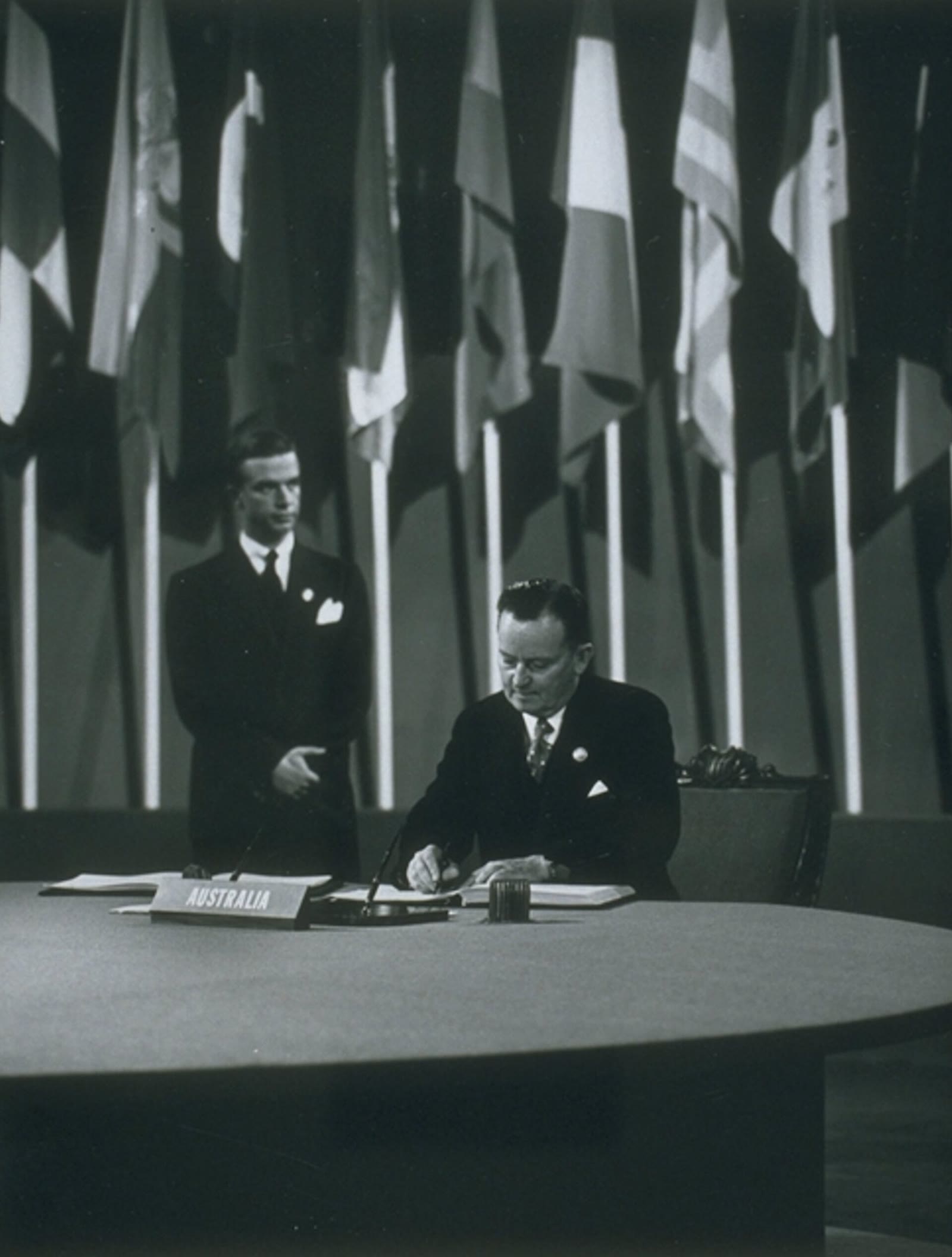
From April 25 to June 26, 1945, delegates of fifty nations met in San Francisco to write the Charter of the United Nations. The United Nations’ account of the San Francisco Conference counts 850 delegates and, with advisers and staff, 3,500 people, plus more than 2,500 press, radio and newsreel reporters.
The conference took over the Veterans Building. “With its galleries commandeered for delegates and press, the museum relocates to a temporary facility on Post Street from March through July,” SFMOMA’s timeline says of that year.
| Date (1945) | Place | What happened |
|---|---|---|
| April 25 | War Memorial Opera House | Conference opens; most plenaries are held here |
| April to June | Veterans Building | Delegates and press take over the museum’s galleries |
| June 25 | Opera House | Charter adopted unanimously |
| June 26 | Veterans Auditorium (now the Herbst) | Charter signed by the delegations |
| October 15 | Poland | Poland signs, one of the 51 original members |
| October 24 | Worldwide | Charter in force, now United Nations Day |
Opera House or Herbst?
Ask where the UN Charter was signed and some summaries will say the Opera House. Both buildings have a claim. The Charter was adopted unanimously in the Opera House on June 25, and signed the next day across the courtyard; in the War Memorial’s words, “it was on the stage of the Veterans Auditorium (now the Herbst Theatre).”
Poland had no delegate in time, so a space was left for it, and it signed on October 15. In 1985 the state listed the complex as a landmark under the name “Birthplace of the United Nations, War Memorial Complex.”
The Herbst name and a stage for talk and music
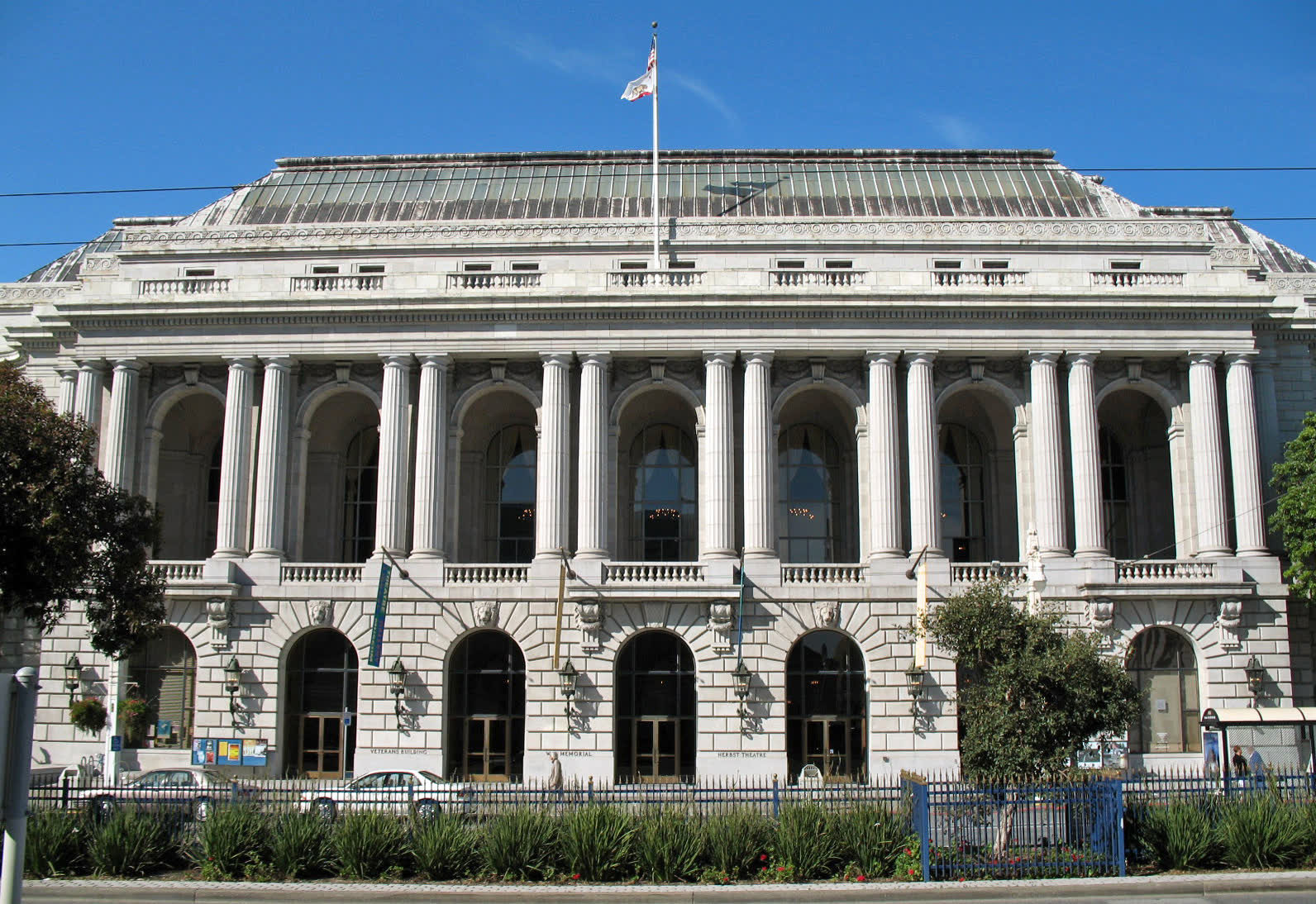
The hall got its present name in the late 1970s, when a Herbst Foundation grant paid for its refurbishment (1978, by the War Memorial’s account; Wikipedia gives 1977 and names the brothers Herman and Maurice Herbst). The city’s War Memorial department took charge of it afterwards.
For decades the Herbst Theatre in San Francisco was the city’s room for ideas spoken aloud. In 2013 the magazine 7×7 noted that the Herbst “has been City Arts’ headquarters,” home to the lecture series City Arts & Lectures. “For 32 years, City Arts & Lectures founder Sydney Goldstein has rolled out a parade of literary rock stars,” it wrote, as the series left for “an upcoming retrofit renovation at the Herbst”. Recital series played there too.
Antenna Theater at the Herbst
Three years after the refurbishment, the hall took in something less polite than a recital. Antenna’s chronology lists “1981: Herbst Theater, San Francisco, CA” among the venues for Vacuum, Antenna’s 1981 stage play about a man who sells emptiness. No review, date or photograph of that run survives in the archive, so the year is all there is.
The Charter came back into Antenna’s work in 1985, at another venue. In Fairplay, where audients re-signed the Charter in 1985, people wearing headphones signed the UN Charter as one of a string of moments from San Francisco history. That show was staged at Fort Mason, not here: see Fort Mason’s Pier 3, where Fairplay was staged. Fort Mason’s Herbst Pavilion, on Pier 2, is a different building.
The city’s other homes for new work have their own histories, from the South of Market cultural center SOMArts to the San Francisco International Arts Festival. Every Antenna venue is listed in Antenna’s full chronology.
Earthquake and rebuild
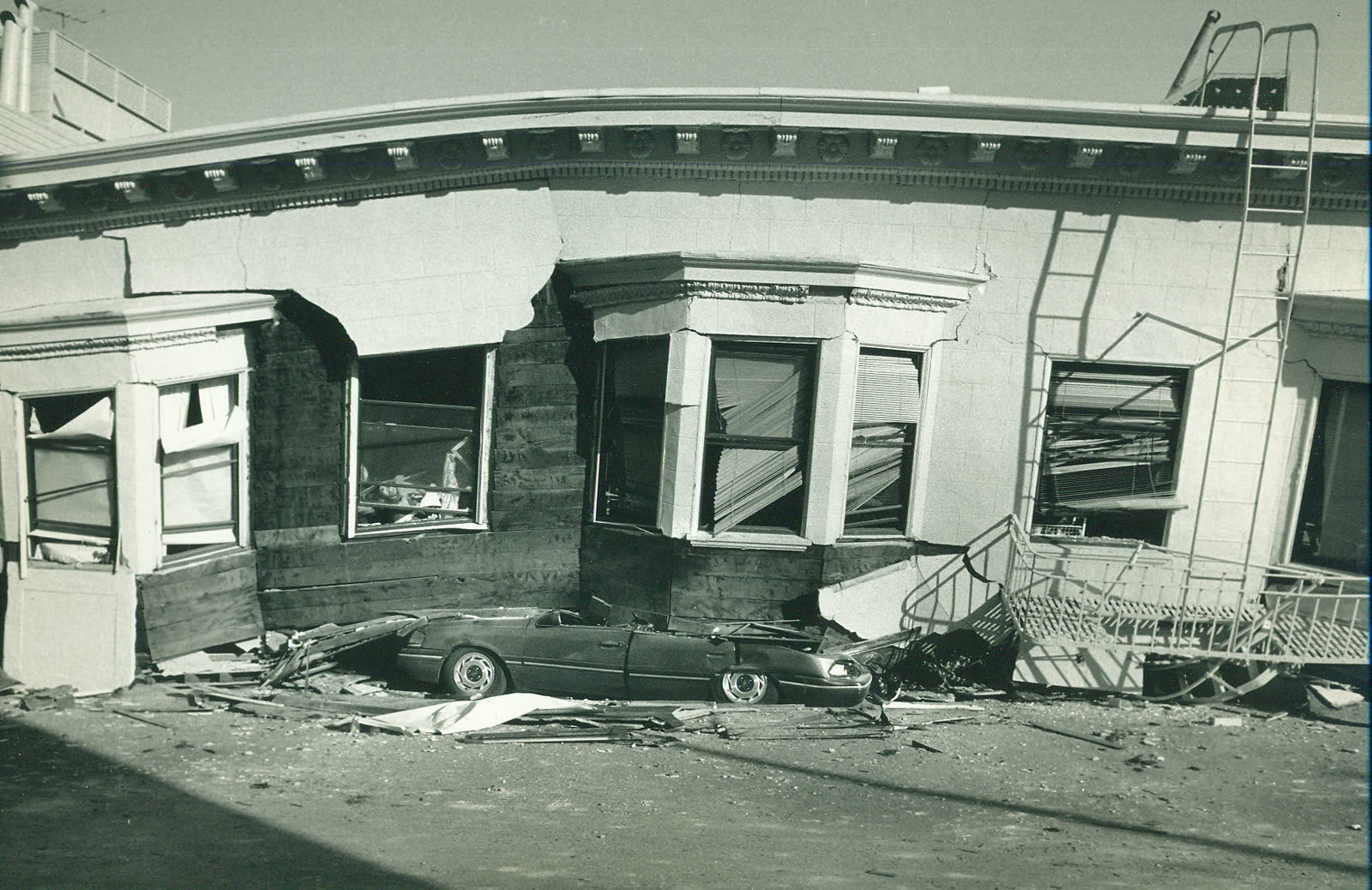
The Loma Prieta earthquake of October 1989 damaged the War Memorial Veterans Building, but it stayed open for more than twenty years. The full repair, Public Works says, “began in July 2013 and wrapped up in September 2015”, at a total cost of $156,369,000.
The work added seismic upgrades, earthquake repairs and better access, a new Arts Commission gallery and space for San Francisco Opera, whose Wilsey Center on the fourth floor opened on September 16, 2015. EverGreene protected the Brangwyn murals through construction, then conserved them.
The history of the Herbst Theatre in nine dates
| Year | Event | Source |
|---|---|---|
| 1915 | Brangwyn paints eight murals for the Panama-Pacific International Exposition | EverGreene; War Memorial |
| 1932 | Veterans Building opens on Armistice Day, with the Veterans Auditorium | War Memorial; Public Works |
| 1934 | Brangwyn murals installed in the auditorium | EverGreene |
| 1935 | San Francisco Museum of Art opens on the fourth floor | SFMOMA |
| 1945 | UN Charter signed on the auditorium’s stage, June 26 | UN; War Memorial |
| 1978 | Refurbished with a Herbst Foundation grant and renamed (1977 in Wikipedia) | War Memorial |
| 1989 | Damaged in the Loma Prieta earthquake; stays open | Public Works |
| 1994 | The museum closes its Van Ness galleries | SFMOMA |
| 2013-2015 | Seismic retrofit and renovation, about $156 million | Public Works |
Seat counts differ by source: 892 from the owner, 890 from the conservators and 928 in Wikipedia, so “about 900” is the safe figure. For the complex as a whole, the War Memorial’s own history of the Civic Center buildings gives the dates, the architect and the signing stage.
Frequently asked questions
Where was the UN Charter signed?
On June 26, 1945, on the stage of the Veterans Auditorium in the War Memorial Veterans Building, now the Herbst Theatre. It had been adopted in the Opera House next door the day before.
Why is it called the Herbst Theatre?
A Herbst Foundation grant paid for its refurbishment in the late 1970s. Wikipedia names the brothers Herman and Maurice Herbst.
Who painted the murals in the Herbst Theatre?
Frank Brangwyn, for the 1915 Panama-Pacific International Exposition. The eight panels were installed in the hall in 1934.
How many seats does the Herbst Theatre have?
About 900. The War Memorial gives 892.
Did Antenna Theater perform there?
Antenna’s chronology lists Vacuum at the Herbst in 1981.