The History of the Labyrinth: From Knossos to Grace Cathedral
The history of the labyrinth runs from rock carvings to a cathedral floor in San Francisco, and it begins with a paradox. The labyrinth of Greek myth was a trap, yet the labyrinths people actually drew, carved and walked have a single path with no way to get lost. This guide follows the figure through the sources, from Knossos to Chartres and the English turf mazes.
Quick answer
What is the difference between a labyrinth and a maze?
A labyrinth has one winding path from the edge to the centre, with no choices and no dead ends: you walk in and walk the same way out. A maze is a puzzle, with branching paths and dead ends, like the hedge maze planted at Hampton Court around 1690. English usage is loose, so many turf labyrinths are called mazes.
Labyrinth or maze?
The people who keep labyrinths today are firm about the labyrinth vs maze distinction. Grace Cathedral in San Francisco puts it simply: “Unlike a maze, a labyrinth has just one path, so there are no tricks to it and no dead ends.” Veriditas, a labyrinth nonprofit, adds that “The labyrinth is not a maze.”
| Aspect | Labyrinth | Maze |
|---|---|---|
| Paths | One path, no dead ends | Branches and dead ends |
| Way out | “the entrance then becomes the exit” | Must be found |
| The route | “The path is in full view” | Hidden by hedges or walls |
| Examples | Knossos coins, Chartres floor, Saffron Walden turf | Hampton Court hedge maze, about 1690 |
| Use | Walking, prayer, games of running | A puzzle to solve |
Older writers were less careful. Herodotus’s translator uses both words for one Egyptian building, and the English call many single-path turf labyrinths “mazes.”
The first labyrinths: where the history of the labyrinth begins
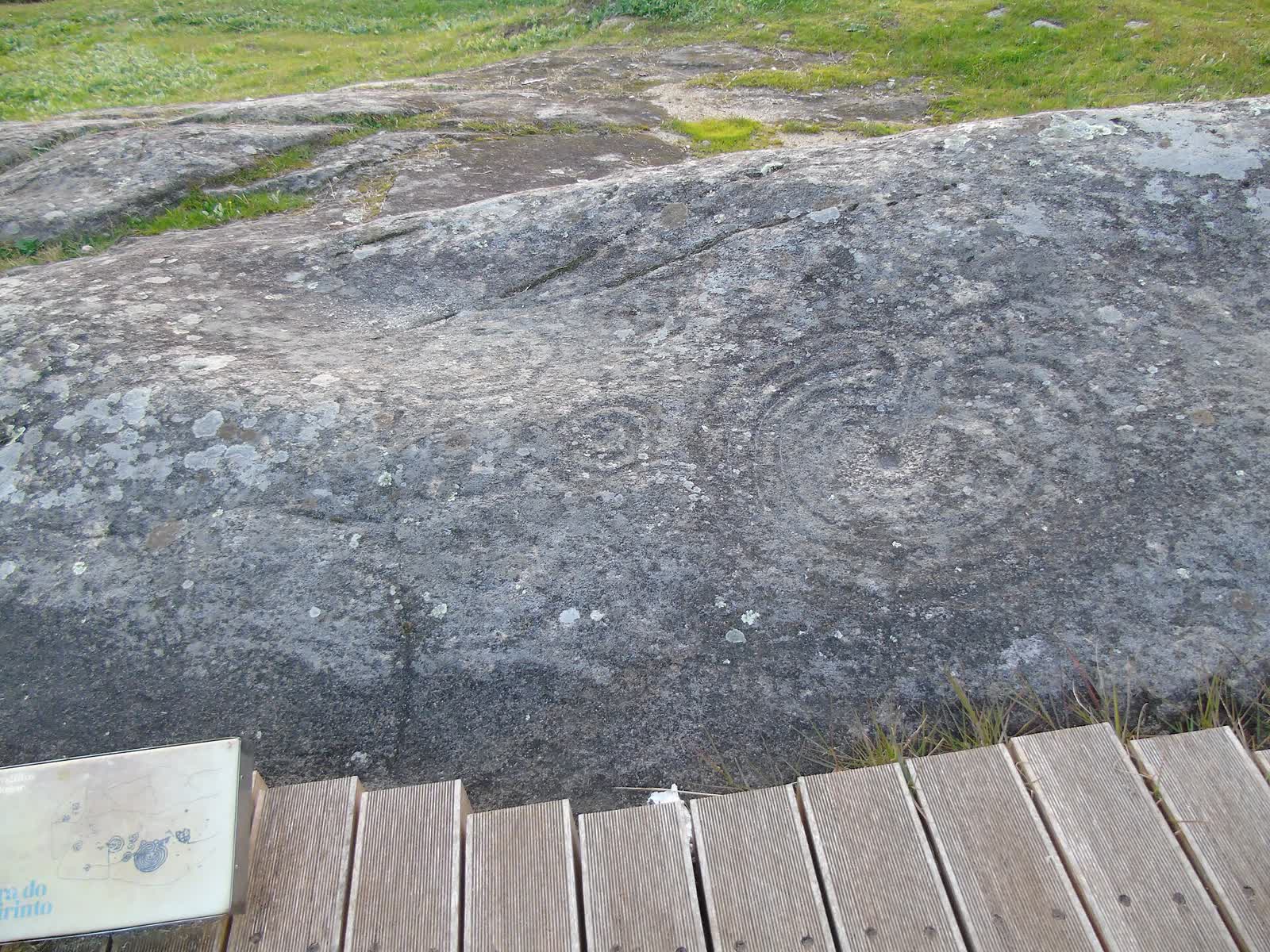
Nobody can date the first one. Jeff Saward’s historical overview for The Labyrinth Society says “some labyrinth decorated artefacts and rock carvings in southern Europe are between 3000 and 4000 years old.” Veriditas claims 5,000 years for designs on pottery and tiles, so “thousands of years” is the safe phrase.
The first written account is Herodotus, in the fifth century BCE, describing a building near Lake Moeris in Egypt. “I have seen it myself, and indeed words cannot describe it,” he wrote, and he counted the chambers: “three thousand altogether, fifteen hundred above and the same number under ground.” That labyrinth was a vast palace of rooms, closer to a maze than to a path.
Knossos, Theseus and the coins
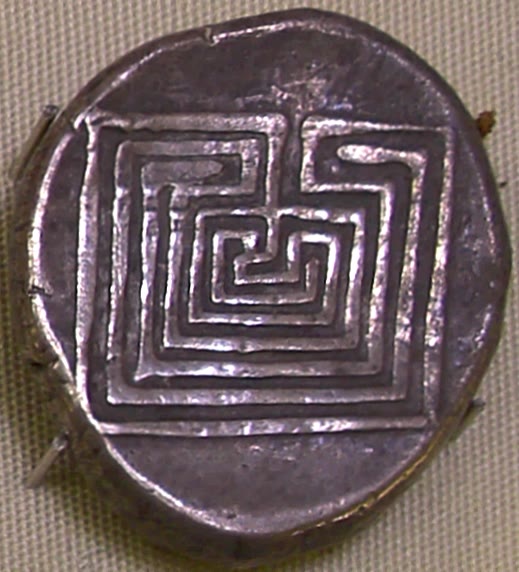
The labyrinth’s lasting story comes from Crete. In the myth, the Minotaur “was confined to an elaborate labyrinth, designed by the inventor Daedalus to keep all who entered trapped,” until Theseus killed it, helped by Ariadne’s thread, as the Menil Collection’s catalogue entry for a Knossos coin retells it.
Here is the paradox. Knossos put the labyrinth on its silver coins from at least the fourth century BCE, and the figure on them is a single winding path, not a trap with dead ends. Roman mosaic floors later “often depicted the labyrinth surrounded by defensive walls with Theseus and the Minotaur at the centre,” Saward writes.
Into the cathedral: Chartres
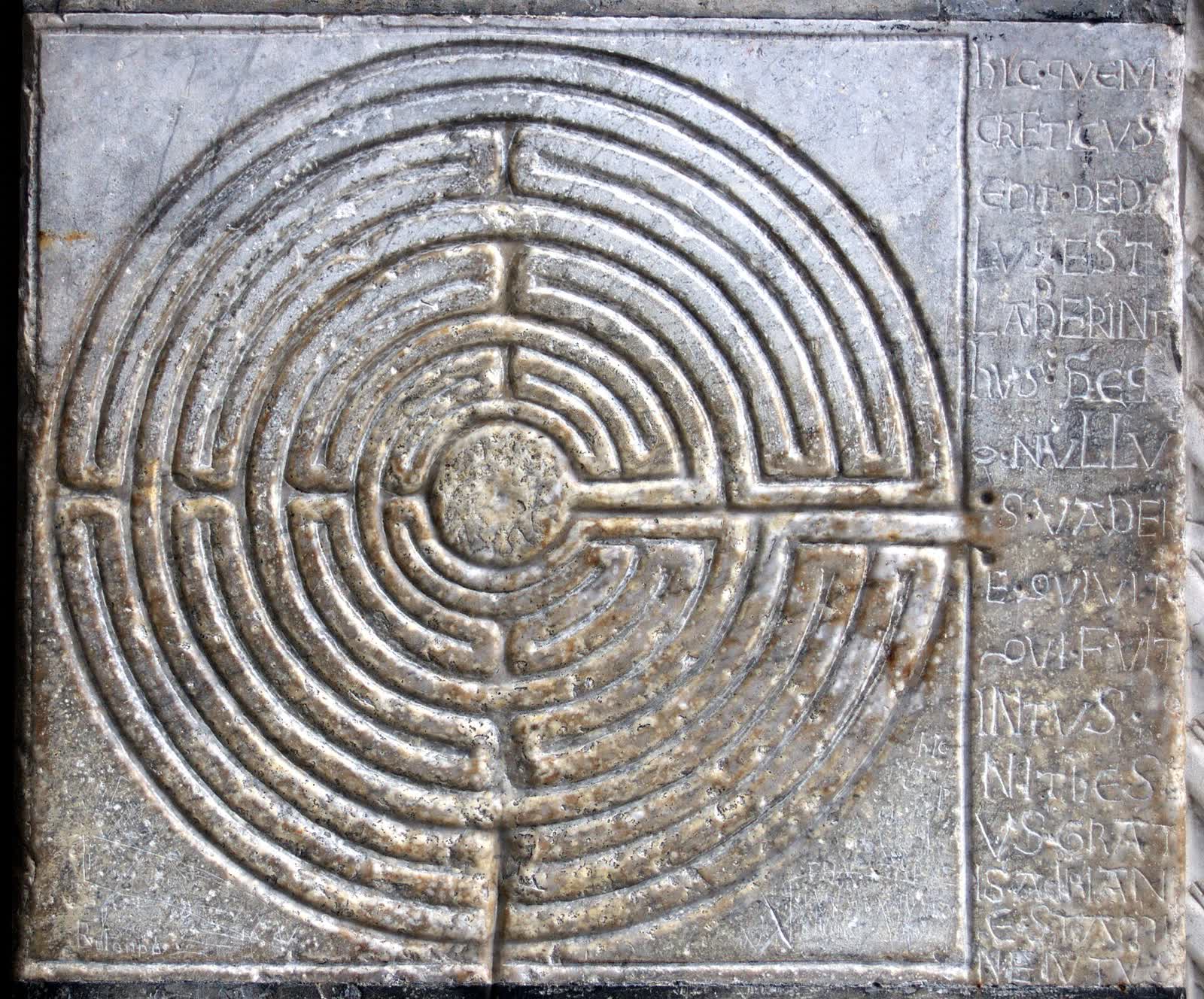
“The first known pavement labyrinth with obvious Christian context is found in a basilica in Algeria during the early 4th century CE,” says Saward. In the 12th century labyrinths appeared in churches, especially in Italy, where one is carved on the portico of Lucca Cathedral, and in the 13th century walkable floor labyrinths spread to northern France.
The Chartres Cathedral labyrinth is the famous one. The cathedral’s own page says the chapter of priests who commissioned the cathedral wanted it, around 1200; Veriditas gives 1201. The cathedral adds that recent findings tie it to the Easter vespers liturgy, and it calls the figure a path rather than a puzzle: “Le labyrinthe est chemin” (the labyrinth is a path).
Reims, Amiens and Saint-Quentin had floor labyrinths too. At Chartres, Veriditas says, the labyrinth was later “forgotten and covered with chairs” for some 250 years.
Turf labyrinths and the first hedge mazes
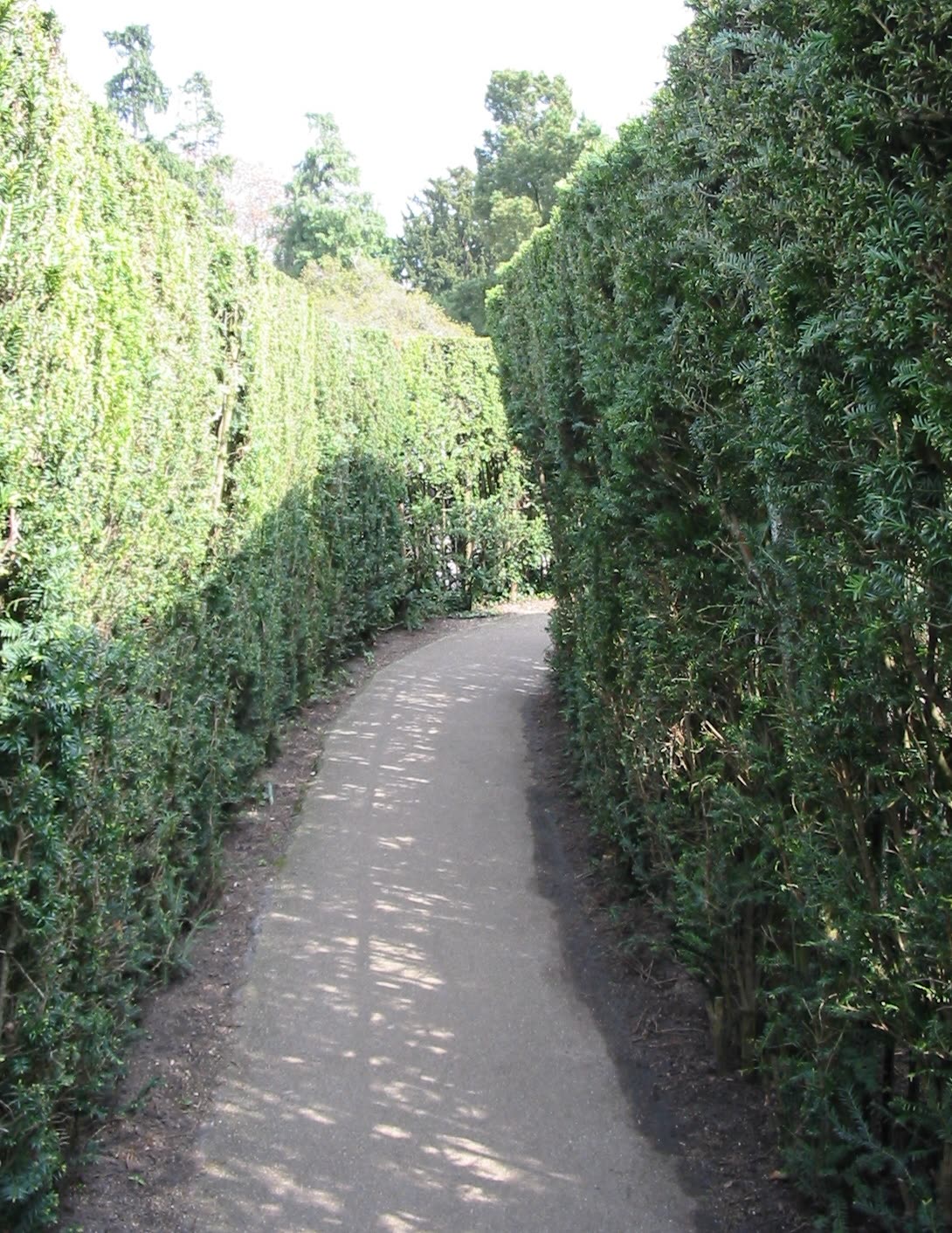
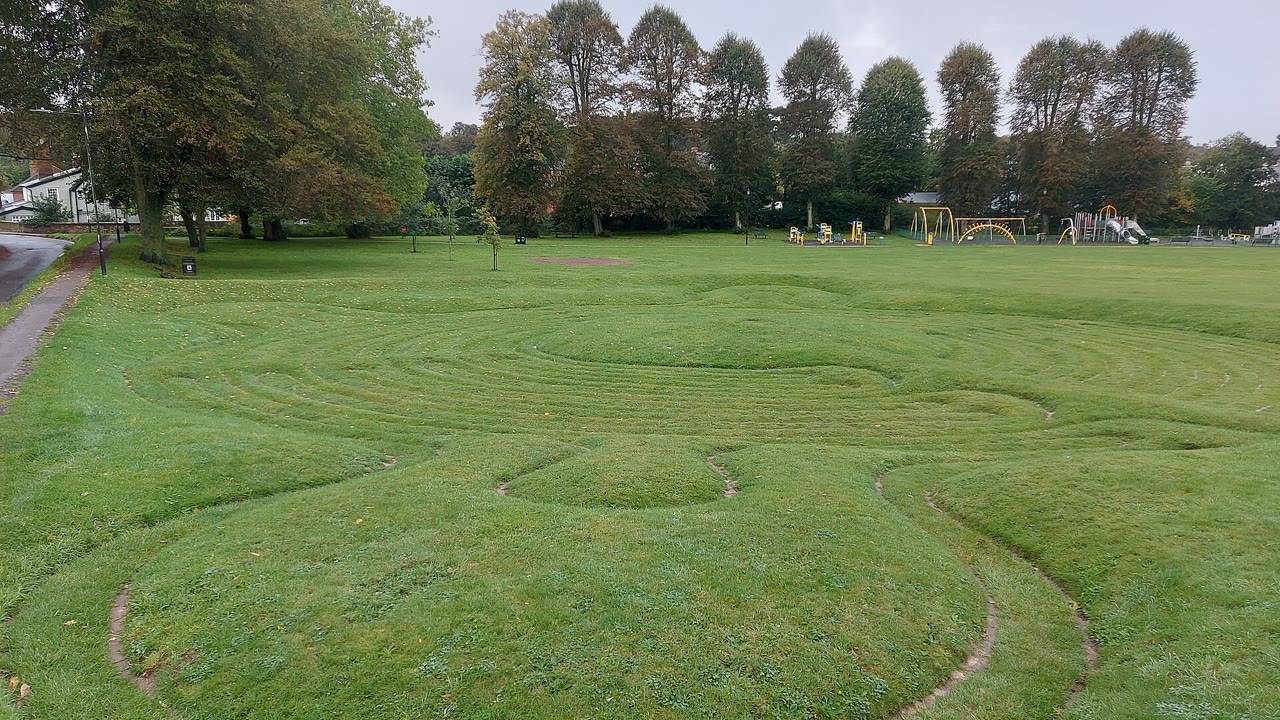
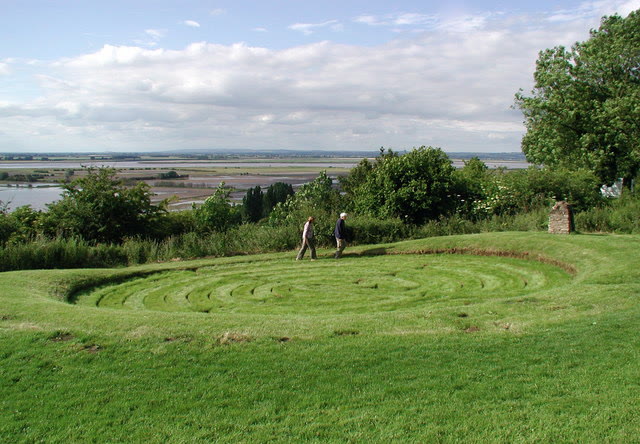
In northern Europe the figure moved outdoors, cut “of turf on village greens and hilltops in Britain and Germany,” and laid in stones across Scandinavia. Their “precise purpose can only be inferred from folklore and local traditions.”
Saffron Walden in Essex has “the largest surviving example,” 17 circuits and 26.9 metres across, with a path of bricks sunk between the turf ridges. Its first record is from 27 March 1699, when the town paid 15 shillings for “Cutting the maze at the end of the common,” in an age when a labourer earned about a shilling a day. One old note says it was “an imitation of Troy walls,” and an 1816 notebook names the centre Waterloo.
The hedge maze is the puzzle version. Guinness World Records calls Hampton Court’s, “planted in 1690 using hornbeam” for William III and Mary II, “The oldest surviving hedge maze,” with “a total path length of 800 m (0.5 miles).”
San Francisco and the walking revival
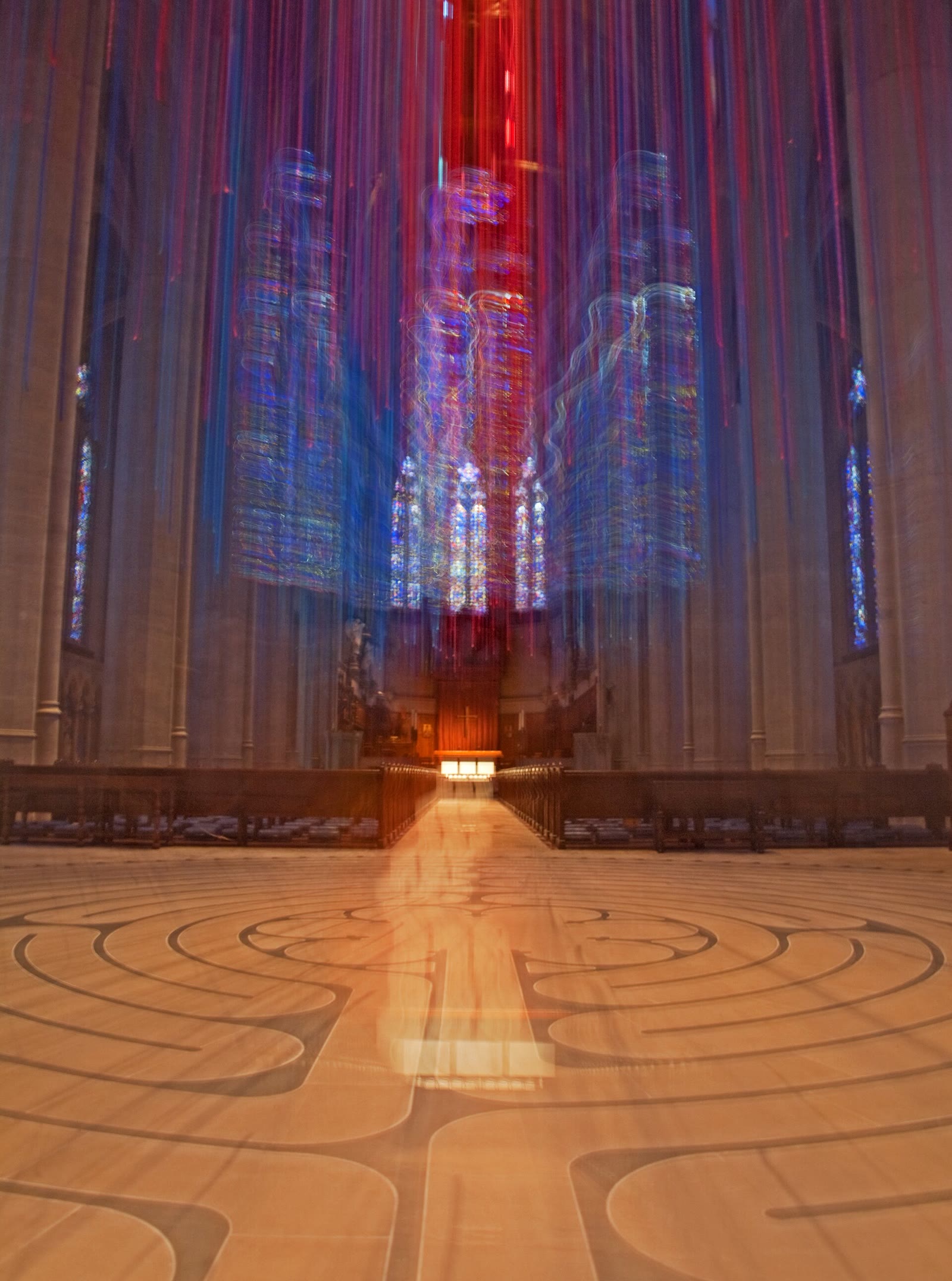
The modern revival started in San Francisco. After visiting Chartres, the Reverend Lauren Artress “returned home to Grace Cathedral, San Francisco, painted the design on canvas and opened it to the public” in 1991. An indoor tapestry labyrinth followed in 1994, an outdoor terrazzo labyrinth in 1995, and in 2007 a limestone and marble labyrinth was set into the cathedral floor.
Artress incorporated Veriditas in California in 1995. Grace Cathedral’s page on its two labyrinths claims the “Modern Labyrinth Movement that began in 1991” and says there are now “over 6000 labyrinths registered” worldwide. Saward agrees on the scale: “more labyrinths have been built in recent years than at any time in the past.”
| When | What |
|---|---|
| 3,000-4,000 years ago | Labyrinth carvings in southern Europe |
| 5th century BCE | Herodotus describes an Egyptian “labyrinth” |
| 4th century BCE | Knossos coins carry the labyrinth |
| Early 4th century CE | First known Christian floor labyrinth, Algeria |
| Around 1200 | Chartres Cathedral’s pavement labyrinth |
| 1690 | Hampton Court hedge maze planted |
| 1699 | Saffron Walden pays for “Cutting the maze” |
| 1991 to 2007 | Grace Cathedral’s canvas, tapestry, terrazzo and stone labyrinths |
One path, one walker: Antenna’s “mazes”
Antenna Theater called its walk-through shows mazes, but in the labyrinth’s terms most were not. American Theatre listed “the walk-through maze, which may, as in Enola Alone, have no actors,” as one of the company’s modes, and in Enola/Alone each walker was “Directed by a soft voice in their ears.”
For Etiquette of the Undercaste at the Smithsonian, the New York Times reported that “The number of visitors will be limited to one every three minutes,” and the Seattle Times wrote that “you are routed through an audio-visual maze.” Esquire called Amnesia “another maze, in other words, but without the walls.” Each audient followed one route, alone, set by a voice on tape.
The true maze was an idea. In 1983 Hardman asked: “How about a labyrinthian show in which you choose a new tape at frequent points of decision.” That branching show is the maze, with forks; the shows Antenna built were labyrinths. No source links Antenna to Grace Cathedral or the labyrinth movement: the likeness is one of form.
For related walks, see the mirror maze, a later fairground cousin, psychogeography and walking as a practice, and Walkmanology and Antenna’s other new theater forms. The neighbouring histories are the history of dime museums and the history of flash mobs.
Frequently asked questions
How old is the labyrinth?
Some labyrinth carvings and artefacts in southern Europe are between 3,000 and 4,000 years old, according to The Labyrinth Society.
When was the Chartres Cathedral labyrinth made?
Around 1200, at the wish of the cathedral’s chapter, possibly for the Easter vespers liturgy. Veriditas gives 1201.
When did Grace Cathedral get its labyrinths?
A canvas copy of Chartres in 1991, a tapestry in 1994, the outdoor terrazzo labyrinth in 1995 and a limestone and marble floor labyrinth in 2007.
What is a turf maze?
A labyrinth cut into turf on a green or hill. Saffron Walden’s, with 17 circuits and 26.9 metres across, is the largest surviving example.