History of the Marin Headlands: Forts, a Park, an Arts Center and a Stage
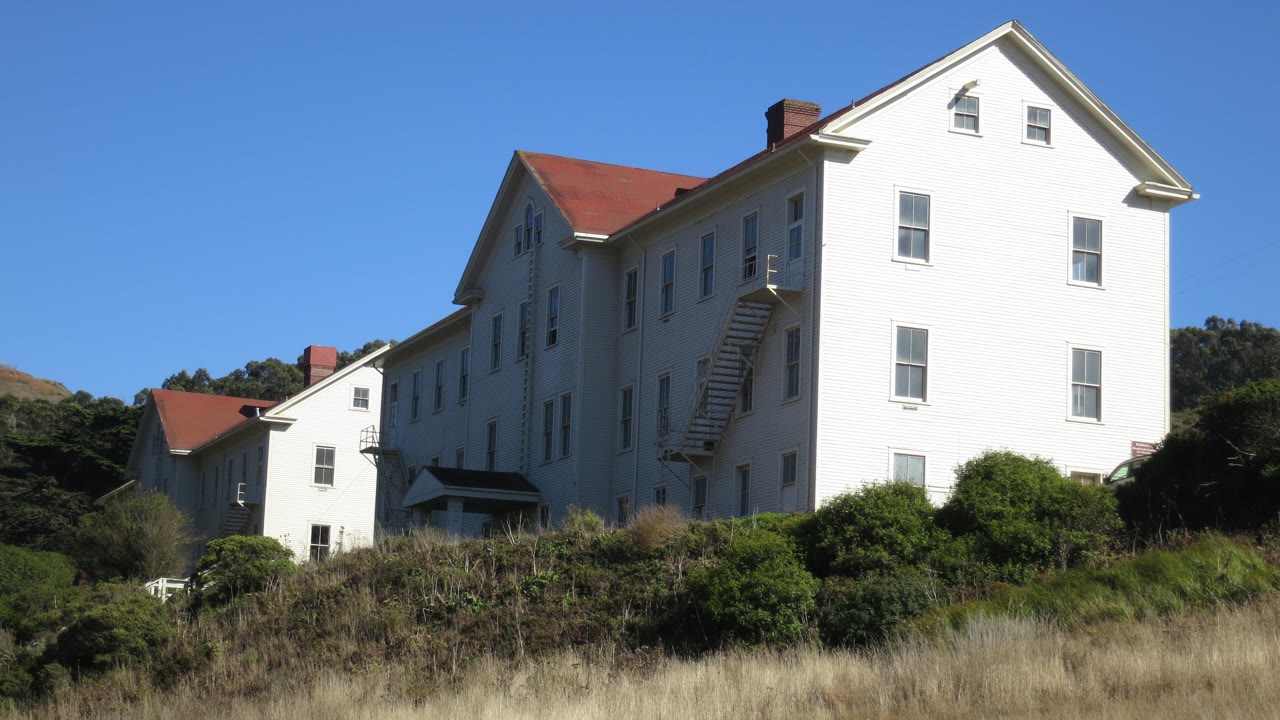
Just north of the Golden Gate, the Marin Headlands hold bunkers on the ridges, barracks by the beach and open hills where a city was once planned. The history of the Marin Headlands runs from the Coast Miwok to the army, through a long fight over development, to a national park whose old buildings filled with artists and, for decades, a theatre company.
Quick answer
What is the history of the Marin Headlands?
The Marin Headlands were Coast Miwok land, then from 1851 an army reservation guarding the Golden Gate, with Forts Baker, Barry and Cronkhite, gun batteries and a Cold War Nike missile site. A fight against the Marincello development ended in 1972, when the land joined the new Golden Gate National Recreation Area.
Before the forts
The National Park Service begins the story thousands of years ago with the Huimen Coast Miwok peoples. Its list of later chapters runs through Portuguese dairy farmers, lighthouse keeping and coastal defense, and ends with Marincello and the creation of the Golden Gate National Recreation Area.
An army reservation at the Golden Gate
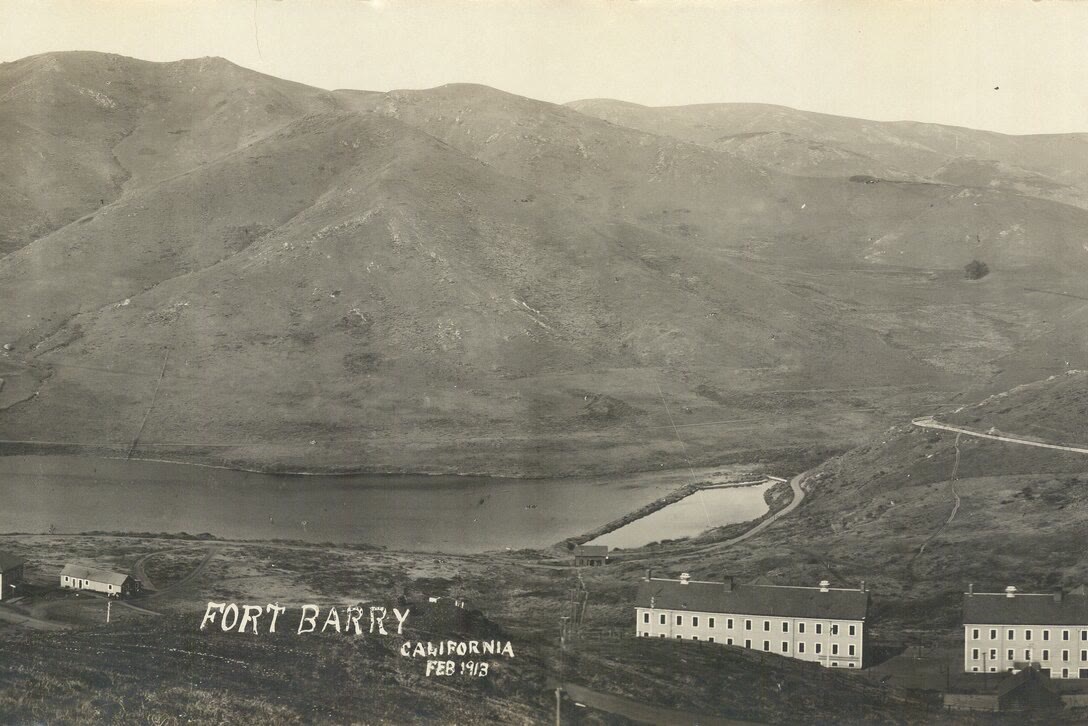
In 1851 President Fillmore set aside land around the Golden Gate for coastal defense guns, including parts of the headlands. The military held it for generations, and the land stayed largely undeveloped between its installations.
The NPS describes Fort Baker as “A 1905 Endicott-period army post that provided seacoast fortifications inside the Golden Gate straits,” and Fort Barry as the 1908 post that did the same outside them. Batteries came first: Battery Mendell at Fort Barry in 1901 and Battery Yates at Fort Baker in 1903.
World War II and Battery Townsley
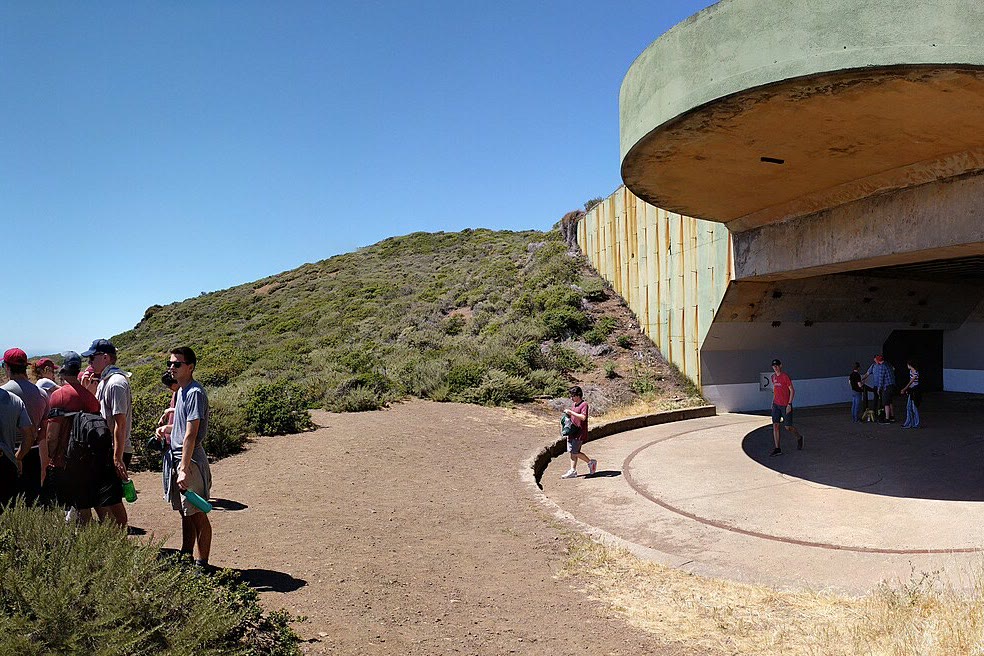
Fort Cronkhite was “A World War II army cantonment that serviced Battery Townsley”, which the NPS dates 1940 to 1948. Its barracks were completed in 1941. A 2013 KALW report found a soldier’s 1940 chalk note, “Lot number 4353”, still in a gunpowder room.
The Cold War: Nike site SF-88
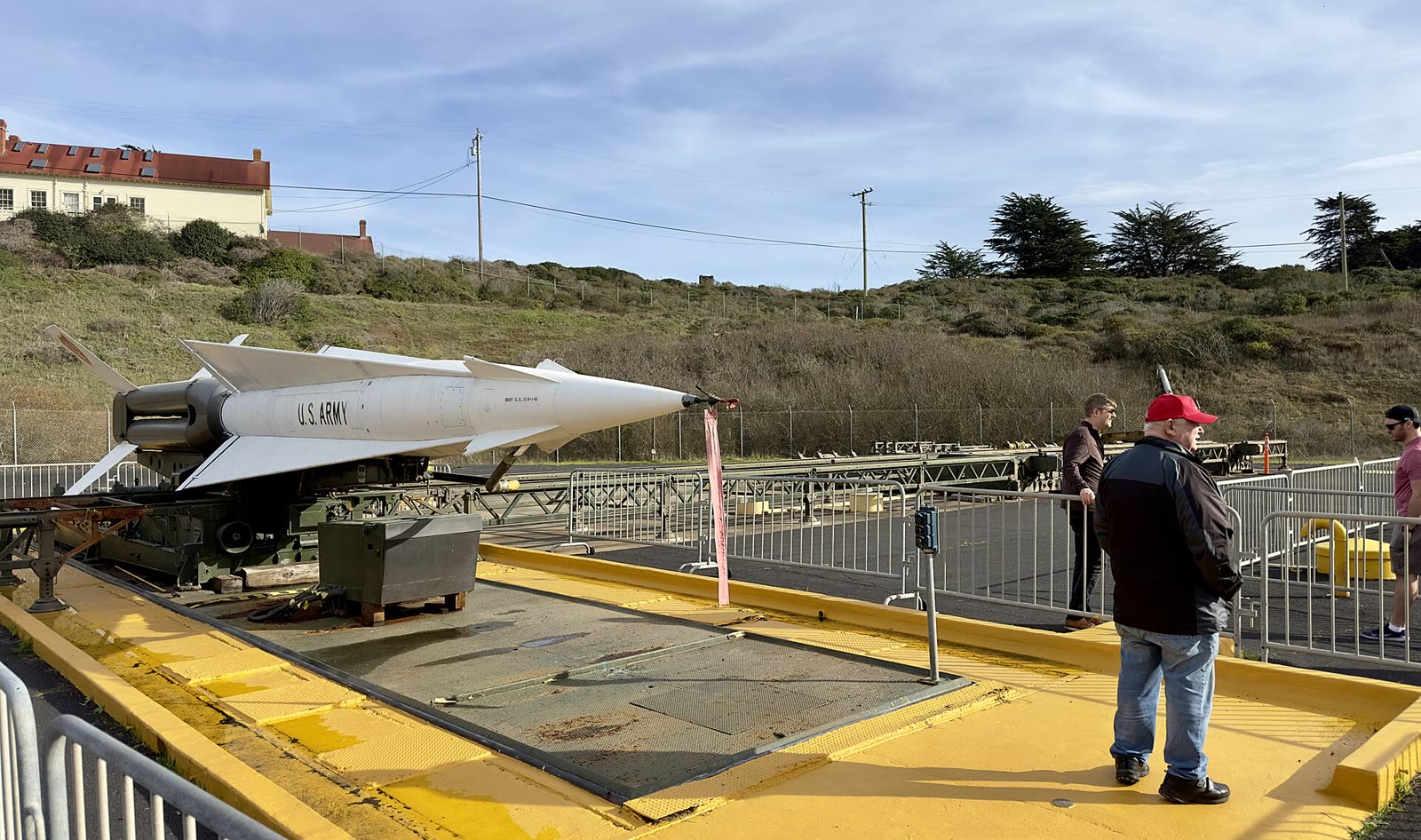
Then came missiles. The Nike site at Fort Barry was “constructed in 1954-55” and “originally housed a battery of twenty NIKE-AJAX missiles,” replaced by larger Nike Hercules missiles by the late 1950s. Atomic Archive’s guide to the Nike missile site is plain about its record: “No missile was ever launched from Site 88L.”
The army closed it in the spring of 1974. It is now “the only NIKE missile battery in the country preserved in its historic appearance.”
Marincello and the 1972 park
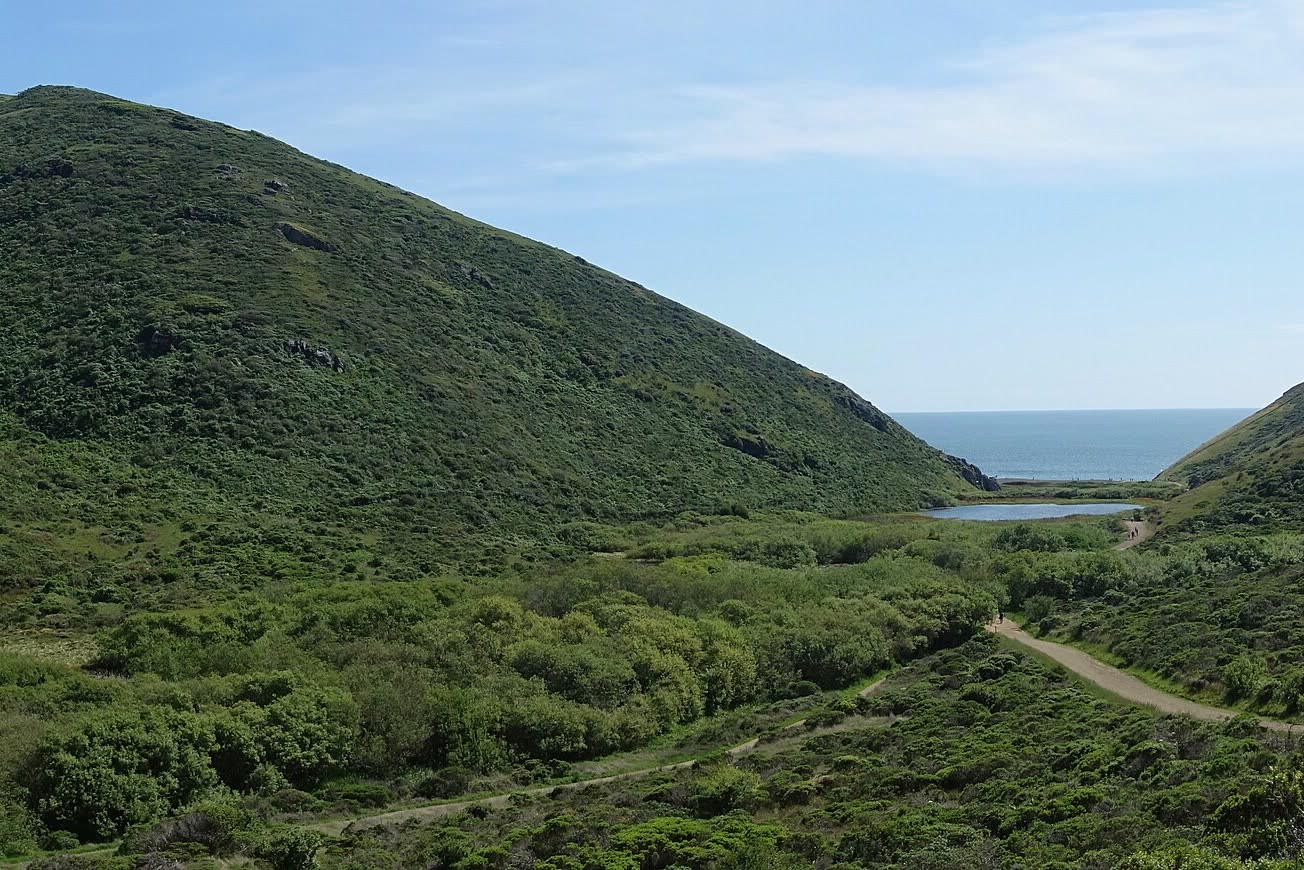
In November 1964 the Pittsburgh developer Thomas Frouge announced Marincello, backed by Gulf Oil’s land development division. “It is probably the most beautiful location in the United States for a new community,” he said. Sources size it differently: Bay Nature reports a city for 18,000 inhabitants, The Nature Conservancy a 2,000-acre development for 30,000 people.
County supervisors approved the plan in November 1965 and construction stopped in late 1967. On November 2, 1970, a state appellate court ruled the approval invalid, on the legal theory of Robert Praetzel, a San Rafael attorney. Bay Nature’s account of how grit and grace saved Marincello tells the fight in full.
In 1972 Gulf sold the land to The Nature Conservancy, which passed it to the National Park Service (in 1975, by the Conservancy’s account). That year also brought what Bay Nature calls “the vast Golden Gate National Recreation Area (GGNRA) we now accept as our birthright.” The park took over in 1972; the army’s last presence ended by the mid-1990s.
Artists in the barracks: Headlands Center for the Arts
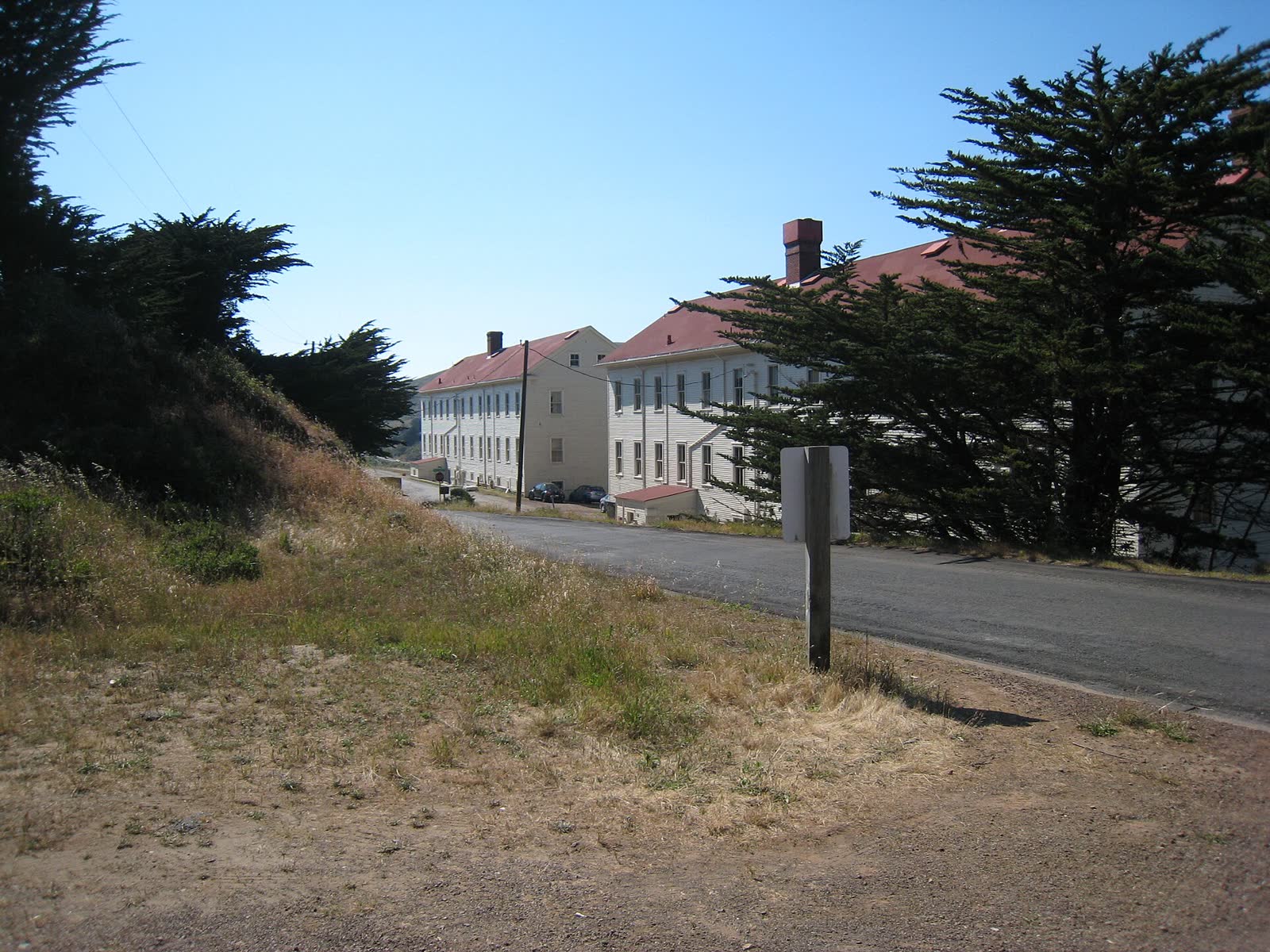
The empty buildings found new tenants. The Headlands Center for the Arts was incorporated in 1982 by “local artists, activists, and civic leaders”, first as the Headlands Art Center, and was working at Fort Barry by the mid-1980s (1984, by its own account). It has supported “more than 1,600 artists” since.
Artists including Ann Hamilton and David Ireland designed the renovation of its public rooms. Across the hills, the Bay Area Discovery Museum for Children occupies several of Fort Baker’s historic buildings.
A stage in the park
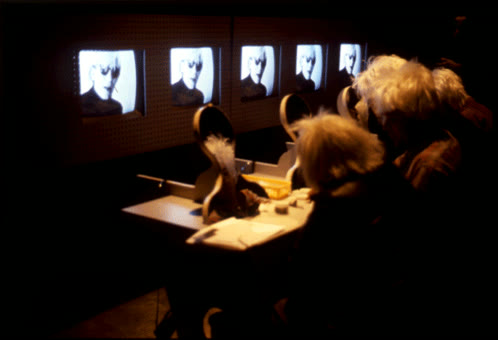
Antenna Theater described the place in its own words: “the Marin Headlands were once a military base and are now part of one of our most beautiful National Parks.” For Snake Theater and then Antenna, it was a stage from 1978 to 2012.
| Year | Work | Where on the headlands |
|---|---|---|
| 1978 | Somewhere in the Pacific (Snake) | Fort Cronkhite beach |
| 1987 or 1988 | Radio Interference | Army building, Fort Baker |
| 1992 | The Appearance of Civilization | Rodeo Beach at night |
| 1997 | Star*Light | Fort Barry |
| 1997-1998 | Pandemonium | Fort Barry woods and meadows |
| 1998, 2002 | Sands of Time | Rodeo Beach |
| 2012 | On the Edge | Trail to Point Bonita Lighthouse |
Antenna’s workshop at Fort Cronkhite
The headlands were also where the company worked. Antenna’s 1999 site said: “Antenna headquarters, our administrative offices and scene shop, are located in the Marin Headlands, part of the Golden Gate National Recreation Area.” The offices were in “Building 1057, in the second row of buildings facing the beach”, a former army building facing Rodeo Beach.
In 1991 Marin Scope visited “the theater’s headquarters at Fort Cronkite” (sic) and found Chris Hardman and Ron Davis “creating and painting endangered species and a host of comical human predators” for All You Can Eat, a Bay Day piece. “In one area an artist was constructing a dancing brown pelican.” Processions like it have a long past, traced in the history of the pageant play and civic parade.
Beach, woods and cliff
Snake Theater’s beach play at Fort Cronkhite “catapulted the group to local prominence in 1978,” Robert Hurwitt wrote. Radio Interference played in an old army building at Fort Baker (1987 by the Chronicle’s review; the chronology lists 1988), where Hardman and set designer Ronald M. Davis “created a dozen or so mini-environments inside”.
Rodeo Beach held Antenna’s Columbus Quincentennial piece on Rodeo Beach in 1992 and Sands of Time, carved into Rodeo Beach, whose sculpted sand recalls land art and its earthworks. Fort Barry’s woods held Pandemonium, the night walk through Fort Barry, and Star*Light, whose soundtrack “includes many individuals describing near-death experiences”. In 2012 On the Edge, the audio walk to Point Bonita, followed the cliffs to the lighthouse.
The history of the Marin Headlands in dates
| When | What happened |
|---|---|
| Thousands of years | Huimen Coast Miwok homeland |
| 1851 | Land set aside for coastal defense |
| 1901-1908 | Endicott batteries; Fort Baker (1905), Fort Barry (1908) |
| 1940-1948 | Battery Townsley; Cronkhite barracks finished 1941 |
| 1954-1974 | Nike site SF-88, never fired |
| 1964-1970 | Marincello proposed, approved, stopped, struck down |
| 1972 | Land sold; Golden Gate National Recreation Area created |
| 1982 | Headlands Center for the Arts incorporated |
| 1978-2012 | Snake and Antenna stage work across the headlands |
Frequently asked questions
Why are there bunkers in the Marin Headlands?
The land was set aside for coastal defense in 1851, and the army built batteries there from Battery Mendell in 1901 through Battery Townsley in World War II.
When did the Marin Headlands become a park?
In 1972, when the Golden Gate National Recreation Area was created and Gulf Oil sold the Marincello site to The Nature Conservancy, which later passed it to the National Park Service.
What was Marincello?
A planned city announced in November 1964 by developer Thomas Frouge with Gulf Oil’s backing. A state appellate court ruled its approval invalid in 1970.
Did a theatre company work in the Marin Headlands?
Yes. Antenna Theater kept its administrative offices and scene shop there and staged work on its beaches, in its woods and along its cliffs, after Snake Theater’s 1978 beach play.
Every production named here has its place in the full Antenna chronology.