
What Is Land Art? Earthworks, Running Fence and a Beach Raked for Theater
In the late 1960s a handful of artists left the gallery for deserts, lakeshores and ranchland, and made the ground itself the material. So what is land art, which works define it, and why does a white fence across Sonoma and Marin belong to the story? This guide also visits a Marin beach where a theatre company raked the history of time into the sand.
Quick answer
What is land art?
Land art is art made in the landscape itself, by sculpting the ground or building with natural materials such as earth, rock and water. It grew out of the conceptual art of the late 1960s and 1970s. Famous examples include Robert Smithson’s Spiral Jetty (1970) and Christo and Jeanne-Claude’s Running Fence (1976).
Land art, defined

The Utah Museum of Fine Arts’ introduction to land art puts it plainly: “Land art is made directly in the landscape by sculpting the land itself or by making structures in the landscape with natural materials.” Also called earth art, it “was part of the wider conceptual art movement in the 1960s and 1970s.”
Its artists wanted natural sites and “ways to circumvent the commercial art system.” Some “used mechanical earth-moving equipment to make their earthworks, while others made minimal and temporary interventions in the landscape.” Most people met the work in photographs, films and maps shown in galleries, and many artists were drawn to “the vast spaces and sublime emptiness of the American West.”
A short land art history
1968: the Earth Works show
In 1967 the gallery owner Virginia Dwan travelled with Nancy Holt and Robert Smithson looking for land for earthworks. “When we could not find land that was available, we were inspired to organize the Earth Works show in the gallery,” she recalled. The show opened in 1968, and Dwan went on to fund desert works such as Double Negative and Spiral Jetty.
The desert works: Double Negative, Spiral Jetty, Sun Tunnels
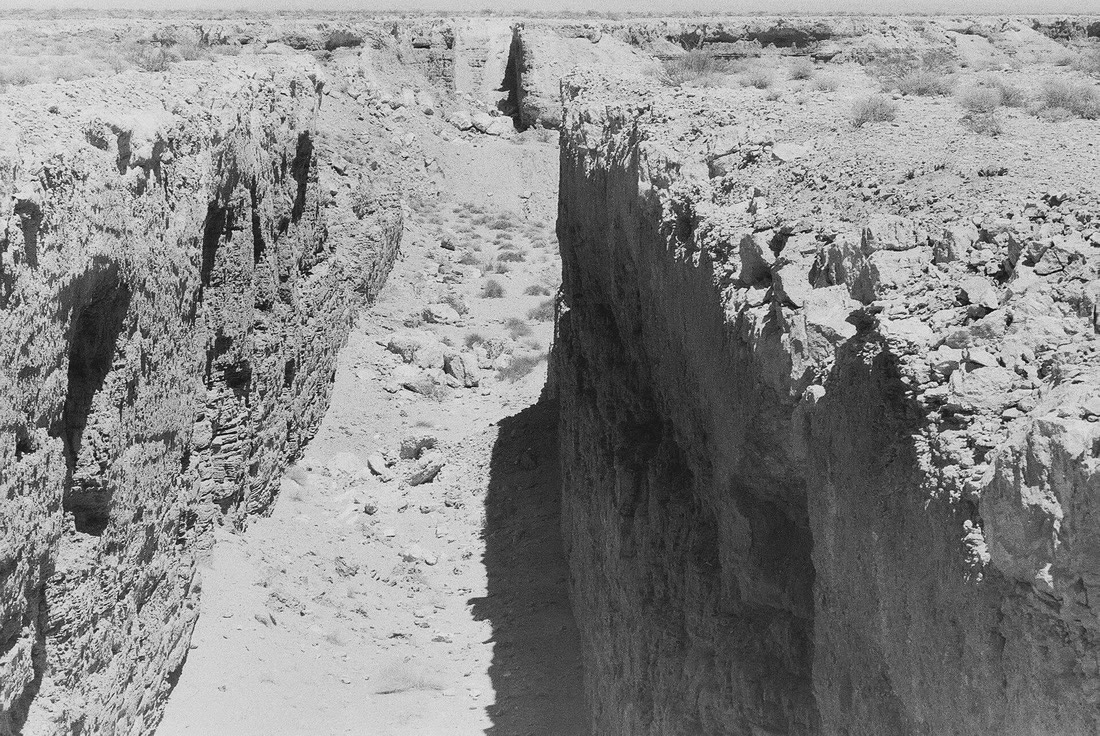
Michael Heizer conceived Double Negative in 1969 and finished it a year later. According to The Cultural Landscape Foundation, he used “dynamite and a bulldozer to remove 240,000 tons of sandstone and rhyolite,” cutting a 1,500-foot line across the edge of a mesa about 65 miles northeast of Las Vegas. Dwan gave it to the Museum of Contemporary Art in Los Angeles in 1984.
Smithson’s Spiral Jetty (1970) is a coil of black basalt and earth, 15 feet wide, reaching more than 1,500 feet into Utah’s Great Salt Lake at Rozel Point. The Utah museum calls it “the most famous large-scale earthwork of the period,” and says it “has come to epitomize Land art.” Nancy Holt’s Sun Tunnels (1973 to 1976) sets four concrete tunnels in the Great Basin Desert, aligned to frame the sun at the solstices.
Entropy: art the weather finishes

These works were never meant to stay still. Spiral Jetty rises and sinks with the lake, which “can alternately submerge the work or leave it completely exposed and covered in salt crystals.” Its bond with the lake “emphasizes the entropic processes of erosion and physical disorder with which Smithson was continually fascinated.” The Holt/Smithson Foundation’s page on Spiral Jetty lists its materials as “Mud, precipitated salt crystals, rocks, water.”
Land art in California
Running Fence, Sonoma and Marin, 1976

The best-known land art California has seen lasted two weeks. Christo and Jeanne-Claude’s Running Fence, the Smithsonian American Art Museum records, “was 24 1/2 miles long and 18 feet high, with one end dropping down to the Pacific Ocean.” It crossed privately owned land in Marin and Sonoma counties and “existed for only two weeks in September of 1976.”
It took “240,000 square yards of heavy woven white nylon fabric, 90 miles of steel cable, 2,050 steel poles, 350,000 hooks, and 13,000 earth anchors,” paid for entirely by the artists. Today a historical sign at Watson School, pictured here, marks its route; the fence itself is gone.
Goldsworthy’s ephemeral turn and the Presidio
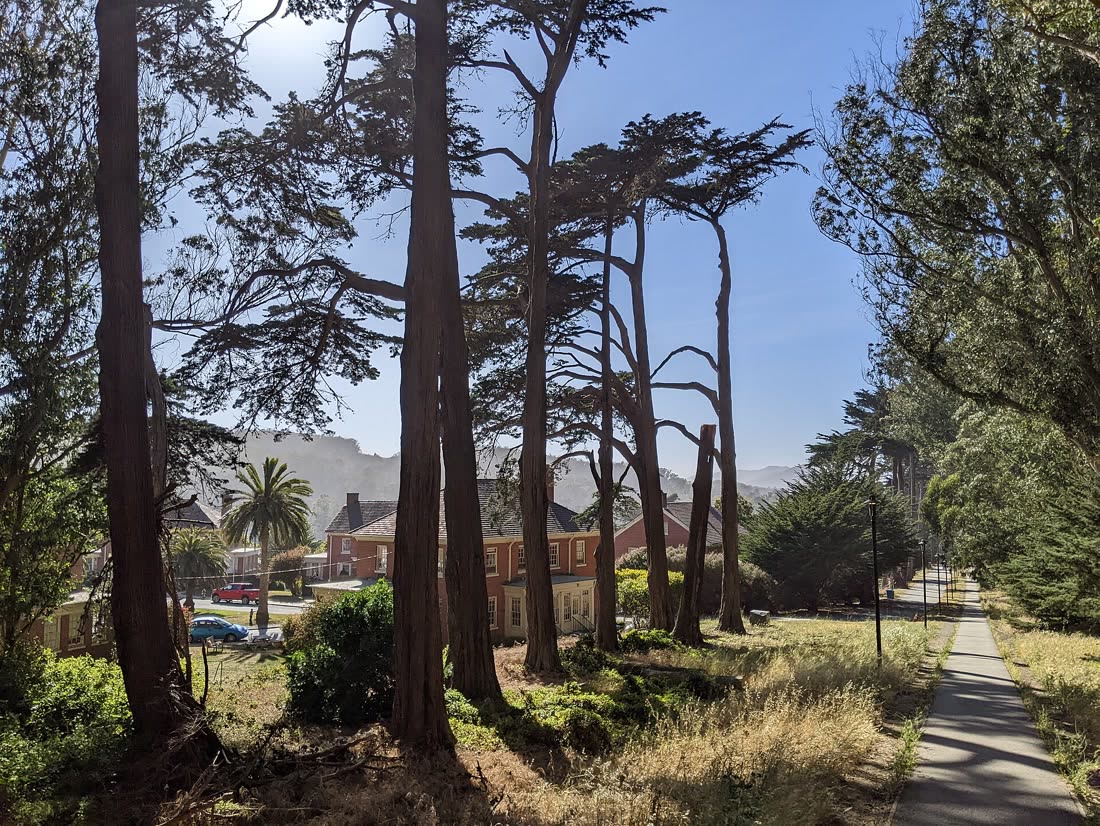
Andy Goldsworthy shows the temporary side. A University of Glasgow catalogue documents the first ten years of his “ephemeral, outdoor practice,” from 1976 to 1986. In San Francisco’s Presidio, the park says, he made four works from materials found there, among them Spire, about 95 feet tall, made from the trunks of felled trees, and Wood Line, which runs 1,200 feet along the forest floor.
| Aspect | Monumental earthworks | Ephemeral land art |
|---|---|---|
| Tools | Earth-moving machines; dynamite and a bulldozer at Double Negative | Minimal, temporary interventions |
| Lifespan | Decades, changed by weather and water | Hours to weeks: Running Fence stood two weeks |
| How most people see it | A trip to a remote site | Photographs, films and maps |
| Examples | Double Negative, Spiral Jetty, Sun Tunnels | Goldsworthy’s early works, Running Fence, Sands of Time |
Land art as theatre: Antenna’s raked beaches
Antenna Theater never called itself a land art company, and no source links Chris Hardman to Smithson, Christo or Goldsworthy. But one of its shows borrowed land art’s methods: sculpting a site, then letting nature erase it.
“Rake and sculpt the shoreline”

Antenna’s 1999 web page called Sands of Time an “interactive performance sculpture.” It explained: “ANTENNA artists rake and sculpt the shoreline of the beach into a visually arresting timeline, much like a Zen Garden, representing all of time from the Big Bang forward.” Visitors walked the 1,300-foot timeline with a soundtrack on headphones.
It began at Rodeo Beach in the Marin Headlands in October 1998, where it “was experienced by over 1,200 people in one evening.” The same page offered a version for places without sand, using “three dimensional bas-relief sculptures made out of dirt and clay.” The full production is told in the full story of Sands of Time.
The tide as the last artist
Where Smithson welcomed entropy, Hardman welcomed the tide. “It tends to erase everything over and over again … It destroys all of our long-term human constructs,” he told the Marin Independent Journal in 2002. Mia Monroe, site supervisor for Muir Woods National Monument, walked the first Rodeo Beach version and said: “I did it with a whole group of friends, and we’re still talking about it.”
The show moved on to Ocean Beach in San Francisco (in 1998 or 1999, by different company records), to Burning Man in the Black Rock Desert in 1999, and to Santa Monica in 2000. Antenna’s page for A Body of Water (2005) described Hardman’s sculptures on Ocean Beach, with “the surrounding sand sculpted to form a seaside sculpture garden.”
For the setting, see the history of the Marin Headlands and Snake Theater’s 1978 play on the sand at Fort Cronkhite. The ideas run through installations you walk into, walks that turn distance into deep time and Antenna’s new theater forms, while the pageant play shows an older way of staging a place.
Frequently asked questions
What is the most famous land art?
Robert Smithson’s Spiral Jetty (1970), a coil more than 1,500 feet long in Utah’s Great Salt Lake, which the Utah Museum of Fine Arts says has come to epitomize land art.
Is land art permanent?
Some is built to last, like Double Negative. Some is temporary by design, like Running Fence, which stood for two weeks, or Andy Goldsworthy’s ephemeral works.
Is there land art in California?
Running Fence crossed Sonoma and Marin counties in September 1976, and Andy Goldsworthy made four works in San Francisco’s Presidio.
Can land art be theatre?
Antenna Theater’s Sands of Time, which the company called an interactive performance sculpture, was raked into a beach and walked with headphones.