Moving Sculptures: Antenna Theater’s Plywood Neighbours in Marin (1982)
In 1982 Antenna Theater set out to fill five Marin County towns with plywood copies of the people who lived there, and to move them every couple of days along their models’ real routes. Moving Sculptures is known chiefly from one source: a Pacific Sun preview by Catherine A. Peters, published in August 1982 and reprinted on the company’s former website. No review or account of how the run went has been found, so what follows is the project as it was planned and described.
Quick answer
What was Moving Sculptures?
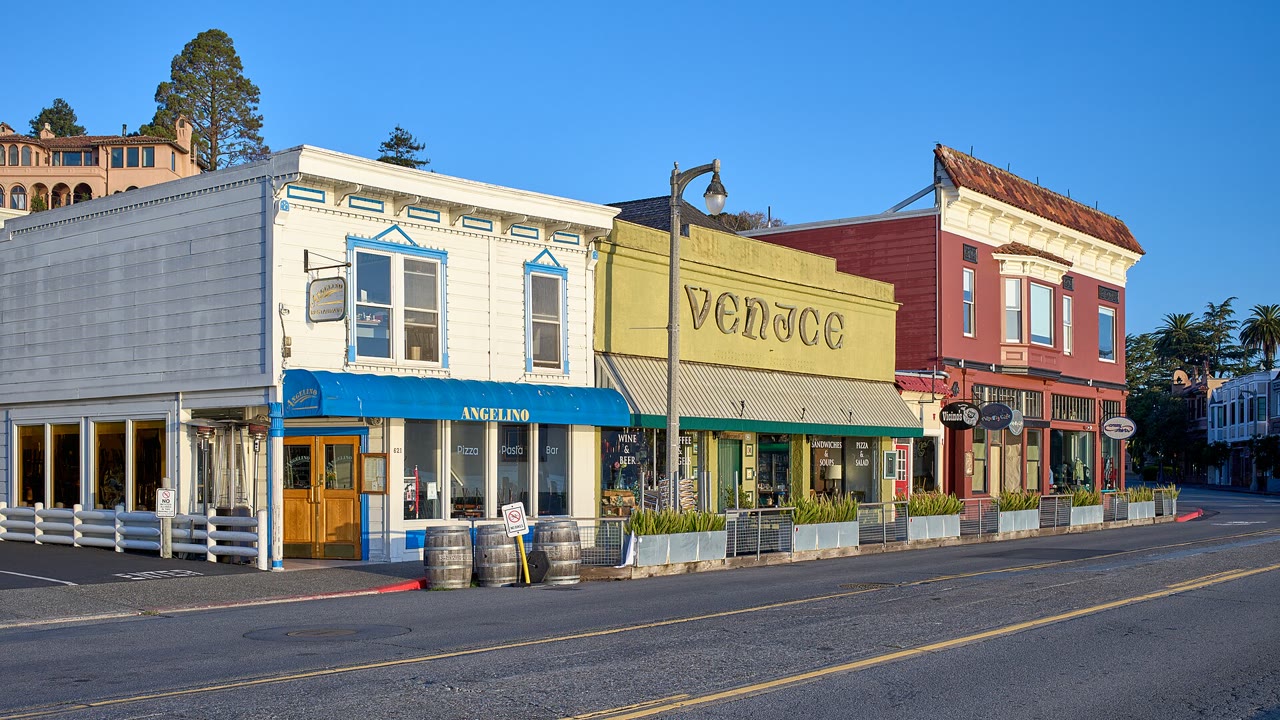
Moving Sculptures was a 1982 Antenna Theater project in Marin County, California. Flat plywood figures of real residents were to stand in Sausalito, Mill Valley, Corte Madera, San Anselmo and San Rafael and be moved every few days along the routes their models really took. Hardman wanted people to see their town as a stage.
A county as a stage
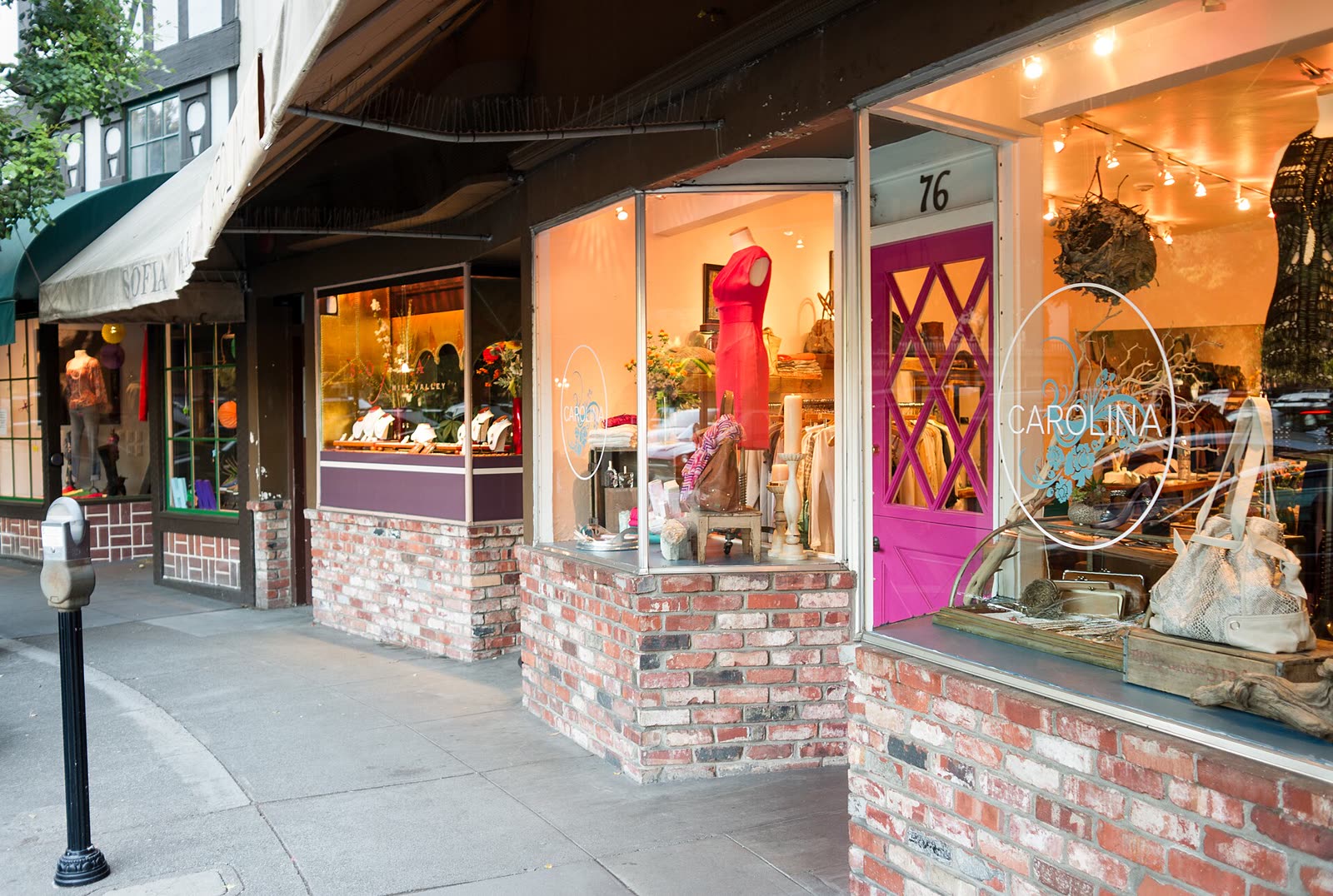
Peters opened her preview with a pun: “The quest for art in public places marches on, in this case, literally.” Antenna’s own page summed up the plan: “Over a period of months, plywood figures of local residents follow the paths of their real life counterparts, jogging, shopping, walking the dog, in five Marin County, California cities.”
The figures were to appear “on sidewalks, in banks and in bars. Every couple of days the statues will move around the town, tracing a day in the life of a real person.” The towns were “Sausalito, Mill Valley, Corte Madera, San Anselmo and San Rafael,” and “Most of the characters will travel in the downtown area and will cross paths at some point.”
Hardman’s aim was simple: “I think people will get the effect of their town as a stage.” Peters put it another way: “Hardman perceives Marin County as a theatrical space rather than a museum.” It was Marin County public art that behaved like theatre, close kin to site-specific theater in the Bay Area.
Forty characters in plywood
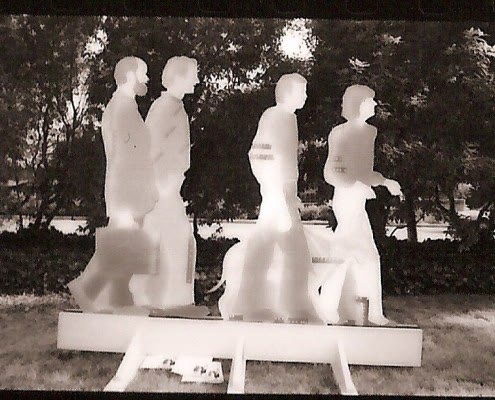
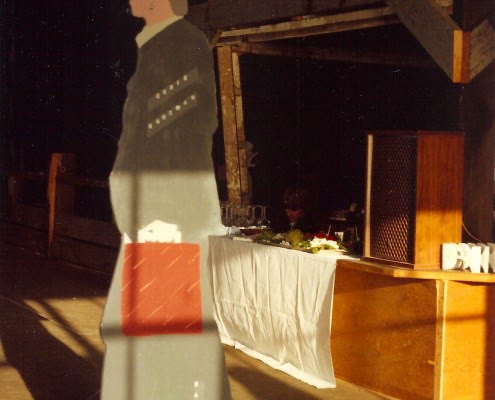
These plywood people sculptures were not meant to stand out. “The sculptures are flat something like giant paper dolls that stand on cement bases. They will be cut from plywood and painted muted colors so they will melt into the crowd like shadows.”
Hardman explained: “I wanted to create something you might have to look at twice to see. It might seem like a real person until you see that it doesn’t move.”
He called them characters, not statues. Antenna planned “40 characters in all, including two ferry commuters, a Mill Valley mother and her two small kids, a skateboard rider, a storekeeper, a town clerk and a barkeeper.” The preview named a few more.
| Character | Route or distance |
|---|---|
| Two ferry commuters | Not given |
| A Mill Valley mother and her two small kids | Mill Valley |
| Skateboard rider, storekeeper, town clerk, barkeeper | Not given |
| Lucky the dog | Fairfax to San Anselmo, “the farthest” |
| A Fairfax attorney | “only 34 feet”, from his office to the bar across the street |
Finding “the visible people in town”
The models were not celebrities. “Hardman was not looking for VIPs but for the just folks who give a town its color and personality. The Antenna staff visited city officials and hung out in stores, on playgrounds and in town squares to find out who the visible people in town are.”
Annette Rose, then the project manager, saw the cast as a portrait of the county: “When you see all 40 characters, it will be, in a sense, a demographic survey of the people in Marin County.” She also noticed what casting did to the models: “The persons we interviewed really wanted their characters to reflect what it is they do in their town.”
“Several people said to me, ‘I love this town,’” Rose told Peters. “It made them think about their own relationship to the town, like it was a person. People in the same town would say that to me, yet they don’t know each other.”
Moving day
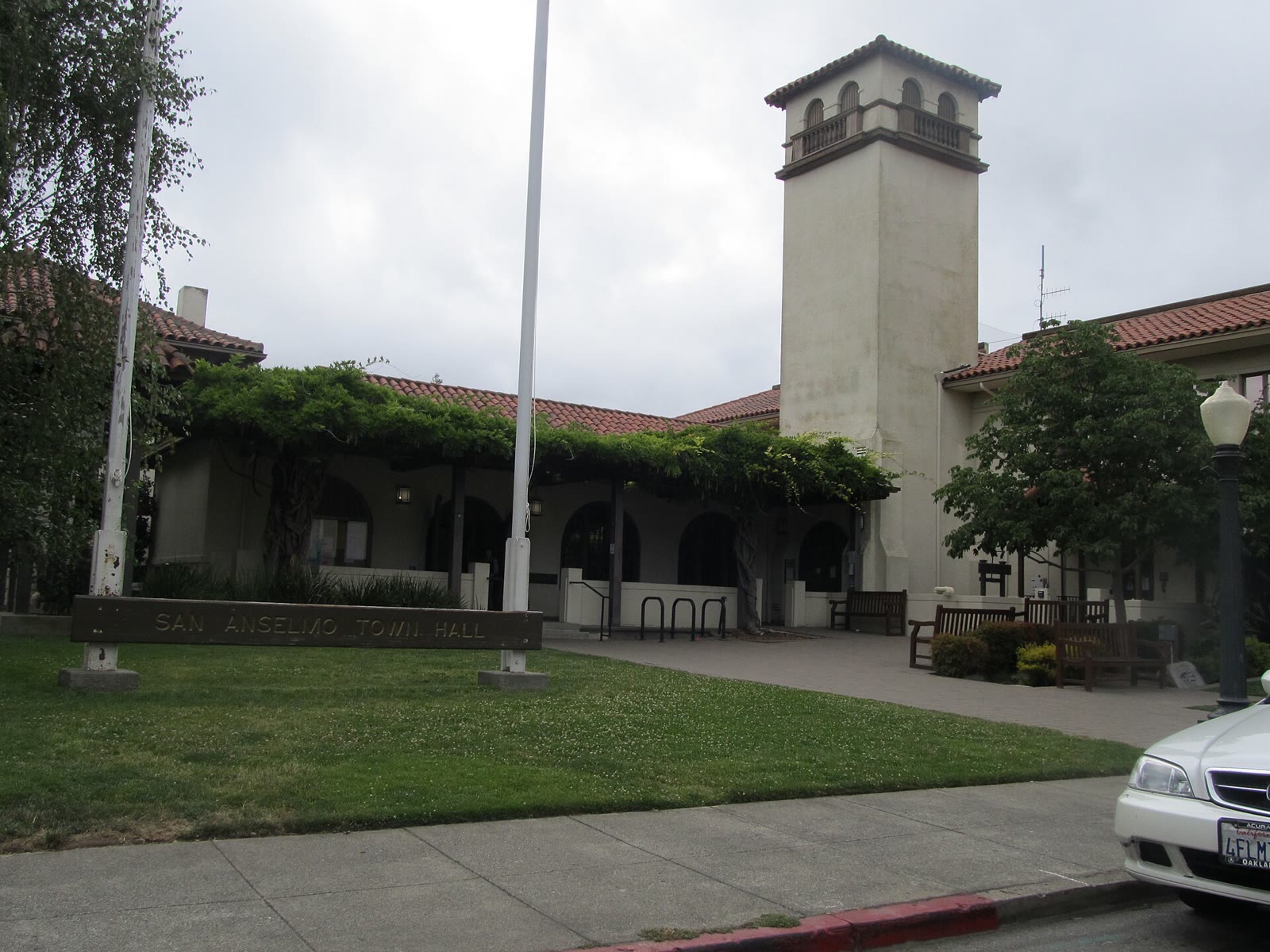
The plan was hands-on. “Every couple of days Hardman and friends will move the characters several or many yards, depending on the person depicted.” Lucky, a “well-loved if mangy mutt in Fairfax”, had the longest run, which means at least one route started outside the five towns.
Viewers were to be able to follow along: “A map of all the journeys, with information about each character, will be available at city halls and in the places the characters visit.” The preview said “Several sculptures and their human prototypes will be on display August 8 at the Falkirk Community Center in San Rafael”. Twelve years later, Falkirk hosted Making Waves, Antenna’s 1994 retrospective.
The figures were due to go out on August 9 and 10. “And then, off they go into the world,” Hardman said. Whether the start date held, how many figures went out, how long they stayed and how people reacted are not recorded in any source found.
Out of the Antenna process
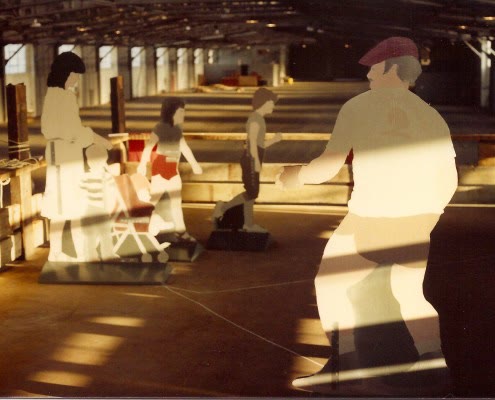
Peters wrote that Antenna “was founded on the idea that local public art can be a community activity; the Antenna aphorism is ‘to receive, transform and transmit information.’” Hardman tied the project to the interviews behind Vacuum: “We interviewed people for Vacuum and used these interviews in the show.” Audiences had toured Tam High on Walkmans in High School, Antenna’s first Walkman piece, and the method is part of the story of theatre made from interviews.
“It’s a populist approach to art, like a WPA project in some ways,” Hardman said. “It’s very accessible as an idea.” He hoped it would help people “stop and be more aware of one another”, and said he would like to repeat it in five years. There is no sign that he did.
Look-alikes were in the air that year. Peters noted he “ran (unsuccessfully) for Sausalito city council last spring”, and Robert Hurwitt later wrote that “fifty campaign workers appeared around town, all dressed like him and wearing masks of his face”. Hurwitt described the sculptures as theatre “whose story evolves as they are moved from place to place over a period of days”.
Lifelike figures in public, 1982
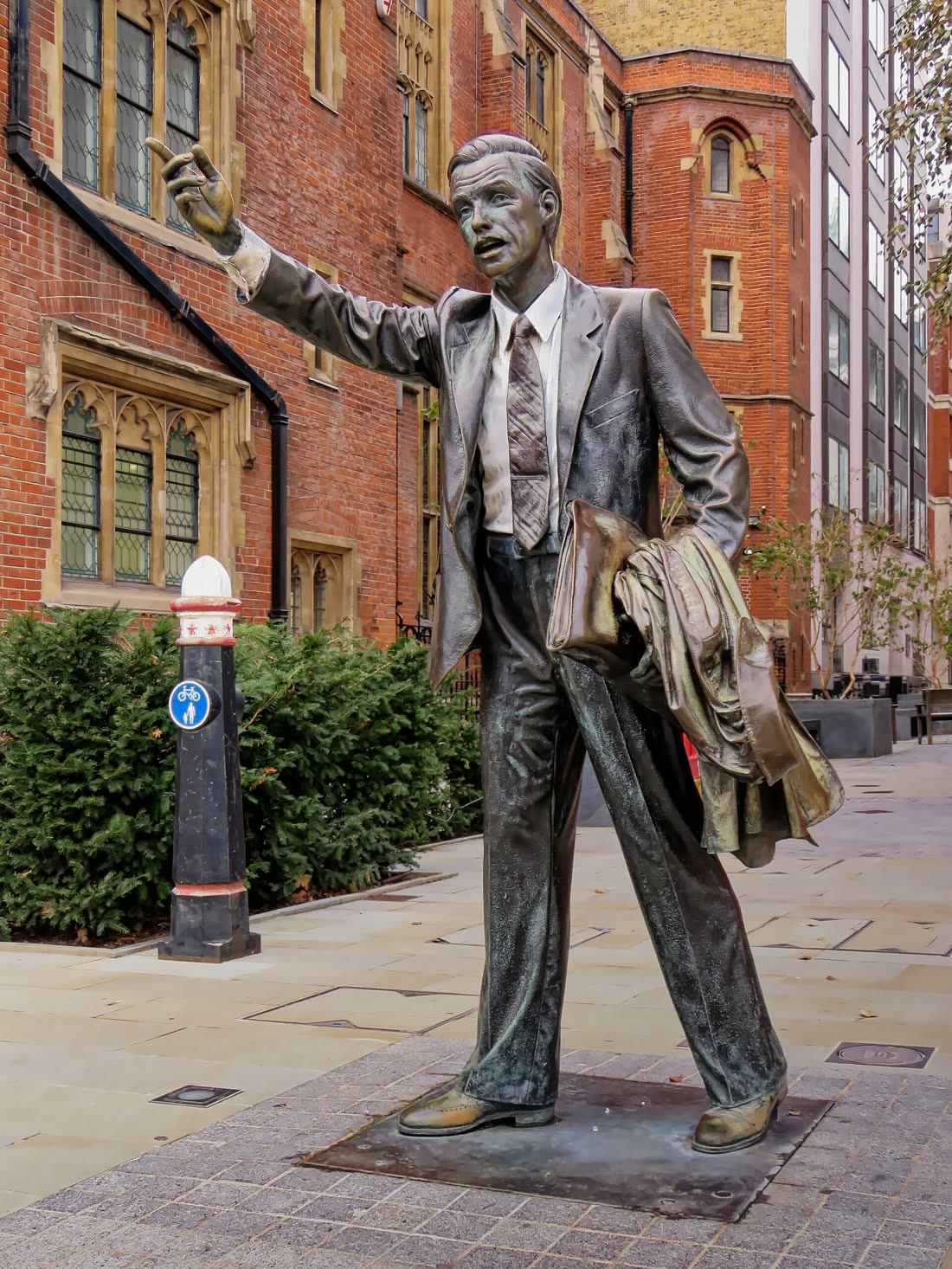
Peters set the project against the usual idea: “Art in public places is often a mural or some sort of semi-permanent fixture, such as a statue.” The same year, in Lower Manhattan, John Seward Johnson II’s bronze businessman Double Check was first placed in what is now Zuccotti Park.
| Aspect | Double Check | Moving Sculptures |
|---|---|---|
| Material | Bronze | Flat painted plywood on cement bases |
| Subject | An unnamed businessman | Named Marin residents |
| Permanence | Permanent | Temporary |
| Movement | Stays put | Moved every couple of days |
Both played on a double take. The difference is that Antenna’s figures were neighbours, and their story was where they went next. For more on figures and things that carry a performance, see what object theatre is and the history of street theatre.
Frequently asked questions
Which towns took part?
Sausalito, Mill Valley, Corte Madera, San Anselmo and San Rafael, according to the Pacific Sun.
How many figures were there?
Forty characters were planned, from ferry commuters to a Fairfax dog called Lucky. No final count is recorded.
Who were the models?
Not VIPs but local people, found by Antenna staff in stores, on playgrounds and in town squares.
Is there an account of how it went?
No. The record is a preview published before the figures went out, plus the company’s own pages.
Moving Sculptures has a short entry in Antenna Theater’s full production chronology.