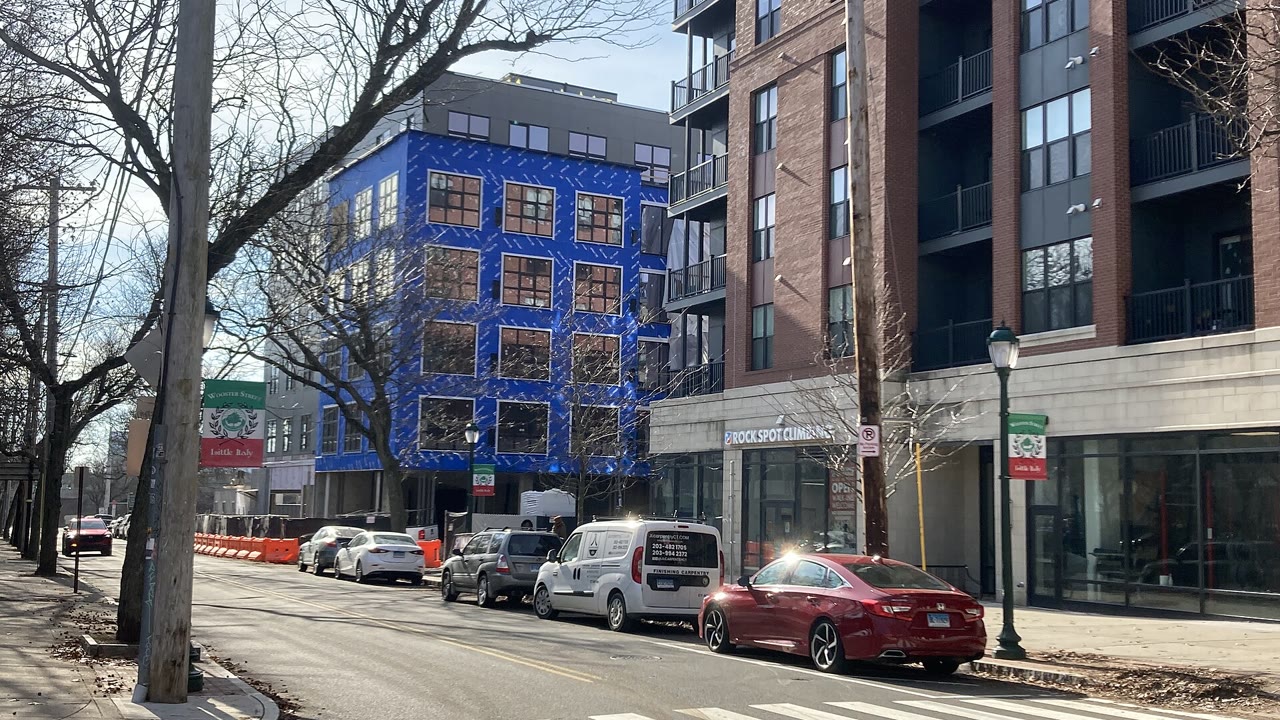
History of the Performing Garage: The SoHo Theater on Wooster Street
The Performing Garage was never a garage. The history of the Performing Garage starts with a two-storey factory in a forgotten manufacturing district, then follows two theater companies, a film shoot and a long line of visiting artists, all in one small room at 33 Wooster Street.
Quick answer
What is the Performing Garage?
The Performing Garage is a small black box theater at 33 Wooster Street in New York’s SoHo. Built in 1868 as a factory, it became Richard Schechner’s Performance Group theater in 1968 and has been home to Elizabeth LeCompte’s Wooster Group since the 1970s, owned through an artists’ cooperative.
A factory on Wooster Street
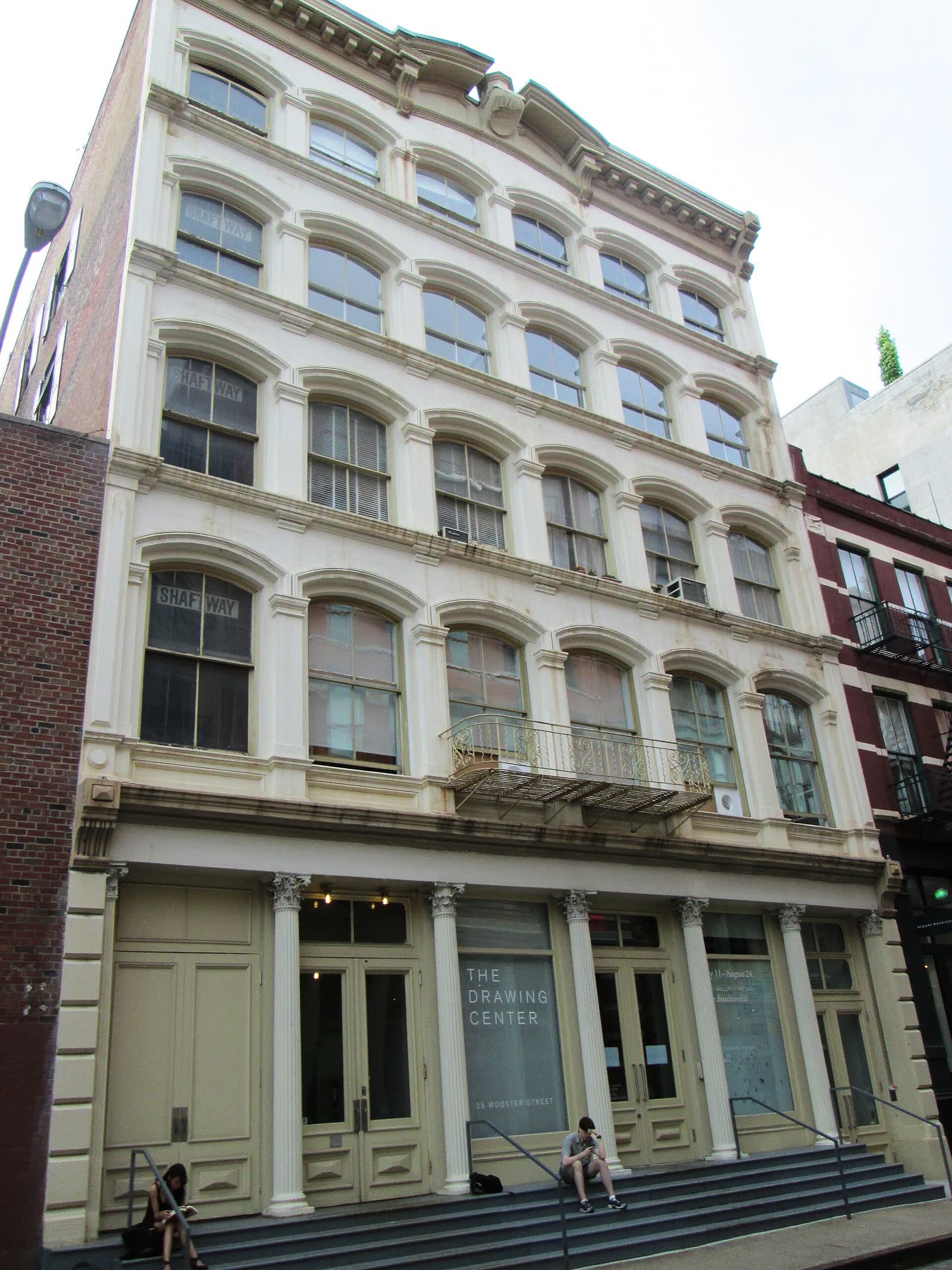
The building’s paper trail is in the 1973 report that created the SoHo-Cast Iron Historic District. Its entry for 31-33 Wooster Street gives “Commenced: 1868”, the architect William Shears, and “Original Function: Factories and workshop”.
The same entry explains the low front that passers-by see today: “Major alteration in 1961 when 3rd and 4th floors removed.” Before it was a theater, the Wooster Group says, the ground floor held a metal stamping and flatware factory. No source says it ever housed cars; the name simply stuck.
Artists move into Hell’s Hundred Acres
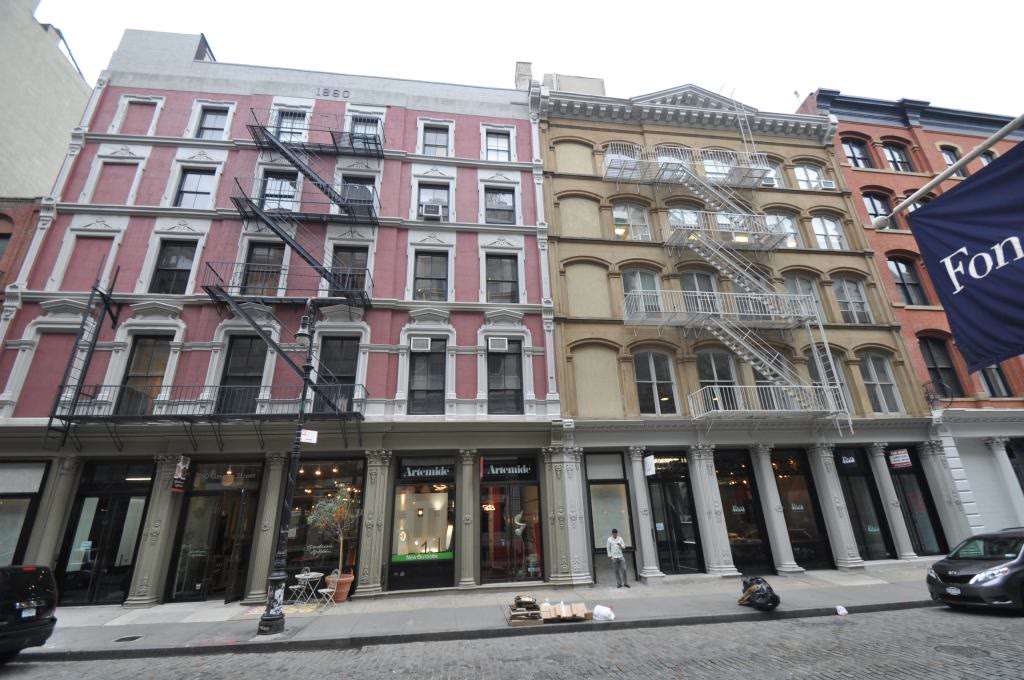
By mid-century the district had gone quiet. The landmark report says it “lay unchanged and forgotten by the City in a limbo of small industrial and commercial enterprises. It was not until the 1960s that a new movement began to stir.” Painters were working on ever larger canvases, and “the high-ceilinged, empty lofts of SoHo provided the large spaces that they needed for their work and the rents were very low.”
The area, nicknamed Hell’s Hundred Acres, was zoned for manufacturing, so artists could work there but not legally live there. The Fluxus organizer George Maciunas found a way in by forming artists’ cooperatives; the Gotham Center’s history of Maciunas as the father of SoHo notes that he filed them “as agricultural cooperatives”.
His 1967 flyer listed the buildings already bought, among them “64-70 Grand Street and 33 Wooster Street and 131 Prince Street.” “Maciunas went on to develop 16 buildings,” the Gotham Center adds. The district was designated a landmark on August 14, 1973.
The Performance Group years
Richard Schechner’s Performance Group, founded in 1967, opened the Garage in 1968 with Dionysus in 69. Its repertory there ran through Commune, Sam Shepard’s The Tooth of Crime in the early 1970s, Brecht’s Mother Courage and Genet’s The Balcony, and Brian De Palma filmed Dionysus in the room. The ideas behind that work are in Schechner’s environmental theater and its six axioms.
Wikipedia says Schechner acquired the building, but Maciunas’s flyer had already listed it as a co-op purchase. The safe account is that it went into one of Maciunas’s cooperatives in the late 1960s and the company took over the ground floor.
From the Performance Group to the Wooster Group
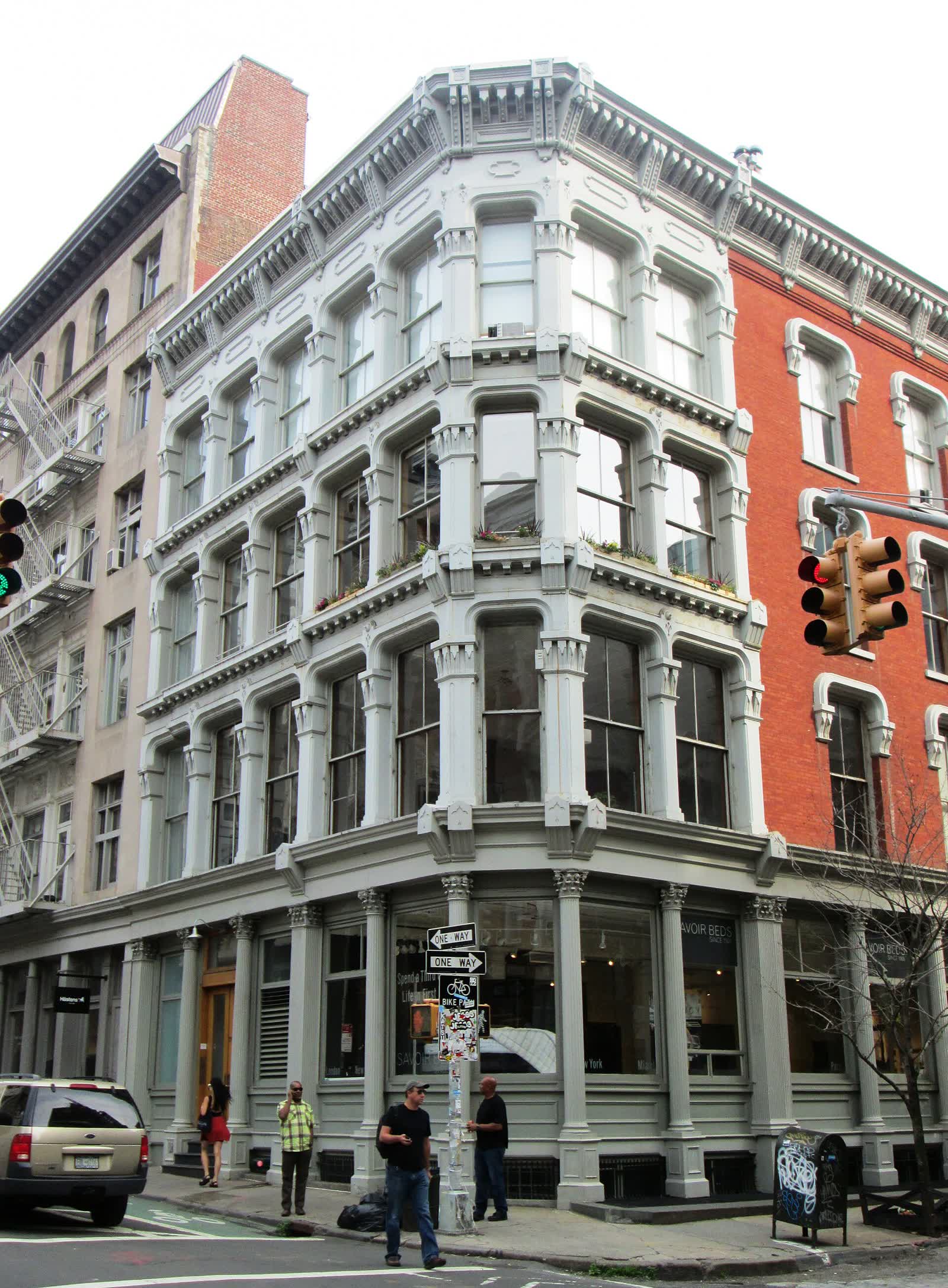
“In 1975, Elizabeth LeCompte and Spalding Gray, who were then members of The Performance Group, began making work at the Garage and eventually founded The Wooster Group.” Their first pieces, built around Gray’s own life, became the trilogy “Collectively known as Three Places in Rhode Island”. Late in the decade Gray also tried out his solo monologues there.
“In 1980, LeCompte and Gray formally founded The Wooster Group, along with Ron Vawter, Kate Valk, Jim Clayburgh, Willem Dafoe, and Peyton Smith.” Schechner resigned that year, and the company, named for the street, stayed in the room.
| Aspect | The Performance Group | The Wooster Group |
|---|---|---|
| Years at the Garage | 1968 to 1980 | 1975 (as a group within the Performance Group) to now |
| Led by | Richard Schechner | Elizabeth LeCompte (with Kate Valk) |
| Signature works there | Dionysus in 69, Commune, The Tooth of Crime, Mother Courage | Three Places in Rhode Island, Route 1 & 9, L.S.D., Brace Up! |
| Method | Environmental theater: a new spatial design for each show | Collage of found texts, video and live performance, developed over years |
Route 1 & 9 and the 1982 funding cut
Route 1 & 9, first seen in 1981 and 1982, “juxtaposed Thornton Wilder’s Our Town, displayed on video monitors in the style of a TV soap opera, with a simultaneous live rendition of a vaudeville routine by Dewey ‘Pigmeat’ Markham”. White actors played the Markham routine in blackface, and some audiences and critics were scandalized.
In 1982 the New York State Council on the Arts cut the group’s grant by 43 percent and barred the money from that piece, judging the sequences harsh caricatures of a racial minority, according to the Christian Science Monitor and PBS. The Monitor noted that the piece began in an upstairs room of the Garage before moving to the main auditorium.
Swimming to Cambodia and the guest stage
Gray’s best-known monologue was born in the room. “Swimming to Cambodia was initially staged as a work-in-progress at the Performing Garage in Dec 1983,” the AFI Catalog records, and Jonathan Demme filmed it there: “Principal photography took place on 6, 7, and 8 Nov 1986 at the Performing Garage”.
The Wooster Group’s list of guests runs from Richard Foreman, Joan Jonas and Mabou Mines to early Blue Man Group and Elevator Repair Service, which developed Gatz there. Antenna Theater was one of the visiting West Coast companies. Antenna’s chronology lists Vacuum, Antenna’s first production at the Garage in 1982, and Artery, Antenna’s one-audient walk-through played there in 1983 (the chronology lists 1984).
The Garage today
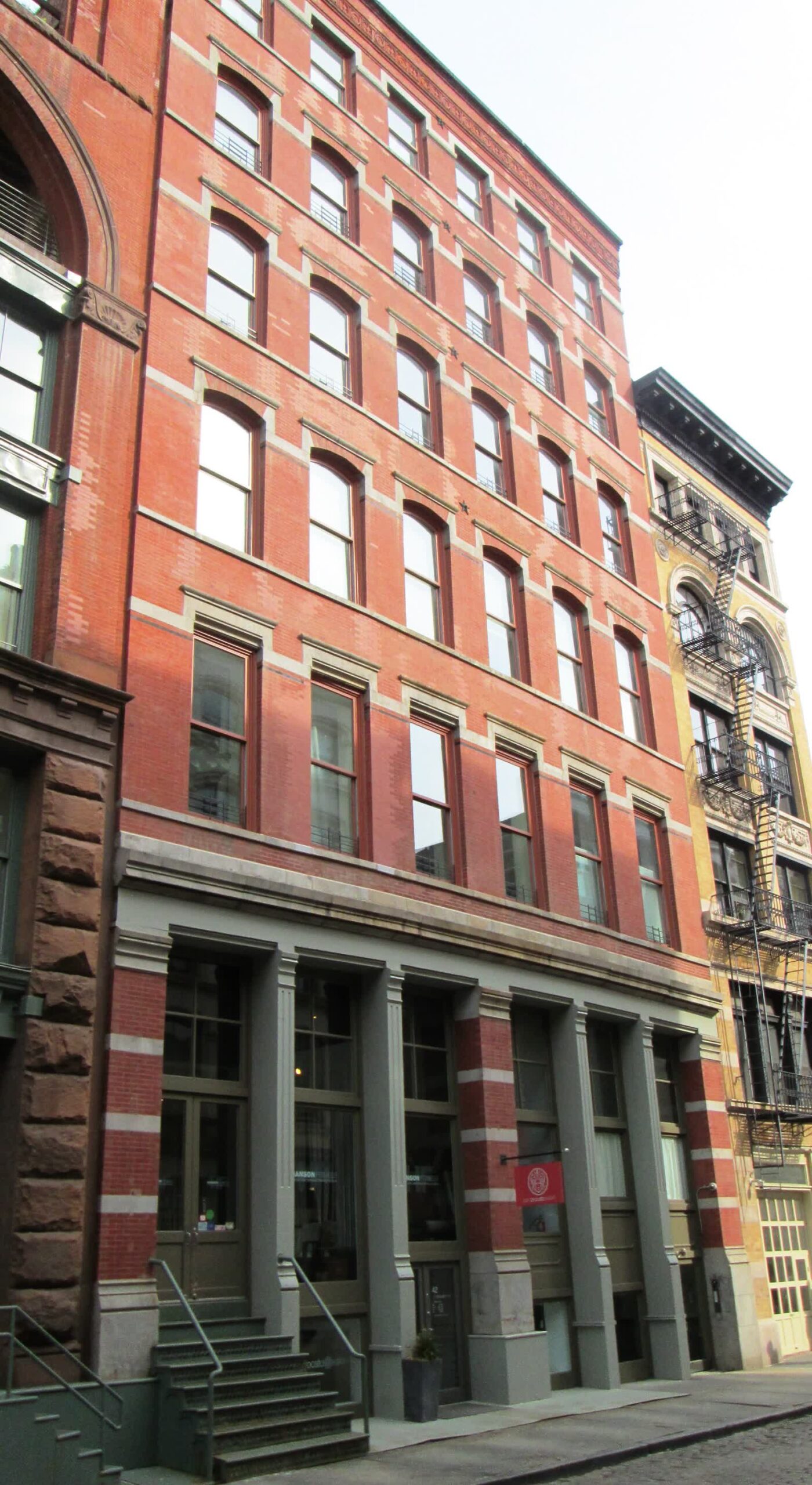
The Performing Garage in SoHo is still owned by artists. “The Group owns and operates The Garage as a shareholder in the Grand Street Artists Co-op, which was established in the late 1960s as part of the Fluxus art movement,” the company says. It lists the room as “a 110-seat street-level historic black box theater”; older guides give about 60 seats.
The Wooster Group’s own page calls the Garage its “permanent home and performance venue since the Group’s beginning”. In 2025 the group was invited to the Venice Biennale, “where LeCompte received the Golden Lion for lifetime achievement in theater.” The Wooster Group’s page on the Performing Garage tells the building’s story in the company’s words.
The history of the Performing Garage in eleven dates
| Year | Event | Source |
|---|---|---|
| 1868 | Factory and workshop building begun at 31-33 Wooster Street, architect William Shears | LPC 1973 report |
| 1961 | Third and fourth floors removed | LPC 1973 report |
| 1967 | 33 Wooster Street on George Maciunas’s list of artists’ co-op purchases | Gotham Center |
| 1968 | The Performance Group opens the Garage with Dionysus in 69 | Wooster Group; Wikipedia |
| 1973 | SoHo-Cast Iron Historic District designated (August 14) | LPC |
| 1975 | LeCompte and Gray begin the Rhode Island pieces at the Garage | Wooster Group |
| 1980 | The Wooster Group formally founded; Schechner leaves | Wooster Group |
| 1982 | State arts council cuts the group’s funding by 43 percent over Route 1 & 9 | Christian Science Monitor; PBS |
| 1983 | Swimming to Cambodia begins as a work in progress (December) | AFI Catalog |
| 1986 | Demme films Swimming to Cambodia in the Garage (November 6-8) | AFI Catalog |
| 2025 | LeCompte receives the Venice Biennale’s Golden Lion | Wooster Group |
Other industrial buildings found second lives as stages, among them the Roundhouse in London, a railway engine shed turned arts venue. Gray and Antenna later shared a 1984 Los Angeles series with Antenna’s Carplays, the year of the Olympic Arts Festival in Los Angeles. Every Antenna venue is in Antenna’s chronology.
Frequently asked questions
Was the Performing Garage ever a garage?
No source says so. It was a metal stamping and flatware factory before it was a theater, in an 1868 building cut down from four floors to two in 1961.
Who owns the Performing Garage?
The Wooster Group, as a shareholder in the Grand Street Artists Co-op, an artists’ cooperative of the Fluxus era.
What is the difference between the Performance Group and the Wooster Group?
The Performance Group was Richard Schechner’s company, at the Garage from 1968. LeCompte and Gray began their own work there in 1975 and formally founded the Wooster Group in 1980, when Schechner left.
Where was Swimming to Cambodia filmed?
At the Performing Garage, on November 6 to 8, 1986, directed by Jonathan Demme.