History of the Roundhouse, London: From Engine Shed to Arts Centre
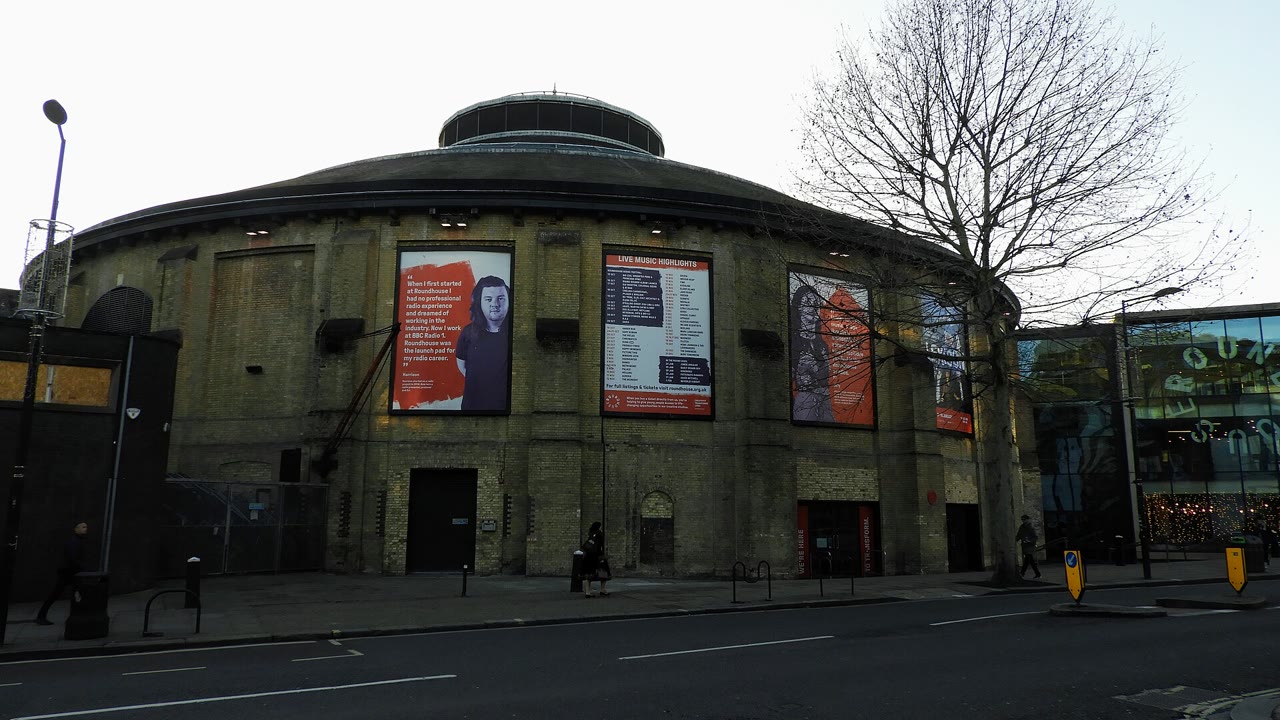
On Chalk Farm Road in Camden stands a round brick shed with a conical roof, built for steam locomotives. Its history in London passes through a gin warehouse, an all-night launch party, a decade of radical theatre, years of dereliction and a rebuild that turned its cellars into studios.
Quick answer
What was the Roundhouse originally?
The Roundhouse in Camden was built in 1846-47 as a railway engine shed around a turntable. Locomotives soon outgrew it, and from about 1870 it was Gilbey’s warehouse for wines and spirits. Arnold Wesker’s Centre 42 made it an arts venue that opened in 1966; it closed in 1983 and reopened in 2006.
A shed built around a turntable, 1846-47
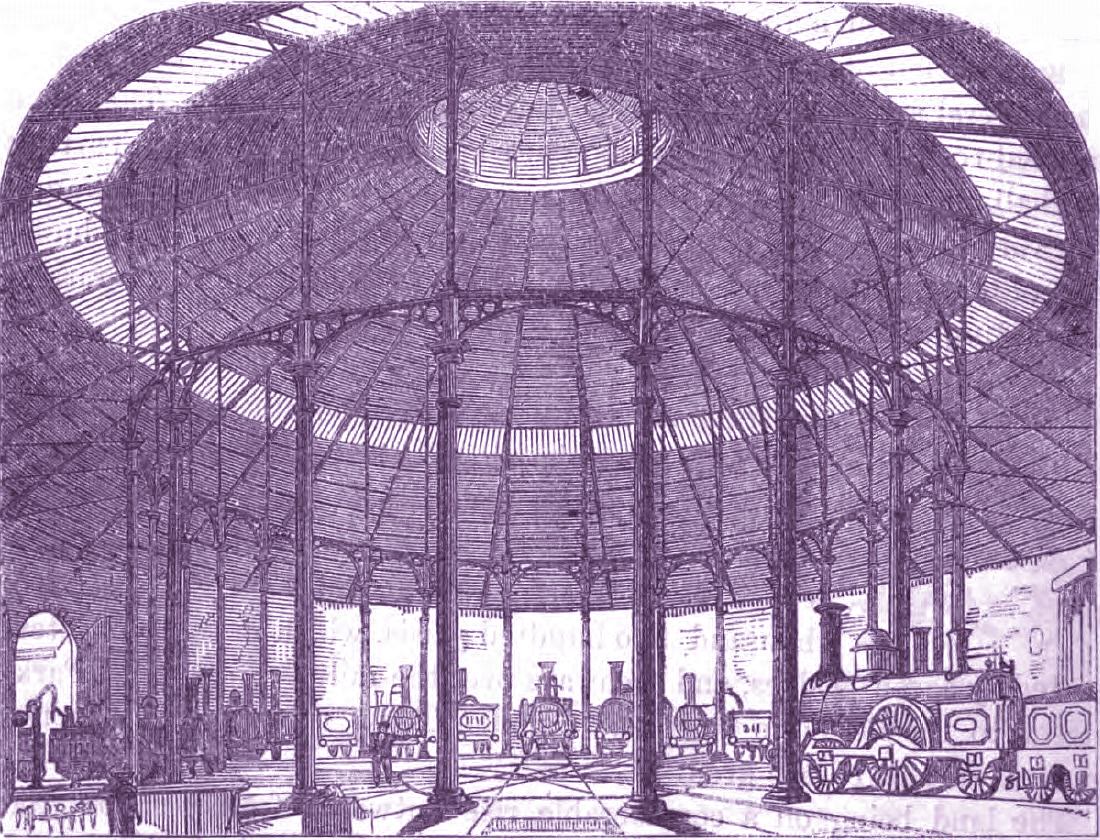
The engineer Robert Dockray designed it as “a state-of-the-art shed for servicing and turning steam locomotives”. The Roundhouse’s own history praises its “innovative use of cast and wrought iron to support the slate roof”, and the building is Grade II* listed.
Its shape came from the job. Architectural Record explains that “its great turntable, capable of carrying 24 train engines at once, came to a halt less than a decade later as locomotives became too long to fit into the 157-foot-diameter rotunda”. A Transport Trust plaque dates its working life to 1847-1855, when it was “made obsolete as locomotives outgrew its turntable.”
Corn, potatoes and gin

“By 1860s the Roundhouse had become a shed for corn and potatoes.” From about 1870 (the local history gives 1869) it was leased to the Gilbey wine and spirits firm as a bonded warehouse. The tracks came out, and “a wooden gallery made of huge timbers” went in “to carry the vats of maturing whisky and brandy.”
Gilbey’s stayed until 1963. The Camden local history sums up the luck of it: “Pure chance saved a noble building, simple, distinctive and exuding power, like a great dinosaur left stranded in a changed world.”
Centre 42 and the night of 15 October 1966
Centre 42 took its name from a trade union resolution; the Roundhouse sums up its principle as “arts should be for everyone”. The playwright Arnold Wesker imagined that “Theatre, dance, circus, all would perform there and people would pay what they could afford for entrance.” The Roundhouse dates Centre 42’s arrival to 1964.
Money was slow, and the first public night came on 15 October 1966: the launch of the underground paper International Times, “an all-night rave billed as a ‘pop-op-costume-masque-drag ball’, with guests invited to ‘bring their own poison’”. There were “performances from Soft Machine and a fledgling Pink Floyd”, a night close in spirit to the happenings of the 1960s.
Theatre in a round room, 1968-1983
In 1968 “Peter Brook premiered his celebrated production of ‘The Tempest’. In the same year Jimi Hendrix, Otis Redding, and The Doors all played to packed houses.” The Living Theatre of New York came too, and the era brought Andy Warhol’s only play, Pork, and Oh! Calcutta!, a booking that so angered Wesker that he resigned.
Théâtre du Soleil’s 1789 used the whole floor: “the audience had to move from one stage to the next … only to realize that they had become part of the action and they themselves were the crowd in the play.” It is a classic case of promenade theatre, where the audience moves.
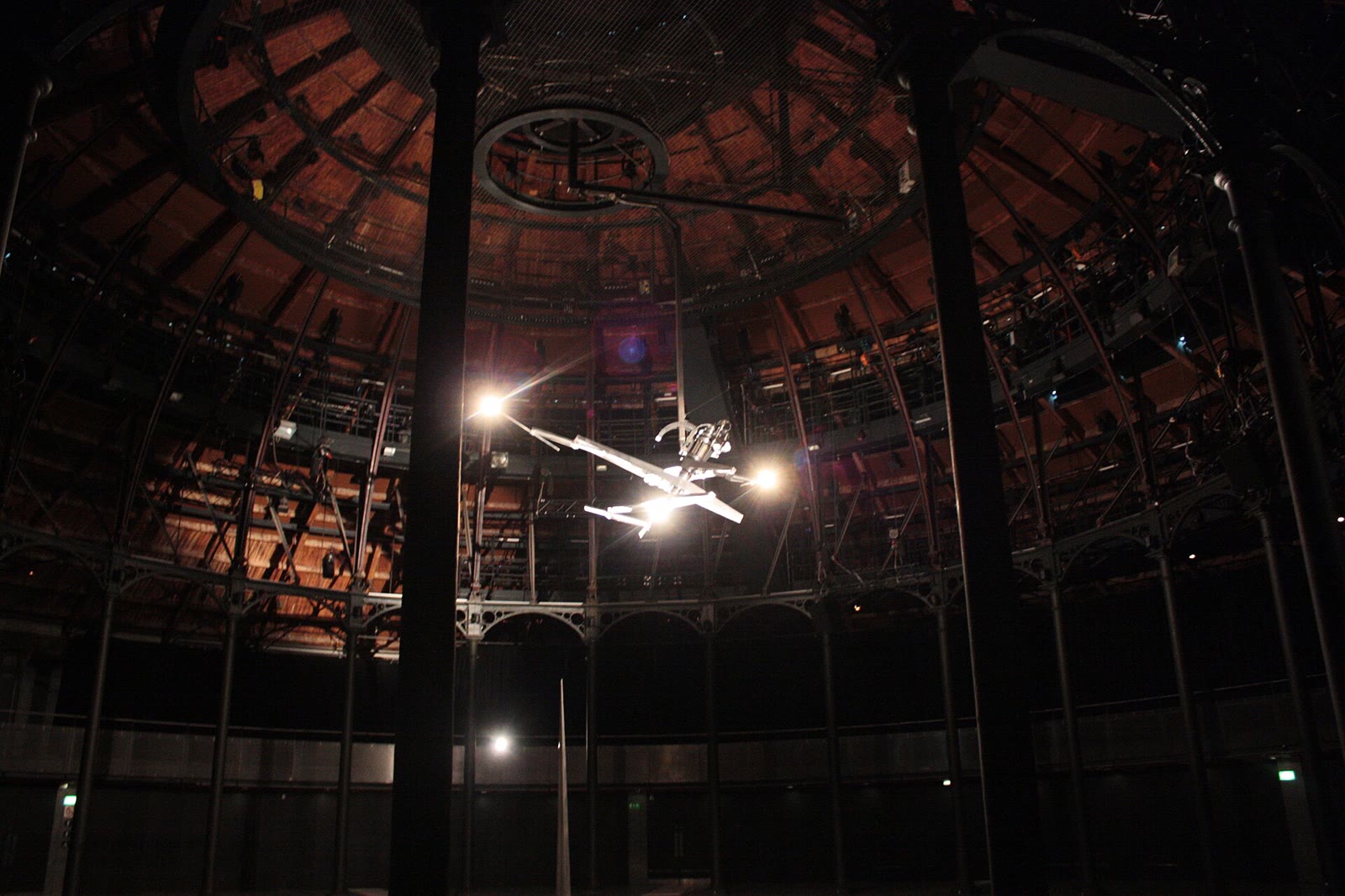
The room fought back. There was “the central ring of cast iron pillars”, and “the vast roof dispersed the sound”, which suited loud bands but not quiet dialogue.
From 1977 Thelma Holt ran it as a theatre, and Richard Negri “designed a central acting space with seating inside the columns, on the edges of the old turntable. This reduced the seats from 940 to 600.” In 1983, short of funds, it went dark.
Derelict, then reborn, 1983-2004
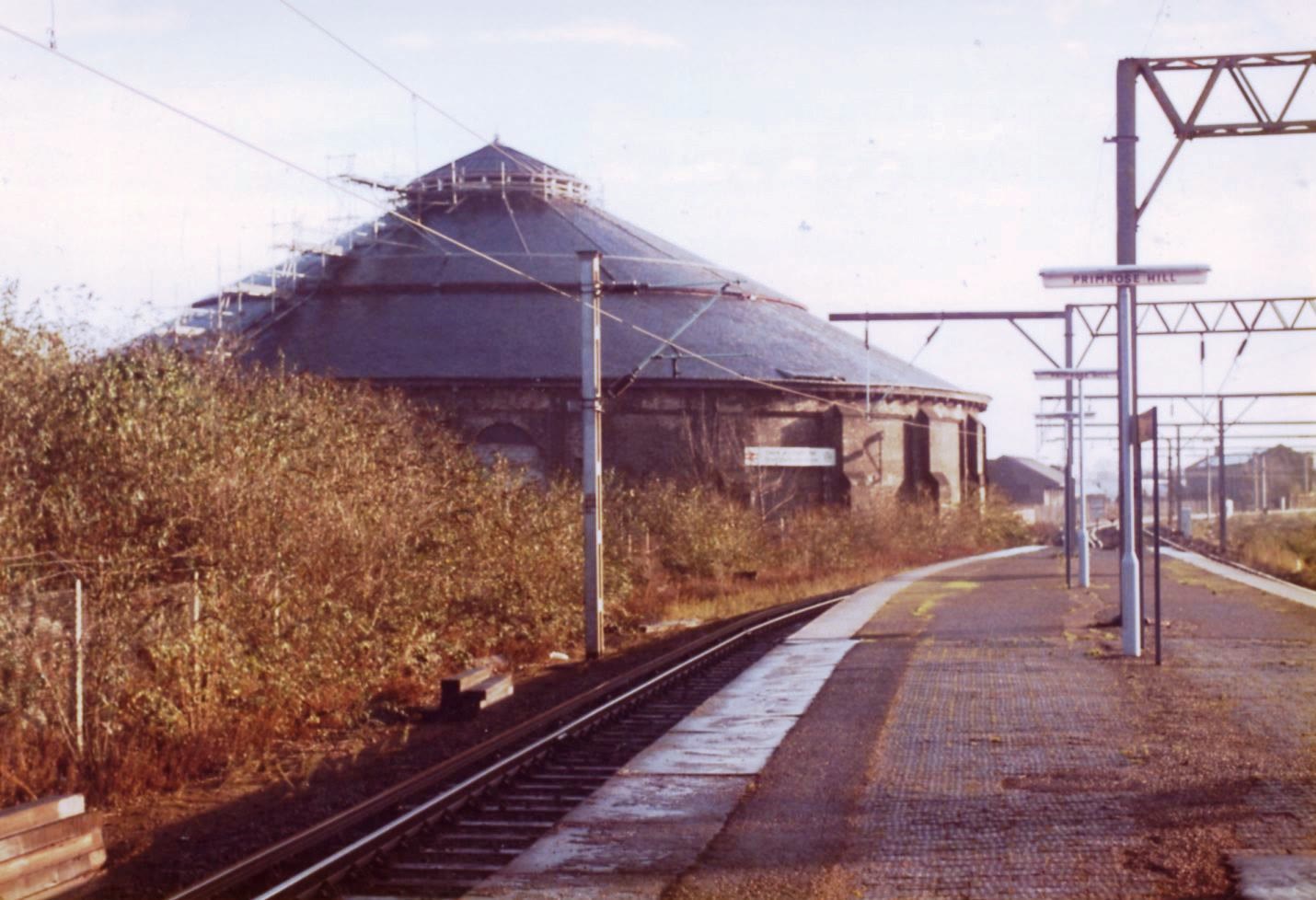
Camden “sunk the money in a Centre for Black Music and Drama but the enterprise collapsed in 1990”. Other schemes came and went, from “A 60ft globe” to “an IMAX cinema or a shopping centre”.
Then, “in September 1996 the Roundhouse had a new owner in Torquil Norman”, a retired toy maker. The Roundhouse’s own account of the 1996 purchase describes how the shell was hired out while money for a rebuild was raised. “De La Guarda, Stomp, the Michael Clark Dance Company, Ballet Boyz, Michael Moore, and the RSC all performed at the Roundhouse during this period,” even though artists “had to bring their own generators and fight off the odd rodent.”
A dream maze in the undercroft
In August 2002 Antenna Theater of San Francisco, with Soho Theatre Company co-presenting, filled the vaults under the floor with Euphor!um, Antenna’s walk-through of Kubla Khan, which had played Burning Man’s art program the year before. The press release noted: “This is the first time they have presented work in the UK.”
Critics wrote about the space as much as the show. The Independent’s Kate Bassett found “The dark labyrinth of brick chambers and narrow passages under Camden’s Roundhouse” perfect for Coleridge, and UK Theatre Net told readers that “below its theatre space lies a secret.” It was a theatre installation you walk into, and it ran until January 2003.
| Period | Use of the vaults |
|---|---|
| Railway years | Received ash from locomotives |
| After the railway | Collected rats and stagnant water |
| 2002-2003 | Euphor!um: brick chambers, narrow passages and an opium lounge |
| Since 2006 | Roundhouse Studios for young people aged 13 to 25 |
The rebuild and the Roundhouse Studios
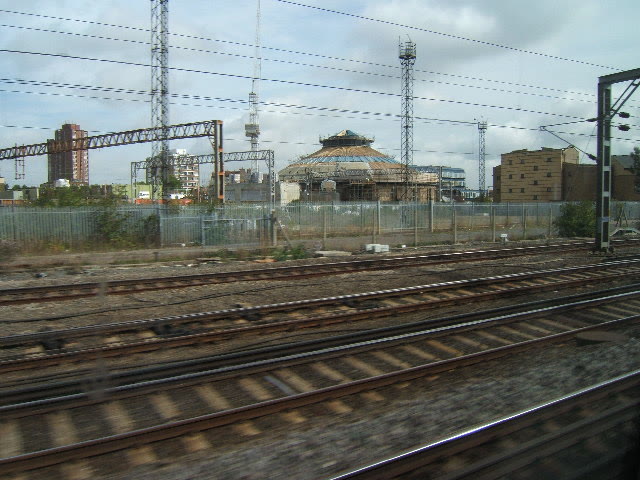
“In 2004 the Roundhouse closed for a £29.7 m redevelopment” by John McAslan and Partners, about £30 million in most accounts. The roof gained seven soundproofing layers, and its glazed roof-lights let in daylight “for the first time in over 100 years”.
Architectural Record’s 2007 report on the rebuild explains that McAslan dug out the downhill side, so the undercroft became the ground floor. The vaults that “had once received ash from locomotives and later, in the building’s post-railroad era, only collected rats and stagnant water” became “a labyrinth of music practice rooms, recording studios, and editing suites”.
“On Thursday 1 June 2006, the Roundhouse reopened”, with the physical theatre show Fuerzabruta. Industrial buildings turned into stages have a family likeness, as the history of the Performing Garage in SoHo shows, and Antenna’s London run has its line in the Antenna chronology.
History of the Roundhouse in London, in dates
| When | What happened |
|---|---|
| 1846-47 | Engine shed with a turntable for 24 locomotives, designed by Robert Dockray |
| 1869 | Leased to W. & A. Gilbey as a bonded warehouse |
| 1963 | Gilbey’s leaves |
| 1964 | Arnold Wesker’s Centre 42 takes the building |
| 15 October 1966 | Opening night: the International Times launch |
| 1977 | Thelma Holt makes it a theatre in the round |
| 1983 | Closes for lack of funds |
| 1996 | Torquil Norman buys the building |
| 2002-03 | Antenna’s Euphor!um fills the undercroft |
| 1 June 2006 | Reopens with Fuerzabruta |
Frequently asked questions
Why is the Roundhouse round?
Because it was built around a turntable that could hold 24 locomotives, inside a rotunda 157 feet across.
What was the Roundhouse used for after the railway?
It stored corn and potatoes, then from 1869 it was Gilbey’s bonded warehouse for wines and spirits until 1963.
When did the Roundhouse become an arts venue?
Arnold Wesker’s Centre 42 took it on in 1964, and it opened on 15 October 1966 with the launch party of International Times.
When did the Roundhouse reopen?
On 1 June 2006, after a rebuild costing about 30 million pounds, designed by John McAslan and Partners.