Meredith Monk’s Site-Specific Works: From the Guggenheim to a Tower in Sonoma
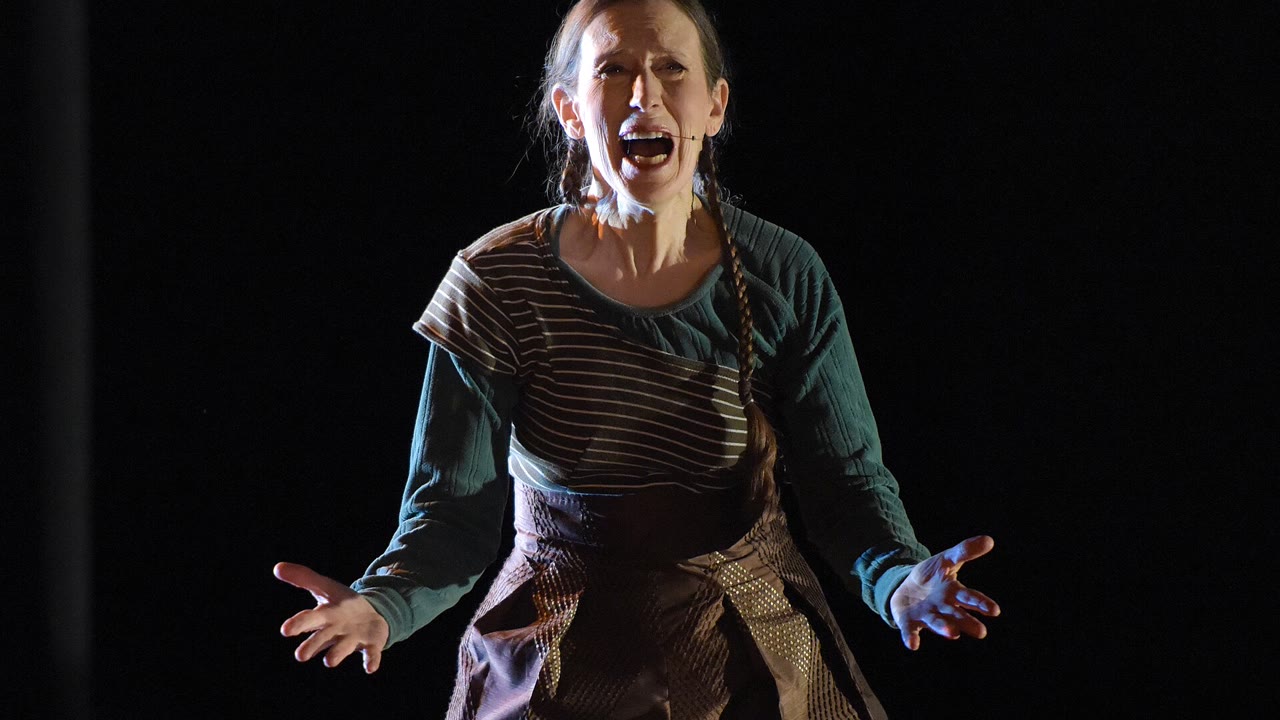
Meredith Monk is best known as a composer and singer, but her reputation as a site-specific artist rests on a handful of works that took over a museum, a loft, a parking lot, an island and a concrete tower. Here are those works in order, from 1967 to 2009, with how the audience moved through each one.
Quick answer
What are Meredith Monk’s site-specific works?
Meredith Monk began making site-specific work in 1967 and in 1969 staged Juice on the Guggenheim’s spiral ramp, the first live work in its rotunda. Vessel (1971) moved its audience from her loft to the Performing Garage to a parking lot; later site works filled Roosevelt Island (1994) and Ann Hamilton’s tower in Sonoma County.
A composer who left the stage (1964 to 1969)
Monk, born in 1942, trained at Sarah Lawrence College, “where she also studied modern dance with Bessie Schonberg. Graduating in 1964,” as the Jewish Women’s Archive puts it. NPR’s obituary of Anna Halprin lists her among Halprin’s students, a link told in our post on Anna Halprin and the Dancers’ Workshop. Monk’s own biography says she “began creating work in galleries, churches, and mostly non-traditional performance spaces.”
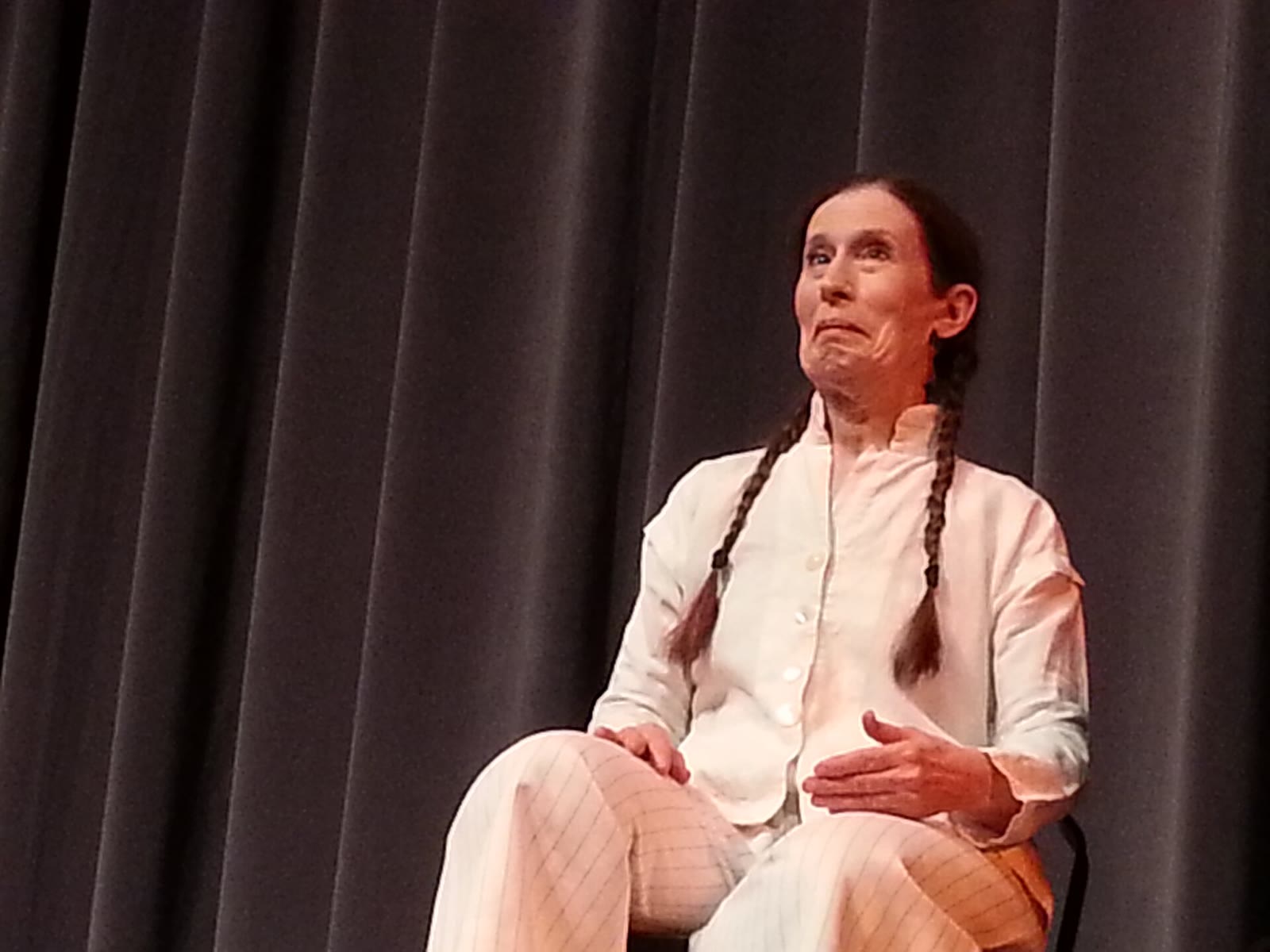
Her company site dates the start precisely: “Meredith Monk began working in unconventional spaces in the summer of 1967 with her work, Blueprint.” One of the Blueprints pieces, IRCAM’s survey notes, included Bob Wilson as a performer; our guide to Robert Wilson as a theatre director picks up his side. By 1969 she was working with large local casts in a Washington museum, the Chicago Museum of Contemporary Art and a factory in Buffalo.
Juice at the Guggenheim (1969)
Monk’s biography calls her “a pioneer in site-specific work” and “the first artist to create a piece in the rotunda of the Solomon R. Guggenheim Museum (Juice, 1969).” The first installment took place on November 7, 1969. Her site describes “a woman on horseback; 75 singer-dancers in white, wearing red combat boots,” on the spiral ramps, and four principals in red “moving through the space as one figure.”
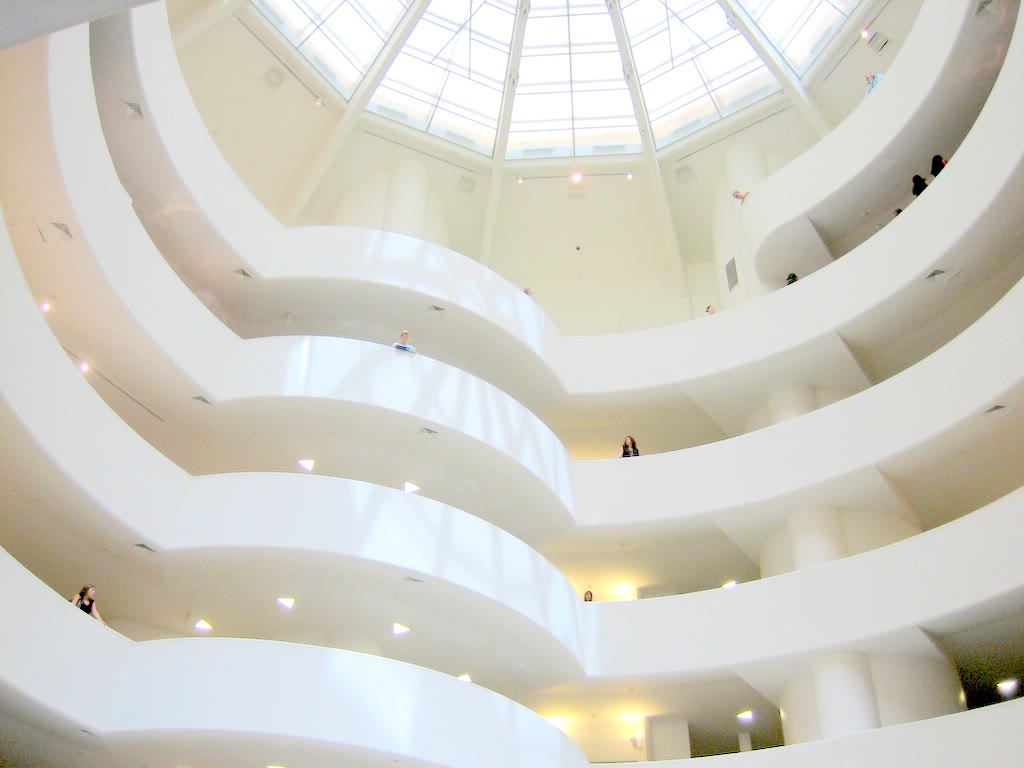
Sources put the cast at 75 or 85 extra performers. Juice was a “theatre cantata in three installments”: Barnard College’s Minor Latham Playhouse followed from November 29 to December 1, and her loft on December 7. In the loft, “audience members walked through an array of objects and costumes used in the previous two parts.”
Monk compares the whole to “a zoom lens, as the viewer’s perception shifted from the monumental to the intimate.” Her company’s account of Juice, with all three dates and credits is the best single record.
Needle-Brain Lloyd and Vessel (1970 to 1971)
Needle-Brain Lloyd and the Systems Kid (1970), billed as “a live movie,” played on a college campus during the American Dance Festival. Her publicist recalled “horses flying across a field at 10am” and “row boats lit with lanterns bobbing on the campus pond at sunset.”
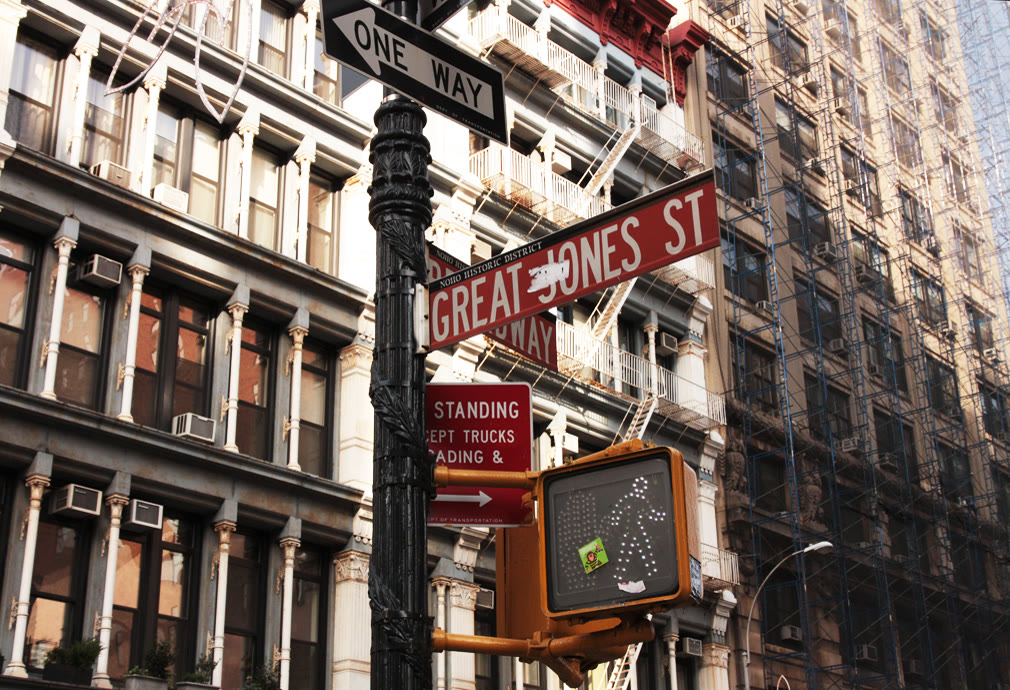
Vessel, billed as an opera epic on the life of Joan of Arc, began in Monk’s loft on Great Jones Street on October 18, 1971. It played one evening in three places: the loft, the Performing Garage and a parking lot. Deborah Jowitt, writing in the New York Times in 1974, said that unlike Juice, “‘Vessel’ grew larger and louder.”
The audience had to “drink wine while they waited for a chartered bus which took them from the loft to the theater, and then walk several blocks through one of Manhattan’s decaying warehouse districts.” The middle stop has its own story in the history of the Performing Garage on Wooster Street. Jowitt’s essay is reprinted as “Take a Trip With Monk” (1974).
She also explained why such journeys were rare: “The works which Monk created for specific sites were enormously complicated to produce, to say nothing of expensive, and hence almost unrepeatable.”
American Archeology on Roosevelt Island (1994)
The 1994 press release called American Archeology #1 “Monk’s first new site-specific work since 1978.” It ran September 23 to 25, “rain or shine,” on “opposite shores of the island: the Lighthouse Park on its northern tip and the 19th century Renwick Ruins on its southern end.”
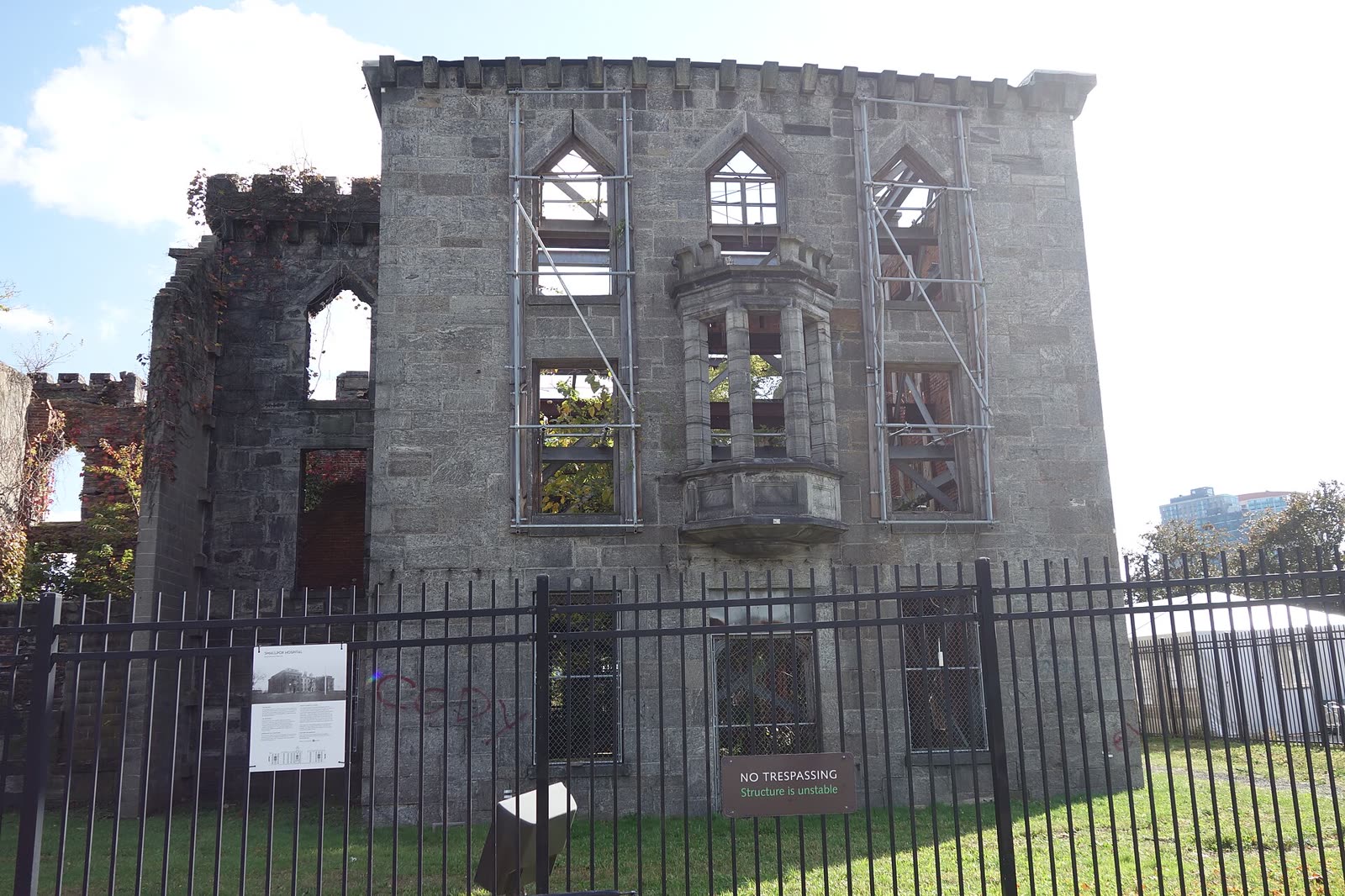
It marked “the first public performance at the former smallpox hospital, designed by James Renwick Jr.” The cast of 60 included her Vocal Ensemble, island seniors, “a brigade of children,” and “a horse and rider.”
The tower and the return to the rotunda (2007 to 2009)
In 2007 Ann Hamilton’s tower at Oliver Ranch in Geyserville, Sonoma County, “opened with Meredith Monk and members of her ensemble.” Hamilton gives its height as 80 feet; the Walker calls it 60, and reviewers say eight stories. Its staircases “rise up opposite each other, only intersecting at the top,” and Monk returned with Songs of Ascension, performed there in autumn 2008.
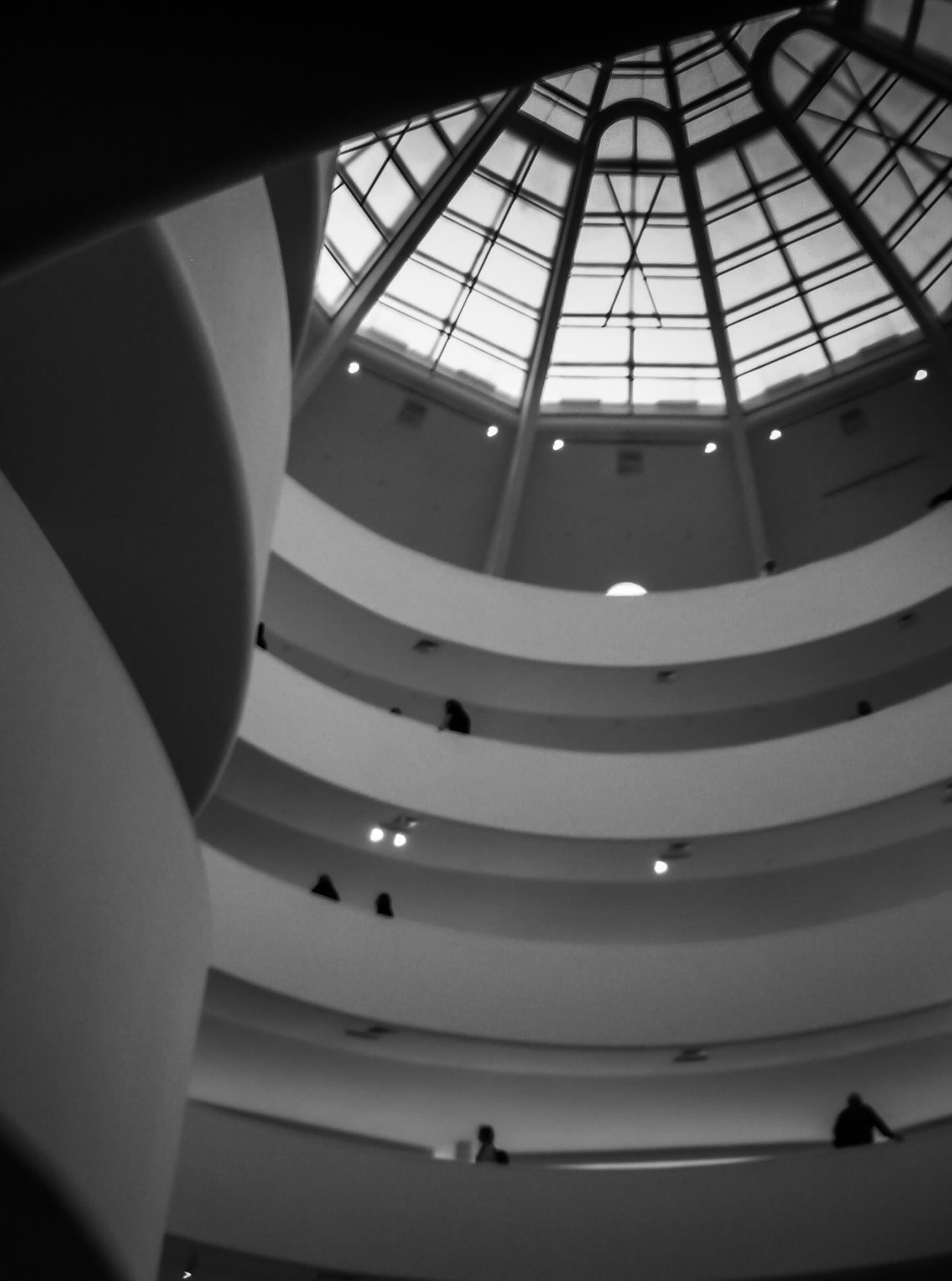
On March 5, 2009, the Guggenheim hosted Ascension Variations, and Jowitt found “the ground plan of the new work is almost identical to that of Juice.” The audience began in the lobby, strolled up the ramps, then came to the railing “and watch what happens down in the lobby where we began.”
| Year | Work | Place | How the audience took part |
|---|---|---|---|
| 1967 | Blueprint | Unconventional spaces, New York | A three-part durational piece |
| 1969 | Juice | Guggenheim; Barnard; her loft | Watching the ramp, then a theatre, then walking among objects |
| 1970 | Needle-Brain Lloyd and the Systems Kid | A college campus | Outdoors, morning to night |
| 1971 | Vessel | Her loft; the Performing Garage; a parking lot | A bus, then a walk of several blocks |
| 1994 | American Archeology #1 | Roosevelt Island | Two parts on opposite shores |
| 2007-08 | Songs of Ascension | Ann Hamilton’s tower, Sonoma County | Performers on a double spiral staircase |
| 2009 | Ascension Variations | Guggenheim | Lobby, ramps, then the railing |
Walking audiences in Sausalito: Antenna as a parallel
No source links Monk and Antenna Theater, but both left the auditorium and moved an audience through real places. The difference is how. Monk moved a crowd, by bus and on foot; Antenna, from 1981, mostly moved one listener at a time with a tape, so the route did the directing. That listener became what Antenna called the audient.
Chris Hardman wrote in The Drama Review in 1983: “My first walkman experiment, High School, produced in Summer 1981 for the Bay Area Playwrights Festival, was a site-specific location walk-through, somewhat like a self-guided museum tour.” He added: “Walkman theatre has thus far zapped the proscenium and brought forth the theatrical entity: the audient.”
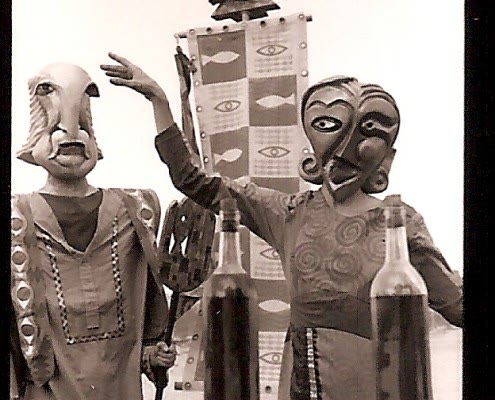
Two coincidences, and no more. Vessel’s middle section played the Performing Garage in 1971, the room where Antenna later played Vacuum and Artery. And On Sight, Antenna’s 1993 walk through Sausalito, told a town’s history in its own streets with residents in the cast, a year before Roosevelt Island did the same. The wider form is in promenade theatre, where the audience follows on foot, and the dates are in the Antenna chronology.
| Aspect | Meredith Monk (Juice, Vessel) | Antenna Theater (Artery, On Sight) |
|---|---|---|
| Who moves | A crowd, together | Usually one audient at a time; On Sight, a group |
| What guides them | The performers, a chartered bus, the building | A tape on a Walkman |
| Scale | 60 to 85 performers, horses, choirs | Built rooms for one; a town’s streets |
| Repeatable? | “almost unrepeatable” (Jowitt, 1974) | Artery toured widely |
Frequently asked questions
Why is Meredith Monk called a site-specific pioneer?
From 1967 she made works for particular buildings and landscapes, and in 1969 she became the first artist to create a piece in the rotunda of the Guggenheim.
What was Vessel?
An opera epic about Joan of Arc, played on one evening in October 1971 in her loft, the Performing Garage and a parking lot, with the audience taken by bus and on foot.
Where was American Archeology #1?
On Roosevelt Island in New York, in September 1994, in Lighthouse Park and the ruins of the Renwick smallpox hospital, with a cast of 60.
Was Monk connected with Antenna Theater?
No source says so. Both took audiences through real places, and both played the Performing Garage in New York, a decade apart.