
What Is a Deep Time Walk? Earth’s History at Walking Pace
Schools, churches and climate groups advertise deep time walks, and it is fair to ask: what is a deep time walk, and what happens on one? The short version: you walk, and the distance you cover stands for time. By the end, the whole of human history fits into a space smaller than your shoe.
Quick answer
What is a deep time walk?
A deep time walk turns Earth’s 4.6-billion-year history into a 4.6-kilometre walk, so each metre stands for a million years. Walkers pass key events, from the planet’s formation to the arrival of life, and find that all of human history fits in the last few centimetres. The best-known version began at Schumacher College in 2007.
A walk where every metre is a million years
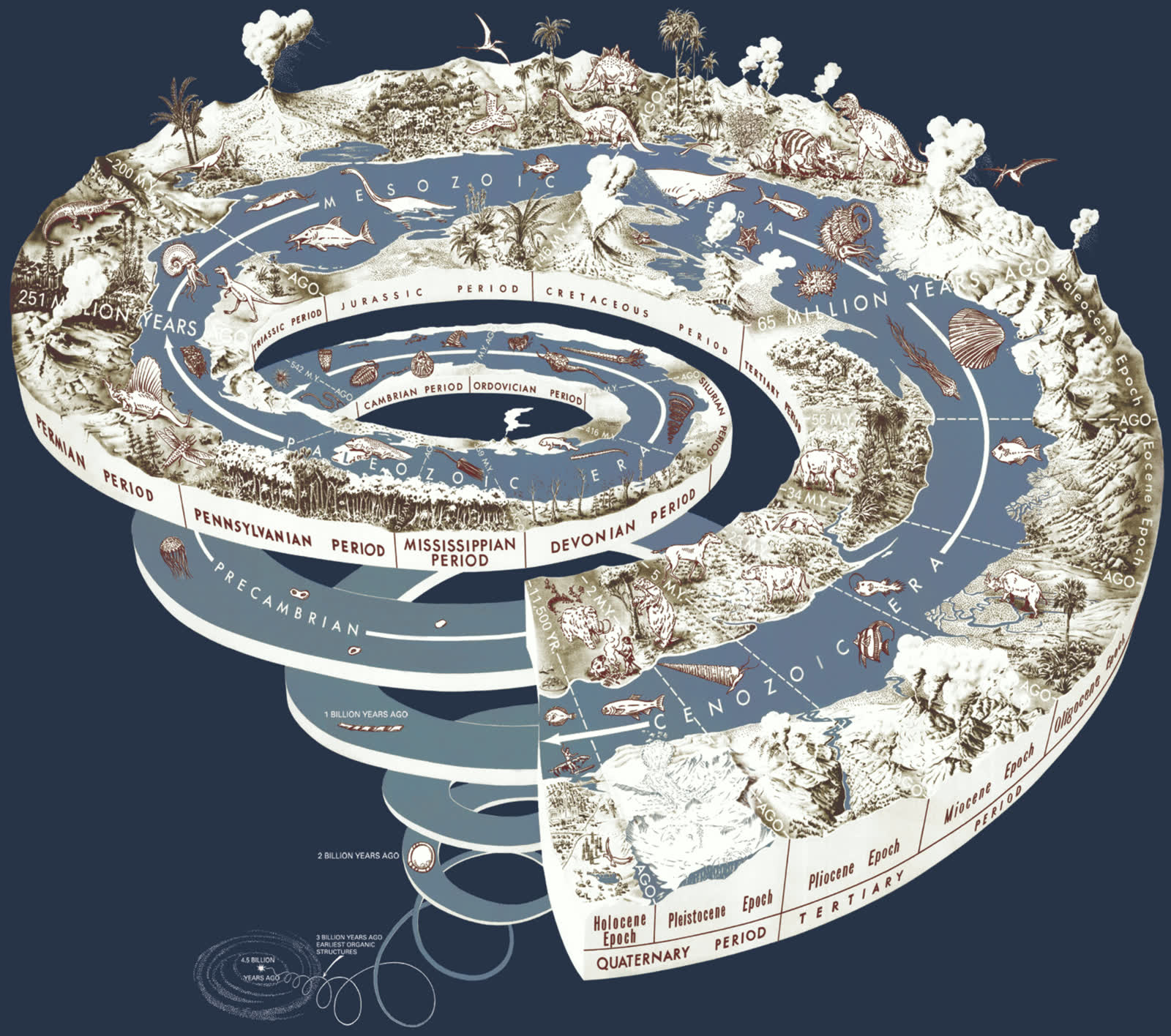
The project’s own definition is simple: “Deep Time Walk is a transformative journey through 4.6bn years of Earth history via a 4.6km guided walk.” The rule that makes it work is the scale. You walk “at a rate of 1 million years per metre,” so the distance on the ground matches the age of the planet.
The surprise comes near the end. According to the artist network walk · listen · create, “the last 20 centimetres of the walk represents the time span of Homo Sapiens on Earth (200,000 years), with the industrial revolution represented by just 1/5th of a millimetre.”
| Distance walked | Years represented | What it stands for |
|---|---|---|
| 1 metre | 1 million years | The unit of the walk |
| 2 metres | 2 million years | As one writer put it, you “walk 2 million years in just 2 meters” |
| Last 20 cm | 200,000 years | Homo sapiens on Earth |
| Last 1/5 mm | About 200 years | The industrial revolution |
Where the idea came from
“Deep time”: McPhee’s phrase
The science writer Laura Poppick notes that “one particular metaphor that McPhee included in Basin and Range was actually his own invention, not one he had plucked from a textbook: Deep time.” That is John McPhee’s 1981 book.
The Cosmic Walk, a spiral of candles
Walking the story came earlier than the app. In the early 1980s Sister Miriam Therese MacGillis, who founded Genesis Farm in New Jersey, created the Cosmic Walk, a spiral laid out on the ground “with stations representing major evolutionary events.” The spiral “should be at least 100 feet long, 140 feet is better.”
“One person, the walker, lights a candle from the primary candle and walks the spiral,” while a second person reads the text. The aim, in the National Catholic Reporter’s words, is to bring “our knowledge of the 14-billion-year Universe process from our heads to our hearts.”
Palo Alto, Earth Day 1997: the Walk Through Time
The next step happened in the Bay Area. The Walk Through Time, “from stardust to us,” was imagined by the physicist Sidney Liebes of Hewlett Packard Laboratories. It was first presented on Earth Day, 22 April 1997, at HP Laboratories sites in Palo Alto, Bristol and Tokyo. It set about 90 illustrated panels along a one-mile walk, “where each foot represents one million years of evolution.”
Schumacher College, 2007
The Deep Time Walk proper was “co-created at Schumacher College in 2007 by ecologist Dr Stephan Harding, Head of Holistic Science at the College and his MSc student, the geologist Sergio Maraschin.” The Deep Time Walk project history credits Maria Montessori, Joanna Macy and Sister Miriam Therese MacGillis as influences.
In 2012 Fred Adam and Geoff Ainscow made “the first Walk Through Time iPhone app.” A year later, Schumacher students were working on an app of their own, and the two projects merged. The project was founded in 2016, and its app was its first product.
How the Deep Time Walk app works
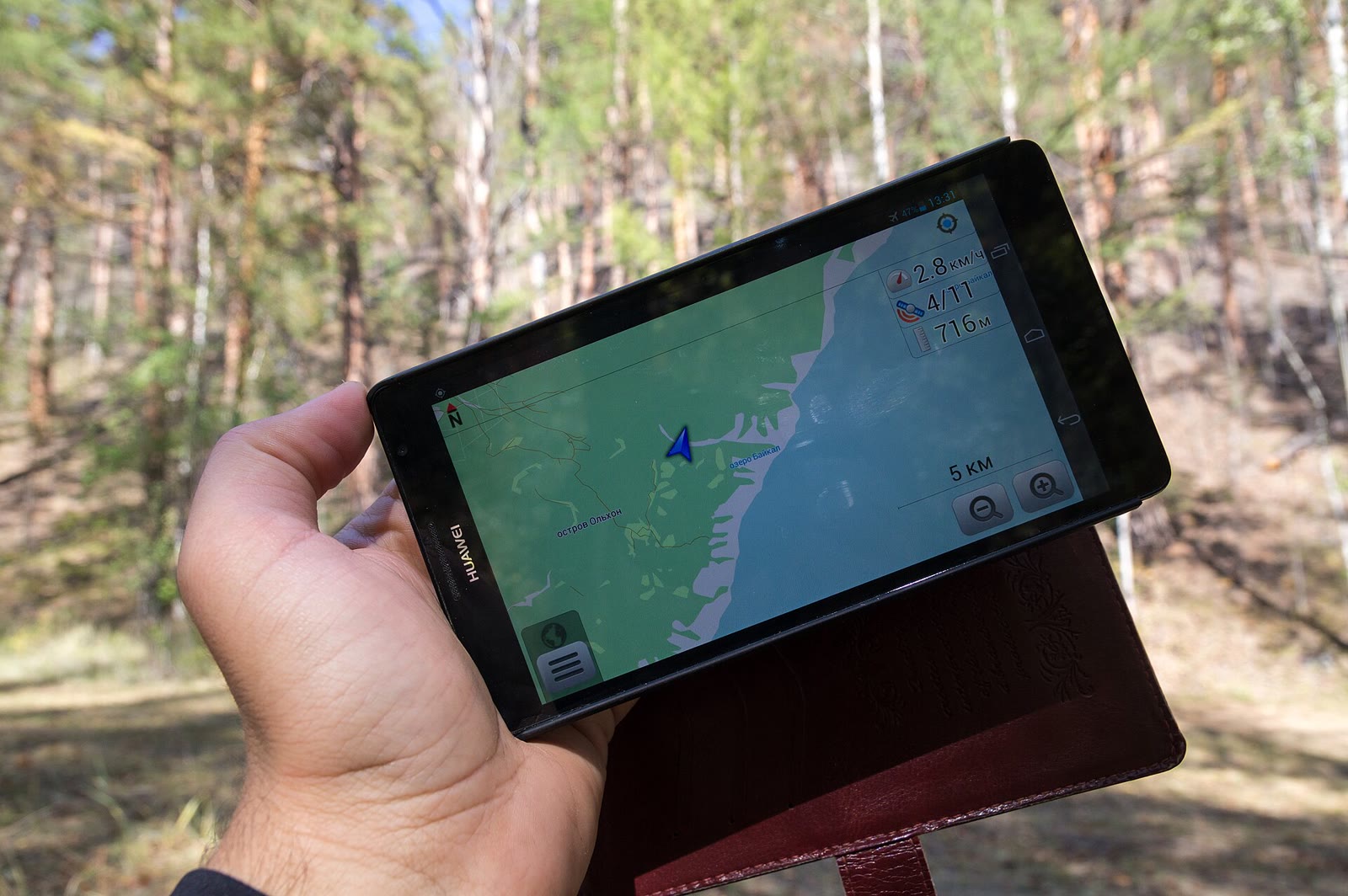
The deep time walk app does the counting, “with the app silently calculating your speed and distance adjusting the soundscape accordingly.” Its “built-in pedometer” lets a walker hear each key event as they reach it, so it is triggered by distance rather than by a map.
The narration is a play, not a lecture. “The Fool and the Scientist” was written by the playwright Peter Oswald and Stephan Harding, and the Long Now Foundation describes “a dramatized dialogue between a questioning protagonist and patient scientist.” Before the walk begins, “our narrator suggests you put your device in a pocket.”
Two design choices stand out. A “gaiaphonic mode” sends all the sound into one ear, “allowing the other to be present to the world around you.” And for those who can’t cover the distance, “we have developed a Mobility-Assist mode.”
Other time walks compared
Each picks its own subject, length and scale, so a geologic time walk on a canyon rim and a cosmic one on a beach feel quite different.
| Walk | Year | What it covers | Length | Scale |
|---|---|---|---|---|
| Cosmic Walk | Early 1980s | The universe, about 14 billion years | At least 100 feet | Proportional along a spiral |
| Walk Through Time | 1997 | “From stardust to us” | One mile | One foot = one million years |
| Sands of Time (Antenna Theater) | 1998-2002 | The universe since the Big Bang | About 1,300 feet of beach | About 100 feet = one billion years |
| Deep Time Walk | 2007 (app from 2016) | Earth, 4.6 billion years | 4.6 km | One metre = one million years |
| Trail of Time | 2010 | Grand Canyon’s geologic history | 4.56 km | One metre = one million years |
Grand Canyon’s Trail of Time

At the Grand Canyon, the rocks themselves are the exhibit. The University of New Mexico’s Trail of Time page explains: “Each meter walked on the timeline trail signifies one million years of Grand Canyon’s geologic history.” It opened in 2010 after “15 years of work,” and in 2022 crews reinstalled almost 100 of its 2,500 bronze markers.
A beach in Marin: Sands of Time

A year after Palo Alto, Antenna Theater opened a time walk of its own on Rodeo Beach in Marin. “Visitors wearing walkmans hike along the beach viewing the sculpted sand while hearing the story of the universe starting from the big bang and ending at the present.” The full story is in Sands of Time, Antenna Theater’s beach walk through cosmic time.
Its scale was far tighter. At roughly 100 feet to a billion years, it ended with one grain of sand standing for 2,000 years. The same thinking ran through Antenna’s AllTime and calendar projects, including a calendar that starts on the winter solstice.
Why walking works
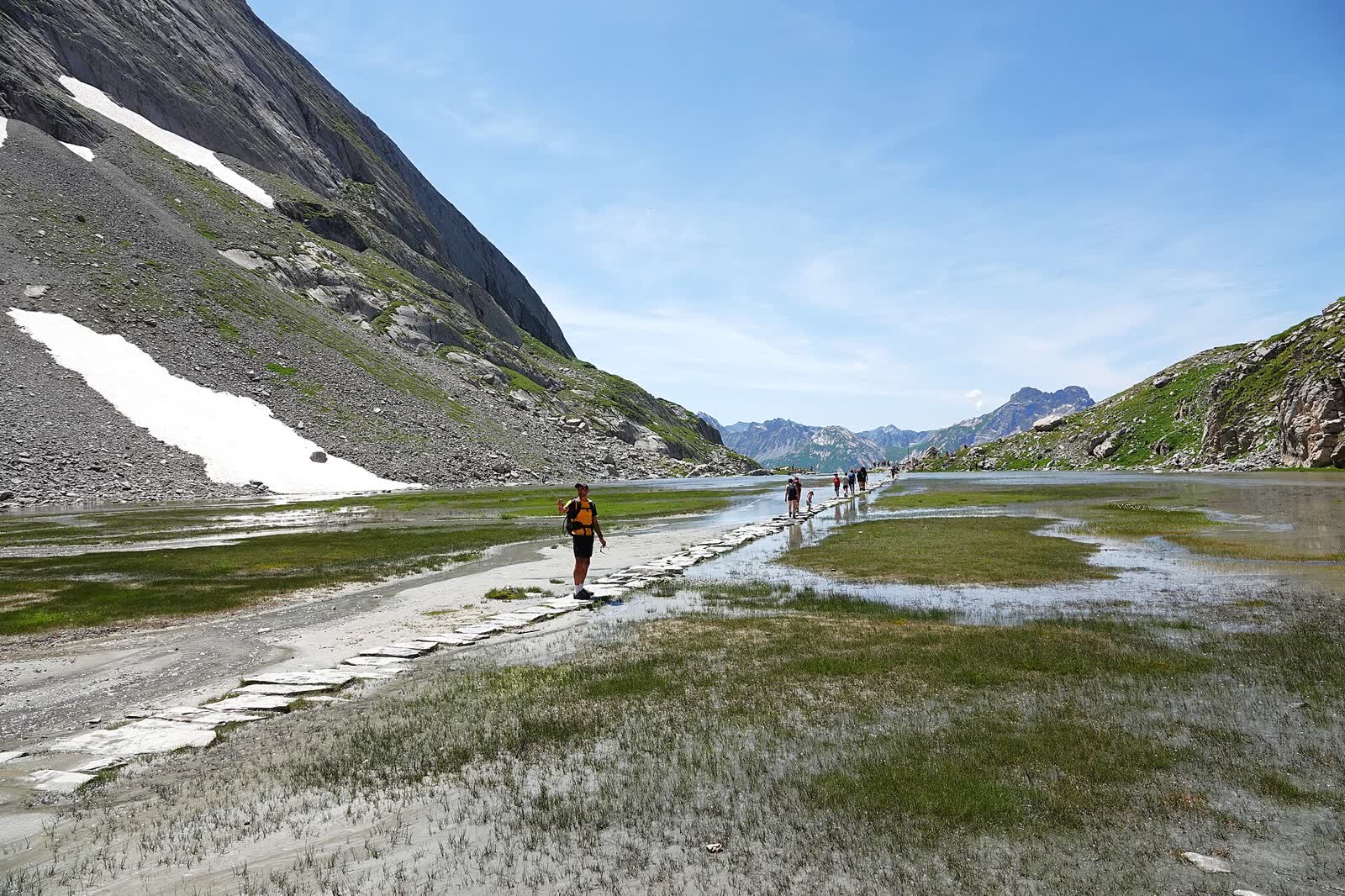
The problem these walks solve is old. As ASU put it when the Trail of Time opened, “Conceptualizing and comprehending time when it spans anything more than a few centuries is a challenge for many people.”
Distance gives them back a meaning. The Long Now Foundation calls it a “translation of time into distance” that turns a million years into “the comprehensible and familiar metric of one meter.” Your legs remember what your head forgets.
Walking with a voice in your ear is also a form in its own right. Compare what a soundwalk asks you to listen for, and read how location-based audio storytelling learned where its listener is. Antenna’s time walk also came out of a city with a long taste for odd forms, covered in our history of San Francisco performance art.
Frequently asked questions
How long is a deep time walk?
The Deep Time Walk is 4.6 kilometres, one metre for each million years of Earth’s 4.6-billion-year history.
Who created the Deep Time Walk?
The ecologist Stephan Harding and the geologist Sergio Maraschin co-created it at Schumacher College in 2007.
Can I do a deep time walk alone?
Yes. The Deep Time Walk app counts your distance and adjusts the audio as you go, and a Mobility-Assist mode helps those who cannot walk 4.6 kilometres.
Is the Cosmic Walk the same thing?
It is an older ritual, created in the early 1980s by Sister Miriam Therese MacGillis: a spiral at least 100 feet long, walked with a candle while a reader tells the story of the universe.
For more of the company’s experiments, see Walkmanology and Antenna’s other new theater forms.