
The History of the Silent Disco, from a 1920 Radio Dance to Festival Headphones
From the outside a silent disco looks absurd: a crowd dancing hard to music nobody else can hear. The history of silent disco is mostly a story of noise rules and radio headsets, with more shaky origin stories than most accounts admit. Here is what the sources support, with a Bay Area theatre as a parallel.
Quick answer
Who invented the silent disco?
No single person. Reports from 2005 credit Dutch developers who had used wireless headsets at raves and travelling parties. Glastonbury’s silent disco that June was the first big festival one, after a silent gig in Cardiff in 2000 and a museum dance party in Chicago in 2002, and a 1920 “radiophone dance” in Atlanta is the classic forerunner.
How a silent disco works
The kit is simple. In NBC News’s 2005 report on Glastonbury’s wireless headphones, partygoers “tune into a restricted radio frequency through which the music of the disc jockey or band is broadcast,” and each sets the volume. To anyone without a headset, “it’ll look like the dancers are jumping around to a nonexistent beat.”
Forerunners: dancing to a distant band
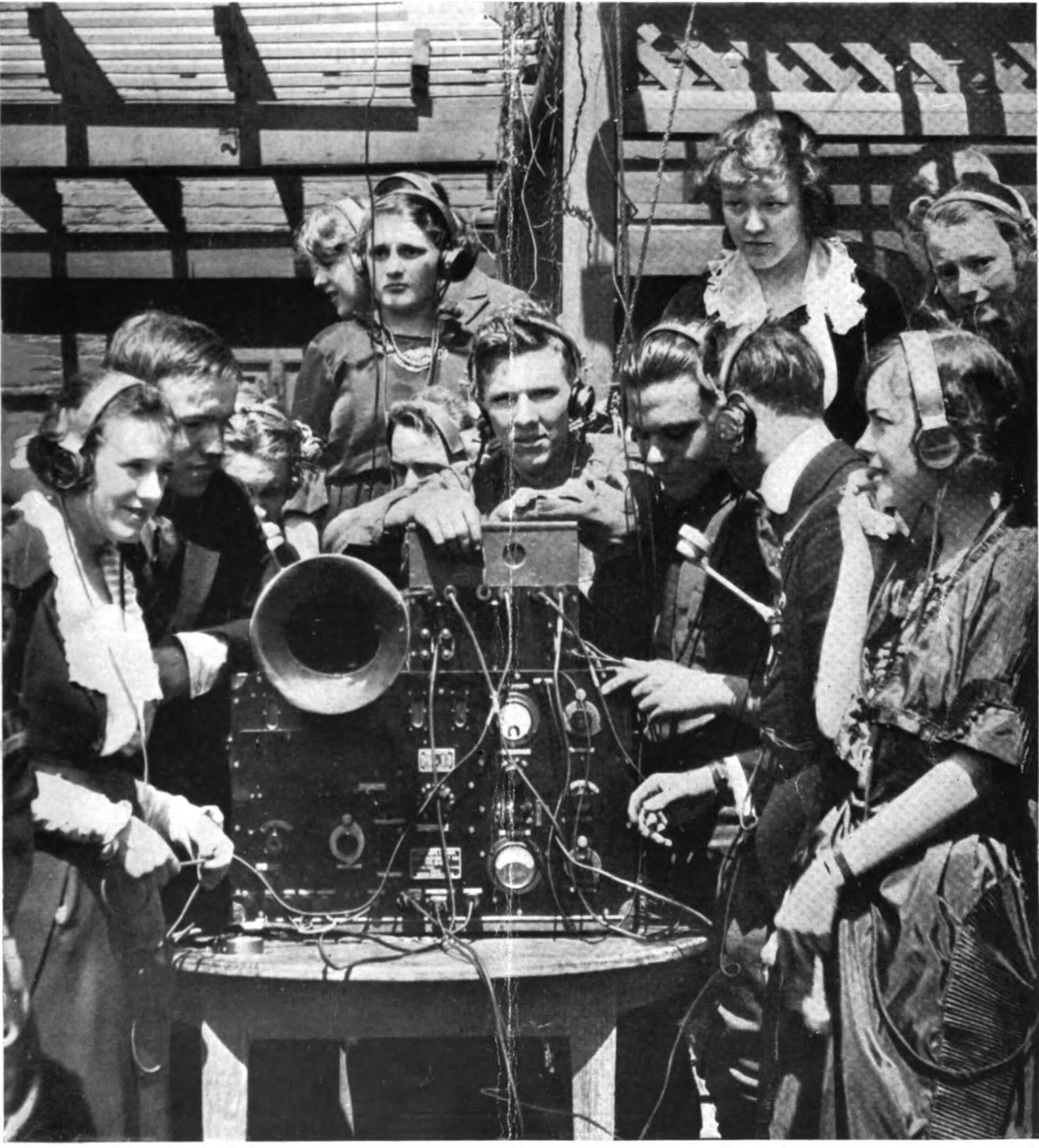
The earliest scene usually cited comes from May 1920, when an Atlanta social club held a “radiophone dance” “in which the participants danced wearing earphones to music transmitted from a band across town.” The account is credited to Radio Amateur News on the Wikimedia Commons page for the photograph.
Other origin stories repeated on vendor blogs, about headset-wearing activists in the early 1990s or a festival radio link in 1994, come without sources. This history leaves them aside.
Headphone concerts: the Flaming Lips
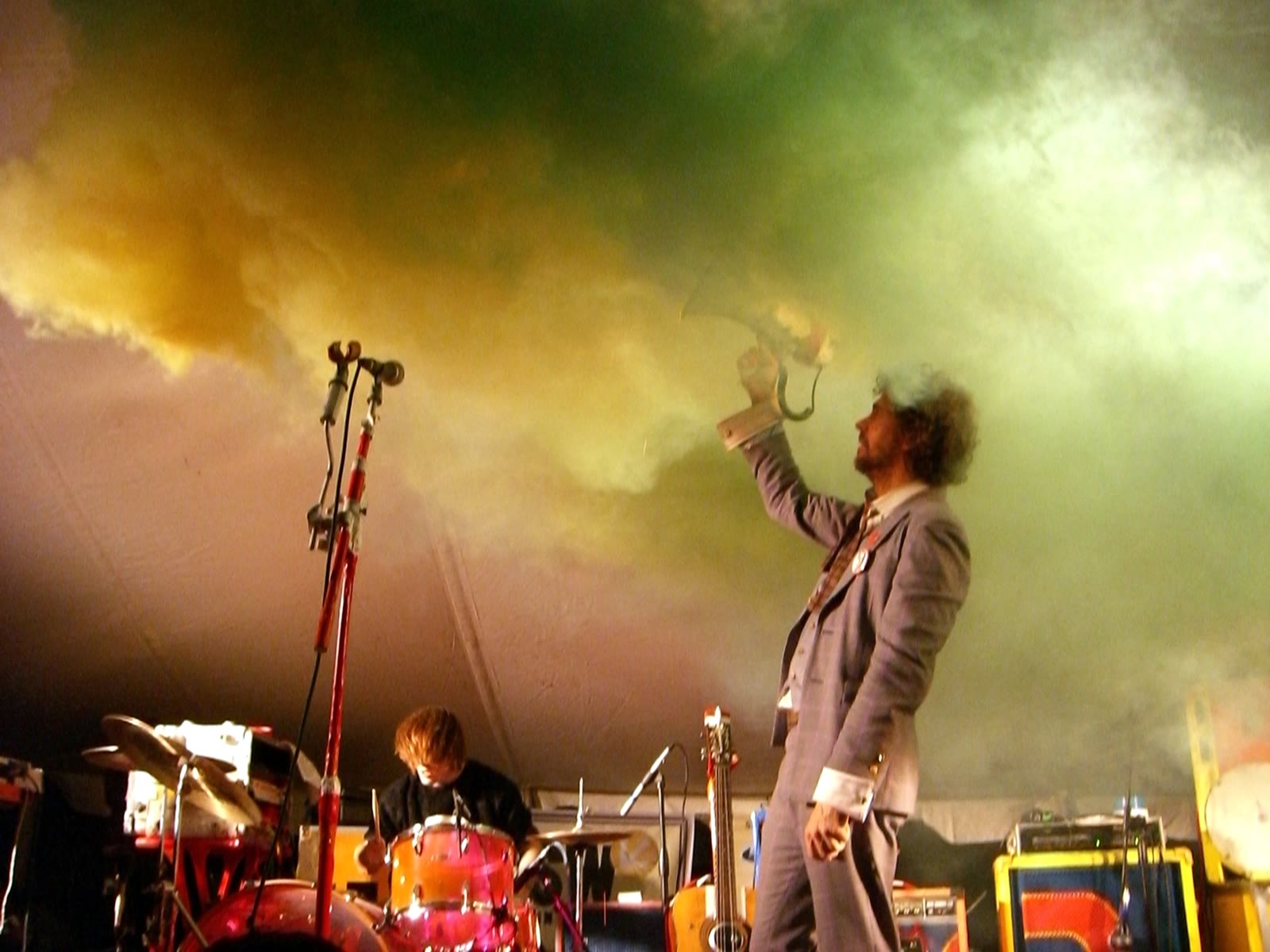
A separate thread ran through rock. Stereogum recalls that in the summer of 1996 Coyne and Steven Drozd “dreamed up a grand symphony of parked cars. They distributed 40 cassette tapes, comprising one sprawling original composition, to 40 volunteers, who synchronized their car stereos on command.” Their 1997 album Zaireeka moved the idea from cassettes (whose story is in the history of the cassette tape) to “four different CDs that have to be played simultaneously on four different CD players.”
In 1999 the band took headphones on tour. Mix’s 1999 report on the Flaming Lips’ headphone shows says “The Oklahoma City band passed out 500 headphones and Walkman-style radios to audience members at each stop.” Michael Ivins traced the idea to the cinema: “I think it came about when Wayne [Coyne] went to one of those big multiplex theaters where they give you hearing-impaired headphones.”
These were not silent shows, since the speakers stayed on, and the point was a cleaner mix, a late chapter in the history of stereo sound. “At the Fillmore in San Francisco, the experiment seemed only partly successful,” Mix noted.
Silent gigs and dance parties
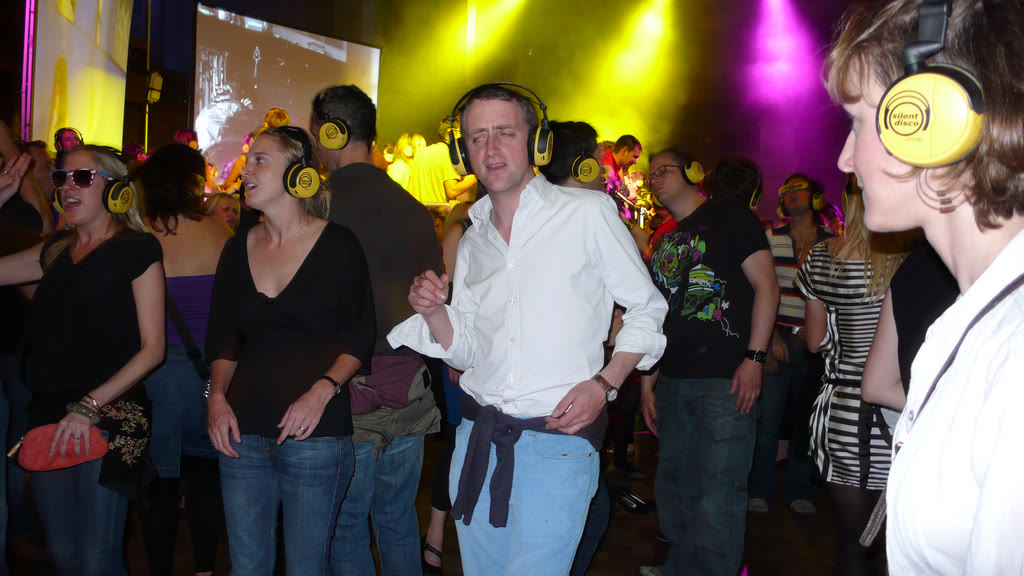
The truly silent events came next. In May 2000 the BBC’s Music Live season included “a ‘silent’ gig at Chapter Arts Centre in Cardiff, where the audience listened to band Rocket Goldstar plus various DJs, through headphones.”
In Chicago, the artist Meg Duguid describes a silent dance party on the plaza of the Museum of Contemporary Art during the summer solstice events, where “a DJ spun a transmission to fifty wireless headsets that audience members put on and danced to.” Wikipedia, citing the Chicago Reader, dates it to 2002.
Glastonbury and Bonnaroo, 2005

In March 2005 AFP, citing The Times, reported that the festival would “unveil yet another cultural innovation, the silent disco,” part of a “volume management strategy” once the stages fell quiet. Michael Eavis said, “We have been toying with this idea for years, trying to think of ways to combat the noise limits.” Emily Eavis was blunter: “Just imagine 2 000 people dancing with geeky headsets. It’s very Glastonbury.”
Who made the kit depends on the report. NBC News called the headphones “the brainchild of Nico Okkerse and business partner Michael Minten from the Netherlands,” while the Birmingham Post named the Dutch firm 433fm.com, and dancers had “a choice of tuning their headphones to two different frequencies.”
The format reached the United States later that year at the Bonnaroo festival in Tennessee. Ryan Dowd recalled that “because of the poor signal quality of the headphones, most people participated in the silent dance party for a few minutes only.”
Soundclash, Antarctica and cathedrals

Better headsets made the format a fixture. At Massive Attack’s Meltdown in London in 2008, the Guardian’s Akin Ojumu enjoyed “the soundclash you can create on your headphones, switching between DJs.” In December 2013, Guinness World Records reported, Metallica played Antarctica “without traditional amplification due to the icy continent’s fragile environment,” to an audience on headphones.
In 2024 the silent disco reached England’s cathedrals. The Guardian reported that “More than 400 people paid about £25 a head to dance beneath Winchester Cathedral’s magnificent medieval arches,” and that a petition against the “desecration of our historic holy places” passed 2,400 signatures. Guildford’s chief operating officer put the case plainly: “By generating an income in this way, we can keep the cathedral open.”
| Year | Event | Where |
|---|---|---|
| 1920 | A “radiophone dance” in earphones | Atlanta |
| 1996-1997 | Synchronised car stereos; Zaireeka | The Flaming Lips |
| 1999 | Headphone concerts, 500 headsets a night | US tour, including the Fillmore |
| 2000 | A “silent” gig for BBC Music Live | Chapter Arts Centre, Cardiff |
| 2002 | A DJ transmits to fifty wireless headsets | Museum of Contemporary Art, Chicago |
| 2005 | The first big festival silent disco | Glastonbury, then Bonnaroo |
| 2008 | Switching between DJs on one headset | Meltdown, London |
| 2013 | Metallica heard on headphones | Antarctica |
| 2024 | Silent discos in cathedrals | Winchester and others |
A theatre parallel: Antenna’s Pink Prom (1982)
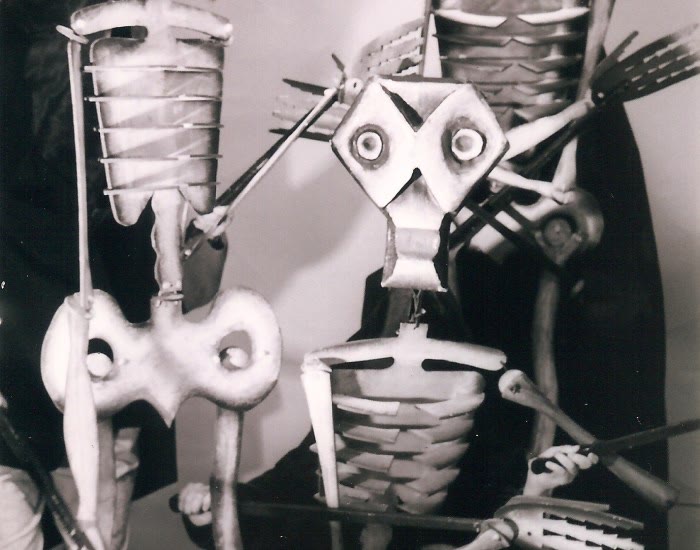
Theatre had put sound in private ears for a different purpose. For Antenna Theater’s Pink Prom, at Tamalpais High School in Mill Valley in July 1982, Chris Hardman recorded “Intervoice tapes for 11 promsters and promettes” and started them all at once, as told in Pink Prom’s Walkman-cued performers. It followed Antenna’s earlier High School production.
It was the reverse of a silent disco. Reviewing it for the San Francisco Chronicle, Bernard Weiner noted that “it was the student-performers who wore them, completing unrehearsed tasks as they heard the instructions on tape,” while the crowd “danced to the sounds of an excellent live band.” Some performers, he added, “were having trouble hearing their instructions over the sound of band.”
In 1983 Hardman imagined a single transmitter: “Information will be transmitted from one central source so there will be no time discrepancies due to motor speed and/or tape stretch as is the case with currently available walkmans.” Antenna later sent sound by FM radio, and Skin & Bones (1995) had its tape “available in English and Spanish on headsets,” two channels in one room, by coincidence rather than lineage. That longer story is in the history of headphone theater.
None of this makes Antenna an ancestor of the silent disco, and no source links them. A silent disco gives everyone the same party; Antenna, in Walkmanology and its other new theater forms, used headphones to give each listener a story, closer to how a sound installation shapes what a visitor hears.
Frequently asked questions
When was the first silent disco?
Glastonbury’s in June 2005 was the first big festival silent disco, and the name was in print that year. A silent gig ran in Cardiff in 2000, and a 1920 Atlanta radiophone dance is often cited as a forerunner.
How does a silent disco work?
DJs broadcast on radio frequencies to wireless headsets. Each dancer sets the volume and can switch between channels.
What is a headphone concert?
A live show heard through headphones. In 1999 the Flaming Lips handed out 500 headsets and radios a night and broadcast the stereo mix from a kit-built FM transmitter.
Did theatre use headphones first?
Theatre used them earlier for other ends. Antenna Theater’s Pink Prom (1982) cued performers on synchronized Walkman tapes while the dancers heard a live band. No source links it to the silent disco.