The History of Stereo Sound, from Paired Receivers to the Personal Stereo
Stereo is so ordinary now that music without a left and a right sounds strange. Yet the history of stereo sound runs back almost a century and a half, through paired telephone receivers, an English patent, a cartoon orchestra and a format war that buyers ignored. It even passes through a Bay Area theatre that put stereo earphones on its audience.
Quick answer
Who invented stereo sound?
Alan Blumlein, an engineer at EMI in England, filed the patent for what he called “binaural” sound, now stereo, on December 14, 1931. Clément Ader had shown two-channel listening in Paris in 1881, and Bell Labs demonstrated three-channel stereo in 1933. Stereo reached homes with the first stereo LPs in late 1957 and FM stereo radio in 1961.
Two ears before stereo
Copper, PS Audio’s magazine, notes that “two-channel sound was demonstrated as far back as 1881, when paired telephone receivers transmitted performances of the Paris Opera to nearby rooms.” That was Clément Ader’s system, told in the théâtrophone and the history of headphone theater. Ader’s listeners held a receiver to each ear; the engineers of the 1930s wanted direction from loudspeakers heard by both ears at once.
Bell Labs and “auditory perspective”
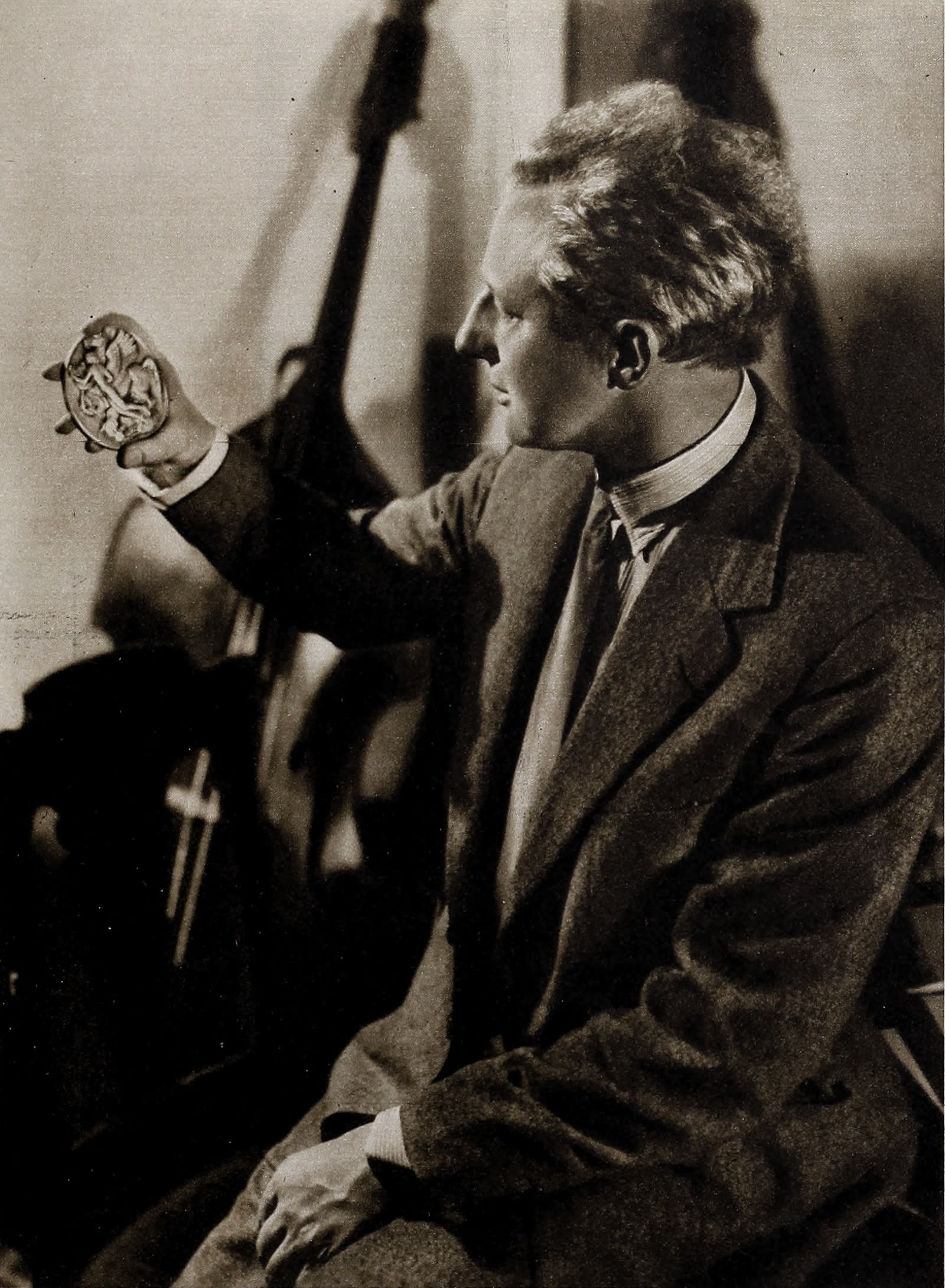
In the United States, Bell Telephone Laboratories recorded nearly every rehearsal of Leopold Stokowski’s Philadelphia Orchestra in the 1931-1932 season, and some of those discs, released in 1979, turned out to hold stereo pairs. Stokowski was won over: “Listening monaurally gives me the sensation of the music being choked and crushed together … Binaurally, the music sounds free.”
The public test came on April 27, 1933. Harvey Fletcher welcomed senators and advisors to Constitution Hall in Washington, where, as the Acoustical Society’s account of the 1933 Bell Labs demonstration puts it, “On the stage were three loudspeakers. Stokowski was stationed at a control panel in the hall.”
A soprano sang Coming Through the Rye as she crossed the stage in Philadelphia, and in Washington “the phantom of her voice ‘appeared to be strolling on the stage’”. The evening closed with “an unforgettable duel in the dark between two trumpet players separated by more than a hundred miles.”
Fletcher’s team had planned nine speakers in a grid but settled on three in a row, since actors on a stage do not jump up and down. A vertical array, Fletcher joked, would suit only “something like Hamlet’s ghost.”
Blumlein’s patent
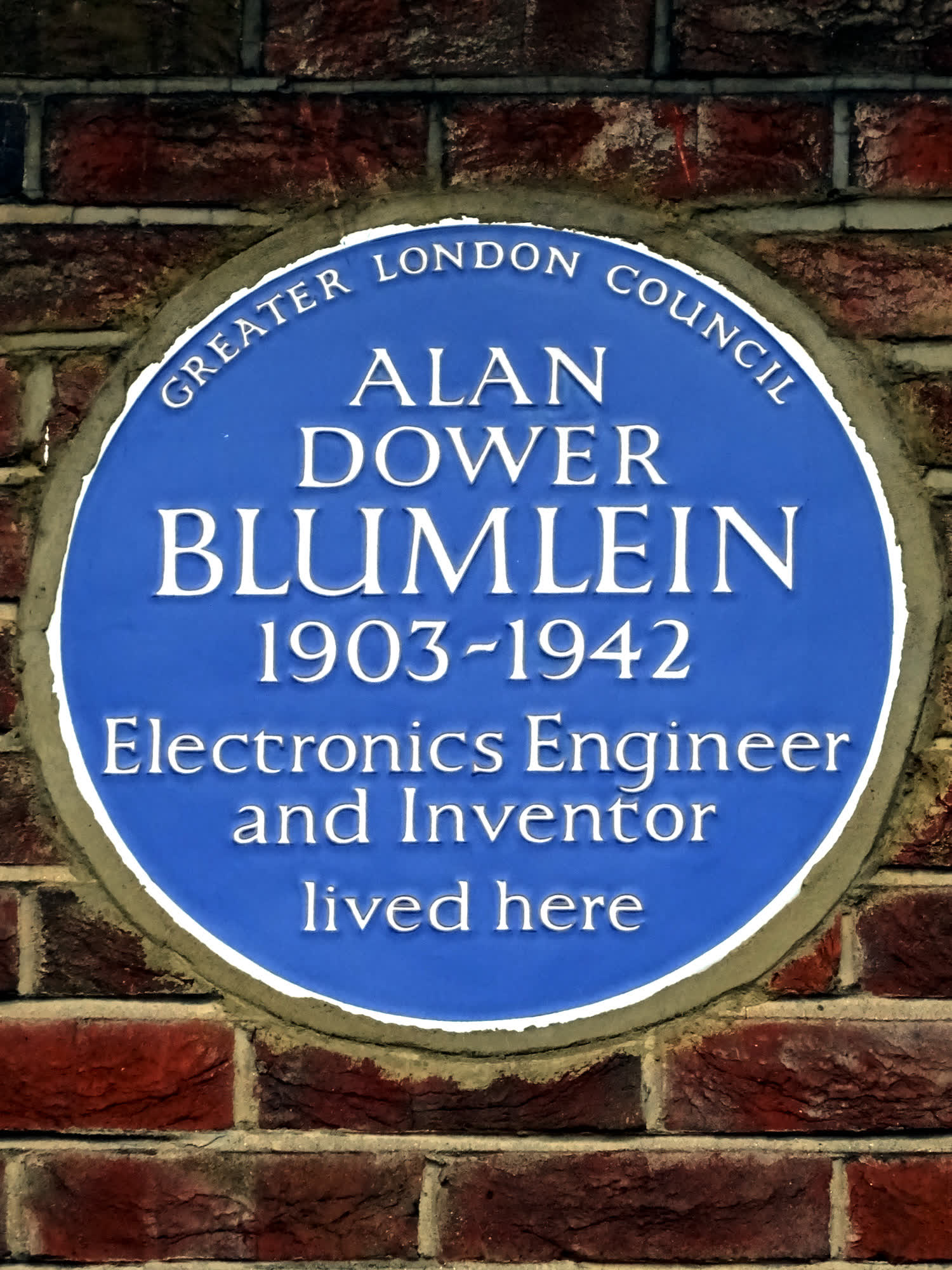
In England the answer came from Alan Blumlein, an engineer at EMI. The EMI Archive Trust’s history of Blumlein and the invention of stereo says that “After a night at the cinema with his wife, Blumlein was frustrated that the sound from a character on screen could only be heard from a speaker on the corresponding side of the room.” He set to work on “a binaural (now known as stereo) system.”
His patent, GB 394,325, was filed on December 14, 1931. It notes that phase differences “in two loud-speakers (both heard by both ears) do not produce the required effect,” so Blumlein made “the relative loudness of a number of loud-speakers” depend on the direction a sound came from.
The Hi-Fi Hall of Fame counts “a remarkable 70 claims” in it, including two microphones at right angles, “still known as a ‘Blumlein Pair’,” and two channels in the two walls of one record groove. On December 14, 1933, EMI cut its first stereo test disc at Hayes. Blumlein was killed in 1942 on a secret radar test flight.
Stereo goes to the movies
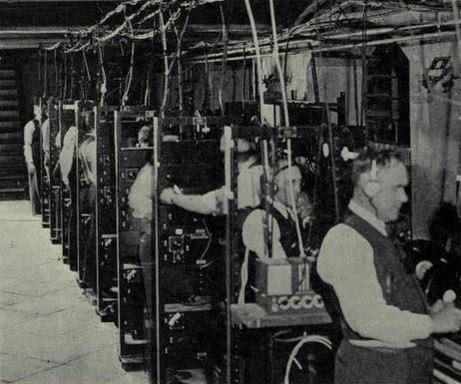
Hollywood’s first big attempt was Disney’s Fantasia. The IEEE History Center’s wiki describes Fantasound as “an elaborate and expensive sound system that recorded Fantasia on nine optical recorders using eight music tracks plus a click track for animation timing.” WHYY credits Stokowski and his orchestra with “the first stereo recordings of orchestral music.”
The playback systems weighed some 15,000 pounds and went only to select theaters. Fantasia opened with one at the Broadway Theater on November 13, 1940, but wartime defense needs halted production of the equipment. Bill Garity, the Disney engineer who oversaw it, later said: “Technically, it was bad.”
Stereo comes home
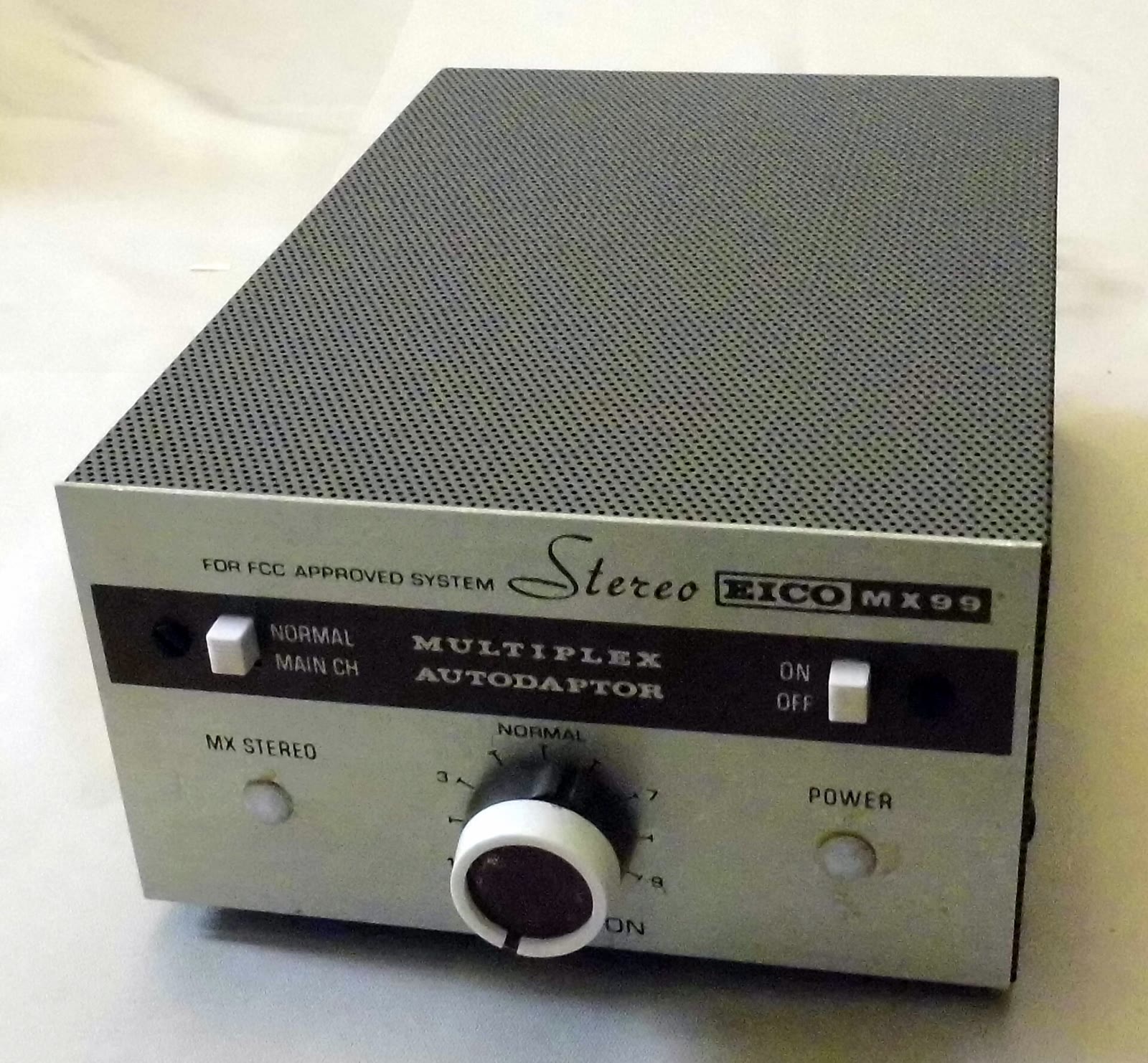
Stereo reached consumers first on reel tape, which was awkward at home (a handier box came later, as the history of the cassette tape tells). Copper marks “the first single-groove Stereo LP, manufactured by Audio Fidelity in October of 1957,” cut on a Westrex 45/45 lathe: Dixieland on one side, trains on the other. Stereo records reached shoppers across the industry in early 1958.
Radio followed. The FCC approved a joint GE-Zenith system for FM stereo in April 1961, and regular broadcasts began on June 1. Records set the terms, as Radio-Electronics explained: “the recording industry is already committed to 45/45 and that’s the kind of program that has to be transmitted, most of the time.”
More channels
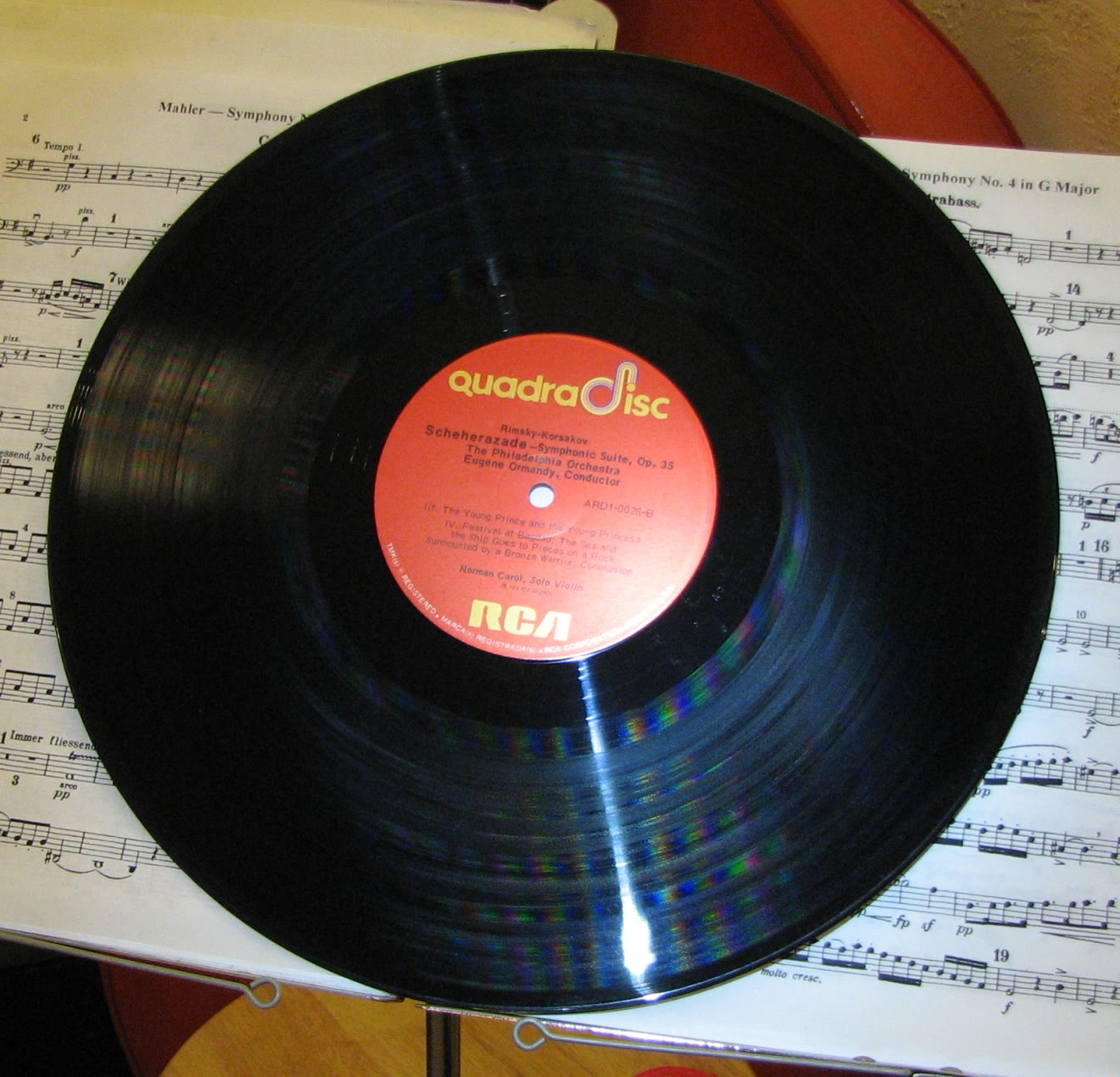
If two channels were good, the industry reasoned, four would be better. In Stereophile, Tom Fine says quadraphonic sound was sunk by “competing and incompatible LP formats, high prices on the better-sounding discrete-channel reel tapes, and a collective shrug by the buying public.” By about 1977 the major labels had abandoned it.
Surround sound won in the cinema instead. Dolby introduced its Dolby Stereo optical soundtrack in November 1974, and Star Wars opened in May 1977 in 46 US theatres equipped for it. By then Dolby had moved its headquarters to San Francisco.
The history of stereo sound in ten dates
Two years after Star Wars, stereo went into a pocket with the Sony Walkman and the personal stereo.
| Year | Event | Source |
|---|---|---|
| 1881 | Paired telephone receivers carry the Paris Opera, one receiver per ear | Copper (PS Audio) |
| 1931 | Alan Blumlein files his “binaural” patent at EMI (December 14) | GB Patent 394,325 |
| 1933 | Bell Labs relays the Philadelphia Orchestra to three loudspeakers in Washington (April 27) | Acoustics Today |
| 1933 | EMI cuts its first stereo test disc at Hayes (December 14) | EMI Archive Trust |
| 1940 | Fantasia premieres in Fantasound at the Broadway Theater (November 13) | IEEE History Center |
| 1957 | Audio Fidelity issues the first single-groove stereo LP | Copper (PS Audio) |
| 1961 | The FCC adopts the GE-Zenith FM stereo standard; broadcasts start June 1 | Radio World |
| 1970s | Quadraphonic LPs fail; labels abandon them by about 1977 | Stereophile |
| 1975-1977 | Dolby Stereo film soundtracks; Star Wars in 46 Dolby Stereo theatres | Dolby Laboratories |
| 1979 | The personal stereo: Sony’s Walkman | The Walkman post on this site |
Stereo as a stage
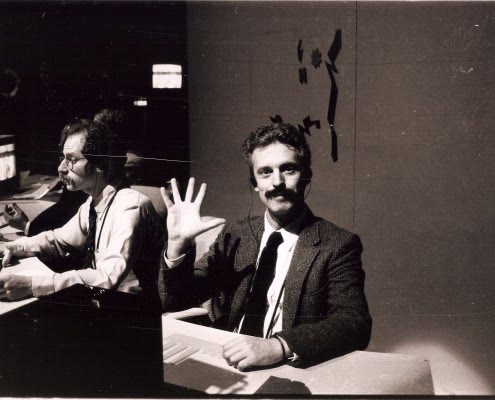
Theatre found its own use for consumer stereo. Antenna Theater developed none of this technology; it put stereo in its audience’s ears. Its 1982 Pink Prom was billed as a piece in which “Sixteen actors in prom dress perform to pre-recorded portable stereo audio choreography,” and in Artweek in 1985 Anthony Reveaux wrote of Fairplay that “The stereophonic dialog between suicide counselors and the doomed made the Golden Gate Bridge sequence disturbingly intense.” The company’s notes on its psycho-acoustic method carried the heading “Stereo Audio Mixes with the Inner Voices.”
That is a parallel, not a line of descent. The form is told in Walkmanology and Antenna’s other new theater forms and Fairplay’s promenade through San Francisco, while binaural sound, stereo’s headphone cousin, is a different technique. The same earphones later served dancers in the history of the silent disco.
Frequently asked questions
What was the first stereo recording?
EMI cut its first stereo test disc at Hayes on December 14, 1933. Bell Labs’ rehearsal discs of 1931-1932 were later found to hold stereo pairs too.
When did stereo records come out?
Audio Fidelity issued the first single-groove stereo LP in late 1957, and stereo records reached consumers across the industry in early 1958.
When did FM radio go stereo?
The FCC approved the GE-Zenith system in April 1961, and regular FM stereo broadcasts began on June 1, 1961.
Why did quadraphonic sound fail?
Competing, incompatible LP formats, costly tapes and buyers’ indifference sank it, and the major labels gave up on quad by about 1977.