What Is a Sound Installation? Sound Placed in Space, From Times Square to the Wave Organ
Some artworks you look at. A sound installation you stand inside, listening to a room, a traffic island or a jetty that has been made to sound. This guide explains what is a sound installation, where the term came from, and why the San Francisco Bay holds so much of the form’s history. It ends with a theatre company that used sound the other way round.
Quick answer
What is a sound installation?
A sound installation is an artwork in which sound, not image, is the main material, placed in a space or site that listeners move through at their own pace. It has no fixed beginning or end. Max Neuhaus, generally credited with the term, made works whose sounds were placed “in space rather than in time.”
Sound installation, defined
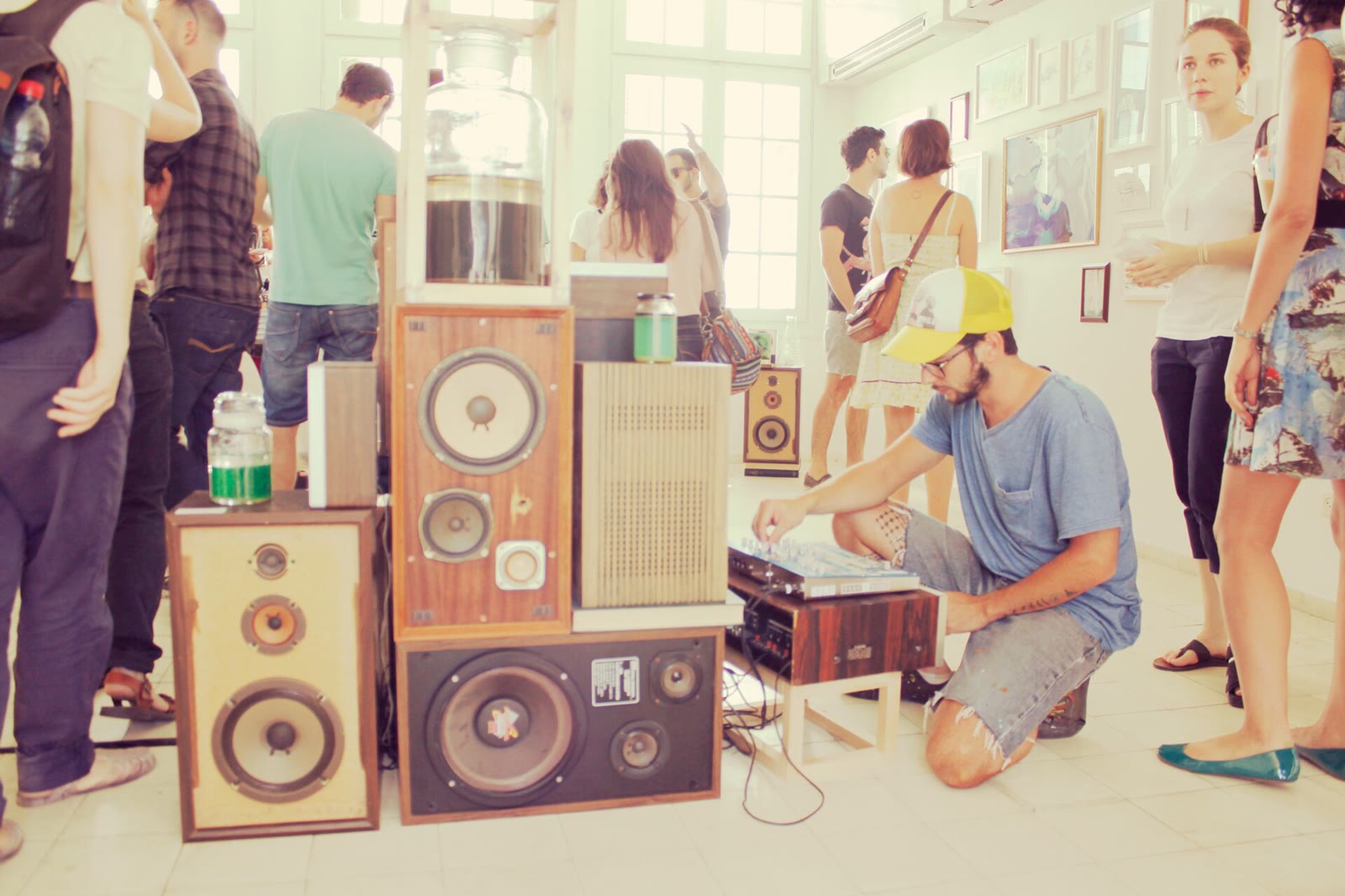
Volker Straebel, in a scholarly history of the form, starts with the name: “The compound term ‘sound installation’ makes reference to sound as the defining material.” The room matters too: “Sound installations are defined or influenced by the acoustic properties of the spaces where they are presented.” He dates the first to 1967 and notes they “have become increasingly prevalent since the 1980s.”
The neighbouring terms blur. Of sound installation and sound sculpture, Straebel writes: “While the former seems to presuppose a reference to space, the latter can refer to individual sound-emitting objects.” The artist Bernhard Leitner put it physically: “the sound itself should be understood as a building material, as an architectural, sculptural, form-creating material like stone, plaster, or wood.”
| Aspect | Sound installation | Sound sculpture | Soundwalk | Antenna’s headphone installations |
|---|---|---|---|---|
| Where the sound is | In the room or site, shared by everyone | In an object | In the world outside; nothing added | In each visitor’s ears |
| Time | No beginning or end | Ongoing or triggered | The length of the walk | A timed route with a soundtrack |
| Listener | Moves freely | Stands near the object | Walks and listens | Walks a set route, often alone |
| Example | Neuhaus, Times Square (1977) | The Wave Organ (1986) | Neuhaus’s LISTEN walks | Etiquette of the Undercaste (1988) |
Where the term came from
The words are older than the art. Straebel notes that “In the United States, the term ‘sound installation’ initially referred to technical set-ups for sound systems, particularly in movie theaters,” and cites a 1928 cinema advertisement.
Max Neuhaus is generally credited with the artistic use. He “claimed it for his works in a 1982 interview and dated it back to the early 1970s,” Straebel writes, and the term “can be found in press releases from as early as 1976.” Max Neuhaus’s estate describes his sound works as pieces “which were neither music nor events,” for which he coined the term.
Sound installation art examples: three landmarks
Neuhaus: from Drive-In Music to Times Square

Neuhaus’s Drive-In Music ran in Buffalo “From October 1967 to April 1968,” along Lincoln Parkway, where “20 weak radio transmitters were mounted on the trees.” Each motorist heard something “unique for each driver.” For Straebel, “musical form appears here for the first time as a function of space.”
His best-known piece, Times Square, is “a rich harmonic sound texture emerging from the north end of the triangular pedestrian island located at Broadway between 45th and 46th Streets.” It ran from 1977 to 1992 and was reinstated in May 2002. His earlier listening walks belong to a different form, the soundwalk, which adds no sound at all.
Bill Fontana and the Golden Gate
In 1987 Bill Fontana “captured a live sonic duet between the Golden Gate Bridge and the Farallon Islands in honor of the bridge’s fiftieth anniversary.” He placed microphones along the bridge, underwater and on land, and sent the sound live to loudspeakers on SFMOMA’s former Van Ness Avenue building. Later, “SFMOMA became the first American museum to acquire one of his installations.”
Janet Cardiff’s The Forty Part Motet
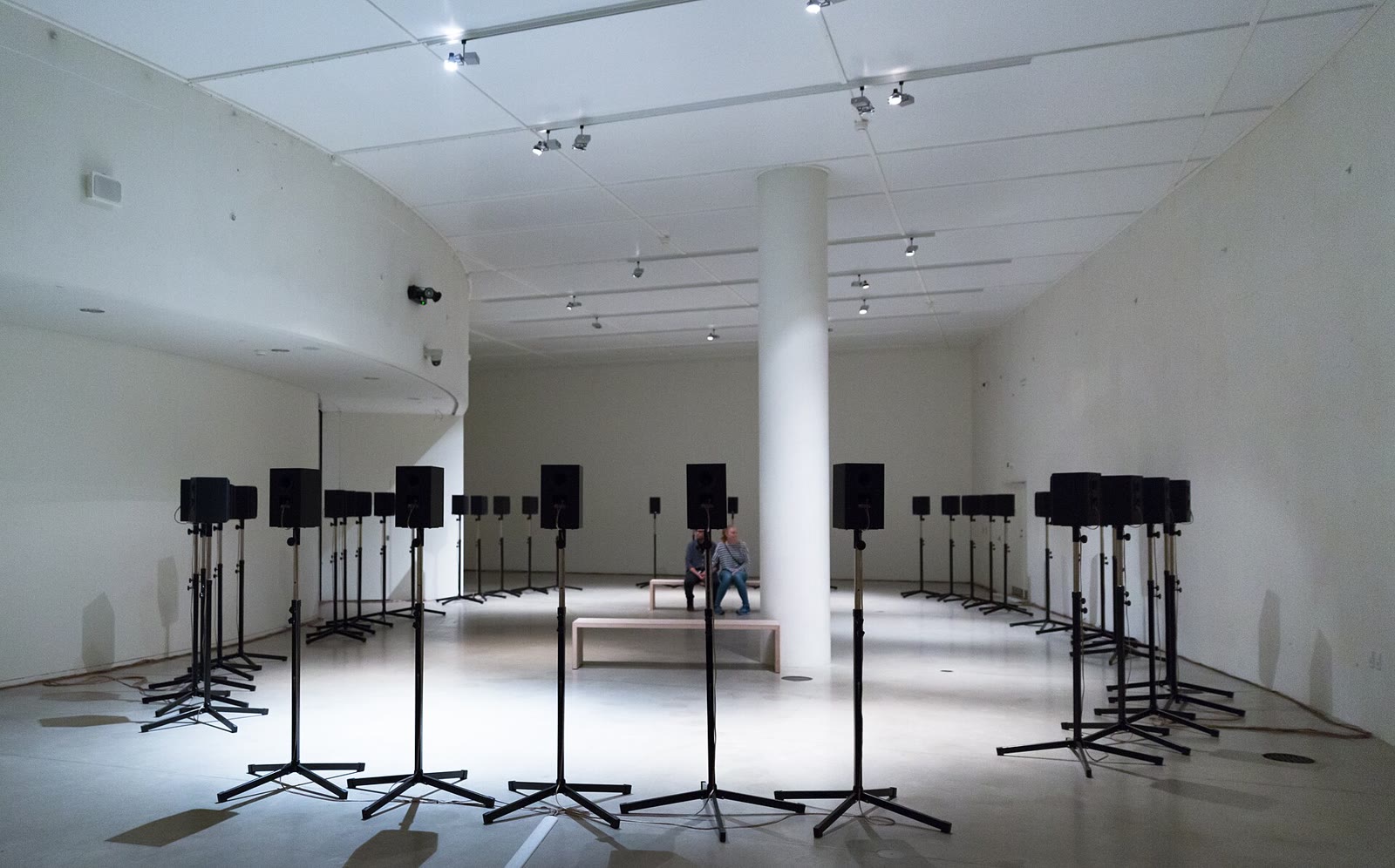
“Cardiff created this work in 2001,” and “her installation consists of 40 speakers arranged in an oval,” playing Thomas Tallis’s Spem in alium one voice part at a time. “The installation’s 14-minute audio loop includes 11 minutes of singing and three minutes of intermission.”
In 2015 it “made its California debut when SFMOMA and Fort Mason Center for Arts & Culture collaborated to bring the piece to San Francisco’s Gallery 308.” UC Berkeley’s Arts Research Center counted “59 singers, adults and children” and dated the Tallis to 1573, figures other accounts give differently. Rudolf Frieling summed up the effect: “She creates a one-to-one relationship between the listener and a human voice that’s very intimate, even in a public setting.”
Sound installation in San Francisco: a Bay Area landscape

The Wave Organ
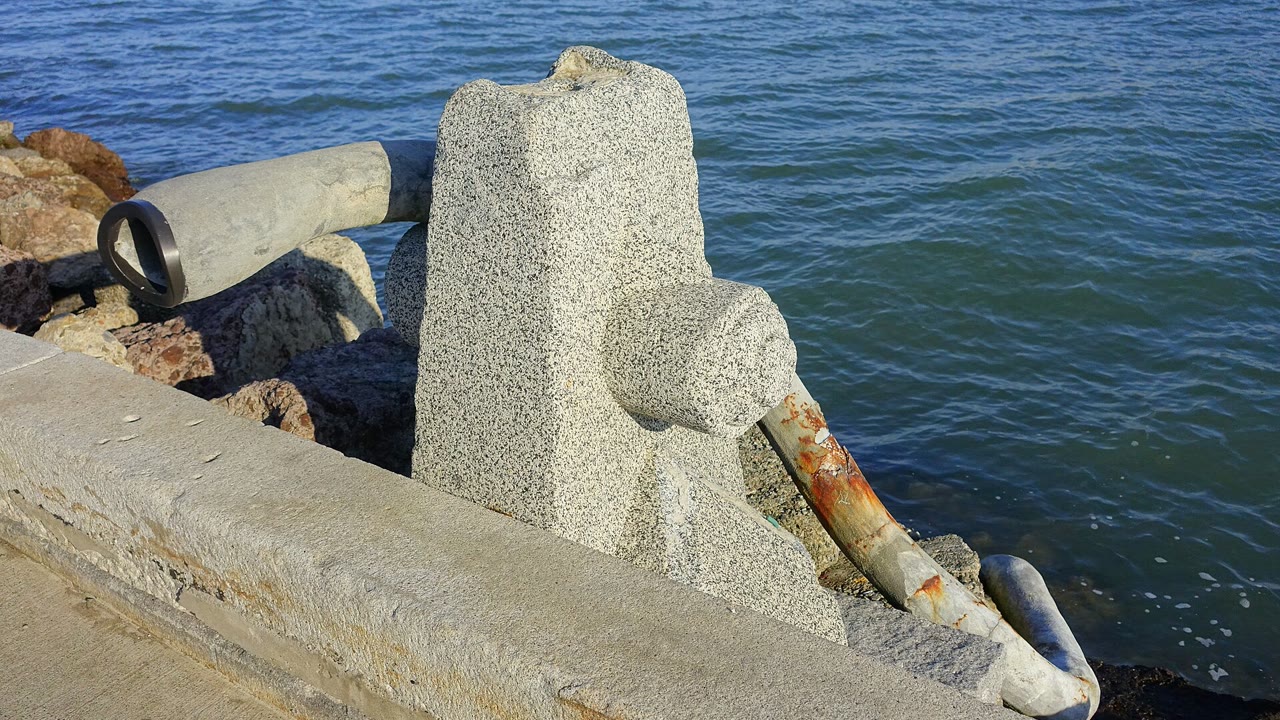
The Exploratorium’s page on the Wave Organ calls it “a wave-activated acoustic sculpture located on a jetty in the San Francisco Bay.” Peter Richards conceived it and built it “in collaboration with sculptor and master stone mason George Gonzalez,” and it was “completed in May 1986 and was dedicated in June to the memory of Frank Oppenheimer.” It has “25 organ pipes made of PVC and concrete,” and “The Wave Organ sounds best at high tide.”
The idea came from Fontana: “Inspiration for the piece came from artist Bill Fontana’s recordings made of sounds emanating from a vent pipe of a floating concrete dock in Sydney, Australia.”
Audium, a theater of sound

Audium is not an installation you wander through but a seated theatre. It describes itself as “the first theater of its kind in the world, pioneering the exploration of space in music,” where “Listeners are bathed in ‘sound sculptures’ performed through 176 speakers in total darkness.” Its founders Stan Shaff and Doug McEachern “began experimentation in the late 1950s,” premiered Audium IV in 1967 and opened their own theatre on Bush Street in 1975.
A contrast: sound inside Antenna’s installations
Antenna Theater worked from the other end. A sound installation releases sound into a shared room; Antenna’s walk-throughs gave each visitor a private track. Its technique page explained: “The PSYCHO-ACOUSTIC uses personal listening devices and headphones, what we call ‘Walkmonology’, to give the audient a first-person experience of the inner voices of the characters.”
That method is the root of Walkmanology and Antenna’s other new theater forms, and a cousin of binaural audio drama on headphones. In Etiquette of the Undercaste, a theatre installation that visitors walk into, the London Times reported that “you hear a stereophonic montage of voices which transports you into the squalid world of America’s homeless.”
The Seattle Times described “the collage-style soundtrack, based on interviews Antenna conducted with dozens of ‘real’ people,” a technique explained in what a sound collage is. Antenna even called The Grid, its 1989 piece at the Wexner Center, an audio installation.
The closest it came to the gallery form was outdoors. In A Body of Water (2005) at Ocean Beach, “‘Audients’ experienced a seaside sculpture garden while listening to an audio drama concerning our relationship to the ocean.” In Fire and Ice (2006), “the pre-recorded audio was broadcast to the shore-bound audience.” These are cousins of the sound installation, not examples of it.
Frequently asked questions
Who coined the term sound installation?
Max Neuhaus is generally credited. He said in a 1982 interview that he coined it in the early 1970s, though the words were used earlier for cinema sound systems.
What is the difference between a sound installation and a sound sculpture?
An installation presupposes a reference to space, while a sound sculpture can be a single sound-emitting object. The line blurs: the Exploratorium calls the Wave Organ an acoustic sculpture.
Who are well-known sound installation artists?
Max Neuhaus (Times Square, 1977), Bill Fontana (the Golden Gate piece, 1987), Peter Richards with George Gonzalez (the Wave Organ, 1986) and Janet Cardiff (The Forty Part Motet, 2001).
Is a headphone show a sound installation?
Not in the strict sense, because the sound is private rather than in the room. Antenna’s walk-throughs put personal listening devices and headphones inside built installations.