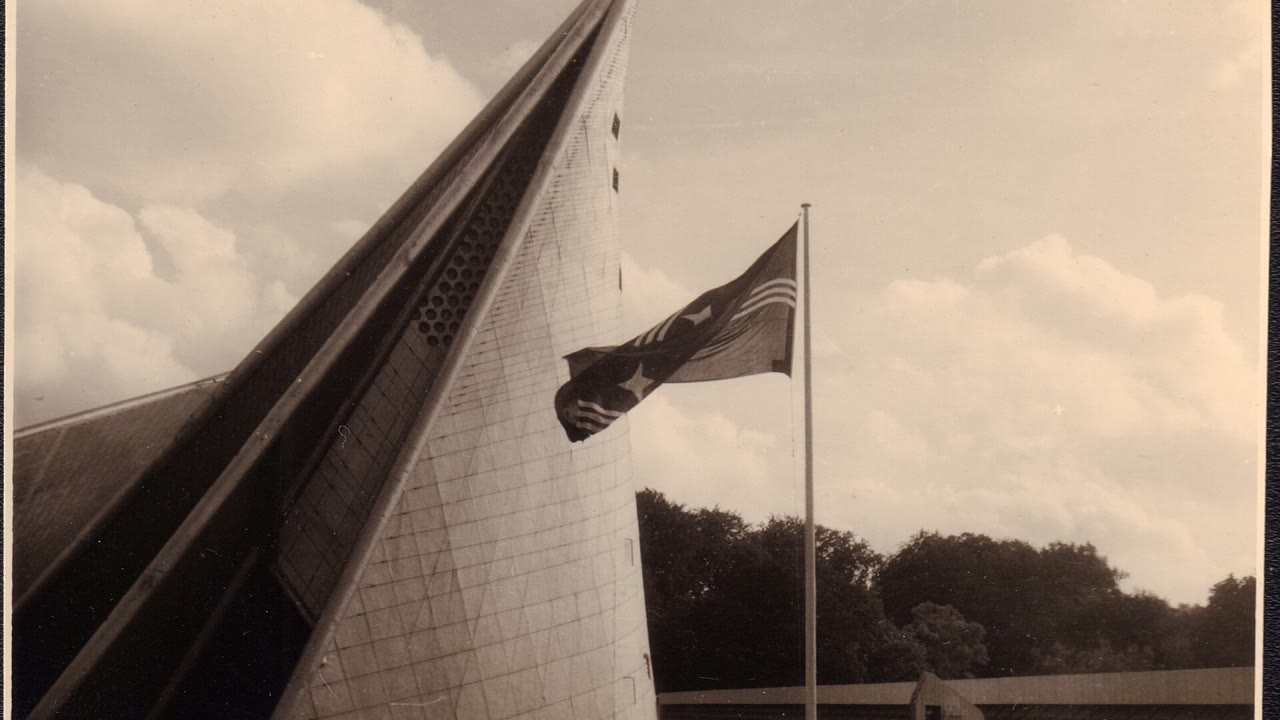
The History of the Audium, San Francisco’s Theatre of Sound
The history of the Audium in San Francisco is the story of two music teachers who wanted sound to move. Stan Shaff composed and Doug McEachern built the equipment. Their experiments grew from house concerts into a theatre where the lights go out and the music travels.
Quick answer
What is the Audium in San Francisco?
Audium is a San Francisco theatre built for moving sound. Composer Stan Shaff and equipment designer Doug McEachern began experimenting in the late 1950s, opened a first theatre in 1967 and moved to 1616 Bush Street in 1975, where listeners sit in darkness while a live performer sends sound through 176 speakers.
Light shows, dance and tape (1956-1960)
Audium’s own chronology starts in 1956, with “spatial ideas interacting with light and sound projections with sculptor Seymour Locks (early form of light show).” Shaff was a trumpet player and a school music teacher. He also played with the San Francisco Tape Music Center, including “the first performance of Terry Riley’s In C (1964).”

The date of the partnership depends on who tells it. Audium’s biographies say “In 1958 Shaff met fellow musician and teacher Douglas McEachern,” while Shaff himself told an interviewer in 1985, “In 1958 or 1959 I met Doug McEachern.” McEachern’s electronics let him “develop original audio systems for the live, spatial performance” of Shaff’s compositions.
Shaff also did instrumental and tape music work with Anna Halprin’s Dancer’s Workshop. In 1960 came the “First concerts at composer Stan Shaff’s home in San Francisco, with multiple speakers set up in four rooms, performed with a rudimentary control board.”
From Space Audiums to Audium (1962-1964)
On August 2, 1962, the pair took over the Gallery Lounge at San Francisco State College. The program announced “SPACE AUDIUMS: An electronic music concert, space-audiums, conceived and executed as movement through space.”

By the 1963 program, “the word Space Audiums changed to Audium (16 speakers),” with “four speakers mounted on mobile-like construction above the audience, rotated to give Doppler effect.” Audium II played the San Francisco Museum of Art on October 17, 1963, and Audium III followed there in October 1964.
Reviewing Audium III in the San Francisco Chronicle, Alfred Frankenstein found that “the possibilities of the space-sound continuum have seldom been so extensively explored.”
The first theatre on 4th Avenue (1967-1970)
Shaff and McEachern leased a hall at 309 4th Avenue, at Clement, and spent a year and a half preparing it “concurrent with full-time teaching.” Audium’s history calls the building “an old dance hall”; its Audium V page and Resident Advisor call it “an old lodge hall in San Francisco’s Richmond District.”
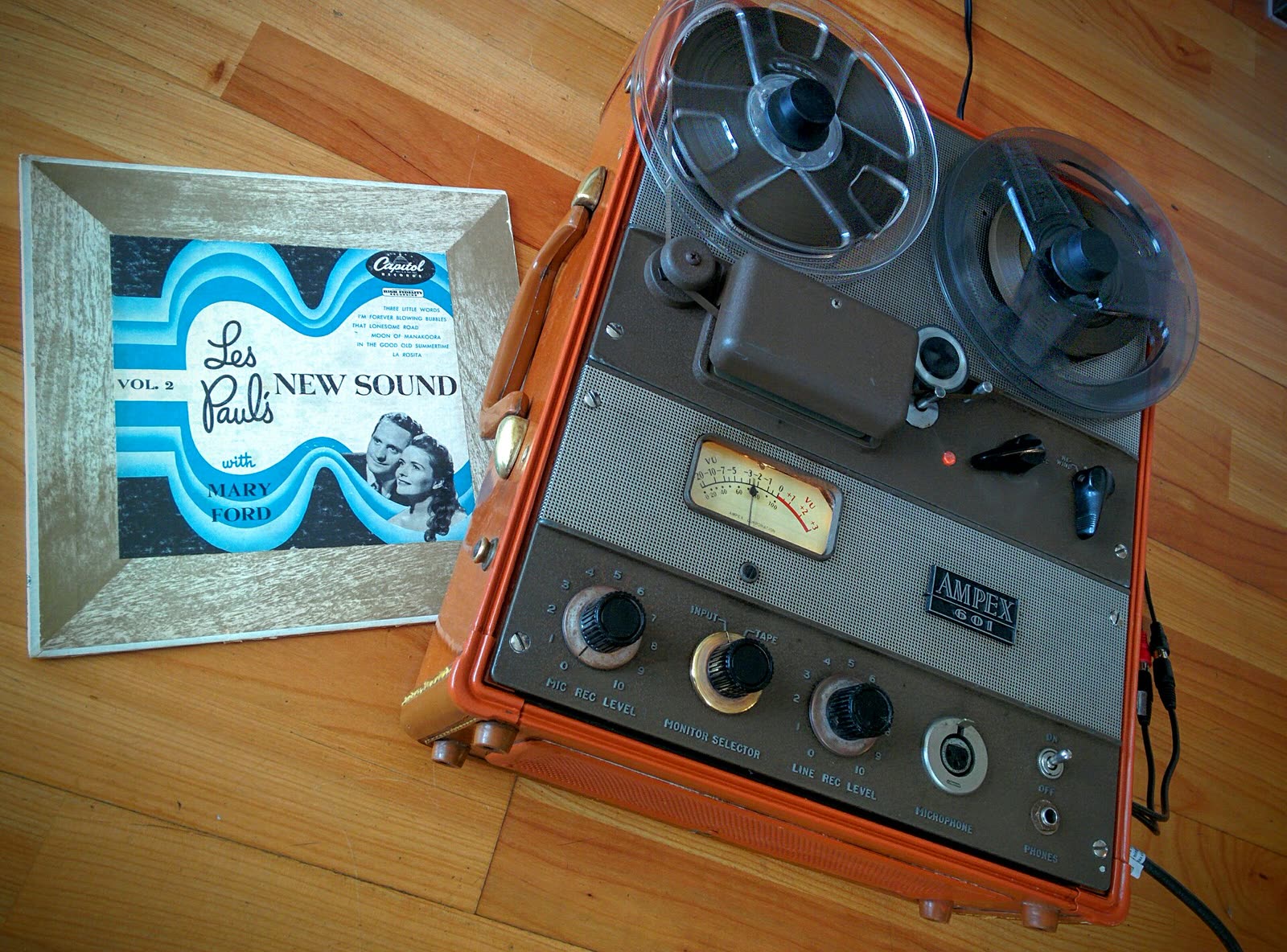
Audium IV premiered on May 23, 1967, with 44 speakers, expanded to 61 in 1968 according to Audium’s history (its Audium V page gives the room 80). A “tape performer” played each program live at “A specially-designed console.” The 1969 program note for Audium V put the idea plainly: “It is a total sound theatre. The environment is not only a setting, it is in itself a sound instrument.”
It ended with a property deal. “After 3 1/2 years of weekly public performances, Audium’s first theatre closes, due to sale of building,” the archive records, on October 2, 1970.
A building within a building: 1616 Bush Street
The new home, a former bakery called Stemple’s, was rebuilt “with the help of a small grant from the National Endowment for the Arts.” The 1975 program note described the result: “It is a building within a building, an effort of several years’ planning and execution.”
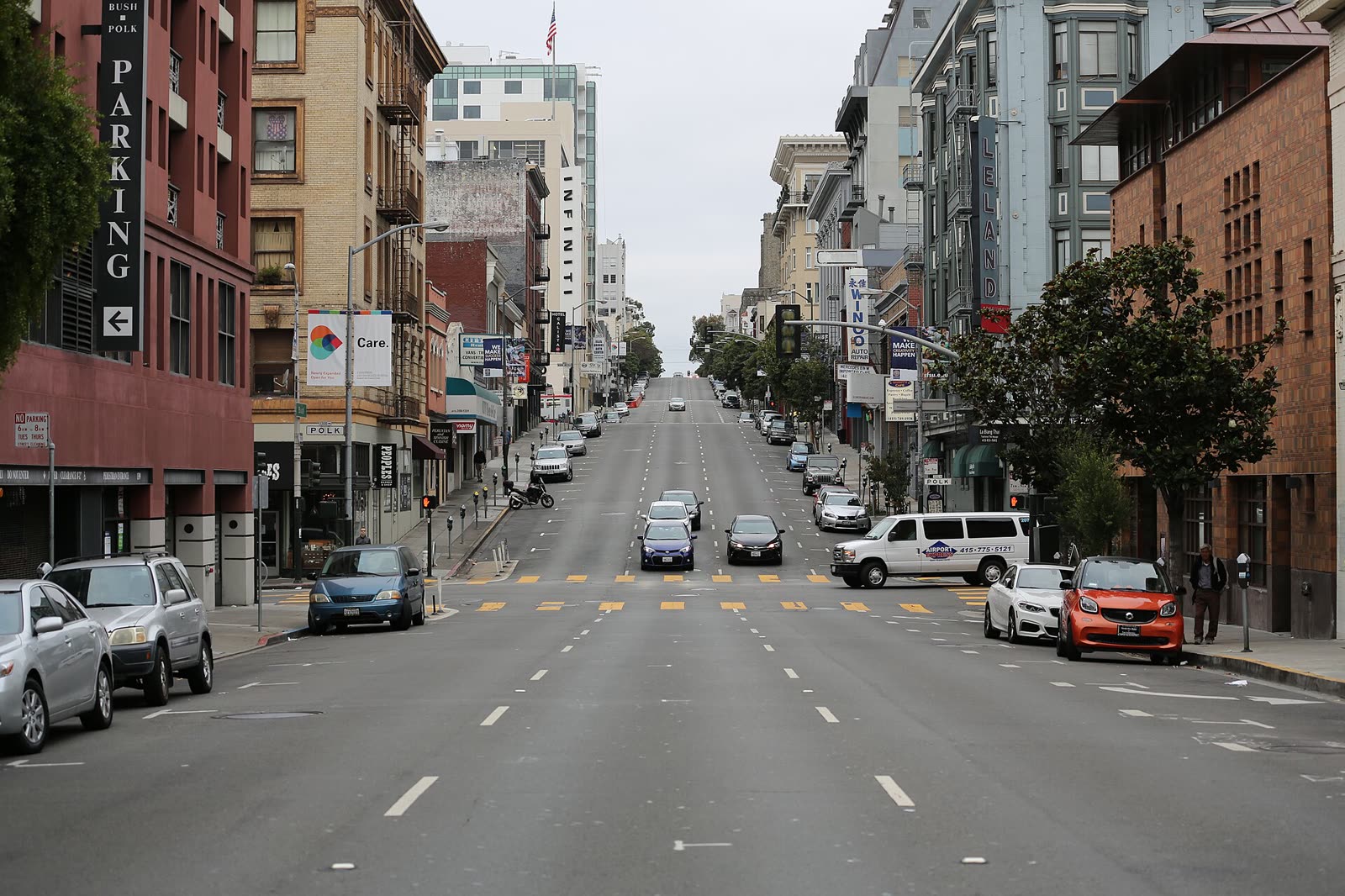
Audium VI, subtitled “A Theatre of Sound-Sculptured Space,” gave its first public performance on October 31, 1975, with 136 speakers. That is Audium’s own date; a 2024 San Francisco Standard feature says the theatre has run “since 1976.”
| Year | Work or event | Place | Speakers |
|---|---|---|---|
| 1960 | First concerts | Shaff’s home, four rooms | 8 speakers, 4 channels (with Halprin) |
| 1962 | Space Audiums | SF State College | Not stated |
| 1963-1964 | Audium II and III | San Francisco Museum of Art | 16 |
| 1967 | Audium IV | 309 4th Avenue | 44, then 61 by 1968 |
| 1975 | Audium VI | 1616 Bush Street | 136 |
| 1984 | Audium VIII | 1616 Bush Street | 169 |
| 2008-2019 | Audium IX, X and XI | 1616 Bush Street | 176 |
How the instrument works
“Listeners sit in concentric circles and are enveloped by speakers in sloping walls, a floating floor and a suspended ceiling,” a 1984 note explains. “Sounds are ‘sculpted’ through their movement, direction, speed and intensity on multiple planes in space.”
Why the dark
In the 1985 Computer Music Journal interview, Gareth Loy asked about the total darkness. Shaff said it “not only puts the audience on their own, but their imaginations are drawn in by the darkness to corporealize the sound images.”
What the critics heard
Most of the early press survives as excerpts on Audium’s in-depth history of program notes and reviews. In the Oakland Tribune in 1969, Paul Hertelendy wrote that Audium “makes Karlheinz Stockhausen’s developments in spacial music seem rather primitive in comparison.”

The Bush Street opening drew more. Calvin Ahlgren decided in 1976 that “it represents an auditory planetarium,” an image worth setting beside the history of the planetarium and its domed skies. The Chicago Tribune called it “totally devoid of the visual.”
A new generation (2008-2025)
Weekly performances continued, and “Speakers were added under seats, additional speakers and channels were added for ambient sounds (for a total of 176 speakers).” Audium IX opened in 2008 and Audium X in 2018. Audium XI, in 2019, was a “Composition by Stan and David Shaff,” Stan’s son.
The sound control system was digitised in 2020 and 2021, and a residency program began in 2021. In 2023, Resident Advisor reported the revival of Audium V, noting that David Shaff “has reworked the performance for Audium’s modern sound system of 176 speakers.”
Sound comes to you, or you go to the sound: Audium and Antenna
Loy drew a distinction in 1985 that serves as a contrast here: “on the one hand the sounds come to the listener, in the other the listener goes to the sound.” Shaff answered, “Logically that’s correct; however, ultimately the two collide.”

Antenna Theater, founded in Sausalito in 1980, worked from the other end. Its archive asks: “What if an audience member could walk though a theatrical environment acting and experiencing the drama firsthand while listening to their own soundtrack.” That walker became Antenna’s audient, who walks to the sound, and Hardman, it says, “redefined what the audience is.”
| Aspect | Audium | Antenna Theater |
|---|---|---|
| Listener | Seated in concentric circles | Walking through a set |
| Light | Total darkness | Lit rooms and mazes |
| Sound source | Speakers in walls, floor and ceiling | Headphones, one track per audient |
| Performer | A live tape performer at a console | Recorded voices plus live actors |
| In Loy’s terms | The sound comes to the listener | The listener goes to the sound |
No source connects the two companies; they answered one question in opposite ways. For the wider picture, see how sound installations differ from a theatre of sound, how stereo and multichannel sound developed and the history of headphone theater.
Frequently asked questions
Who created Audium?
Composer Stan Shaff and equipment designer Doug McEachern, two San Francisco music teachers. Audium dates their meeting to 1958; Shaff said in 1985 that it was 1958 or 1959.
When did Audium open on Bush Street?
Audium’s timeline gives the first public performance at 1616 Bush Street as October 31, 1975. The first theatre opened in 1967.
Is an Audium performance live?
The compositions are recorded, but each program is performed live by a tape performer who moves the sound through the room from a custom console.
What was the Bush Street building before Audium?
Audium’s archive says its predecessor at 1616 Bush Street was a bakery called Stemple’s.
For more on sensory San Francisco, read the history of the Exploratorium, the city’s hands-on museum, or explore Walkmanology and Antenna’s other new theater forms.