What Is Promenade Theatre? From Pageant Wagons to Walk-Through Plays
What is promenade theatre? Put simply, it is a show you follow on foot. There are no fixed seats, and the audience moves through the space as the scenes unfold. The form is older than most theater buildings, and it keeps coming back, from medieval street plays to London’s standing crowds to headphone walk-throughs in the Bay Area.
Quick answer
What is promenade theatre?
Promenade theatre is staging in which the audience has no fixed seats and moves on foot from scene to scene, following the action through a space. It can happen in a theater, a street or a whole building. Its roots run back to medieval mystery plays, which were performed in the streets.
How promenade staging works for the audience
The Drama Teacher puts the core idea plainly: “audiences are not confined to fixed seating but instead move through performance spaces as the action unfolds around them.” In practice that usually means standing, walking between playing areas, and being steered by guides, stewards, lighting or the actors themselves.
Promenade staging brings real gains. Spectators get close to the performers, the crowd becomes part of the picture, and a company can use rooms or streets that would never fit rows of seats. The costs are just as familiar: lines can be lost outdoors, sightlines get blocked, and the company has less control over where people stand.
Every promenade production has to answer the same practical questions. How will people hear, who decides the route, and how do you stop a crowd bunching in one doorway? Different companies have answered them in very different ways, as the history shows.
Promenade theatre history in brief
| Period | Example | Who moves |
|---|---|---|
| 1376 to 1569 | York Corpus Christi plays on pageant wagons | The stage moves; the audience waits at stations |
| 1977 to 1985 | The Mysteries, National Theatre | The audience mingles with the actors |
| 1981 to 1995 | Antenna walk-throughs (High School, Artery, Amnesia, Enola Alone) | One audient at a time, led by a soundtrack |
| 1990s to now | York plays revived on wagons | The wagons again |
| 2018 | Julius Caesar, Bridge Theatre | A standing crowd, moved by stewards |
Pageant wagons: when the stage did the walking
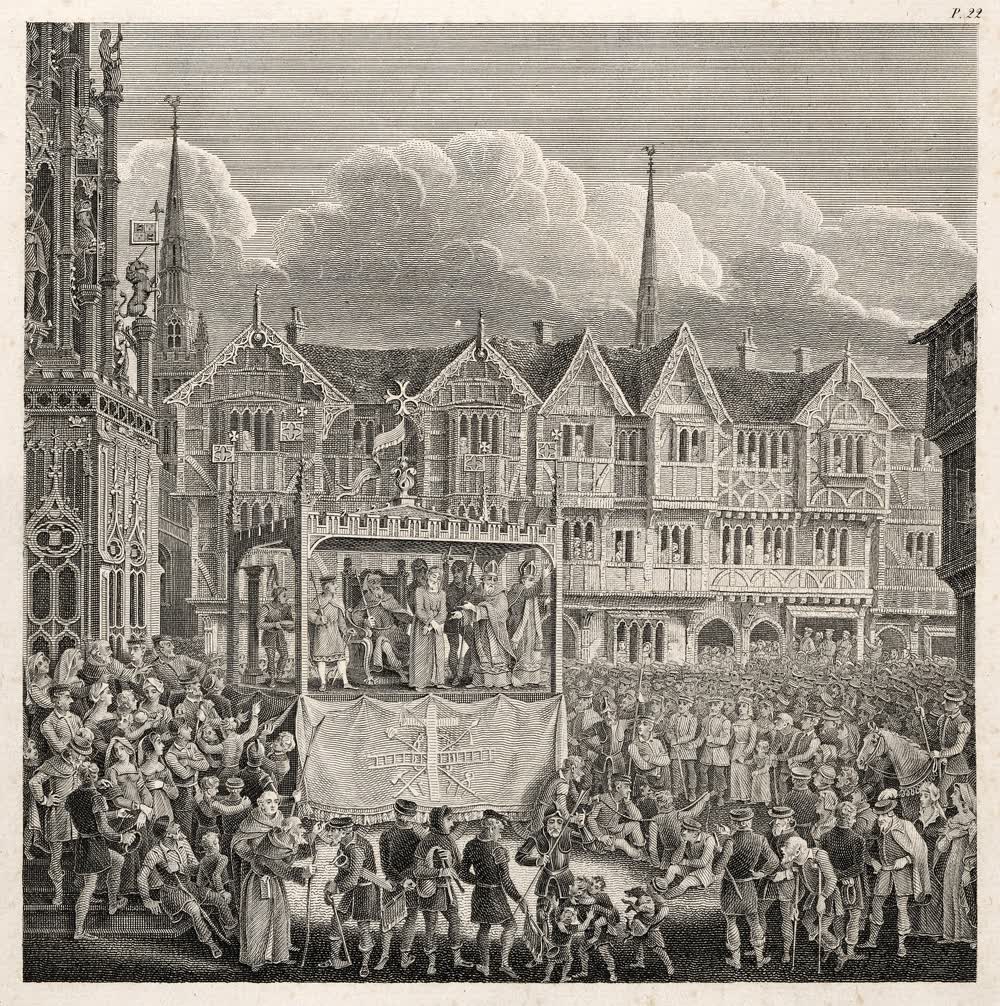
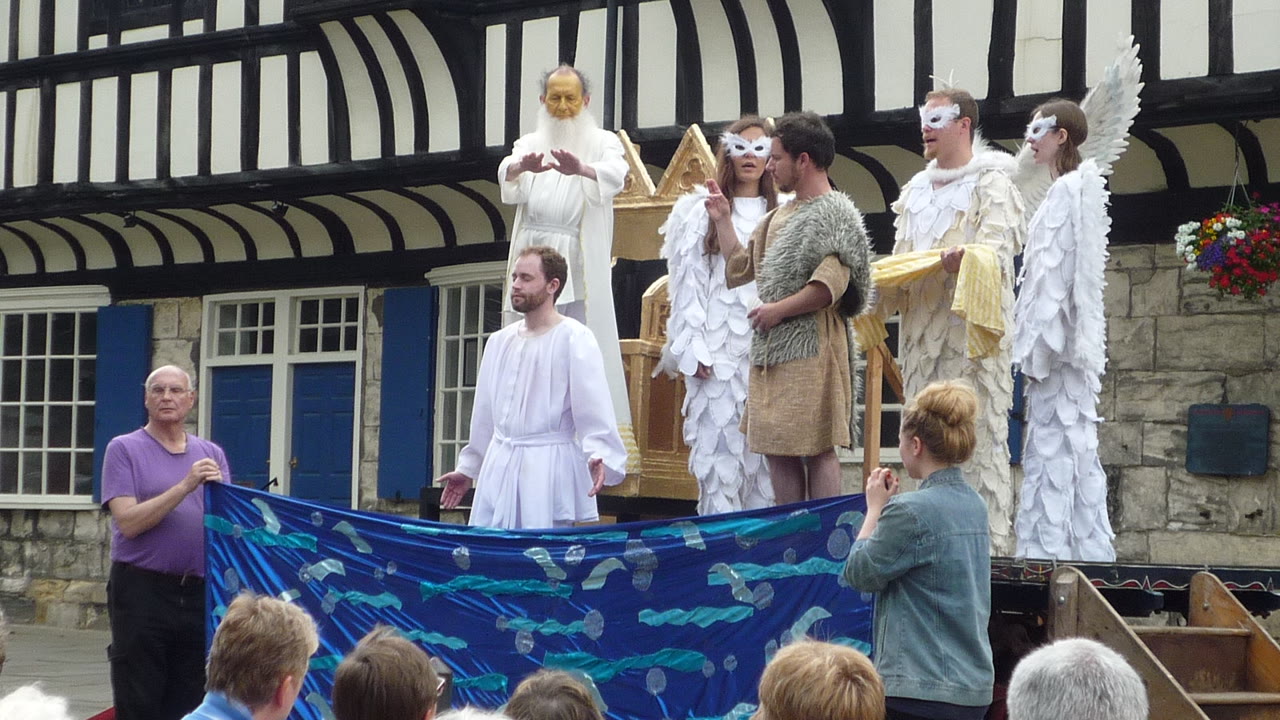
Medieval religious drama is the usual starting point, and it holds a surprise. The York cycle of 48 mystery plays was organised, financed and performed by the city’s craft guilds, from the mid-fourteenth century until the plays were suppressed in 1569.
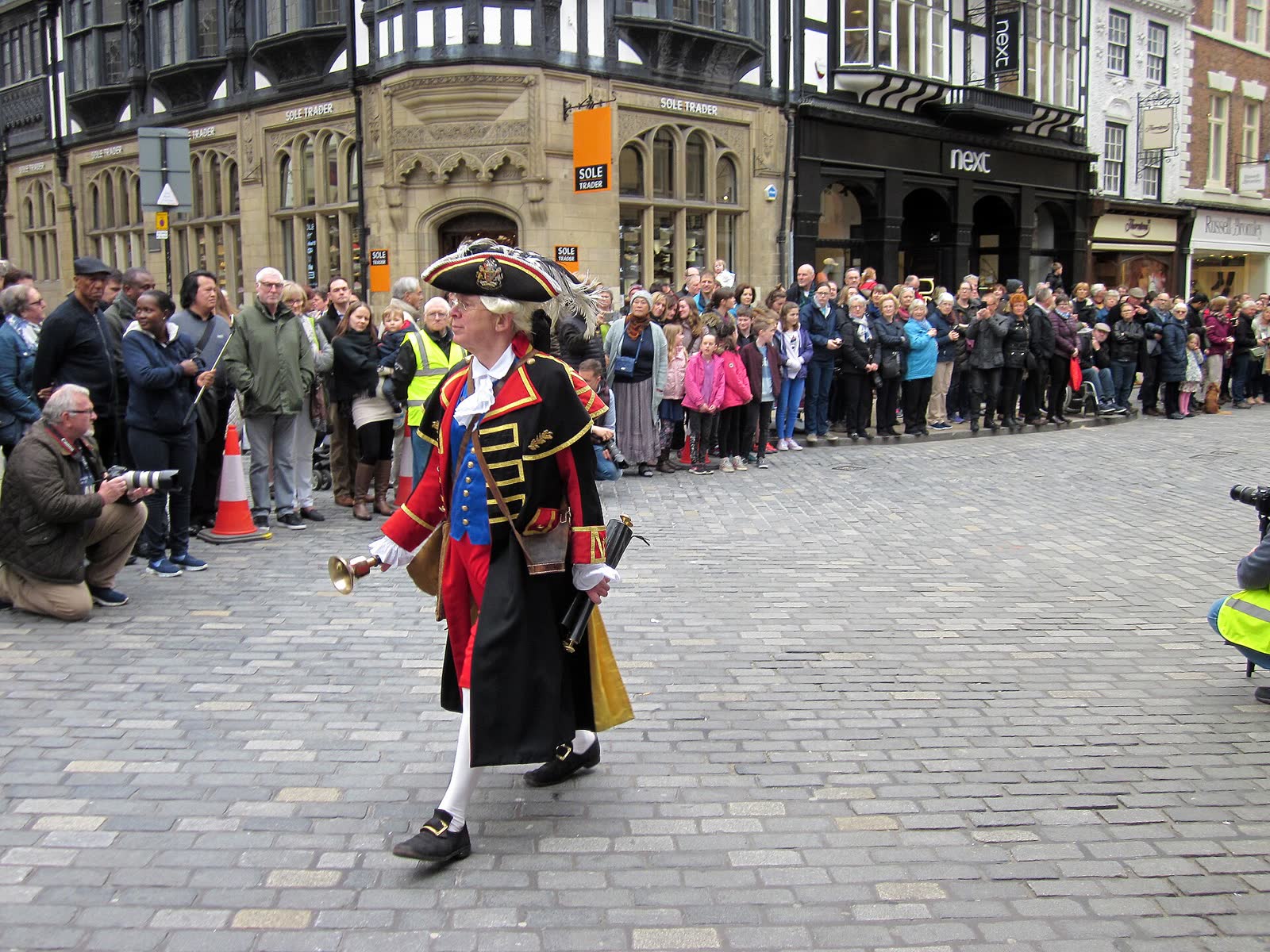
Dennis G. Jerz, in his study of how the York Corpus Christi plays were staged, writes that “each short play, mounted on an individual stage-wagon, was pulled through the streets of York, stopping to perform for audiences that had gathered at predetermined ‘stations’ along the route”. In York, then, the stage did the walking and the crowd mostly stayed put. Modern promenade flips that around.
The Mysteries at the National Theatre
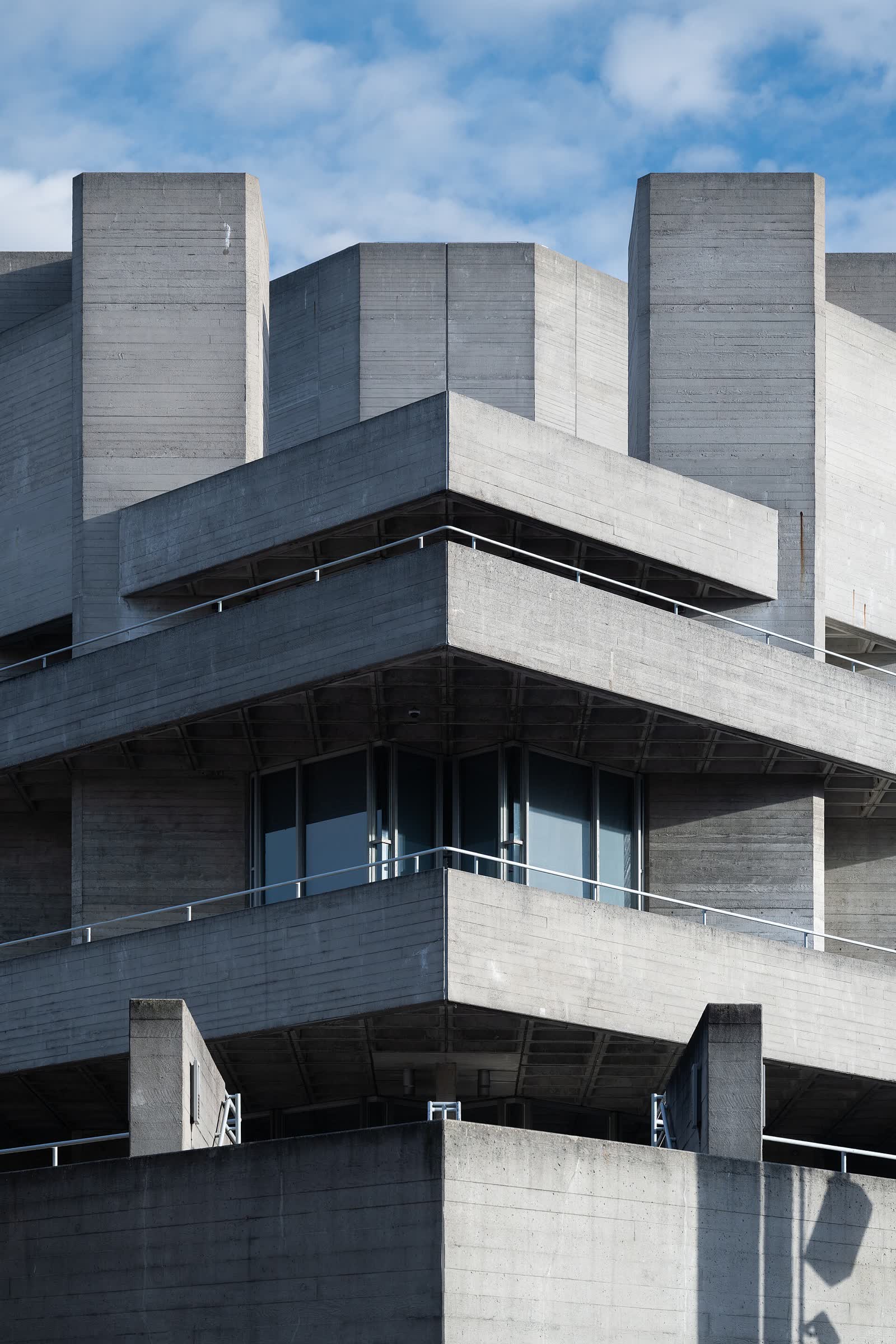
The landmark modern example came from the same medieval plays. The National Theatre’s The Mysteries was first performed on Easter Saturday 1977 on the terrace of the National Theatre building, in a promenade staging with the audience mingling with the actors. At the start of each performance, actors dressed as tradesmen welcomed the audience in.
The full cycle later filled the Cottesloe. The Victoria and Albert Museum holds the 1984 poster for The Mysteries, which reads “Three promenade productions” and names Bill Bryden as director. Bryden won the Olivier Award for Director of the Year in 1985 for The Mysteries, and William Dudley won Designer of the Year.
Standing crowds today: the Bridge Theatre
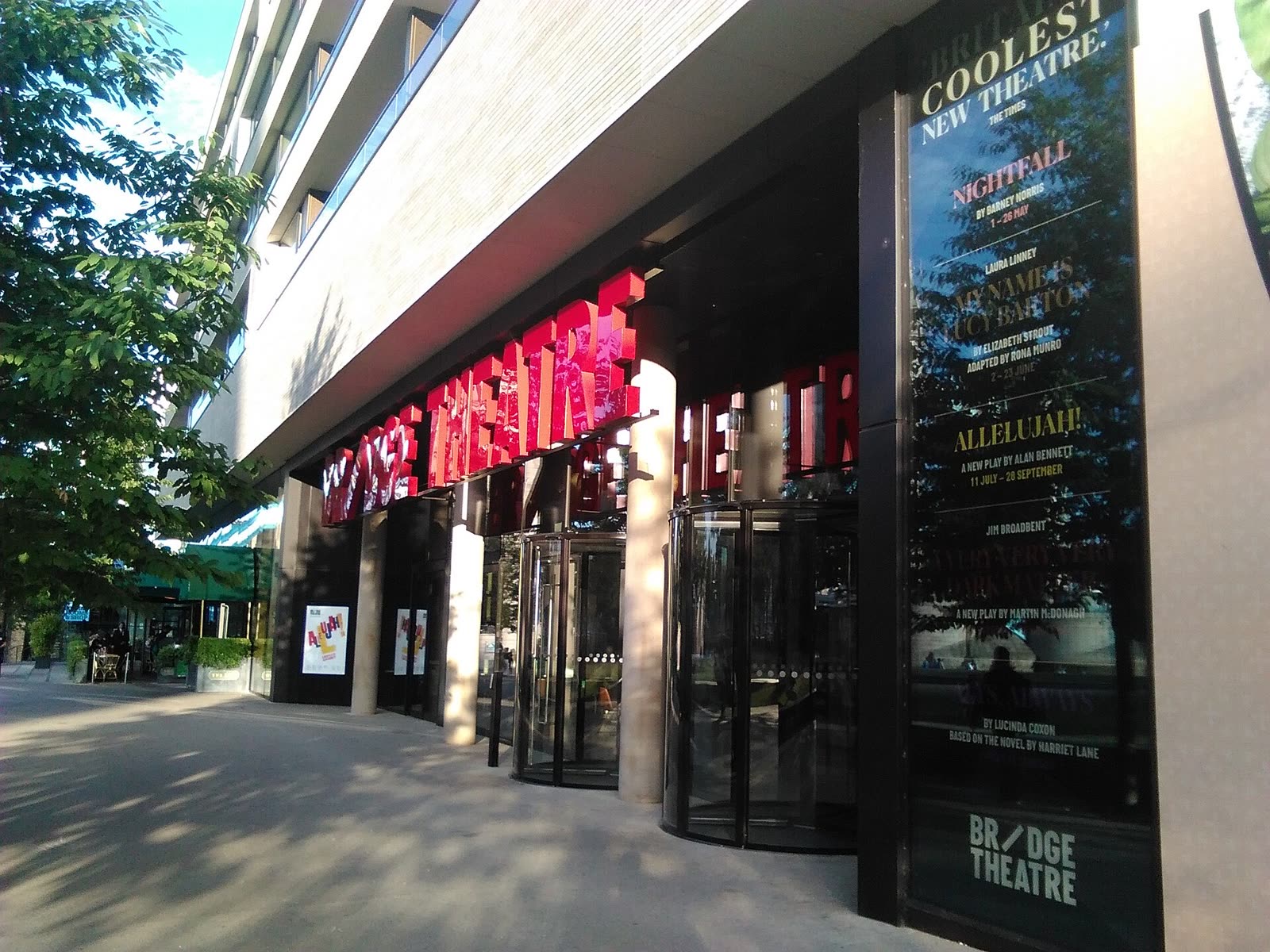
In 2018 the Bridge Theatre in London staged Julius Caesar around a standing audience. Mark Shenton of London Theatre called the standing tickets “the most intimate and democratising experience of the show”, in a production “constantly reconfigured around a standing audience”.
From a seat, he noted, it looked “quite hard work”, with “the audience kept on the move a lot.” That is promenade in one line: closeness for the walkers, and constant management by the company.
Promenade with headphones: Antenna’s walk-throughs
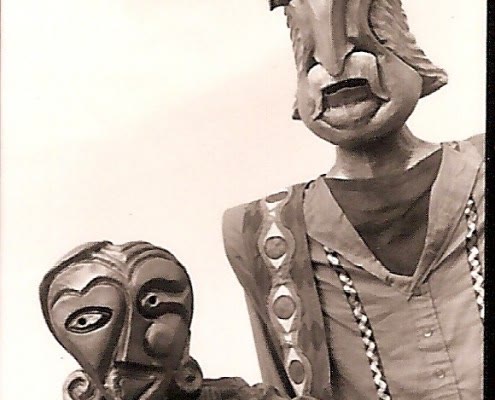
Antenna Theater solved promenade’s old problems with headphones. Instead of moving a crowd, it moved one person at a time. For Artery, the company built “a complicated labyrinth in which each spectator enters at 4-minute intervals”, Paul Lenti wrote in The Mexico City News in 1983. Each person also got “a Sony Walkman that guides him or her through this network set”.
Lenti saw why that mattered. In earlier walk-through art, “the participant had to be ushered through the work, whereas the Sony Walkman makes the spectator/actor an independent unit.” The soundtrack replaced the steward, and nobody had to strain to hear a line. Our post on Artery and its 17-room Walkman maze covers that show, and how one-to-one theater works explains the single-spectator format.
Critics did use the word. In American Theatre in December 1994, Jean Schiffman described Enola Alone as “an abstract, digitally enhanced promenade” about being a bomber pilot, staged in an army barracks on the Presidio. Amnesia (1983 to 1984) went the other way from Artery’s single path: “Four different memory paths are taken in random order as each ‘audient’ struggles to regain their sense of self.”
Later, Antenna took promenade outdoors. Pandemonium, Antenna’s night walk in the Marin Headlands, sent audience members in headphones through the woods to meet 35-foot puppets and masked actors. The archive’s account of the audient, Antenna’s single walking spectator explains the thinking behind all of these.
Promenade vs immersive theatre vs site-specific
The labels overlap, which is why they confuse people: promenade describes how the audience moves. Immersive describes being inside the fiction. Site-specific describes a work made for one real place. A single show can be all three, or only one.
| Aspect | Promenade theatre | Immersive theatre | Site-specific theatre |
|---|---|---|---|
| Defining feature | The audience moves on foot, no fixed seats | The audience is placed inside the world of the show | The work is made for one real place |
| Who sets the route | Usually the company | Often the spectator explores freely | The place sets the frame |
| Can it be seated? | No | Yes | Yes |
| Example | The Mysteries, inside a theater | Multi-room shows in converted buildings | A recycling center, a town, a fort |
| Antenna example | Enola Alone (1994) | Artery’s 17-room maze | Skin & Bones at a recycling center (1995) |
For the longer view of the promenade vs immersive theatre question, see how immersive theater differs from a traditional stage and site-specific theater in the Bay Area. The 1960s idea of a shared room is covered in what environmental theater is and Schechner’s six axioms.
Frequently asked questions
Do you stand at a promenade performance?
Usually, yes. At the Bridge Theatre’s Julius Caesar in 2018, the standing audience was kept on the move a lot, according to Mark Shenton of London Theatre.
Where did promenade theatre come from?
Medieval religious drama is the usual origin. In York, plays on wagons were pulled through the streets to audiences waiting at stations, so there the stage moved rather than the crowd.
What is a famous example of promenade theatre?
The National Theatre’s The Mysteries, billed as three promenade productions, which won Bill Bryden the 1985 Olivier Award for Director of the Year.
Is promenade theatre always site-specific?
No. The Mysteries was a promenade production inside a theater building. Site-specific work is made for a particular real place.
Promenade is one of several forms Antenna explored. See Walkmanology and Antenna’s other new theater forms for the rest.